
Shanghai usually means three things to a first-time visitor: the Pudong skyline, the Bund and Nanjing Road. All three are worth a morning. But the city that 25 million people live in starts one block behind them, in the lane houses of the former French Concession, the Sunday book market at the Confucius Temple, the converted oil tanks on the West Bund and the breakfast stalls where a bowl of noodles costs 12 yuan. This guide covers that Shanghai: where to walk, what to eat, which gardens stay quiet, and how to get around without reading Chinese.
Exploring the Old City’s Unexpected Corners
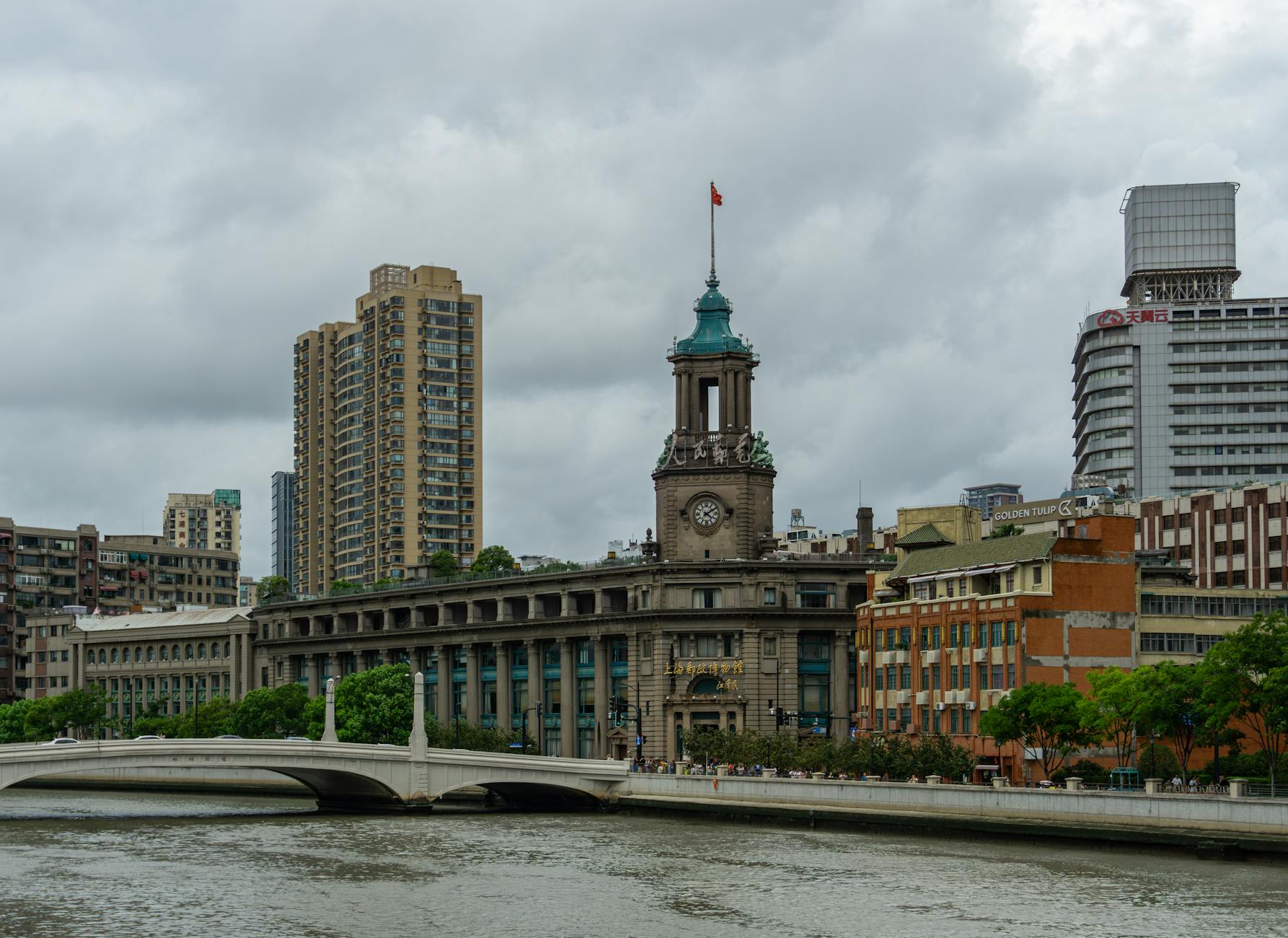
One piece of advice covers most of what follows: forget Pudong and Nanjing Road for a day. Shanghai’s older districts west and south of People’s Square move at a different speed, and that is where the lane life, the markets and the small temples are. None of them need a ticket. The Old City itself is easy to find on a map: Renmin Road and Zhonghua Road form a circle that follows the line of the demolished Ming-era city wall, and the Dajing Pavilion on Dajing Road keeps the last 50 metres of it standing.
Find Calm in Quiet Alleys and Tea Houses

Start in the former French Concession, but skip the boutiques on Wukang Road. Its real fabric is the lilong, the gated lanes of brick shikumen houses built between the 1870s and 1930s. Inside, life runs at walking pace: laundry on bamboo poles between buildings, old men at mahjong tables on the pavement, the smell of somebody’s lunch from a ground-floor kitchen. Fuxing Middle Road and the lanes off Shaoxing Road are good places to go in. Tianzifang, the famous lilong, has turned into a souvenir maze, but the lanes two streets over have not. Small tea houses here sell oolong and pu-erh by the pot, and nobody minds if one pot lasts an hour. A local breakfast tour of the French Concession is the easiest way to learn which stalls and lanes to come back to on your own.
Discover Forgotten Temples and Local Markets

Step off the main drags and the Old City south of Yu Garden still has a few surprises. The Confucius Temple (Wen Miao) on Wenmiao Road is one: a walled compound of courtyards and old trees where the loudest sound is a sparrow. On Sundays a second-hand book market fills the courtyards, with everything from Cultural Revolution posters to 1980s comics, and entry is a few yuan. Antique hunters should head to the Cangbao Building on Fangbang Middle Road, a multi-floor warren of stalls selling porcelain, coins, propaganda posters and a great deal of reproduction. Bargain, and start at a third of the asking price. The old Dongtai Road antiques street that older guidebooks mention was demolished in 2015, so do not go looking for it.
Finding Art Beyond the Tourist Trail

Shanghai is not only business and history. It has the largest contemporary art scene in China after Beijing, and most of it sits in two former industrial zones that cost nothing to walk around.
How Old Factories Became Art Galleries
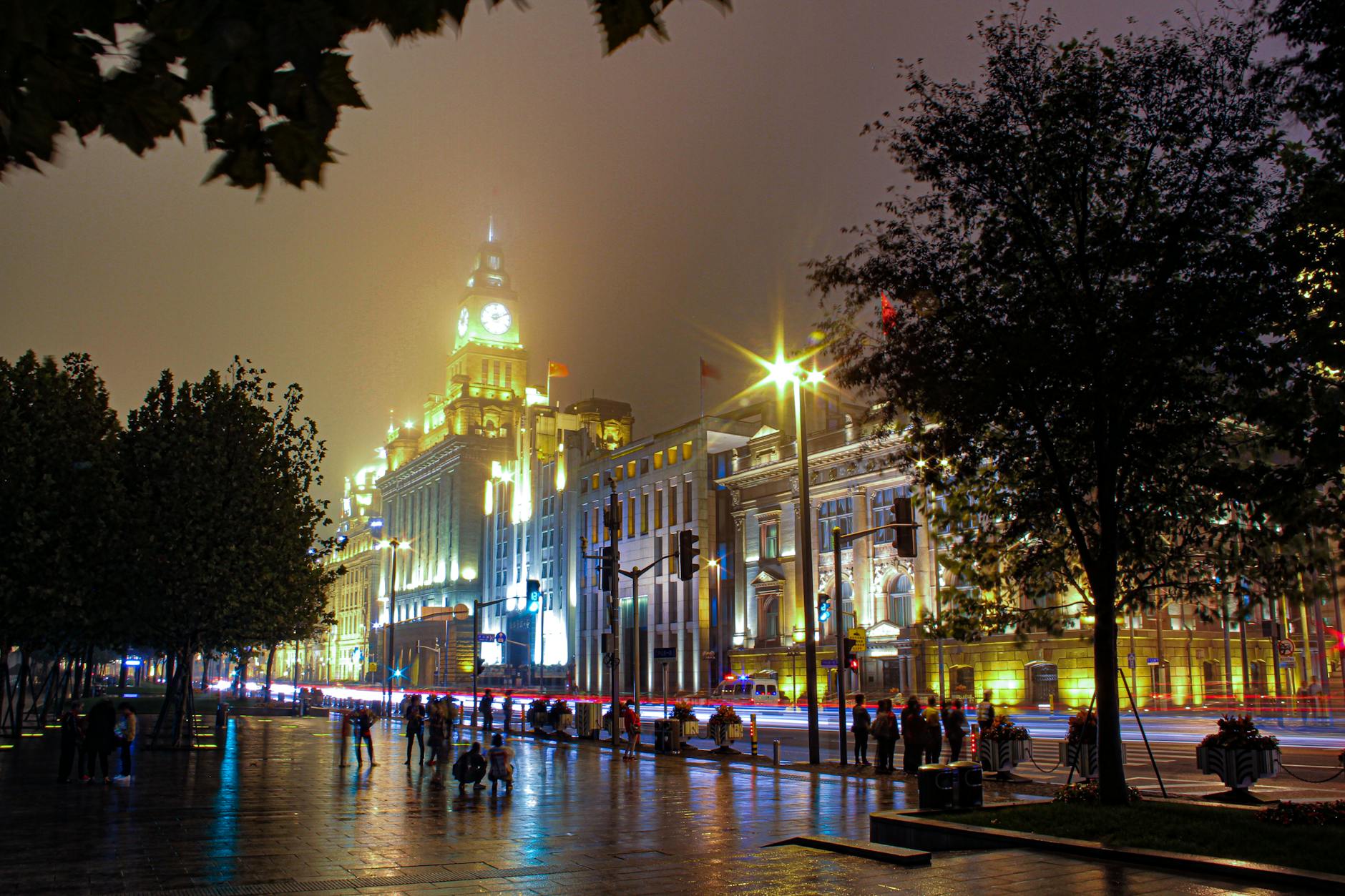
M50 Creative Park at 50 Moganshan Road is the one most people know: a former textile mill on Suzhou Creek, now several dozen galleries, studios and cafes. Entry is free and the galleries open around 10 in the morning, Tuesday to Sunday. Walk past the big names at the entrance and into the smaller rooms at the back, where young artists show work priced for actual buyers. Then take the metro to the West Bund in Xuhui. Along the river south of Longhua, a former airfield and cement works has become a museum mile: Tank Shanghai inside five converted aviation fuel tanks, the Long Museum, the Yuz Museum and the West Bund Museum with its Centre Pompidou partnership. Most charge 50 to 100 yuan, and there are no crowds on a weekday.
The City Streets Are an Open-Air Gallery

Street art in Shanghai comes and goes with demolition schedules, so the murals in any given guide may be gone. Two places are reliable. One is the long graffiti wall along Moganshan Road beside M50, repainted constantly and tolerated by the district. The other is the stretch of the West Bund riverside path, where the old industrial cranes and walls carry commissioned pieces. For something older, a vintage bike tour of the Old Town runs through the lanes around Fangbang Road, past hand-painted shop signs and the last stretches of city wall, with a night option when the lanterns are lit.
Finding Peace in Shanghai’s Parks and Gardens
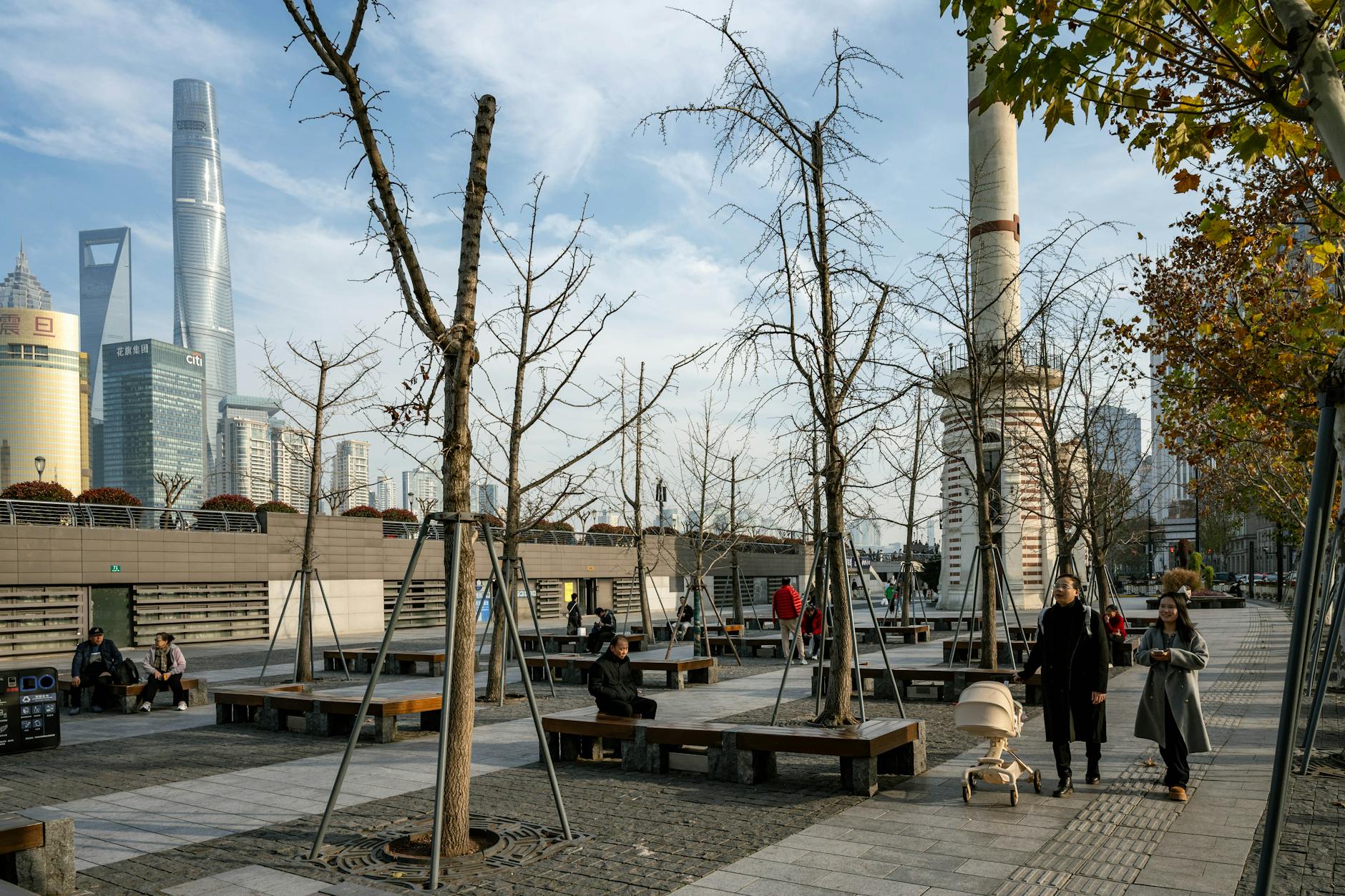
Parks in Shanghai are not decoration. They are where the neighbourhood meets, and the schedule is the same in every one: tai chi and sword practice at dawn, retired men with caged songbirds mid-morning, ballroom dancing after dinner. Most city parks are free and open from five or six in the morning. Lu Xun Park in Hongkou, with the writer’s tomb and a lake full of pedal boats, runs the same programme for a northern crowd and sees almost no foreign visitors.
A Morning in the Park with the Locals

Fuxing Park in the French Concession is the classic, a 1909 French-style garden with plane trees and a rose garden. Arrive between 6:30 and 8:00 and the lawns hold hundreds of people: tai chi groups, qigong, a choir under the pavilion, couples doing the waltz to a portable speaker. Zhongshan Park in Changning is bigger and less touristy, with the same morning programme. Nobody minds an onlooker, and joining a tai chi line at the back is the normal thing to do. A coffee from the stall by the gate costs 15 yuan, and a bench with a view of the dancing is the best seat in the city at that hour.
Discovering Gardens Off the Beaten Path

Everyone goes to Yu Garden, and it deserves the visit, but it is mobbed from ten o’clock on. Buy Yu Garden entry tickets in advance and be at the gate when it opens at 8:30 in summer or 9:00 in winter. Then take metro Line 11 to Nanxiang for Guyi Garden, a Ming-dynasty garden from 1566 that most visitors never hear of. It has lotus ponds, covered walkways, bamboo groves and a fraction of the crowd, and the town around it is the birthplace of xiaolongbao, so lunch is settled. For a full day out, the water towns west of the city are the usual choice. Zhujiajiao is the easy one, on metro Line 17, and a tour to a less-visited water town is the way to see canals without the tour-bus crowds. Staying near the gardens is possible too: the Okura Garden Hotel Shanghai occupies the old French Club with its own lawn in the Concession, and the Renaissance Yu Garden hotel stands next to the Old City.
What the Locals Eat in Shanghai

Shanghai food is sweeter and oilier than the rest of China, built on soy, sugar and rice wine. To eat it properly, skip the restaurants with English menus on the Bund and go where the queues are. Prices in the lanes are a fraction of downtown: a full breakfast for 15 yuan, a bowl of noodles for 12.
Street Food and a Proper Local Breakfast

A Shanghai morning starts on the street, and the hotel buffet cannot compete. Look for the window with a queue before 8:00 and order the “four warriors” of local breakfast: dabing flatbread, youtiao fried dough stick, soy milk and cifantuan sticky-rice roll. Add jianbing, the egg crepe with crispy cracker inside, or xiaolongbao soup dumplings. The dish worth crossing town for is shengjianbao: pan-fried pork buns, crisp on the bottom, full of hot soup on the inside. Bite a hole first, drink the soup, then eat the bun. Four cost about 10 yuan.
Historic Cafes and Family-Run Restaurants

For a bigger meal, the rule is simple: Chinese-only sign, older couples at the tables, a menu of ten dishes or fewer. Places like that have usually been cooking the same two or three things for decades. In Xuhui and the lanes off Huaihai Road they serve Shanghai-style noodles with scallion oil, hongshaorou red-braised pork and drunken chicken in rice wine, with a main course rarely over 40 yuan. Point at what the next table is eating if the menu defeats you. Evenings belong to the local beer bars, often a few plastic tables under a shop awning, where the kitchen does skewers and the beer is 8 yuan a bottle. A local food and beer tour strings five or six of these stops together in one evening, which is a good way to find the ones to return to.
Practical Tips for Exploring Unknown Shanghai

Logistics in Shanghai are easier than in most of China, but a few things need sorting before landing: apps, payment and a map that works without Google.
How to Get Around and Where to Stay

Shanghai’s metro is one of the largest in the world, with 20 lines, English signage and fares from 3 to 9 yuan. It reaches almost everything in this guide, including Nanxiang and Zhujiajiao. For short hops use a taxi (meters start at 14 yuan) or the DiDi app, and keep your destination written in Chinese characters, because most drivers do not read pinyin. For a base, pick the French Concession or Jing’an rather than Pudong: both are walkable, full of lane life and ten minutes by metro from the Bund. Among downtown hotels, the Jin Jiang Tower is a five-star on Maoming Road, inside the Concession and two blocks from Huaihai Road, and the Shanghai Park Hotel is a 1934 Art Deco landmark on People’s Square that was the tallest building in Asia when it opened.
Talking with People and Understanding the Culture

Shanghai is the most international city in mainland China, but English thins out fast beyond hotels and malls. “Ni hao” and “xie xie” earn a smile, and a translation app with a camera handles menus. Payment is almost entirely by phone. Since 2023 Alipay and WeChat Pay accept foreign Visa and Mastercard, so set one up before arrival. Cash still works at stalls and markets, so carry 200 yuan in small notes. Google Maps does not work without a VPN. Amap or Baidu Maps do, and both have English modes. For a long walk that needs no map at all, follow the Suzhou Creek waterfront: the riverside path was completed in 2020, runs 42 kilometres through the city, and passes M50, the old warehouses of Sihang and the back of the Bund.
- Apps to install: Amap or Baidu Maps for navigation, Pleco for translation, DiDi for taxis, Alipay for everything else.
- Manners: patience and a smile go further than volume. Nobody expects a foreigner to get the etiquette right.
- Plans: leave room for detours. The best lanes are the ones you walk into by mistake.
Shanghai’s Many Faces

Shanghai is a city of layers, and the glossy top one is the thinnest. Under it are the lilongs, the park dancers, the Sunday book market and the breakfast queues, and they explain the place better than any skyline photo.
A workable off-trail day looks like this. Fuxing Park at 7:00 for the tai chi, shengjianbao on Huaihai Road at 8:30, the lanes off Shaoxing Road until lunch, metro to the West Bund for Tank Shanghai in the afternoon, and a plastic-table beer bar in Jing’an at night. Total cost, museum ticket included, is under 200 yuan.


