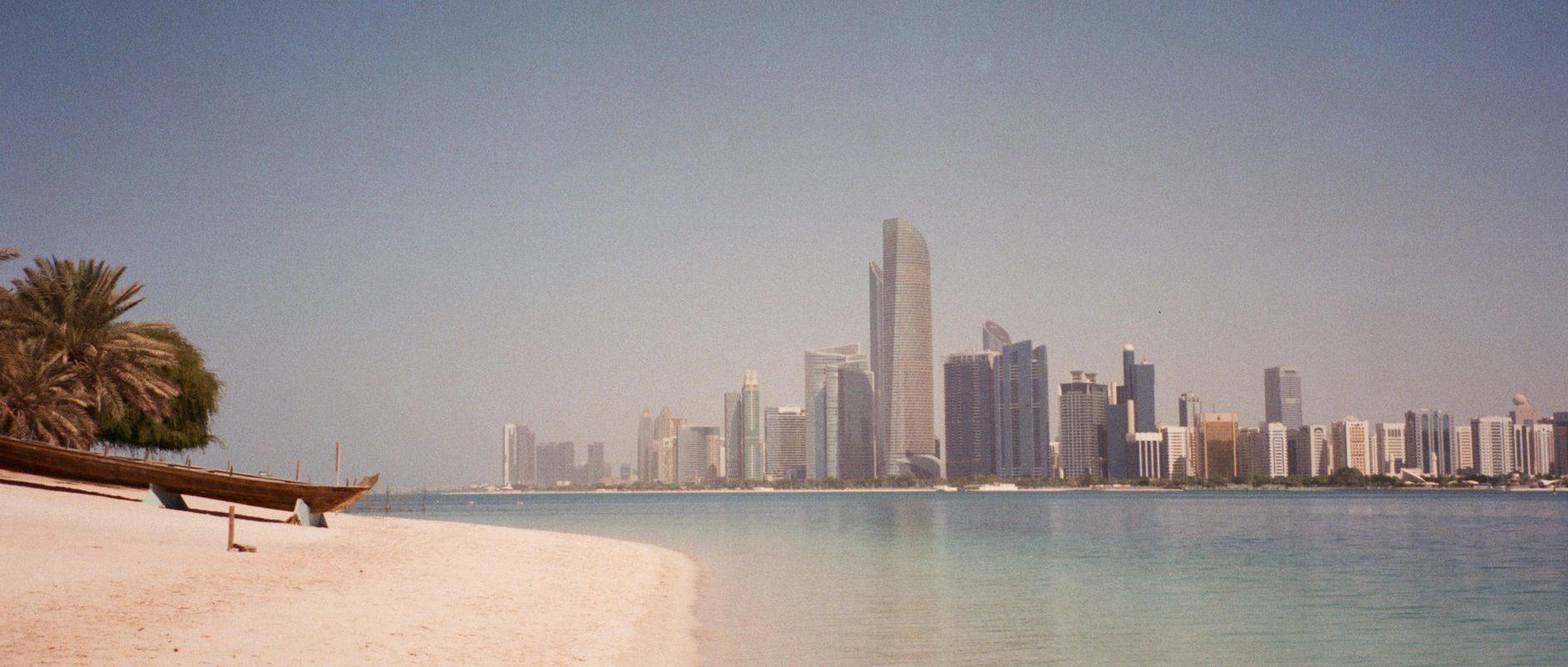
Abu Dhabi sits on a cluster of islands in the Persian Gulf, and there are more beaches here than you can cover in one trip. City corniche, white sand on Saadiyat, calm lagoons of Yas Island – each spot has its own character and its own price tag. Water here warms up by October and stays pleasant until May, so the swimming season runs longer than in most of the region.
This guide covers the beaches that make sense for visitors: easy entry into the water, showers, cafes, and lifeguards on duty. For each one you’ll find prices, transport tips, and a few notes from experience.
Corniche Beach – Eight Kilometers of City Shoreline
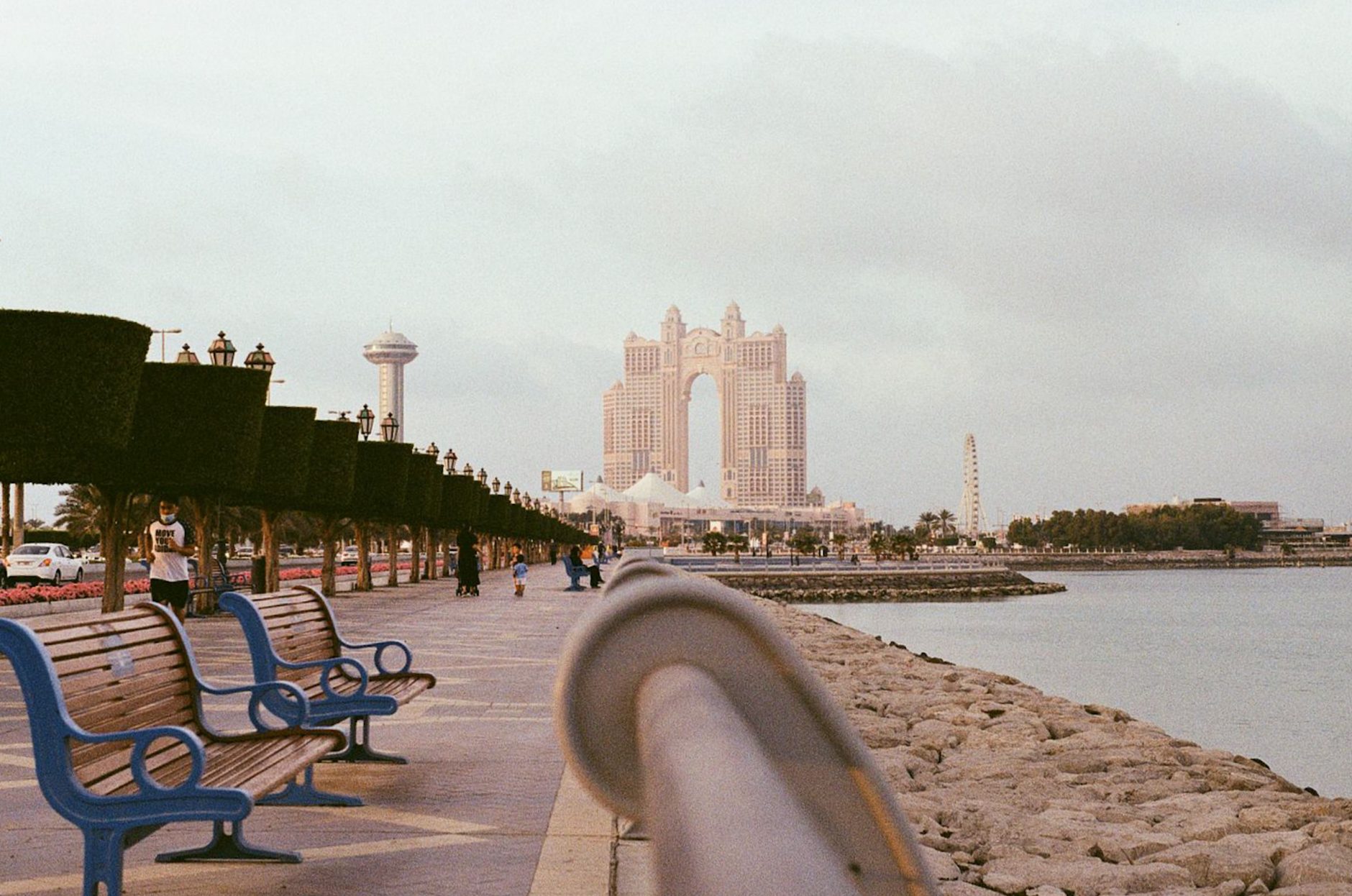
Corniche Beach stretches along the central waterfront for almost eight kilometers. Its sand is imported, fine, and light-colored, and the slope into the water is gentle. A Blue Flag flies over this beach – the water and shore get cleaned several times a day, and it shows.
Paid and Free Zones
Sections divide the shoreline. Free areas are open to everyone, but there are no sunbeds – just sand, showers, and toilets. Paid zones at Gate 2 and Gate 3 cost about 10 dirhams per person. That buys you a guarded entrance, clean changing rooms, and noticeably smaller crowds.
A family zone is fenced off from the rest. Couples, women, and parents with kids are welcome there, while loud groups get sent to the next section over. With small children it works well: calmer water, shallower entry, playgrounds nearby.
Getting There and What’s Nearby
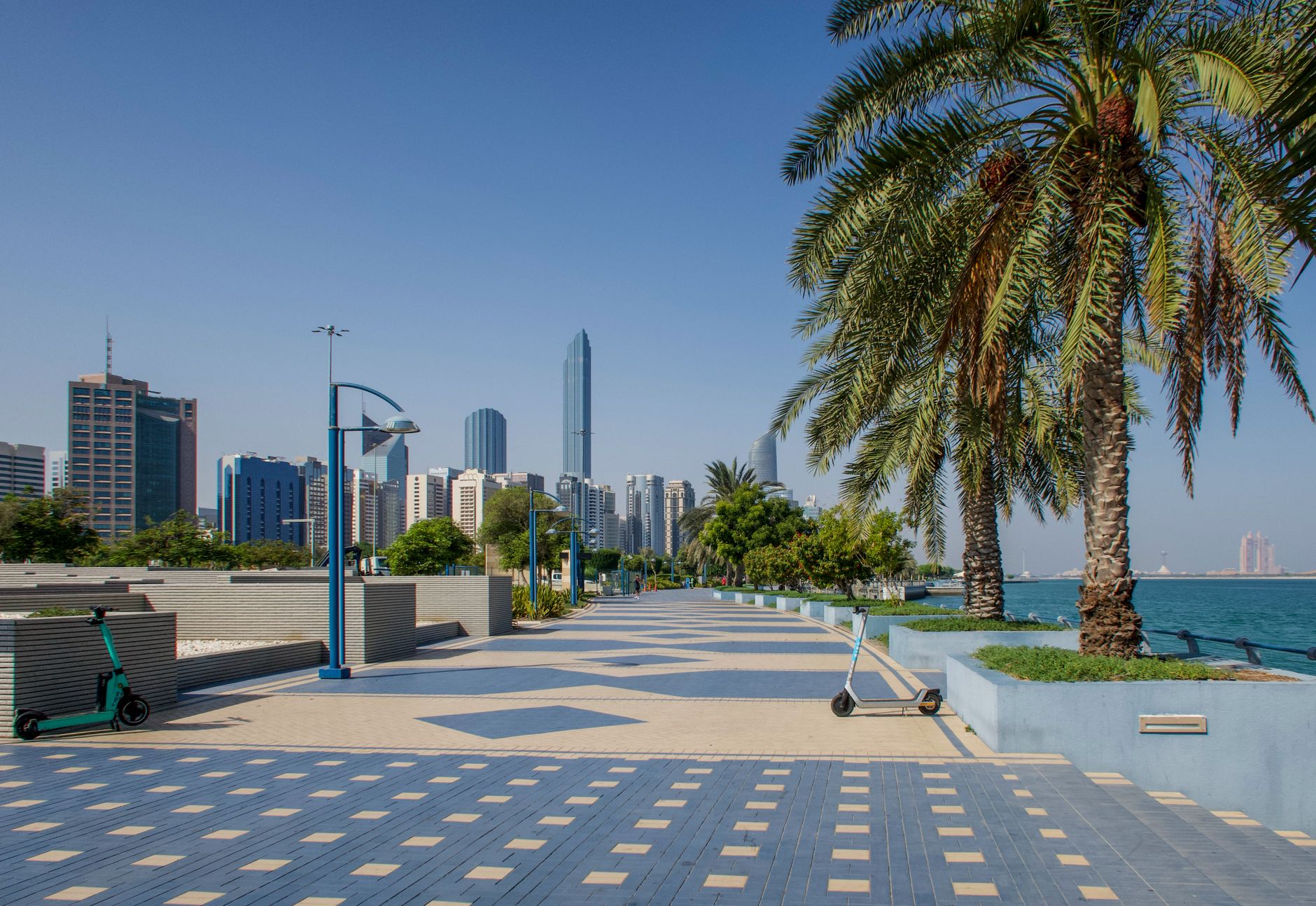
A bike path runs the full length of the promenade, with bicycle and scooter rentals along the way. Cafes and ice cream kiosks appear every two or three hundred meters. Parking is free, though spots are scarce on weekend afternoons, Saturday and Sunday here since 2022 – arrive before noon.
From the water, the city looks different. To see the Corniche skyline from the gulf side, join an island-hopping boat trip – routes run along the waterfront and the nearest islets.
At the western end of the beach stands the Radisson Blu Corniche with direct access to the sea. A solid choice if you want to stay central and walk to your swim.
Saadiyat Island and Its Sea Turtles
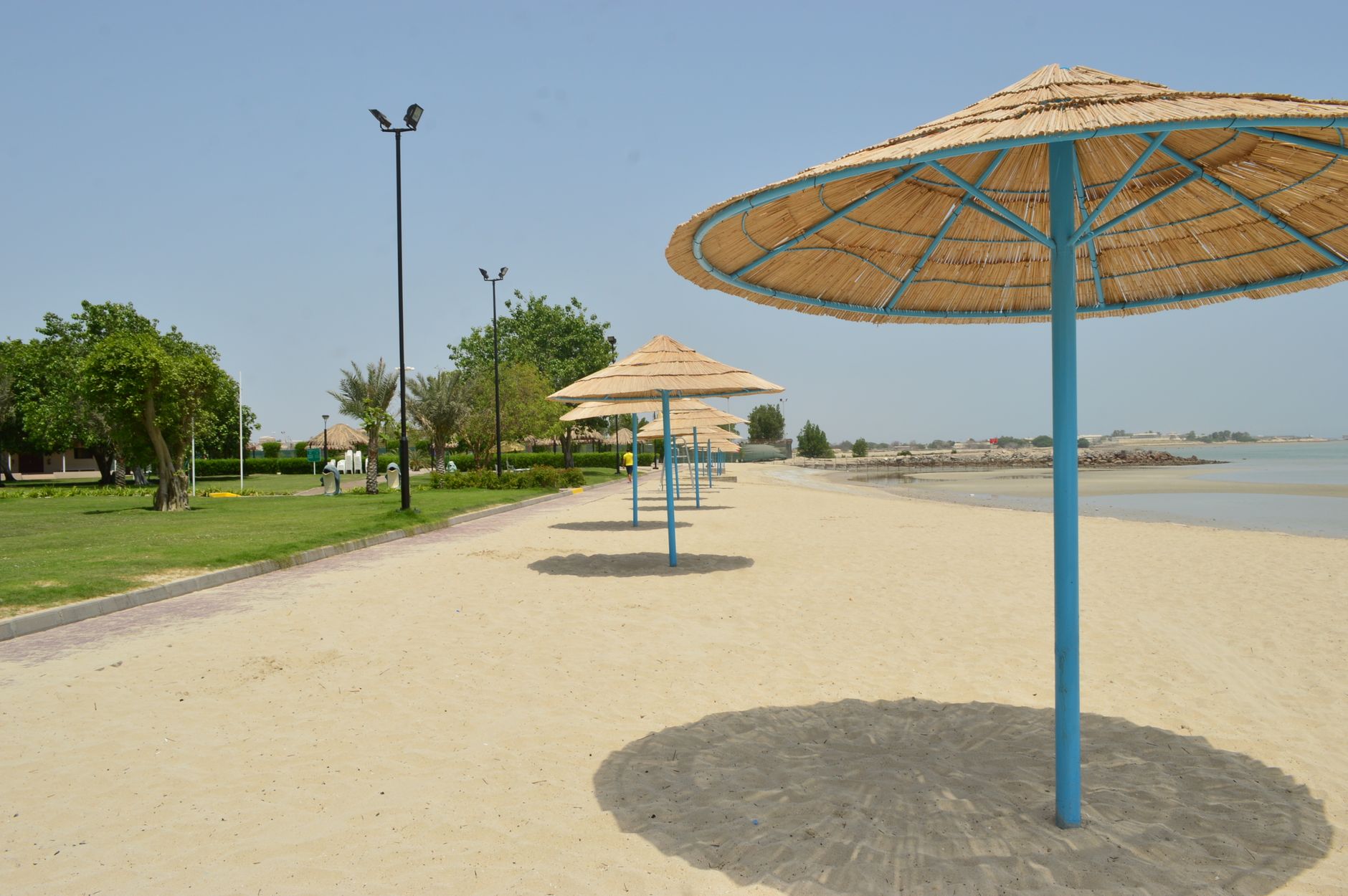
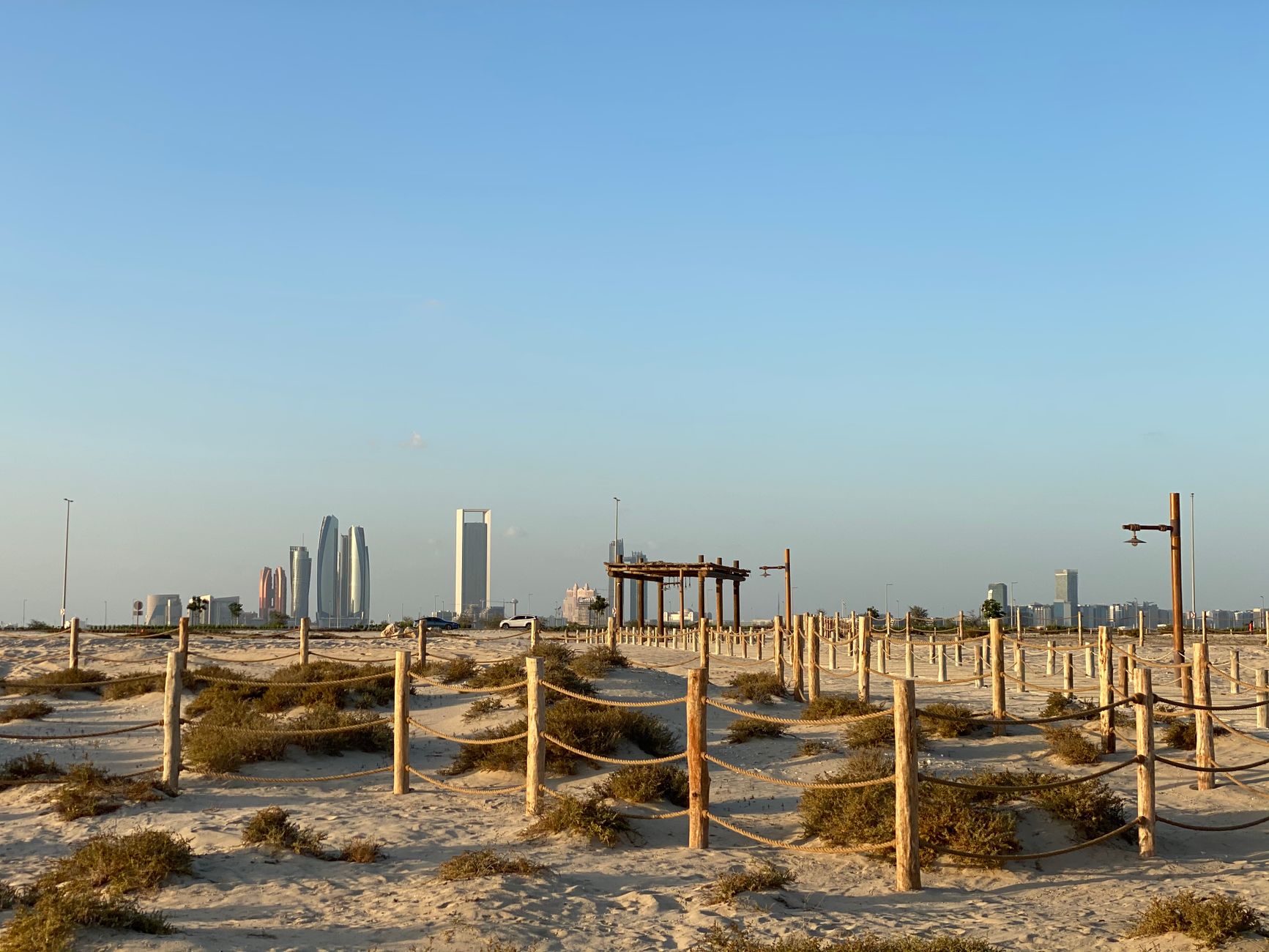
Saadiyat Island’s beaches are widely considered the most beautiful in the emirate. The sand is white and squeaks underfoot, and the water leans turquoise. Hawksbill turtles nest in the dunes, so parts of the shore are roped off in spring and early summer while rangers watch over the clutches.
Soul Beach
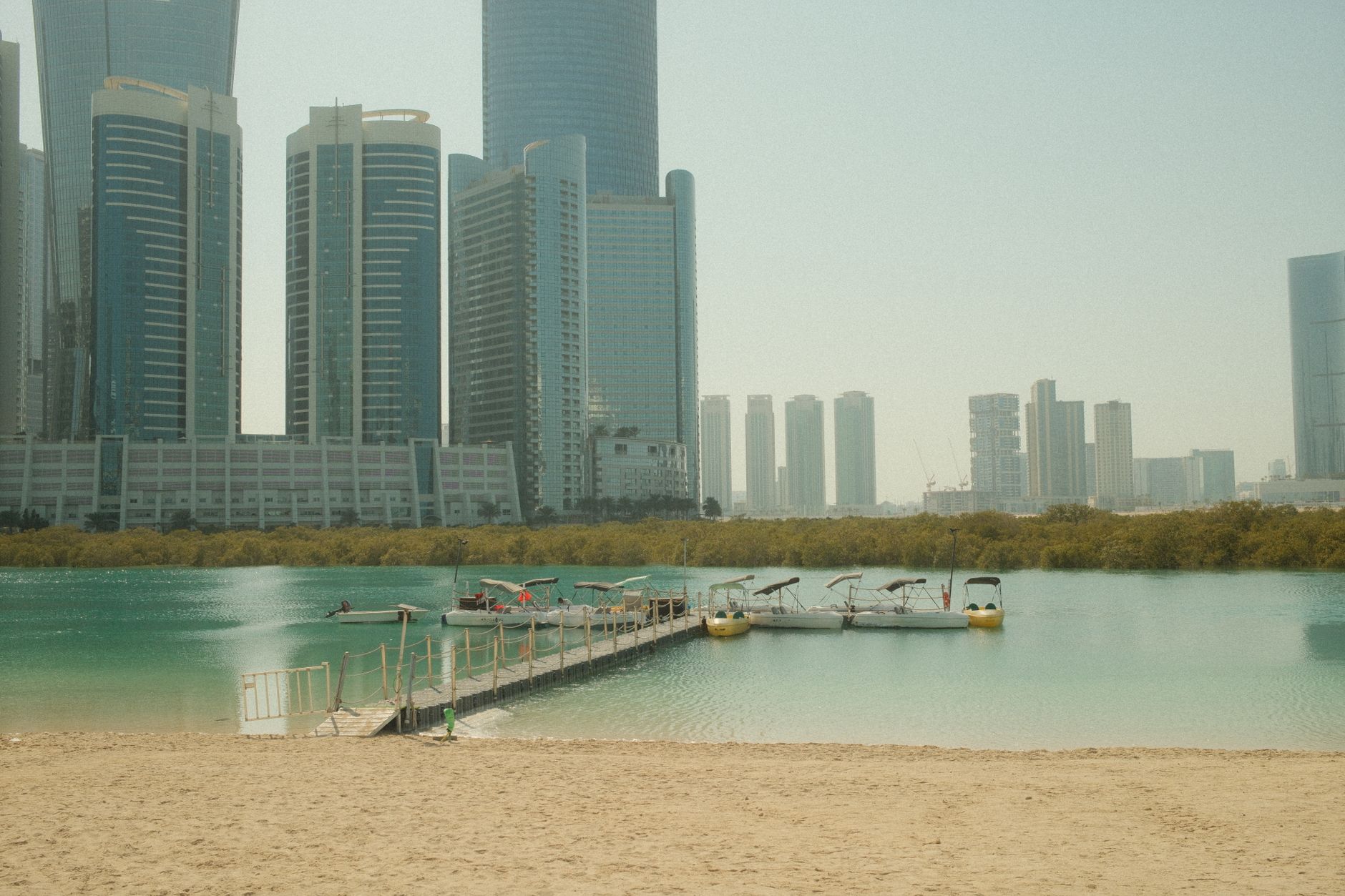
Saadiyat’s former public beach now goes by the name Soul Beach. Entry costs about 25 dirhams, with sunbeds and umbrellas paid separately. Everything you need is there: showers, changing rooms, a cafe, and paddleboard rental. Waves run higher here than on the Corniche. Keep a closer eye on kids in the water – adults will enjoy the swim all the more.
Beach Clubs and the Cultural District
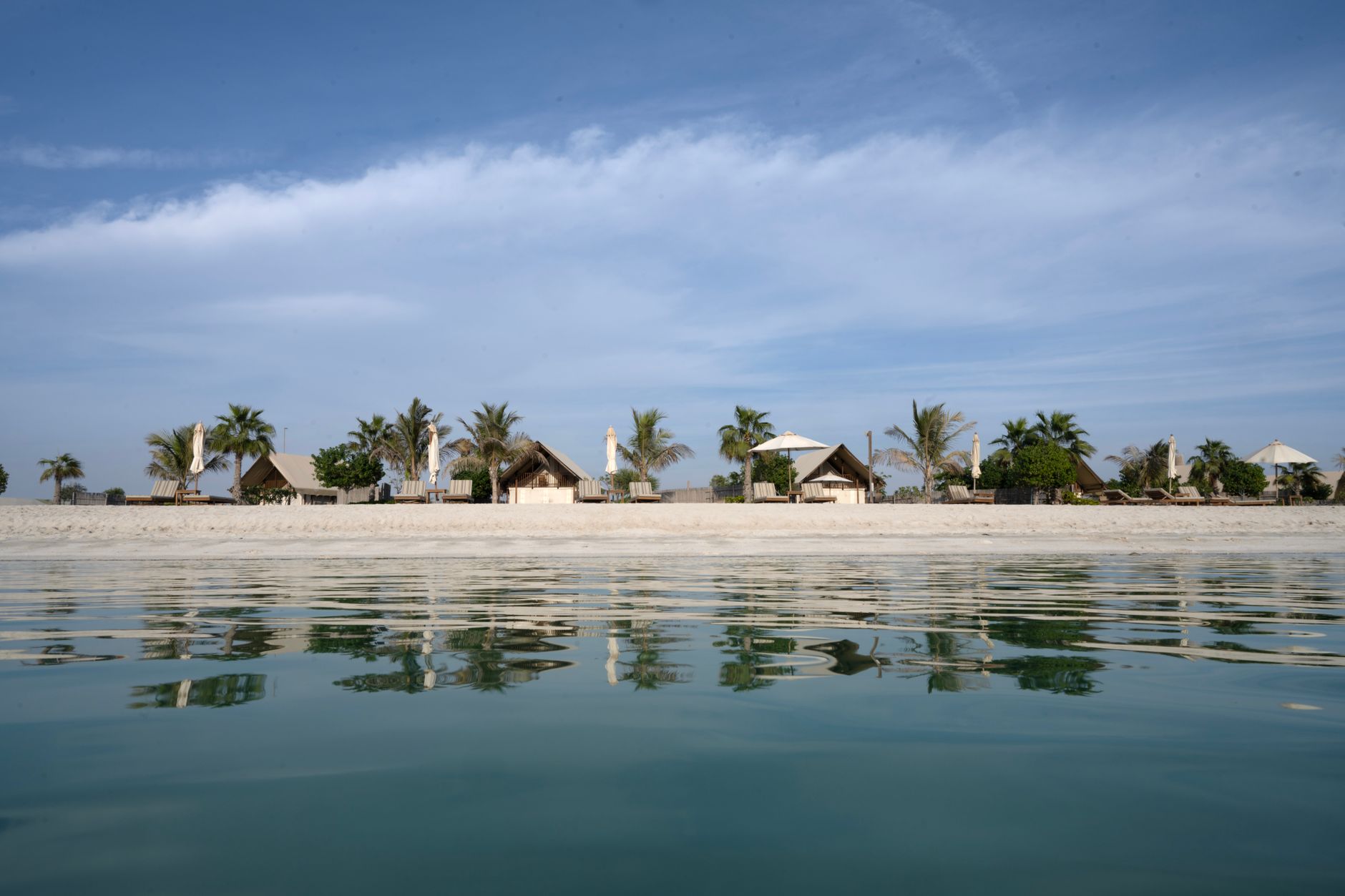
Saadiyat Beach Club is the expensive option, with a pool, a spa, and a restaurant. A day pass runs 200-400 dirhams depending on the day, and weekends sit at the top of that range. Book ahead: in high season the sunbeds are gone by lunchtime.
After the beach, head to the cultural district next door. Louvre Abu Dhabi is a ten-minute drive away, and its dome over the water looks best at sunset. Louvre Abu Dhabi tickets are sold online – the queue at the ticket desk eats half an hour on busy days.
Yas Beach Next to the Theme Parks
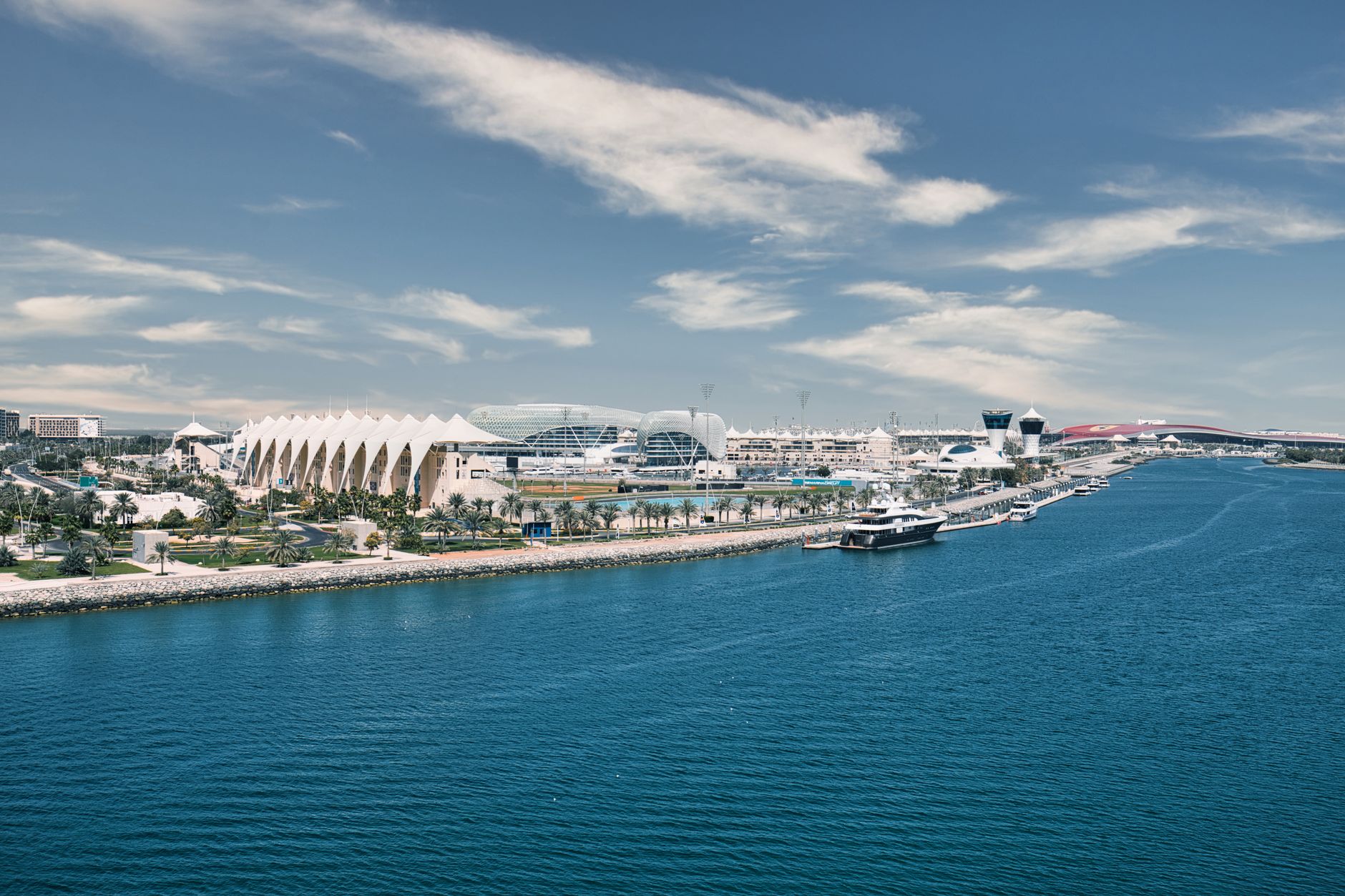
Yas Island is known for Ferrari World and its water park, but the beach deserves attention too. Yas Beach hides in the southern part of the island among the mangroves, and it draws fewer tourists than you’d expect.
Weekday entry costs about 50 dirhams; weekends run roughly double, with a sunbed included in the price. A bar and a restaurant operate on site, and a DJ plays on weekend afternoons. The crowd skews young.
The lagoon stays calm, and the depth builds slowly. Kayaks launch from the mangrove side – at dawn, rays glide up to the boats and herons hunt over the water.
For a night on the island, the W Abu Dhabi above the Formula 1 marina works well. A free shuttle runs to the beach, and Ferrari World is ten minutes away by taxi; Ferrari World tickets are sold online in advance, which skips the line at the gate.
Al Bateen, Hudayriyat, and Hotel Beaches
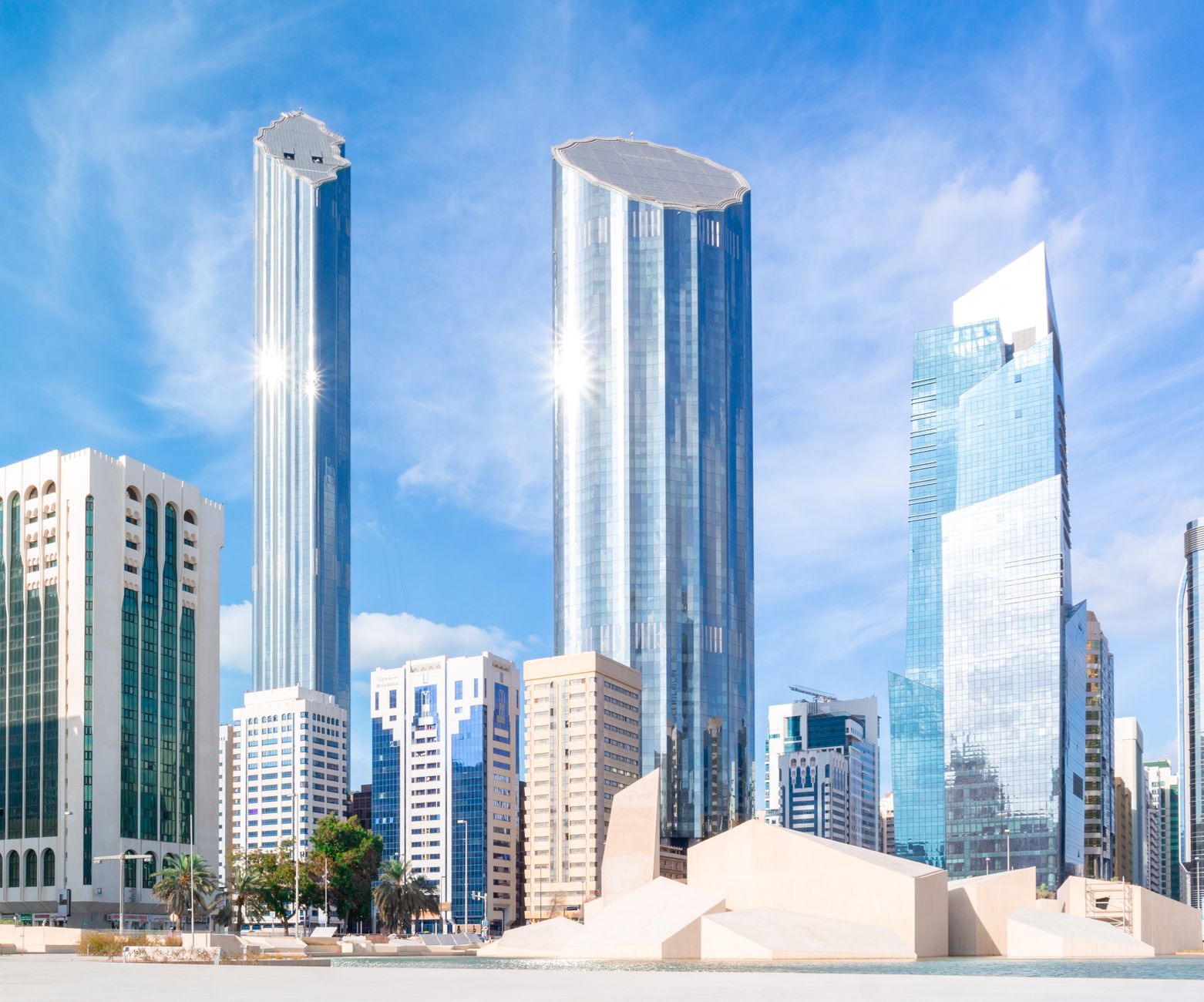
Beyond the headline spots, the city has plenty of shoreline without the crowds. Some beaches opened only recently, and tourists haven’t caught on yet.
Where Locals Swim
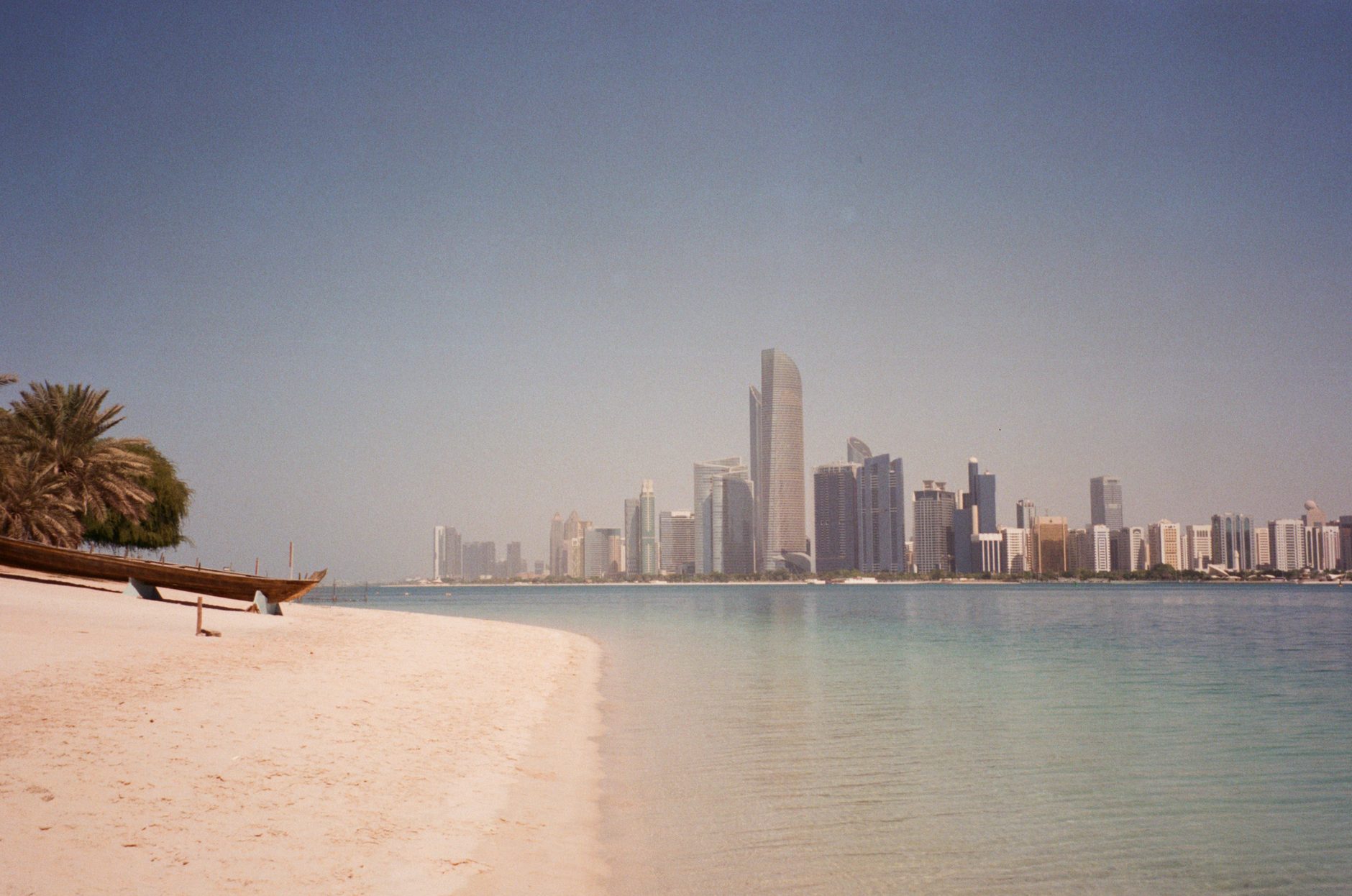
Al Bateen lies in the western part of the city, facing Hudayriyat Island. Entry is free. Swimming conditions are gentle: shallow, warm, no waves. Families grill right on the sand in the evenings, cafe prices are half of what tourist areas charge, and the mood stays neighborhood-casual.
Hudayriyat itself has been turned into a sports island over the past few years. Marsana Beach is free to enter and sits next to cycling tracks, a climbing wall, and outdoor workout areas. After dark the waterfront lights up, and food comes from a row of trucks.
Hotel Day Passes
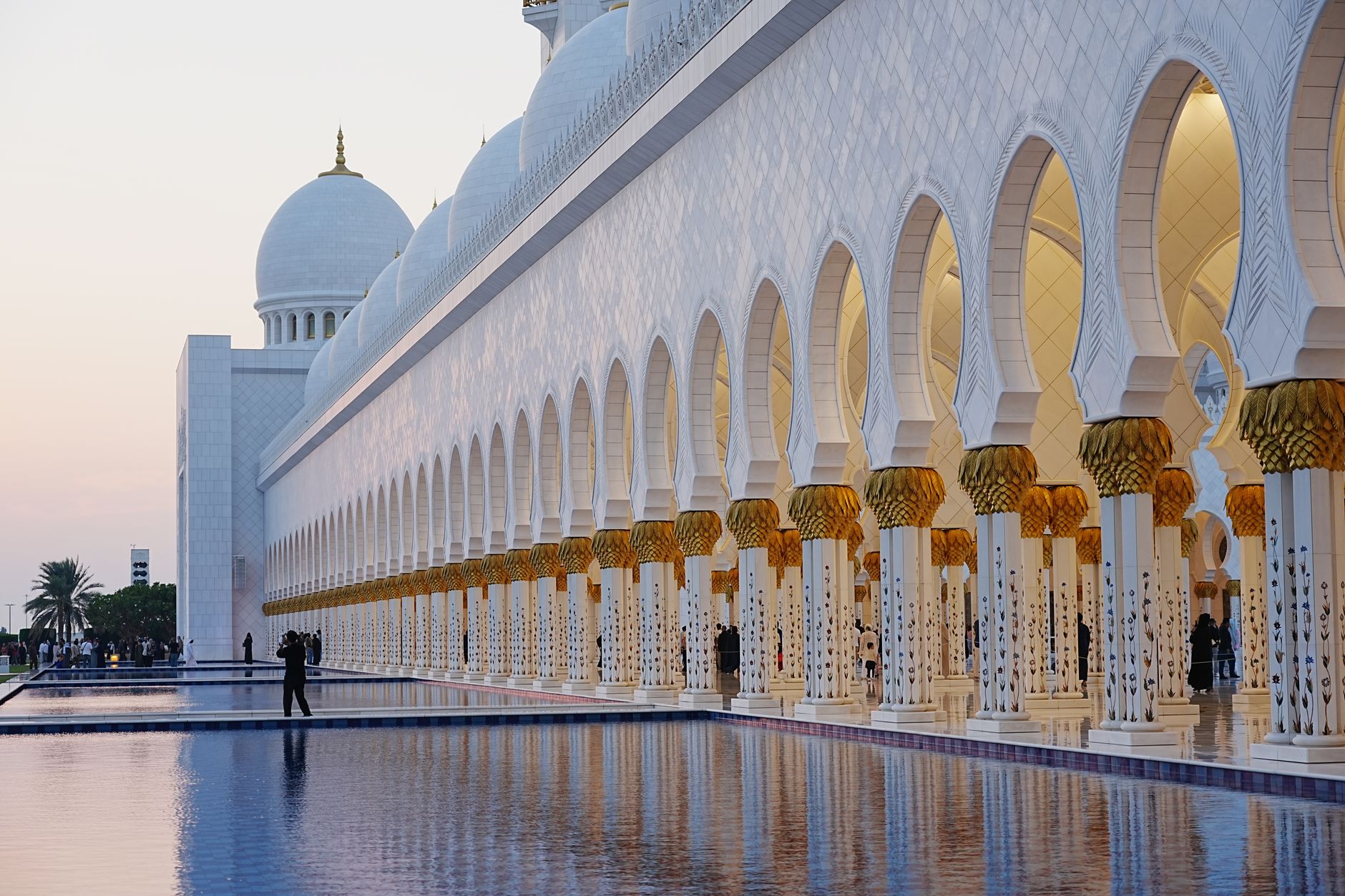
Many five-star hotels sell day access to their beaches. It works simply: pay the entrance fee and get a sunbed, a towel, and pool access on top. Some hotels credit part of the fee toward your restaurant bill.
The beach at Emirates Palace is a kilometer of sifted sand facing the Etihad Towers. It’s pricey, but quiet even at the height of the season. Families are usually pointed toward Al Raha Beach Resort on the road to Yas Island: the lagoon there is shallow, warm, and fully sheltered from waves.
When to Go and What to Expect
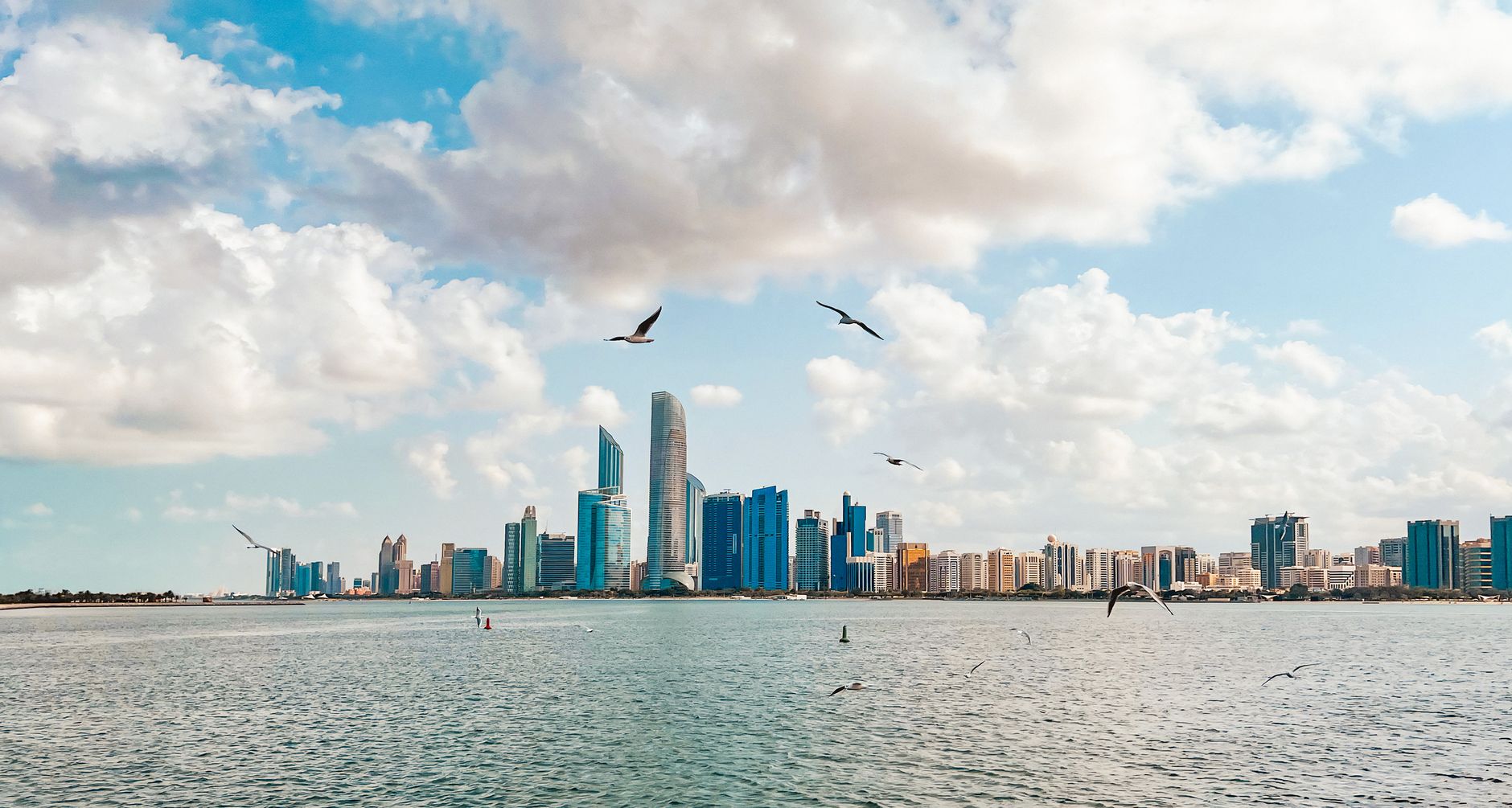
Beach life in Abu Dhabi follows the calendar more than the brochures let on. January and August feel like different countries here.
Swimming Season Month by Month
Comfortable swimming lasts from October through May. In winter the water holds at 22-24 degrees Celsius, and daytime air reaches 25-28. Swimming in January takes no courage at all – half of Europe is tanning on these beaches.
Summer swings to the other extreme. Air temperatures climb past 40 degrees, and the water heats up to 33 and stops being refreshing. From June to September locals come out after sunset, and visitors do better with a hotel pool that is chilled, which the big resorts advertise openly.
Direct flights to Abu Dhabi get pricier around the winter holidays – book two to three months out. If you’re based in Dubai, the capital’s beaches are about ninety minutes away by car or by the intercity bus E100 from Al Ghubaiba, and a day tour of Abu Dhabi from Dubai covers the mosque, the Corniche and the museum on the way.
Rules and Dress Code
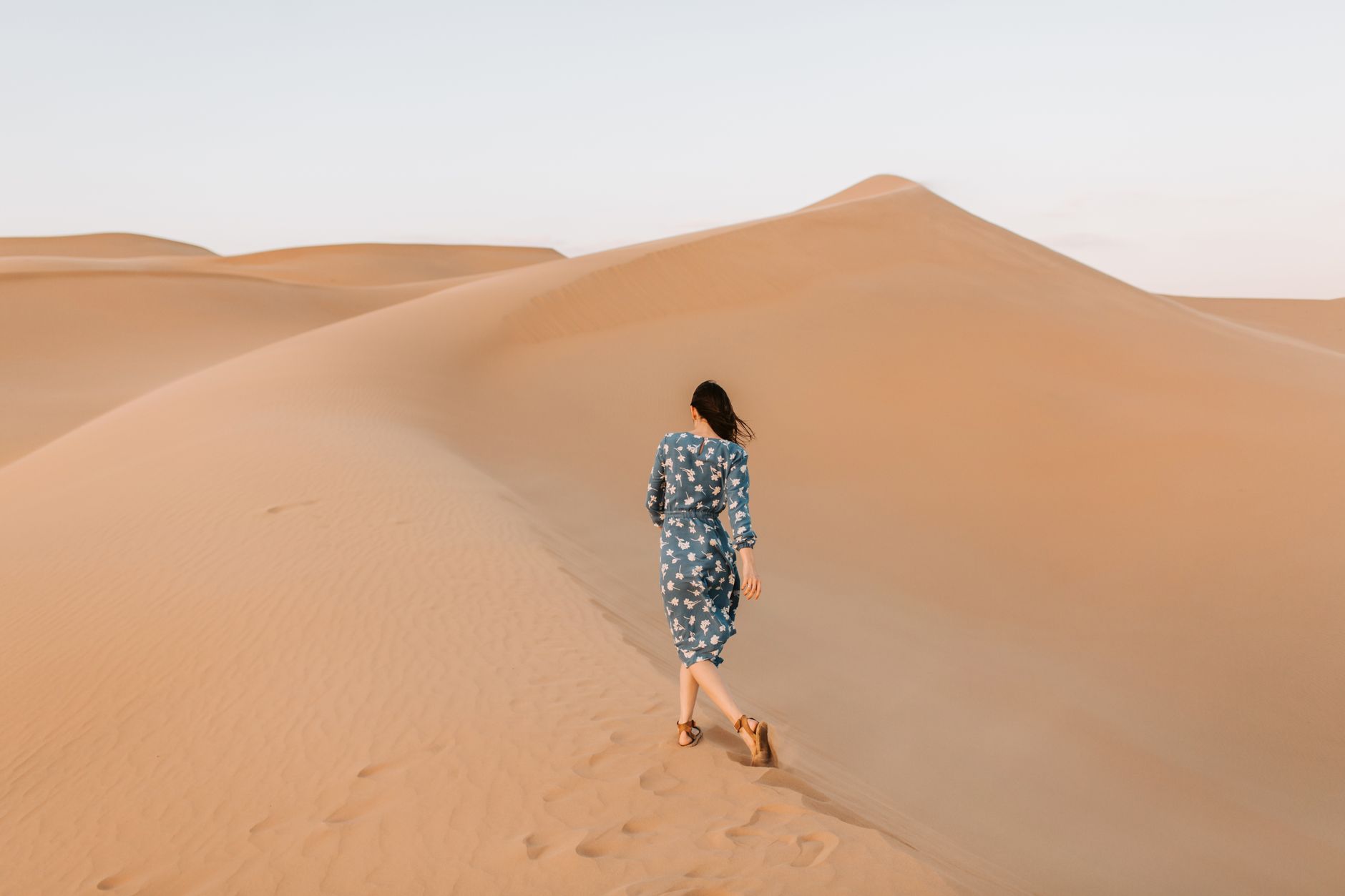
Regular swimwear is fine on the beaches; going topless is banned everywhere. Away from the sand, covering shoulders and knees is the norm – at minimum, throw on a wrap for the walk to the car. Alcohol is sold only in licensed hotel and club bars, and bringing your own is not allowed.
Don’t photograph strangers without asking, especially women in traditional dress. Littering on the beach carries a fine starting at 500 dirhams, and the patrols do write tickets.
Pack high-SPF sunscreen and water shoes. The sun in the Emirates is harsh even in winter, and an hour is enough to burn. Beyond that, the beaches here ask very little of you: show up, pay a small fee, and spend the whole day by warm water.


