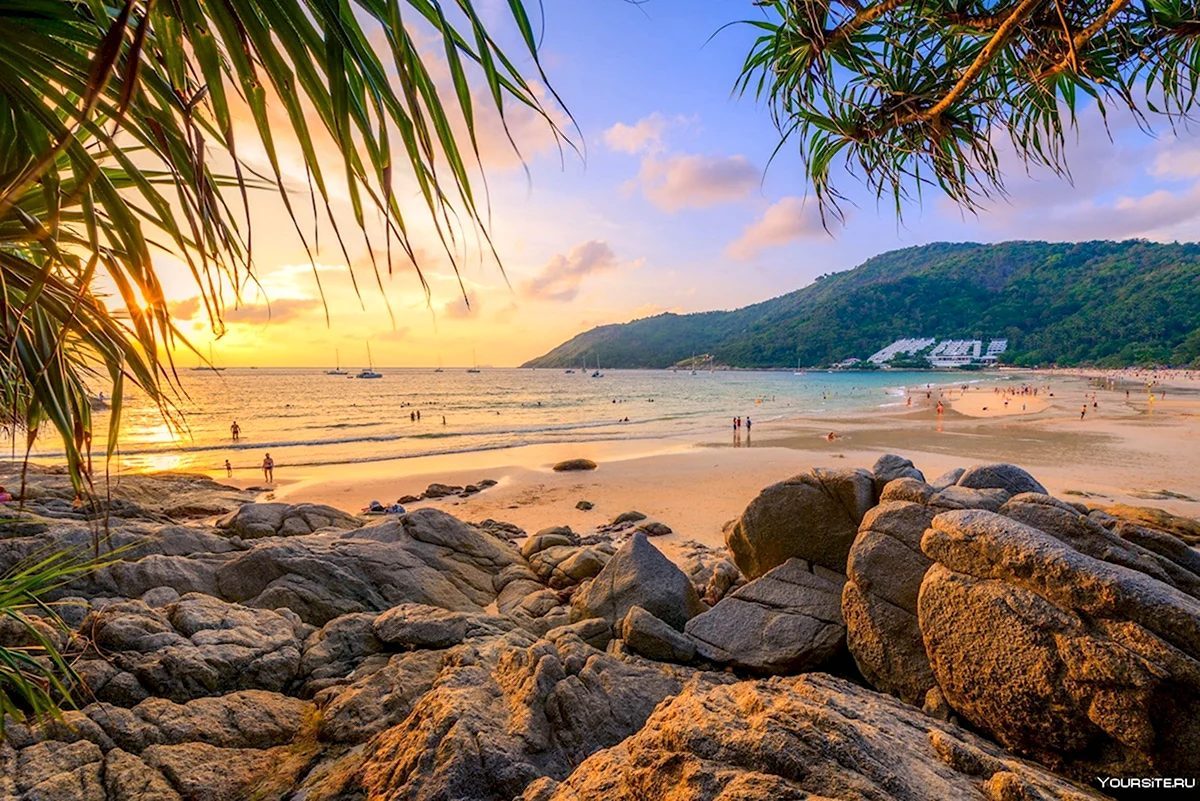
Phuket is Thailand’s largest island, hanging off the southwest coast on the Andaman Sea and joined to the mainland by a bridge. It has a big international airport, a 40-kilometre west coast of beaches, an old town built by Chinese tin merchants, and two of the country’s best-known boat trips on its doorstep. It is also the island people complain about most, usually because they never left Patong. This guide covers the beaches worth choosing between, what to see when you tire of the sand, the food, and the practical side of getting around. Most visitors fly in directly, and our Phuket flight schedule lists the direct routes and baggage rules.
In a nutshell:
To see how the island’s hotels rate against Bangkok, Chiang Mai and Samui, take a look at our comparison of guest scores in Thai cities.
Where to stay
- Patong: nightlife, Bangla Road, the biggest choice of hotels and the highest prices for a taxi out.
- Karon: a long, calmer beach ten minutes south of Patong, the usual choice for families.
- Kata: two smaller bays with surf in the monsoon months and flat water in winter, good for families and surfers.
- Nai Harn: a quiet bay at the southern tip with one big resort and a lake behind the beach, the pick for couples.
- Phuket Town and Siray: for the Old Town, the markets and cheaper rooms, with the beaches a 30-minute drive away. Courtyard by Marriott Phuket Town and Novotel Phuket City Phokeethra are the two reliable business-class hotels in town; The Westin Siray Bay Resort & Spa sits on Siray island across the bridge, with its own beach facing east.
- Coconut Island: Barcelo Coconut Island is the one resort on Koh Maphrao, reached by the hotel’s own boat from Laem Hin pier. Quiet, and a long way from everything.
Where to eat
- Street food: the Phuket Weekend Market (Naka Market) on Saturday and Sunday evenings near Central Festival, and Malin Plaza in Patong every night.
- Seafood: Kan Eang@Pier at Chalong and Laem Hin Seafood on the east coast, both on the water and both priced by weight.
- Fine dining: Blue Elephant in a colonial mansion in the Old Town and Boathouse Wine & Grill on Kata beach.
How to get around
- Taxis and tuk-tuks: fixed quotes rather than meters, so agree the fare first. Grab and Bolt work on the island and are usually cheaper than the street price.
- Scooter rental: 200 to 300 baht a day, helmet and an international permit with the motorcycle category required. The hill roads between Patong and Karon catch out beginners every week.
- Car rental: from about 900 baht a day, the sensible option for families and for reaching the north of the island.
- Buses: the Smart Bus runs from the airport down the west coast to Rawai for 100 baht, and blue local buses link the beaches with Phuket Town for 30 to 50 baht.
Phuket’s Beaches
Almost all the beaches are on the west coast, strung along one road from Mai Khao by the airport down to Rawai at the southern tip. The further north you go, the emptier they get. The four below are the ones most people choose between, and they are close enough that you can try them all in a week. Red flags on the beach between May and October mean rip currents, and lifeguards enforce them.
1. Patong Beach
Patong is Phuket’s most famous beach, and the nightlife is the reason. The beach runs for about 3 kilometres along a wide bay, with a beach road of hotels and shops behind it and Bangla Road cutting inland from the middle.
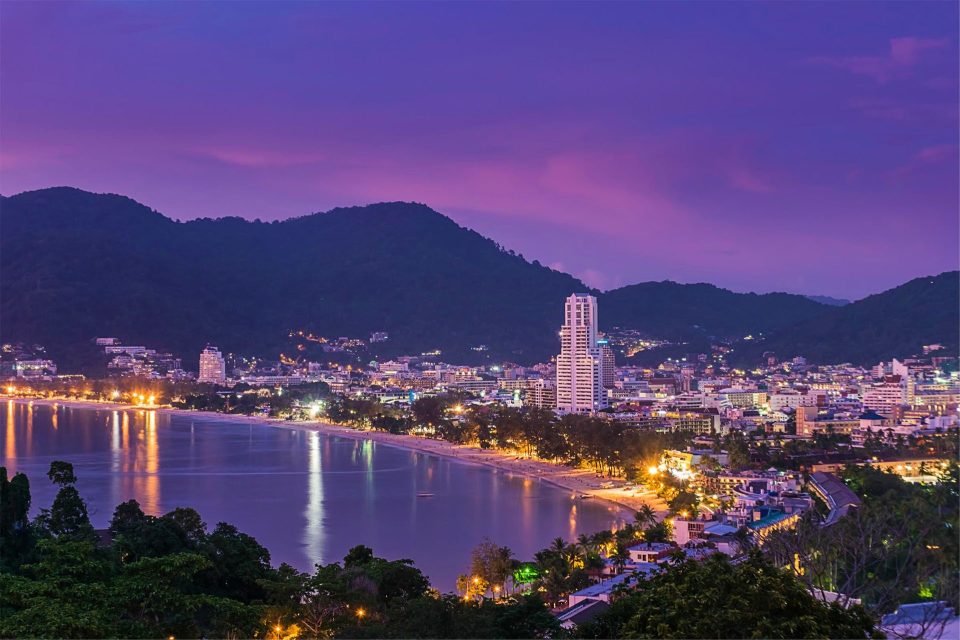
- Nightlife: Bangla Road closes to traffic at dusk and turns into a 400-metre strip of bars, clubs and touts. Beer on the street costs 100 to 150 baht; inside the clubs it doubles.
- Water sports: parasailing for about 1,500 baht a flight, jet skis by the half hour, and dive shops that run boats to Racha and the Similans.
- Shopping: Jungceylon mall for air conditioning and fixed prices, the OTOP market and Banzaan fresh market for everything else.
2. Karon Beach
Over the hill south of Patong, Karon is the island’s second most popular beach and a different world. Three kilometres of sand with no road on it, a slow main street behind, and hotels set back far enough that the beach itself stays quiet.
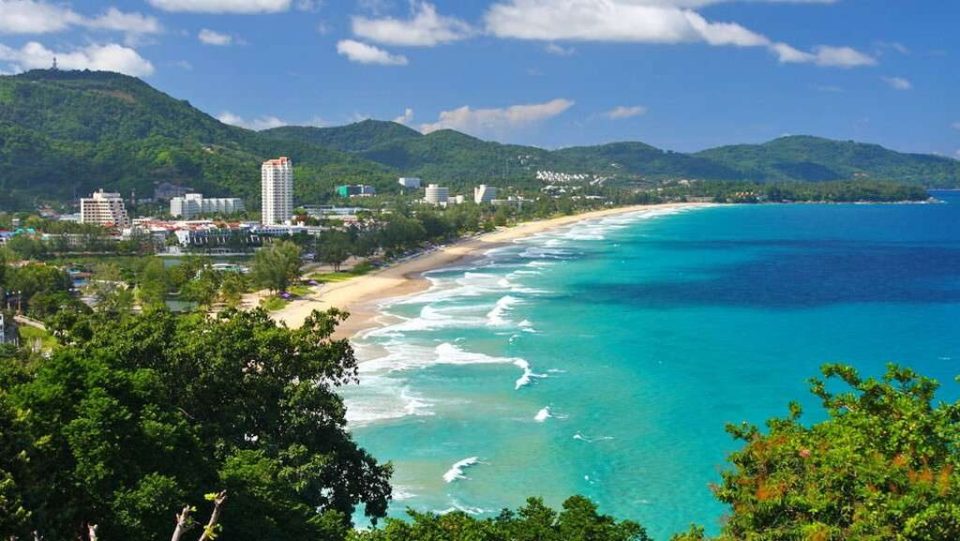
- Space: the beach is long enough that even in January you can walk five minutes and have 50 metres to yourself. The sand squeaks underfoot near the northern end, a local oddity.
- Families: the water is shallow in the dry season, restaurants along the beach road serve pasta as readily as curry, and Karon Circle has a night market on Tuesdays and Fridays.
- Snorkelling: the rocks at the southern end, towards Kata, have fish close to shore when the sea is flat. Do not expect Similans-grade coral.
3. Kata Beach
Kata is two bays: Kata Yai, the bigger one with the surf schools and the Club Med, and Kata Noi, a smaller cove over a headland with a handful of hotels and no town behind it. Between them is Phuket’s most relaxed beach village.
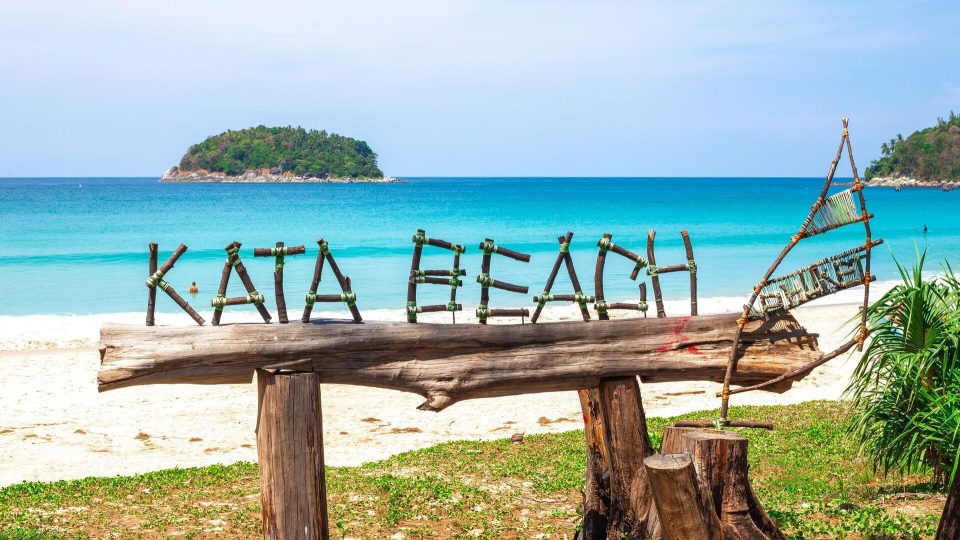
- Surfing: Kata Yai has the island’s most consistent beach break from May to October. Board hire is 300 baht an hour and a lesson about 1,500. In the dry season the sea is flat and the boards go into storage.
- Swimming: from November to April the water at Kata Noi is as calm and clear as anywhere on the island, with a small reef at the northern end.
- Evenings: the village has enough restaurants, bars and massage shops for a fortnight without feeling like Patong. Karon Viewpoint, the postcard shot of three bays, is a ten-minute ride up the hill.
4. Nai Harn Beach
Nai Harn sits at the southern tip of the island, a short bay closed in by hills with a lake and a monastery behind it. It is the beach Phuket residents go to on a Sunday, which tells you most of what you need to know.
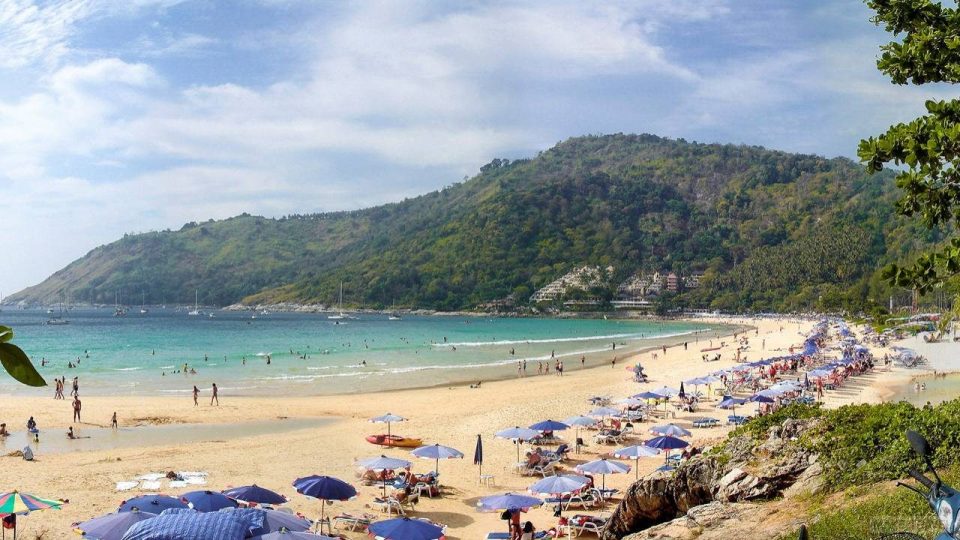
- Quiet: one large resort, a few small guesthouses in the village, and no beach road. The parking area fills by mid-morning at weekends, so come early or late.
- Water: clear and calm in the dry season, with a steep drop-off that makes it good for swimming. In the monsoon the waves here are among the biggest on the island, and the red flags mean it.
- Nearby: Promthep Cape for the sunset crowds, Windmill Viewpoint above Ya Nui beach for the same view with fewer people, and Rawai fishing village for dinner.
Cultural and Historical Attractions
Phuket got rich on tin in the 19th century, and the money came mostly from Chinese immigrants who built the shophouses and mansions of the Old Town. The temples came earlier and the Big Buddha much later, in the 2000s. All three sights below are in the south of the island and fit into one day with a scooter or a driver.
1. Phuket’s Big Buddha
A 45-metre white marble Buddha sits on the ridge of Nakkerd Hill between Chalong and Kata, visible from most of the south of the island. Entry is free and the site opens from 6 am to 7 pm. The road up is steep and winding, about 6 kilometres from the Chalong turn-off, and a half-day tour to the Big Buddha usually pairs it with Wat Chalong and a viewpoint.
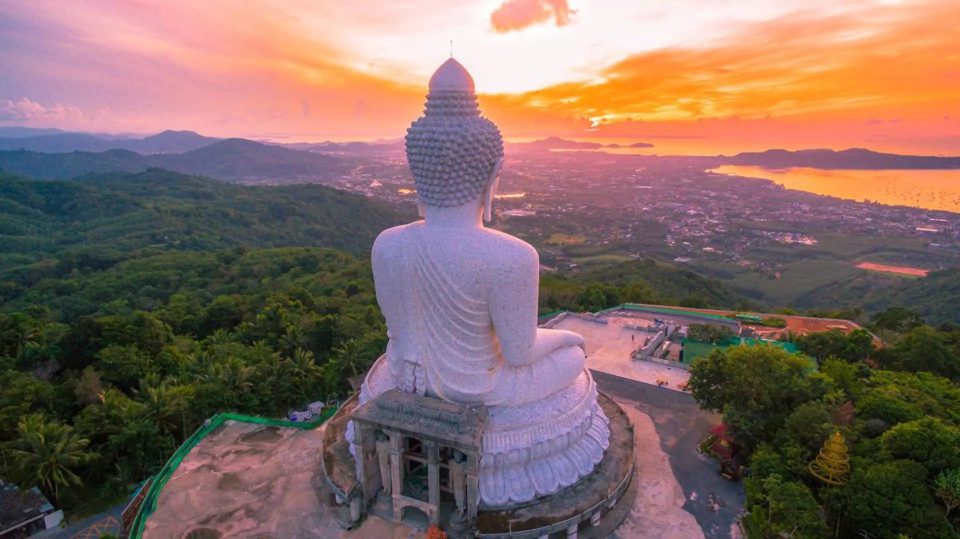
- Views: from the platform you see Chalong Bay to the east, Kata and Karon to the west, and on a clear day the islands towards Krabi.
- Dress code: shoulders and knees covered. Sarongs are lent free at the entrance, and there is a shrine and a smaller brass Buddha behind the main statue.
- Timing: the site is still being finished, funded by donations, and the marble tiles are laid one at a time by visitors who pay 300 baht to write a name on one. Go before 9 am or after 4 pm to avoid the coach groups.
2. Wat Chalong
Wat Chalong is the largest and most visited of Phuket’s 29 temples, on the main road between Phuket Town and Rawai. It is a working temple with a steady flow of local worshippers, and the firecrackers going off in a brick kiln by the entrance are people giving thanks for answered prayers.
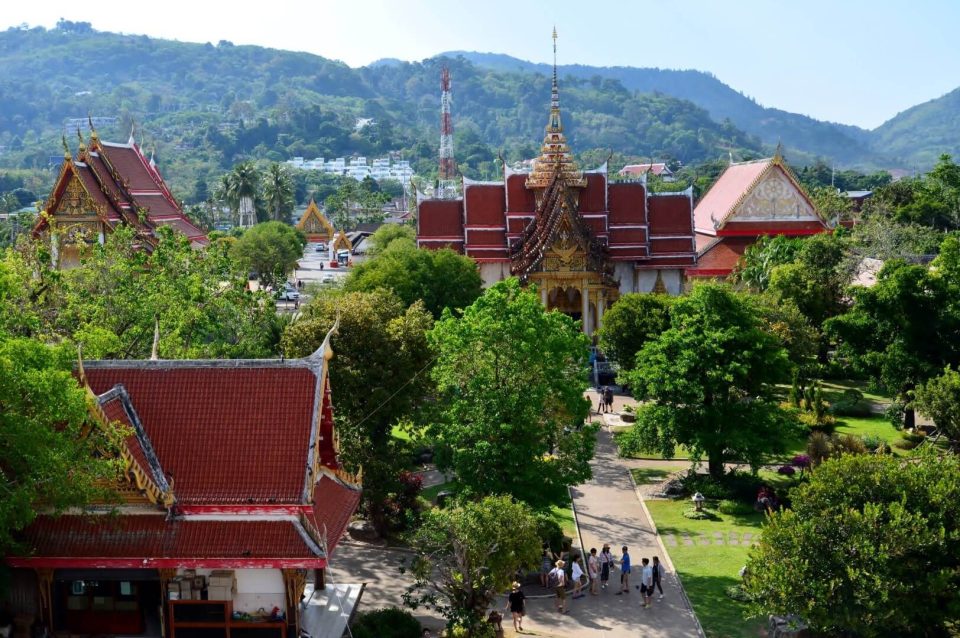
- Architecture: a three-storey Grand Pagoda from 2001 with murals of the Buddha’s life on every wall and a relic said to be a fragment of his bone on the top floor.
- History: the temple’s fame rests on two monks, Luang Pho Chaem and Luang Pho Chuang, who treated the wounded with herbal medicine during the 1876 tin miners’ rebellion. Their statues are in the old sermon hall.
- Practical: free entry, open 7 am to 5 pm, shoes off in the halls. It is 10 minutes from Chalong pier, so it combines well with a boat day.
3. Phuket Old Town
Phuket Town is where the island stops being a resort. A grid of a dozen streets holds the Sino-Portuguese shophouses of the tin era, pastel-painted and mostly restored, with cafes, galleries and small hotels inside them. It is 40 minutes from Patong by car and a good half-day, or an evening if you time it for the Sunday market.
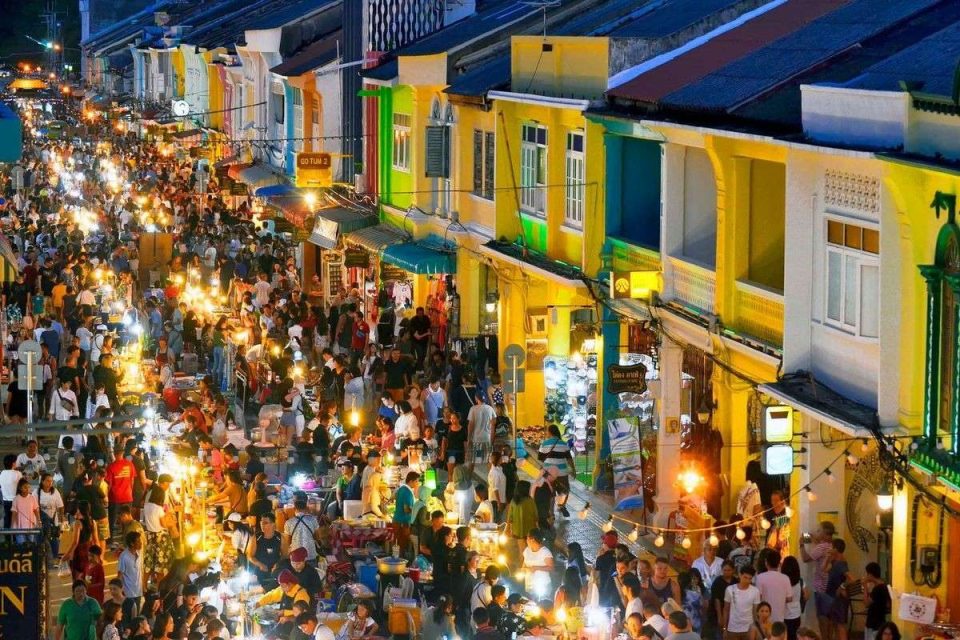
- Architecture: shophouses with arched five-foot walkways along Thalang, Dibuk and Krabi Roads, and the grander mansions of the tin barons on Krabi Road and around the Clock Tower.
- Sunday Walking Street: Thalang Road closes to traffic from 4 pm to 10 pm on Sundays for a food and craft market that is far better than anything on the beaches.
- Museums: the Thai Hua Museum in a former Chinese school on Krabi Road covers the immigrant story for 200 baht, and the Peranakan Phuket Museum on Chalong Road does the same with more costume and less text.
Natural Attractions
Phuket’s own nature is in the north, where the airport end of the island still has empty beaches and a patch of original rainforest. The scenery everyone comes for, though, is offshore: the limestone islands of Phang Nga Bay to the northeast and the Phi Phi group to the southeast. Both are day trips, and both are cancelled when the monsoon sea gets rough, so plan them for the start of your stay.
1. Sirinat National Park and Khao Phra Thaeo
Sirinat National Park runs along the northwest coast next to the airport and covers the beaches of Nai Yang and Mai Khao, 13 kilometres of sand with casuarina trees instead of hotels behind most of it. Khao Phra Thaeo, inland to the east, is the island’s last piece of virgin rainforest and the place with the waterfalls.
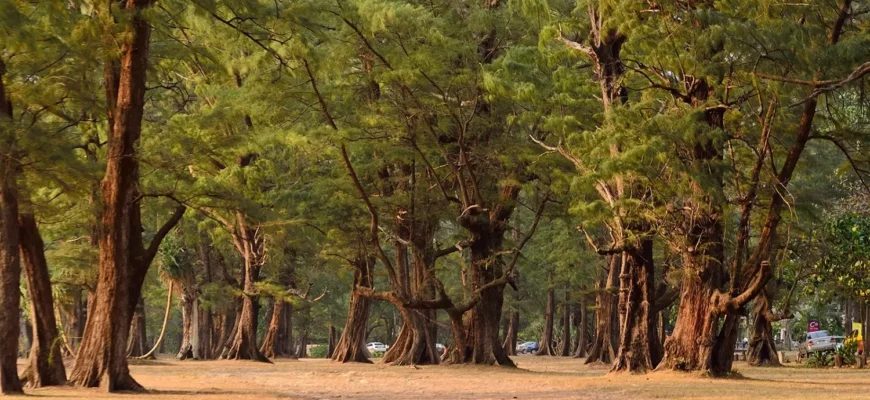
- Beaches and mangroves: Mai Khao is where sea turtles once nested and occasionally still do, and there is a mangrove boardwalk at the park headquarters. Nai Yang has a row of beach restaurants and the famous spot where planes land 50 metres over your head.
- Wildlife: Khao Phra Thaeo has the Gibbon Rehabilitation Project, which takes in gibbons rescued from the photo touts on the beaches. Visits are free, donations welcome, and you hear the gibbons before you see them.
- Waterfalls: Bang Pae, a 15-minute walk from the gibbon centre, and Ton Sai on the other side of the reserve. Both are worth it from June to November and dry to a trickle by February. The park fee is 200 baht for foreign visitors.
2. Phi Phi Islands
Phi Phi is 45 kilometres southeast of Phuket, about 45 minutes by speedboat or two hours by ferry from Rassada pier. A Phi Phi day trip by speedboat is the single most booked tour on the island, and for good reason.
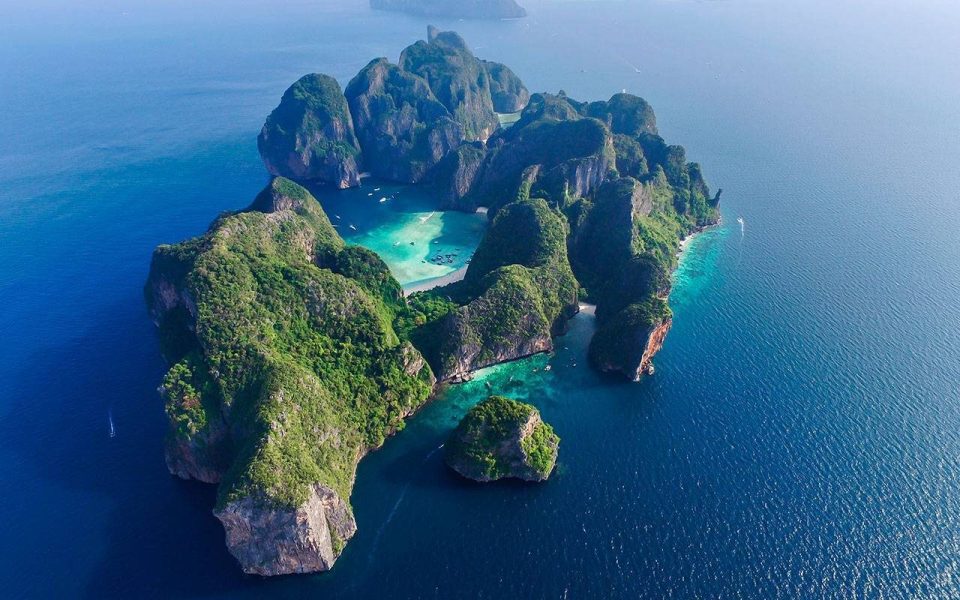
- Water: the snorkelling stops at Pileh Lagoon and Bamboo Island are the clearest water most people see in Thailand, with reef fish in the shallows and the odd blacktip reef shark.
- Beaches: Maya Bay on Phi Phi Leh, the beach from the film, reopened in 2022 with a limit on visitors and a ban on swimming; boats moor at the back and you walk across. Our guide to the islands near Phuket covers the quieter alternatives.
- Cost and timing: a group speedboat day runs 1,800 to 2,800 baht with lunch and the 400-baht national park fee. Boats leave at 8 am and are back by 5. From May to October the crossing can be rough enough to cancel, and the tour will not tell you until the morning.
3. Phang Nga Bay
Phang Nga Bay lies between Phuket and the mainland to the northeast, a sheltered sea studded with limestone towers up to 300 metres high. Because it is enclosed, the water stays flat when Phi Phi trips are cancelled, which makes it the better monsoon-season choice.
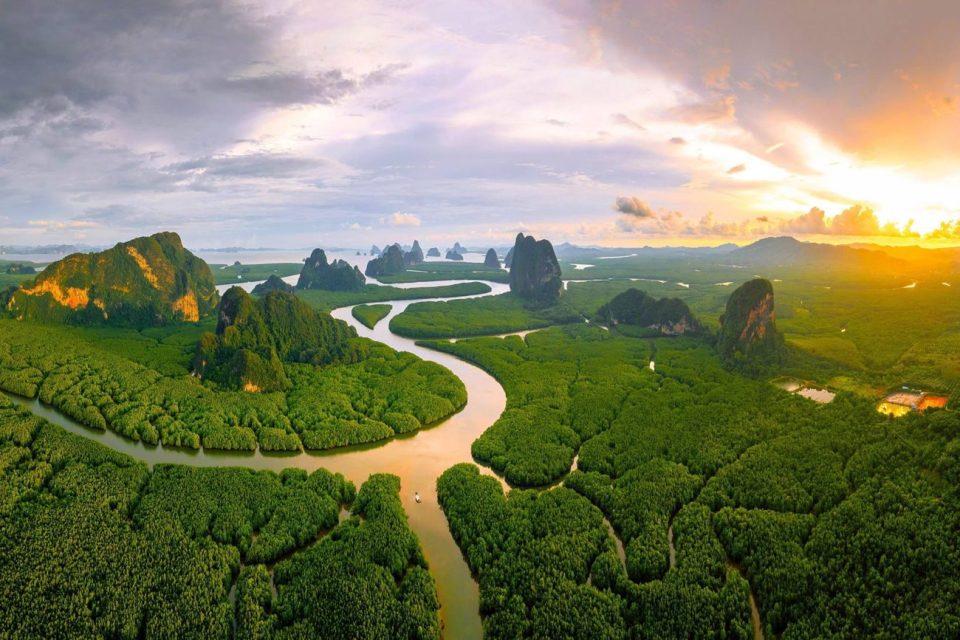
- Karsts: the cliffs rise straight out of green water, hollowed with caves at the waterline. The scenery is closer to Halong Bay than to anything else in Thailand.
- Sea caves: the standard tour puts you in an inflatable canoe with a paddler who takes you through tunnels into hidden lagoons (hongs) open to the sky. The tide decides which caves are passable, so tour times shift from day to day.
- James Bond Island: Khao Phing Kan, with its needle rock, appeared in The Man with the Golden Gun in 1974 and has had a souvenir market on the beach ever since. Twenty minutes is enough. Tours also stop at Koh Panyee, a Muslim fishing village built on stilts, for lunch.
Entertainment and Active Recreation
Beyond the beaches, Phuket has three activities that draw people for their own sake: diving, golf and elephants. Diving depends on the season, golf does not, and the elephant question depends on where you go.
1. Diving and Snorkeling
Phuket is the base for diving on Thailand’s Andaman coast. The reefs around the island itself are modest; the good sites are a boat ride away, and any diving or snorkelling trip from Chalong pier will spend more time getting there than in the water.
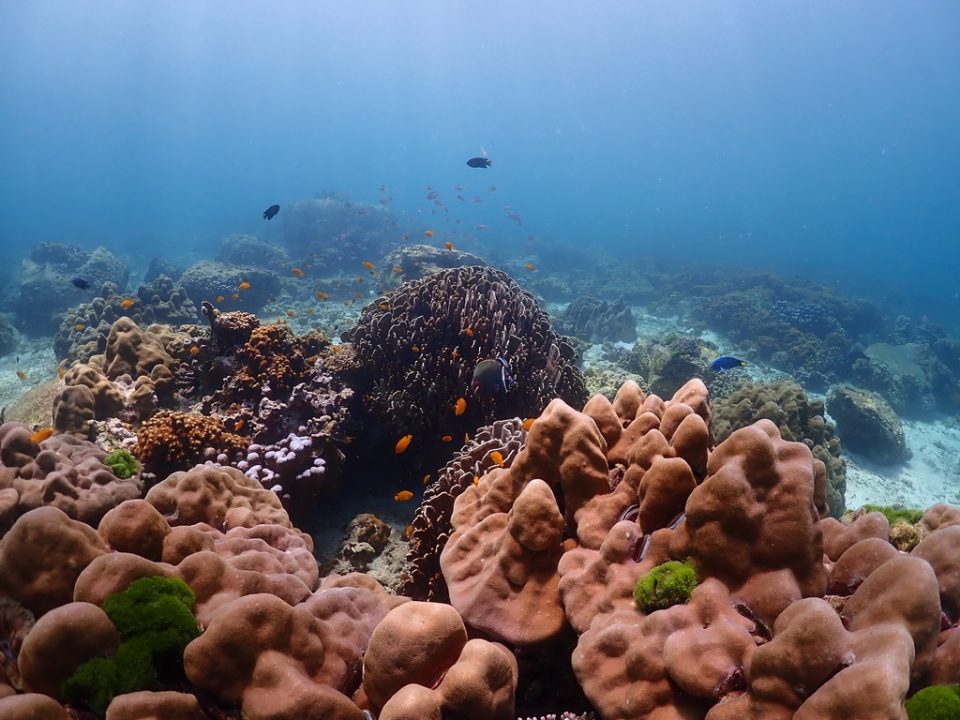
- Day sites: Racha Yai and Racha Noi, an hour south, have clear water and easy depths for beginners. Shark Point and Anemone Reef to the east are the best of the near sites, with leopard sharks on the sand.
- Dive centres: dozens along Chalong, Kata and Patong. A two-dive day trip costs 3,500 to 4,500 baht with gear; an Open Water course runs 12,000 to 15,000 over three or four days.
- Similan Islands: the best diving in the country, 90 kilometres northwest and reachable on liveaboards or long day trips from Khao Lak. The park is open only from mid-October to mid-May.
2. Golf
Phuket has half a dozen full-length courses, most of them built on old tin mines, which explains the lakes. It is one of the few places in Asia where you can play in the morning and be on a beach by two.
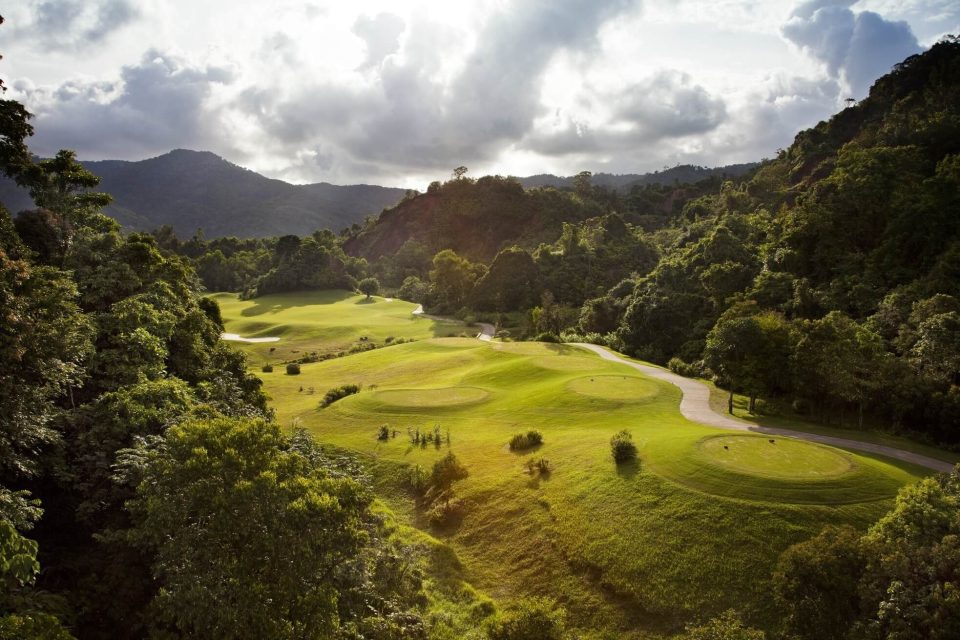
- Courses: Blue Canyon Country Club near the airport has two championship courses and has hosted the Johnnie Walker Classic twice. Laguna Phuket Golf Club at Bang Tao and Red Mountain at Kathu are the other two most people play.
- Cost: green fees run 3,500 to 6,500 baht for 18 holes in high season, with a compulsory caddie at about 400 baht plus tip. Twilight rates after 2 pm knock a third off.
- Lessons: every club has a driving range and pros who teach by the hour, and the low season from May to October is when rates and tee times are easiest.
3. Elephant Sanctuaries
Elephants are sold on every corner of Phuket, and the difference between a sanctuary and a camp with a new sign is not always obvious from the brochure. A genuine elephant sanctuary visit has no riding, no shows and no hooks, and the elephants decide how close they come.
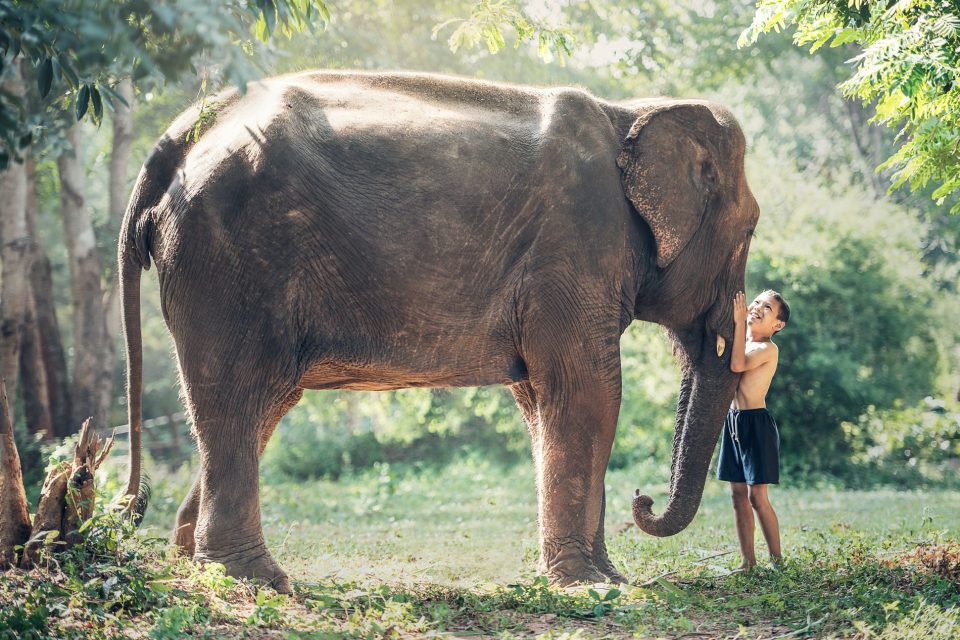
- What changed: most of Phuket’s elephants spent decades carrying tourists on howdahs. Over the last ten years the better camps have retired the saddles and switched to feeding and walking programmes, partly because Western tour operators stopped selling rides.
- Where: Phuket Elephant Sanctuary near Khao Phra Thaeo was the first on the island to go ride-free and remains the reference point. Its morning programme is about 3,000 baht and you watch from walkways rather than touch the animals.
- How to check: look for chains in the photos, ask whether bathing is on offer (the best places have stopped it), and count the elephants per visitor. Ten guests to one elephant is a camp, whatever the name.
Cuisine and Restaurants
Phuket has its own cuisine, a southern Thai and Hokkien Chinese mix that you will not find in Bangkok: Hokkien noodles, moo hong pork belly stew, and the crab curry called gaeng poo bai cha-plu. The Old Town is the place to find it. The beaches do seafood and tourist Thai, some of it very good, at two to three times Old Town prices.
1. Seafood Restaurants
Seafood is the island’s default dinner. Restaurants on every beach display the catch on ice out front, you point, they weigh and grill, and the bill comes by the kilo.
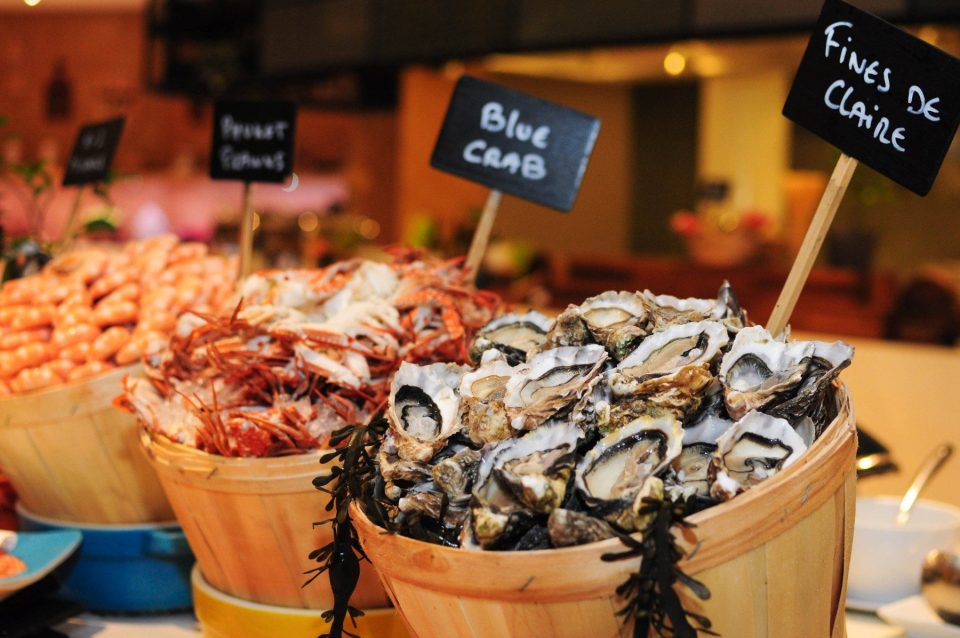
- Prices: check the per-kilo price on the card before you choose; tiger prawns run 800 to 1,200 baht a kilo, a whole snapper about 600, and a lobster whatever they think you will pay. Ask them to weigh it in front of you.
- Where: Kan Eang@Pier at Chalong has been on the water since 1973 and is the safe choice for a group. Laem Hin Seafood on the east coast near Coconut Island pier is where the Thai families go, with the same fish and half the bill.
- Rawai: at the fishing village on the southern tip you buy the fish from the market stalls and carry it across the road to a restaurant that cooks it for about 100 baht per kilo. The best-value seafood on the island.
2. Street Food
Street food on Phuket lives in the markets rather than on the pavement, and the markets are in and around Phuket Town rather than on the beaches. A full dinner from the stalls costs 150 to 250 baht.
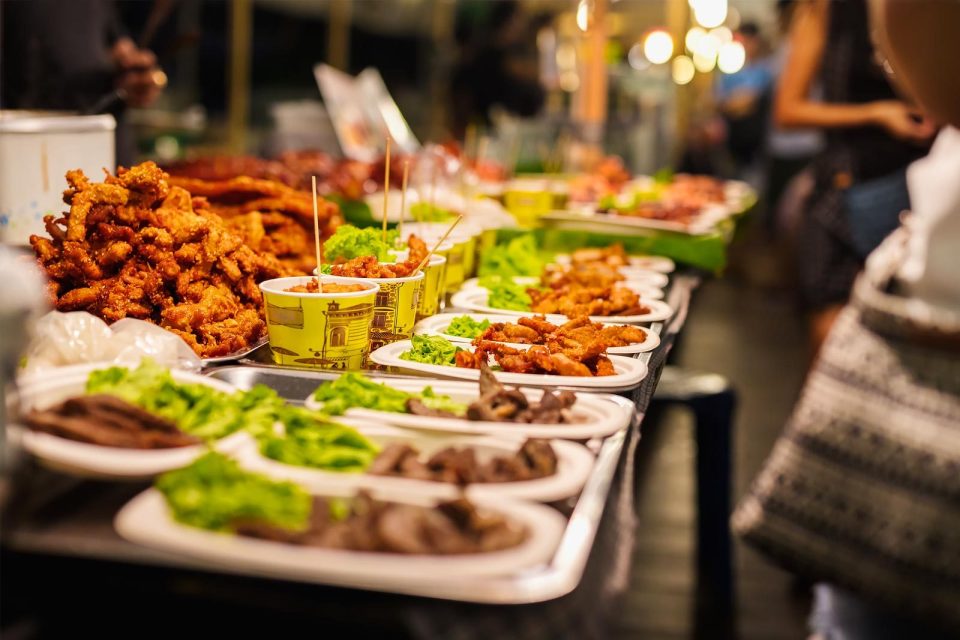
- Markets: the Phuket Weekend Market (Naka) on Saturday and Sunday from 4 pm is the biggest, half food and half clothes. Chillva Market on Yaowarat Road runs Tuesday to Saturday with a younger crowd, and the Sunday Walking Street on Thalang Road is the prettiest.
- Dishes: Hokkien mee (yellow noodles with pork and seafood), o-tao (oyster omelette with taro), satay, roti with curry from the Muslim stalls, and mango sticky rice from March to June when the mangoes are in season.
- Breakfast: dim sum is a Phuket Town habit inherited from the Hokkien immigrants. The shops open at 6 am and are sold out by 9; a plate costs 15 to 25 baht.
3. Fine Dining
The island’s top end is spread between the Old Town mansions and the resort restaurants on the west coast, and a set dinner for two with wine runs 5,000 to 10,000 baht.
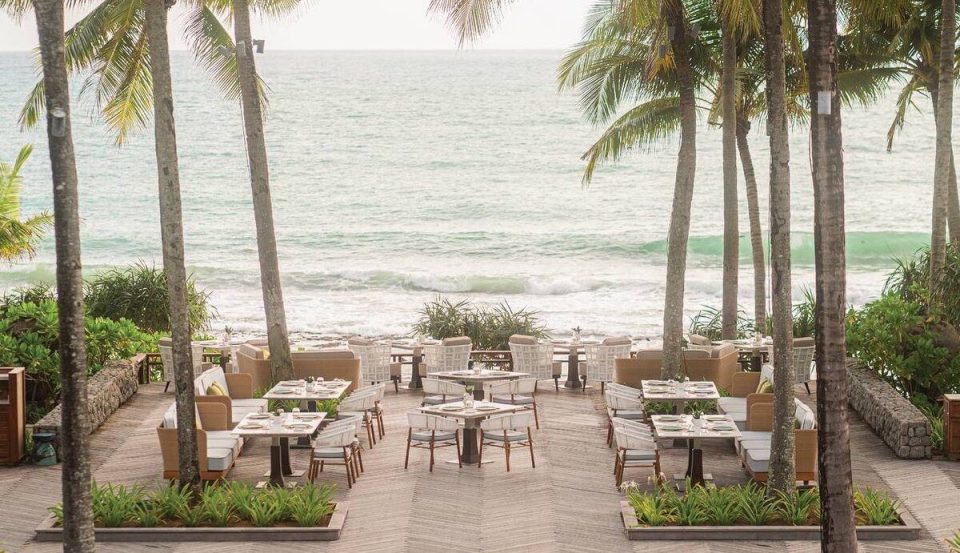
- Restaurants: Blue Elephant occupies a 1903 governor’s mansion in the Old Town and serves royal Thai cooking with a cooking school upstairs. Boathouse Wine & Grill on Kata beach has been the island’s special-occasion table since the 1980s. Pru at Trisara in the north holds Phuket’s Michelin star.
- Wine: Thailand taxes imported wine heavily, so a bottle that costs $15 at home is $50 on a Phuket list. The Boathouse cellar is the deepest on the island and runs tastings on request.
- Booking: reserve a week ahead for sunset tables in high season, and ask for the sea-facing side; the difference between tables at the same restaurant is the view, not the food.
Two last practical points. The dry season runs from November to April, and that is when the boat trips run reliably and the west-coast sea is safe to swim; from May to October expect afternoon rain, red flags on the beaches, and hotel rates about a third lower. And give the Old Town at least one evening. Most of what people dislike about Phuket is Patong, and most of what makes it worth the flight is everywhere else.


