
Chongqing is built on hills where the Yangtze meets the Jialing, and the result looks like no other Chinese city. Monorail trains run through the middle of an apartment block. A street-level exit from one building turns out to be the twentieth floor of another. Two days are enough to see the main districts, ride the cable car across the river and eat two proper hotpot dinners, but only if the hotel sits close to a metro line.
Below is a weekend plan that works for a first visit. Day one covers the central peninsula, Jiefangbei and Hongyadong, plus an evening cruise. Day two goes to the old town of Ciqikou, the cableway, Eling Park and the Liziba station. Prices and metro notes are at the end.
How to Get to Chongqing and Where to Stay

Chongqing Jiangbei International Airport (CKG) has direct flights from most big Chinese cities and a handful of international routes, mostly to Southeast Asia, Seoul and Tokyo. From Europe or North America, the usual path is a connection in Shanghai, Beijing, Guangzhou or Chengdu. Flights from Shanghai take under three hours. Compare fares on Trip.com, which lists the domestic Chinese carriers that Western search engines often skip.
Metro Line 3 and Line 10 both stop inside the airport. A ride to Jiefangbei costs under 10 RMB and takes about an hour. A taxi runs 60 to 80 RMB on the meter and takes 40 minutes outside rush hour. Late-night arrivals should budget for a taxi or a pre-booked private transfer, since the metro closes around 22:30.
Finding the Right Hotel with a Great View

Location decides how much of the weekend goes to sightseeing and how much to stairs. Distances on the map look short, but a hill or a river often sits in between. Three districts make sense for a two-day stay.
- Jiefangbei is the central business district on the peninsula. Shopping malls, restaurants and the densest cluster of hotels are here, and most sights are a short metro hop away. The Westin Chongqing Liberation Square and the JW Marriott both have upper-floor rooms facing the river.
- Hongyadong puts the famous stilt-house complex right outside the window. Evenings are noisy with tour groups until about 23:00, and rooms here cost more for the same standard.
- Nan’an sits across the Yangtze. Its hotels have the widest skyline panorama in the city, which is why photographers book here. DoubleTree by Hilton Chongqing Nan’an is the usual pick. The trade-off is 20 to 30 minutes of travel to the peninsula each way.
For a first weekend, Jiefangbei is the safest choice. Metro Lines 1, 2 and 6 cross here, and Hongyadong is a 15-minute walk downhill.
Day One: Layers, Lights, and Spicy Food
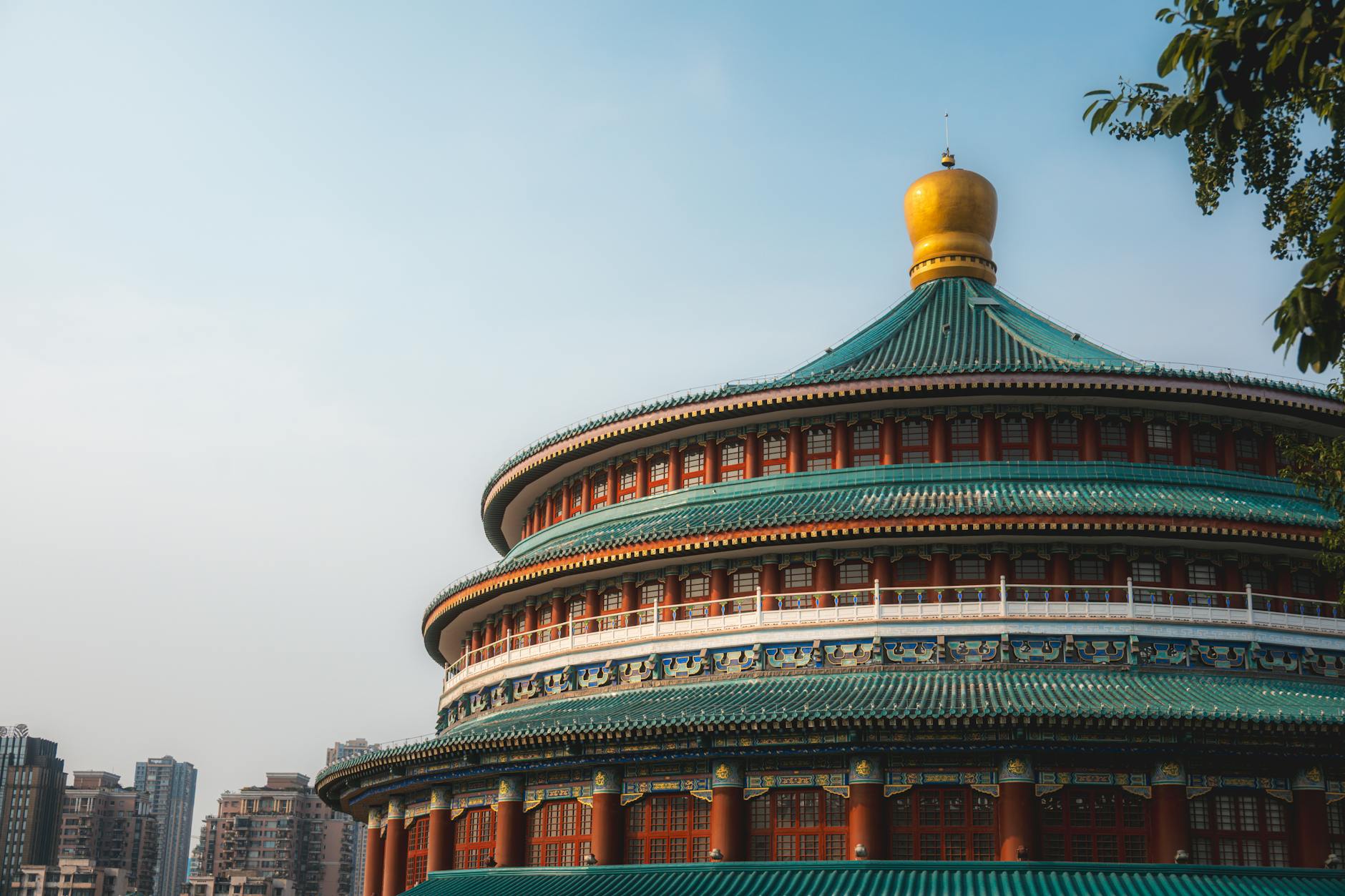
Start in Jiefangbei, the core of the peninsula. Mornings here belong to office workers. By noon the pedestrian streets around the Liberation Monument fill with shoppers and tour groups, so the quiet hours are before 10:00.
Morning Among Skyscrapers and Raffles City

Raffles City Chongqing stands at Chaotianmen, the tip of the peninsula where the two rivers meet. Moshe Safdie designed eight towers, four of them joined at the 250-metre mark by a horizontal “Crystal” that holds a garden, a pool and the public Exploration Deck. Tickets cost around 180 RMB. Weekday mornings have the shortest queues. From up there the city’s layering is obvious: roads stacked on roads, bridges landing on the roofs of malls.
Walking back towards the Liberation Monument explains the nickname “Mountain City”. Streets climb and drop at angles that would be stairs anywhere else. Several towers in Jiefangbei have paid viewing floors, and a cheaper alternative is the free terrace at the top of any big mall. Our separate guide to the best viewpoints in Chongqing compares them.
An Afternoon Exploring Hongyadong
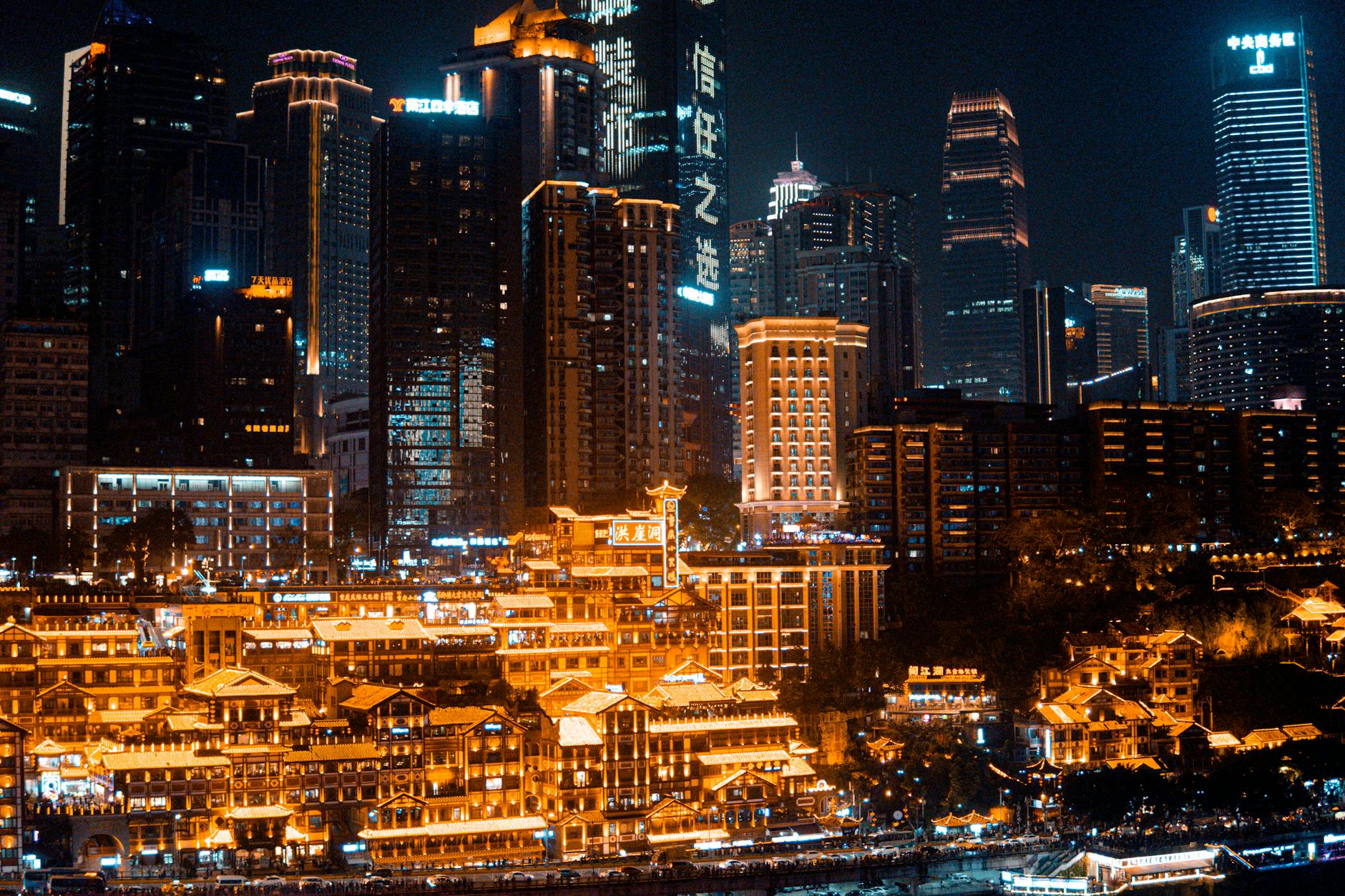
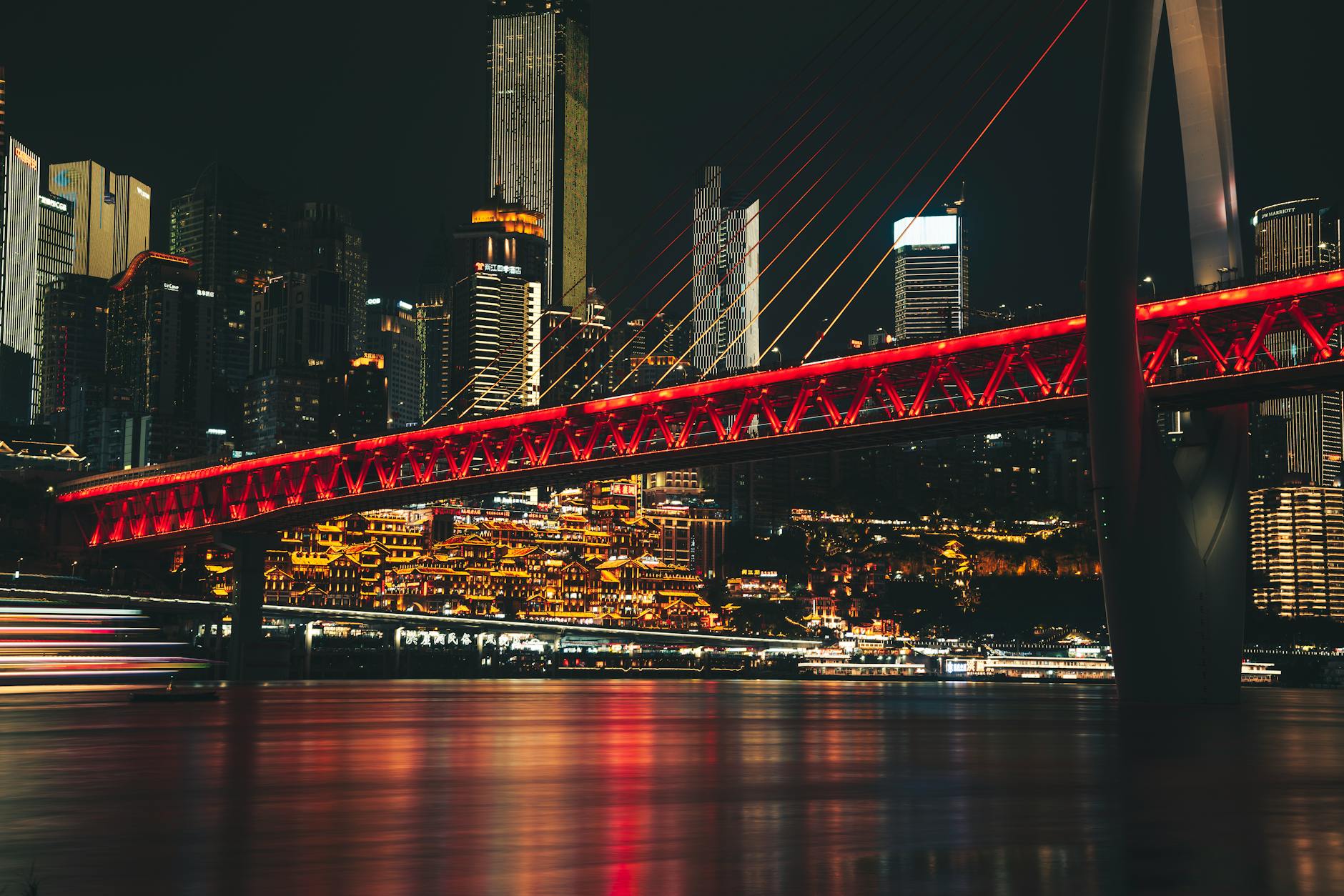
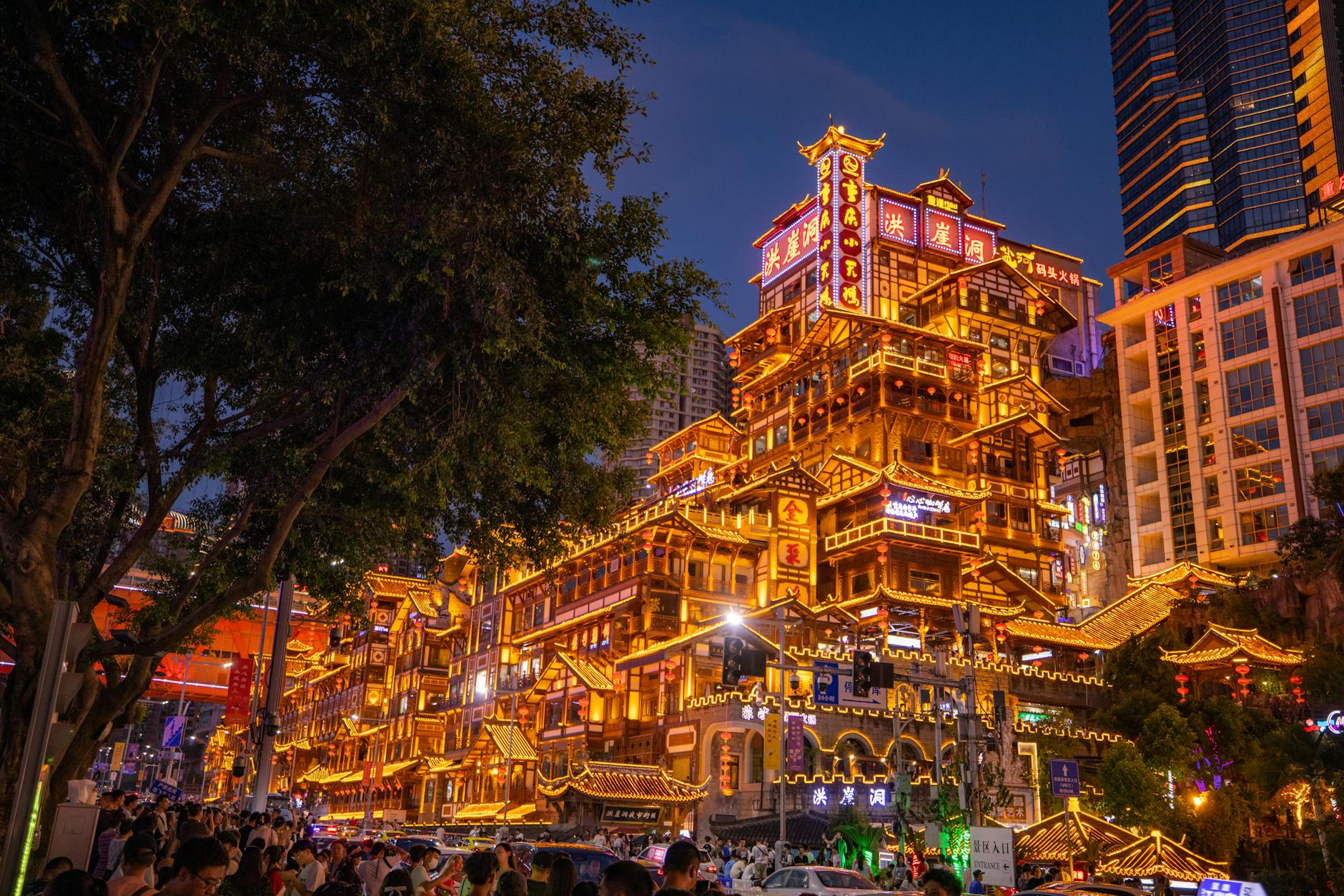
Hongyadong is the most photographed sight in Chongqing: eleven floors of stilt houses in the traditional Bayu style, rebuilt in 2006 on the steep bank of the Jialing River. Entry is free. The upper floors open onto Cangbai Road at street level, and the lowest floor opens onto the riverside road, so the complex works as a giant staircase between two parts of the city.
Inside are shopping lanes, snack stalls, teahouses and souvenir shops. Sichuan tea shops here will brew a sample before selling a tin, and the usual price for a decent jasmine or green tea is 50 to 100 RMB per 100 grams. Floors are numbered inconsistently, so getting lost for a while is part of the visit. See the complex twice, once from inside and once from the bridge or the opposite bank, because the two views have nothing in common.
An Evening River Cruise and City Lights

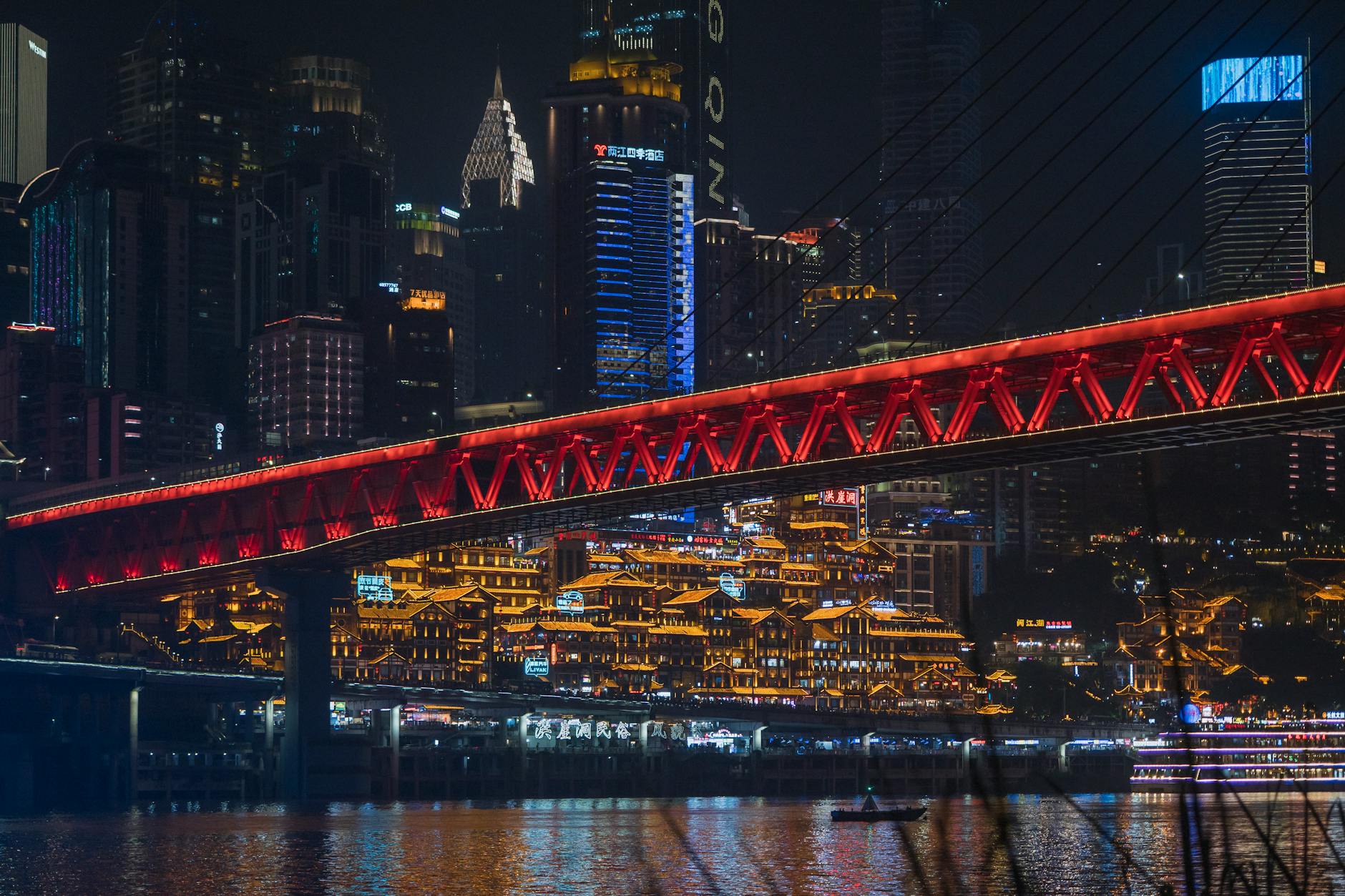
After dark Chongqing switches on. Every tower on the peninsula runs a light show, and Hongyadong glows gold against the black hillside. Qiansimen Bridge, a ten-minute walk from Hongyadong, is the standard spot for the postcard photo. The lights usually come on around 19:00 in summer and 18:30 in winter and switch off at 22:00 or 23:00.
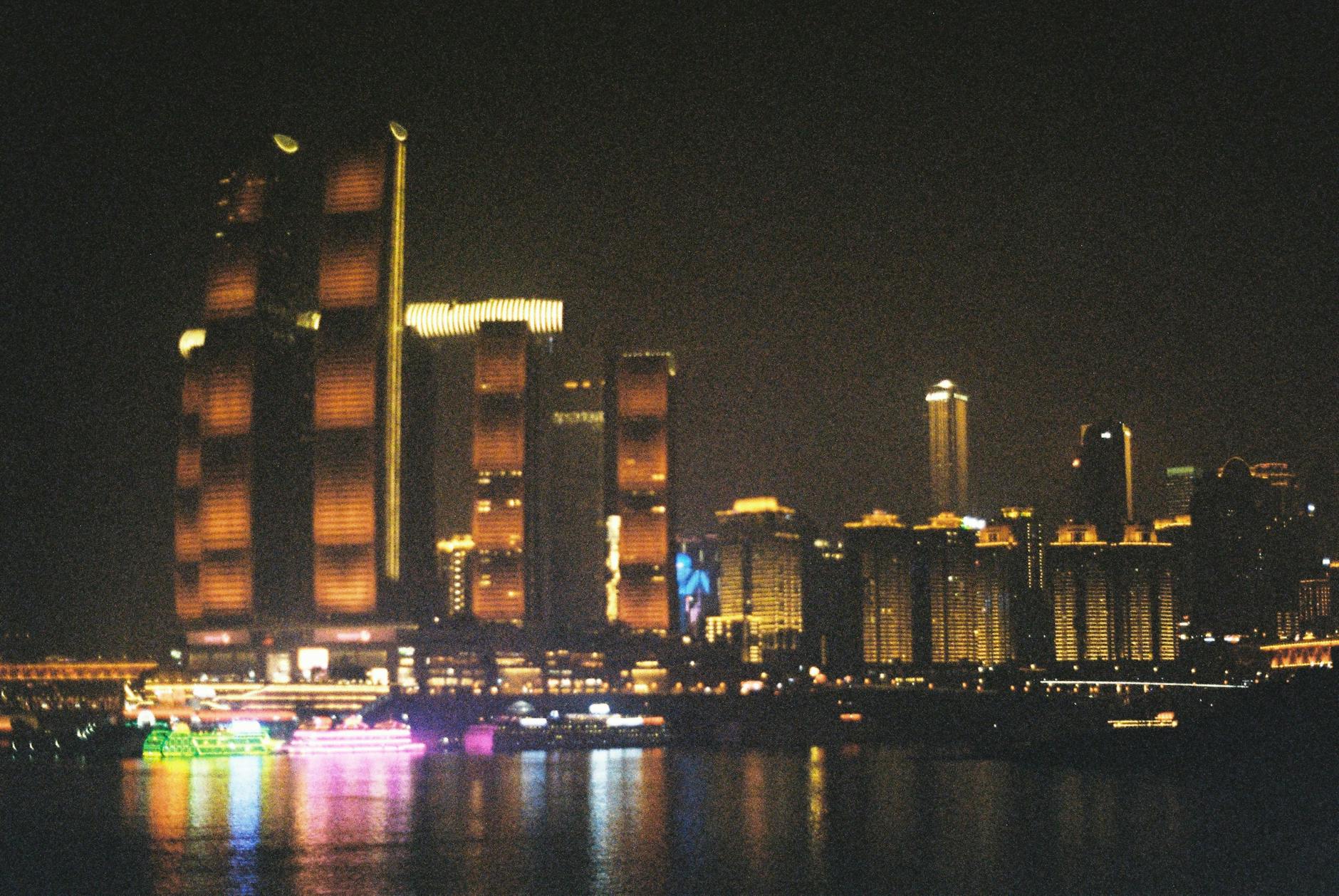
A night cruise on the Yangtze and Jialing leaves from Chaotianmen pier and loops around the peninsula in about an hour. Standard tickets run 100 to 160 RMB. Boats sail past Hongyadong, under Qiansimen and Dongshuimen bridges and back, which is the only way to see the whole skyline from one place.
After the cruise, the bar streets of Jiefangbei and the Nanbin Road waterfront in Nan’an stay open past midnight. Teahouses with live Sichuan opera or face-changing shows are the quieter option.
What to Eat on Day One? Hotpot!
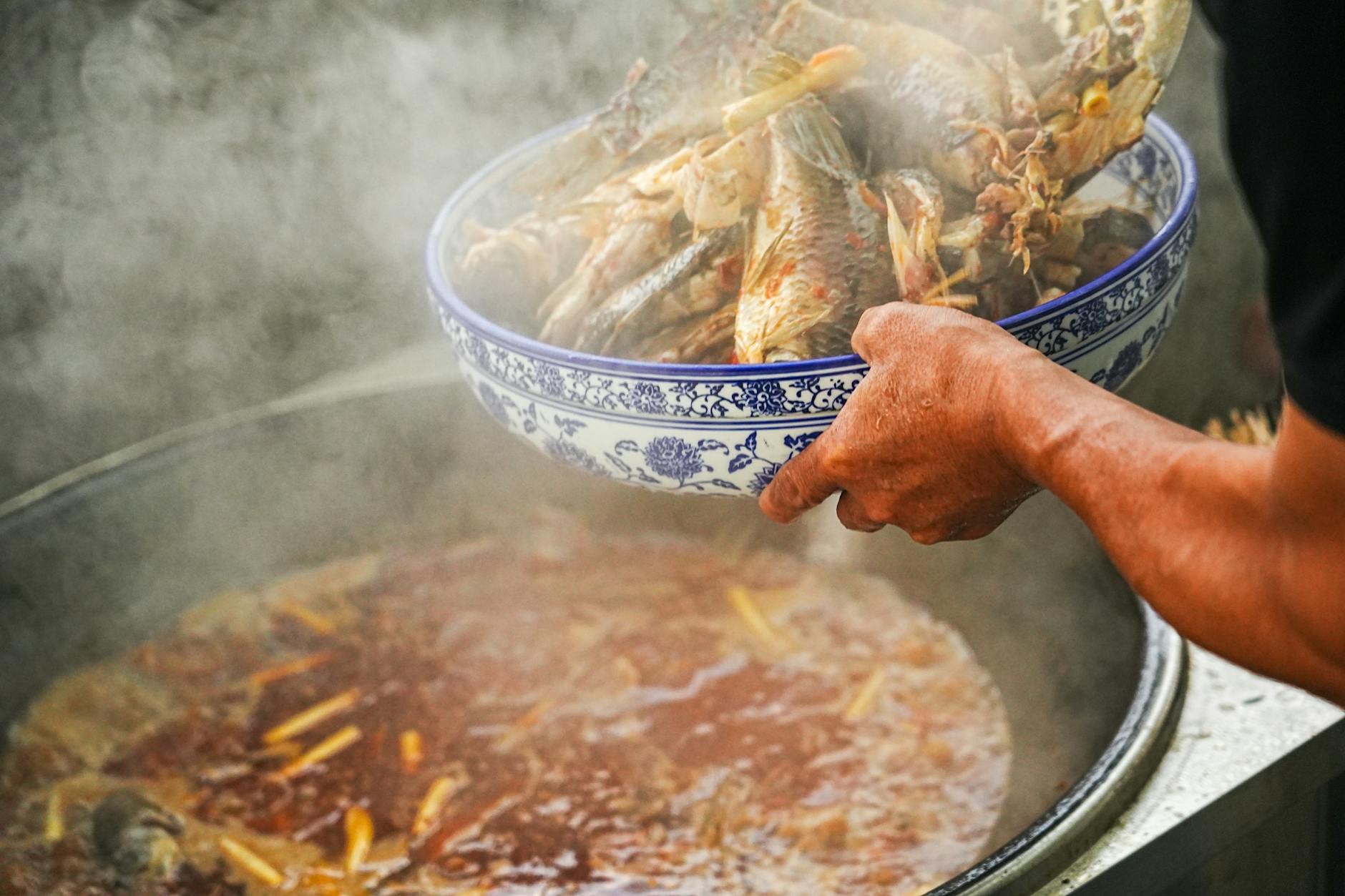
Chongqing hotpot is the dish the city is known for across China. Beef tallow broth, a thick layer of dried chilies and Sichuan peppercorns, and a nine-grid pot that separates the hottest zones from the milder ones. Restaurants full of local families are the reliable sign of quality.
Anyone unsure about the heat can ask for “wei la” (微辣, mildly spicy) or a “yuanyang” pot split between red broth and clear bone broth. Even the mild version is hotter than most Western “spicy”. Sesame oil with garlic, served as the standard dipping sauce, takes the edge off.
Order a mix of thin-sliced beef, tripe, duck intestine if you dare, tofu skin, lotus root, potato and mushrooms. Expect 100 to 150 RMB per person at a mid-range place. Non-spicy Chongqing food exists, mainly steamed and braised dishes, but hotpot is the reason to come.
Day Two: Old Streets, Cool Transport, and More Food

Day two leaves the skyscrapers for Chongqing’s older neighbourhoods, then comes back for the two pieces of transport that have made the city famous online.
A Morning in Ciqikou Ancient Town
Ciqikou was a porcelain port on the Jialing River for a thousand years before Chongqing had a single high-rise. Take Metro Line 1 to Ciqikou station; the old town starts 300 metres from the exit. Flagstone lanes, two-storey wooden houses, teahouses and sweet shops selling spicy peanuts and flaked candy fill the main street. Entry is free, and shops open from about 9:00.
Arrive before 10:00, because by midday the main lane is shoulder to shoulder. Side alleys towards the river are calmer. Teahouses by the Baolun Temple sometimes host Sichuan opera and face-changing shows with a pot of tea included. Local snacks to try here are fried sesame rice balls and chenmahua, the twisted dough sticks sold in a dozen flavours from one shop with a permanent queue.
Where to Find the Best Street Food for Lunch
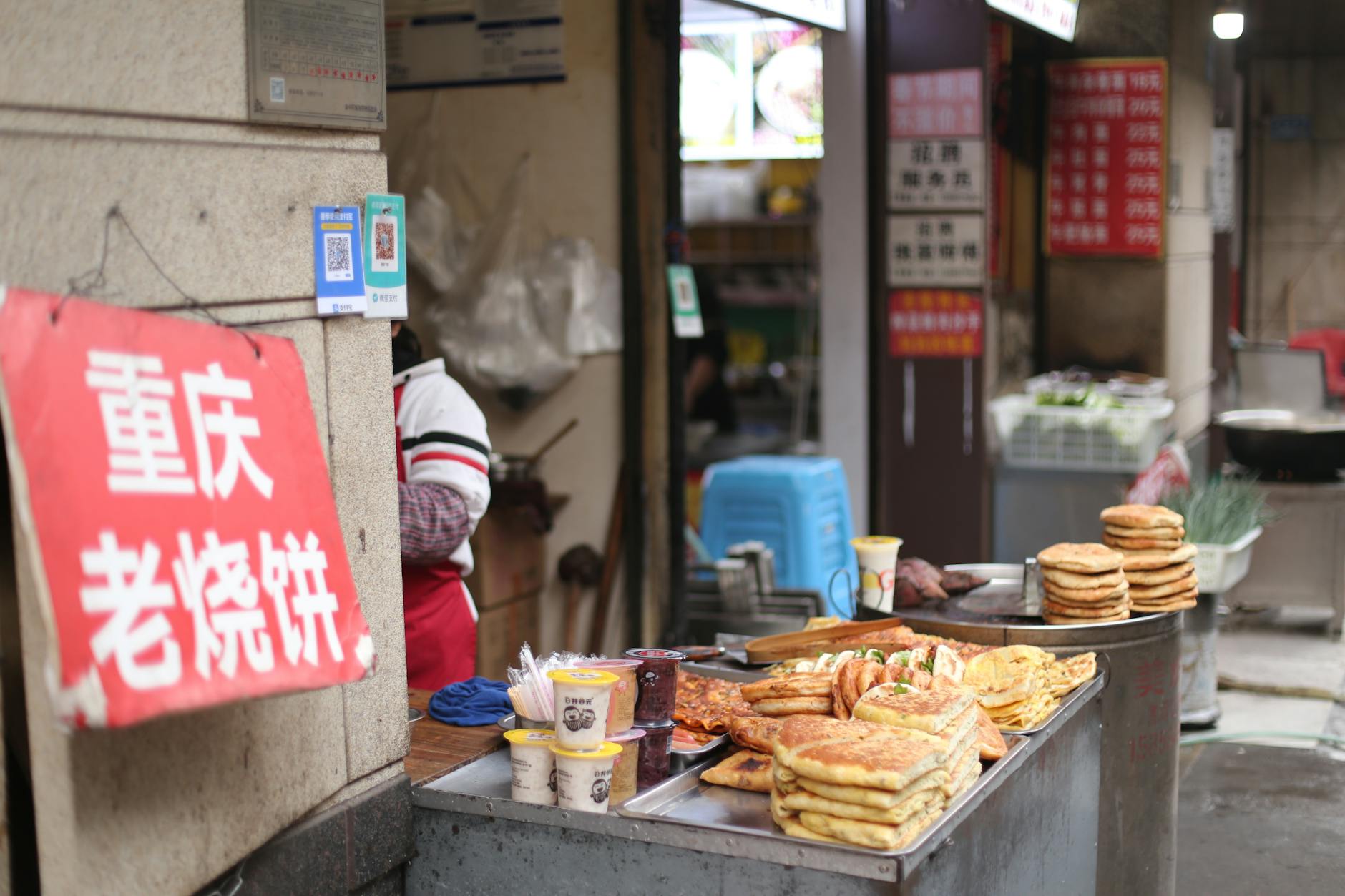
Ciqikou is a fair place to eat lunch, but the whole city works as an outdoor food court. Small stalls with plastic stools and a queue of locals are a better bet than the shops with English menus on the main lane. Four dishes cover the basics:
- Xiaomian, thin wheat noodles in a chili-and-peanut broth, sold at every corner for 8 to 15 RMB. Locals eat it for breakfast; visitors tend to manage it at lunch.
- Mao Xue Wang, duck blood curd, tripe, ham and vegetables simmered in red broth. Spicier than hotpot and served in a basin for sharing.
- Ciba, sticky rice cakes fried and rolled in crushed peanuts and brown sugar. Sweet, cheap and the easiest break from chili.
- Fried tofu and potatoes with cumin and chili powder, sold from carts for 5 to 10 RMB. Drier and milder than the soups, so a safe starting point.
Carry a bottle of water or a cold soy milk. Most stalls take WeChat Pay or Alipay only, so set up one of them before the trip or keep small cash notes for the few that still accept them.
An Afternoon of Unique Sights

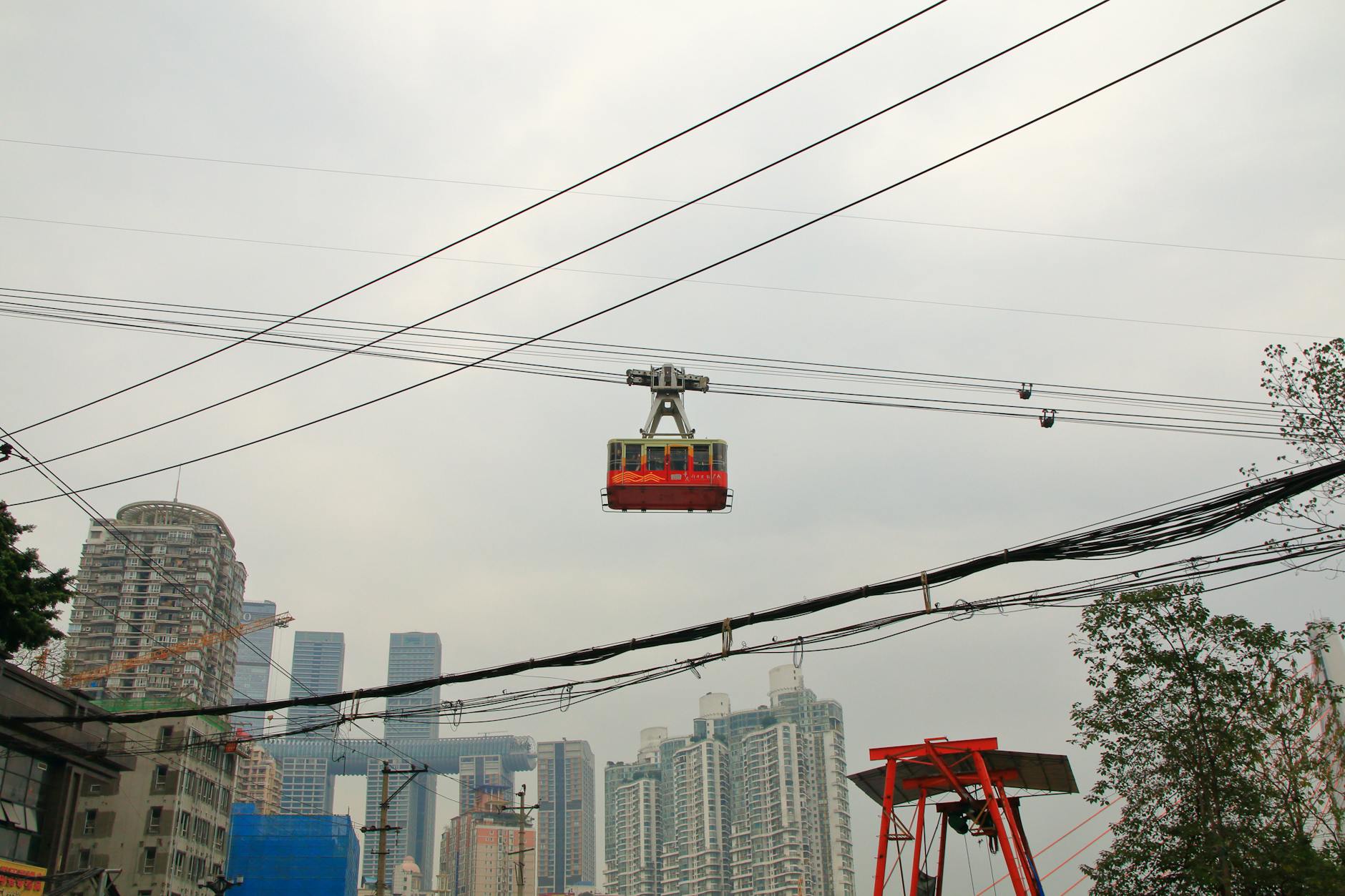
The Yangtze River Cableway opened in 1987 as plain public transport and now works mainly as a ride. It crosses 1,166 metres of river from Xinhua Road on the peninsula to Shangxin Street in Nan’an in about five minutes. A one-way ticket costs 20 RMB, return 30 RMB. Queues on the peninsula side can pass an hour on weekends; boarding from the Nan’an side is usually faster.
From Nan’an, head back across and up to Eling Park, the oldest private garden in Chongqing, laid out in 1909 on the narrowest part of the peninsula. It is green, quiet and free. Its viewing pavilion looks down on both rivers at once, which no tower deck can offer. Sunset here is the calmest hour of the weekend.
Finish at Liziba station on Metro Line 2, where the monorail runs straight through the sixth to eighth floors of a residential building. The city built a viewing platform below the tracks for the crowds, so photos from there are free and easy. Trains pass every few minutes, and the whole stop takes 20 to 30 minutes including the wait for a clean shot. Line 2 continues along the Jialing River on a raised viaduct, which is a pleasant ride back towards Jiefangbei in itself.
Some Practical Tips and a Look at Costs
Chongqing is cheap by the standards of Shanghai or Beijing. Hotels, food and transport together fit into a modest budget, and most of the sights in this plan cost nothing.
How to Get Around the City
The metro, called Chongqing Rail Transit, is the main tool. Twelve lines, fares from 2 to 10 RMB, signs in English and trains every three to five minutes. Buy single tickets at machines or pay with the Alipay or WeChat transit code. Buses go everywhere but show stops only in Chinese. Taxis start at 10 RMB and are fine outside the 17:00 to 19:00 crush, when a bridge crossing can take half an hour. Didi, the Chinese ride-hailing app, accepts foreign cards.
Expect stairs. Lots of them. Escalators and public lifts link the different levels of the city, and a walk that looks flat on the map can involve ten storeys of climbing. Comfortable shoes matter more here than in any other Chinese city.
What a Weekend Budget Looks Like
- Flights are the biggest line. Fares move a lot by season, so compare dates on Trip.com or Google Flights and book domestic connections a few weeks out.
- Accommodation. A good four-star hotel in Jiefangbei costs 400 to 800 RMB per night for a double. Chain business hotels start around 250 RMB. Five-star rooms with river views, such as the Niccolo Chongqing inside Raffles City, run from about 1,200 RMB.
- Food. Street food and noodle shops cost 10 to 50 RMB per meal. Hotpot at a mid-range restaurant comes to 100 to 200 RMB per person including drinks.
- Sights. Hongyadong, Ciqikou, Eling Park, Liziba and Jiefangbei are free. The cableway is 20 RMB one way, the Raffles City deck about 180 RMB, a night cruise 100 to 160 RMB. A guided full-day Chongqing city tour with an English-speaking guide adds 400 to 700 RMB but saves time on logistics.
Excluding flights, a two-day trip comes to roughly 800 to 1,500 RMB per person, or about 110 to 210 USD, depending mostly on the hotel.
Have More Time? Here’s What Else to See
With a third day, leave the city. Our guide to day trips from Chongqing covers the options in detail; the two that fit a single day are below.
Wulong Karst, about two and a half hours away by car or train, is a UNESCO site with the Three Natural Bridges, limestone arches up to 300 metres high where part of “Transformers: Age of Extinction” was filmed. Organised Wulong day tours leave Chongqing around 7:00 and return after 19:00. The Dazu Rock Carvings, a second UNESCO site about two hours west, hold tens of thousands of Buddhist, Taoist and Confucian figures carved into cliff faces between the 9th and 13th centuries. Both sites are reachable by high-speed train plus a local bus, but a tour removes the transfers.
Two Days in Chongqing at a Glance
Saturday: Raffles City deck in the morning, Hongyadong after lunch, Qiansimen Bridge at dusk, a river cruise at 20:00 and a late hotpot. Sunday: Ciqikou by 9:30, street-food lunch, the cableway to Nan’an and back, Eling Park for sunset, Liziba on the way home. Everything in that list runs on Metro Lines 1, 2 and 6 from a hotel in Jiefangbei.
Spring and autumn are the comfortable seasons. July and August bring 35-degree heat and the humidity that gives Chongqing its “furnace” nickname, while winter is grey and foggy but rarely below 5 degrees. If the dates are flexible, aim for April, May, October or early November. Whatever the month, book the hotel first and let the weekend grow from the nearest metro station.


