Chongqing does not look like any other Chinese megacity. Hills squeeze the center onto a narrow peninsula between two rivers, so streets stack on top of each other, a metro line runs through an apartment block, and a “ground floor” can sit on the eighth level. Under that vertical chaos lies a long past: a walled river port on the Yangtze, the wartime capital of China from 1937 to 1946, and the home of the hottest hot pot in the country. This guide covers the old quarters, the museums, the food and a workable three-day plan, with prices and transport details where they matter.
A City That Seems to Defy Gravity
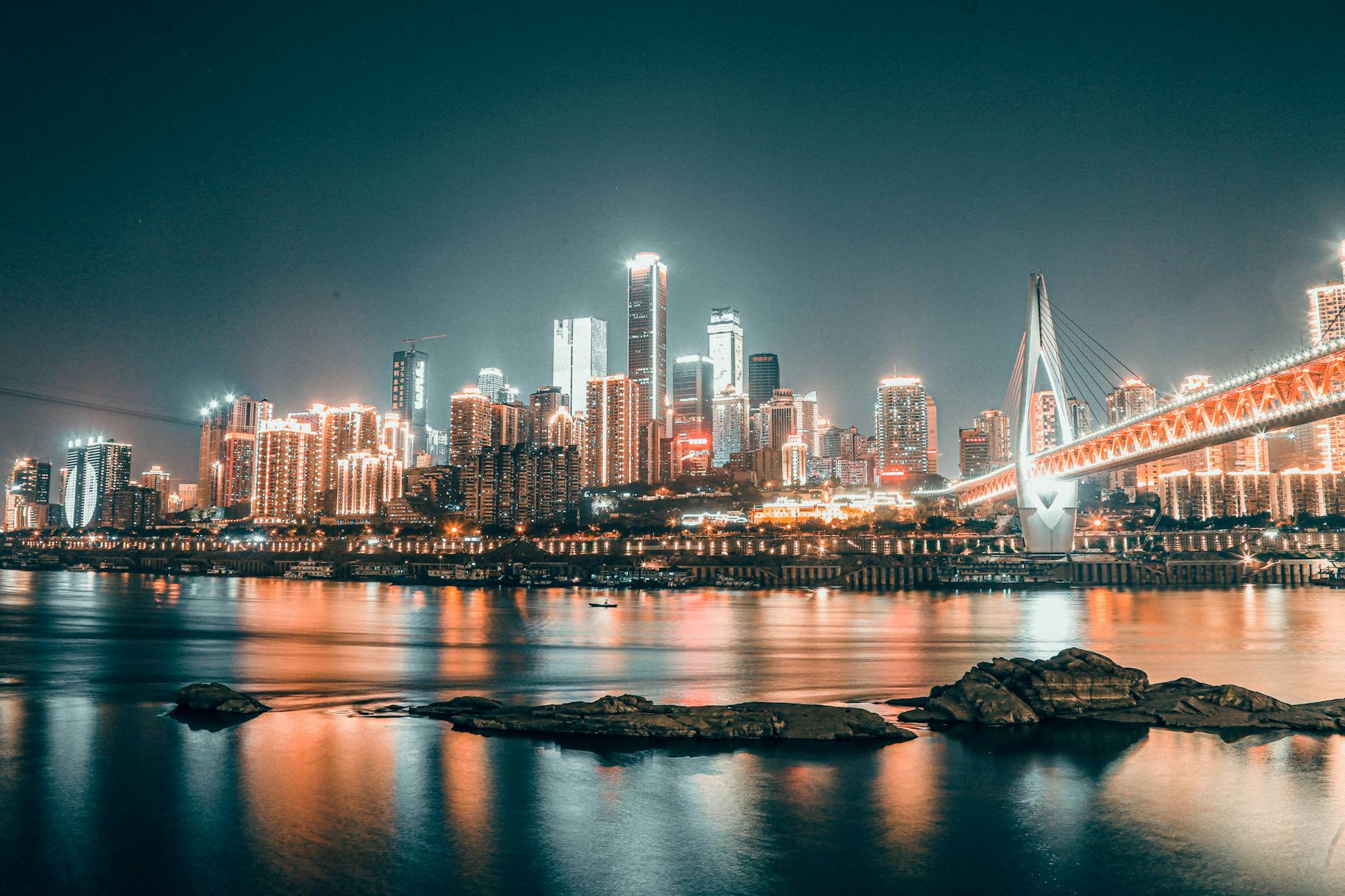
Landscape is the first thing to make sense of. Downtown Chongqing, the Yuzhong district, sits on a peninsula where the Jialing River meets the Yangtze. Roads bend around cliffs, apartment towers grow out of slopes, and one building can have street entrances on floors 1, 8 and 15 at the same time. From a plane window at night the center looks like a scattering of lit towers wrapped in haze, with the lights of older districts far below. Locals call it the Mountain City, and after half an hour on foot the name stops sounding like marketing.
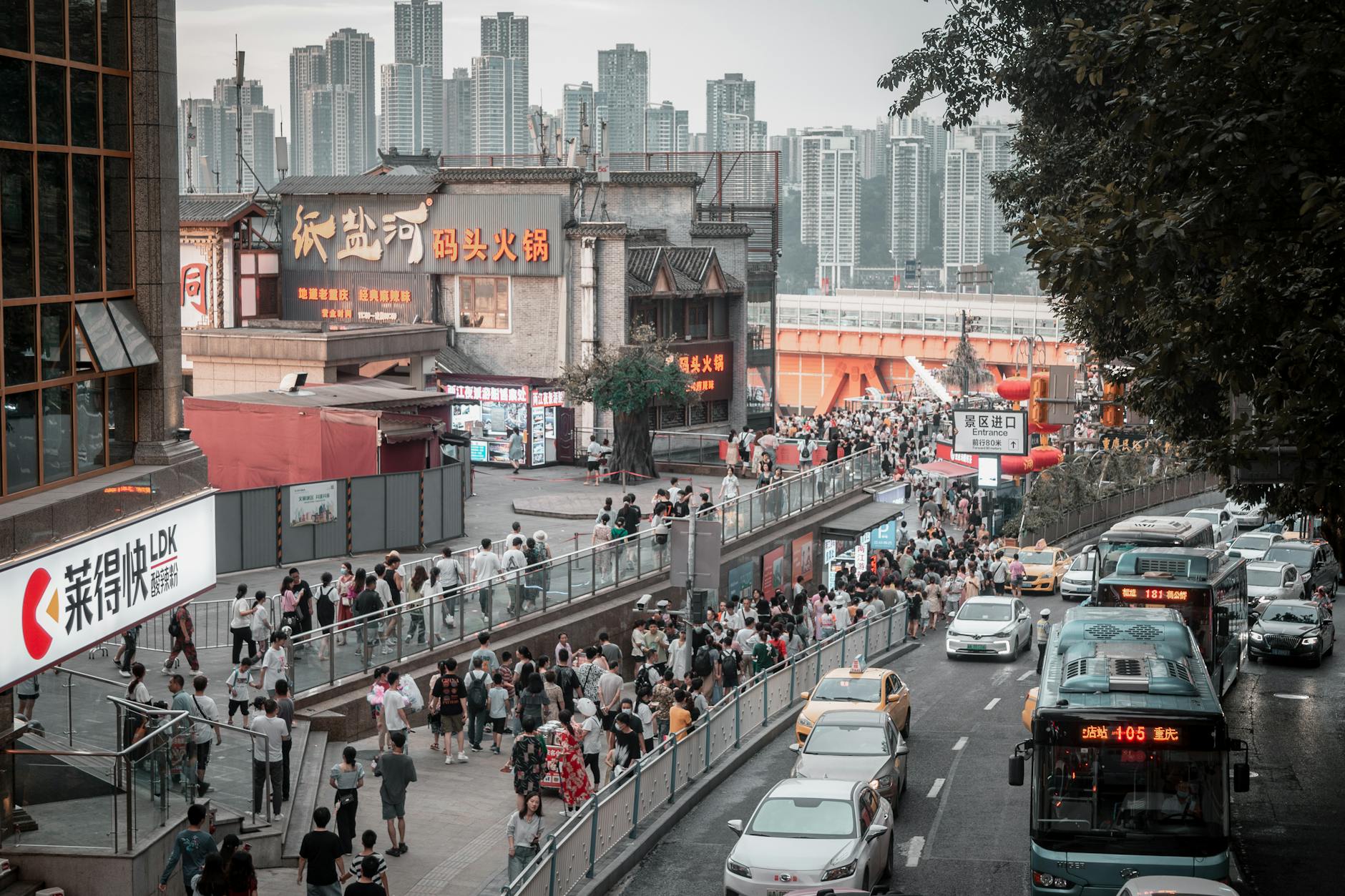
Moving around is its own kind of workout. Straight roads are rare. Stairs, escalators and public elevators are part of the transport network rather than a convenience: the Kaixuanlu elevator and the Huangguan escalator near Lianglukou, over 100 meters long, are paid public transit at a couple of yuan per ride. Walking from a riverside street to the one “above” it can mean 200 steps. Comfortable shoes matter more here than in any other Chinese city, and so does patience with map apps, because two points 100 meters apart on the screen may be separated by a cliff. Locals use every scrap of level ground, which is why shops, flats and noodle stalls appear in places where no planner would put them.
Architectural Wonders and Transport Paradoxes
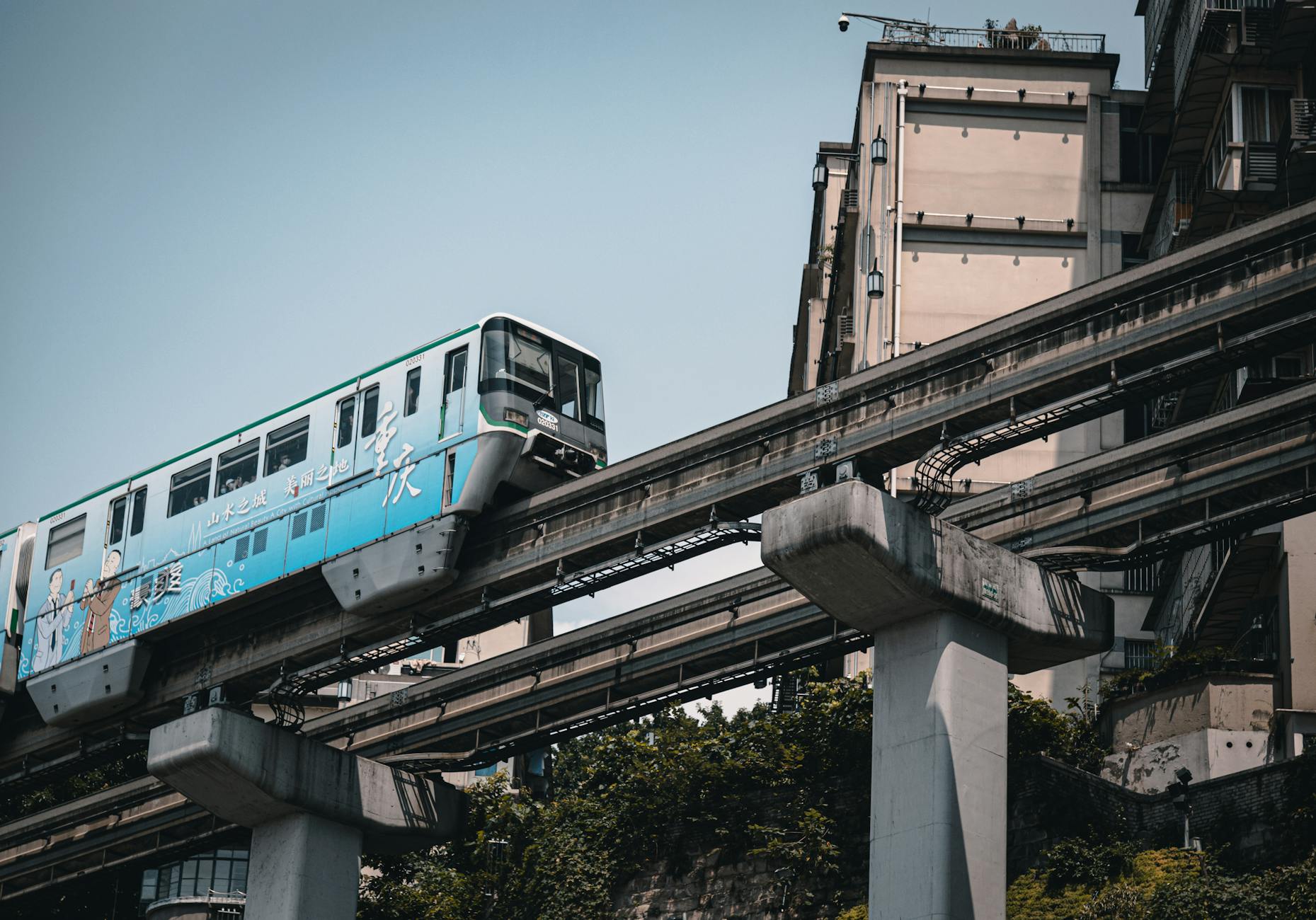
Chongqing’s most photographed sight is a train station. At Liziba, on monorail Line 2, trains pass through the sixth to eighth floors of a 19-story residential building. People live above and below the track, and a viewing platform at street level fills with visitors filming every few minutes. Nobody planned it as an attraction: Line 2 opened in 2005, the building was designed together with the station, and the sound insulation is good enough that residents compare a passing train to a running dishwasher. Ride it rather than just watching it. The stretch of Line 2 between Liziba and Fotuguan runs on a viaduct along the Jialing cliff with the river right below.
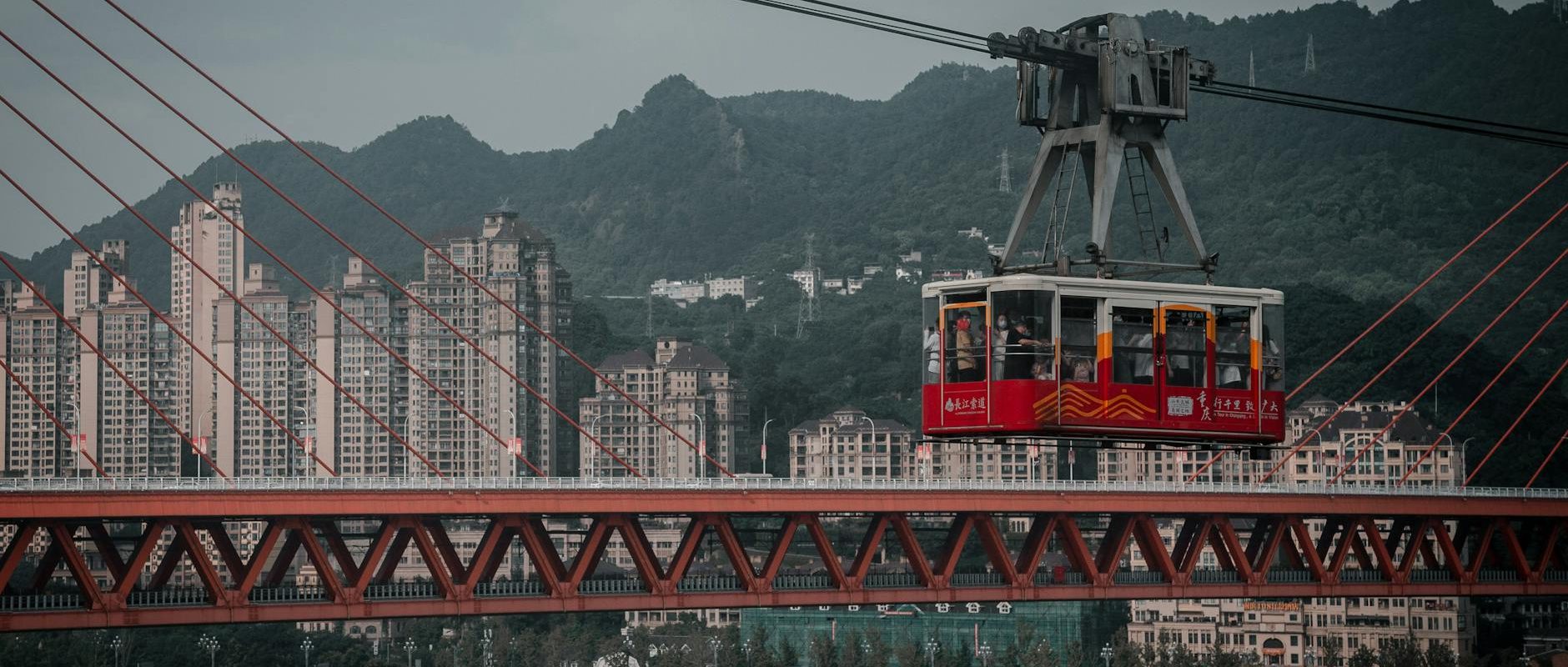
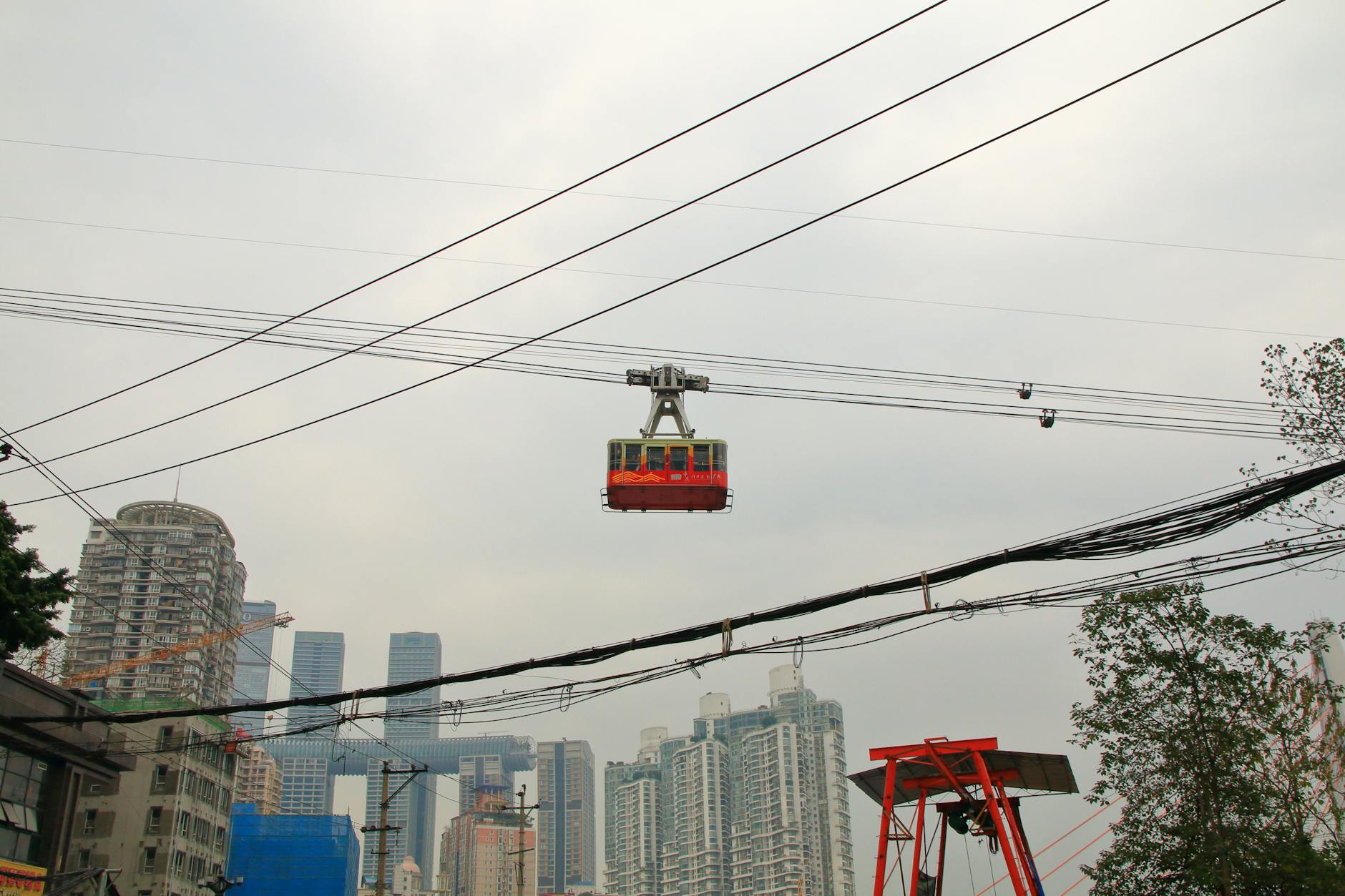
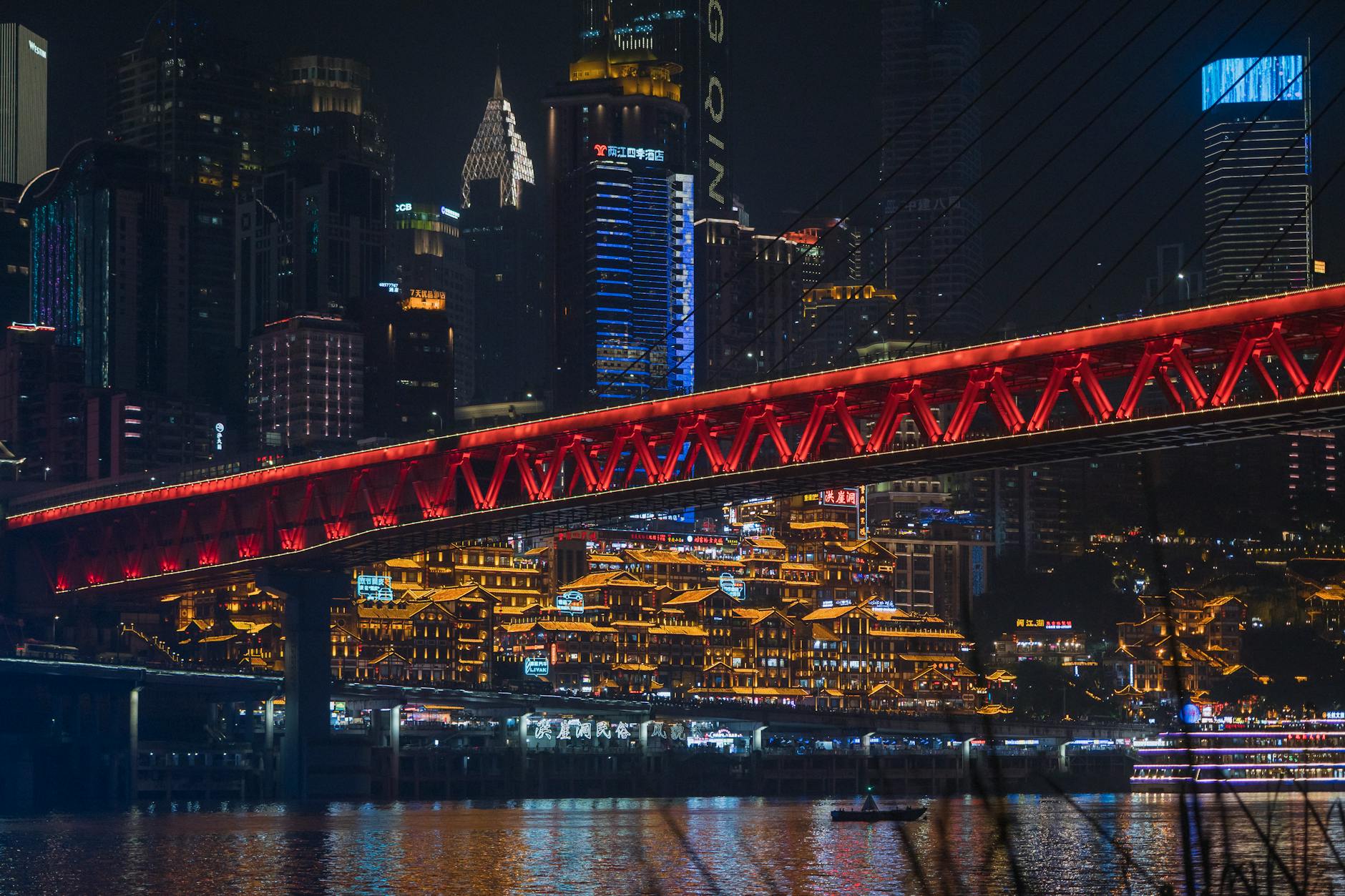
Second paradox: the Yangtze River Cableway. It opened in 1987 as a commuter line and still runs from Xinhua Road in Yuzhong to the south bank, crossing 1,166 meters of river in about five minutes. A one-way ticket costs 20 yuan, a return 30. Go after sunset, when the bridges and the Raffles City towers are lit; the queue on the Yuzhong side can reach an hour on weekends, while the Nan’an side is usually shorter. Next to Raffles City, at Chaotianmen, the horizontal “Crystal” skybridge joins four towers at 250 meters and has an observation deck of its own. Together the monorail, the cableway and the skybridge show how the city solved a problem no flat city ever had to think about.
- After landing, metro Line 3 from Jiangbei Airport reaches Lianglukou in about 50 minutes for a few yuan. With luggage and stairs in mind, a pre-booked airport transfer to the hotel door is the easier option, especially after a night arrival.
- An architecture-focused walk around Raffles City and Chaotianmen explains the eight-tower complex, the old docks below it and the layered streets behind it. Mornings are cooler and the square is emptier before the cruise groups arrive.
Where Old Chongqing Still Stands
Once the eyes adjust to the skyline, older layers come into focus. Chongqing was a walled river port for centuries and a treaty port from 1891. Between 1937 and 1946 it served as China’s wartime capital, which brought the national government, universities and factories upriver from the coast, along with years of Japanese bombing. That period explains the air-raid tunnels still visible under Yuzhong, the wartime villas in the Nanshan hills and the odd mix of 1940s civic buildings next to glass towers. Much of the old wooden city burned or was demolished, so the historic quarters that survive deserve a slow visit.
Ancient Quarters and Their Stories
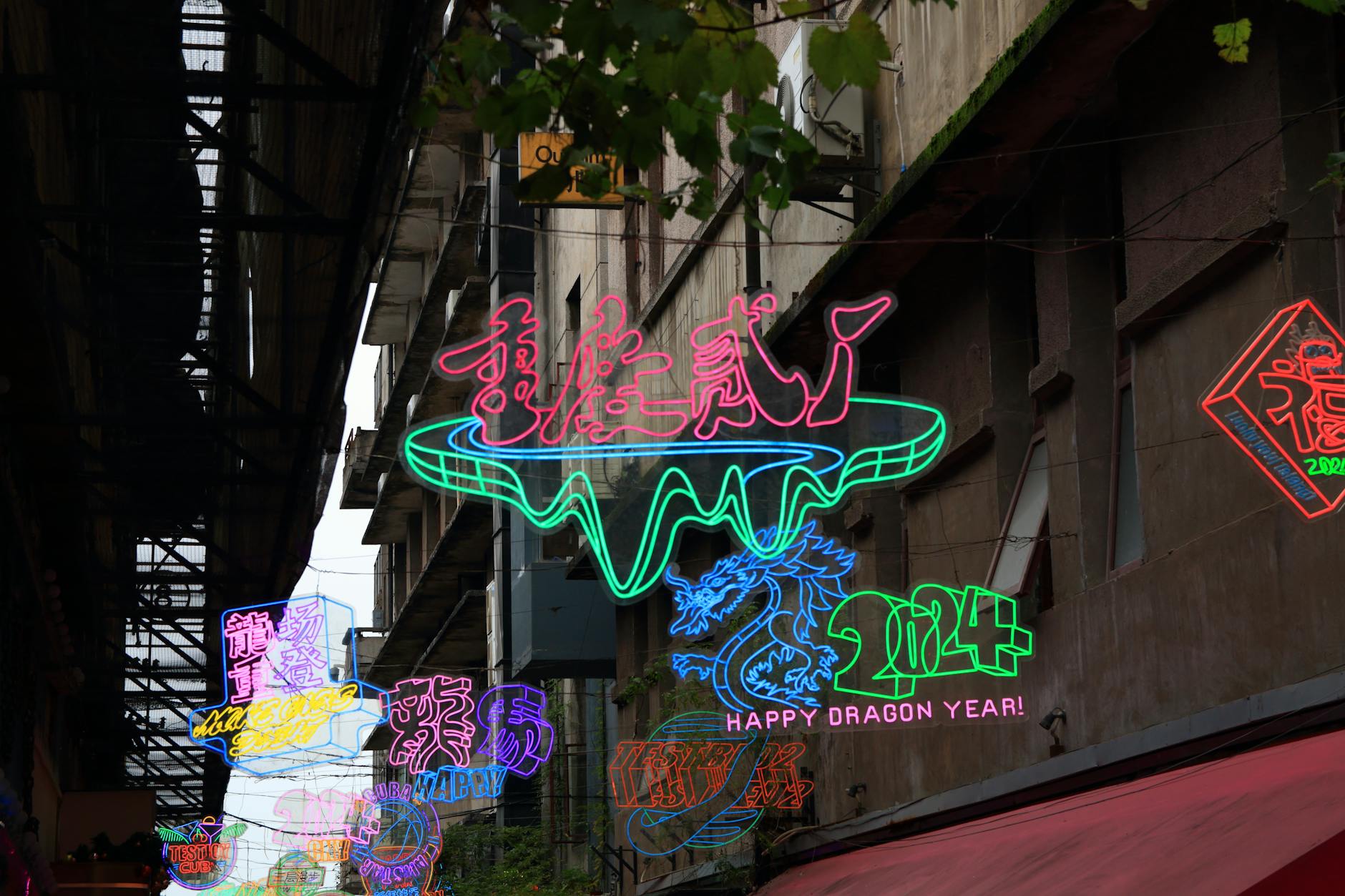
Start with Ciqikou Ancient Town, a former porcelain-making village on the Jialing River, about 40 minutes from Jiefangbei on metro Line 1 (Ciqikou station, then a 10-minute walk). Entry is free. Its main lane is a wall of snack stalls and souvenir shops, and on weekends it moves at a shuffle, so arrive before 10 in the morning or come on a weekday. Side alleys are quieter: wooden houses with tiled roofs, Baolun Temple on the hill, founded in the sixth century and rebuilt under the Ming, and teahouses where a pot of Sichuan tea costs 20 to 30 yuan and comes with a seat for as long as needed. Try the “mahua” fried dough twists from the Chen Changyin shops; the longest queue marks the original one. Half a day disappears here without effort, and the pace feels a century away from the towers across the river.
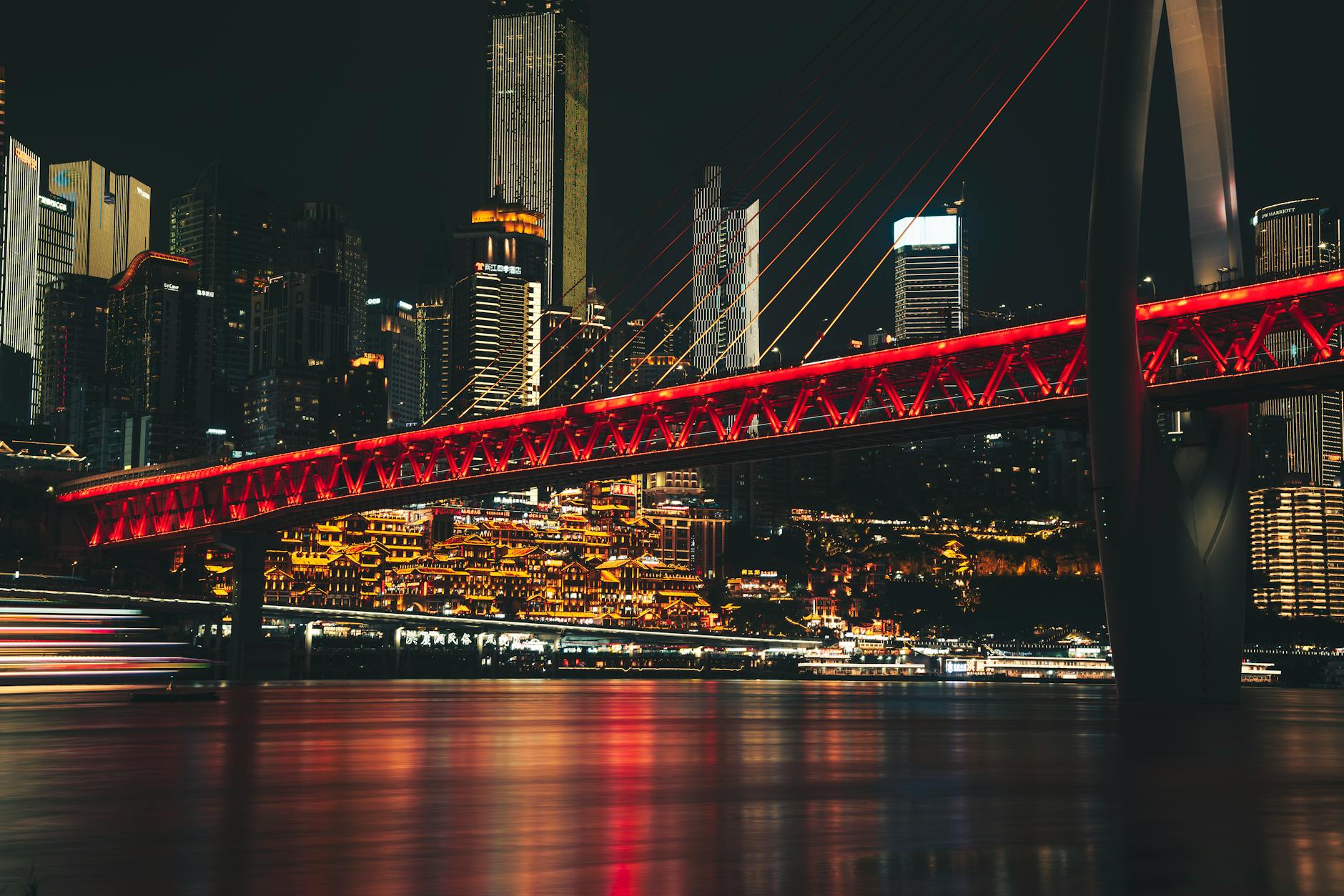
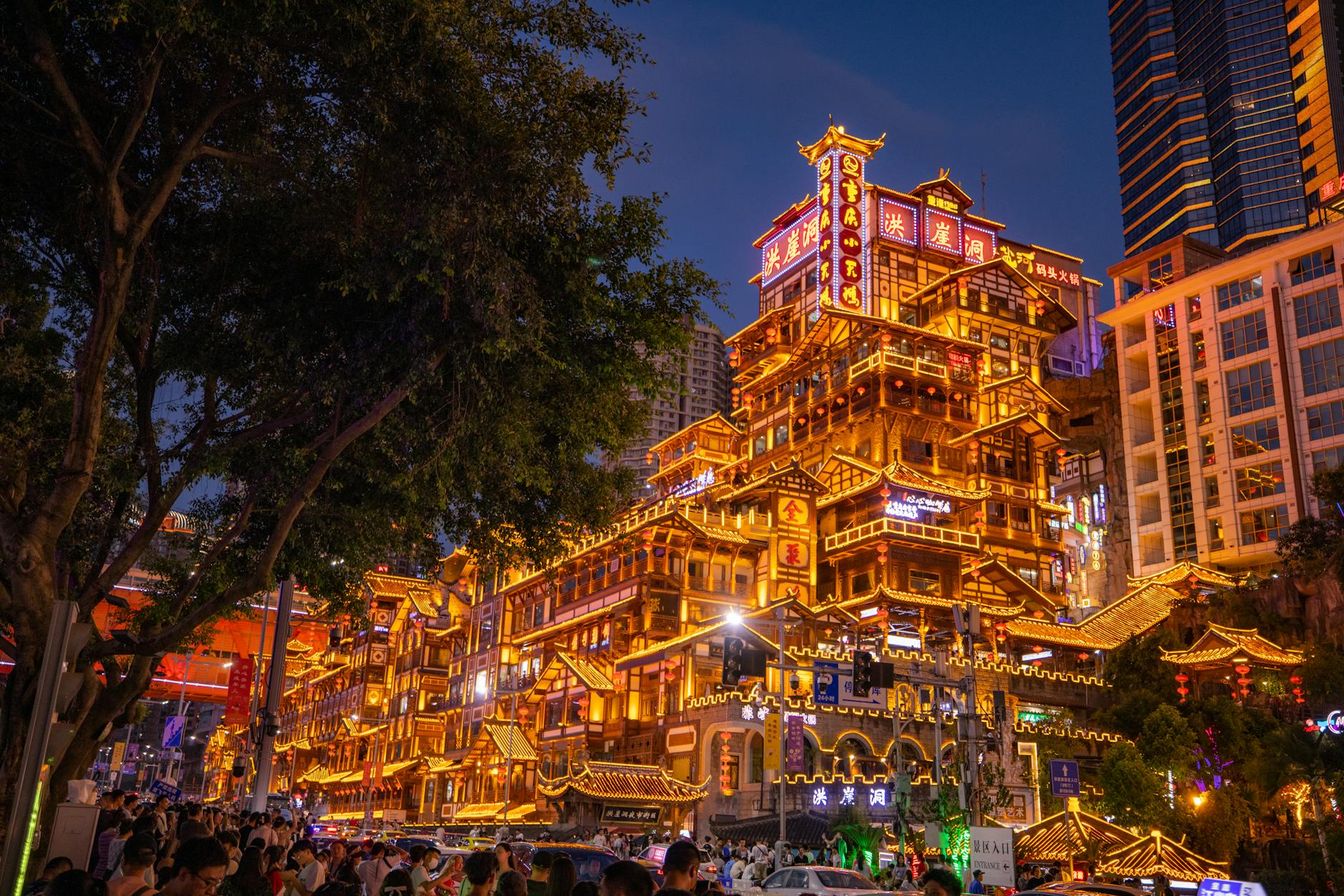
Hongyadong is the other essential stop, and it works best after dark. It is an 11-story complex of stilted “diaojiaolou” houses cascading down the cliff to the Jialing River, built in 2006 in the traditional style rather than preserved from it. Inside are restaurants, bars and souvenir floors. Outside, from Qiansimen Bridge or the riverside road, the whole thing lights up around 7 pm and looks like the bathhouse from a Miyazaki film, which is why the crowd on the bridge at that hour is wall-to-wall. Entry is free, and the teahouse on the upper terrace is a decent place to watch the barges pass. For the full set of night views, a night tour with a Yangtze river cruise covers Hongyadong, the lit bridges and the Raffles City skyline from the water in one evening.
Monuments and Museums
For context, go to the Chongqing China Three Gorges Museum on People’s Square. Admission is free with a passport, it closes on Mondays, and the galleries cover the ancient Ba kingdom, the Three Gorges Dam relocation and the wartime years, with English labels on most displays. Two to three hours is enough.
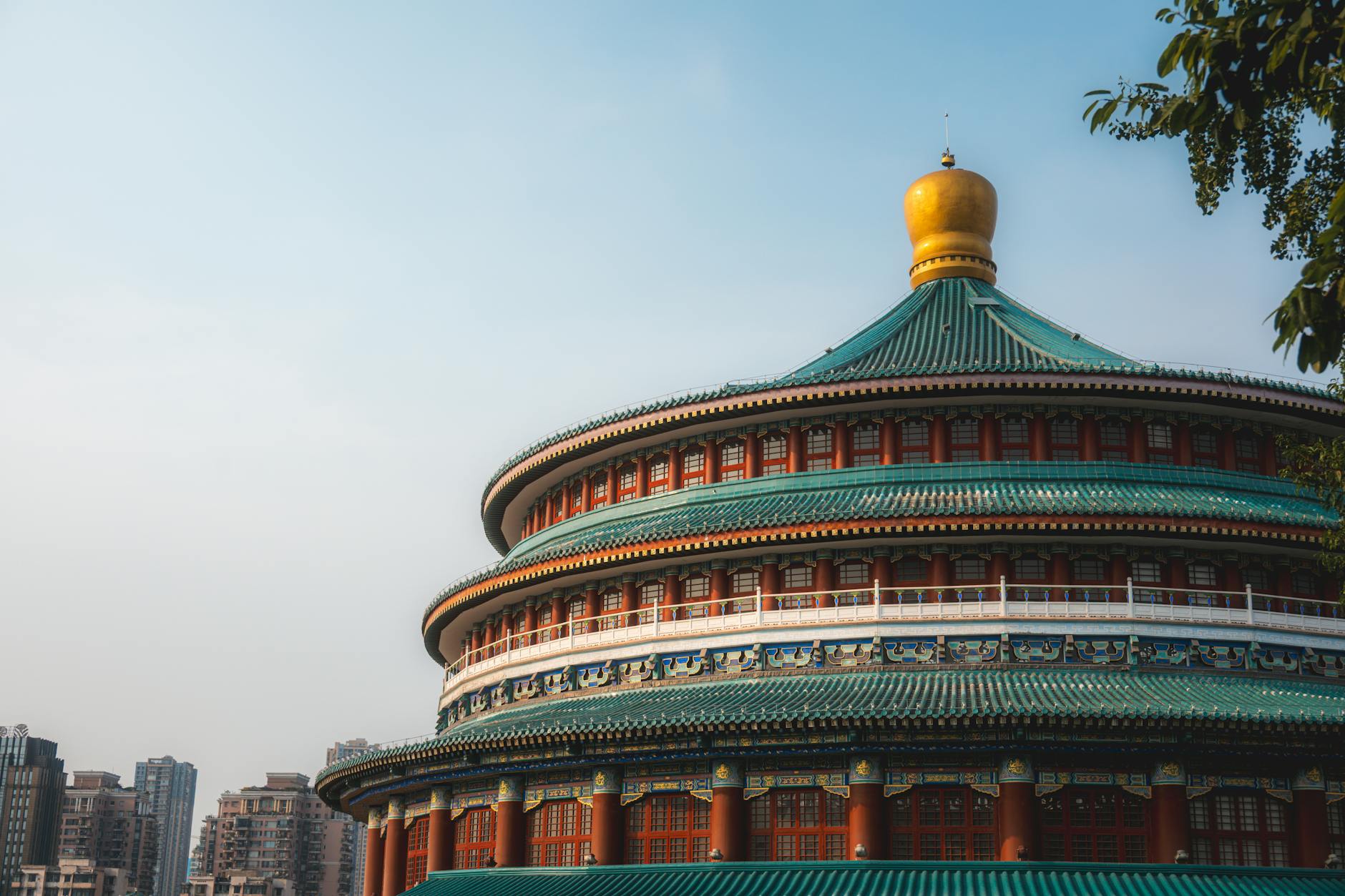
Across the square stands the Great Hall of the People, finished in 1954: a circular auditorium in Ming palace style with a dome modeled on the Temple of Heaven in Beijing, and a touch of Soviet monumentality in the wings. It still hosts official events, so the interior is not always open, but the park around it is a good place to sit after the stairs.
Chongqing’s oldest treasure lies outside the city. The Dazu Rock Carvings, about 160 km west, are Buddhist, Taoist and Confucian sculptures cut into cliffs between the 9th and 13th centuries, on the UNESCO list since 1999. Baodingshan is the main site, with the 31-meter reclining Buddha and the thousand-armed Guanyin, restored and regilded in 2015; Beishan is smaller and quieter. Getting there independently takes a bus from Chenjiaping station to Dazu, about two hours, and then a local taxi to the cliffs, so most visitors book a day tour. Allow a full day either way.
Chongqing’s Culture and Food
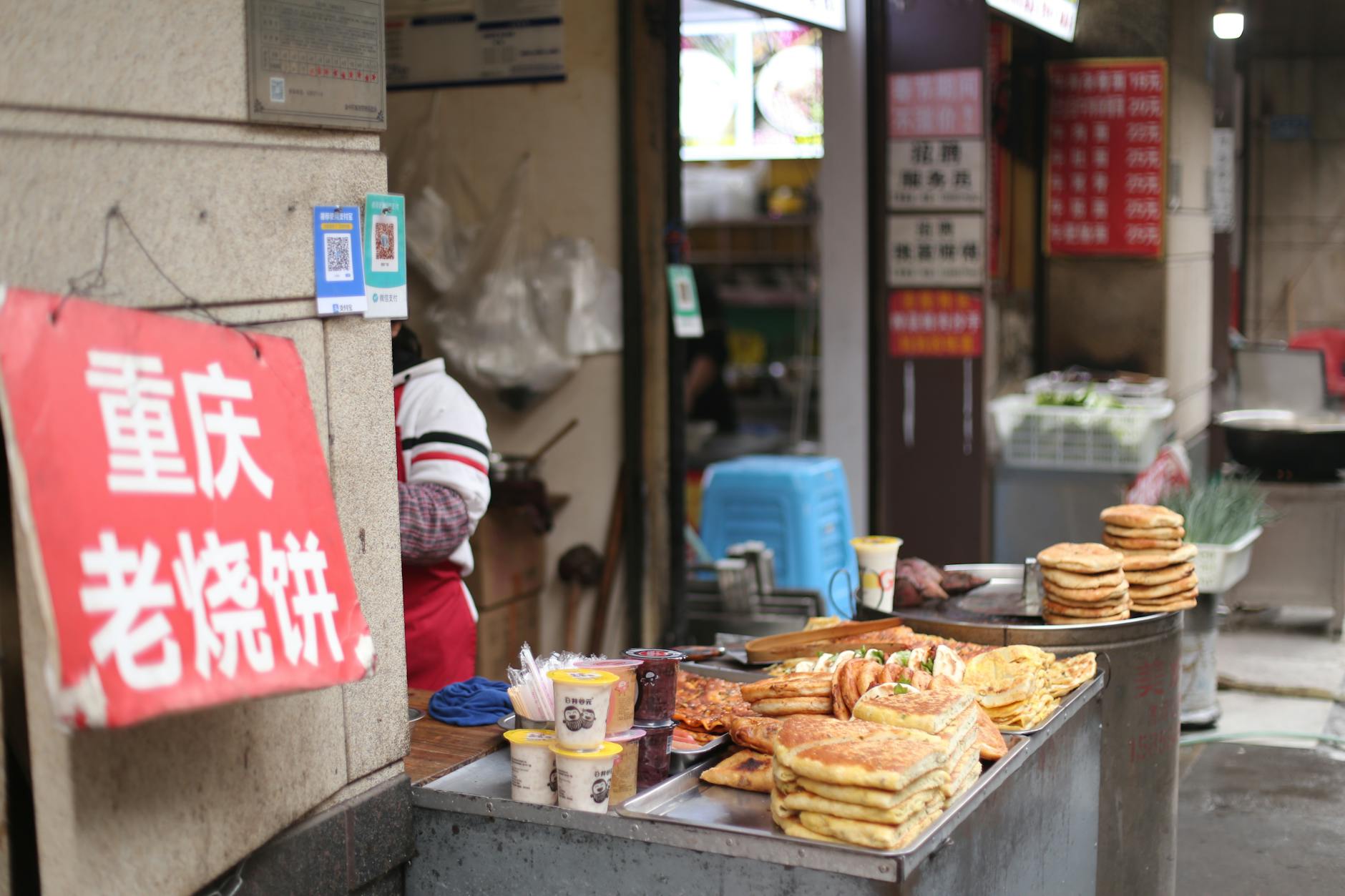
Culture here is not kept behind museum glass. It is in wet markets at 6 am, in retired men playing mahjong under an overpass, in teahouses that double as opera venues, and above all in food. Chongqing is the spiciest city in China, and that is not a slogan: Sichuan peppercorn and dried chili go into the breakfast noodles.
Chongqing Hot Pot
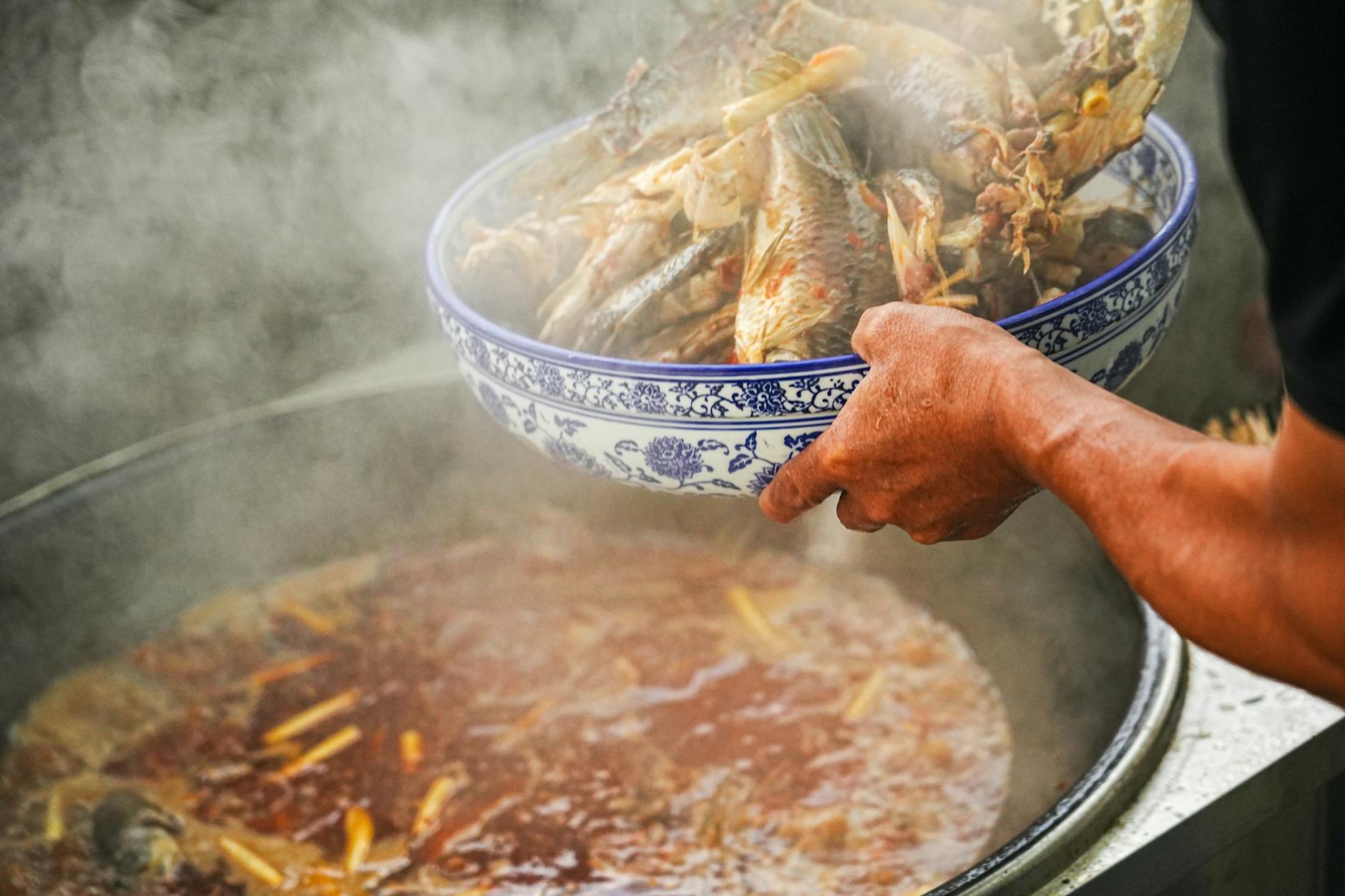
Hot pot, “huoguo”, is the city’s main ritual, and it differs from the Chengdu version: beef tallow instead of vegetable oil, more chili, and a nine-grid pot that keeps delicate items in the calmer center squares. A pot of red broth boils in the middle of the table, and everyone cooks their own ingredients: tripe (“maodu”) swished for ten seconds or so, duck intestine, lotus root, potato slices, tofu skin, thin-sliced beef. Dip everything in a bowl of sesame oil with raw garlic; it tames the heat. Expect 80 to 150 yuan per person at a mid-range place. Ask for “weila” (mildly spicy) or a “yuanyang” pot split between spicy and clear broth; no restaurant will mind. Chains like Liu Yishou and Dezhuang are reliable starting points, and the tunnel branches downtown, where tables sit inside former air-raid shelters, are an experience in themselves.
Hot pot is only the start. Breakfast is a bowl of “xiaomian”, thin wheat noodles in a chili-and-peppercorn sauce, 8 to 12 yuan at any street stall and best eaten standing. Then come “suanla fen” (hot-and-sour sweet potato noodles), “chaoshou” (wontons in chili oil) and roasted chestnuts in winter. Where to eat is simple: follow the office workers at lunch and the taxi drivers at night. A place full of locals at 2 pm is a safe bet anywhere in the city.
- Food districts worth knowing: Jiaochangkou and the lanes behind Jiefangbei for hot pot; Nanbin Road on the south bank for dinner with a river view; Ciqikou and Hongyadong for snacks, at tourist prices.
- To eat with context, a walking tour of local neighborhoods follows residential lanes, markets and family-run noodle shops that are hard to find alone.
Tradition and Modernity in Art and Daily Life
Sichuan Opera is the local performing tradition, and its signature trick is “bianlian”, face-changing: performers swap painted silk masks in a fraction of a second, dozens of times a show, and the method remains a guarded trade secret. Full-length operas are rare now, but teahouse shows of 60 to 90 minutes mix face-changing, fire-spitting, shadow puppetry and comic sketches. Tickets for a Sichuan Opera show with tea and snacks at the table sell out on weekend evenings, so book a day ahead. Short free versions sometimes appear in public squares and at Hongyadong, enough to see the mask trick once.
Tea culture runs just as deep. Teahouses are where people talk, read, play cards and watch the street for hours over one pot; nobody hurries a customer out. Eling Park, high on the ridge of the peninsula, has a teahouse with a view across both rivers, and the old ones in Ciqikou have been serving the same jasmine and green teas for decades. An hour in one is the easiest way to see the slow side of the city hidden behind the skyline.
Contemporary art lives at Huangjueping in the Jiulongpo district, where the old campus of the Sichuan Fine Arts Institute sits inside a street of painted walls, the Tank Loft art park and student cafés; take Line 2 to Yangjiaping and walk. And since Chongqing is a city of stairs, the walk itself is part of the culture. Shibati, the “eighteen steps” quarter below Jiefangbei, was the old route from the upper town down to the river, rebuilt in 2021 with the staircase kept. It is a fair place to start looking for hidden corners of local life.
How to Plan Your Trip to Chongqing
Chongqing is huge, and three days covers the center and one day trip without rushing. A longer stay makes room for a second excursion or a slower pace. The plan below mixes old quarters, modern landmarks and food; a more compact weekend itinerary works if the stay is shorter.
A 3-Day Itinerary and Some Handy Tips
Day 1, modern center and museums. Start at Jiefangbei, the pedestrian square around the 1940s Liberation Monument, now dwarfed by malls. Walk down to Hongyadong (15 minutes) for the daytime view and a snack, then take a taxi or bus to People’s Square for the Three Gorges Museum and the Great Hall; the museum closes on Mondays, so swap days if needed. Lunch is the first hot pot. In the evening, ride the Yangtze cableway and watch Hongyadong light up from the opposite bank, or take the river cruise for the full set of bridges.
Day 2, old traditions and food. Give the morning to Ciqikou: arrive by 9, see the temple and the side lanes before the crowds, buy mahua for the road. Return on Line 1, change at Lianglukou to Line 2 and get off at Liziba for the train-through-building shot and a ride along the river. Afternoon for Eling Park and tea, or for Huangjueping and the art street. Evening: a Sichuan Opera teahouse show, then a late bowl of noodles near Jiaochangkou.
Day 3, nature or ancient art. Use the day for a trip outside the city. The two main options are Dazu for the rock carvings and Wulong for the karst. Wulong is about three hours away by road, or an hour on the high-speed train to Wulong station plus a shuttle to the park. Its Three Natural Bridges are limestone arches up to around 280 meters high over a single gorge, a filming location for Transformers 4, with the Longshuixia Fissure Gorge nearby; the site is UNESCO-listed as part of South China Karst. An organized day trip to the Wulong karst handles the shuttle, the entrance tickets and the return, which otherwise take some planning. Dazu is the better choice in rain or for anyone more interested in history than hiking.
Three days is one version. With a week, add a Yangtze cruise through the Three Gorges (ships leave from Chaotianmen), the wartime sites in the Nanshan hills, and a dinner at a riverside hot pot on Nanbin Road. Leave gaps in the plan, because the stairs eat more time than any map suggests.
Where to Stay and How to Get There
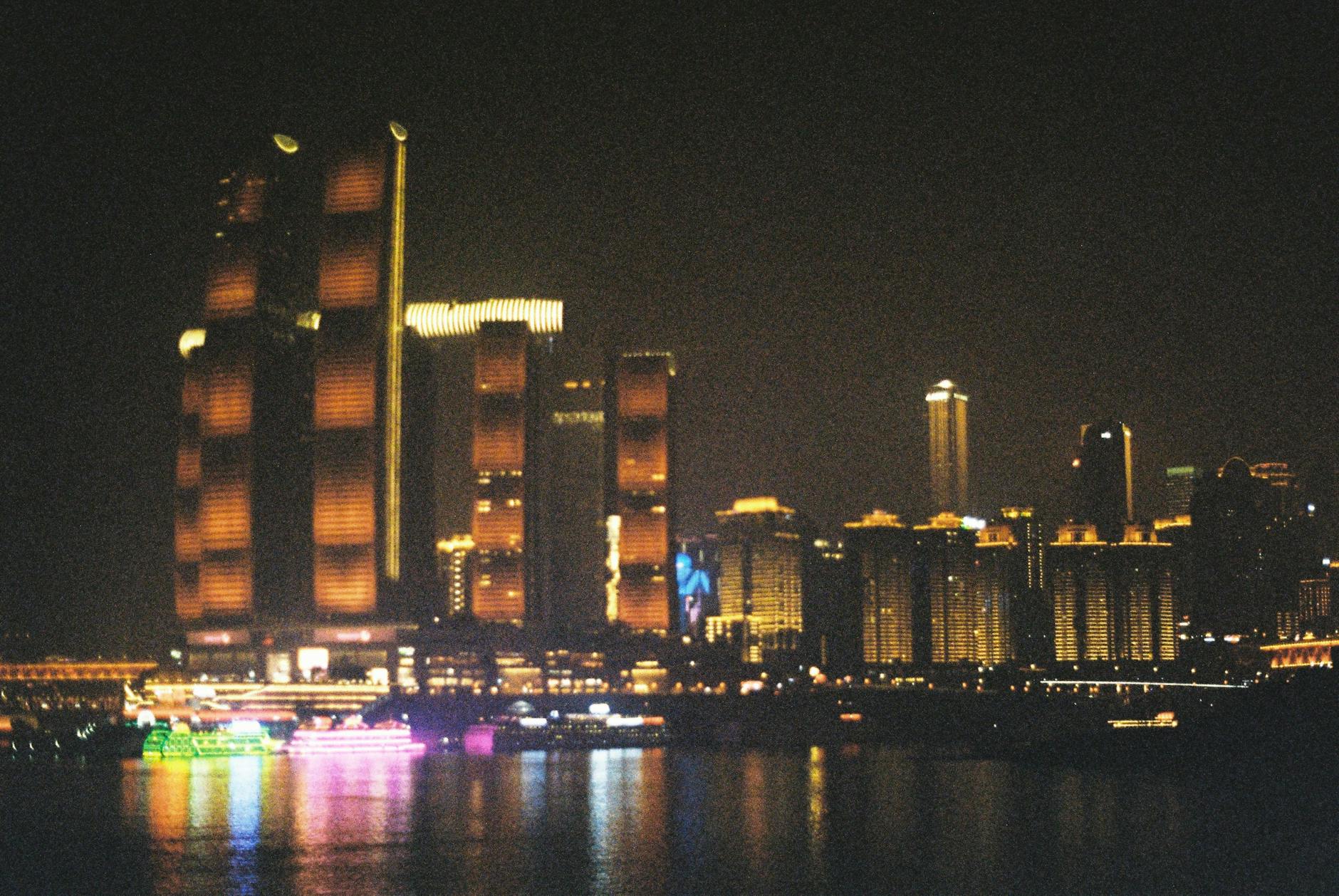
Stay in Yuzhong, near Jiefangbei, or in Jiangbei across the river. Both have metro access and the night views; Jiefangbei is more walkable, Jiangbei is quieter at night. Two well-placed five-star options are Niccolo Chongqing, on the upper floors of the IFS tower in Jiangbei with a sky lobby facing the peninsula, and The Westin Chongqing Liberation Square, a few minutes on foot from Jiefangbei and Hongyadong. Mid-range three- and four-star hotels cluster around Jiaochangkou and Lianglukou metro stations and often cost under 400 yuan a night outside Chinese holidays. Avoid the first week of October and Chinese New Year, when prices double and Hongyadong becomes impassable.
Getting there is simple. Chongqing Jiangbei International Airport (CKG) has direct flights from most Chinese cities and a growing list of international routes, and flights to Chongqing from Europe or North America usually connect through Beijing, Shanghai, Guangzhou or Hong Kong. From the airport, metro Line 3 or Line 10 reaches the center in about 50 minutes; a taxi to Jiefangbei costs 60 to 80 yuan and takes 40 minutes outside rush hour. Inside the city, the metro, monorail, buses and cableway all accept the Alipay or WeChat transit code, so no card purchase is needed, and a single metro ride starts at 2 yuan.
Seeing the City with a Guide
Chongqing rewards a guide more than most cities, because so much of it is underground, above street level or behind an unmarked door. A good local guide knows which elevator counts as public transport, which hot pot tunnel used to be an air-raid shelter and where the wartime villas sit in the Nanshan hills. Guided tours here fall into a few types.
Overview tours hit the main sights in a day: Jiefangbei, Hongyadong, Liziba, the cableway and a hot pot lunch. Architecture-focused walks concentrate on the modern skyline, Raffles City and the layered streets around Chaotianmen. For something stranger, Fengdu Ghost City, about 170 km downriver, is a hillside of temples and statues devoted to the Chinese underworld, built up over nearly two thousand years and a standard stop on Yangtze cruises. From the city it makes a long day trip, but a memorable one.
Then there are tours that go into the city’s hidden layers: wartime air-raid shelters, some now restaurants and some museums, the alleys of the former lower town along the rivers, the Shibati staircase and the old teahouses. A walk that combines the skywalks, the shelters, the back alleys and a teahouse shows a Chongqing that the skyline tours miss entirely.
Day trips draw the most consistent praise in traveler reviews. Wulong’s Three Natural Bridges and Fairy Mountain (Xiannü Shan) make a long but rewarding day, and the organized versions remove the hardest part, which is the transfer between the train station, the visitor center and the park shuttles.
Chongqing in Practical Terms
Chongqing stands alone among Chinese cities. A river port that became a wartime capital and then a municipality of more than 30 million people, it keeps its history in odd places: in air-raid tunnels turned into hot pot rooms, in a 1987 cableway that still carries commuters, in teahouse opera and in staircases older than any road. Its landscape forces everything to bend, from the metro to the plumbing, and that is why it looks like nowhere else.
A few numbers to keep in mind. Three days is the minimum, four is comfortable. Spring (March to May) and autumn (late October and November) are the easiest seasons; July and August bring 35 to 40 degrees and the city’s “furnace” reputation. A metro ride starts at 2 yuan, the cableway costs 20, a bowl of xiaomian about 10 and a hot pot dinner 80 to 150 per person. The museum is free and closed on Mondays. Hongyadong lights up at about 7 pm, and the view is better from across the river than from inside.


