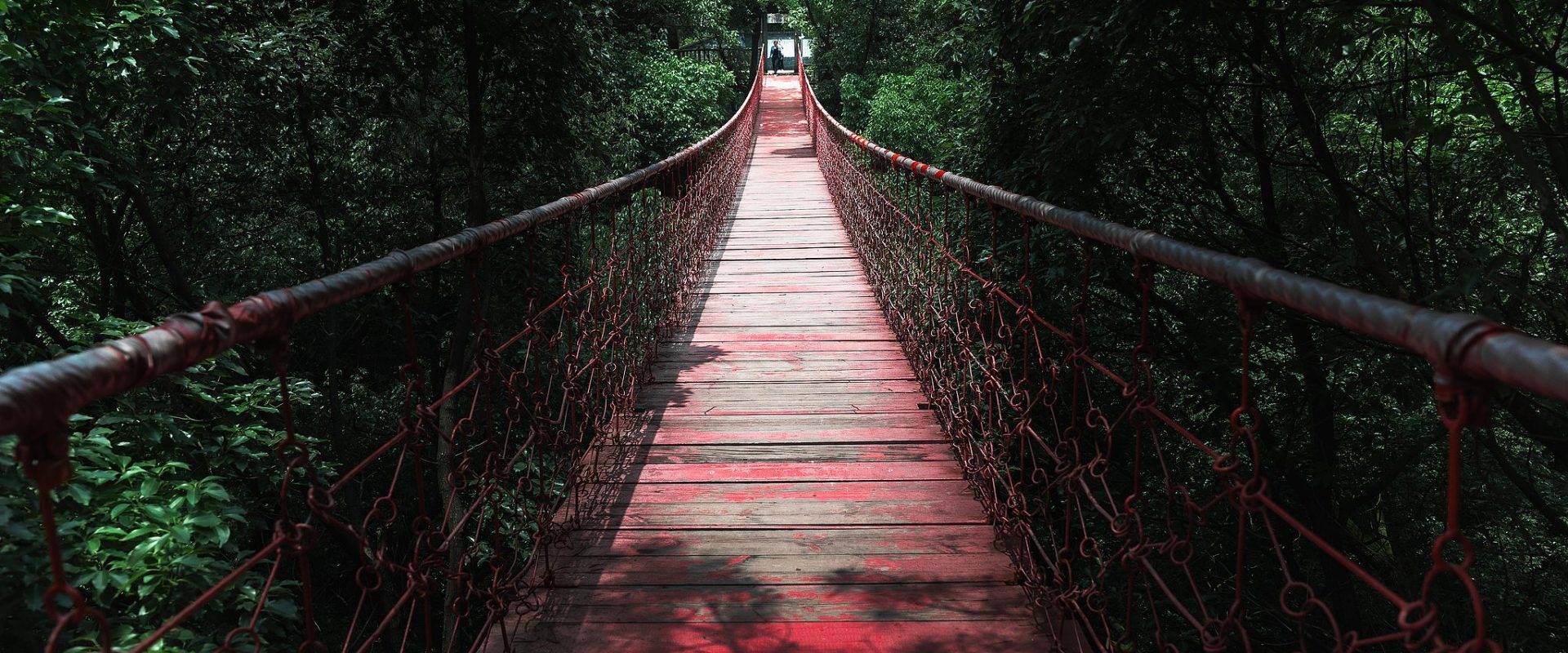
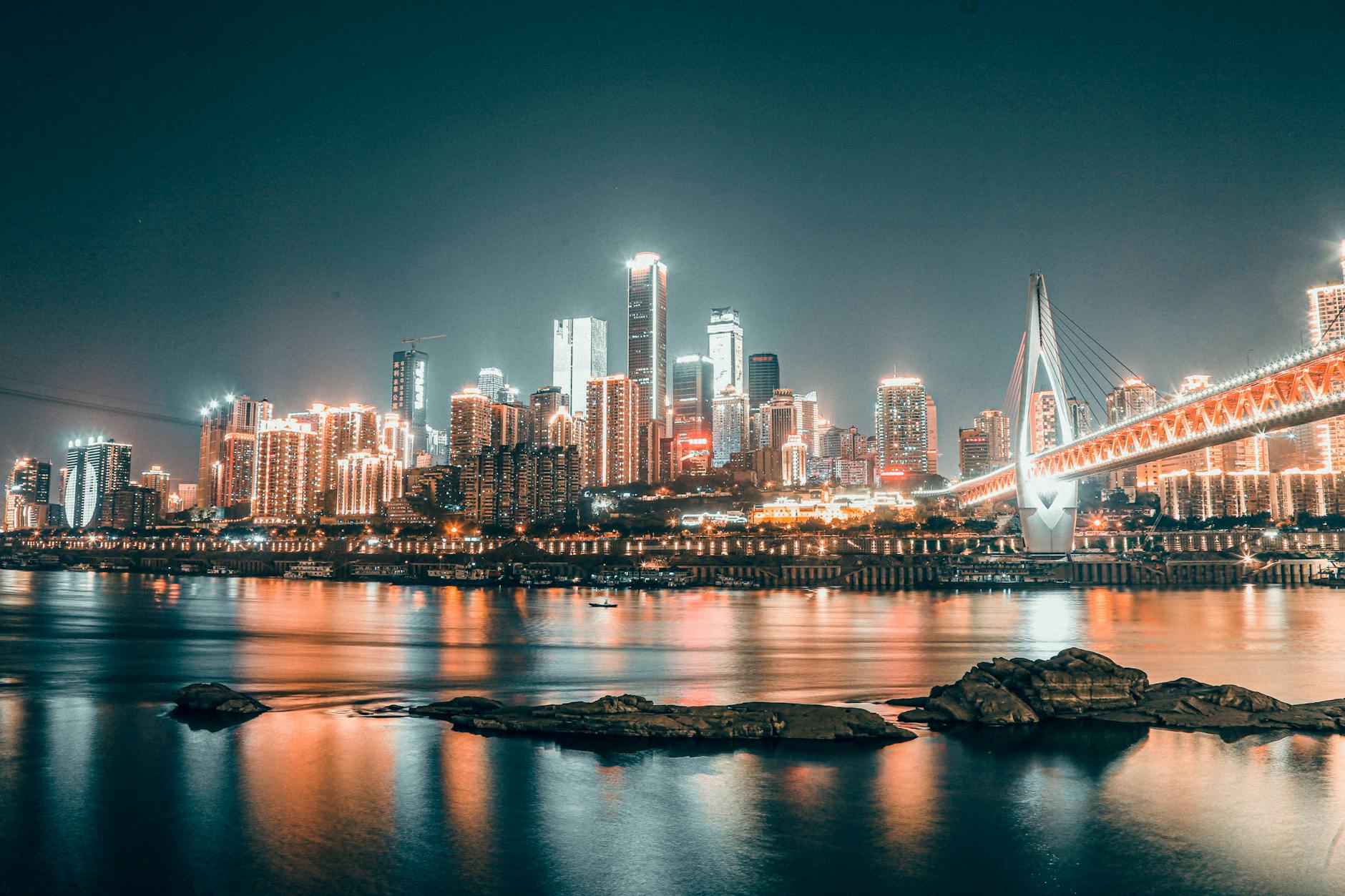
Chongqing wears visitors down faster than most Chinese cities. Thirty million people live on hills above two rivers, roads stack five levels deep, a metro line runs through the middle of an apartment block, and every walk ends in a staircase. After three or four days the appeal of all that concrete fades, and the sensible move is to leave it for a day. The municipality is the size of Austria, and most of it is limestone mountains, gorges and forest. Three places within three hours of the centre cover the range: Wulong for canyons and natural bridges, Jinfoshan for cool mountain air, and Gele Mountain for a half-day among trees without leaving the city limits.
Each section below gives the route out of the city, what the tickets cost, how long the walking takes and what the place is actually like, so that you can match a trip to the time you have. Prices are in Chinese yuan (RMB) and come from 2025 ticket boards.
Wulong’s Karst Canyons and Natural Bridges
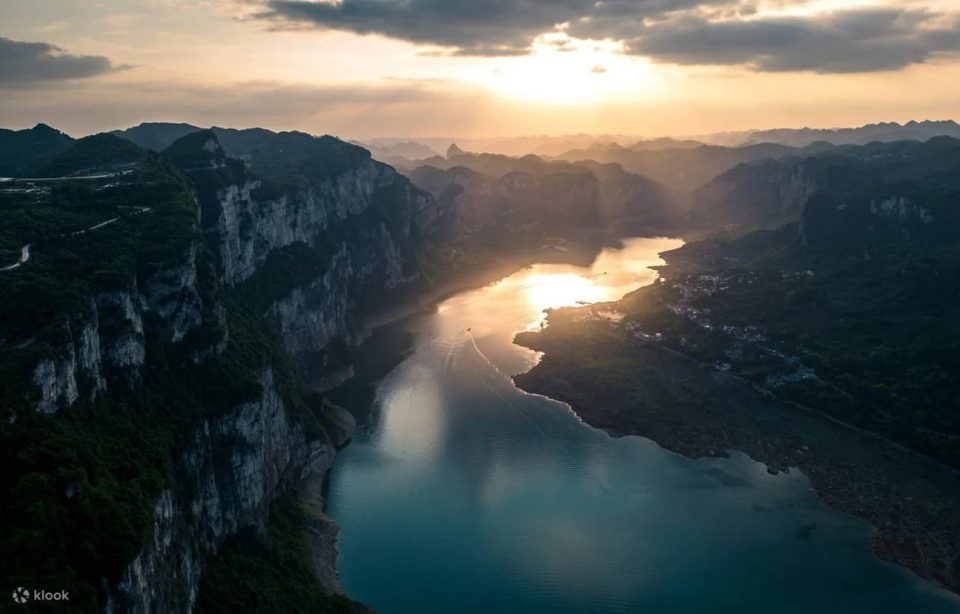
Ask anyone in Chongqing where to go for scenery and Wulong is the first answer. Wulong Karst National Geology Park is a UNESCO World Heritage site about 170 km southeast of the city, a landscape of sinkholes, arches and gorges carved out of limestone over millions of years. Photographs flatten the place, and standing on the floor of the Tiankeng canyon with 200 m of rock overhead gives a sense of scale that no picture conveys.
Getting there takes two to three hours by bus from Sigongqiao bus station, or about 1.5 hours on the train from Chongqing North to Wulong station, followed by a local bus to the park gate. A private transfer makes sense for a group of three or four and costs little more than four bus tickets. The park has several zones, and the two that matter on a day trip are the Three Natural Bridges (Tiankeng Sanqiao) and Longshuixia Gap. With limited time, the bridges alone justify the trip, and a Wulong Three Natural Bridges day tour from Chongqing bundles transport and tickets and solves the problem of the last bus back.
The visit starts with a glass elevator that drops 80 m down the canyon wall. At the bottom the air turns humid, the walls go green with moss and ferns, and the three arches rise overhead one after another. Michael Bay shot scenes of “Transformers: Age of Extinction” here, and the set pieces still make sense once you see the place. Entry costs about 125 RMB in peak season, the park shuttle bus 50 RMB and the elevator 15 RMB. For three hours inside one of the largest natural bridge systems in Asia, that is a modest bill.
Walking Among the Three Natural Bridges
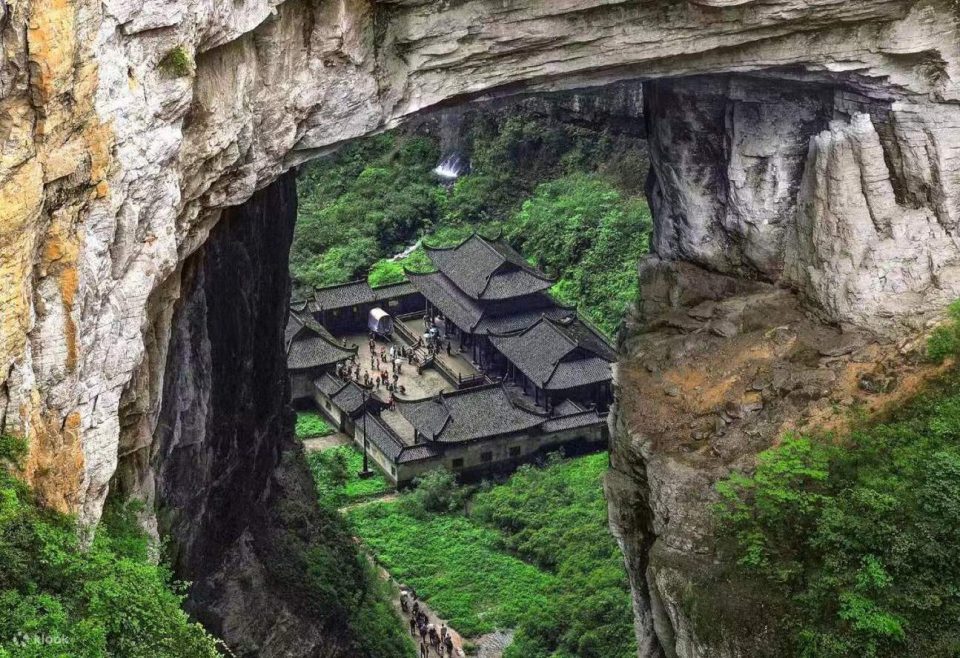
Tianlong, Qinglong and Heilong bridges are the remains of collapsed karst caves, three arches of 200-300 m spanning a single valley. The trail runs under all three and takes two to three hours at a photographer’s pace. Beneath Tianlong Bridge stands a reconstructed Tang dynasty post house, built for the film “Curse of the Golden Flower” and left in place; from a distance it looks grown out of the rock. After rain, temporary waterfalls spill from the canyon rims, and the mist they throw up makes a wet day worth the trip. For anyone who wants Fairy Mountain’s alpine meadows in the same day, a guided tour to Wulong Fairy Mountain and the Three Bridges combines both with a driver who knows the shuttle schedule.
Every bend in the trail opens a new angle on the arches, so the walk takes longer than the distance suggests. Expect rock walls on both sides, light falling in shafts through the openings above, and small cascades on the cliffs in wet months. Of the three parks in this guide, Wulong is the one that delivers a genuine sense of the unreal, and the one worth the long day.
Longshuixia Gap and Furong Cave
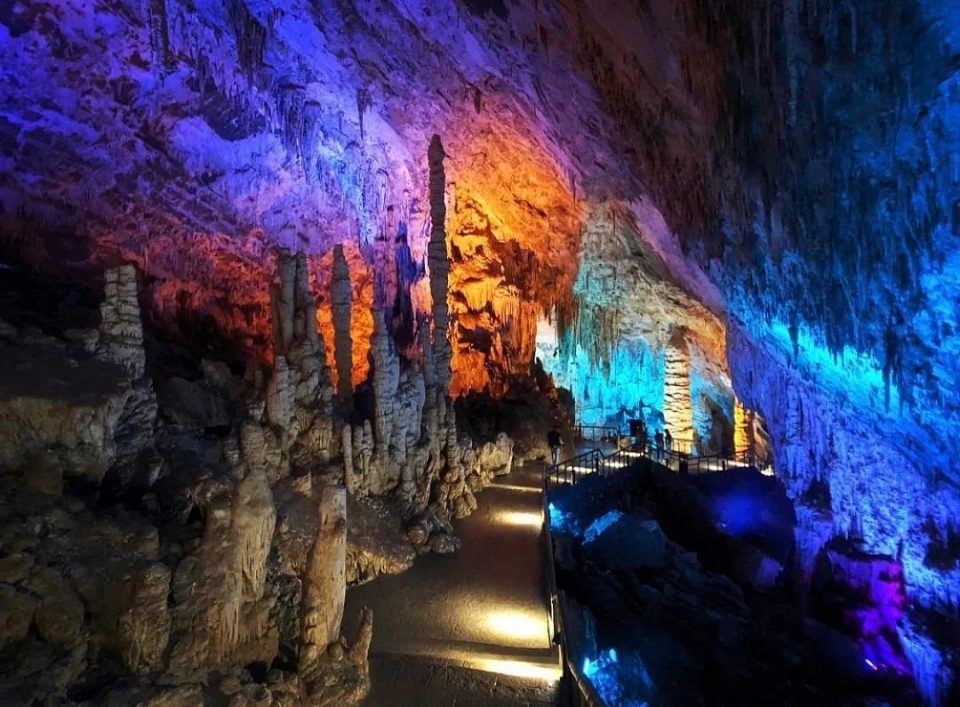
With time and legs to spare after the bridges, Longshuixia Gap is the natural next stop. It is a narrower, deeper canyon than Tiankeng, with waterfalls dropping into the gorge and suspension bridges across it, and the trail through it takes about two hours. The third sight, Furong Cave, is a different thing altogether: one of the largest show caves in China, with 2 km of lit passages, a chamber 60 m high and stalactite formations that geologists travel to see. It needs another two to three hours plus a transfer across the county, so it suits an overnight in Wulong town more than a day trip from Chongqing.
One site done properly beats three done at a run, and the bridges alone fill a day from Chongqing. Visitors with a second day usually pair Longshuixia with the cave. Combined tickets for the bridges and the gap are sold at the visitor centre, and a shuttle links the two.
Climbing Jinfoshan, the Golden Buddha Mountain
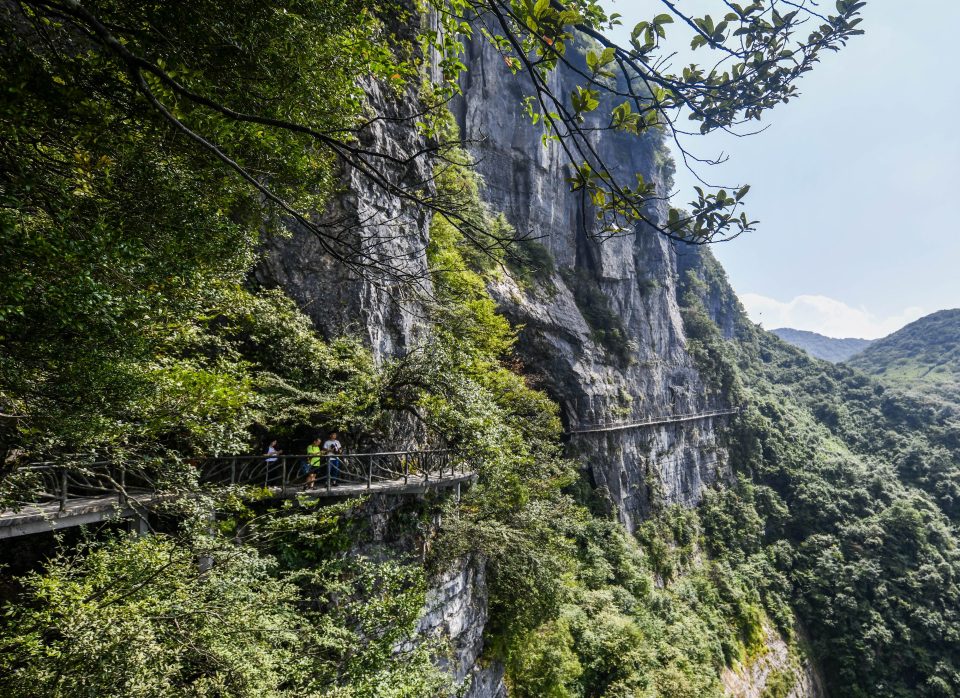
Jinfo Mountain, usually written Jinfoshan, lies in Nanchuan district about 100 km south of the centre, a two to three hour drive. It is a national nature reserve topping out above 2,200 m, which is the point: in July, when Chongqing sits at 38°C, the summit plateau is ten degrees cooler. The reserve protects a block of subtropical forest with its own endemic plants and animals, and it spends much of the year inside cloud.
Jinfoshan suits a day built around a long walk rather than a single sight. Two cable cars climb to the plateau, and from the top station marked trails lead along the cliff edge to viewpoints over the valleys. On clear days the view ranks with the best panoramas around Chongqing. Entry costs about 70 RMB, a round trip on the cable car about 80 RMB, and the park shuttle 20 RMB. Buses leave from Nanping bus station in Chongqing for Nanchuan, where a local shuttle continues to the park.
The name refers to the gold colour the cliffs take at sunset, and to the Buddhist temples scattered on the slopes, some of them active. Waterfalls are not the draw here; forest, limestone pinnacles and clean air are. In winter the plateau gets snow, something Chongqing itself never sees, and a small ski run near the summit opens for a few weeks in January. Buses to Nanchuan leave from Nanping or Sigongqiao stations; check the departure board, since the station changes with the schedule.
Gele Mountain’s Red Leaves and History
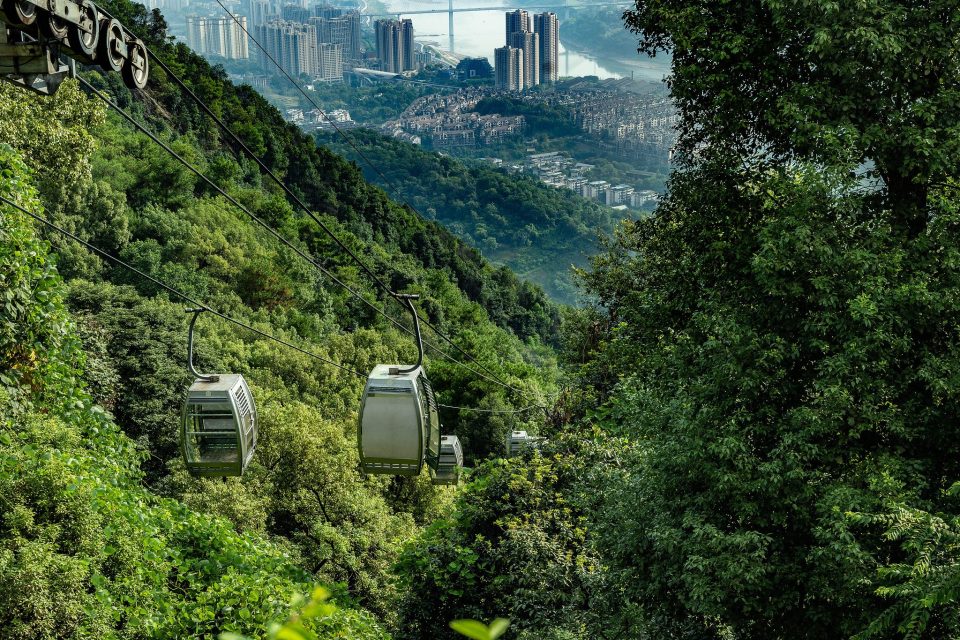
For something closer, Gele Mountain National Forest Park sits on the western edge of the city in Shapingba district. Metro Line 1 to Lieshimu station and a short taxi or bus ride bring you to the gate in under an hour from the centre. The park is known for dense forest, cleaner air than the valley and, in November, maples and sweetgums turning red and gold along the ridges. It is the obvious choice for a few hours of walking without a bus timetable.
Gele Mountain is also a memorial site. On its lower slopes stand the Zhazidong and Baigongguan prisons, where the Nationalist government held and executed Communist prisoners in the 1940s, now preserved with the Red Crag memorial complex. They record a grim chapter of Chongqing’s wartime history, and most Chinese visitors come for them rather than for the trees. Park entry costs about 20-30 RMB; the memorials are free. Locals use the mountain for morning exercise, and on weekday mornings the trails belong to retirees with tea flasks.
Hiking and Fresh Air
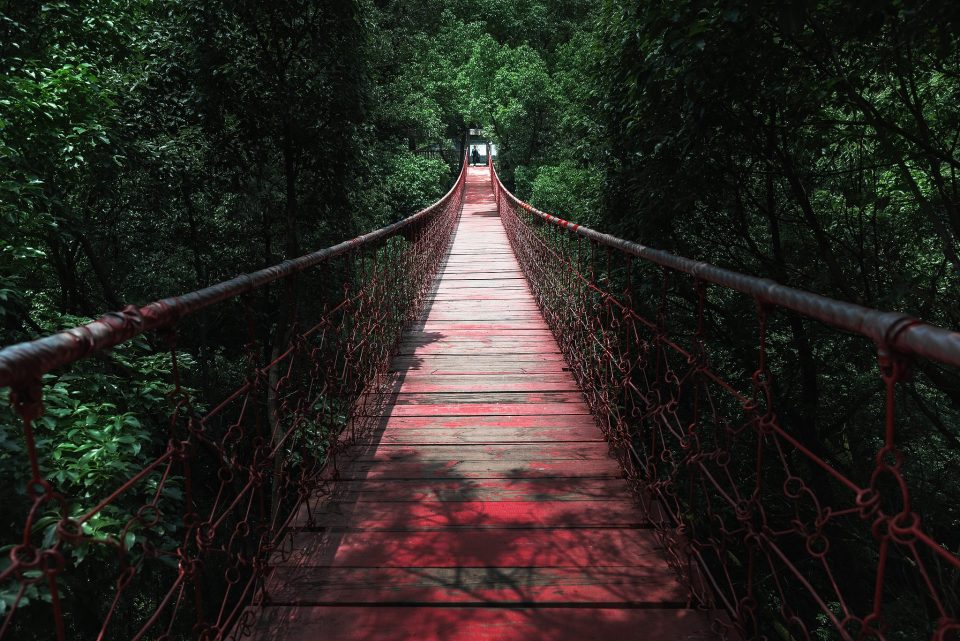
Walking on Gele Mountain is simple: follow the marked paths up through the forest, listen to the birds, and turn around when you have had enough. There is no karst drama and no high peak, only quiet, which after a week of Chongqing’s traffic is the point. Bring decent shoes and water; the paths are paved but steep in places. Several viewing platforms near the ridge look out over the hills to the west and back toward the towers of Shapingba.
Gele Mountain makes the case that a day out of Chongqing need not be a production. Half a day, a metro ticket and a flask of tea cover it. For visitors with a free afternoon between the city’s main sights, it is the easiest green space to reach.
Planning the Trip
A little planning keeps a day trip from turning into a night in a county town, and these are the points that matter most:
- Transport: Buses are the simplest option. Services to Wulong leave from Sigongqiao bus station and to Nanchuan (for Jinfoshan) from Nanping station; a one-way ticket costs 60-90 RMB. Trains from Chongqing North reach Wulong in about 1.5 hours and are easier to book through the 12306 app. For a group, a private day tour with a driver costs more but removes the question of the last bus, which leaves Wulong around 5 pm.
- Season: Spring and autumn are the best months by a wide margin. Chongqing summers are humid and hot, with the valley above 35°C for weeks; Jinfoshan’s plateau is the one escape. Winter is cold and damp, but the parks are nearly empty and Wulong’s canyon looks more dramatic in mist.
- Packing: Walking shoes with grip, a hat, sunscreen and a rain jacket, since mountain weather changes within an hour. Carry water and snacks: the cafes inside the parks are sparse and charge double.
- Language: Ticket offices at Wulong have some English; elsewhere, little. A translation app and the place names written in Chinese characters (武隆, 金佛山, 歌乐山) save time at bus stations.
- Payment: WeChat Pay and Alipay work everywhere, and both now accept foreign cards after a short registration. Carry a few hundred RMB in cash as a backup, because foreign bank cards are rarely accepted at park kiosks.
Which Park for Which Day
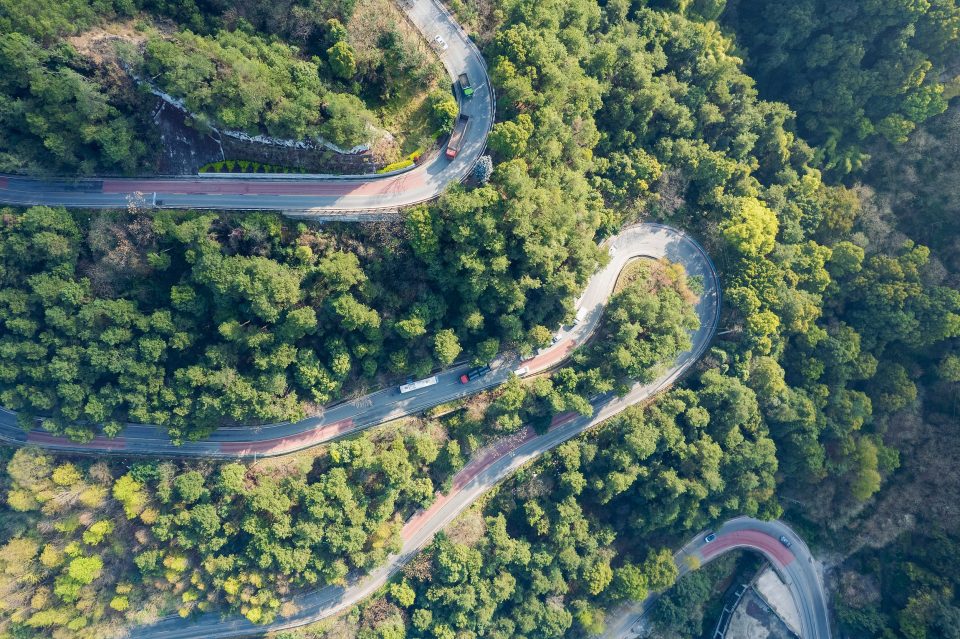
The choice depends on time and appetite. With a full day and a taste for big landscapes, Wulong is the answer. With a hot day and a wish for cool air and a long walk, Jinfoshan. With half a day and no patience for buses, Gele Mountain. Travellers staying a week often do Gele first as a test of their legs and save Wulong for the clearest forecast.
Even a day trip involves several hours on foot and a lot of stairs, so check the forecast the evening before and expect it to change. Smaller local agencies in Jiefangbei sell day tours to Wulong that include transport and tickets for 300-400 RMB, often cheaper than doing it independently once the park shuttle and elevator are added up. One of them runs a film-locations version of the Wulong trip for anyone who wants the “Transformers” angle.
For a longer stay that mixes city days with these trips, a hotel near a metro line and a bus station simplifies everything. The Niccolo Chongqing, a five-star in the Jiefangbei tower with views over both rivers, is the splurge option; the same district has business hotels at a third of the price and a direct metro link to Chongqing North station.
Three Parks, Three Kinds of Day
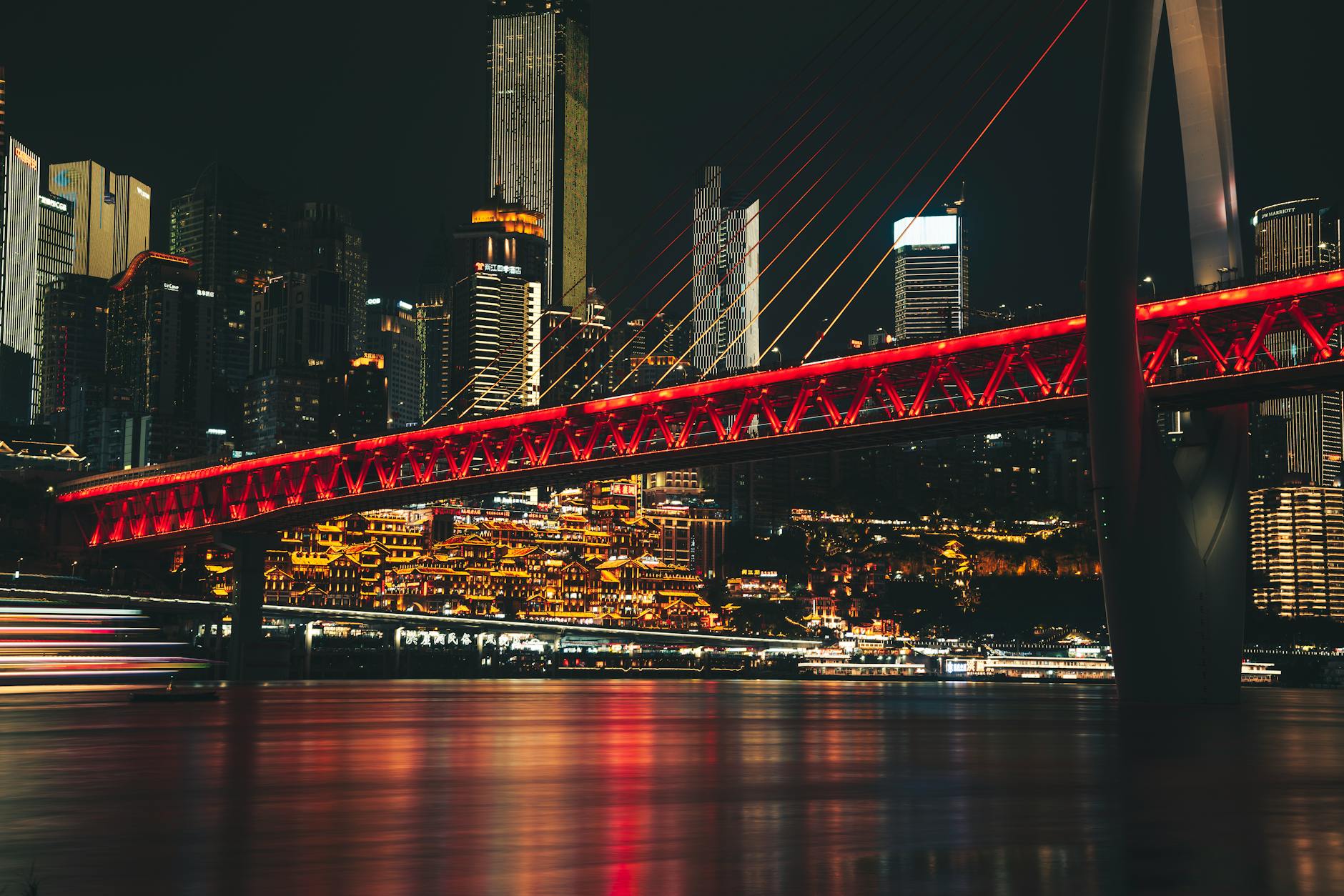
Chongqing is more than skyscrapers and hotpot; it is also the starting point for a stretch of limestone country that few foreign visitors see. Wulong’s arches, Jinfoshan’s cloud forest and Gele Mountain’s quiet trails each give a different day: one spectacular, one cool and slow, one short and easy.
Whichever park you pick, leave early, because the first bus to Wulong departs around 7 am and the canyon is at its best before the tour groups arrive at 11. If the trip is still at the planning stage, flights to Chongqing from Europe usually route through Beijing, Shanghai or Chengdu, and Jiangbei airport connects to the centre by Metro Line 3 in about 45 minutes.


