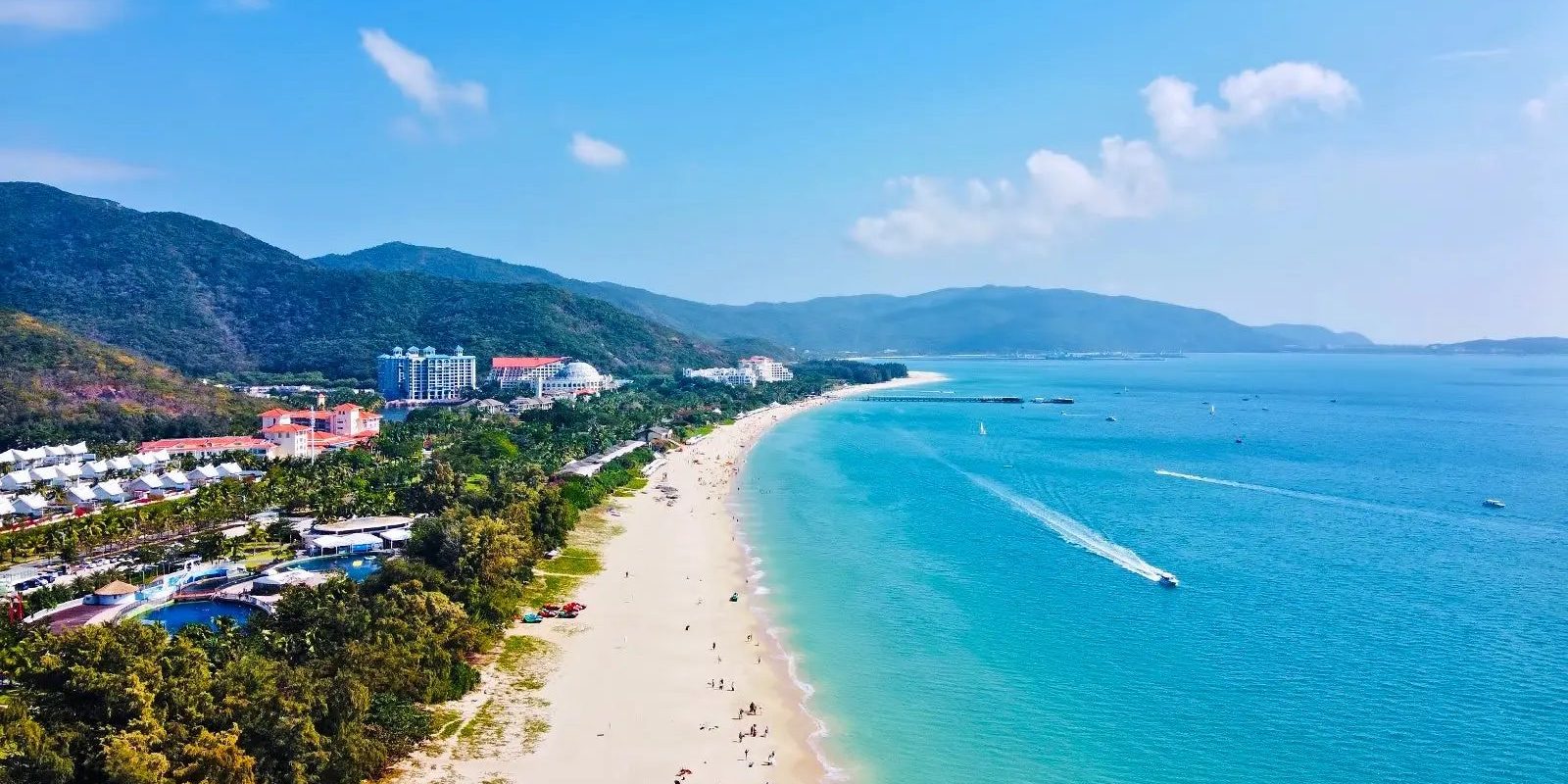
Sanya’s coastline runs for more than 200 kilometers, and on a hotel map it looks like one continuous resort. It isn’t. Four bays take almost all the visitors, and they differ enough that booking the wrong one can spoil a trip: one has clear water and silence, the next has night markets and karaoke until 2 AM, and in another the sea is closed to swimmers for most of the year.
Below is a comparison of Dadonghai, Yalong Bay, Sanya Bay and Haitang Bay by beach, prices, distance from the airport and the kind of traveler each suits. Distances are from Sanya Phoenix Airport, taxi fares are in Chinese yuan, and 7 yuan is roughly 1 US dollar.
1. Dadonghai Is Where You’ll Find All the Action
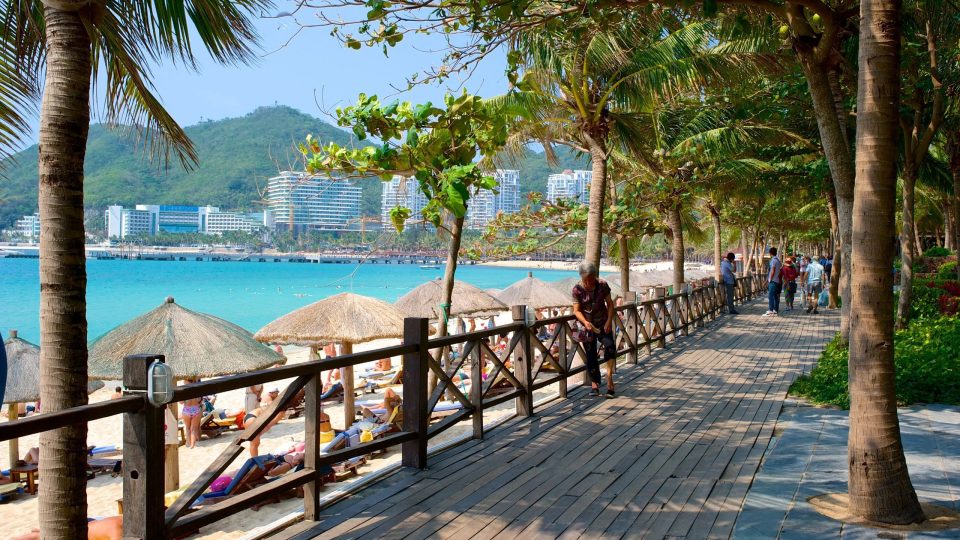
For a first time in Hainan without any Chinese, Dadonghai is the easiest landing. It is a compact, 2.5-kilometer bay 20 minutes from the airport (taxi 50 to 60 yuan), wedged between downtown Sanya and Luhuitou hill. Everything sits within a ten-minute walk: the beach, the malls, the seafood square, pharmacies, a Metro supermarket and most of the English-speaking tour desks on the island.
Sea and beach. Yellow sand, a gentle slope, lifeguards and roped swimming zones. Waves stay small because the bay faces south and is sheltered by two headlands, so swimming is allowed almost every day of the year. Water clarity is average: fine for a dip, not for snorkeling. By 10 AM on weekends and all through Chinese New Year the sand is wall to wall.
Who it suits. Younger travelers, anyone on a first visit, people who want to walk to dinner instead of calling a taxi. Downsides. Noise from bars until late, a tight beach in high season, and hotel rooms that are mostly second line, with a road between you and the sand.
What to Do and See
- Summer Mall, the “Pineapple”. A shopping center shaped like a golden pineapple, impossible to miss. Food court on the top floor, a supermarket in the basement, cinema and a rooftop bar.
- Seafood square. From about 6 PM dozens of stalls set out tanks of live prawns, crabs and clams. You pick, they weigh and grill. A dinner for two with beer runs 150 to 250 yuan if you check the price per jin (500 grams) before pointing.
- Beach promenade. About two kilometers of bars with live music, massage chairs and fruit carts, with Luhuitou Park at the western end for a 30-minute climb and a view over the whole bay.
Fruit prices. Pre-cut mango and coconut on the beach cost two to three times the street price. Walk ten minutes inland past the Pineapple to Yuya Road or the First Market downtown, where a kilo of mangoes is 10 to 20 yuan in season and the vendor will cut it for you.
Where to Stay
Only a handful of Dadonghai hotels touch the sand; most stand across the road, which here means a two-minute walk. Rooms range from 250 yuan at guesthouses to 1,200 yuan at the beachfront resorts.
- Sunshine Resort Intime Sanya: one of the few beachfront properties, with its own garden and a direct gate to the sand. The usual family choice in this bay.
- Harman Resort Hotel Sanya: built into the Pineapple mall, with a rooftop pool facing the sea. Convenient for shopping and nightlife, less so for a quiet sleep.
- Barry Boutique Hotel: a budget pick a few minutes from the beach, popular with travelers who spend their days out and only need a clean room.
2. Yalong Bay for the Best Beaches and a Quiet Stay
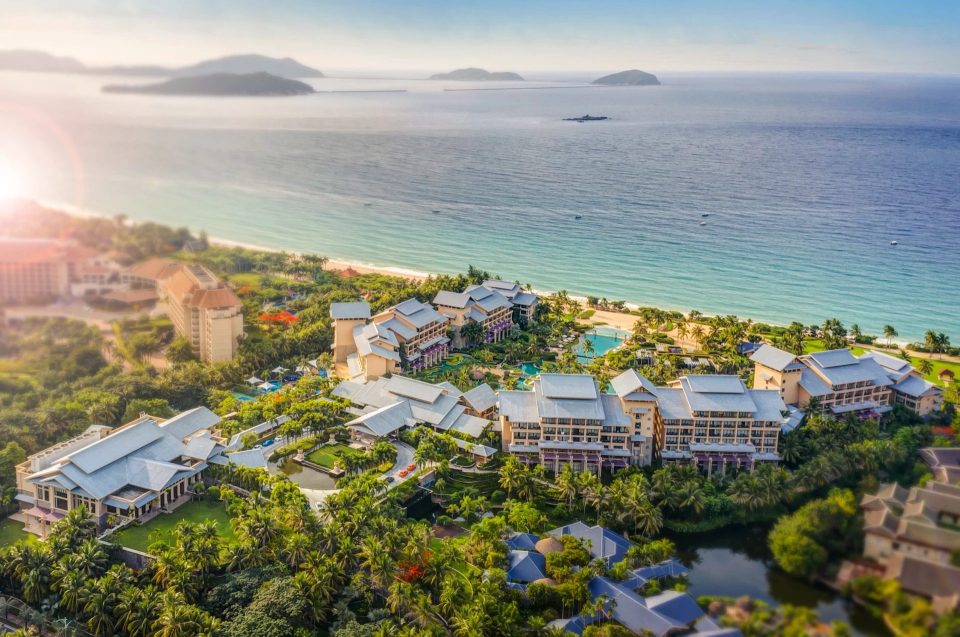
Yalong Bay (Yalongwan) is the beach that appears in Hainan advertising: seven kilometers of pale sand in a crescent 25 kilometers east of downtown, about 40 minutes and 90 to 110 yuan by taxi from the airport. Chinese marketing calls it the “Oriental Hawaii,” and for once the comparison is not far off. There is no town here, only resorts, a golf course and one shopping street.
Sea and beach. The best on the island by a clear margin: wide, fine sand, a gradual entry that stays shallow for 20 meters, and water that reads turquoise rather than green. Visibility is good enough to see fish from the surface near the rocks at either end of the bay. Each hotel keeps its own stretch with loungers and lifeguards, and the public section in the middle has showers and parasols for rent.
Who it suits. Families with small children, couples, anyone whose plan is beach, pool, spa and repeat. Downsides. The most expensive bay for both rooms and food, and almost nothing to do outside hotel grounds after dark.
What to Do and See
- Yalong Bay Tropical Paradise, the forest park on the hills above the bay, known for the glass skywalk and the suspension bridge from the film “If You Are the One II.” Entry about 150 yuan including the shuttle buses; the viewpoint over the full crescent of the bay is the reason to go.
- Rose Valley. A plantation park 15 minutes inland with several hundred rose varieties in bloom from November to April. Mostly for photos, 60 to 80 yuan.
- La Floret and the Yalong Bay outlets. The only non-hotel dining in the bay: a pedestrian street with Cantonese, Sichuan and Western restaurants and a Starbucks, plus a discount mall with sportswear brands.
Food budget. Resort restaurants here charge 200 to 400 yuan per person for dinner. A taxi to La Floret costs 15 to 20 yuan from anywhere in the bay, and a meal there is half the hotel price. For a real market, buses 25 and 27 run to Dadonghai and downtown Sanya for a few yuan and take about 50 minutes.
Top Hotels
Nearly every international chain has a resort along the beach road, with rates from about 800 yuan in low season to 3,000 yuan and above over Chinese New Year.
- MGM Grand Sanya: the loudest address in a quiet bay, with DJ pool parties, a kids’ club and a long beachfront.
- Sheraton Sanya Yalong Bay Resort: large gardens, several pools and one of the widest beach sections, which is why families book it year after year.
- Huayu Resort & Spa Yalong Bay: second line, next to La Floret, and typically 30 to 40 percent cheaper than the beachfront names for the same beach five minutes away.
3. Sanya Bay Is All About Sunsets and Local Life
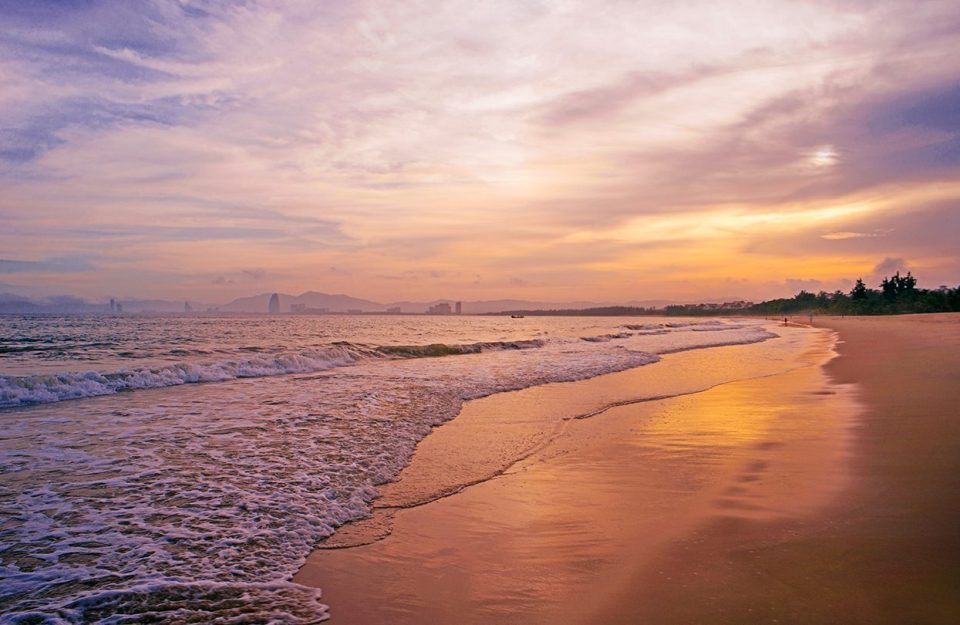
Sanya Bay is the long one: 22 kilometers of beach running west from the city center almost to the airport, which sits at its far end. Taxis from the terminal take 10 to 25 minutes depending on which section you book, 30 to 50 yuan. Behind the beach runs Sanya Bay Road and the “Coconut Dream Corridor,” a palm-lined promenade, and behind that an ordinary Chinese city with apartment blocks, noodle shops and wet markets.
Sea and beach. Wide, flat, grey-yellow sand with so much room that even in February you can find 50 meters to yourself. The water carries sand in suspension, so it looks murky near shore, and a road separates every hotel but one from the beach. On the plus side, the firm sand is good for running and the bay faces west, which matters at sunset.
Who it suits. Budget travelers, long-stay visitors renting apartments, photographers, anyone who prefers a city with a beach to a resort without one. Downsides. Sand flies at dusk (bring repellent, the bites itch for a week), traffic noise on the road, and a sea that is more for walking beside than swimming in.
What to Do and See
- Phoenix Island. An artificial island of five curved towers connected to the promenade by a bridge. Every evening from about 8 PM the facades turn into a light show visible along the whole bay. Free to watch from the beach.
- Tianya Haijiao, the “Ends of the Earth.” A seaside park at the western end of the bay with inscribed boulders, entry about 80 yuan. More of a pilgrimage for Chinese visitors, who know the rocks from the back of the old two-yuan note, than a beach stop.
- First Market and the seafood street. Downtown, 10 minutes by taxi. Buy crab, mantis shrimp or grouper by weight at the market, then carry it to one of the restaurants on Xinmin Street next door, which cook it for 15 to 25 yuan per dish.
Sunset. Sanya Bay is the only one of the four facing west, so people drive over from Yalong and Haitang for the evening. Sunset falls between 5:45 PM in December and 7:15 PM in June; the stretch of palms near the Howard Johnson hotel is the classic frame.
Where to Stay
Rooms start around 200 yuan in apartment hotels and rarely pass 1,000 yuan even at the resorts, which makes Sanya Bay the cheapest of the four by a wide margin.
- Pullman Oceanview Sanya Bay Resort & Spa: one of the few upscale hotels here, with its own tunnel under the road to the beach and a pool that compensates for the murky sea.
- Wyndham Sanya Bay: a large hotel with big pools, mid-range prices and families as the main clientele.
- Howard Johnson Resort Sanya Bay: the tall, hard-to-miss building that marks the center of the bay; older rooms but a direct position opposite the best sunset palms.
4. Haitang Bay for Luxury Resorts and Duty-Free Shopping, Not Swimming
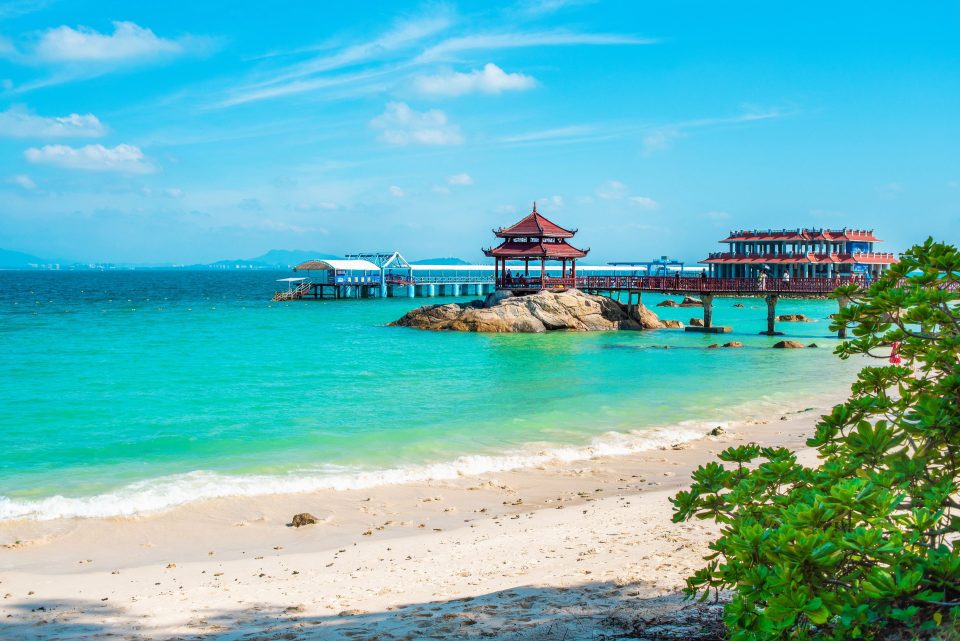
Haitang Bay is the newest resort zone, 30 kilometers northeast of downtown and about 50 minutes (120 to 150 yuan) from the airport. The 20-kilometer beach was farmland and fishing villages until the 2010s; now it holds a row of large resorts spaced far apart, a few villa complexes and the world’s biggest duty-free mall. Construction is still going on at both ends.
Sea and beach. Long, wild and nearly empty, with surf rolling in off the open South China Sea. That surf is the catch: swimming in the sea at Haitang Bay is prohibited for most of the year because of rip currents, and red flags fly on the hotel beaches. You sunbathe on the sand and swim in the pool. Every resort here was designed with that in mind, so the pools are enormous.
Who it suits. Shoppers, spa guests, families who plan their days around Atlantis, and anyone who wants space between themselves and the next sunbed. Downsides. Far from everything, no sea swimming, and no street life at all; dinner outside your hotel means a taxi.
What to Do and See
- Atlantis Sanya. A 1,300-room resort with an aquarium of 86,000 marine animals, a dolphin lagoon and the Aquaventure water park, the largest in China. Day tickets for non-guests cost roughly 300 to 400 yuan for the water park and 200 yuan for the aquarium; book the day before in high season.
- CDF Sanya International Duty-Free Shopping Complex. Around 120,000 square meters of cosmetics, watches, liquor and luxury brands. Duty-free purchases are open to anyone leaving Hainan island, including domestic travelers, up to a yearly limit of 100,000 yuan per person. You need your passport and a ticket off the island.
- Wuzhizhou Island: a small coral island with the clearest water in the Sanya area, reached by a 15-minute ferry from the pier at the northern end of the bay. Combined ferry and entry ticket about 150 yuan; snorkeling, diving and glass-bottom boats are paid separately on the island.
Day trip option. Haitang works as an excursion from any other bay: morning at Wuzhizhou, afternoon at Aquaventure or the duty-free mall, taxi back before dark. A car for the day with a driver costs about 400 to 500 yuan; a one-way taxi from Dadonghai is 90 to 110 yuan. Carry your passport, the mall will not sell to you without it.
Where to Stay
Rates run from about 900 yuan at the older resorts to 2,500 yuan and up at Atlantis and the newest openings, and in Chinese holiday weeks the whole bay sells out months ahead.
- Atlantis Sanya: hotel guests get unlimited access to the water park and aquarium, which for a family of four roughly offsets the price gap against neighboring resorts after two days.
- The Westin Sanya Haitang Bay Resort: a short walk from the duty-free complex, with a lagoon pool large enough for kayaks and a reliable kids’ club.
- Sofitel Sanya Leeman Resort: French-managed, known for its breakfast and gardens, with the quietest beach section in the bay.
The Four Bays Side by Side
- Dadonghai. 20 minutes from the airport. Swimmable sea, crowded beach, rooms from 250 yuan, walkable nightlife and food. Best for first visits and short stays.
- Yalong Bay. 40 minutes. The best beach and clearest water, rooms from 800 yuan, little outside the hotels. Best for families and couples with a beach-only plan.
- Sanya Bay. 10 to 25 minutes. Long empty beach, murky water, road between hotel and sand, rooms from 200 yuan, sunsets and city life. Best for budgets and long stays.
- Haitang Bay. 50 minutes. No sea swimming, huge pools, Atlantis and duty-free, rooms from 900 yuan. Best for shoppers and resort-only holidays.
Two practical notes apply to all four. Water temperature stays between 22 and 28°C all year, so swimming is possible in any month where it is allowed, but November to April is the dry season with the calmest sea, while July to October brings typhoon warnings that close beaches for days at a time. And hotel prices across every bay triple during Chinese New Year and the first week of October; outside those weeks, the same rooms are often discounted by 40 percent on the booking apps.
To see how the resort strip rates against the mainland cities, check our guest score study of Chinese hotels.


