Tashkent is the capital of Uzbekistan and the largest city in Central Asia, with about three million people. Most travellers pass through on the way to Samarkand and Bukhara. They give it a single day. That day covers the ten places below if you plan the order. They cluster into three areas: the old town around Chorsu, the centre around Amir Temur Square, and a few outliers reached by metro.
How to Group These Sights in One Day
My usual advice: start in the old town at 8 or 9 in the morning. Chorsu Bazaar is at its busiest then, and the Hast-Imam courtyards are still empty. Move to the centre for lunch. In the afternoon take the metro out to the TV Tower or the railway museum. Metro is the practical link between all of this. A ride costs a fixed fare of a few thousand som, about 25 US cents. Soviet-era stations such as Kosmonavtlar and Alisher Navoi are attractions in themselves. Photography inside has been allowed since 2018.
1. Hast-Imam Complex
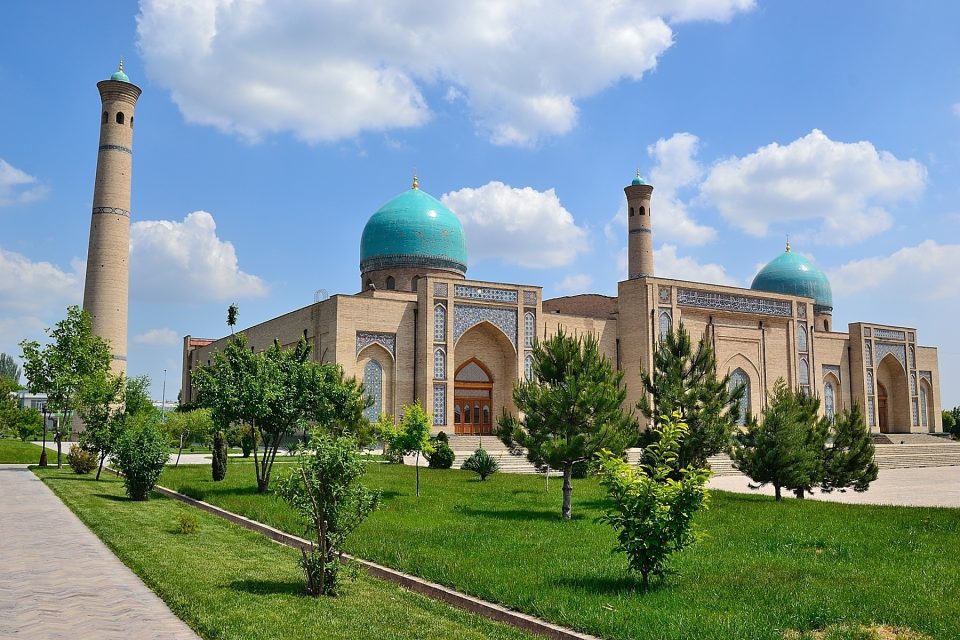
Hast-Imam, also written Hazrat Imam or Khazrati Imam, is the religious centre of the old town. Around one large square stand the 16th-century Barak-Khan madrasah, the Tillya Sheikh mosque, the mausoleum of Kaffal Shashi, a 10th-century scholar, and the Hazrati Imam mosque with its two 50-metre minarets, added in 2007. A guided visit to the Hast-Imam complex helps here. Buildings span several centuries and the signage is thin.
Its main object is the Uthman Quran, kept in the small Muyi Mubarak library on the square. It dates from the 7th or 8th century. Written on deerskin in early Kufic script, it is said to be the copy Caliph Uthman was reading when he was killed. Photography of the manuscript is not allowed. Entry to the library costs a small fee. Give the whole complex an hour. Nearest metro is Gafur Gulom, about 15 minutes on foot. Chorsu is a similar walk in the other direction, so the complex fits naturally into an old town walking tour.
2. Amir Temur Square
Amir Temur Square is the centre of the modern city. Timur’s equestrian statue went up in 1994. Earlier the same spot held statues of Kaufman, Stalin and Marx in turn. That sequence tells you most of what you need to know about the square’s history.
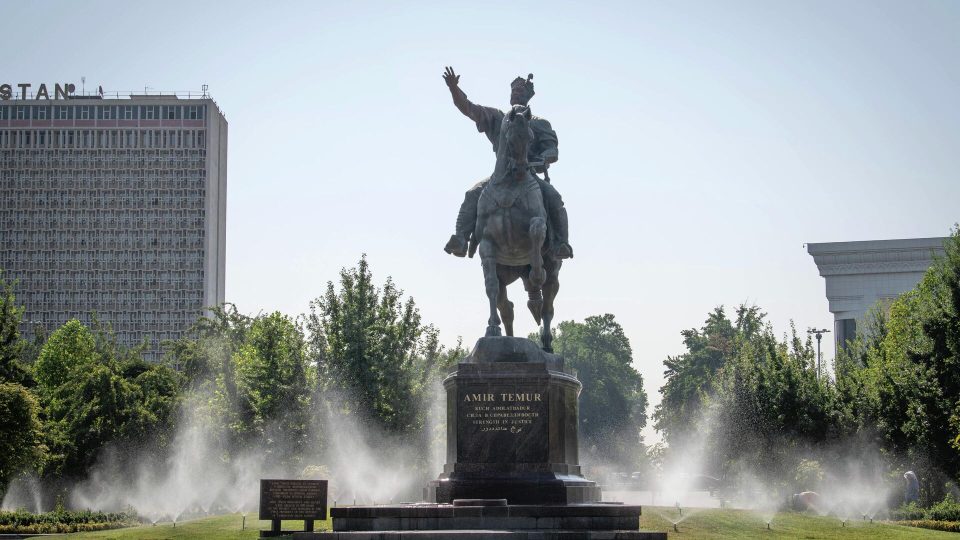
Around it stand the Hotel Uzbekistan, a 1974 concrete block with a lattice facade that has become the city’s unofficial symbol, the Tashkent Chimes clock tower, and the Amir Timur Museum with its blue dome. Plane trees once shaded the square. They were cut down in 2009, so in summer it is a place to cross rather than to sit. Benches under the trees in the neighbouring Broadway pedestrian street are better for that.
Navoi Opera and Ballet Theatre is a five-minute walk away. Most of the city’s mid-range and upscale hotels sit within a kilometre of the square. Two metro stations serve it: Amir Temur Khiyoboni on the Chilonzor line and Yunus Rajabi on the Yunusobod line.
3. Museum of Nature of Uzbekistan
Founded in 1876, the State Museum of Nature is the oldest museum in Central Asia. Its collection covers the country’s minerals, insects, reptiles, birds and mammals, with dioramas of the Kyzylkum desert, the Tian Shan mountains and the Aral Sea region as it was before the sea shrank.
Displays are old-fashioned: glass cases and stuffed animals. Labels are mostly in Uzbek and Russian. Even so, it is the quickest way to understand why Uzbekistan’s landscapes look the way they do. See it before you head out to the desert or the mountains. Allow 45 minutes.
4. Tashkent Television Tower
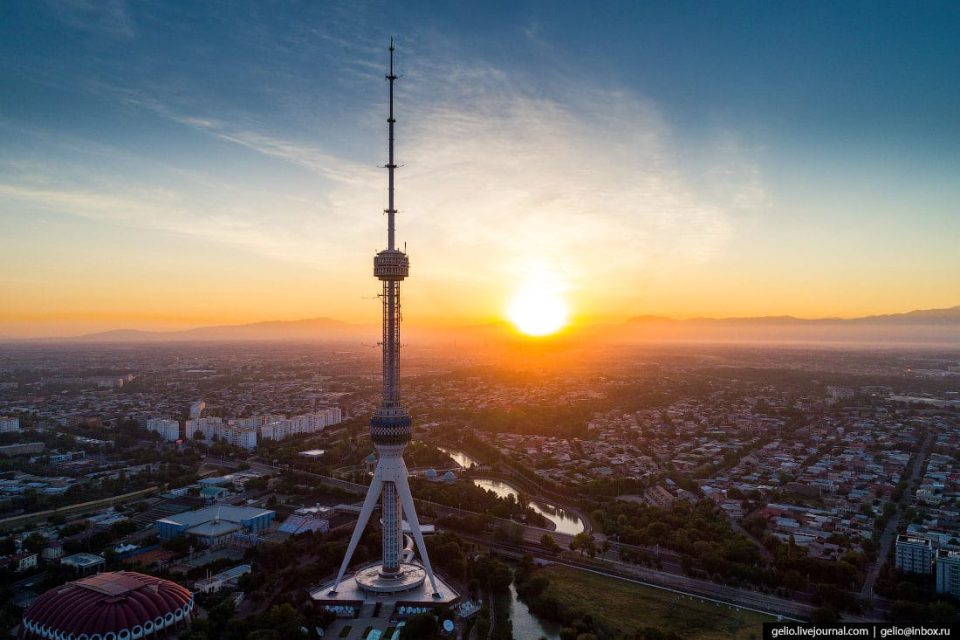
At 375 metres, the TV Tower has been the tallest structure in Central Asia since it opened in 1985. Its observation deck sits at about 100 metres. From there you see how flat and green the city is. On a clear winter day the snow on the Chimgan mountains shows to the east.
Bring your passport. Entry goes through a security check, and without a passport they will not let you up. Above the deck is a slowly revolving restaurant, one full turn per hour. Food there is ordinary. Sunset makes up for it. Bodomzor metro station is right next to the tower, well away from the other sights, so the tower works best as the last stop of the afternoon.
5. Kukeldash Madrasah
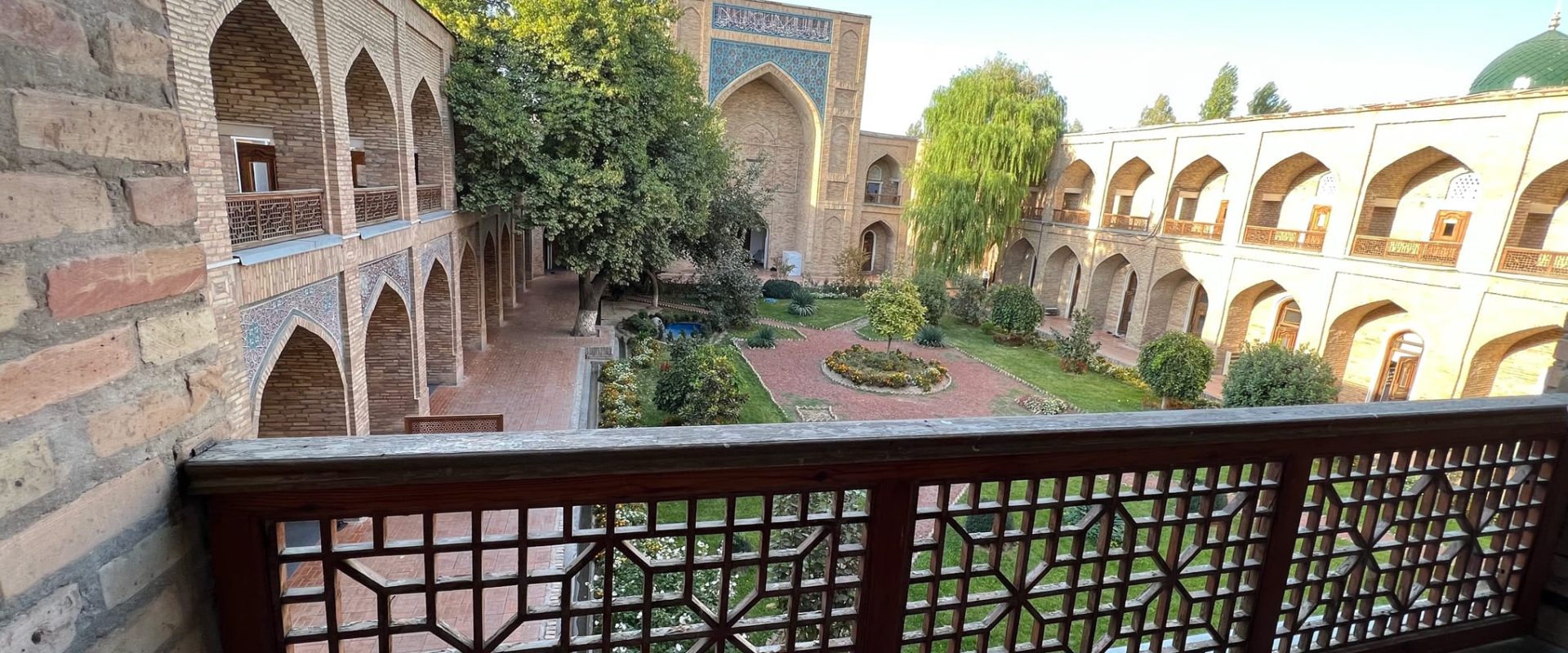
Kukeldash Madrasah dates from the 1570s and is the largest surviving madrasah in Tashkent. It stands on a rise above Chorsu, next to the Juma mosque, so you pass it on the way between the bazaar and the metro.
Main things to see are the brick portal and the courtyard with its rows of student cells. Tilework is restrained compared with Samarkand. Since the 1990s it has operated as a working religious school again. Visitors can look into the courtyard but not into the classrooms. Women should cover their heads. Ten or fifteen minutes is enough.
Navoi Park, officially the National Park named after Alisher Navoi, is the biggest green space in the city, laid out around a lake with pedal boats. Ponds, a monument to the poet, playgrounds and cafes fill the rest of it. Locals come here in the evening when the heat drops. Several guided walking tours of the city start or finish here.
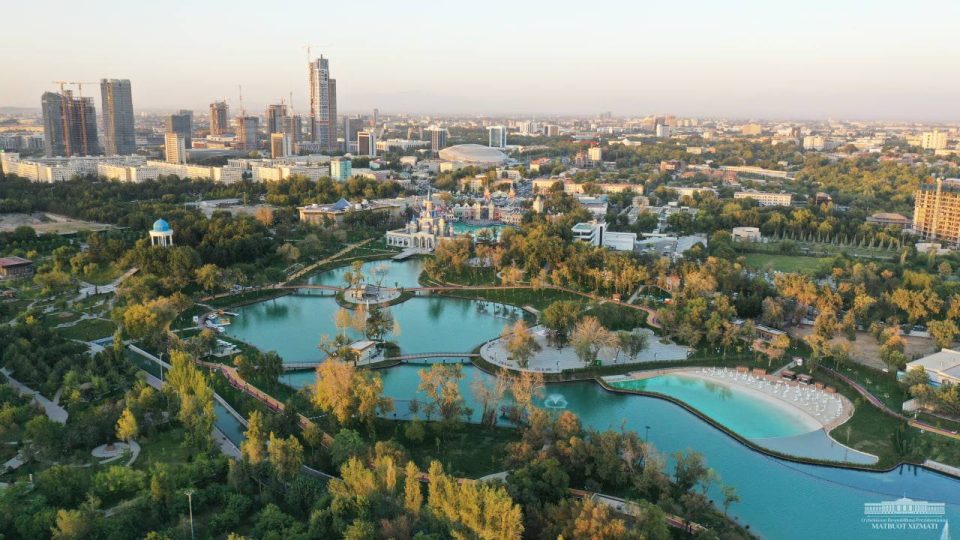
Alisher Navoi was a 15th-century poet whose name is on half the institutions in the country. He wrote in Chagatai Turkic rather than Persian, which is why he matters so much here. Concerts and holiday events fill the park on Navruz, 21 March. Milliy Bog metro station is at the gate.
7. Uzbekistan Railways Museum
Uzbekistan’s railway museum is an open-air yard beside Tashkent’s main railway station. It opened in 1989 for the centenary of the Central Asian railway. A few dozen steam and diesel locomotives stand on the tracks, from pre-revolutionary Russian engines to Soviet freight giants. You can climb into most of the cabs.
Children like it for that reason. It takes half an hour. Catching the Afrosiyob high-speed train to Samarkand from the same station? Arrive an hour early and see the museum before you board.
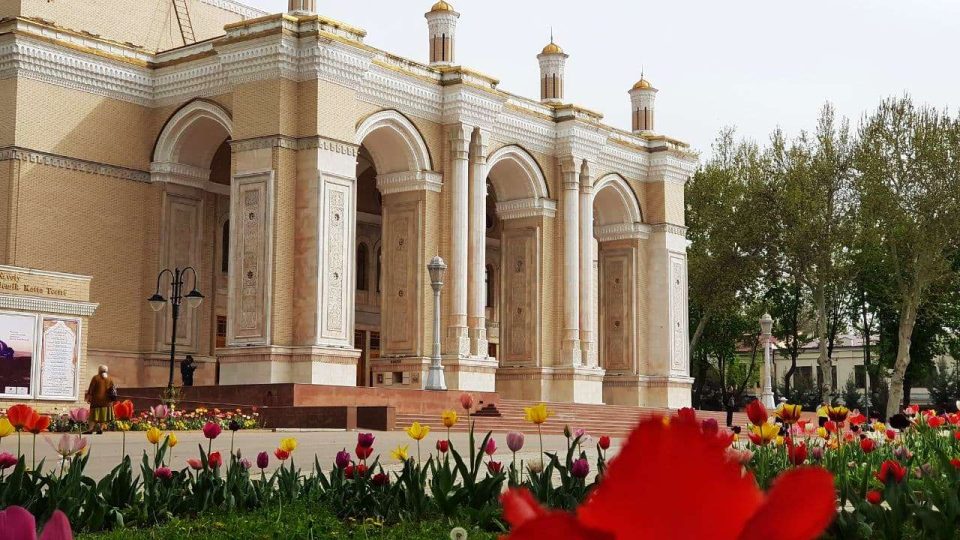
Completed in 1947, the theatre was designed by Alexey Shchusev, the architect of the Lenin Mausoleum. Japanese prisoners of war did part of the construction, and a plaque on the wall records it. It survived the 1966 earthquake. That quake flattened much of the city.
Inside, six foyers are each decorated in the carved plaster style of a different region: Bukhara, Samarkand, Khiva, Fergana, Termez and Tashkent. Seeing them means buying a ticket for a performance, and that is the best deal in the city. Seats for an opera or ballet cost a few dollars. Season runs from September to June. Programme appears on the theatre’s website a month ahead.
9. Chorsu Bazaar
Chorsu is the main market of the old city and the place I send everyone first. Under the blue-tiled dome, built in 1980, the ground floor holds meat and dairy. A ring around it holds spices, dried fruit and nuts sold by the kilo.
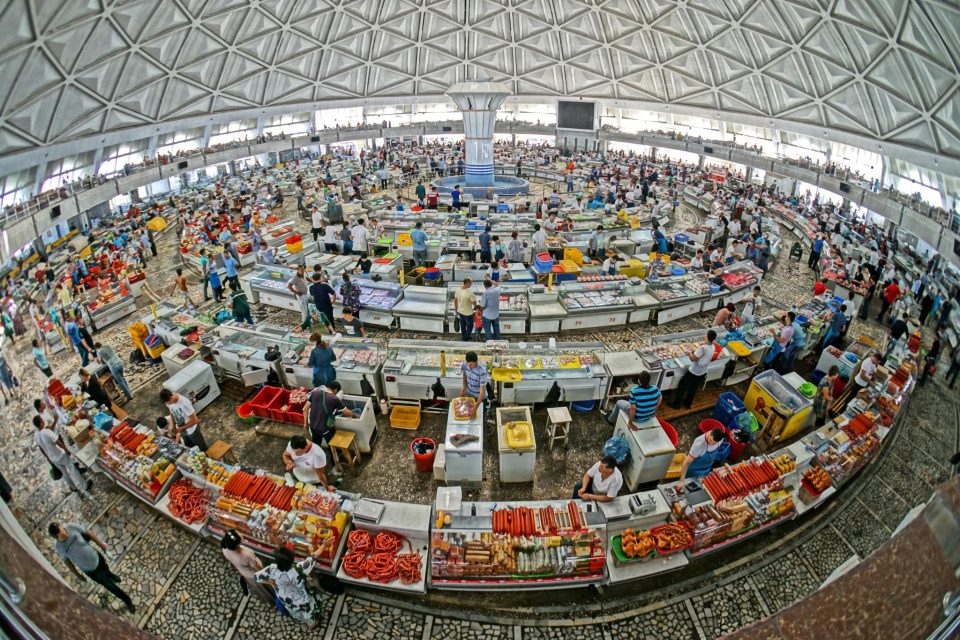
Outside the dome are the bread sellers with round non loaves stacked in prams. Next to them runs the food row: samsa come out of tandoor ovens, and plov is served from cauldrons from about 11 am. Go before noon. By mid-afternoon the best stalls have sold out. Prices are in som. Haggling is expected for anything beyond food. Chorsu metro station opens right onto the market. A food tour that starts here is the easiest way to try the dishes without guessing.
10. Aqualand Water Park
Aqualand is one of the largest water parks in Central Asia and the answer to a Tashkent July, when daytime temperatures pass 40 degrees. Slides range from children’s chutes to steep drops. Several pools and shaded areas fill the rest.
It opens for the summer season only, roughly May to September. Weekends fill up with local families. A weekday morning is calmer. For travellers with children it is the one stop on this list worth trading a museum for.
Ten sights, one metro card and one day: old town in the morning, centre for lunch, tower at sunset. Anything left over is a reason to come back from Samarkand a day early.


