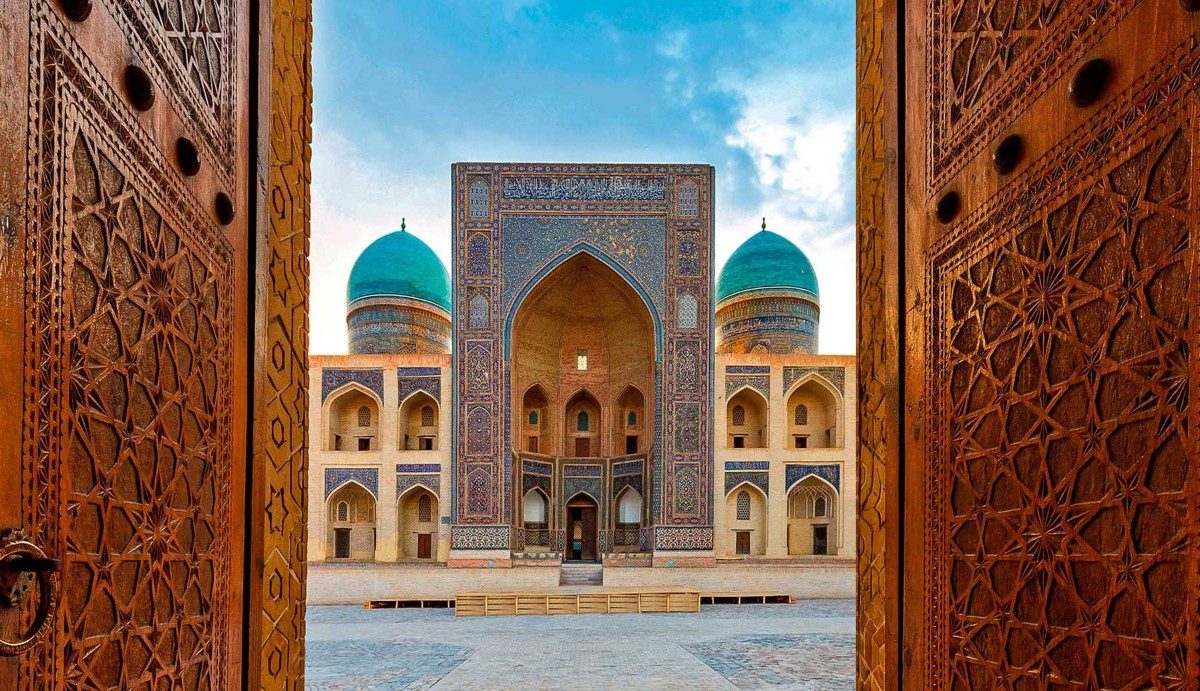
Bukhara is the city in Uzbekistan where the history is easiest to read, because it was never flattened and rebuilt the way Samarkand was. Buildings from the 10th, 12th, 16th and 20th centuries stand within a kilometer of each other. You can walk the whole sequence in a morning. What follows is the story of the city told through ten of those buildings, in the order they were built, with what they cost to enter in 2026. I lived in Uzbekistan for the better part of a year. Bukhara was where I sent every friend who had time for only one city, with the same advice each time: be on the Ark terrace before nine, when the square is still empty.
Twenty-Five Centuries on the Ark
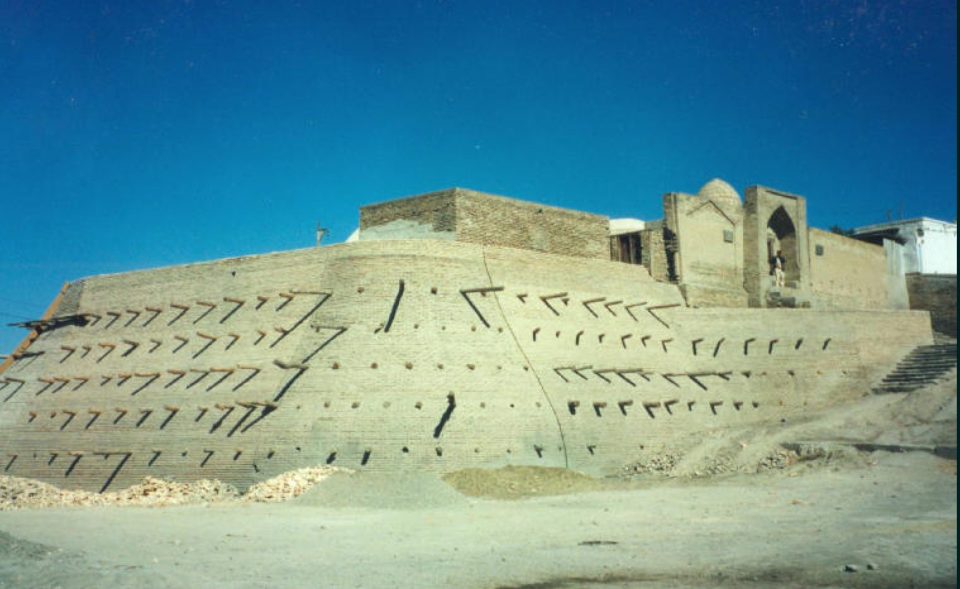
Bukhara’s Ark is a fortress on an artificial hill 20 meters high. That hill is the oldest thing in the city. Excavations have found layers going back to the 5th century BC. Every ruler of the oasis, from the Sogdian princes to the last emir, lived on top of it. Siyavush, hero of the Persian epics, is said to be buried under the east gate. Until the 1920s locals lit candles there at the new year. Today’s walls are from the 16th to 18th centuries. About 80 percent of what stood inside was destroyed in September 1920, when the Red Army bombed the citadel to drive out the emir. What survives is the gate, the Friday mosque with its painted ceiling, the coronation court, the stables and a small set of museums.
Open 9:00 to 18:00, later in summer; entry about 60,000 sum, roughly 5 US dollars. A terrace above the gate has the best view of the Kalyan minaret and the Bolo Hauz mosque across the square. Start here. From the terrace you can see almost every building in this article.
Ismail Samani’s Brick Cube
In a park ten minutes west of the Ark stands a brick cube nine meters on a side, and it is the oldest intact building in Central Asia. Ismail Samani founded the dynasty that made Bukhara the capital of a Persian-speaking empire from Iran to the Pamirs. He built it for his father around 892 and was buried in it himself in 907. That Samanid century was Bukhara’s first golden age. Its court supported the poet Rudaki and the historian Bal’ami. Ibn Sina, born in 980 in a village outside the city, later wrote that the Samanid library was the making of him.
It survived the Mongols because it was already buried in silt and sand. Archaeologists dug it out in the 1930s. Look at the brickwork. Every surface is patterned with bricks laid in different directions, and the effect changes with the sun through the day. Entry is about 15,000 sum and the park is a good place to sit. Chashma-Ayub, a domed shrine over a spring a hundred meters away, is 12th to 16th century and now a small water museum.
A Minaret Genghis Khan Spared
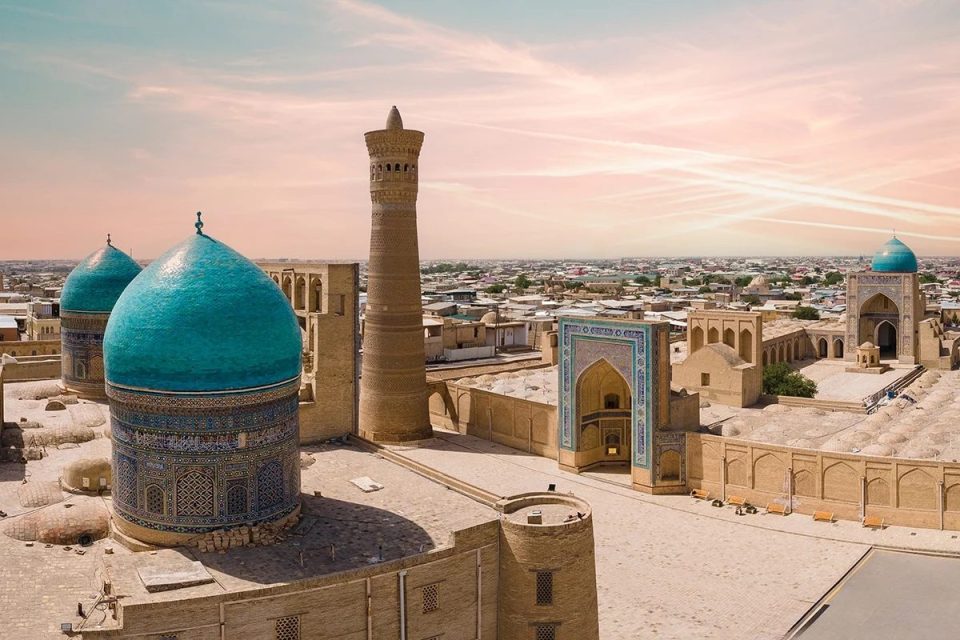
Arslan Khan, the Karakhanid ruler, built the Kalyan minaret in 1127. At 46.5 meters it was probably the tallest structure in Central Asia for centuries. It is made entirely of baked brick, with fourteen bands of different ornament and the first use of glazed blue tile in the region, on the band below the lantern. Its foundations go ten meters down on a bed of reeds and camel milk mortar, according to the local story. Apart from repairs to the top after the shelling of 1920, the brick body is the original of 1127. When Genghis Khan took Bukhara in 1220 he ordered the city burned but the minaret spared. Reportedly he had to tip his head back to see the top, and decided anything that made him bow deserved to stand.
Until the early 20th century the minaret was also the city’s place of execution. The condemned were tied in sacks and thrown from the gallery, which is why Western travelers called it the Tower of Death. The climb is closed to visitors. Looking is free. Po-i-Kalyan, the square around the minaret, is the center of everything else in this story.
Kalyan Mosque and Mir-i-Arab
After the Mongols and after Timur, whose capital was Samarkand, Bukhara’s second golden age came under the Uzbek Shaybanid dynasty in the 16th century. Kalyan mosque, at the foot of the minaret, was finished in 1514 on the site of the one Genghis burned. Its courtyard holds 12,000 worshippers. Its 288 domes on 208 pillars make a roofscape you can only appreciate from the Ark terrace. Entry about 30,000 sum. It was a warehouse in Soviet times and reopened for prayer in 1991.
Facing it across the square is the Mir-i-Arab madrasah of 1535, with two blue domes, paid for according to tradition by the sale of 3,000 Persian slaves. It was one of only two madrasahs in the Soviet Union allowed to keep training clergy after 1945. It still functions, which is why you can look into the courtyard from the portal but not go in. Two buildings facing each other across an open square, mosque and school, make up the classic Bukhara composition called kosh. This is the finest example.
Trading Domes and the Pond
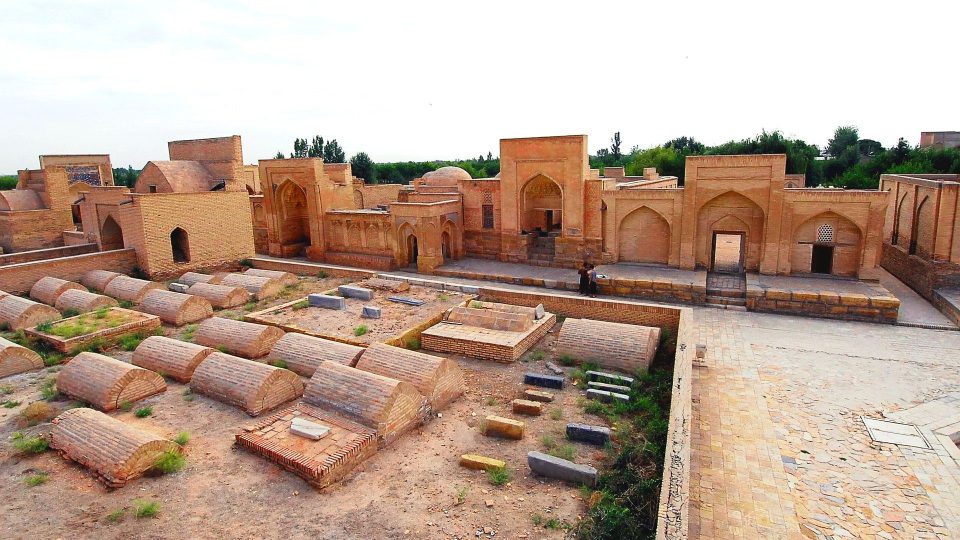
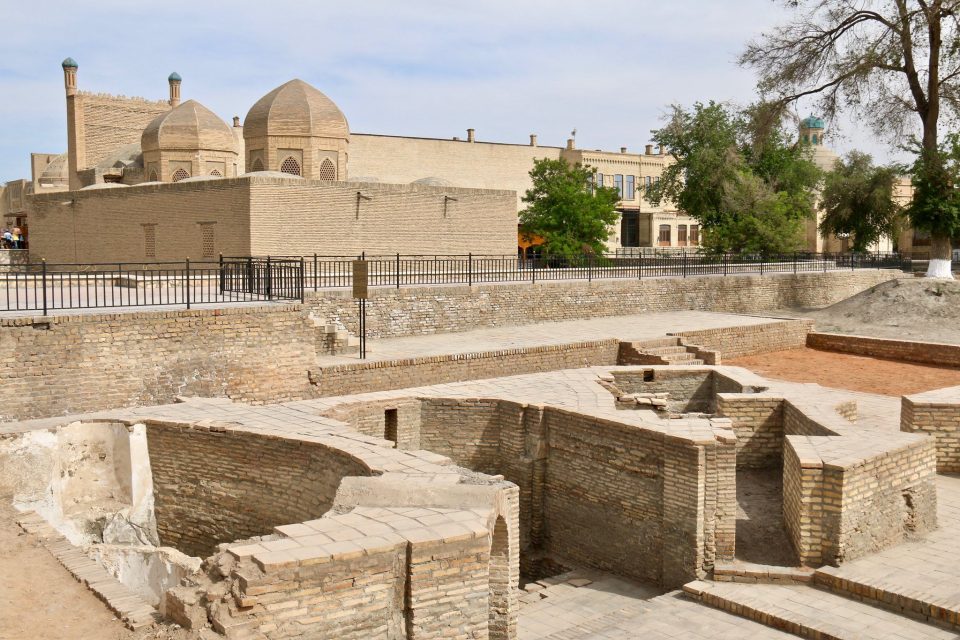
Sixteenth-century Bukhara was a city of merchants. The Shaybanids roofed its main crossroads with domed bazaars so trade could continue in the summer heat. Three survive on the street running southeast from Po-i-Kalyan: Toqi Zargaron, the jewelers’ dome, from 1570; Toqi Telpak Furushon, the hat sellers’ dome; and Toqi Sarrafon, the money changers’ dome, where Indian bankers changed silver for every currency on the Silk Road. They still sell what their names say, plus carpets, and the prices are negotiable by about a third. Between them stands the Maghoki-Attar mosque. Its lower parts are 12th century, and it sits on a Zoroastrian temple that sat on a Buddhist one. The archaeological pit beside it shows the layers.
That street ends at Lyab-i-Hauz, a stone pond dug in 1620 by the grand vizier Nadir Divan-Begi. He then built a caravanserai on one side and a khanaka, a lodge for Sufi pilgrims, on the other. When the emir came to the opening he declared the caravanserai a madrasah, and the vizier had to convert it. That is why the portal has the un-Islamic pair of birds carrying deer toward a sun with a face. The builders had not planned a religious building. Mulberry trees around the pond are 500 years old. This is where Bukhara eats in the evening. Plov and beer at the tables around the water come to about 60,000 sum a head. A statue of Hoja Nasreddin on his donkey stands at the east end.
Bolo Hauz and Chor Minor Under the Emirs
From the 18th century Bukhara was ruled by emirs of the Manghit dynasty, and the city they left is smaller in scale and brighter in color. Bolo Hauz mosque of 1712, facing the Ark across Registan square, was the emir’s own Friday mosque. Its front porch stands on twenty slender wooden columns painted red, blue and gold, reflected in the pond in front. The ceiling is the most cheerful thing in the city. It is a working mosque, free to enter outside prayer times.
Chor Minor, a fifteen-minute walk east of Lyab-i-Hauz through the mahalla, is a gatehouse with four small towers topped in blue. A Turkmen merchant built it in 1807 as the entrance to a madrasah that has since vanished. None of the four towers is a minaret, and no one ever called prayers from them. Each is decorated differently. It is Bukhara’s favorite oddity, free to see from the street. The neighborhood around it, with its blank mud-brick walls and carved doors, is the old city as it was lived in before restoration.
Sitorai Mokhi-Khosa and the Last Emir
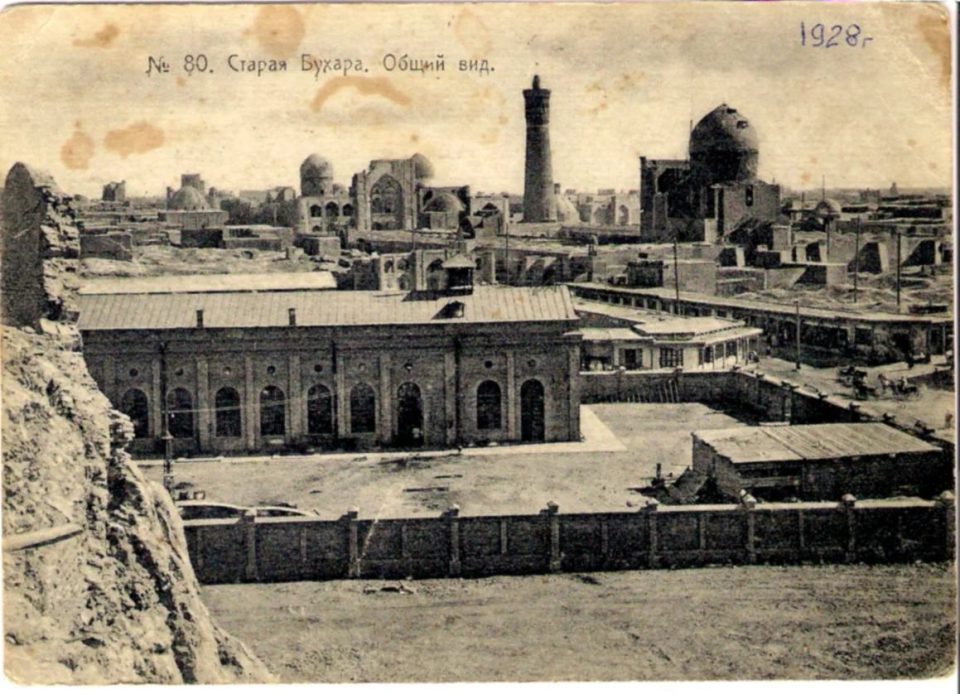
Russia defeated the emir’s army in 1868 and made Bukhara a protectorate. The emirs kept power at home in exchange for obedience abroad. Alim Khan, the last of them, had been educated in St. Petersburg. His summer palace four kilometers north of the city, finished in 1918, shows what that did to a Bukharan ruler’s taste. Reception rooms have Venetian mirrors, Russian tiled stoves and a white marble hall. The courtyards, the painted ceilings and the harem pavilion by the pond are pure Bukhara. Alim Khan is said to have thrown an apple to the wife he chose for the night from a pavilion above the pool. Now a museum of court life, the palace costs about 40,000 sum. A taxi from the center is about 30,000 sum each way.
In September 1920 the Red Army under Mikhail Frunze took the city after four days of bombardment. Alim Khan fled to Afghanistan with what he could carry and died in Kabul in 1944, the last ruler of a line stretching back to Ismail Samani’s throne on the Ark. A Bukhara People’s Soviet Republic lasted four years before absorption into the Uzbek SSR. UNESCO listed the historic center in 1993. Since independence the city has restored the trading domes, refilled the ponds that Soviet health officials drained, and turned dozens of old merchant houses into guesthouses. Our study of Uzbekistan hotel guest scores found those converted houses rate among the highest in the country.
Walking the Ten Buildings
- 8:30. Start on the Ark terrace for the overview, then cross to the Bolo Hauz mosque. Sixty minutes.
- 9:45. Walk west to the Samanid Mausoleum and Chashma-Ayub. Forty minutes including the park.
- 10:45. Back east to Po-i-Kalyan: the minaret, the Kalyan mosque courtyard, the Mir-i-Arab portal. Allow an hour.
- 12:00. Down the trading domes to Lyab-i-Hauz for lunch by the pond. Ninety minutes with shopping.
- 14:00. Chor Minor through the mahalla, then a taxi to Sitorai Mokhi-Khosa. Two hours.
- Evening. Back to Po-i-Kalyan when the minaret is lit and the square is empty.
Total entry fees for the day are about 145,000 sum, around 12 US dollars. Everything except the summer palace is within a 25-minute walk of Lyab-i-Hauz. A licensed guide for the old city costs 25 to 35 US dollars for half a day, and a guided walk through historic Bukhara covers the first eight buildings above in about three hours. Our Bukhara travel guide has the practical side, from the Afrosiyob train that arrives from Tashkent in under four hours to where to eat. The guide to Bukhara’s historic hotels lists the merchant houses and madrasahs you can sleep in. If you are continuing to Samarkand, our history of Samarkand through its monuments picks up the Timurid thread where Bukhara leaves it.


