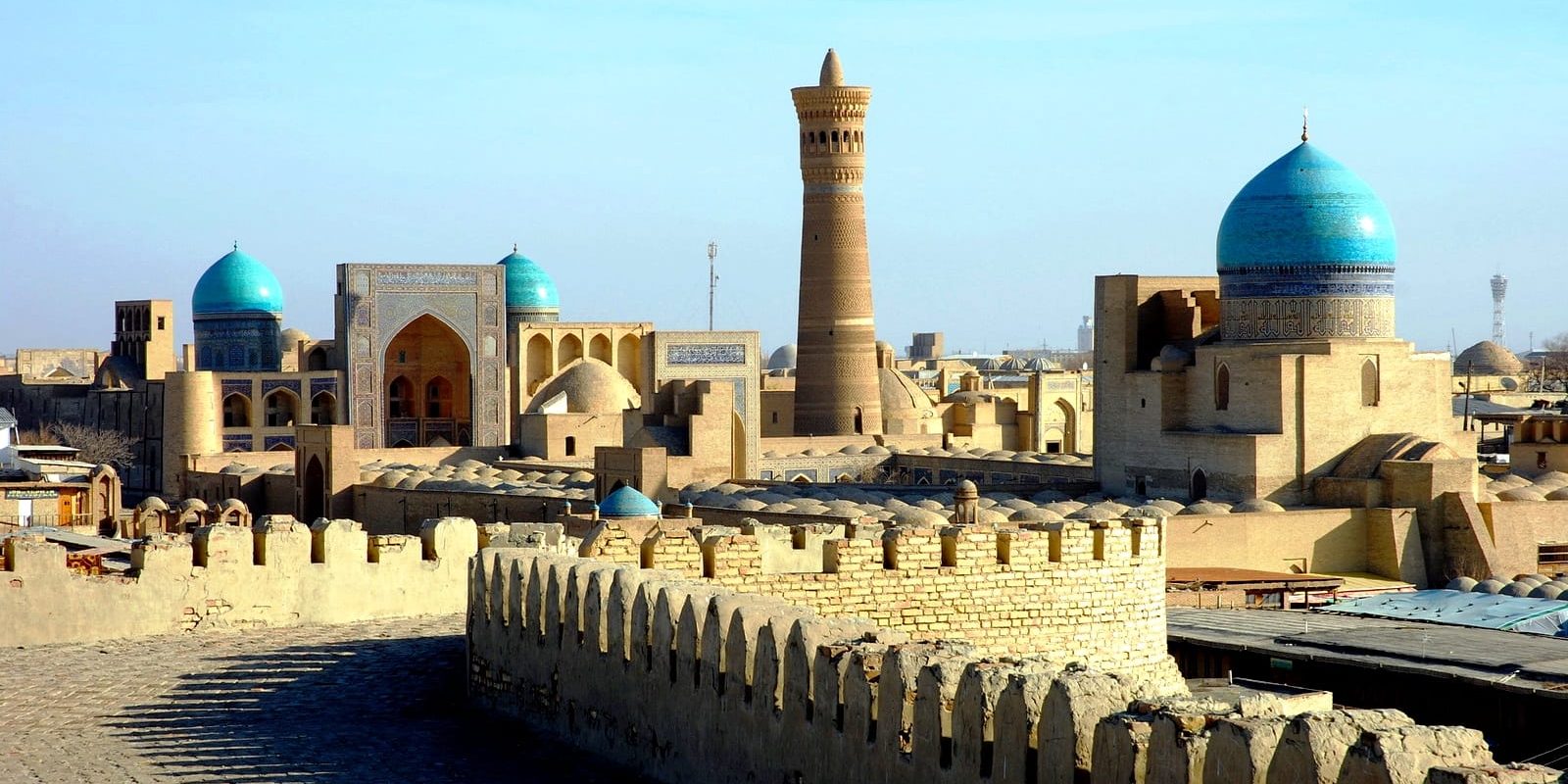
Bukhara is the most compact of the three big Silk Road cities in Uzbekistan. Samarkand spreads its monuments across a modern town, Khiva is a single walled museum, and Bukhara sits in between: a living old town where people still bake bread next to a 12th-century minaret. Almost everything worth seeing lies within a 20-minute walk of the Lyab-i Hauz pond.
Settlement here goes back some 2,500 years. Under the Samanids in the 9th and 10th centuries the city was a center of learning on the Silk Road, and Avicenna grew up in a village nearby. Most of what stands today dates from the 16th century, when the Shaybanid khans rebuilt the bazaars and madrasahs. Two days are enough for the main sights on your own. A half-day walking tour of the old town helps on the first morning, mostly because the buildings look alike until someone explains who built what.
Main Sights
- Samanid Mausoleum. Built around 900 for Ismail Samani and his family, this is the oldest intact building in the city. It is small, about ten meters on each side, and made entirely of baked brick laid in patterns that change with the light. Come early or late in the day, when the sun is low. It stands in Samani Park, a 15-minute walk west of the Ark fortress, and the entrance fee is symbolic.
- Kalyan Minaret and Poi Kalyan. Kalyan means great, and the minaret has earned the name since 1127. It rises 46.5 meters, and Genghis Khan reportedly ordered it spared when he razed the rest of the city. Around it stand the Kalyan Mosque, with room for 10,000 worshippers, and the Mir-i Arab madrasah, which still trains students and is closed to visitors. Sunset from the square is the best free view in Bukhara.
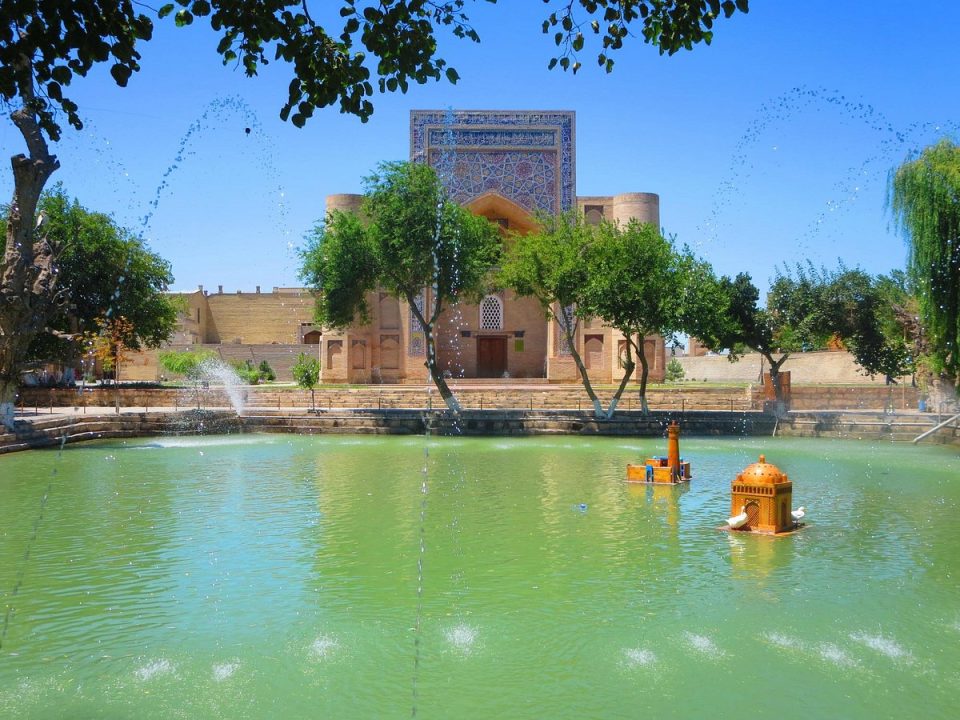
- Lyab-i Hauz. A stone pond dug in 1620, shaded by mulberry trees older than most countries, with the Nadir Divan-Begi madrasah on one side and a khanaka on the other. Tea houses around the water fill up after 6 pm. Nearby is Bozori Kord, a 16th-century hammam that still operates. A session in the Bozori Kord bathhouse takes about an hour and includes a scrub and a ginger rub. Men and women have separate hours, so check the schedule the day before.
Beyond these three, walk through the trading domes between Lyab-i Hauz and Poi Kalyan. Toqi Zargaron was the jewelers’ dome, Toqi Sarrofon housed the money changers, and Toqi Telpak Furushon sold hats. Today they sell scarves, knives and miniature paintings. Chor Minor, a small four-towered gatehouse hidden in the back streets east of the pond, is worth the ten-minute detour.
Culture and Traditions
Crafts in Bukhara are a working industry, not a museum display. Workshops sit inside the old madrasahs, and you can watch most of the process before buying.
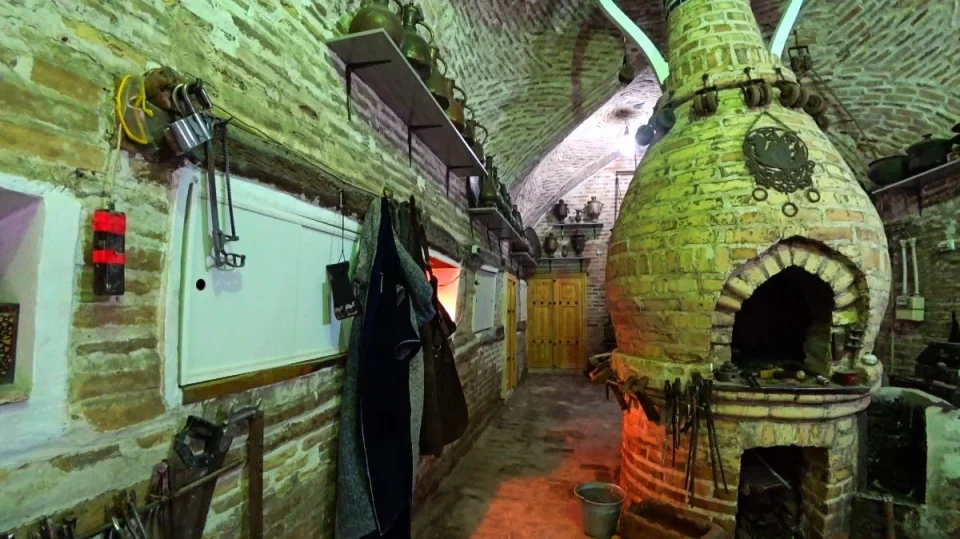
- Crafts. Gold embroidery on velvet is the local specialty. Skullcaps, coats and slippers with gold thread come from Bukhara and nowhere else in the country. Suzani embroidery, hand-forged scissors shaped like storks, and carpets from the workshop inside the Sayfiddin caravanserai are the other things people carry home. Prices are negotiable, and starting at half the asking price is normal.
- Music and dance. Bukhara is the home of shashmaqam, a classical vocal tradition shared with Tajik culture. The easiest way to hear it is the evening folklore show in the Nadir Divan-Begi madrasah, which runs most nights in season with dinner in the courtyard. Costumes are more theatrical than authentic, but the musicians are good.
- Holidays. Navruz on 21 March is the biggest date in the calendar. Streets fill with plov cooked in cauldrons the size of bathtubs, and sumalak, a wheat paste stirred all night, is handed out to everyone. If you can time a trip for late March, do it. Hotels book out a month ahead.
Gastronomy
Bukhara plov differs from the Tashkent version. It is layered rather than mixed, sweeter, often with raisins and quince, and locals eat it for lunch, not dinner. Look for a chaikhana with a queue around 1 pm. Other things to order: shashlik by the skewer, manty dumplings, and the local samsa baked in a tandoor. Bread from Bukhara, the flat round lepeshka stamped with a pattern in the middle, keeps for days and is a traditional gift. Restaurant portions are large. Sharing two mains between three people is the usual approach. If you want to learn the dishes rather than only eat them, a cooking class in a Bukhara family home is a common half-day option and ends with lunch.
Tips for Travelers
- Best months are April, May, September and October. July and August pass 40°C in the shade, and the old town has little of it. Winter is cold and quiet, with some hotels closed.
- Stay inside the old town. Converted merchant houses around Lyab-i Hauz cost from about $30 for a double with breakfast, and being able to walk out at 7 am before the tour groups is worth more than a pool. A guesthouse in the old town of Bukhara is also the easiest way to arrange a taxi to the station.
- Trains from Tashkent take about four hours on the Afrosiyob and arrive at Kagan station, 12 km from the center. Taxi from there costs a few dollars. Book train tickets a week or two ahead in high season.
- Wear proper shoes. Streets are uneven stone, and a normal sightseeing day is 12 to 15 km on foot. If you would rather not plan the route, a full-day guided tour of Bukhara covers the same ground with transport for the outlying sights, such as the emir’s summer palace.
- English is limited outside hotels and souvenir shops. Russian works everywhere, and a translation app handles the rest. Card payments are common in the center but carry some cash in sum for tea houses and taxis.
Two full days cover the center. A third day fits the Sitorai Mokhi-Khosa summer palace, the Bahouddin Naqshband mausoleum and the Chor Bakr necropolis, all within 15 km of town. Taxi drivers offer the three as a half-day loop, and organized excursions around Bukhara do the same route with a guide. After that, most people continue by train to Khiva or back to Samarkand.


