Almaty sits at the foot of the Zailiysky Alatau, the northernmost ridge of the Tian Shan. The mountains start where the last bus stop ends. Few large cities offer a glacier before lunch and a desert canyon the same afternoon. This guide covers the trips I would put on a short list. Each entry gives distance, road time and cost, so you can choose between a driver, a tour or the bus.
Distances below are from the city center. Mountain roads close after heavy snow. Two destinations, Big Almaty Lake and the upper Alatau valleys, lie inside the border zone with Kyrgyzstan. Carry your passport on every trip. For a plan that combines the city itself with one mountain day, see our two-day Almaty itinerary.
Natural Sights
Three natural destinations account for most day trips out of Almaty. There are the mountain valleys directly above the city, the lake at the top of the Big Almaty gorge, and Charyn Canyon three hours east on the steppe. The first two can be done on public transport plus a walk. Charyn needs a car or a tour.
Zailiysky Alatau Mountain Range
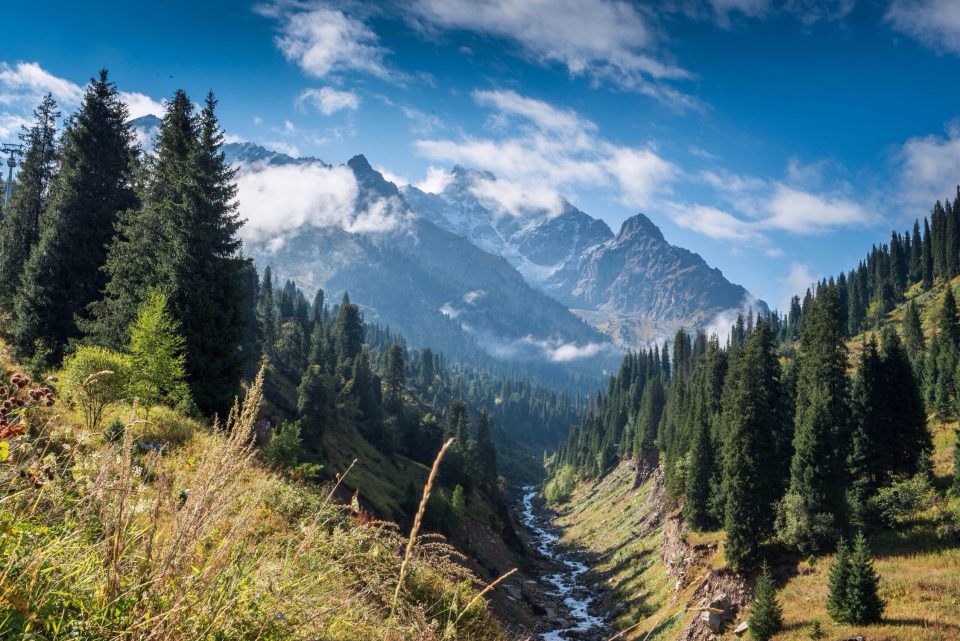
The ridge behind Almaty rises from about 900 meters at the city’s southern edge to peaks above 4,000 meters within 30 kilometers. Vegetation changes with every few hundred meters of altitude. Apple orchards give way to Tian Shan spruce, then alpine meadow, then bare rock and permanent ice. Talgar Peak is the highest point at 4,979 meters. It is visible from the city on clear mornings. Trails start from the end of bus routes. Bus 12 runs from the center to Medeu. From there marked paths lead to Kok-Zhailau plateau and up the Kimasar gorge, a half-day walk each way. Ile-Alatau National Park charges a small entrance fee at the road barriers, a few hundred tenge per person.
Weather turns fast above 2,500 meters. Thunderstorms roll in most summer afternoons, so start early. For anything beyond the marked day trails, a guided trek in the Zailiysky Alatau is the sensible option. Guides know which passes are open and handle the park permits.
Big Almaty Lake
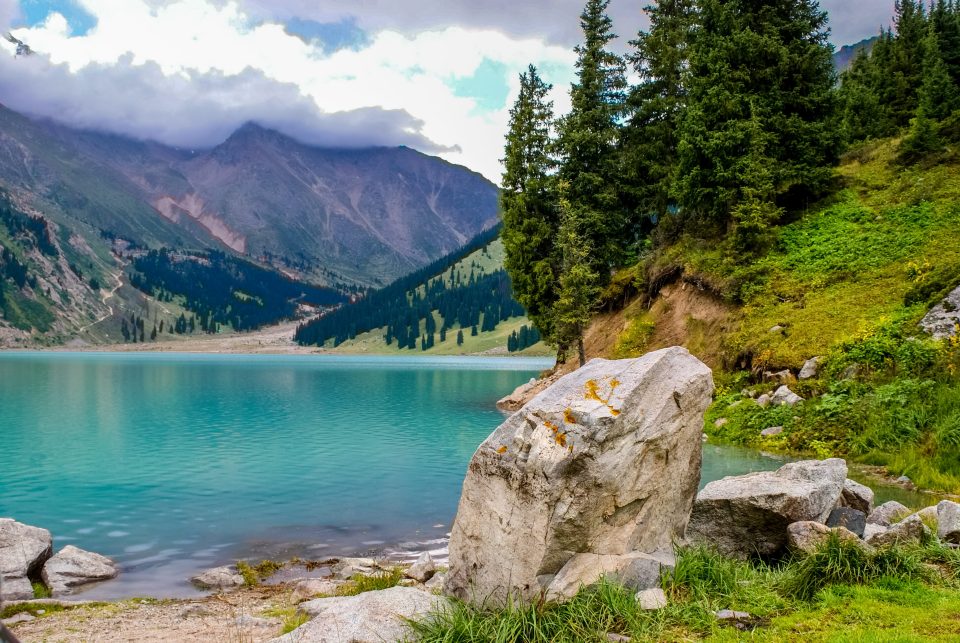
Big Almaty Lake lies at 2,511 meters, 28 kilometers south of the center at the head of the Big Almaty gorge. Its color shifts with the season. In June, when meltwater is high, it is turquoise. By September it turns a deeper blue. Two things surprise first-time visitors. The lake is the city’s drinking water reservoir, so swimming is banned and you cannot walk down to the shore. The road also passes a border checkpoint where guards check passports. Photos are taken from the road and the viewpoints above it.
Getting there without a car takes a morning. Bus 28 goes to the GES-2 stop at the mouth of the gorge. From there it is 8 kilometers uphill on the asphalt road, about two and a half hours on foot. A taxi from the city runs 10,000-15,000 tenge for the round trip with an hour of waiting, roughly 20-30 dollars. A half-day tour to Big Almaty Lake usually adds the Tian Shan observatory further up the road and the cosmic ray station at the pass. You cannot reach the station without a permit on your own.
Charyn Canyon
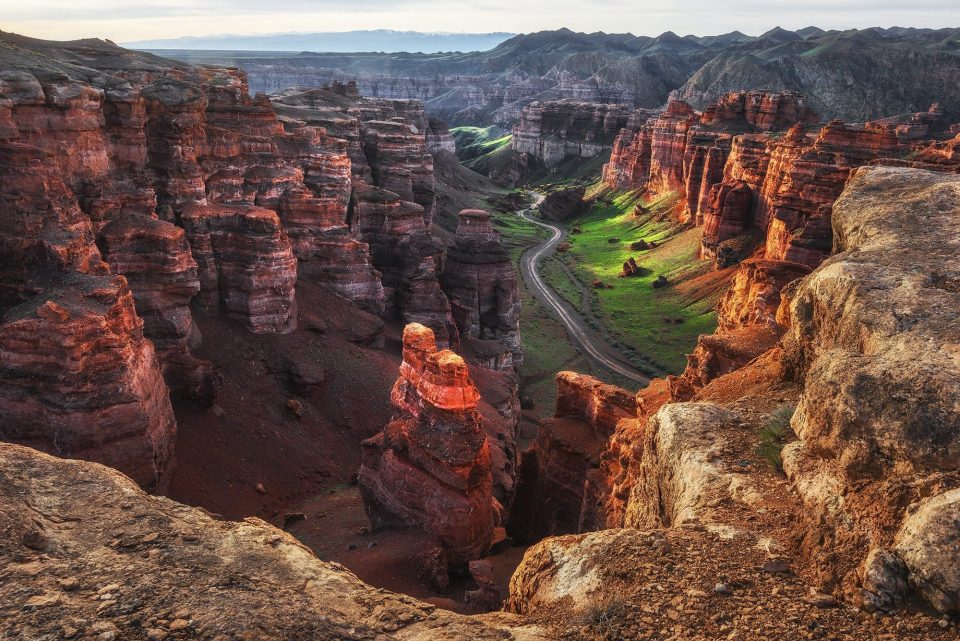
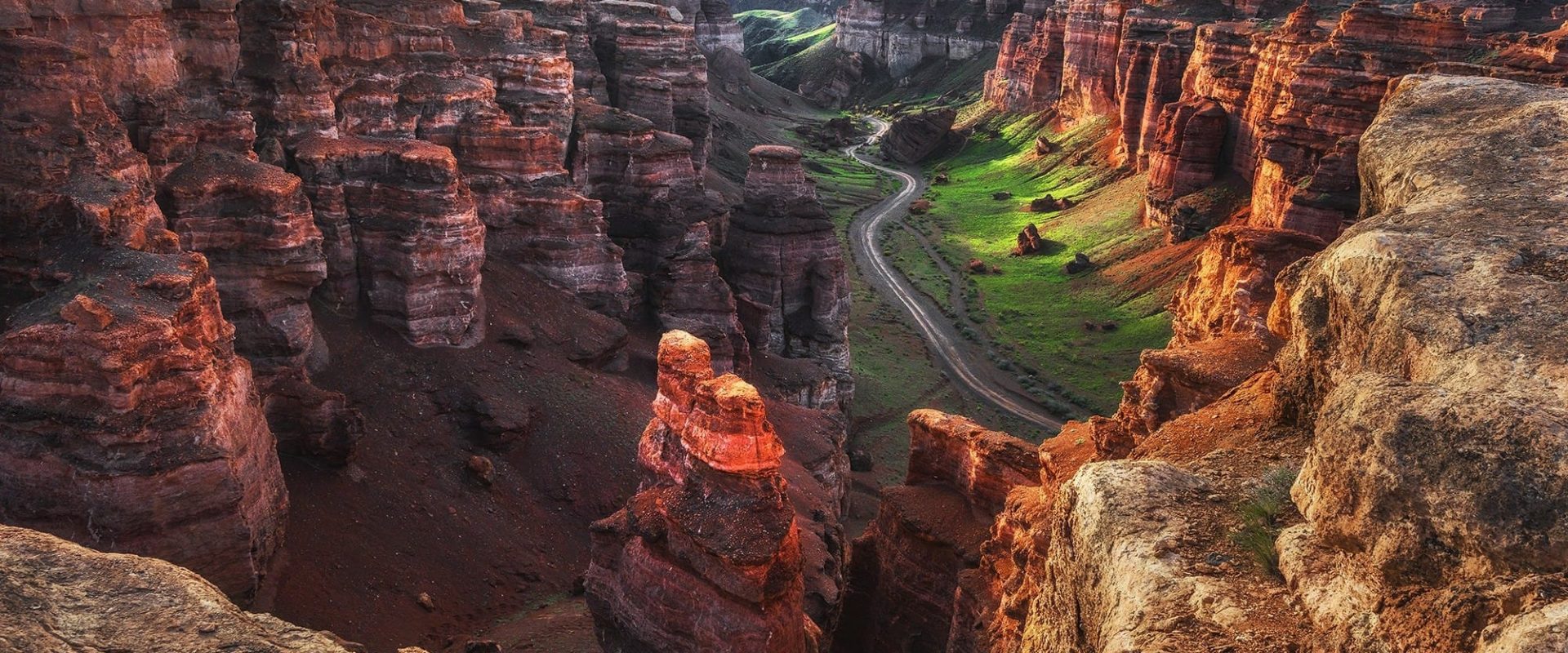
Charyn Canyon is 200 kilometers east of Almaty, about three hours by road across the steppe. The Charyn River has cut it 150 to 300 meters deep into red sandstone. Everyone visits the Valley of Castles, where the walls have eroded into towers and arches. A path runs 2 to 3 kilometers along the canyon floor to the river. A shuttle takes you back up if you do not want to climb in the heat. Park entry is about 1,000 tenge per person. At the bottom there is a small eco-camp with yurts and a cafe.
Summer temperatures on the canyon floor pass 40 degrees. May, September and October are the months to go. Most people take a day tour to Charyn Canyon at 25-50 dollars per person. Longer versions continue to the Kolsai Lakes and Kaindy Lake, with its drowned spruce forest, for an overnight in the village of Saty. A car with a driver for the day costs about the same as two tour seats. It also lets you leave at dawn before the coaches arrive.
Historical and Cultural Sites
The steppe around Almaty was a corridor of the Silk Road. Long before that it was home to Bronze Age herders and the Saka nomads who left the gold warrior found near Issyk. Three sites show that history at very different distances. Petroglyphs lie a couple of hours northwest, a medieval city 25 kilometers east. The mausoleum at Turkestan is a separate journey rather than a day trip. For the city’s own past, read the Almaty story.
Tamgaly and Tamgaly Tas Petroglyphs
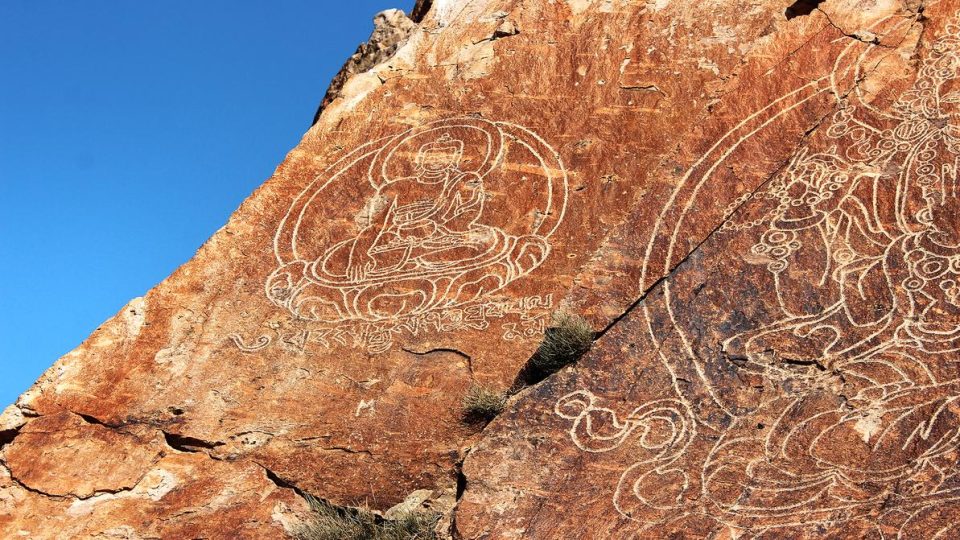
Two places with almost the same name confuse most visitors. Tamgaly, 170 kilometers northwest of Almaty, is the UNESCO site. About 5,000 petroglyphs cover a dry gorge there. The oldest date from the Bronze Age around 1400 BC and show sun-headed deities, hunting scenes and the bulls and horses the herders lived on. A marked route of 2 to 3 hours covers the main groups of carvings. A guide from the site office will point out the figures you would walk past. Tamgaly Tas is different. It lies 120 kilometers north on the bank of the Ili River, and its rocks carry images of the Buddha and Tibetan inscriptions carved by Dzungar Buddhists in the 17th and 18th centuries.
Neither site has public transport. A day tour to the Tamgaly petroglyphs is the practical way to see the UNESCO site. Some operators pair Tamgaly Tas with a boat ride on the Ili. Take water and a hat. Both sites are open steppe with no shade.
Turkestan Region
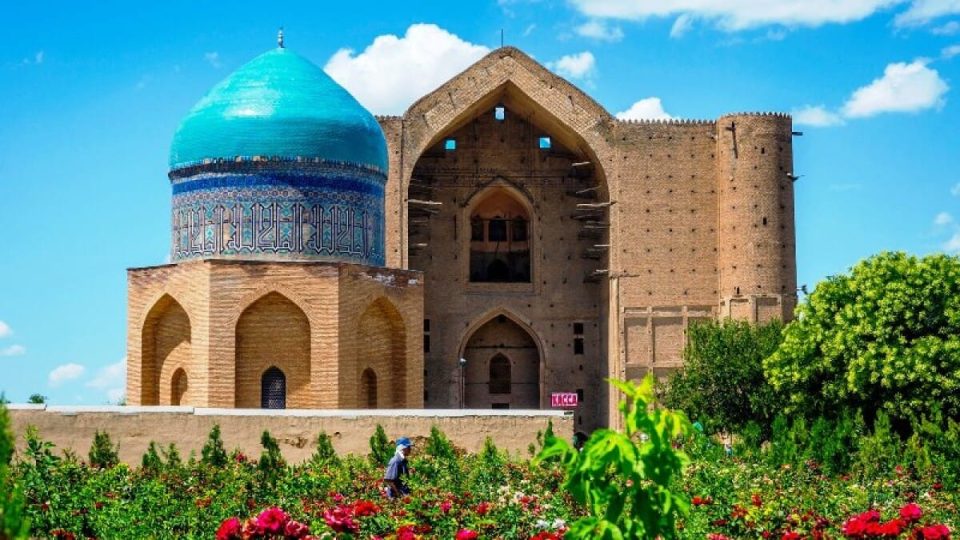
Turkestan is not a day trip from Almaty, whatever the tour desks say. It is more than 800 kilometers west: a flight to Shymkent plus two hours by road, or an overnight train. It earns a place here as the most important historical site in the country. Timur began the Mausoleum of Khoja Ahmed Yasawi in the 1390s over the grave of a 12th-century Sufi poet. It was left unfinished when he died. Even so, it remains the largest surviving building of its era in Central Asia. Its dome is 18 meters across, and a cast bronze cauldron weighing two tons stands inside. UNESCO listed it in 2003.
Plan two days. Fly out in the morning and see the mausoleum and the reconstructed Silk Road quarter next to it in the afternoon. The next morning covers the ruins of Otrar and the Arystan Bab mausoleum before the flight back. Trains from Almaty take about 16 hours each way. They are the cheaper option if time is not an issue.
Talgar Archaeological Complex
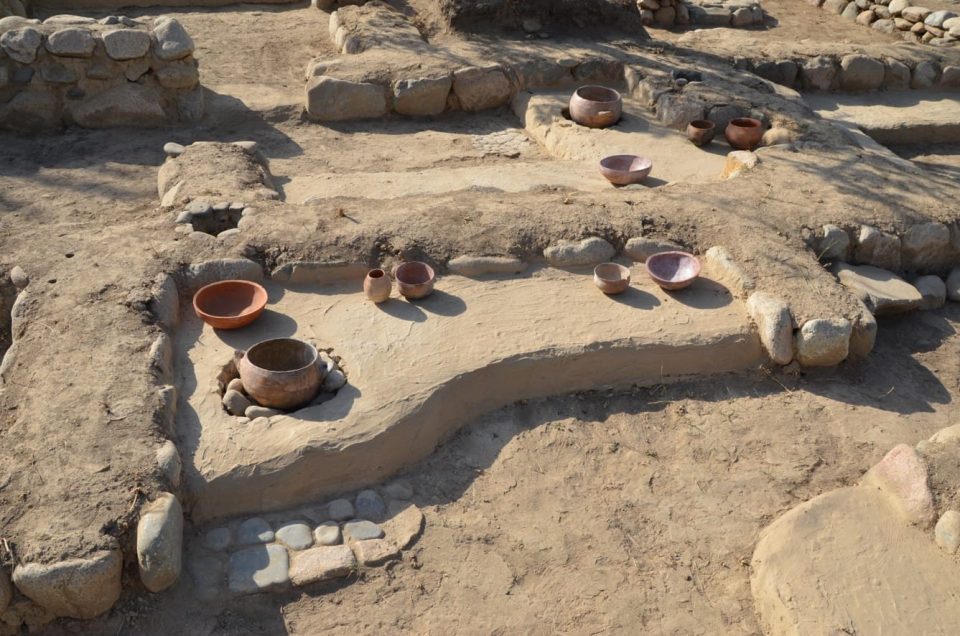
Talgar, 25 kilometers east of Almaty, hides the remains of Talkhiz. This Silk Road town flourished from the 8th to the 13th century before the Mongol advance emptied it. Excavations have uncovered streets, workshops and houses with underfloor heating. UNESCO lists the site as part of the Silk Roads corridor. Above ground it is modest. Low walls and foundations sit on a terrace above the river, so it rewards people who like reading a landscape rather than looking at monuments. Combine it with the Issyk museum on the same road. A replica of the Golden Man, the Saka warrior found in a burial mound in 1969, stands there with the finds from the kurgan. A taxi for the loop costs about 8,000-12,000 tenge. A marshrutka from Sayakhat bus station also runs to Talgar town.
Ski Resorts and Mountain Parks
Almaty is the only city I know where a city bus goes to a ski lift. Both resorts below open in summer as well, with chairlifts running for walkers. Each fits into an afternoon.
Shymbulak Ski Resort
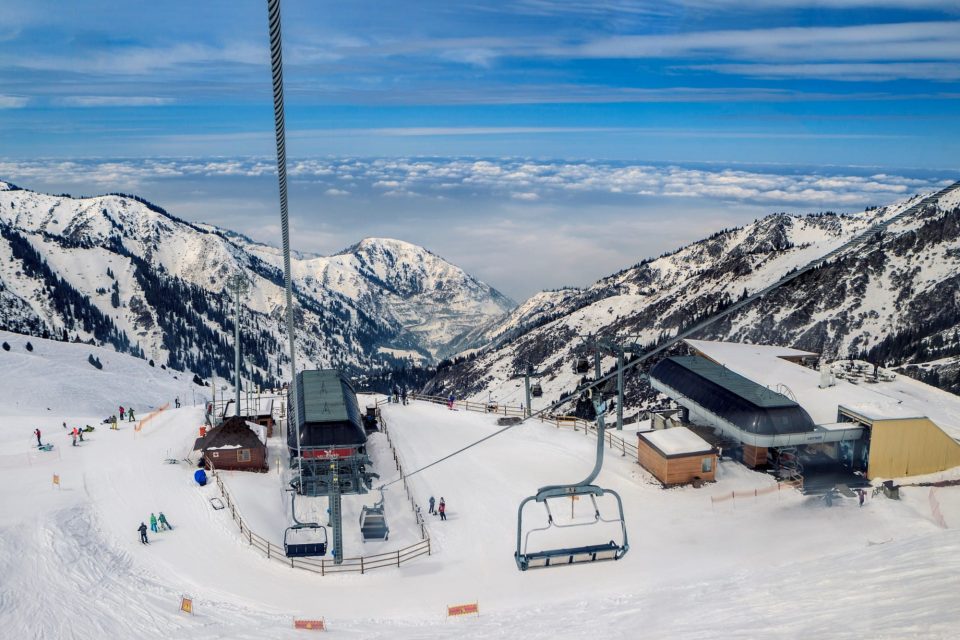
Shymbulak sits at 2,260 meters, 25 kilometers from the center. The way up is part of the attraction. Bus 12 ends at Medeu, the outdoor skating rink at 1,691 meters where speed records were set in Soviet times. From the rink a gondola climbs to the resort base. Two more lifts continue to the Talgar Pass at 3,200 meters. The season runs from December to April on about 20 kilometers of pistes. Rental is available at the base, and a day pass costs far less than in the Alps. In summer the gondola carries walkers and mountain bikers. The round trip from Medeu to the top costs a few thousand tenge, around 10 dollars.
Weekends in ski season bring queues at the Medeu gondola from mid-morning. Weekday skiing is calmer. A guided trip to Medeu and Shymbulak makes sense mainly in winter for first-time skiers who want transport, rental and a lesson in one booking. In summer, the bus and the gondola are all you need.
Ak-Bulak Resort
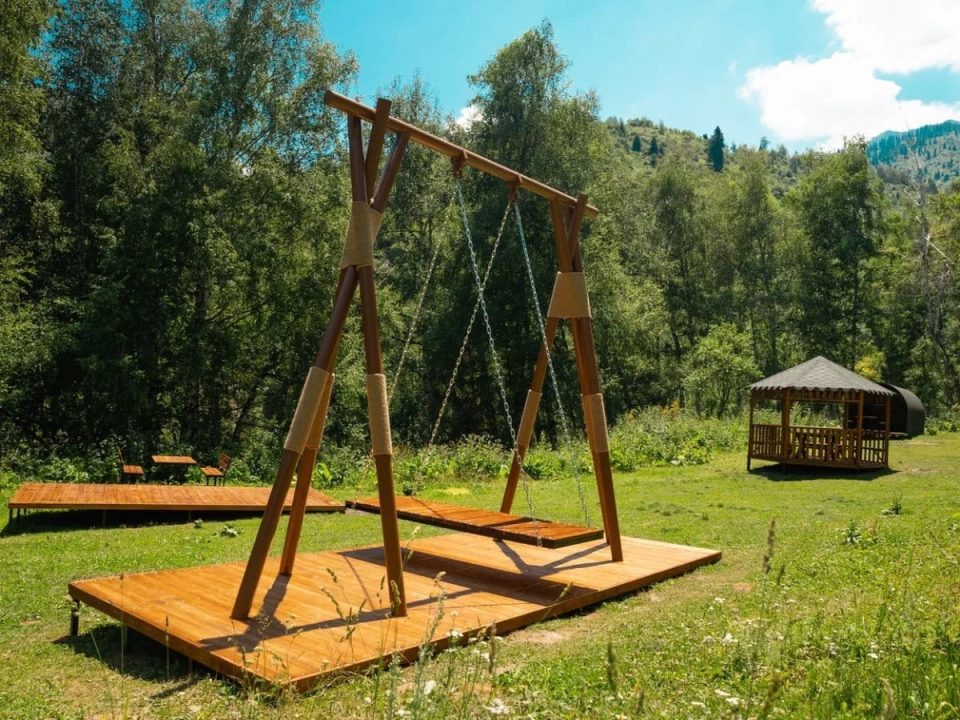
Ak-Bulak is the quieter alternative, 40 kilometers east of the city above Talgar. It has a chairlift, a hotel and a handful of pistes. They suit beginners and families better than Shymbulak’s steeper runs, and lift queues are shorter on weekends. In summer the chairlift runs for the views. There is horse riding into the gorge and picnic grounds along the river. No public bus reaches the base. Go by taxi from Talgar or from the city, about 6,000-9,000 tenge each way.
Planning the Trips
Group by direction to save road time. Medeu, Shymbulak, Big Almaty Lake and the Alatau trails are all south of the city. Each takes half a day. Talgar, Issyk and Ak-Bulak lie on the same road east and fit into one day. Charyn, Kolsai and Kaindy make a single long day or an overnight to the east. Tamgaly is a full day to the northwest. Turkestan needs a flight.
Tours from Almaty cost 25-60 dollars per person for a day. A car with a driver runs 80-120 dollars per day for the group, which works out cheaper for three or more people. Yandex Go and inDrive both work in the city for short hops to the trailheads. Carry cash in tenge for park gates and village cafes. Card terminals stop working past the last town. In any season, pack one layer more than the forecast suggests. Big Almaty Lake runs 10 to 15 degrees colder than the city.


