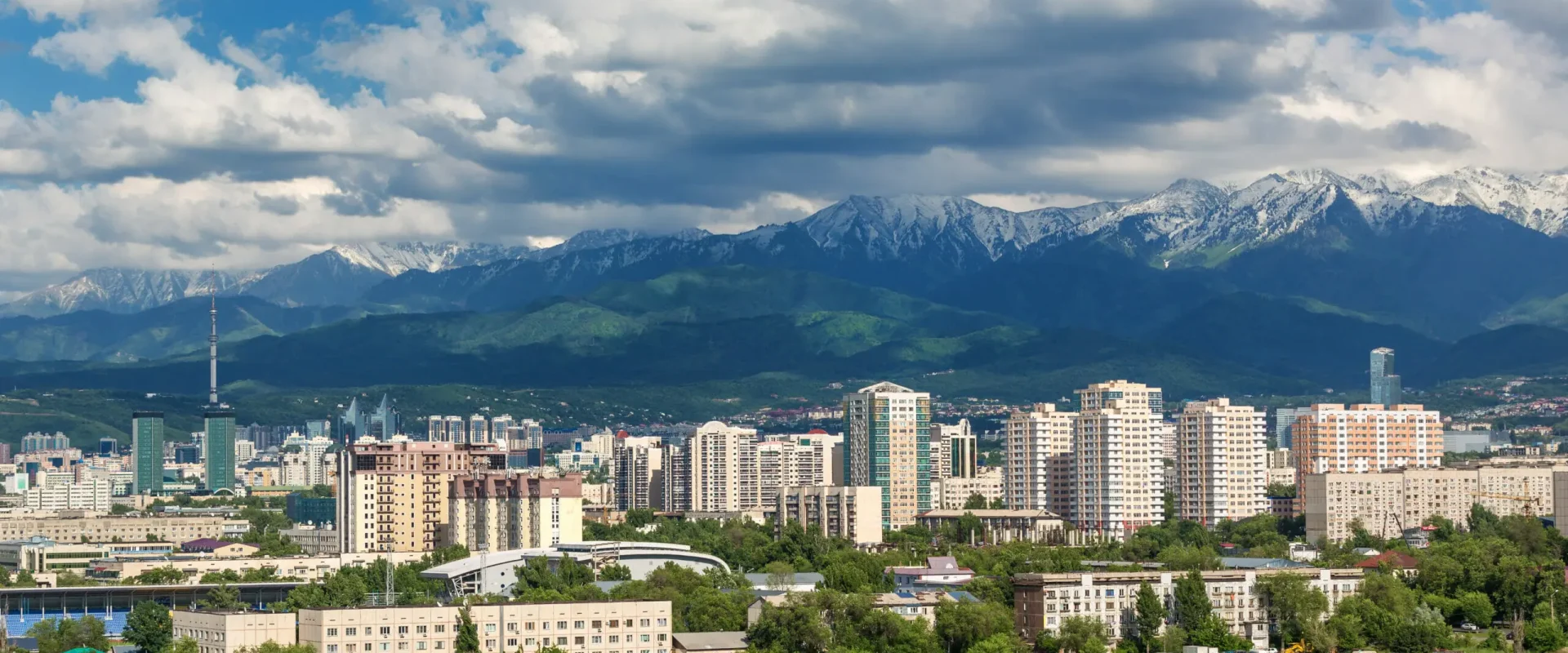
Almaty is a young city by Central Asian standards. Its official birthday is 1854, and the founding document was signed by a Russian major. Samarkand counts its age in millennia. That does not make Almaty’s past dull. In 170 years the place has been a frontier fort, a provincial trading town, a Soviet capital rebuilt after two earthquakes, and the largest city of an independent Kazakhstan. Most of that history is still standing, and it fits into one long day on foot and by metro. This guide follows the timeline through the buildings and places you can visit today, with prices in tenge and the hours that matter.
Before the City Existed
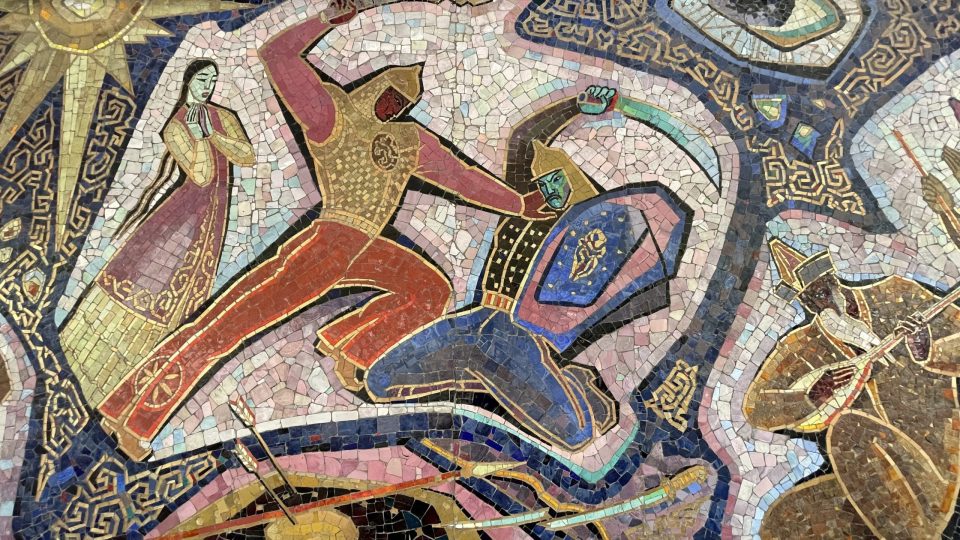
People lived on this slope long before anyone drew a city plan. Saka nomads buried their leaders in earth mounds across the Almaty foothills between the 8th and 3rd centuries BC, and the most famous find from that culture, the Golden Man, came out of a kurgan at Issyk, 50 kilometers east of the city, in 1969. Some 4,000 gold plates covered the warrior’s costume. A full-size replica stands in the Central State Museum, and the original pieces travel between exhibitions.
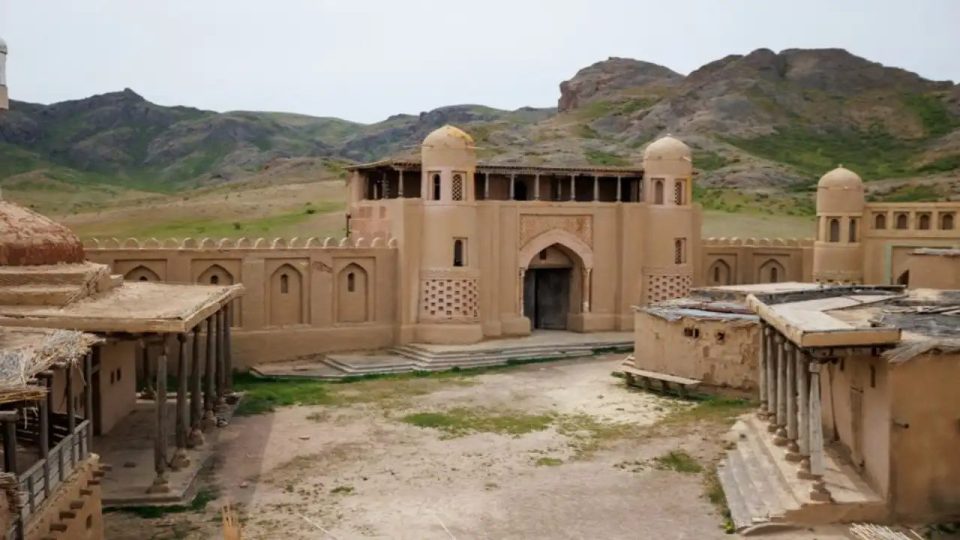
Inside the modern city limits, the Boraldai burial mounds in the northwestern suburbs are the closest you can get to that era without a day trip. There are about 50 kurgans in an open field, unexcavated, with no fence and no ticket office. In the medieval period a Silk Road settlement called Almatu grew up here, and the 10th to 14th century town of Talhiz, 25 kilometers east near Talgar, left foundations you can walk over. Almaty’s name comes from the Kazakh word for apple; the wild apple forests of the Tian Shan are the genetic source of every orchard apple in the world.
Central State Museum of Kazakhstan, Samal-1 microdistrict, 44. Open 9:30 to 18:00, closed Tuesday. Entry about 1,000 tenge, roughly 2 US dollars. Metro to Abay, then a 20-minute walk or a short bus ride.
Verny, the Fort That Became a Town
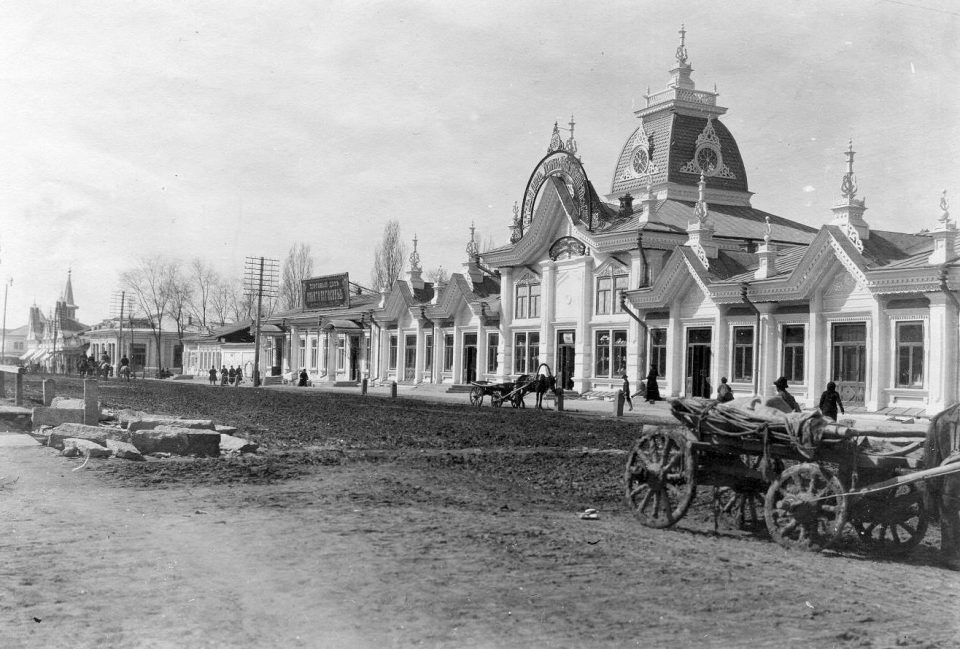
In the spring of 1854 a Russian detachment under Major Mikhail Peremyshlsky built a wooden fort on the right bank of the Malaya Almatinka river and called it Zailiyskoye, later Verny, meaning Faithful. It guarded the new imperial frontier against the Kokand Khanate to the south. Cossack families settled around the walls, a Tatar merchant quarter grew to the west, and by 1867 the settlement had enough people to be declared a town and the seat of the Semirechye province.
Nothing of the fort survives above ground. Its site is the block between Panfilov Park and the Green Bazaar, and the bazaar itself is the oldest continuously working institution in the city, trading on the same spot since the 1870s. Go early on a weekday for horse meat sausage, dried apricots from the south and the best view of how the city still eats. Its market hall dates from 1975; the trade behind it is Verny’s.
Two disasters shaped what you see next. An earthquake on 9 June 1887 destroyed almost every brick building in town and killed more than 300 people. Rebuilding rules that followed favored wood and single storeys, which is why the oldest surviving architecture in Almaty is timber. Then on 4 January 1911 a second, stronger earthquake hit. The wooden buildings held. That is the whole reason the cathedral in the next section is still there.
Zenkov’s Wooden City
Andrei Zenkov was the provincial architect who worked out how to build tall in an earthquake zone. His Ascension Cathedral in Panfilov Park, finished in 1907, is 56 meters high and made almost entirely of Tian Shan spruce, with the timbers joined so the structure could flex. It rode out the 1911 earthquake with a bent cross and little else. It is among the tallest wooden churches in the world, and it is the one building every visitor to Almaty should see inside as well as out. Restorers worked on the interior between 2017 and 2020, and the painted ceiling is worth the neck strain.
Ascension Cathedral is open daily from about 8:00 to 19:00, entry free, modest dress expected. Services on Sunday morning fill the nave, so go on a weekday if you want to photograph it. Metro to Zhibek Zholy, then a five-minute walk.
Across the park at Zenkov Street 24 is a second Zenkov building from 1908, a carved wooden officers’ club that now houses the Museum of Kazakh Folk Musical Instruments. Its collection has more than a thousand instruments, and the staff will play a dombra or a kobyz if you ask. Open 10:00 to 18:00, closed Monday, about 500 tenge. Between the two buildings stands the Memorial of Glory from 1975, with an eternal flame for the 28 Panfilov Guardsmen who died defending Moscow in 1941. Renamed for their division in 1942, the park has been the city’s main gathering place ever since.
Alma-Ata, the Soviet Capital
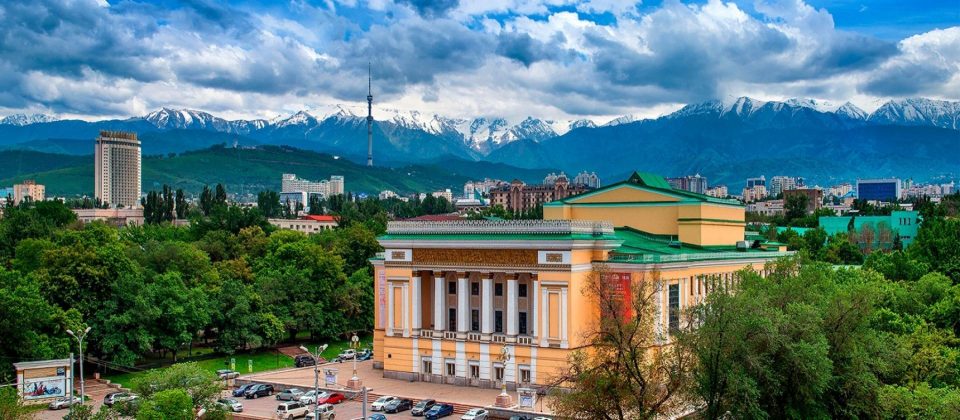
Verny became Alma-Ata in 1921, and in 1929 the capital of the Kazakh republic moved here from Kyzylorda when the Turkestan-Siberia railway reached the city. Over the next 60 years the population grew from 45,000 to more than a million, and the grid of tree-lined streets running downhill from the mountains, cooled by irrigation channels along every curb, is the Soviet planners’ gift to the city. Walk down any street between Abay and Gogol avenues in July and you will feel the difference those ditches make.
Buildings worth a detour from that era cluster around Republic Square and Dostyk Avenue. Hotel Kazakhstan, 1977, was the tallest building in the city until the 2000s at 102 meters and still wears its golden crown. Arasan Baths, 1982, are a marble complex of Russian, Finnish and Turkish baths that remains the best way to spend a cold evening in Almaty; a three-hour session costs about 10,000 tenge. Medeu skating rink at 1,691 meters, opened in 1972, saw more than 120 world records set on its mountain ice. A mudflow dam above it, completed in 1973, stopped a catastrophic flow in July of that year, months after it was finished, and is credited with saving the city.
Republic Square is also where the Soviet story cracked. On 17 and 18 December 1986 Kazakh students gathered here to protest Moscow’s appointment of an outsider as party chief. Troops broke up the crowd; official figures gave two dead, unofficial estimates run far higher. The Dawn of Freedom monument at the top of the square, unveiled in 2006, marks the event, which Kazakhstan now counts as the start of its path to independence.
Bus 12 runs from the Hotel Kazakhstan stop to Medeu in about 30 minutes for 120 tenge. Shymbulak’s cable car continues from Medeu up to 2,260 meters for about 5,000 tenge return.
Almaty After 1991
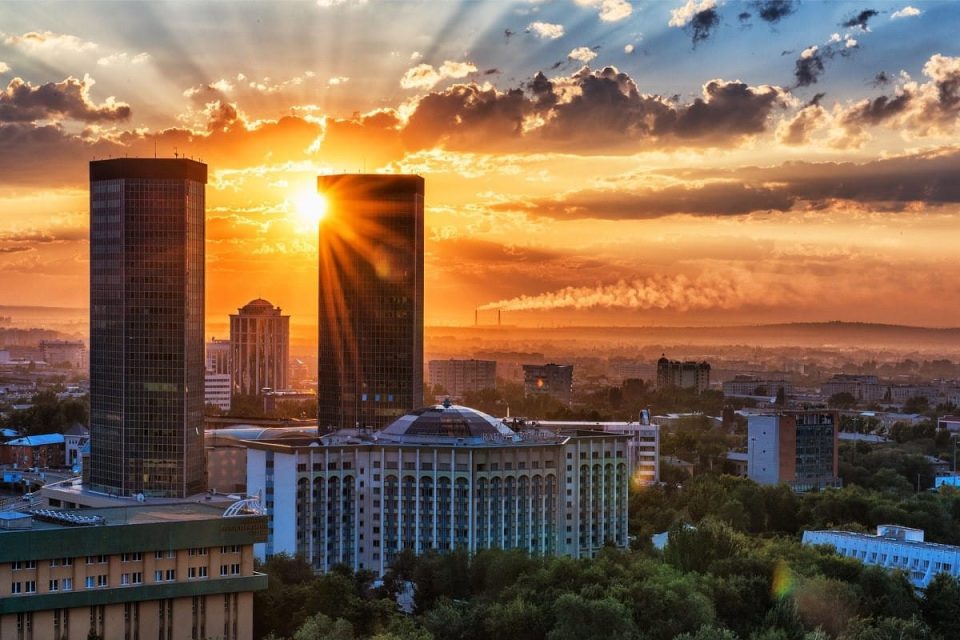
Kazakhstan declared independence on 16 December 1991, and Alma-Ata officially became Almaty in 1993. The Independence Monument on Republic Square, a 28-meter column topped by a replica of the Golden Man standing on a winged leopard, went up in 1996. A year later the government moved the capital 1,200 kilometers north to Astana, taking the ministries and leaving Almaty the money, the universities and the population. Almaty has grown to over two million and remains the commercial center of the country.
The metro that Soviet planners started in 1988 finally opened in 2011, with marble stations that look like a smaller Moscow. A ride costs about 120 tenge on a card bought at the booth, and the line runs from Raiymbek Batyr in the north through the center to the Abay and Baikonur stations. Kok-Tobe hill, with its 1983 television tower and a cable car from Dostyk Avenue, gives the best overview of how the city climbs from the steppe to the mountains. The cable car costs about 3,000 tenge one way, and the ride up at sunset is the right way to end the timeline.
Walking the Timeline in One Day
- 9:00. Green Bazaar for breakfast on the site of the old fort. Metro Zhibek Zholy.
- 10:00. Panfilov Park: Ascension Cathedral, the Musical Instruments Museum and the war memorial. Allow 90 minutes.
- 12:00. Walk south along Dostyk Avenue past Hotel Kazakhstan to Republic Square and the Independence Monument, about 40 minutes.
- 13:30. Lunch, then the Central State Museum for the Golden Man. Two hours.
- 16:30. Kok-Tobe cable car for the view, or bus 12 to Medeu if you would rather see the mountains close up.
- 19:00. Arasan Baths to finish the way the city has finished its evenings since 1982.
A guided history walk through central Almaty covers the same ground in three hours with the stories filled in, and costs about 30 to 40 US dollars. For the medieval and Saka sites outside the city, the Issyk kurgans and Talgar ruins combine well with the Turgen gorge in our guide to day trips from Almaty. If you have two days, the two-day Almaty itinerary adds the mountains, and the hotel guide explains why staying between Abay and Gogol puts every stop above within walking distance.


