
Fujairah sits on the Gulf of Oman side of the UAE, with the Hajar Mountains dropping almost straight into the sea. Life moves slower here than in Dubai, and that is why many people pick it for a beach week. After three or four days on the sand, though, a change of scenery starts to sound good. Fujairah works well for that. Every other emirate is within a three-hour drive, and the Omani peninsula of Musandam begins just up the coast. Below are the day trips that make sense from here, with distances, road numbers, rough prices and the few things worth knowing before you set off.
Mountains, Oases and Wadis Around Fujairah

A good day of hiking can be as satisfying as a lazy one on the beach, and Fujairah’s surroundings deliver both. The Hajar Mountains start a few kilometres inland, cut by wadis that hold water long after the rains. None of this resembles the Dubai skyline. Villages are built of stone and mud brick, goats wander onto the road, and the only traffic jam is a slow pickup in front of you.
Wadi Wurayah National Park

Wadi Wurayah is the best-known natural site in the emirate and the first mountain wadi in the UAE to get national park status. Its pools sit deep in the rocks, a few degrees cooler than the coast, and the air smells of wild herbs after rain. Go early. By ten in the morning the sun is on the water and the birds go quiet. Its waterfalls are small and depend entirely on recent rainfall, so nobody should expect a cascade. Pools are clear enough to swim in, and dragonflies in several colours hover over them. Access has been restricted since the park was created, and the rules change from year to year, so check before driving out. A Fujairah mountain safari with a licensed operator is the surest way to see the wadi, and the only sensible one if mountain roads make you nervous. Sturdy shoes, a hat and more water than you think you need are the minimum kit.
- How to get there: about 60 km north of Fujairah city. Take the E89 coast road toward Khor Fakkan and Bidiyah, then the signed turn-off inland. A 4×4 is needed past the paved section.
- What to bring: water, snacks, sunscreen, a swimsuit, a towel and closed shoes with grip.
- Rules: no litter, no loud music, no feeding or chasing the animals. It is a protected zone, so leave it as you found it.
Driving the Hajar Mountain Roads

Beyond the wadi, the Hajar range hides old settlements, abandoned villages and caves, all reached by winding roads with good tarmac. A usual pattern is simple. Pick a road inland, drive until the view opens up, stop at any fort you pass. Most of them are only partly restored, which makes them feel more honest than the polished ones in the cities. Toward evening the rock shifts from terracotta to a deep purple, and the pull-offs fill with people holding phones. Local guides know the viewpoints that are not marked on maps, so a half-day mountain tour is worth considering if time is short.
Day Trips to Ras Al Khaimah and Al Ain

Fujairah’s position on the east coast is its main advantage as a base. Roads are excellent across the country, and the landscape changes from mountain to desert within an hour of driving. Two emirates stand out for a single day: Ras Al Khaimah for adrenaline and Al Ain for greenery and history.
Adventures and History in Ras Al Khaimah
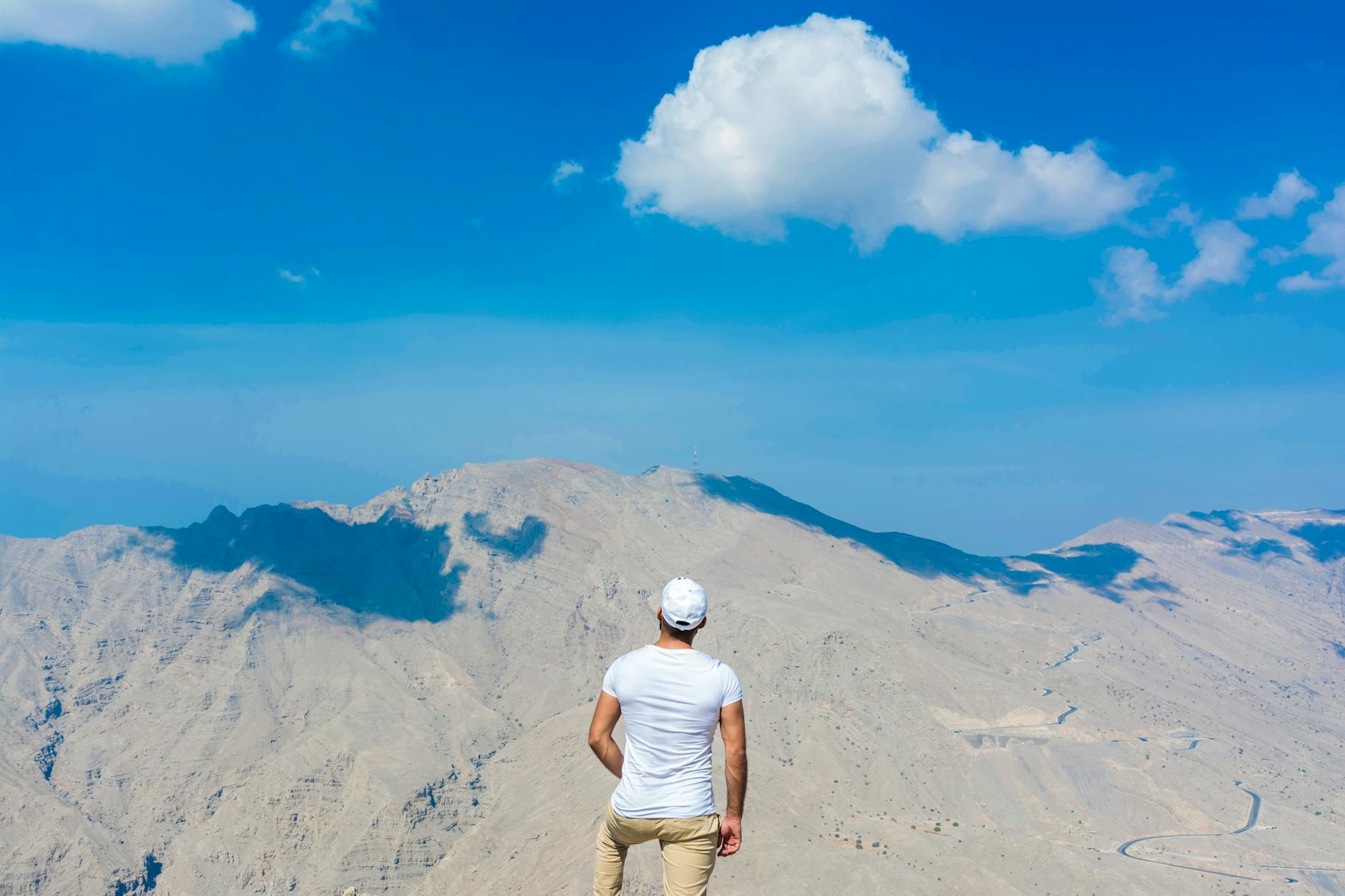
Ras Al Khaimah is a 90-minute to two-hour drive to the north. Its main draw is Jebel Jais, at 1,934 m the highest peak in the UAE, and the Jebel Jais Flight zipline that runs 2.83 km down from near the summit. Riders fly face-down in a harness at 120 to 150 km/h, and the whole ride lasts two to three minutes. Tickets cost roughly 650 AED and sell out on winter weekends, so book ahead. Even without the zipline the mountain road justifies the drive. It climbs through switchbacks with marked viewpoints, and the temperature at the top can be ten degrees lower than on the coast. Back in town, the National Museum of Ras Al Khaimah occupies the old fort and covers the pearling era and the finds from the medieval port of Julfar. Hot-air balloon flights over the desert leave at dawn in winter. Ras Al Khaimah earns its place on any list of day trips from Fujairah because it fits all this into one day without rushing.
- How to get there: take the E89 north from Fujairah, then the E11 or E18. About 1.5-2 hours.
- What to see: Jebel Jais (zipline, viewpoints, the Jais Sledder toboggan), the National Museum in the old fort, the Julfar excavations.
Exploring Al Ain, the Garden City

Al Ain takes longer, about 2.5 to 3 hours each way, which makes it the longest day on this list. It is an oasis city at the foot of Jebel Hafeet, the birthplace of Sheikh Zayed, and the only inland city of its size in the country. Al Ain Zoo, open since 1968, is one of the largest in the region and keeps its animals in wide enclosures rather than cages. Al Ain Oasis, a UNESCO World Heritage site, covers about 1,200 hectares of date palms crossed by the falaj irrigation channels that have watered the gardens for centuries. Entry is free, and the shaded paths are the coolest place in the city at midday. Finish with the drive up Jebel Hafeet. That road climbs around 1,200 m in a series of hairpins, and the view from the top takes in the city on one side and the Omani desert on the other. For culture, the Al Ain Palace Museum and Al Jahili Fort are both central and quick to see.
- How to get there: from Fujairah take the E89 and then the E66. Around 2.5-3 hours.
- What to see: Al Ain Zoo, Al Ain Oasis, Jebel Hafeet, Al Ain Palace Museum, Al Jahili Fort.
A Dose of Culture in Sharjah and Ajman

Sharjah and Ajman sit closer than Al Ain, on the Gulf coast about 1.5 hours from Fujairah. Sharjah is the country’s cultural capital by official designation and by the sheer count of its museums. The Museum of Islamic Civilization on the Corniche holds manuscripts, astrolabes and ceramics from across the Islamic world, and the ticket costs 10 AED. Al Qasba canal nearby has fountains and cafes for a slow afternoon. Ajman, the smallest emirate, adds a quiet Corniche and a National Museum inside the 18th-century fort, with a good section on pearl diving. Both cities show the traditional side of the Emirates with far fewer crowds than Dubai. History-minded travellers often rate this pairing as the best day out from Fujairah.
Stepping Back in Time on Historical Routes

Skyscrapers and futuristic projects are the UAE’s public face, but the east coast tells an older story. Bedouin camps, pearl diving, trading dhows and a string of forts all left traces around Fujairah, and some of the sites predate Islam by centuries.
Sailing the Fjords of Dibba and Musandam

Dibba lies at the northern tip of the Fujairah coast, right against the Omani border, and the town is split three ways between Fujairah, Sharjah and Oman. From here the boats leave for the Musandam peninsula, where the Hajar Mountains drop straight into the Strait of Hormuz and form fjord-like inlets. Musandam is Omani territory, but most Musandam dhow cruises from Dibba start on the UAE side and handle the paperwork. A typical day runs from about 9 to 4. A wooden dhow motors along the cliffs, stops at two or three coves for swimming and snorkelling, and serves lunch on board. Dolphins often ride the bow wave. Water visibility is best from October to May. Our separate guide covers Fujairah’s dive and snorkel spots in more detail if you want to stay in the water longer. This trip combines a mountain landscape with a lazy day on deck, which is why it tops the list for first-time visitors.
- What to do: dhow cruises, snorkeling, diving, fishing and dolphin watching.
- Important: Musandam is Oman, so your passport comes with you, and some nationalities need a visa or a permit. Confirm this with the operator when you book.
Ancient Forts and Mosques of Fujairah

The emirate itself has enough history for a short day without leaving. Fujairah Fort stands on a low hill above the date palms north of the centre, with walls from the 16th and 17th centuries and a restored interior that is free to walk around. Al Badiyah Mosque, about 35 km north on the coast road, is the oldest mosque in the UAE still in use and dates to around 1446. Its design is unusual: four low domes, no minaret, and a prayer hall held up by a single central pillar. Archaeological digs continue around the site, so the small display changes. Both places are included in most half-day heritage tours, and together they take about three hours by car.
Seeing Dubai and Abu Dhabi in a Day

Dubai and Abu Dhabi deserve whole trips of their own. For anyone staying in Fujairah with limited days, though, a single long day in either city is doable and worth the early start.
A Whirlwind Tour of Dubai’s Glamour

Dubai is about 1.5 to 2 hours away depending on traffic at the Sharjah end. One mistake to avoid is trying to see everything. Pick three or four stops. A workable order is Burj Khalifa first (online tickets start around 170 AED and morning slots are quieter), then Dubai Mall and the fountain show, then the Marina or Palm Jumeirah for the late afternoon. Old Dubai, with the creek and the souks, fits in if the day started early. Parking and city traffic are the main stress, so organised transfers from Fujairah make sense. A group excursion to Dubai from Fujairah usually runs 250 to 400 AED per person and includes transport and a guide, but not always the entrance tickets.
- What to fit in: Burj Khalifa, Dubai Mall and the fountains, Dubai Marina, Palm Jumeirah, or the Old Town and the creek if time allows.
- Tip: pick a tour with a fixed schedule so no time is lost driving between districts.
Abu Dhabi’s Grand Mosque and Palaces

Abu Dhabi is a longer haul, about 2.5 to 3 hours each way. One landmark justifies it: Sheikh Zayed Grand Mosque. Entry is free, non-Muslim visitors are welcome outside prayer times, and the white marble courtyard and the chandeliers inside explain why it is one of the most visited sites in the country. Dress rules are strict, and abayas are lent at the entrance. After the mosque, Qasr Al Watan, the presidential palace, opens its halls to the public, and the Louvre Abu Dhabi on Saadiyat Island covers art from several civilisations under its perforated dome. All three can be done in one day with a car. A private sightseeing tour in Abu Dhabi solves the logistics if driving six hours in one day does not appeal.
Some Practical Tips for Your Day Trips

A little preparation makes a long day out much easier. Transport, budget and packing are the three things to settle the evening before, and each one changes how much ground you cover.
Renting a Car or Joining a Tour

Transport decides how the day feels, so it is the first choice to make. Three options cover nearly every case.
- Car rental: I usually rent a car in the UAE because it gives the most freedom on the mountain roads. Driving is easy, with excellent roads and clear English signage. You need an international driving permit (or a licence from a country the UAE accepts) and a credit card for the deposit. Budget cars cost around 100-150 AED per day, and petrol is about 3 AED per litre. Downsides are the traffic and parking in Dubai and Abu Dhabi.
- Organised excursions: a pre-booked tour from Fujairah removes the driving, the navigation and the planning. Options range from large group buses to private guides. Transport, commentary and hotel pickup are included, and the trade-off is a fixed schedule.
- Taxi: expensive for long trips, but fine for short hops around Fujairah or to a nearby wadi.
Budget and Planning

What a day trip from Fujairah costs depends on style, but the ranges below hold for most people.
- Self-guided with a rental car: the car (100-200 AED), fuel (50-100 AED), entrance fees (30 to 200 AED per site) plus food and drinks. A day for two usually lands at 300-600 AED.
- Group excursion: a trip to Dubai or Abu Dhabi runs 250-400 AED per person for bus and guide, often without entrance fees. A Musandam cruise is usually 200-350 AED per person with lunch.
Book tickets for the Burj Khalifa or the Louvre Abu Dhabi online in advance. It skips the queue and is often cheaper than the counter price. Eat outside the main tourist zones where possible. Cafeterias in Sharjah or Al Ain serve a full meal for 20-30 AED, a third of what the mall food courts charge.
What to Pack for a Comfortable Trip

Comfort makes or breaks a long day, so the packing list is short but specific.
- Clothing: light, breathable clothes, a hat or cap and sunglasses. For a mosque visit women need a headscarf and clothing that covers shoulders and knees; men need long trousers.
- Footwear: comfortable trainers or sandals, and closed shoes with grip for any wadi.
- Water and snacks: always carry water, especially in the desert or mountains. A few snacks save time when the next shop is 40 km away.
- Cash: not every place takes cards, especially small shops and local markets.
- For kids: choose routes with something for them at the end. Al Ain Zoo, the waterparks in Dubai and the beaches at Dibba all work well. Keep children in the shade and drinking regularly.
Summer heat in the UAE is brutal, often above 40°C by noon from June to September, so plan outdoor stops for early morning or evening. From November to March the weather suits any of these trips at any hour.
If you are still planning the arrival, flights to Fujairah involve a connection, and most people fly into Dubai or Sharjah instead and drive over in about two hours. For a base, browse hotels in Fujairah by area. Resorts like Palace Beach Resort Fujairah sit right on the beach, while Nour Arjaan by Rotana is a city hotel that also appears in our guide to budget hotels in Fujairah.
Which Trip to Take First

Fujairah works as a launchpad as much as a destination. From one hotel you can reach mountain wadis, a cruise through the Musandam fjords, the oldest mosque in the country and two of the largest cities in the Gulf without repacking a bag. If there is time for only one trip, take the Musandam cruise. It leaves at 9, returns by 4, costs 200-350 AED with lunch, and covers the landscape that sets this coast apart from the rest of the Emirates.


