
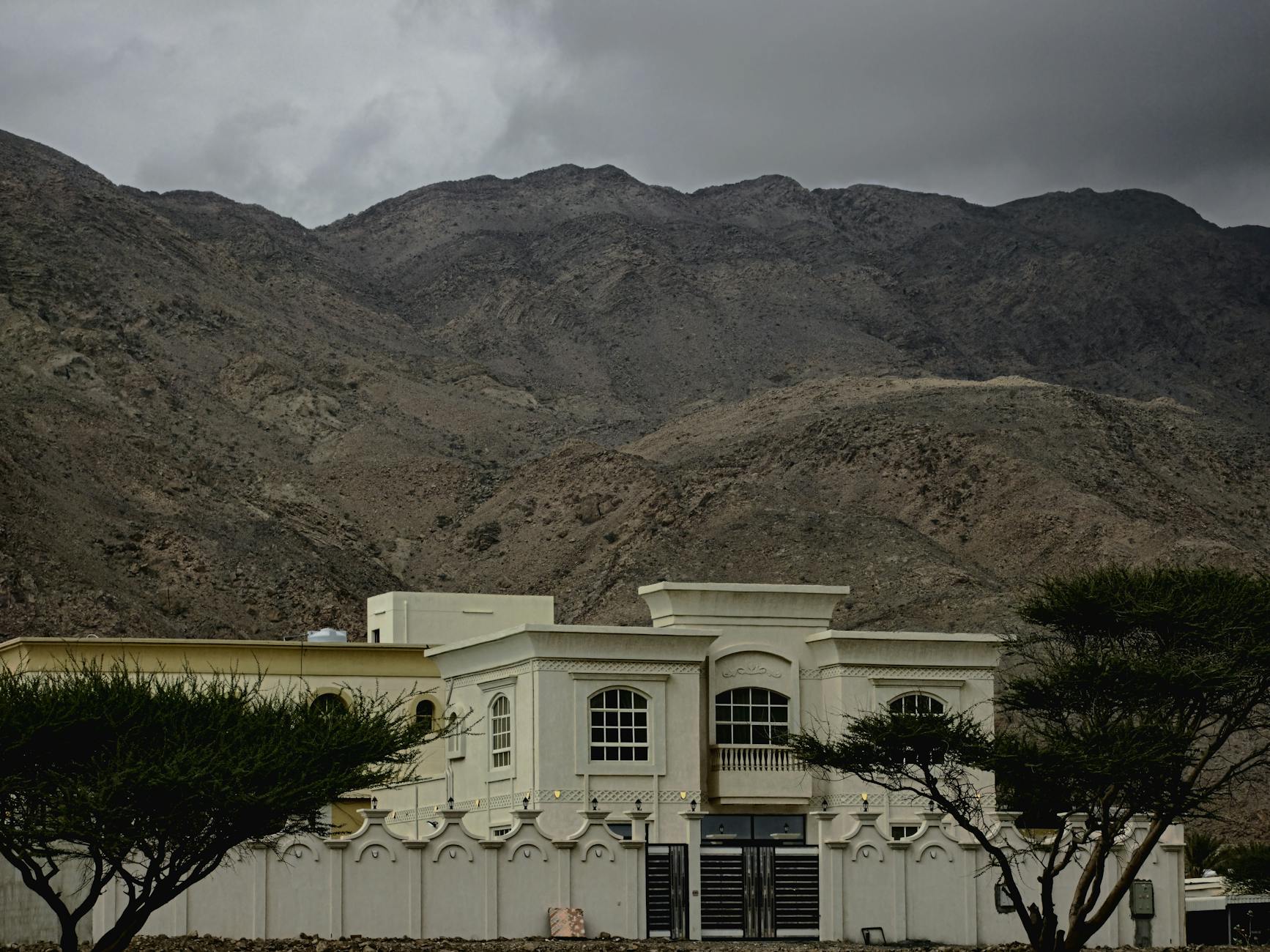
Fujairah is the one emirate that faces the wrong way. Six emirates line the Persian Gulf. Fujairah sits on the far side of the Hajar Mountains, on the Gulf of Oman, with the Indian Ocean beyond. That geography is why it looks nothing like Dubai. No towers, no artificial islands, one modest mall, and a coastline where the mountains drop into the sea within a few hundred metres of the beach.
It is also the cheapest place in the UAE to spend a week by the water. A clean 3-star hotel in the city costs 130-200 dirhams a night, a full lunch at a local cafe 20-30, and most of the sights are free. This guide covers how to get there from Dubai and what a week costs. It also covers where to sleep, what to do with the Gulf of Oman on your doorstep, and how to eat and move around without a Dubai-sized bill. Prices are in UAE dirhams (AED); the rate is fixed at 3.67 to the US dollar.
Why Fujairah is the UAE’s Unexpected Other Side

Fujairah has about 300,000 people and a 70 km coastline backed by the Hajar range. Its port ranks among the busiest bunkering harbours in the world. Tourism here grew up around the Al Aqah resort strip in the north and the dive sites off Dibba, not around shopping. Downtown is a grid of low buildings between the fort and the corniche, with Indian and Pakistani restaurants on every block and a fish market by the harbour. Nothing is designed to impress, which after two days in Dubai is the point.
People usually compare it with Ras Al Khaimah, the other emirate that sells mountains and beaches at lower prices. Ras Al Khaimah has the taller mountain, Jebel Jais, and the desert. Fujairah has the open ocean: clearer water, coral reefs within swimming distance of the shore, turtles and reef sharks. A sea breeze also makes July and August a few degrees less brutal than the Gulf coast. If diving or snorkelling is on the list, Fujairah wins; if it is dune drives and a zipline, Ras Al Khaimah.
Pace is the other difference. Shops close for a long afternoon break, the corniche fills with families at sunset rather than tourists, and a stranger at the next table is likely to start a conversation. Three or four days here are enough to notice that your shoulders have dropped.
A Few Things to Know Before Your First Trip

Fujairah is more conservative than Dubai. Beachwear belongs on the beach and at the hotel pool; in the city, in the souk and at the fort, shoulders and knees covered is the norm for both men and women. No one will fine you for shorts, but you will be stared at, and in the villages along the coast it reads as rude. Alcohol is sold only in hotel bars and restaurants, at 40-60 dirhams a glass, which is one more reason the trip stays cheap.
Weather decides the season. From October to April daytime temperatures run 25-32°C and the sea is 24-28°C, which is the time to come. From June to September the air passes 40°C with heavy humidity, and the sea itself warms past 32°C, too warm to refresh. Hotel prices in those months drop by a third or more, so a summer trip is possible if you plan to live between the pool, the air-conditioned room and the water before 9:00. Either way, bring a hat, sunglasses and SPF 50; the sun here is stronger than it feels.
Since 2022 the UAE weekend has been Saturday and Sunday, with Friday a half day for government offices and a long midday break for prayers. Banks and most offices run Monday to Friday; shops and restaurants are open seven days, with the souk busiest on Friday evening. During Ramadan, eating and drinking in public in daylight is restricted, and most cafes outside the hotels open only after sunset. Dates move 11 days earlier each year; in 2027 Ramadan begins in early February.
Citizens of the US, UK, EU countries, Australia and most of Latin America get a free visa on arrival for 30 to 90 days, depending on passport. Check the current list before booking, since it changes. Currency is the dirham; ATMs are everywhere, cards work in all but the smallest cafes, and the rate at exchange counters in the city is better than at the airport.
Getting There and Budgeting for Your Trip
Fujairah International Airport handles cargo and a handful of regional flights. In practice everyone arrives through Dubai (DXB, 130 km) or Sharjah (SHJ, 110 km). Both are well served from Europe, Asia and North America, and Sharjah’s low-cost carriers are often cheaper from European cities. From either airport it is a 90-minute drive across the mountains on the E84 or E89, one of the better roads in the country.
Getting to Fujairah from Dubai and Elsewhere
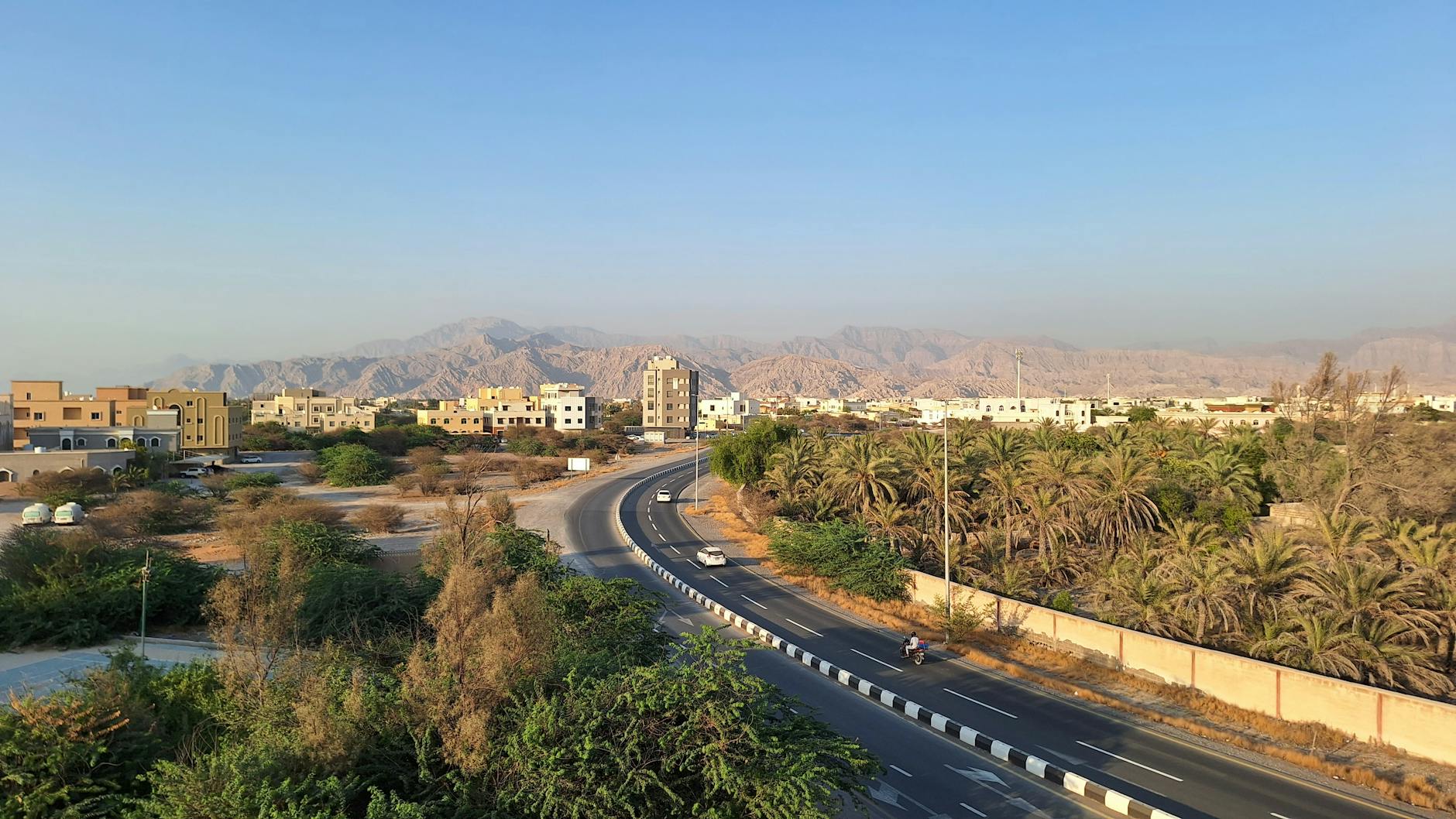
Three ways in, in order of cost. A taxi from Dubai airport is the easiest and the dearest: 250-350 dirhams depending on time of day, 90 minutes to two hours. Split four ways it is reasonable. Hotel transfers cost about the same and need booking a day ahead. For a day trip in the other direction, the organised day trip from Dubai to Fujairah covers the fort, the mosque at Al Bidya and a beach stop. Transport is included, and it costs less than a return taxi.
Buses are the budget option and better than their reputation. Route E700 leaves Union bus station in Deira roughly every hour from early morning to late evening, costs 25 dirhams on a Nol card, and takes about two and a quarter hours to Fujairah’s main bus station near the city centre. Coaches have air conditioning and reserved seats for women at the front. Last departures are around 22:00 in each direction, so a late flight means a night in Dubai or a taxi. From Sharjah there is a similar intercity bus to Fujairah via Khor Fakkan for about the same fare.
A rental car makes the most sense if you plan to see the coast, since the sights are strung out over 70 km and the taxis between them add up. Economy cars start at 100-150 dirhams a day from the airport counters, fuel costs about 3 dirhams a litre, and the roads are empty once you leave the Dubai ring. Speed cameras are everywhere and fines of 600-3,000 dirhams are added to the rental bill, so drive at the limit. You need a licence from your home country plus an international permit for most nationalities, and a credit card for the deposit.
What a Week in Fujairah Costs

Fujairah is the cheapest emirate for a week by the sea, and the gap with Dubai is widest in hotels and food. A realistic estimate for one person, one week, in the October to April season:
Flights: $300-500 return from Europe with one stop, $600-900 from the US east coast, if booked a month or two ahead. Sharjah is often the cheaper airport.
Accommodation: 130-200 dirhams ($35-55) a night for a 3-star city hotel with breakfast; 250-400 for a 4-star. Dream Point Hotel and City Plaza Hotel sit at the bottom of that range in the city centre. Beach resorts at Al Aqah start around 450 dirhams in season and half that in summer.
Food: 70-100 dirhams ($20-27) a day eating at cafeterias and supermarkets, with one sit-down dinner. A mid-range restaurant lunch is 50-80 dirhams; a fish dinner from the market, grilled to order, 60-100 for two.
Transport: 100-200 dirhams for the week on local taxis and one or two buses, or about 700-900 for a week’s car rental plus 100 in fuel.
Activities: most sights are free. A snorkelling trip costs 150-250 dirhams, a first dive 300-400, a mountain safari 250-350. Budget 500 for the week if you do one of each.
Added up, a week on the ground comes to 1,650-2,900 dirhams, about $450-800, and $750-1,300 with flights. For comparison, the same week in Dubai with a mid-range hotel runs two to three times that. Breakfast is included at almost every hotel in the city, which quietly removes one meal a day from the budget. Package deals that bundle flights and a beach resort sometimes undercut separate bookings in the summer months, so compare both. Booking.com’s Fujairah hotel listings let you filter by beach access and by breakfast, which are the two things that change the total.
Where to Stay in Fujairah Without Breaking the Bank

Fujairah hotels fall into two groups that are 45 km apart, and the choice between them shapes the whole trip. Downtown has the cheap rooms, the restaurants and the bus station; the Al Aqah strip to the north has the beach resorts, the dive centres and nothing else. A full comparison is in the guide to budget hotels in Fujairah; the short version follows.
City hotels are the budget base. A typical 3-star here has a large room, a small rooftop or courtyard pool, breakfast in the price and a free shuttle to a beach club a few times a day. Expect 130-200 dirhams in season. City Plaza Hotel and Dream Point are the standard examples near the centre; neither is on the water, but both are within a 10-dirham taxi ride of the corniche and the fort. For 250-400 dirhams the 4-star tier adds a gym, several restaurants and a proper pool. Nour Arjaan by Rotana is an apartment-style hotel with kitchens, useful for a week. V Hotel is the newer business option near the main road.
Five-star in Fujairah city costs what four-star costs in Dubai. DoubleTree by Hilton Fujairah City and Royal M Hotel by Gewan both run 400-600 dirhams in season and often less, with large pools and views of the mountains. If the beach matters more than the city, look at the Al Aqah resorts: Le Meridien, Fujairah Rotana, Sandy Beach and others. They have the sea on the doorstep and Snoopy Island for snorkelling, from about 450 dirhams in winter. The trade-off is that every meal is at resort prices. One habit that pays off here: check the map before paying. In the city, a hotel within walking distance of the Lulu hypermarket and the cafeteria streets saves 20-30 dirhams a day in taxis.
Fun Things to Do, No Matter Your Budget

Fujairah has no theme parks and no observation decks. What it has is a fort, the oldest mosque in the country, 70 km of coast and the best diving in the UAE, and most of the list costs nothing.
Free Things to See for History Buffs and Nature Fans

Four stops cover the history and the coast, and three of them are free:
- Fujairah Fort. A mud-brick and stone fort on a rock above the old town, built around 1670 and restored in the 1990s. It is the largest and best-preserved of the UAE’s coastal forts, with three round towers and a square one. Its grounds are free and open daily; the view from the walls takes in the date palms, the new city and the mountains. A small museum next door, with Bronze Age finds from the local tombs, charges 5 dirhams. An hour covers both.
- Fujairah Heritage Village. Below the fort, a reconstructed village of palm-frond houses, a falaj irrigation channel, fishing boats and farm tools, with a few goats and a cafe. Free. It explains how people lived on this coast before oil, and it pairs with the fort in the same visit.
- Al Bidya Mosque. The oldest mosque in the UAE, dated by archaeologists to 1446, on the coast road 35 km north of the city near Khor Fakkan. It is tiny: four domes, one room, walls of stone and mud a metre thick, with two watchtowers on the hill behind. Free, open to non-Muslims outside prayer times, with modest dress required and abayas lent at the door. A taxi from the city is 80-100 dirhams each way, or stop on the way to the Al Aqah beaches.
- Beaches. Public beaches along the coast are free, with sand, warm water and the Hajar as a backdrop. Fujairah’s own corniche beach is the convenient one. Khor Fakkan beach, 20 km north, was rebuilt in 2020 with a long corniche, an amphitheatre and showers. It is the best free beach on this coast. Technically it lies in Sharjah’s enclave, but no one checks. Bring your own shade, since umbrellas are few.
Add the corniche in the evening, when the fishing boats come in and families walk the length of it, and the Friday fish market behind the harbour. A sunset from the beach here faces the wrong way, east over the water; the colour is on the mountains behind you.
Excursions and Adventures in Fujairah

The reason divers come to the UAE at all is this coast. Open ocean means visibility of 10-20 m and coral that the shallow Persian Gulf cannot support. Most sites lie a few hundred metres off the beach at Dibba and Al Aqah. Details of each site are in the guide to Fujairah’s dive and snorkel spots; this is the budget version.
Snorkelling is the cheap entry. Snoopy Island, a rock shaped like the cartoon dog lying on his back, sits 100 m off the Sandy Beach Hotel at Al Aqah. Day passes to the hotel beach cost around 100 dirhams and include the swim out. Turtles, rays and blacktip reef sharks are regular. A boat-based snorkelling trip in Fujairah to Dibba Rock or Shark Island runs 150-250 dirhams with gear. For scuba, the dive centres at Al Aqah and Dibba offer a supervised introductory dive for beginners at 300-400 dirhams, no certificate needed. Guided dives for certified divers cost about 250 per tank. Martini Rock and the Inchcape wrecks are the ones certified divers ask for. Prices here are roughly half what the same dive costs from Dubai, because the boats don’t have to cross the country first.
On land, the Hajar Mountains start at the edge of the city. Wadis, the dry riverbeds that run back into the range, are the destination. Wadi Al Wurayah is a protected reserve with the UAE’s only permanent waterfall, open on guided visits. Smaller wadis toward Masafi have rock pools after winter rain. A mountain safari in Fujairah by 4×4 covers a wadi, a village and the Masafi Friday market for 250-350 dirhams; a rental car does the paved parts for the cost of fuel. Boat trips from the harbour, for fishing or just the coast, start around 200 dirhams per person for a couple of hours.
Fujairah also works as a base for the rest of the country. Dubai is 90 minutes by bus for a day in the city. Abu Dhabi and the Sheikh Zayed Grand Mosque are three hours away and better as an overnight. Oman’s Musandam peninsula, with its fjord-like coast and dhow cruises, is two hours north through the Dibba border post. It needs a passport and, for most nationalities, a visa arranged through the tour operator. Our guide to day trips from Fujairah covers each of these with transport and costs. Two beach days, one dive day, one mountain day and one trip elsewhere is a good shape for a week.
Eating Well on a Budget in Fujairah

Most of Fujairah’s residents come from India, Pakistan, Bangladesh and the Philippines. So the city eats the way they do: in small cafeterias with plastic tables, a counter and a menu board. This is where the food budget of 70-100 dirhams a day comes from.
Cafeterias around the old souk and along Hamad Bin Abdullah Road serve shawarma for 6-10 dirhams and chicken biryani for 15-20. A thali of rice, dal and two curries costs about the same, and fresh juice 8-10. A full lunch for two rarely passes 50 dirhams. Portions are large enough to share. One rule for finding them: walk one street back from anything with a sea view, and pick the place with the most men in work clothes at 13:00.
Supermarkets are the second leg of the budget. Lulu Hypermarket and Carrefour both have large branches in the city. Their hot counters sell grilled chicken, rice dishes and Arabic bread by weight, and the shelves have fruit, yoghurt and water at a third of hotel prices. A hotel fridge turns this into breakfast and lunch for 15-20 dirhams a day. Bottled water costs 1-2 dirhams here against 5-10 at the beach kiosks.
For one proper dinner, the fish market near the port is the place. Buy the fish by weight, hammour, kingfish or whatever came in that morning, at 30-60 dirhams a kilo. Then carry it to one of the grill stalls next door. They clean and cook it for 10-15 dirhams with rice and salad. That same meal in a Dubai hotel restaurant costs five times as much. Hotel restaurants also run lunch set menus on weekdays, two or three courses for 60-90 dirhams, which is the cheap way into the upmarket end. Fast-food chains exist, at prices higher than the cafeterias and food that is no better.
How to Get Around Fujairah and Save on Transport

Fujairah city is small enough to cross by taxi for the price of a coffee, and the sights outside it are spread along one coast road. Four options, from dearest to cheapest:
Taxis. Metered, plentiful and cheap by the standards of the country. Flag fall is about 5 dirhams, a ride across the city 15-25, and the 45 km to the Al Aqah beaches 80-100 each way. Drivers rarely use maps, so name the hotel or the landmark rather than the street. Careem works in the city for app bookings.
Public buses. Fujairah has a small city bus network and an intercity service north along the coast to Khor Fakkan and Dibba, with fares of 5-10 dirhams. Routes are few and the timetable is loose, but the coast bus is a real option for the beaches and Al Bidya if you are not in a hurry. Both the Dubai E700 and the Sharjah service leave from the same main station.
Car rental. About 100-150 dirhams a day for an economy car, with the first day’s deposit on a credit card and an international permit for most nationalities. It pays for itself on the first trip up the coast, since a return taxi to Al Aqah costs more than a day’s rental. Fuel is cheap, roads are new, and parking is free almost everywhere outside Dubai.
Walking. From the fort to the corniche, the centre is walkable in the morning and after 17:00. In the middle of the day it is not, for most of the year. Evenings belong to the corniche.
Organised tours fill the gap for anyone without a car. A half-day city tour covers the fort, the heritage village and a beach stop for 150-250 dirhams. Full-day versions add Al Bidya and Khor Fakkan; the “Fujairah, the Other Side of the UAE” tour sold from Dubai follows that route. For two or more people, though, a taxi hired for a morning at 200-250 dirhams does the same loop on your own schedule.
Who Fujairah Suits, and a Sample Week

Reviews of Fujairah split on one question: do you want Dubai or not? People who miss the malls, the nightlife and the skyline rate it a quiet backwater, and they are right about the quiet. People who have done Dubai once, or who never wanted to, describe the same things as the reason to come. An empty beach at 8:00. A dive site ten minutes from the hotel. A fort with no ticket booth, and dinner for two under 100 dirhams. Fujairah does not try to be anything else. And the Hajar Mountains at sunset, going from brown to orange to purple above the water, are the one sight here that no one argues about.
A week that uses the place well looks like this. Day one, the fort, the museum, the heritage village and the corniche at sunset. Day two, a bus or car up the coast to Al Bidya and Khor Fakkan beach. Day three, Snoopy Island or a snorkelling boat. Day four, a dive or a mountain safari. Day five, Dubai or Musandam. Days six and seven, the beach and the fish market. Total on the ground for one person, with a 3-star hotel, cafeteria food, one dive and one tour: about 2,300 dirhams, or $630. A bus back to Dubai for the flight costs 25.
One caution before you hunt for bargains: our study of hotel scores in the Emirates found the cheap end of this market to be the riskiest in the country, so read the last three months of reviews before paying for the lowest rate.


