
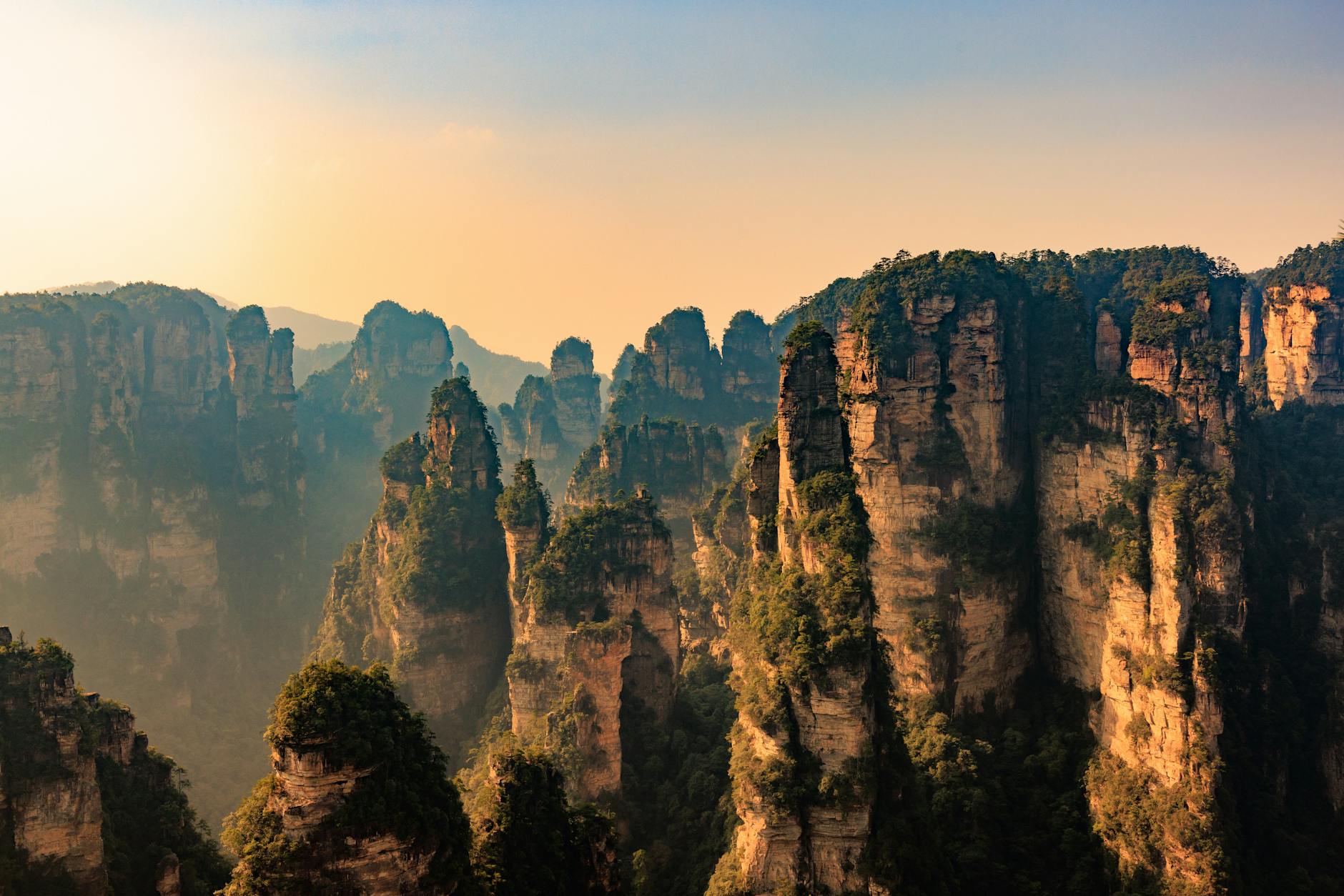
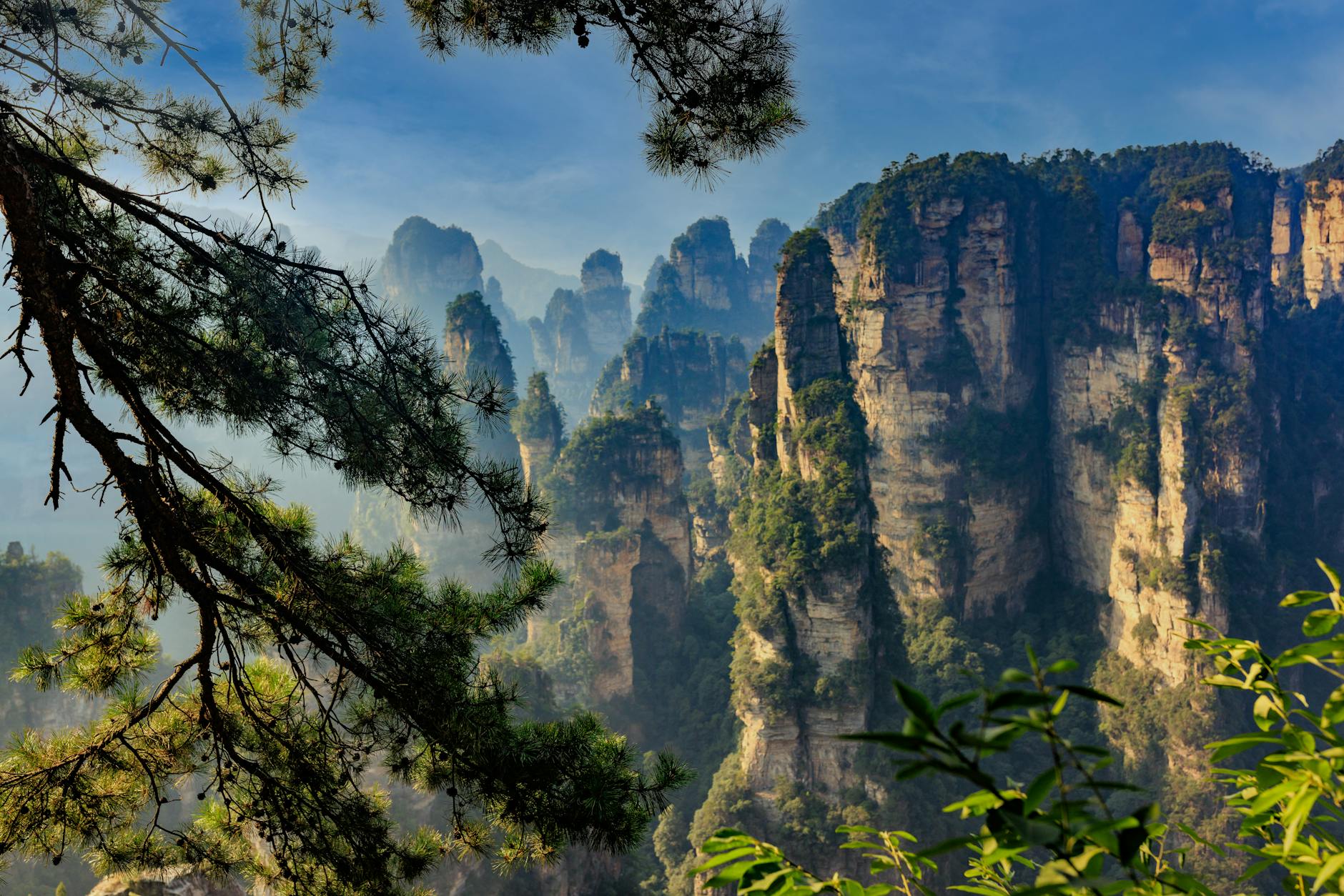
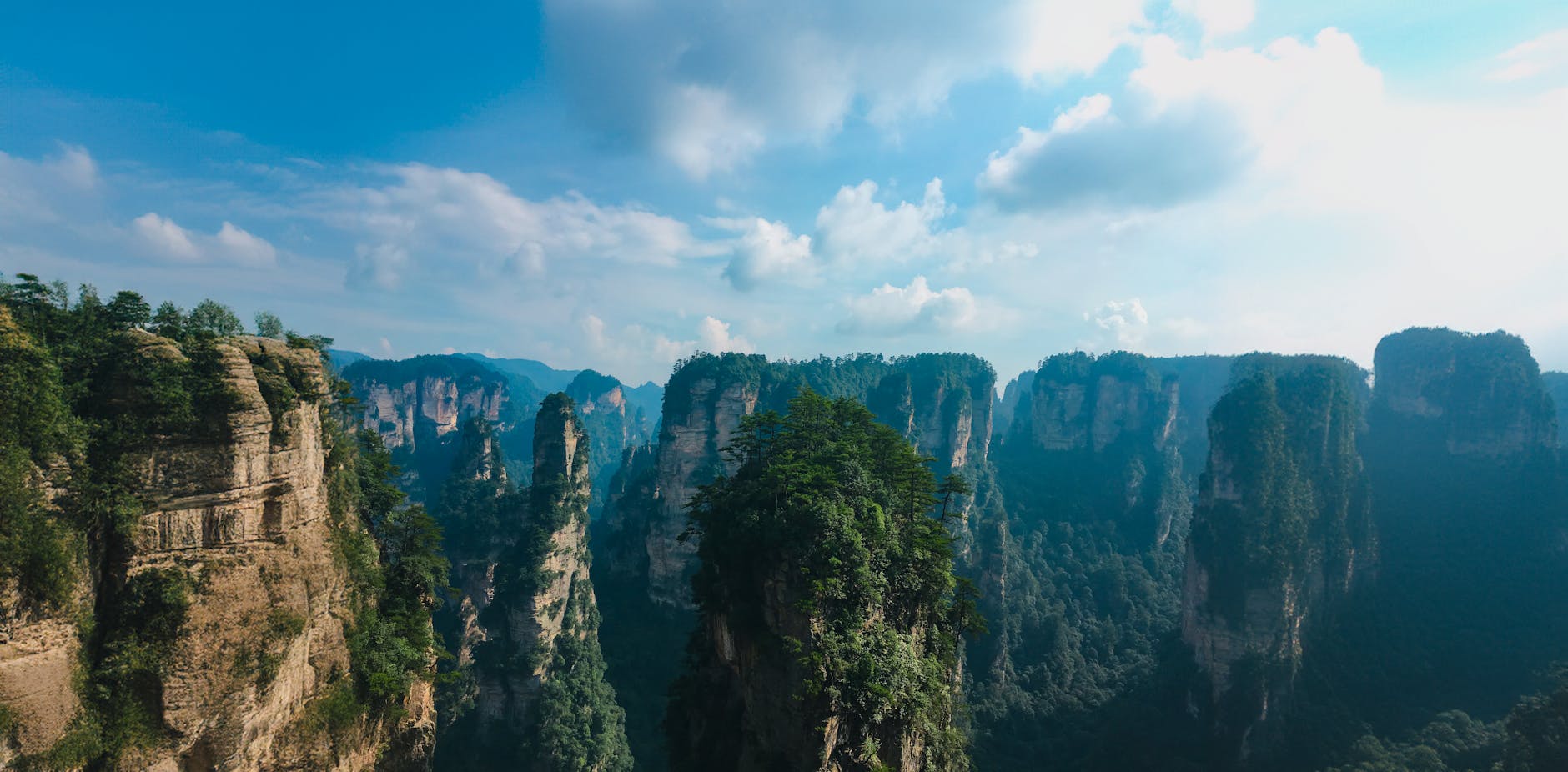
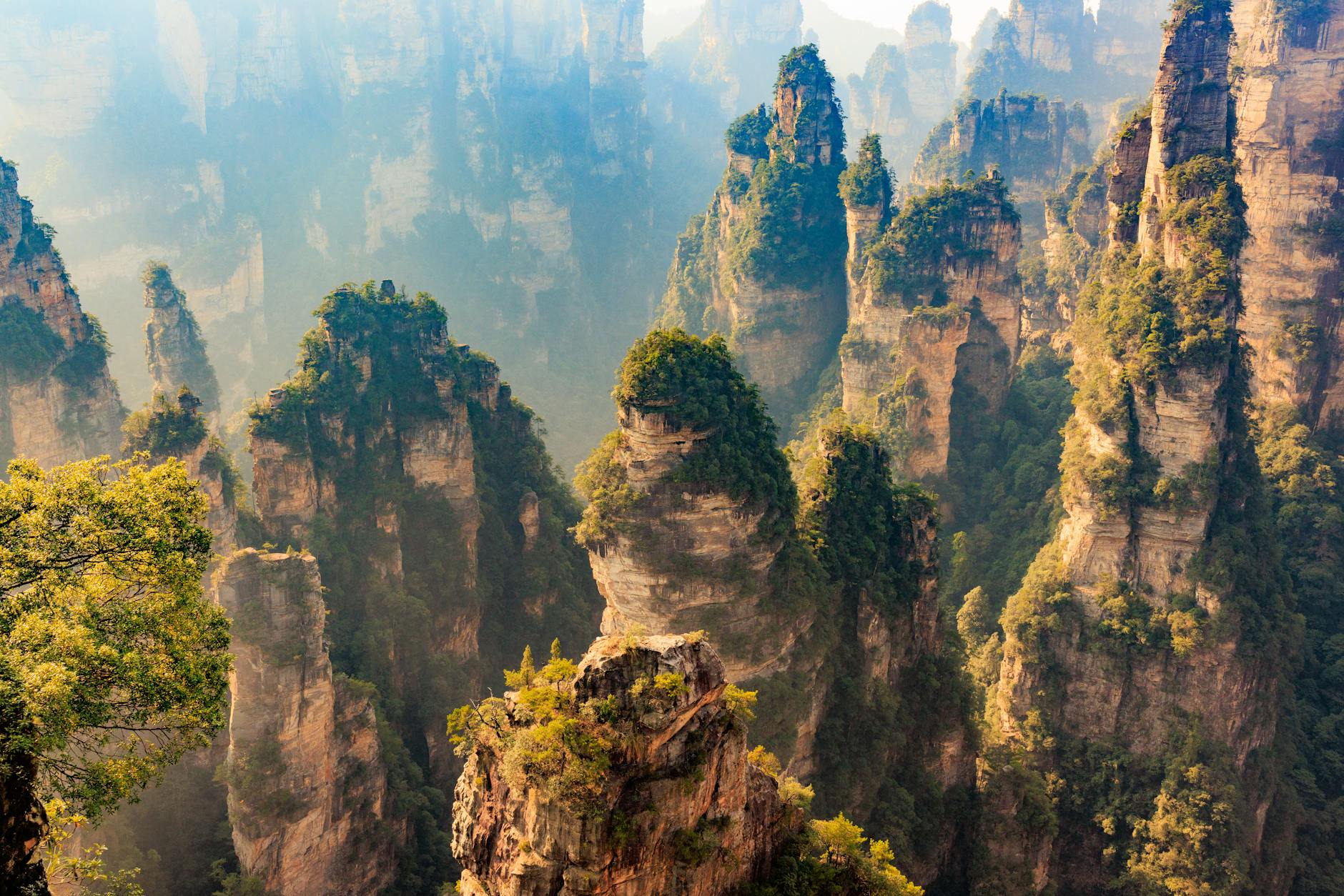
Photos of Zhangjiajie sell the place before any guidebook does. Sandstone pillars stand in fog, and the Hallelujah Mountains from “Avatar” were modelled on them. Then comes the practical question: how much does a trip to Zhangjiajie cost? China looks far and expensive from Europe or North America, but this corner of Hunan is cheaper than most people expect. Below is a line-by-line budget for an independent trip: international and domestic flights, three tiers of hotels, food, park tickets, cable cars, and a few ways to shave the total. All prices are in Chinese yuan (CNY) with a dollar equivalent, and they come from 2025 price lists, so treat them as a baseline rather than a quote.
Getting to Zhangjiajie

Airfare is the single biggest line in any Zhangjiajie budget. Zhangjiajie Hehua International Airport (code DYG, still called Dayong Airport on many timetables) has no direct flights from Europe or North America, so every itinerary involves at least one connection inside China.
Searching early matters more here than on busy routes, because the domestic leg has few seats and fills up around holidays. A useful habit: run a search for flights to Zhangjiajie three or four months out, note the fare, and then check it once a week. Fares on these routes move in steps, not smoothly, and a drop usually lasts a few days.
A typical routing is Europe or North America to one of the big hubs (Beijing, Shanghai, Guangzhou or Chengdu), then a domestic flight to Zhangjiajie. A roundtrip to a hub costs $350-500 in a sale and $700-1000 or more in high season. Domestic one-way tickets run $50-70 when booked early and climb to $150-200 close to the date. Taken together, a sensible allowance for the full roundtrip from Europe or North America is $600-1200 per person.
Domestic Flights Inside China
China Southern, China Eastern and the low-cost carrier Spring Airlines all fly into DYG from the main hubs. Two tactics help with the price. First, compare a single through-ticket against an international ticket to the hub plus a separate domestic ticket; via Guangzhou the split version often comes out cheaper, at the cost of collecting bags and checking in again. Second, give the connection at least three hours. Chinese domestic terminals are large, and a missed self-booked connection is your problem, not the airline’s.
From the airport, most visitors head straight to Wulingyuan, the town at the east gate of the National Forest Park. A taxi there costs about 100-120 CNY ($14-17) and takes 40-50 minutes. For 20 CNY ($3) you can ride a bus from the airport to Zhangjiajie central bus station and change there for the Wulingyuan bus. With the connection the trip takes roughly an hour. Buses leave when full, every 10-15 minutes through the day.
Where to Sleep and What It Costs
Choice of base decides both your bill and how much daylight you spend in the park. Three options exist: Zhangjiajie city, Wulingyuan town, or a hotel inside the park boundary. City hotels are cheapest and furthest away (about 35 km, an hour by bus). Wulingyuan sits at the park gate and has the widest range. Hotels inside the park cost the most and put you on the trails before the first tour bus arrives.
For anyone whose main reason to come is the park, Wulingyuan is the sensible base. Its streets are full of small restaurants, fruit stalls and shops selling rain ponchos, and the park gate is a short walk away. Dorm beds in hostels such as Destination Youth Hostel or Wally House Hostel cost 50-80 CNY ($7-11) a night. A private room in the same places runs 150-250 CNY ($20-35). A guided day in the Zhangjiajie National Forest Park can be booked from the hostel desk or online in advance.
Hostels and Budget Guesthouses
Wulingyuan’s hostels do more than provide a bed. Most will buy park tickets for you, print a map with the shuttle bus routes marked, and arrange a shared car to Tianmen Mountain or the Grand Canyon. Zhangjiajie Jijiehao Inn and Edinburgh Hostel are two of the better-run examples, with English-speaking staff and common rooms where people compare trail notes. Many of them throw in free laundry, a simple breakfast, or coffee, and over four days that trims the budget by a few hundred yuan. Staff at the desk also know which trails are closed after rain and which viewpoints are empty before 9 am, information that no ticket office will give you.
Mid-Range and Luxury Hotels

Wulingyuan has a solid layer of 3- and 4-star hotels from 300-500 CNY ($40-70) a night. All Seasons Lodge has an elevator, large rooms and free laundry, which is rarer than you would think at this price. Whispering Mountains Boutique Hotel is the quieter, design-led option in the same bracket. Inside the park the choice narrows and prices start at 600-800 CNY ($85-115). Tongfu Inn is the usual pick there. What you buy is not luxury but time: the first shuttle buses from the gate reach the main viewpoints around 8 am, and park guests are already on the trails by then.
Five-star options exist in both the city and the town. In Zhangjiajie city the Pullman Zhangjiajie Hotel and the Howard Johnson Neodalle Resort are the established names. In Wulingyuan, Pandora Vista Retreat and No.5 Valley Lodge sell the view rather than the brand. Rates start around 1000 CNY ($140) and reach 2000-3000 CNY ($280-420) a night. Whatever the tier, book ahead for Chinese public holidays. During Golden Week in early October rooms in Wulingyuan sell out weeks in advance and prices double.
Budgeting for Food, Parks and Attractions
With flights and a bed sorted, the remaining costs are daily ones: meals and the parks themselves. Food is the flexible part of the budget. Park tickets are not, so it makes sense to fix those first and let the food budget absorb whatever is left.
What Meals Cost

Zhangjiajie is in Hunan, and Hunan cooking is hotter than Sichuan’s, with fresh and pickled chillies in almost everything. Tell the cook “bu yao la” (no chilli) if you need to. A filling plate of noodles, rice with toppings, dumplings or grilled skewers from a street stall or a small local restaurant costs 20-40 CNY ($3-6). A sit-down meal in a mid-range place with an English picture menu runs 50-100 CNY ($7-14) per person.
Markets in Wulingyuan sell fruit by the jin (500 g) for a few yuan, and supermarkets stock steamed buns and yoghurt for a cheap breakfast. Bottled water costs 3-5 CNY, local beer 8-15 CNY. On street food and market fruit a daily food budget of 150-200 CNY ($20-28) is realistic. With restaurant lunches and dinners, plan on 250-350 CNY ($35-50). A hotel that includes breakfast, such as Lee’s Boutique Resort in Wulingyuan, removes one meal a day from the equation, and in a hilly town where you leave at 7 am that counts.
Park Tickets and Cable Cars
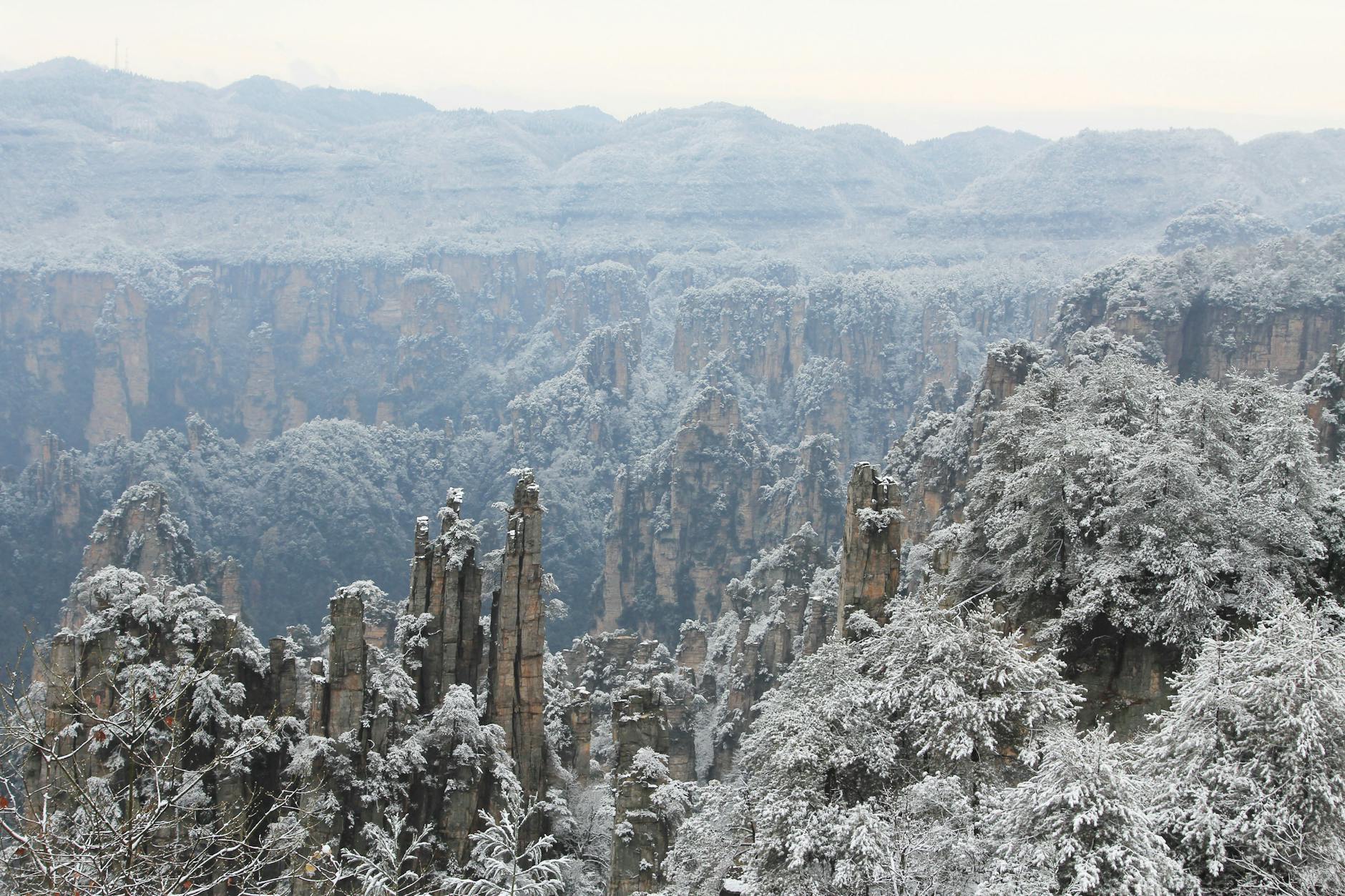
Entrance tickets and transport inside the parks make up the largest fixed cost after flights. Zhangjiajie National Forest Park sells a ticket valid for four consecutive days at 228 CNY (about $32). It includes the free shuttle buses that connect the gates, the Golden Whip Stream, Yuanjiajie and Tianzi Mountain. For an area of 480 square kilometres, that is a fair deal. Three paid extras sit inside the park:
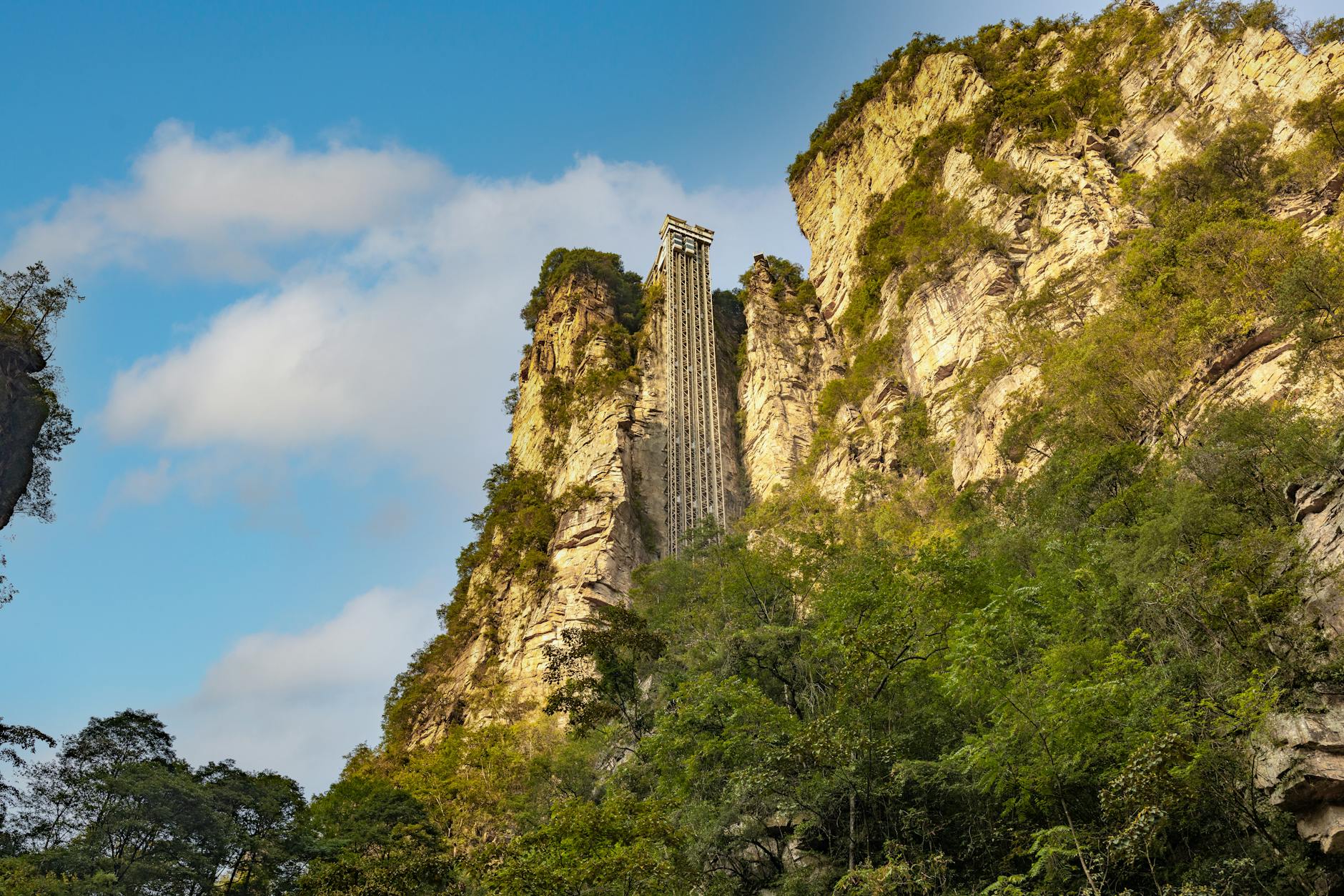
- Bailong Elevator. A glass lift built into a cliff face, the tallest outdoor elevator in the world. One way costs 65 CNY ($9). It saves a two-hour climb and the view on the way up is the point.
- Tianzi Mountain cable car. 72 CNY ($10) one way.
- Huangshizhai cable car. 65 CNY ($9) one way. The Huangshizhai loop at the top takes about two hours on foot.
Independent visitors manage the park fine with the shuttle map, but a guided day helps on a first visit, mainly because the bus system has five lines and the signage switches between Chinese and inconsistent English. For routes away from the main viewpoints, there is a separate guide to lesser-known Zhangjiajie locations, including trails where you will meet nobody between 9 and 11 am.
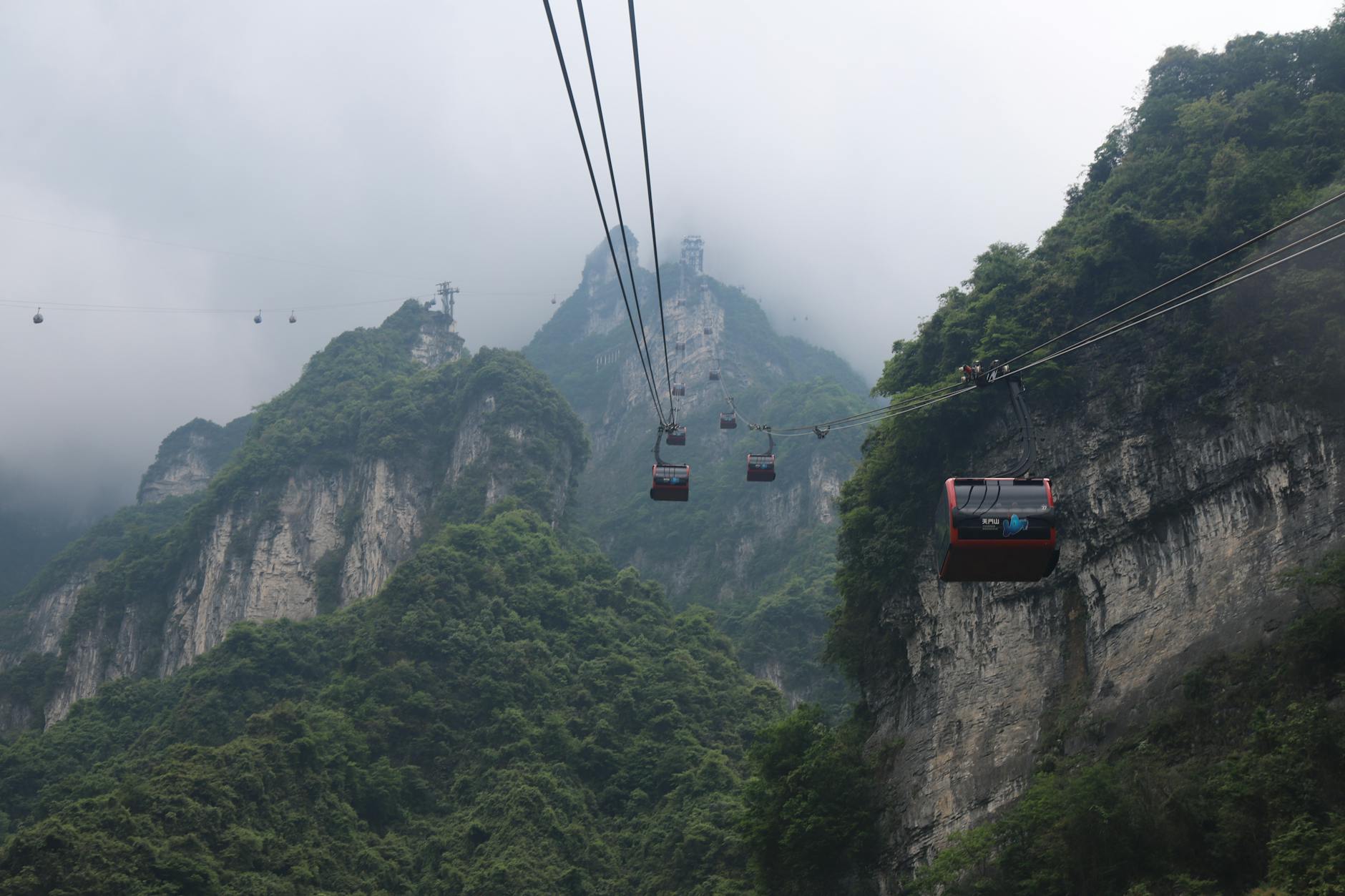
Tianmen Mountain is a separate park on the other side of Zhangjiajie city and needs its own day. A ticket costs 238 CNY (about $33) and covers the 7.5 km cable car from the city centre, the bus up the 99 Bends road and entry to the Heaven’s Gate arch. Glass walkways cost 5 CNY for shoe covers, and the summit chairlift is 25 CNY. Lines for the cable car exceed an hour in high season, so a Tianmen Mountain tour with timed tickets and a guide for the glass sections is one case where paying extra buys a usable day.
Grand Canyon and the Glass Bridge
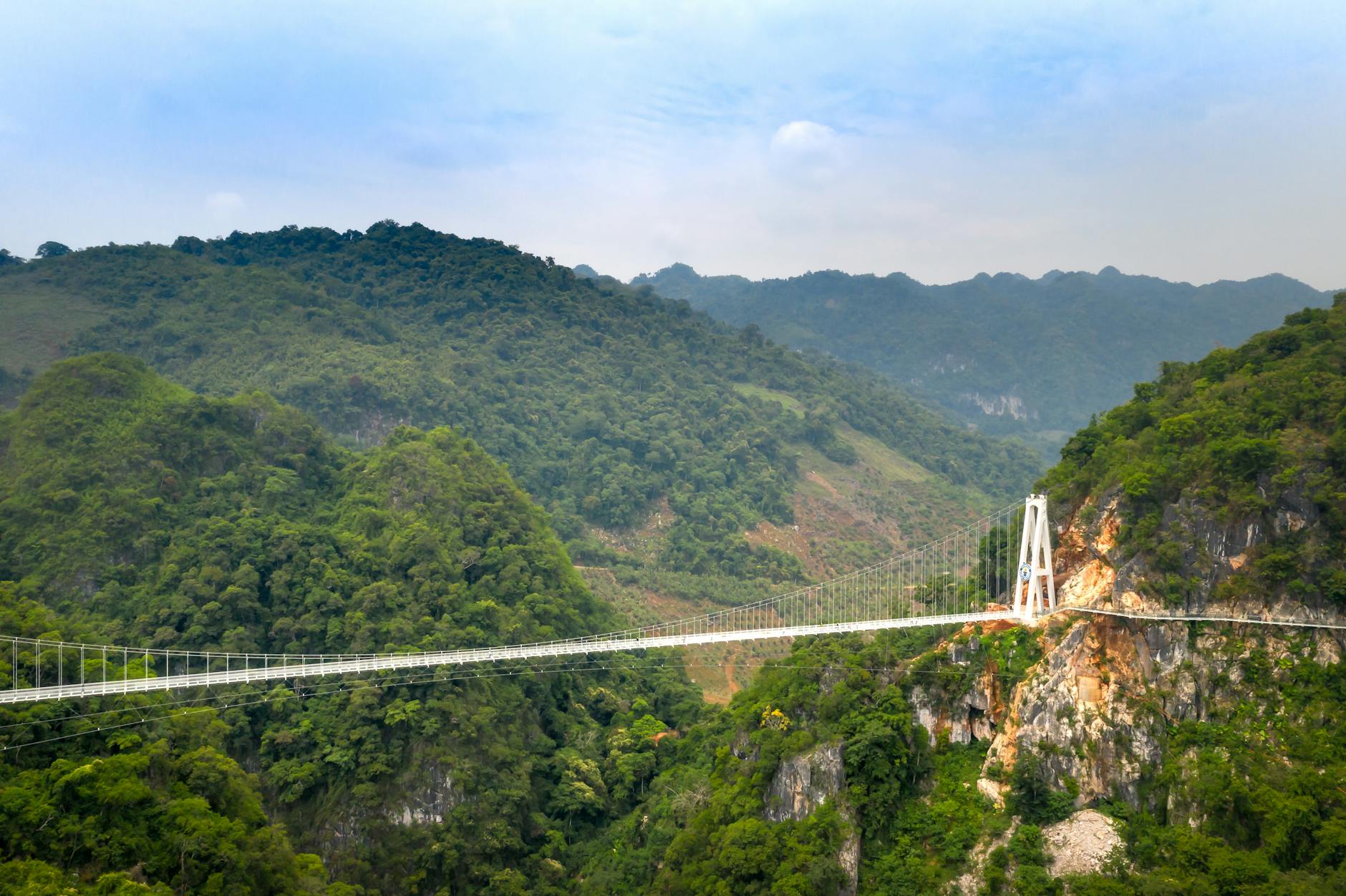
Zhangjiajie Grand Canyon lies about 30 km east of Wulingyuan and holds the glass bridge, 430 m long and 300 m above the canyon floor. Canyon entry costs 118 CNY (about $16), and walking on the bridge is another 35 CNY ($5). Optional add-ons include a zipline (50 CNY), a boat along the canyon floor (35 CNY) and an elevator back up (35 CNY). Shoe covers are mandatory on the glass. Anyone uneasy with heights should know that the bridge sways slightly in wind and that turning back halfway is allowed. A combined canyon and bridge ticket bought at the hostel saves the queue at the gate.
Adding up the main tickets, 700-1000 CNY ($100-140) per person covers three to four days across the National Forest Park, Tianmen Mountain and the Grand Canyon, including one or two cable cars. Souvenirs, extra lifts and snacks inside the parks come on top. Unlike food, these numbers barely move with your travel style.
Ways to Spend Less in Zhangjiajie
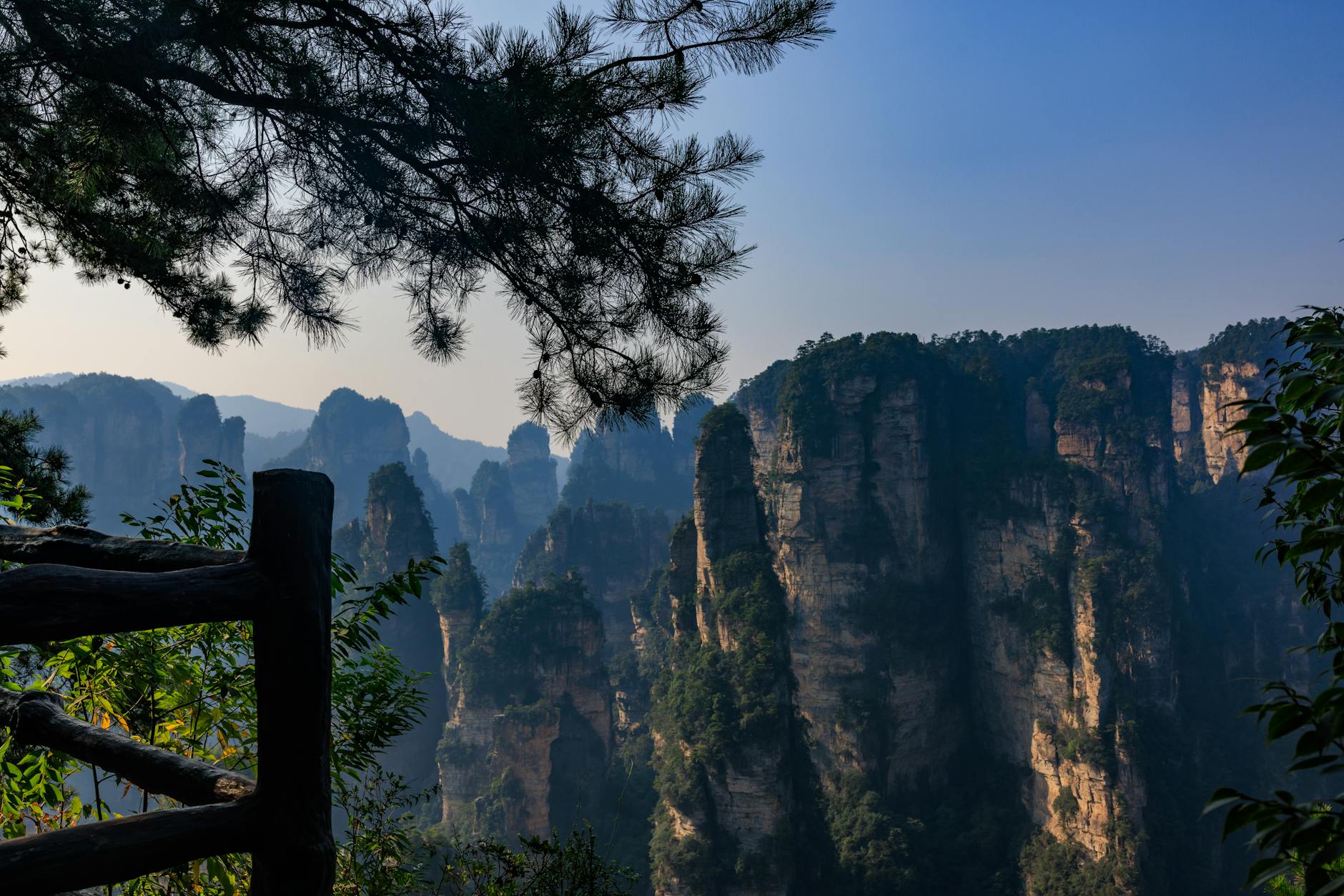
Zhangjiajie is one of China’s most visited parks, yet it stays affordable for independent travellers who plan a little. Most of the savings come from timing and transport, not from skipping sights.
Plan Dates and Tickets Ahead
Booking flights a few months ahead makes the largest difference, since domestic fares to DYG can triple in the last two weeks. Hotels follow the same curve in Wulingyuan, where supply is limited by the valley. Solo travellers and couples who are in town for the park will spend far less in a Wulingyuan hostel than in a city hotel, and they gain an hour of trail time each morning. Reserving a room online a month out is enough outside holiday periods.
Avoid Chinese national holidays. During Golden Week (first week of October) and Chinese New Year (late January or February), park shuttles run with queues of an hour or more and hotel prices double. Spring (April-May) and autumn (September-November) bring mild weather and clearer air. Those months suit a slower schedule too, like the unhurried Zhangjiajie itinerary described elsewhere on this site. Summer is the rainy season, and July fog can hide the pillars for days.
Eating at local places saves money and tastes better. Hotel breakfast, where included, is worth getting up for. Inside the parks, cafes charge 10 CNY for water that costs 3 CNY in town and 30-50 CNY for instant noodles, so carry a bottle and some snacks from the supermarket. Restaurants near the Yuanjiajie viewpoint serve lunch for 60-80 CNY if you need a hot meal mid-trail.
Local Transport Between the Parks
Inside the National Forest Park, free shuttle buses link every main area and run from about 7 am to 6 pm. Taxis are not allowed past the gates anyway. Between Zhangjiajie city and Wulingyuan, public buses leave from the central bus station every 10-15 minutes for 12-20 CNY and take about an hour. To the Grand Canyon, a bus from Wulingyuan costs around 15 CNY; a shared car arranged by a hostel costs 50-80 CNY per person and saves an hour of waiting.
Tickets for the National Forest Park and Tianmen Mountain can be bought in advance through hotels or online, which matters in high season when Tianmen caps daily visitors. With all of that in place, an independent traveller spends about $500-700 for four or five days on the ground, excluding international flights. That covers a hostel bed or budget private room, local food, every main park ticket and two cable cars. With mid-range hotels and restaurant meals the same trip comes to $900-1200.
An extra day is well spent beyond the parks. Aizhai Bridge, a suspension bridge 350 m above a gorge on the road to Jishou, and the riverside town of Furong with its waterfall running under the old street make a long but rewarding day. A day trip to Furong Ancient Town with transport included costs less than hiring a car for the 300 km round trip.
Sample Budget for Four Days
Here is how the numbers above combine for one person over four days in Wulingyuan, excluding the international flight. The budget column assumes a hostel private room and street food; the comfort column assumes a 4-star hotel and restaurant meals.
| Item | Budget | Comfort |
|---|---|---|
| Domestic flights, roundtrip | $100-140 | $140-300 |
| Airport to Wulingyuan and back | $6 | $30 |
| 4 nights accommodation | $80-140 | $160-280 |
| Food, 4 days | $80-110 | $140-200 |
| Park tickets and cable cars | $100-140 | $100-140 |
| Local buses and shared cars | $15-25 | $40-60 |
| Total on the ground | $380-560 | $610-1010 |
Zhangjiajie is not the cheapest destination in China, but the pricey parts are predictable: the flight in and the park tickets. Everything else bends to your choices. Pick a shoulder-season week, sleep in Wulingyuan, buy the four-day park ticket on day one, and the whole trip costs about as much as a long weekend in a European capital.
There is data behind the town’s reputation – in our China hotel guest score study it outrated every megacity we measured.


