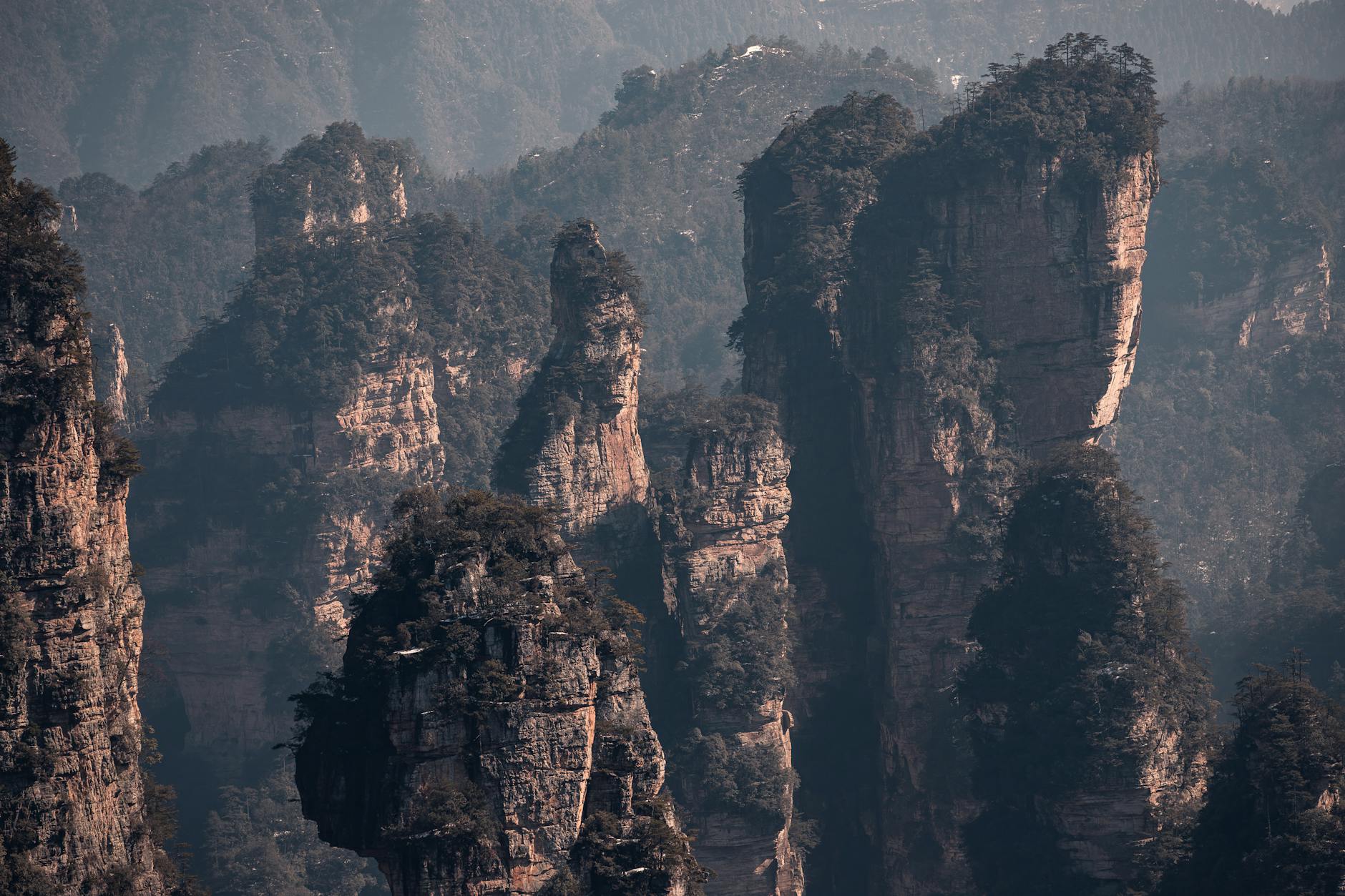
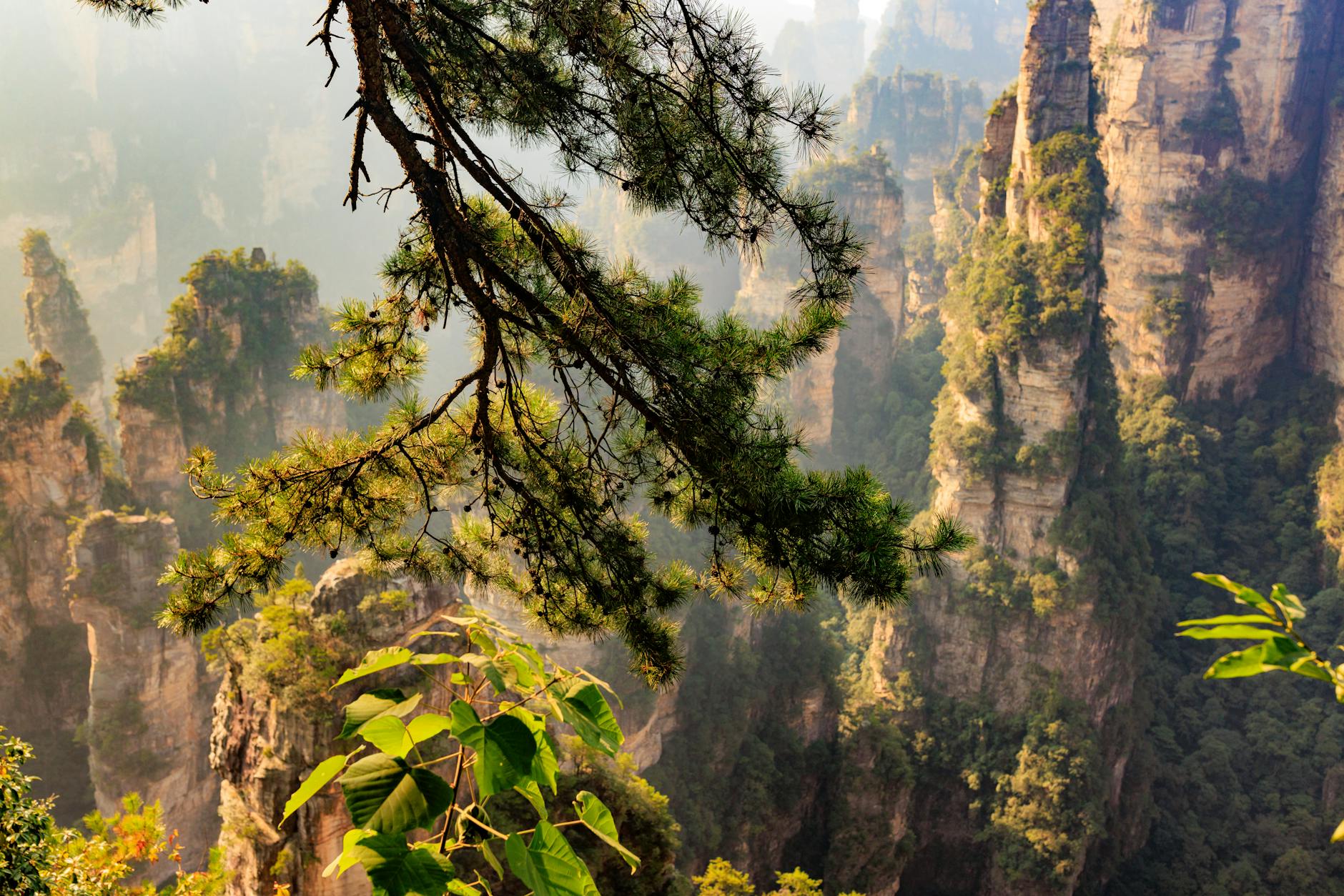
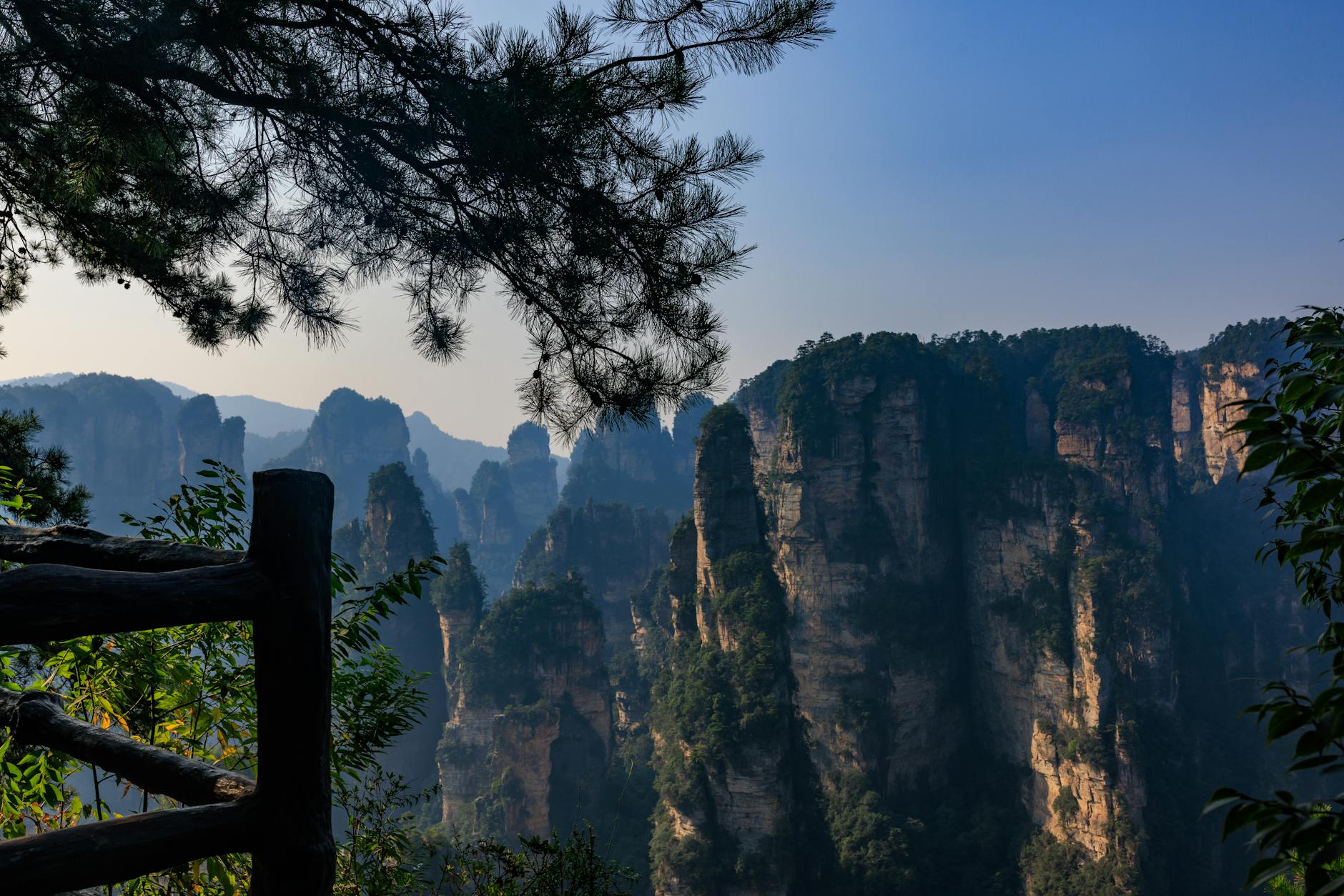
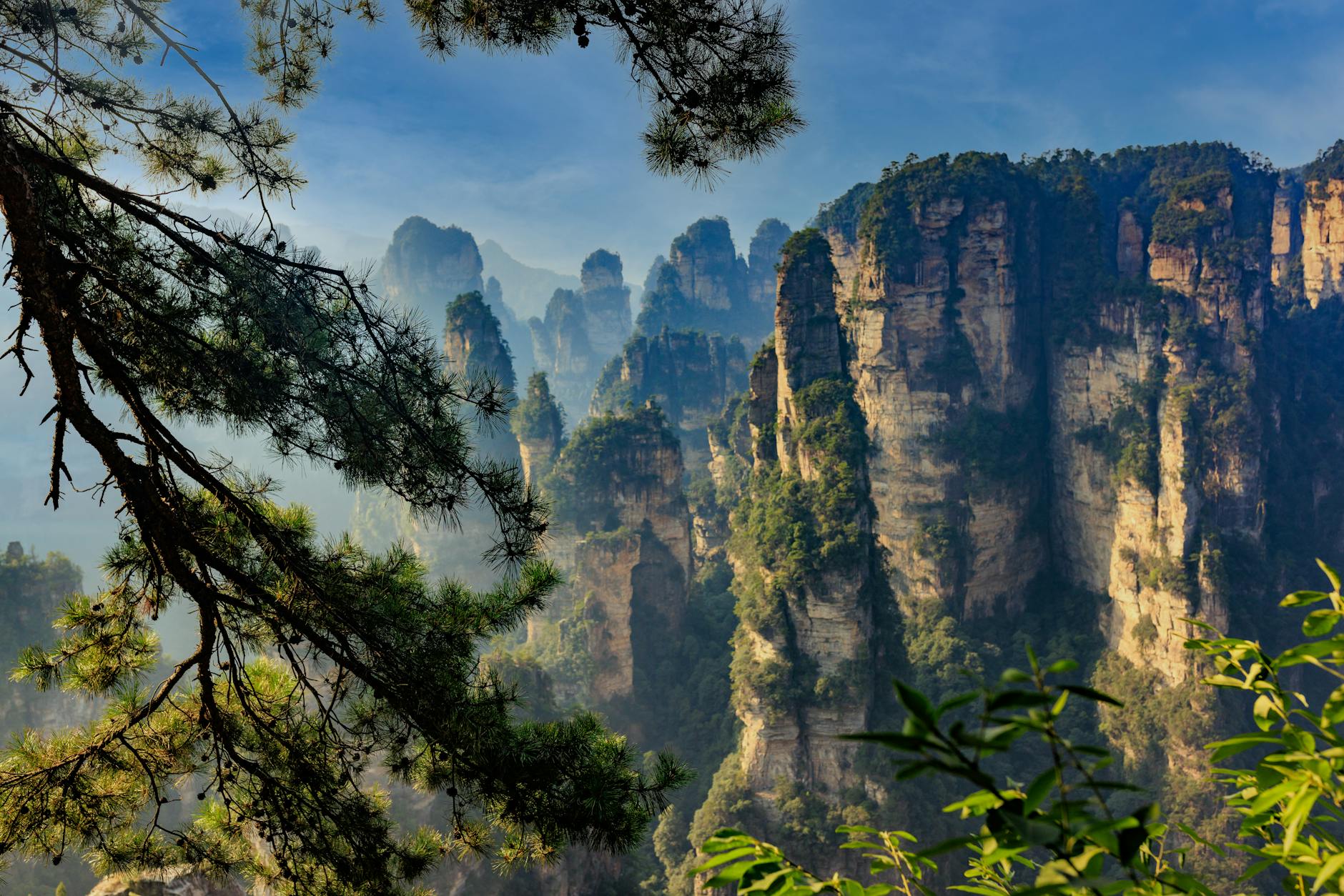
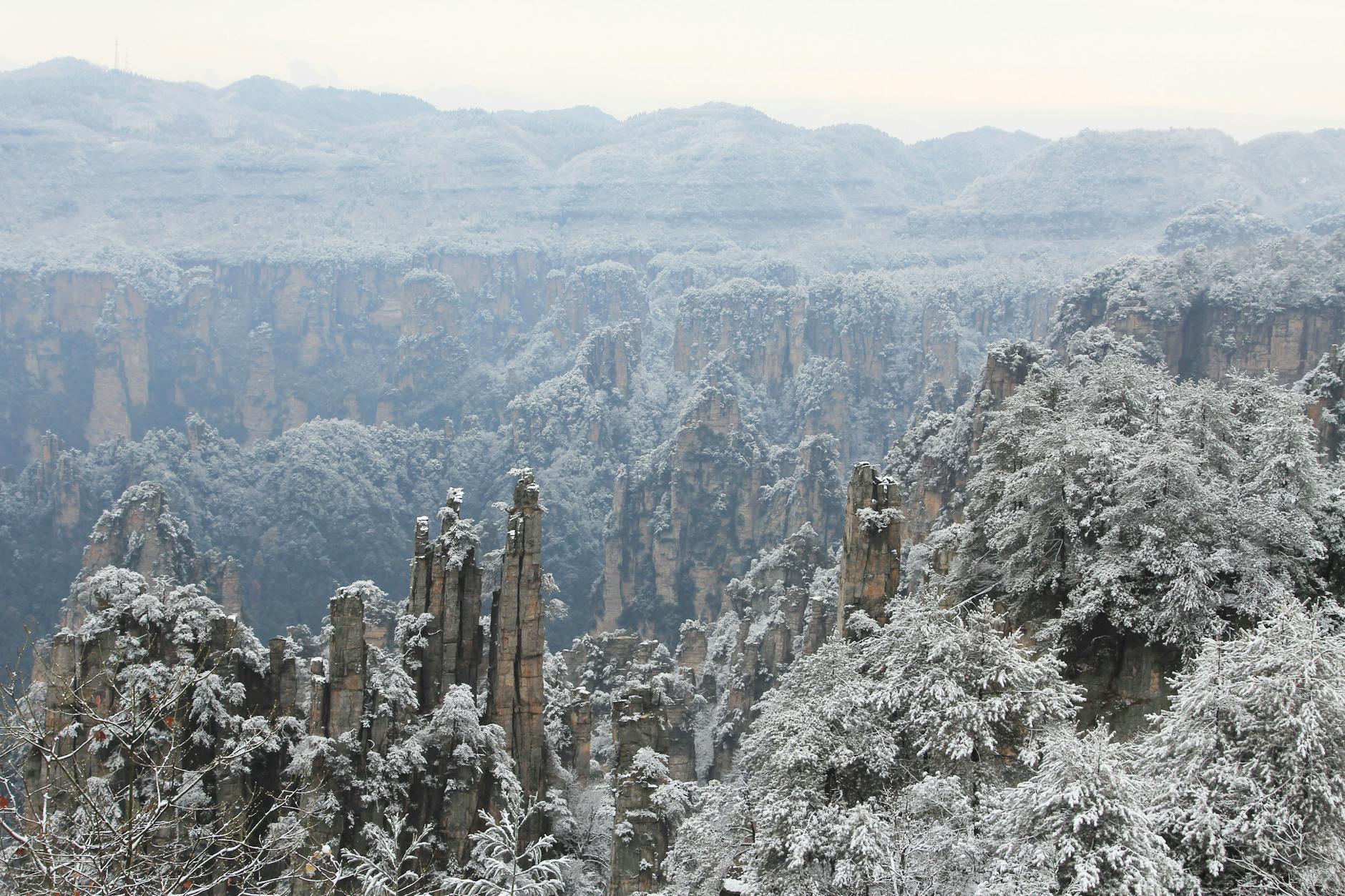
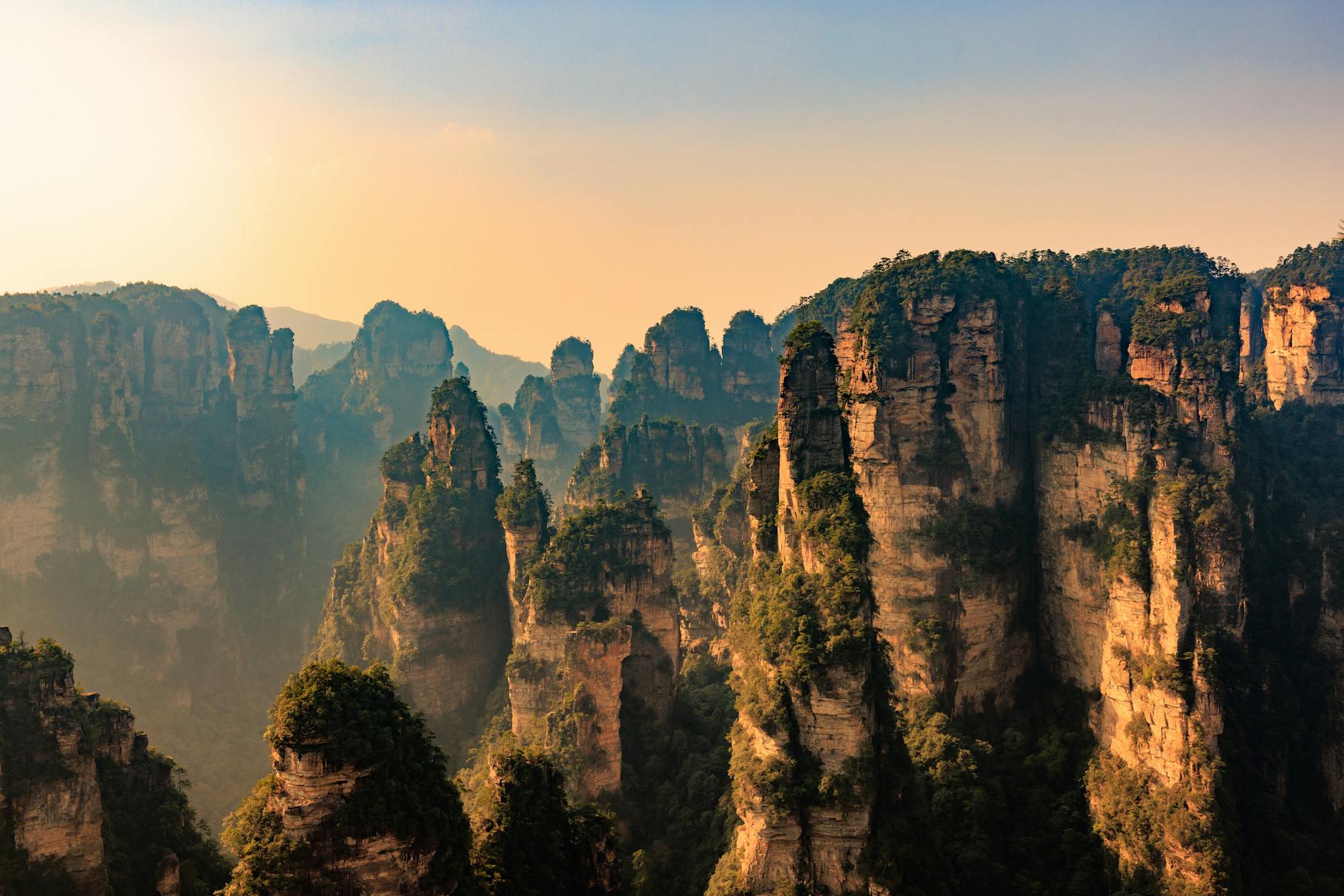
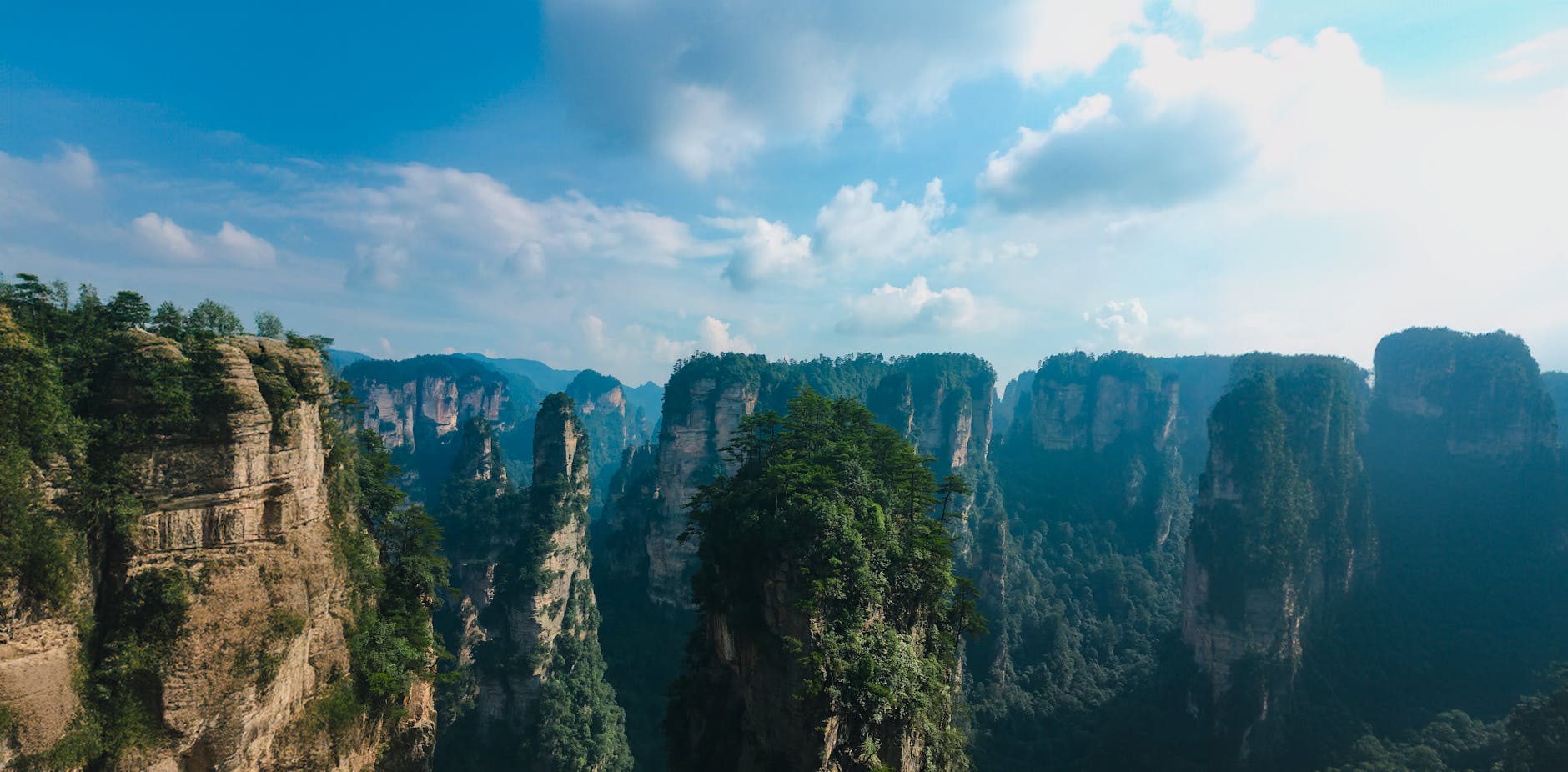
Photographs of Zhangjiajie look doctored. Sandstone pillars several hundred metres tall, mist pooling in the gorges between them, a pine tree growing out of a summit the size of a dinner table. It is real. It just does not look it, which is why James Cameron’s team used it as the model for the floating mountains of Pandora and why three million people a year now come to see it.
Planning a trip here on your own, on a tight schedule, takes some work. Its sights are spread across three separate scenic areas with separate tickets. Inside the main park, the shuttle system confuses first-timers. Tour groups arrive in waves and can turn a viewpoint into a queue. This itinerary spends one day in each area, starts early every morning and moves against the flow of the groups. It covers the main sights without the stress.
Prices and times are given for the main season, March to November. Winter is cheaper, colder and occasionally icy on the upper trails.
How Do You Even Get to Zhangjiajie?
Zhangjiajie city in western Hunan is the hub for all three scenic areas, and it has its own airport, Hehua (DYG), five kilometres from the centre. Direct flights come in from Shanghai in about two and a half hours, from Beijing in three, and from Guangzhou, Chengdu and several other cities. Book ahead in season, when fares double. A high-speed rail station opened in 2019 and puts Changsha three hours away and Guangzhou five. From the airport, a taxi to the city centre costs 30 to 50 yuan and to Wulingyuan, where the main park entrance is, about 100 to 150. Public buses do the same routes for a few yuan and take twice as long.
Where’s the Best Place to Stay in Zhangjiajie?
Picking the base is the single most important decision for beating the queues, because the parks open early and the groups arrive by nine. There are two realistic choices.
Zhangjiajie City
This is the larger town, with better infrastructure, more restaurants and the rail station. Tianmen Mountain’s cable car leaves from the middle of it, so the city is the right base for that day and for the Grand Canyon. Its drawback is distance: Wulingyuan and the National Forest Park are 40 to 60 minutes away by bus. Everything from cheap hostels to international chains is available, and the Home Inn branches near the Tianmen cable car station are the standard budget pick for an early start.
Wulingyuan
A smaller tourist town at the eastern entrance to the National Forest Park, and the better base for anyone who wants to spend most of the trip inside it. From a guesthouse here you can be at the gate when it opens, before the buses from the city have left. Its main street is lined with hostels, guesthouses and mid-range hotels. Pullman Zhangjiajie is the comfortable option, five minutes from the entrance. Whichever town you choose, it pays to book a hotel in Zhangjiajie before arriving. In the Golden Week holidays the whole area sells out.
How Many Days Do You Need in Zhangjiajie?
Three. One day each for the National Forest Park, Tianmen Mountain and the Grand Canyon gives enough time for the main sights without running, and leaves a half-day spare for something quieter. Two days is possible, but it means choosing between Tianmen and the Grand Canyon and skipping the quiet corners of the park. For anyone who would rather not manage the logistics, a three-day all-inclusive group tour follows almost the same route with transport, tickets and a guide included.
Day 1 in the Avatar Mountains of the National Park
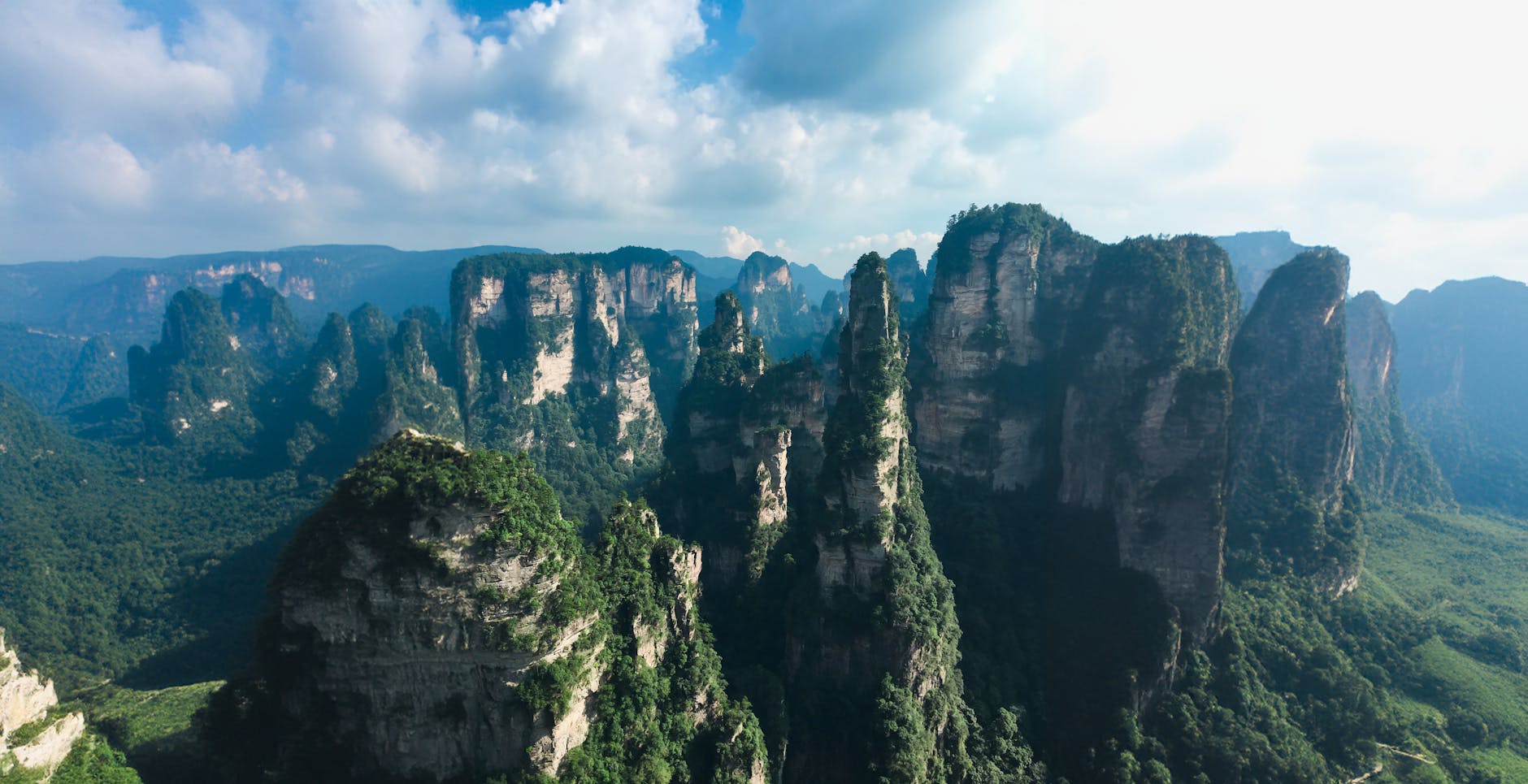
Day one belongs to Zhangjiajie National Forest Park, the part of the Wulingyuan Scenic Area with the famous pillars. An early start is not optional. Be at the Wulingyuan gate at 7:00, when it opens, and you will have the first trail almost to yourself for an hour. Entry costs about 225 yuan in season and is valid for four days, with one entry per day, so the fourth day of a trip can come back here at no extra cost.
Golden Whip Stream and Riding the Bailong Elevator
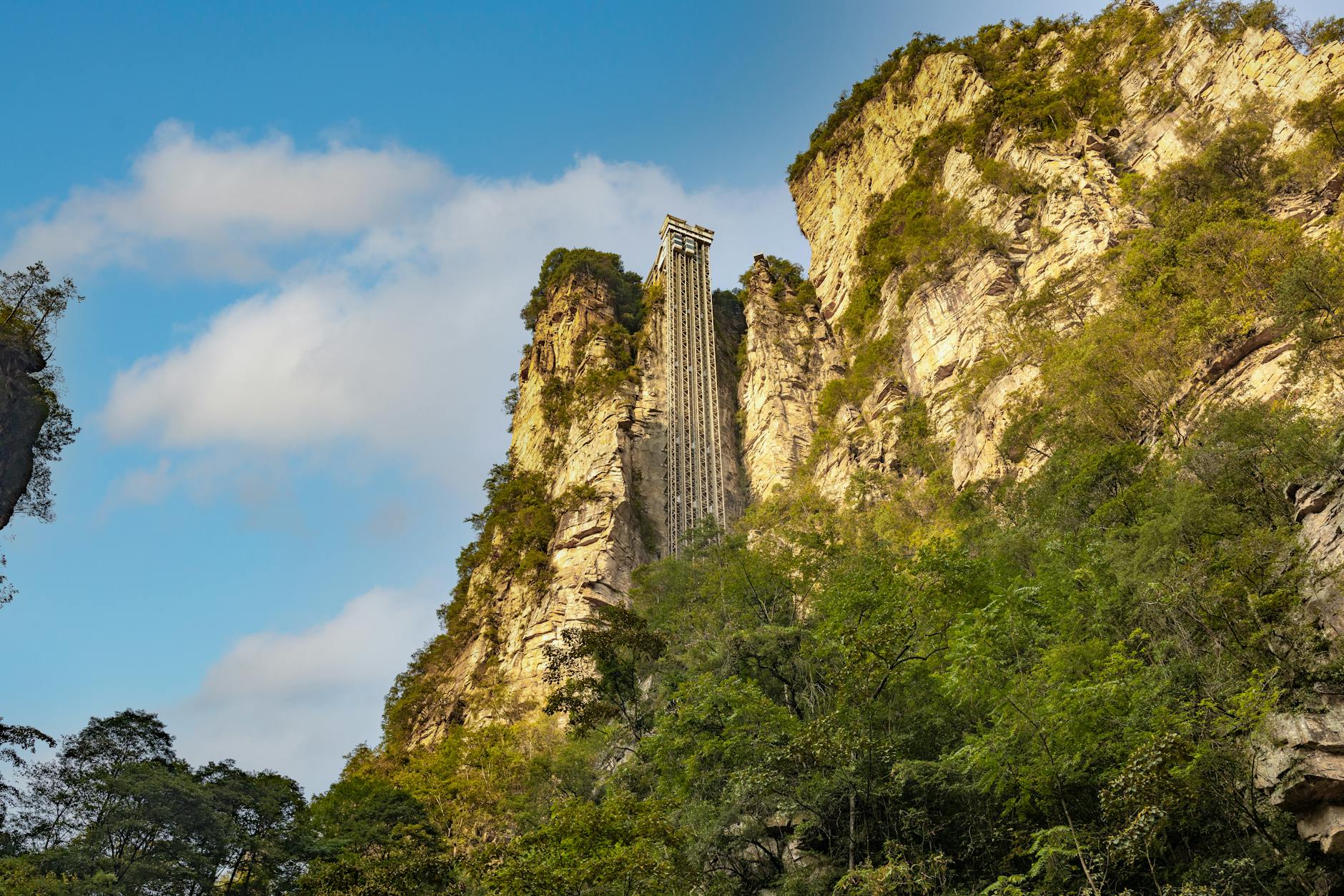
Start on the Golden Whip Stream trail from the Forest Park gate. It follows a clear stream for 7.5 kilometres along the floor of the gorge, flat almost the whole way, with the pillars rising on both sides. In the morning it is quiet enough to hear the water, and the macaques that live along it have not yet learned that the day’s tourists carry snacks. Keep food zipped away regardless. At the far end, a shuttle runs to the Bailong Elevator. This glass lift is bolted to a cliff face and climbs 326 metres in under two minutes to the Yuanjiajie plateau. It is the tallest outdoor lift in the world and costs about 70 yuan one way. Queues build here from mid-morning, which is the other reason to walk the stream first.
Anyone who prefers a set plan can take a private day tour of the National Forest Park, which handles the shuttles and the lift tickets. Only the walking is left to you.
Finding Pandora on the Yuanjiajie Plateau
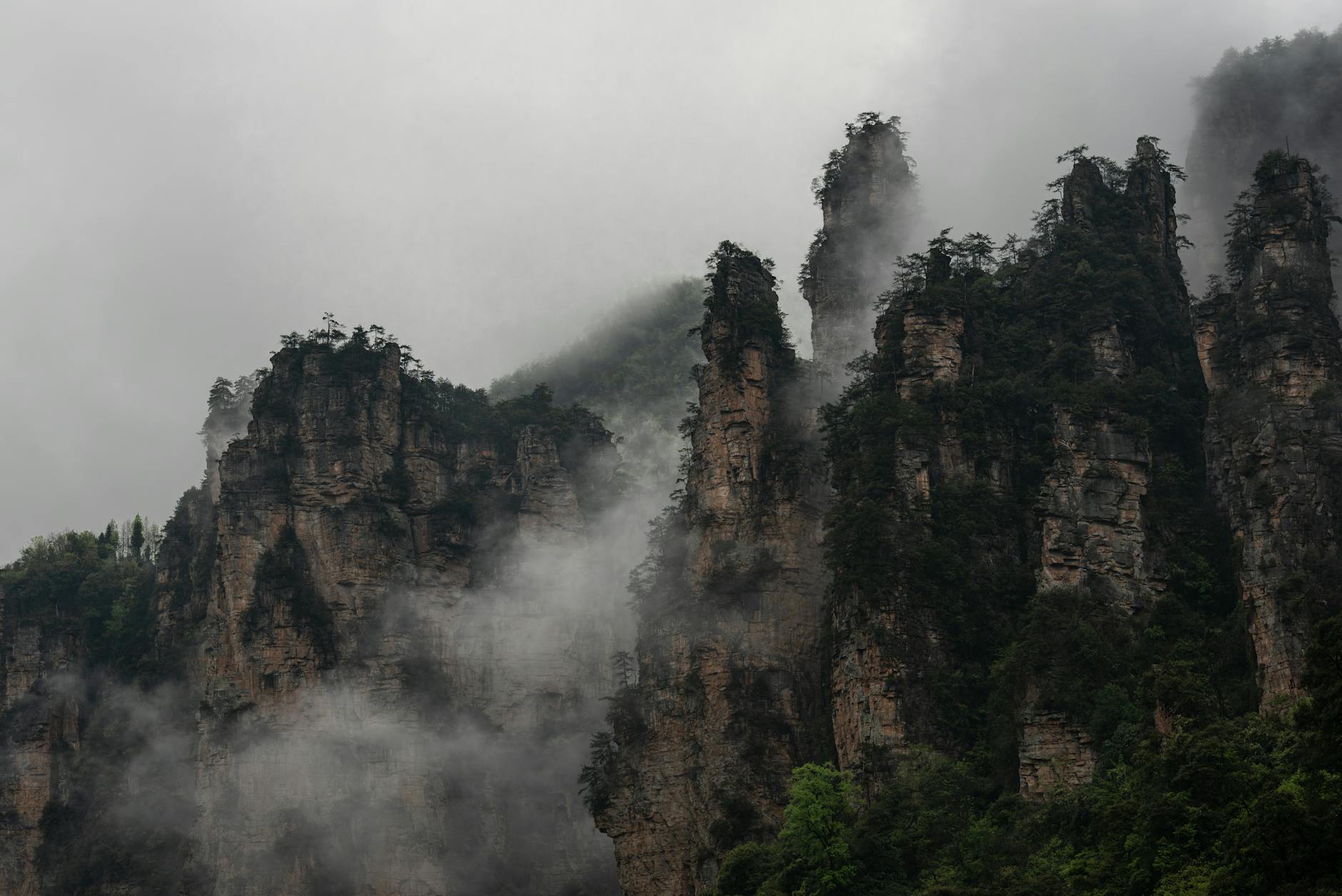
Yuanjiajie is the plateau that gave Cameron’s team their reference photographs, and the viewpoints are strung along a single paved path. Plan on two to three hours up here.
- First Bridge Under Heaven. A natural stone arch linking two pillars, 350 metres above the gorge floor, with a drop on both sides that the railings do little to soften.
- Southern Sky Column. The 1,080-metre pillar that the local government renamed “Avatar Hallelujah Mountain” in 2010. Park tickets with fast-track entry are sold for this section, which matters in Golden Week.
- Platform of Ecstasy. The classic view of the pillars standing in mist, the one on every postcard.
Tour groups walk this path in one direction, from the lift towards the shuttle stop, so walking it the other way earns a few quiet minutes at each viewpoint. From Yuanjiajie a free park shuttle continues to Tianzi Mountain. There, a cable car runs down to the valley. Or the path continues to the Imperial Brush Peaks and Helong Park, where the pillars are thinner and taller than anything on Yuanjiajie. By the time the last shuttle returns to Wulingyuan, around 18:00, most people have walked 15 kilometres and will sleep well.
Day 2 on the Glass Skywalks and the Road to Heaven
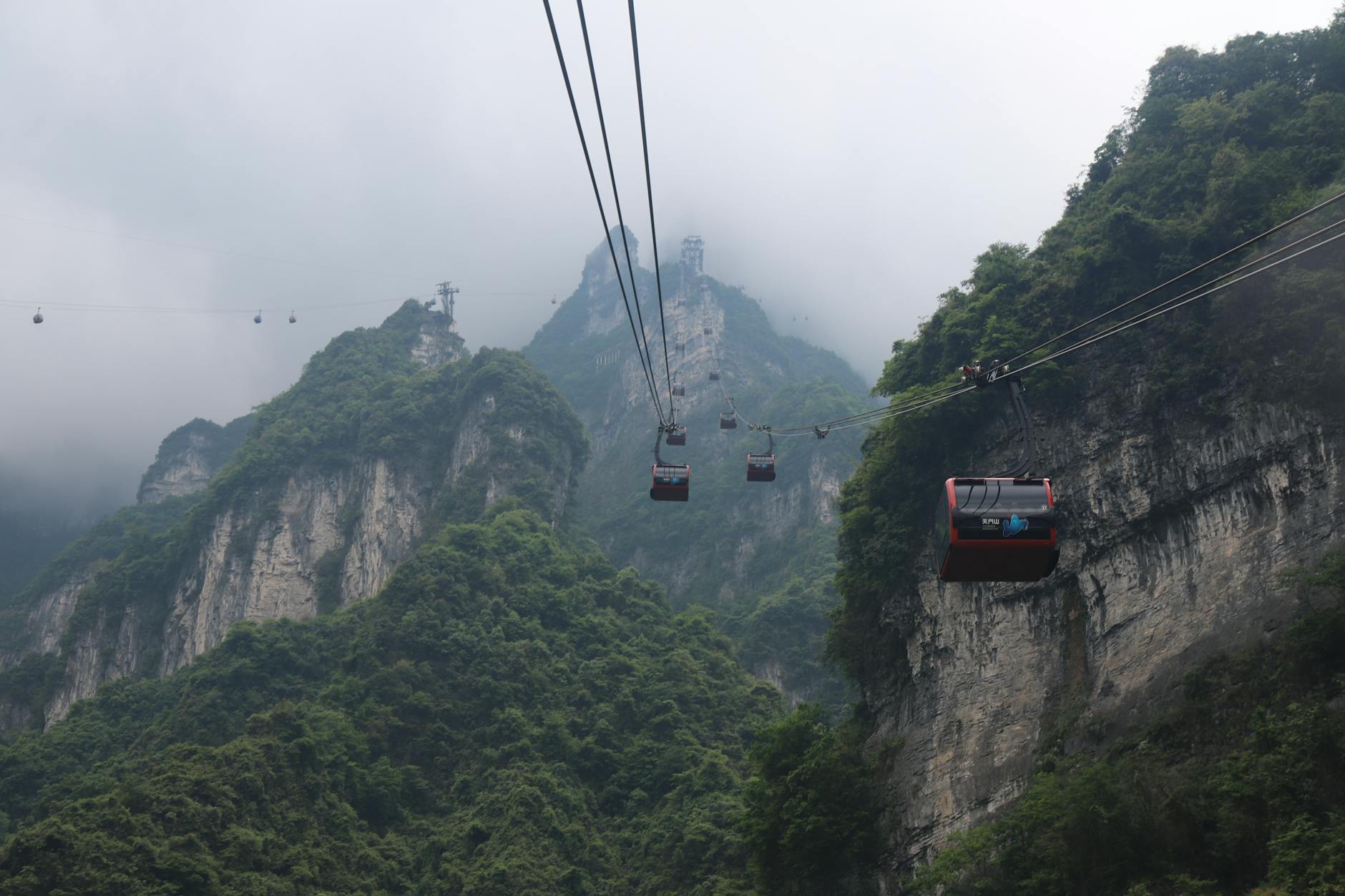
Day two is Tianmen Mountain, which rises straight out of Zhangjiajie city. It is a different kind of day: fewer kilometres, more height, and a test for anyone nervous of drops. Tianmen has the longest passenger cable car in the world at 7.5 kilometres, a natural arch through the summit called Heaven’s Gate, and several glass walkways bolted to the cliffs. Cable cars start running around 8:00, and the line is shortest then. Tianmen Mountain tickets with the cable car cost about 280 yuan in season and are best bought online the day before, because the ticket office allocates time slots and the morning ones go first. There are two ways to do the loop:
- Route A: cable car up from the city, bus down the 99-Bend Road.
- Route B: bus up, cable car down.
Route A is the better one. In the morning the cable car queue is shorter than the bus queue. Its cabin climbs slowly over the rooftops, then over forest, then along the cliff, with the switchbacks of the 99-Bend Road unwinding below. Riding it takes about 30 minutes and is an attraction in itself, and the views on the way up are the best of the day if the cloud stays high.
On the Summit, Glass Skywalks and a Temple
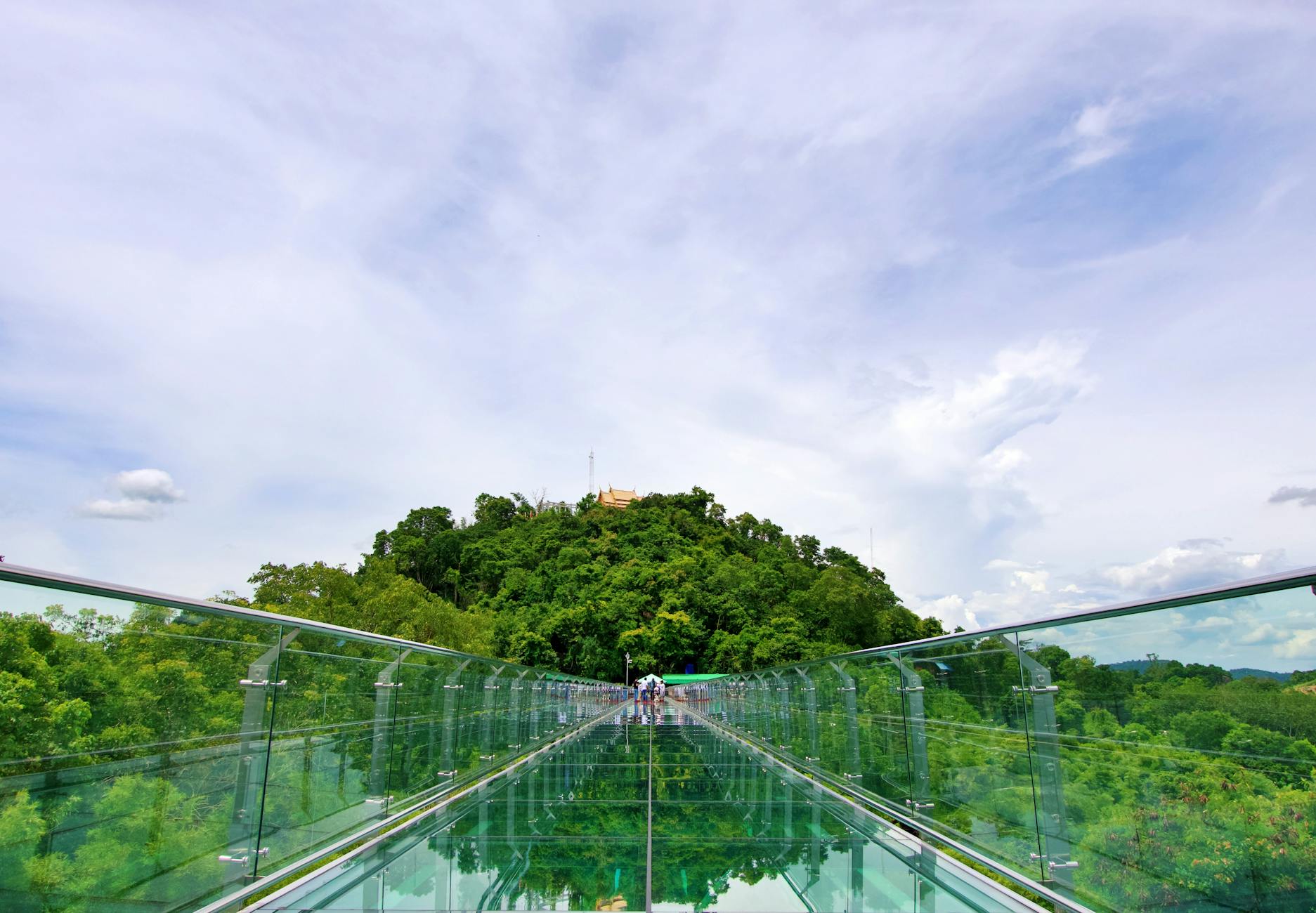
Head for the glass skywalks first, before the summit fills up. There are three of them. Best known is the Coiling Dragon Cliff walk: 100 metres of glass bolted to a vertical face at 1,400 metres above sea level. Cars on the road below look like toys. Staff hand out cloth shoe covers at the entrance for a few yuan. Cleaners polish the glass constantly, and for anyone with vertigo that makes it worse rather than better. Some visitors cross with a hand on the rock the whole way. After that, the cliff-edge path circles the summit in about two hours with views over the city and the plain to the north. Tianmen Mountain Temple sits in a hollow near the top. Rebuilt in 2009, this Buddhist complex stands on a site that has held a temple since the Tang dynasty, and it is the quietest spot on the mountain.
Descending Through Heaven’s Gate
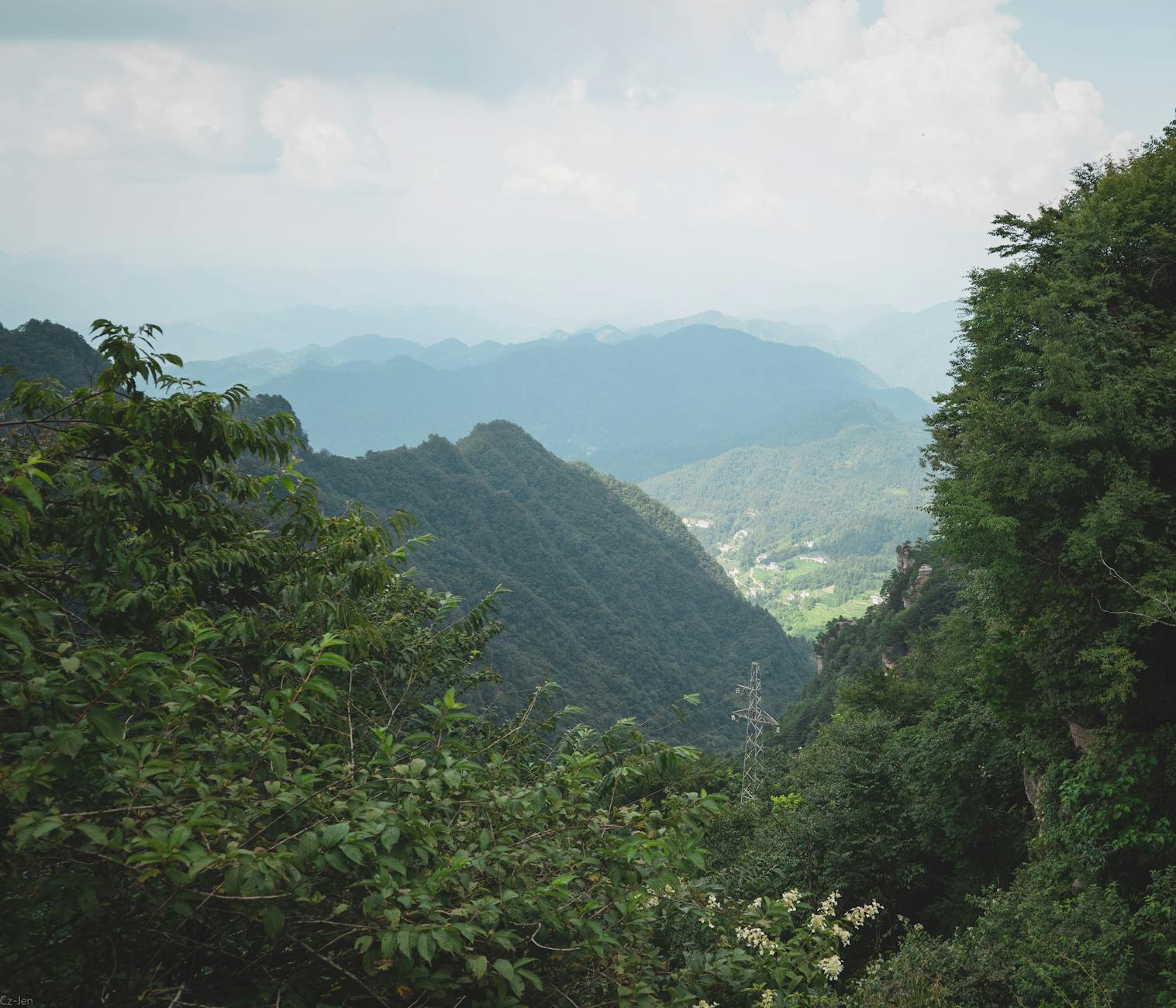
Tianmen’s signature feature is the arch itself, Tianmen Cave, a hole 131 metres high through the mountain that opened up when a section of cliff collapsed in the year 263. A series of escalators built inside the rock connects the summit to the top of the arch. From there, 999 stone steps drop to the plaza at the foot of it, steep enough that most people hold the rail. Taking the stairs rather than the escalator down is the way to feel the scale of the thing. At the bottom, buses wait to take passengers down the 99-Bend Road to the city. It is an 11-kilometre descent with a hairpin every 100 metres, driven by someone who has done it a thousand times.
Allow five to six hours for the whole mountain. Cable car, glass paths, temple and arch together make the most varied single day in Zhangjiajie, and the one visitors tend to talk about afterwards.
Day 3 at the Grand Canyon’s Glass Bridge
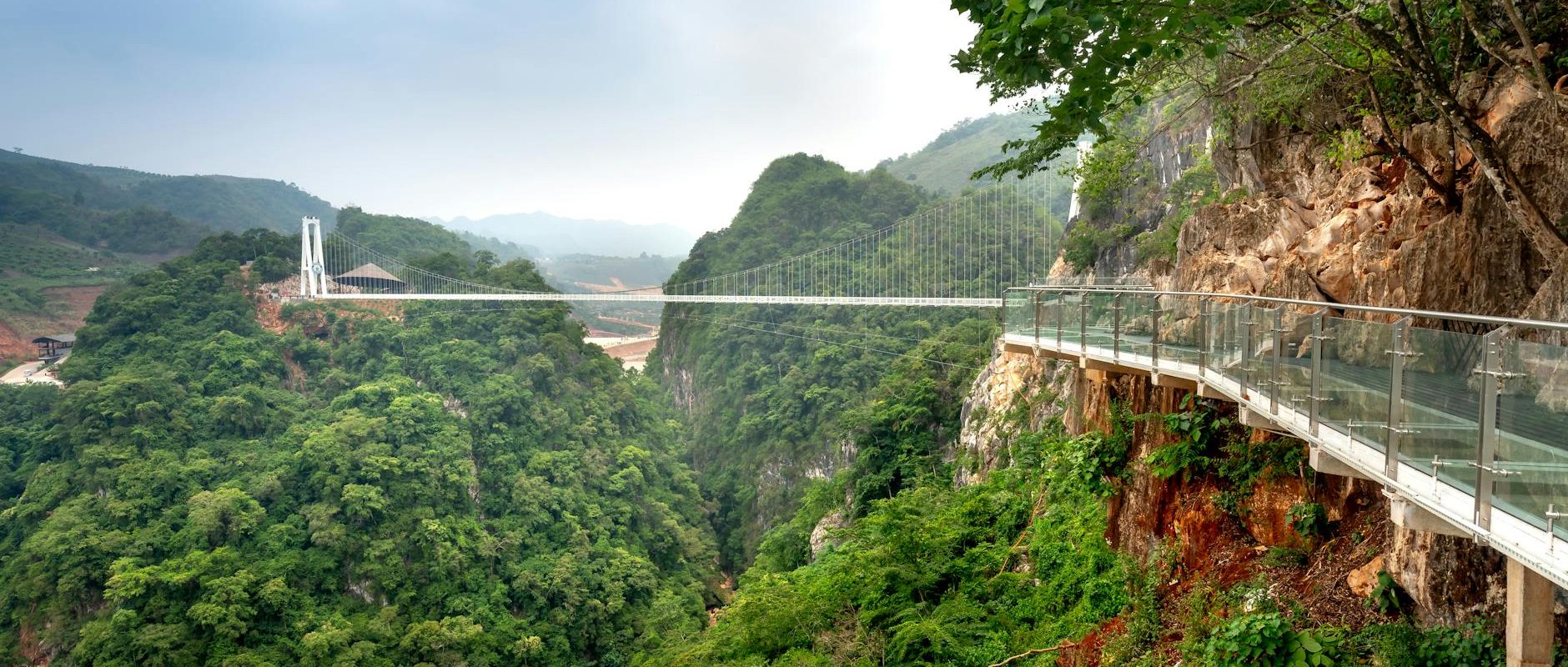
Day three goes to the Zhangjiajie Grand Canyon, about an hour’s drive east of Wulingyuan by bus or taxi. Its main event is the Glass Bridge, opened in 2016: 430 metres long, 300 metres above the canyon floor, and for a while the longest glass-bottomed bridge in the world. It is longer and higher than anything on Tianmen. Daily entry is capped, so Grand Canyon and glass bridge tickets should be bought online in advance, about 260 yuan for the combined ticket. Arrive at opening time, 8:00, for the shortest line.
Walking the Glass Bridge and Canyon
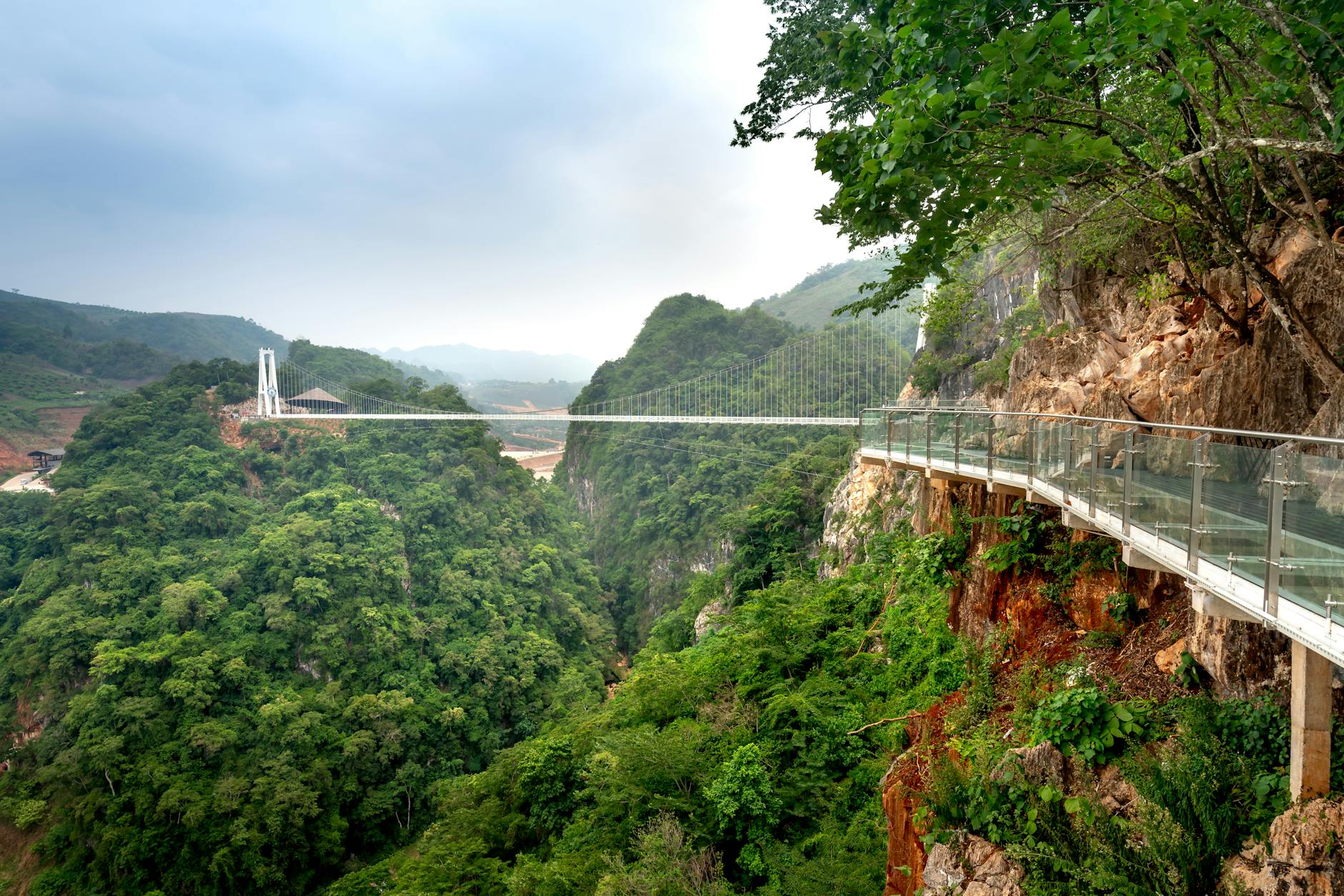
Engineers built the bridge as a steel span with 99 panels of three-layer glass. Crossing it with that much air below is a shot of adrenaline whatever your head for heights. On any given morning a few people cross on hands and knees. Shoe covers are compulsory and phones must go in a wrist strap. After the bridge, the path drops into the canyon by stairs and a sloping walkway. It then follows the river past waterfalls and a cave or two, and finishes with a short boat ride to the exit. Descent and walk take two to three hours and are far quieter than the National Forest Park, with the same green sandstone walls. A lift brings you back to the top, or the trail does. For a day with everything arranged, including the transfer from either town, a two-day small-group tour covers the canyon together with Tianmen and the Avatar mountains.
Wrapping Up the Itinerary With a Few Extra Options
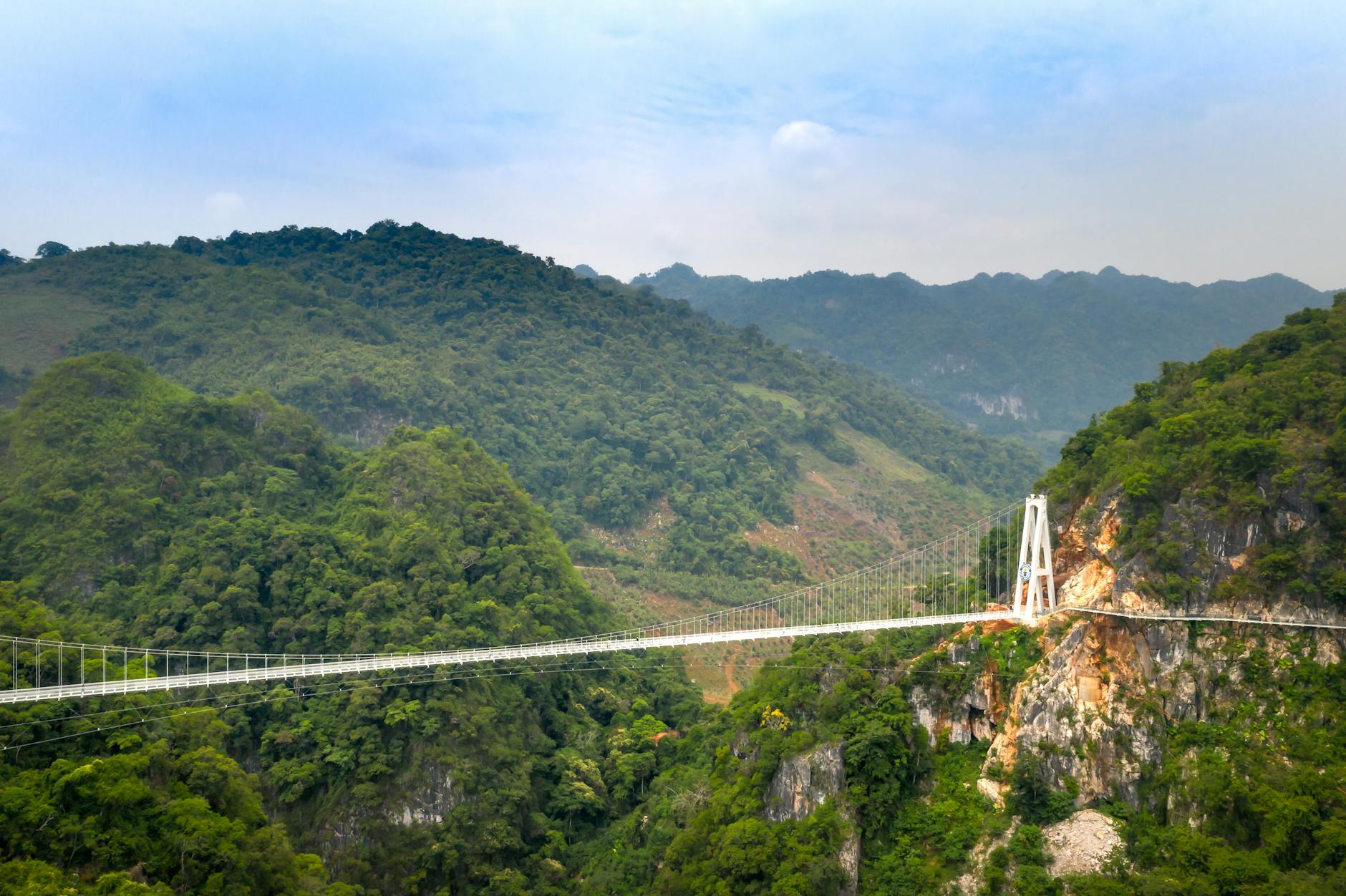
Most people finish the canyon by lunchtime, which leaves an afternoon. Your four-day park ticket makes Yangjiajie the obvious use of it: a less-visited corner of Wulingyuan with its own pillars, a cliff ladder called the Sky Ladder and almost no groups. Otherwise, change the scenery. Furong is an old Tujia town built around a waterfall that drops straight into the river, about two hours away. Fenghuang, the famous riverside town of stilt houses, is three. A day tour to the ancient towns of Furong and Fenghuang covers both. Many versions stop at the Aizhai suspension bridge, hanging 350 metres above a gorge on the expressway west. Either option turns three days of rock into a fourth day of river and history.
A Few Tips to Make Your Zhangjiajie Trip Easier
A few practical points separate a smooth three days from a frustrating one. Most come down to timing and tickets.
Best Time to Visit and Weather
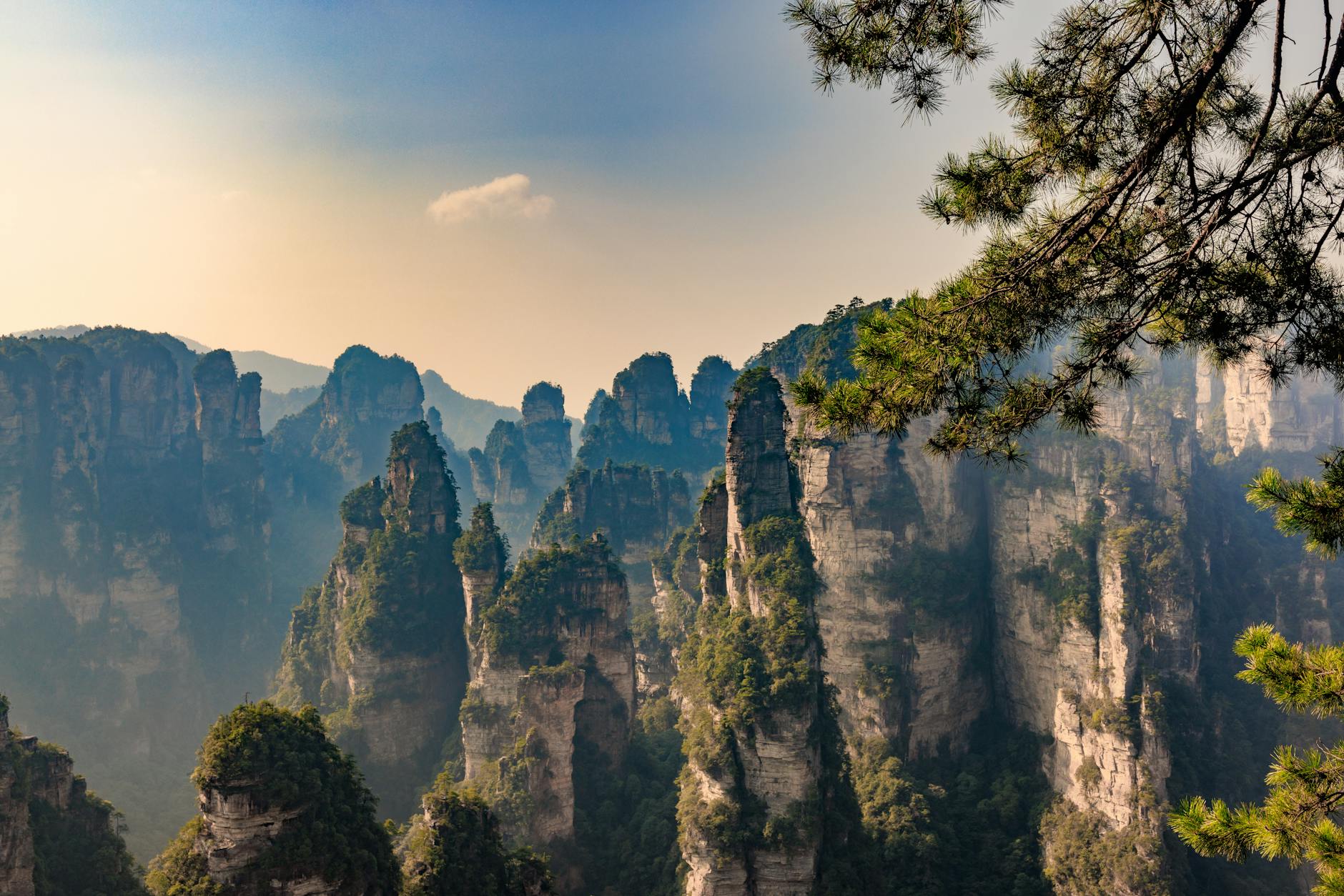
April to May and September to October are the best months. Temperatures sit between 15 and 25 degrees, rain is lighter than in summer, and the mist that makes the pillars look like they float is most frequent in spring. Summer is hot, humid and busy. Winter brings cold and occasional ice on the high paths, though snow on the pillars is a sight of its own and the parks are almost empty. Dates to avoid are the Chinese public holidays: Golden Week around 1 May and the week from 1 October, when domestic tourism fills every trail and hotel.
Food and Drinks
Inside the National Forest Park, food is limited to a few canteens at the shuttle hubs and priced for a captive audience. Carry water and snacks. In Wulingyuan and the city, restaurants serve Hunan cooking, which is hot in a different way from Sichuan: chilli heat without the numbing pepper. Local Tujia cooking’s speciality is sanxiaguo, “three things in one pot”, a dry hotpot of pork, tofu and vegetables cooked at the table for about 60 yuan for two. Small noodle shops near the park gates do a bowl of rice noodles for 10 to 15 yuan and open early enough for a 6:30 breakfast.
- Map. Take the paper map at the entrance or download an offline one. Free shuttle buses link the main areas inside the park, and the routes are colour-coded on the map.
- Tickets. The Wulingyuan park ticket is valid for four days with one entry per day. Tianmen Mountain and the Grand Canyon are separate tickets and separate sites. Both cap daily numbers and allocate time slots, so buy them online in advance rather than at the gate.
- Footwear. Comfortable, waterproof shoes. Trails are paved but often wet, and the stairs on day two add up to several thousand steps.
- Language. English is rare outside the main hotels. A translation app with a camera, and the hotel’s name written in Chinese, cover most situations.
- Payment. Alipay and WeChat Pay accept foreign cards and work at every ticket office and noodle shop. Cash is useful only for the smallest stalls.
How to Avoid Crowds in Zhangjiajie
Besides the early start, three habits make a difference.
- Reverse the route. Groups all follow the same path in the same direction. Walking Golden Whip Stream first and taking the Tianzi Mountain cable car up, then working back towards the lift, puts you against the flow all day.
- Book online. For the Glass Bridge and Tianmen Mountain, a prebooked time slot is the difference between walking in and standing in line for an hour.
- Go midweek. Tuesday to Thursday is noticeably quieter than the weekend, and any day outside the public holidays is quieter than any day inside them.
What Three Days in Zhangjiajie Add Up To
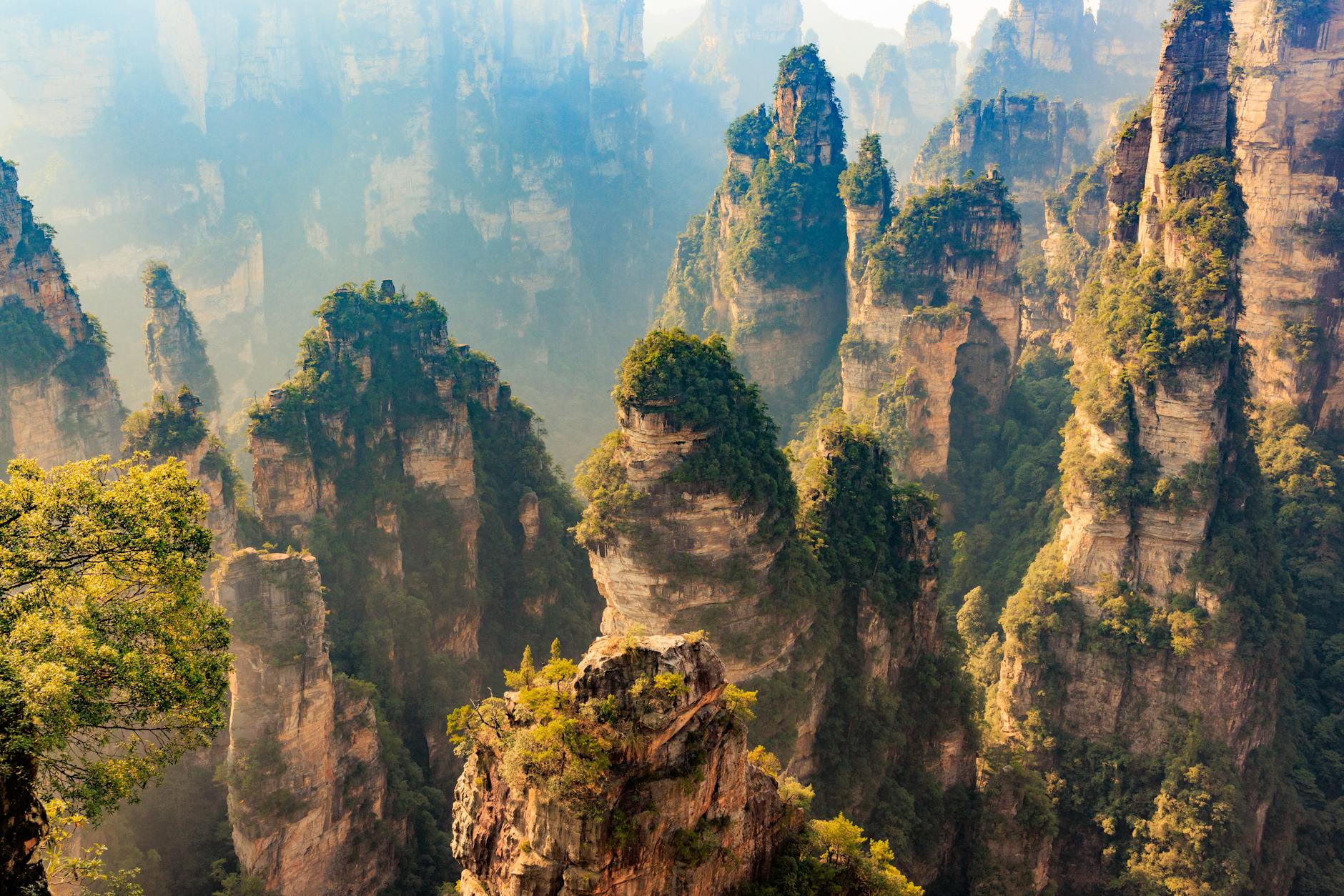
Zhangjiajie is one of the few places that outdoes its own photographs. Its pillars are older than the Himalayas, the mist is real, and the feeling of standing on a stone bridge with 350 metres of nothing on either side does not fade. Three days is enough to see the three main areas properly and to find the quiet corners that the groups skip.
Budget for the plan above, per person and without hotels, runs as follows. Park ticket 225 yuan. Bailong lift 70. Tianmen with cable car 280. Grand Canyon with bridge 260. Transport between the sites about 150, food about 100 a day. That comes to roughly 1,300 yuan for three days, and a fourth day in Yangjiajie costs nothing but the shuttle.


