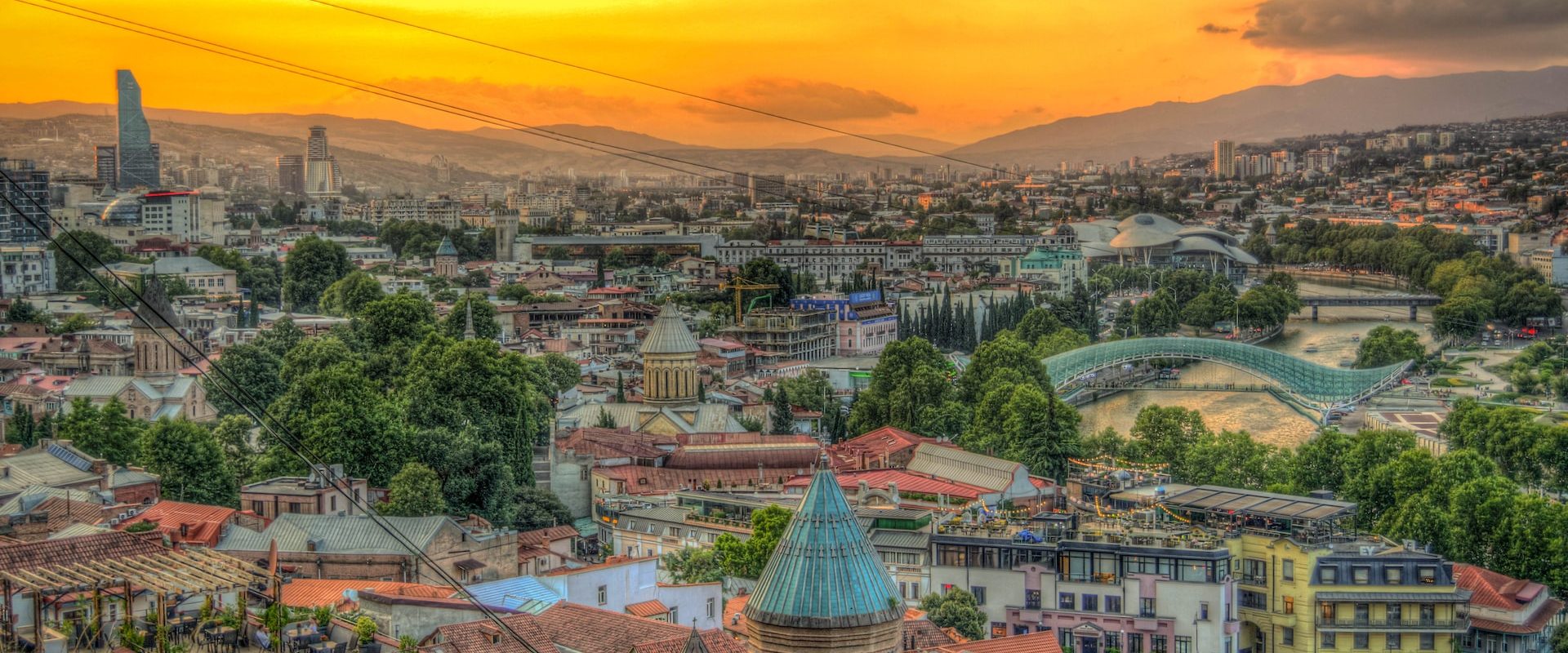
Tbilisi sits in a river valley at the crossroads of old trade routes, and the city still looks the part. Persian-style bathhouses, Art Nouveau facades, Soviet blocks and a glass footbridge share a few square kilometres along the Mtkvari. This list covers ten places that explain how the city fits together, with notes on how to reach each one and what it costs.
1. See the City from Narikala Fortress
Narikala Fortress is the first thing you notice on arrival. It sits on a steep ridge above the Old Town and defines the skyline from almost any bridge. Views from the walls take in the whole bend of the river.
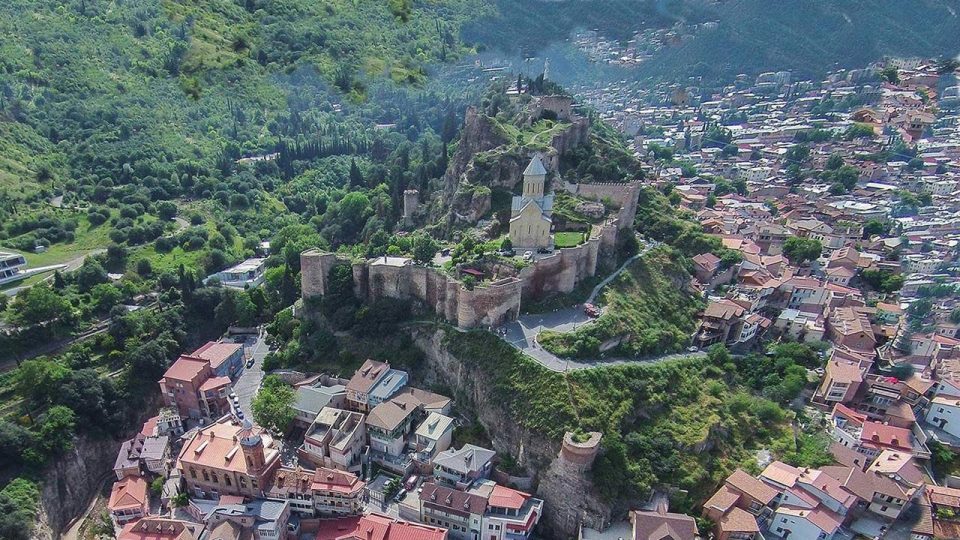
Fortifications here go back to the 4th century, and the fortress survived a long string of Persian, Arab and Mongol sieges before being rebuilt again and again. Most of what stands today dates from the 17th century. An earthquake in 1827 brought down much of the structure, and nobody rebuilt it afterwards, which is why the walls look so ragged.
Easiest way up is the aerial tramway from Rike Park, next to Europe Square. A ride costs 2.5 lari each way, paid with the same Metromoney card that works on the metro and buses, and takes about two minutes. Cabins drop you at the fortress gate, with the Mother of Georgia statue a short walk along the ridge. If you’d rather have someone explain what you’re looking at, there is a guided city tour that includes the cable car and the funicular.
2. Get Lost in the Old Town (Kala)
Kala is the oldest quarter, a tangle of narrow lanes below the fortress lined with houses whose carved wooden balconies lean toward each other across the street. Churches, a mosque and a synagogue stand within a few hundred metres of one another. Anchiskhati Basilica, from the 6th century, is the oldest surviving church in the city.
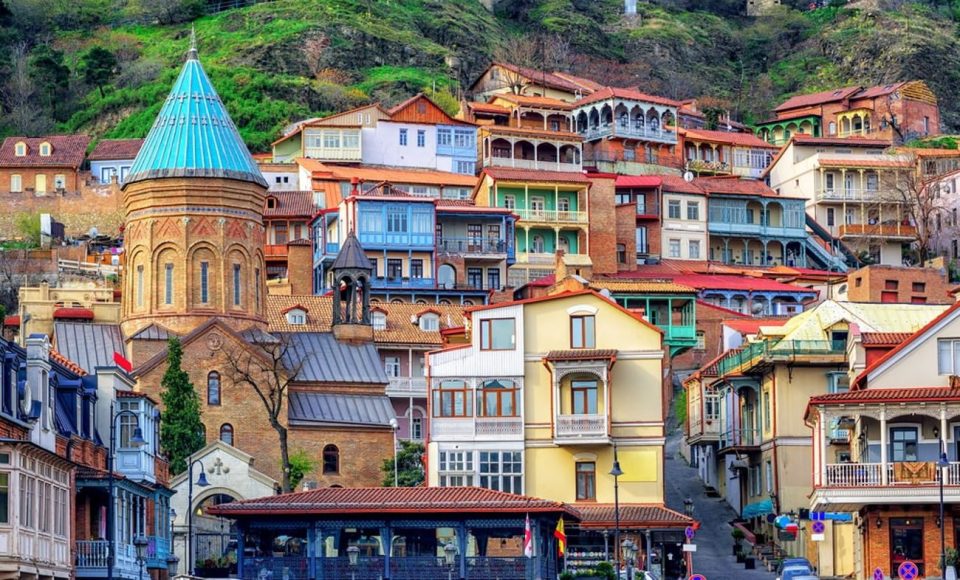
Sioni Cathedral and Anchiskhati are the obvious stops, but the quarter rewards walking without a plan. Courtyards open off the lanes, half of them with a vine trained over a shared balcony. A guided city tour covers the main sites in two or three hours if time is short, though an afternoon on foot does the same job.
Before leaving, walk down to Abanotubani, the bathhouse district at the southern end of Kala. Its brick domes mark the sulfur baths that gave the city its name, and they get their own entry below.
3. Marvel at the Holy Trinity Cathedral
Holy Trinity Cathedral, or Sameba, is the largest Orthodox church in Georgia and the main symbol of the post-Soviet city. It looks older than it is. Construction ran from 1995 to 2004, funded largely by donations.
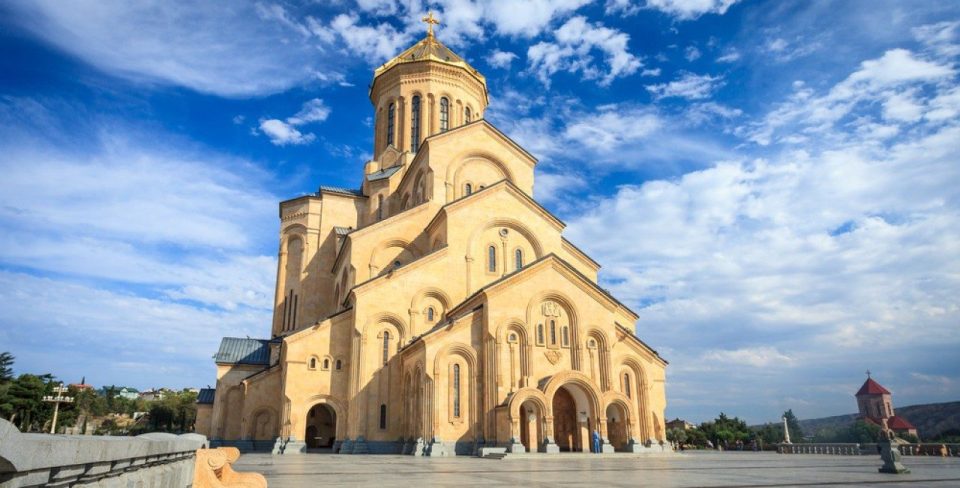
Sameba stands on Elia Hill on the left bank, visible from almost anywhere in Tbilisi. Its dome reaches 87.5 metres, which makes it the third-tallest Orthodox church in the world. Inside, frescoes and icons follow traditional Georgian models, and the complex includes a bell tower, a seminary and gardens that are open to walkers.
Go after dark if you can. Floodlights pick out the whole building, and the walk up from Avlabari metro station takes about ten minutes. A half-day tour that combines the Old Town, Sameba and the Chronicle of Georgia monument is a reasonable way to see three hilltop sites without hunting for buses.
4. Walk Across the Modern Bridge of Peace
Bridge of Peace is the most photographed structure in Tbilisi after the fortress. This glass-and-steel footbridge crosses the Mtkvari between the Old Town and Rike Park. It opened in 2010 as a statement about where the country was heading.
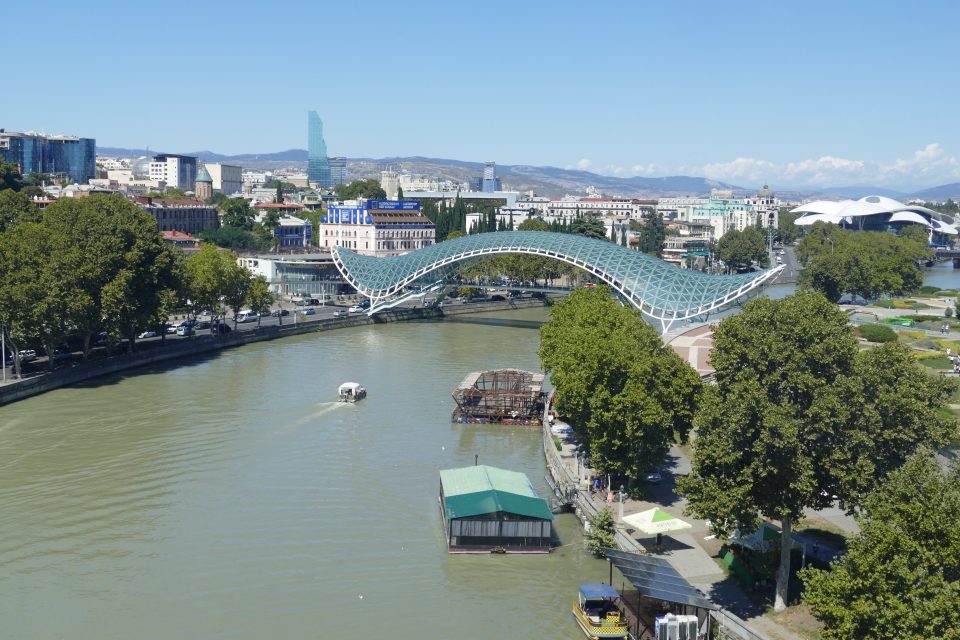
Italian architect Michele De Lucchi designed the bridge, and its light, wave-shaped canopy is all glass and steel. After sunset, more than 30,000 LEDs run patterns along the roof. Locals will tell you the sequence spells out, in Morse code, the chemical elements that make up the human body. Whether that is true or not, the show runs every evening.
Crossing takes two minutes. A viewing platform on the Rike Park side gives the standard postcard shot with Narikala behind the bridge. It is also the quickest link between Kala and the cable car station.
5. Have Fun at Mtatsminda Park
Mtatsminda is the mountain that closes off the city on the west, with the TV tower on its summit. Locals go up to cool off in summer, and the amusement park at the top draws families on weekends. Views from the terrace cover the whole city, from Sameba to the airport road.
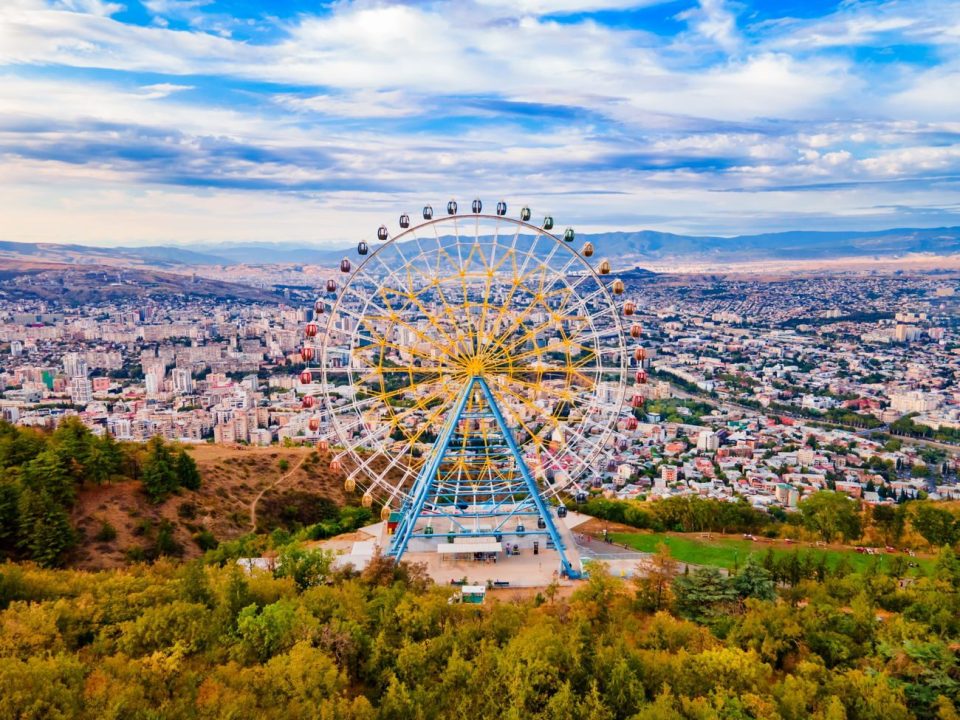
Rides, a Ferris wheel and a handful of cafes fill the park. Entry to the grounds is free; you pay per ride. An observation terrace in front of the restaurant building gives the panorama, and it is at its best in the hour after sunset.
To get there, take the funicular from the lower station on Chonkadze Street, a short walk uphill from Rustaveli Avenue. It needs its own plastic card, sold at the station; the Metromoney card does not work here. Halfway up, the car stops at the Mtatsminda Pantheon, where Georgia’s writers and public figures are buried around the church of St David. That stop alone justifies the ride.
6. Escape to the Tbilisi Botanical Garden
For a break from traffic, head into the Tbilisi Botanical Garden. It fills the gorge between Narikala and the Sololaki ridge, so you walk in from the middle of the Old Town and lose the city within five minutes. Founded in 1845 on the site of royal gardens, it now covers 161 hectares.
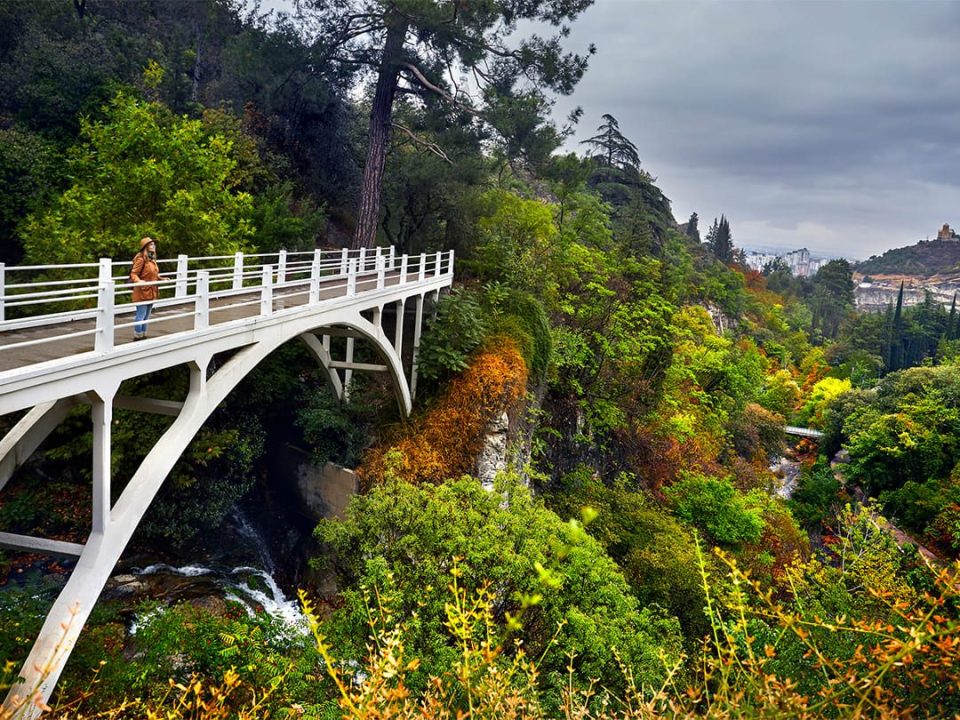
More than 4,500 plant species grow here. Paths wind past a waterfall, over small bridges and up to terraces with the fortress walls above them. Most visitors enter through the gate at the end of Botanikuri Street in Abanotubani; a second entrance sits below the Mother of Georgia statue, which lets you combine the garden with the ridge walk from the cable car.
Spring and early summer are the best months, when the slopes are in flower. Bring water in July and August. Shade is patchy on the upper paths, and the climb back out is steeper than it looks.
7. Stroll Down Rustaveli Avenue
Freedom Square marks the start of Rustaveli Avenue, the city’s main street. St George on a gilded column stands in the middle of the square, and the square itself hosts most of the country’s demonstrations and celebrations.
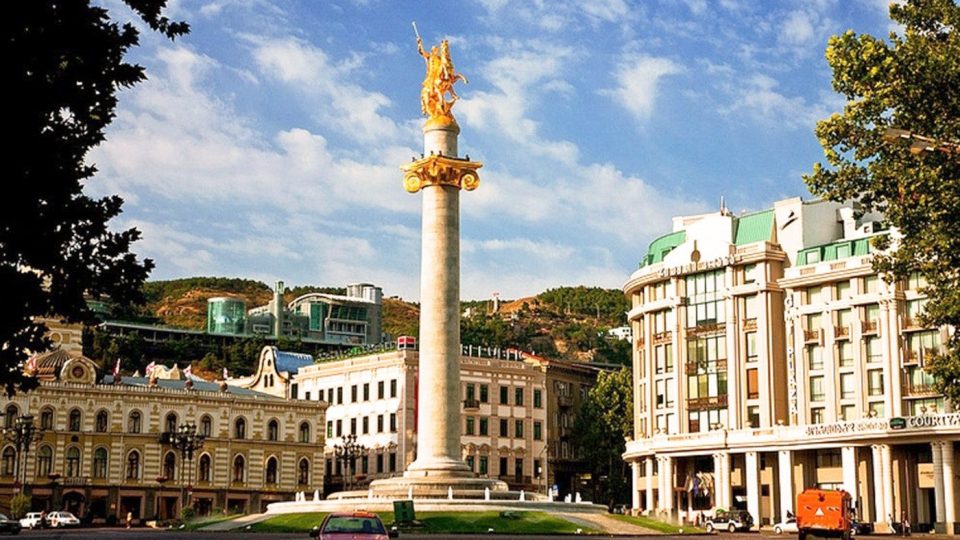
Rustaveli runs about 1.5 kilometres north-west from the square, past the Parliament building, the Opera and Ballet Theatre, the National Gallery and the Rustaveli Theatre. Cafes fill the ground floors, and metro stations sit at both ends. Walk it once by day and once at night; the lighting on the Opera facade is worth the second pass.
If you’d rather see the side streets than the facades, there is a guided street art and graffiti walk that heads off the avenue into courtyards most visitors never find. Otherwise, end the stroll at Rustaveli metro station, or carry on down Kostava Street to Heroes Square.
8. Relax in the Abanotubani Sulfur Baths
Abanotubani means “bath district”, and it is the reason Tbilisi exists. Legend has it that King Vakhtang Gorgasali found the hot springs while hunting in the 5th century and moved his capital here; “tbili” means warm in Georgian. You’ll find the neighbourhood right below Narikala, marked by brick domes at street level and the blue-tiled facade of the Orbeliani baths.
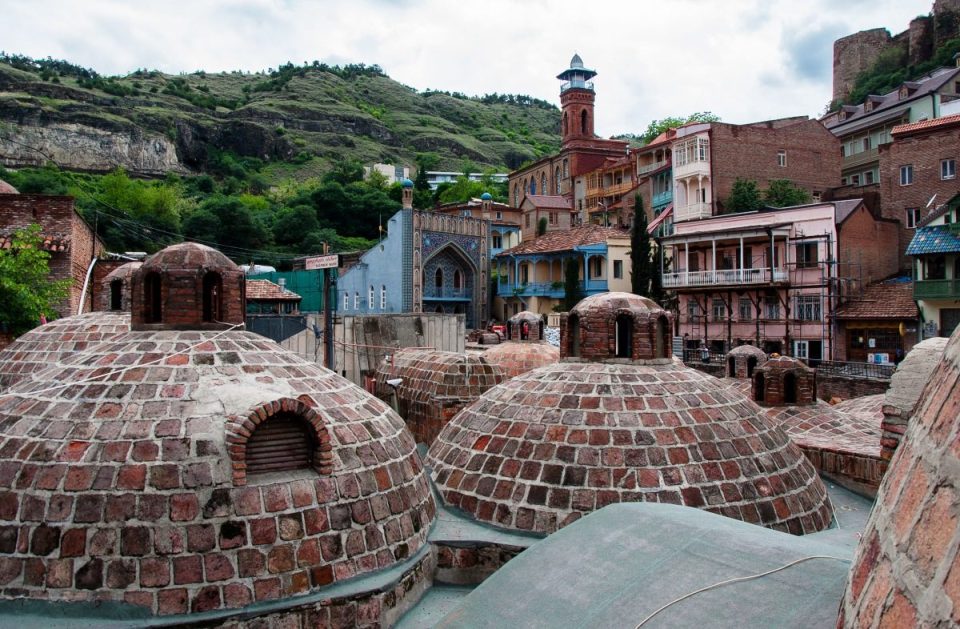
These are working baths, not museum pieces. Water arrives from the springs already hot and smelling faintly of eggs; the sulfur is what gives the baths their reputation for easing joints and skin. Each house has a cheap communal section and private rooms rented by the hour, with a pool, a shower and a bench to recover on.
A scrub and massage with the traditional kisa mitt is booked as an extra and is the part people remember. Evenings fill up, so reserve a room a day ahead. After a day of climbing hills, an hour here beats any hotel spa.
9. Explore the Georgian National Museum
To understand what you have been looking at, go to the Simon Janashia Museum of Georgia at 3 Rustaveli Avenue, the main building of the National Museum network. It holds the country’s central collection and covers everything from Stone Age tools to the 20th century.
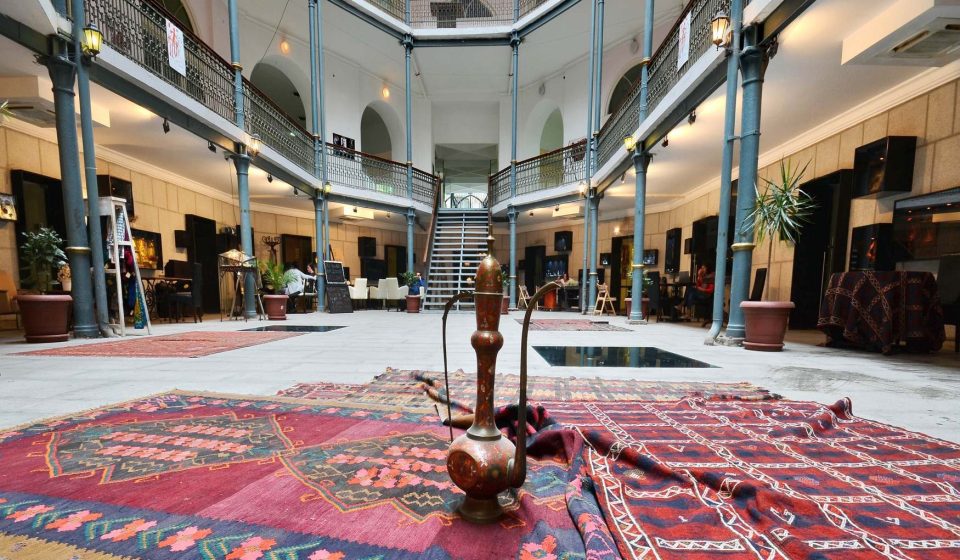
Two sections justify the ticket on their own. One is the Archaeological Treasury in the basement, with Colchian and Iberian gold jewellery from the first millennium BC, far finer than most people expect. Another is the Museum of Soviet Occupation on the upper floor, which documents 1921 to 1991 with photographs, court files and a railway carriage door riddled with bullet holes. Also here are the 1.8-million-year-old hominin skulls from Dmanisi, the oldest found outside Africa.
Allow two hours. The museum is closed on Mondays, and temporary exhibitions in the same building are usually worth checking at the ticket desk.
10. Climb to the Church of Saint Nino
Makhata Hill rises on the left bank above Avlabari, and the Church of Saint Nino on its summit is one of the newer additions to the skyline. Location is the point. From up here the view sweeps from Sameba across the river to Narikala and Mtatsminda, and the hill is quieter than any of them.
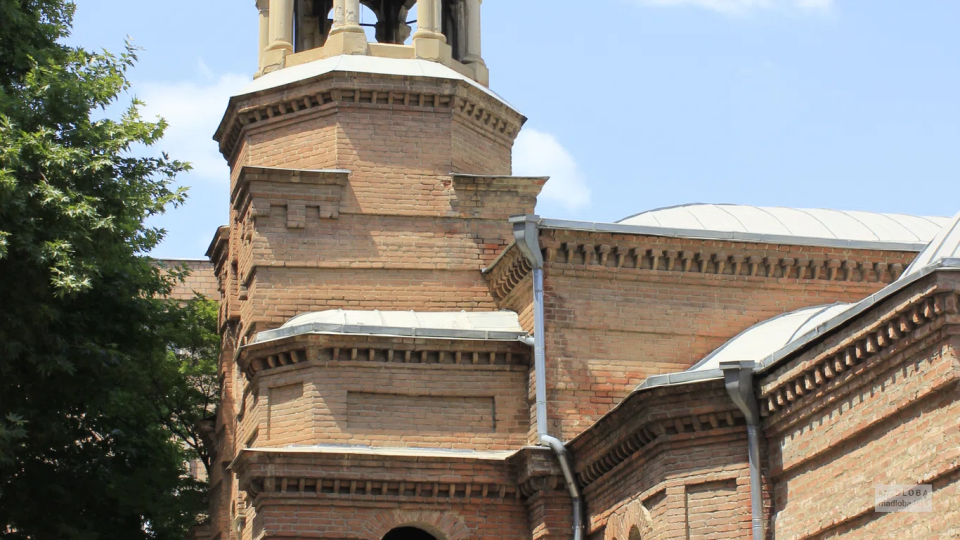
Saint Nino is the 4th-century evangelist credited with converting Georgia to Christianity, and her grapevine cross is the symbol you’ll see in every church in the country. Pilgrims come up on feast days. On an ordinary weekday the grounds are almost empty, and the only sound is wind in the pines.
Go in the morning or the last hour before sunset to avoid the afternoon heat on the unshaded climb. Bring water, since there is nothing to buy on top, and wear shoes with grip. Parts of the path are steep and loose.
Tbilisi is a city of contrasts: 4th-century walls above a 2010 glass bridge, a cathedral the size of a small town a few hundred metres from a quiet hillside church. Two things fill in what the sights leave out, and those are food and mountains. A khinkali and khachapuri cooking class ends with you eating what you made, which is a better introduction to the cuisine than any restaurant.
For the mountains, most people pick one of two day trips. A group tour to Kazbegi via the Zhinvali reservoir and Gudauri follows the Georgian Military Highway north to the Gergeti Trinity Church at 2,170 metres; count on a 12-hour day. West of the city, a day trip to Martvili Canyon and Prometheus Cave is longer still, but it gets you a boat on green water and a cave with a river running through it.
Book hotels in Tbilisi early for May, September and October, when the weather is at its most comfortable and the Old Town guesthouses fill up. Then leave the plan loose. The metro costs 1 lari a ride and runs until midnight, which is all the logistics most visits need.


