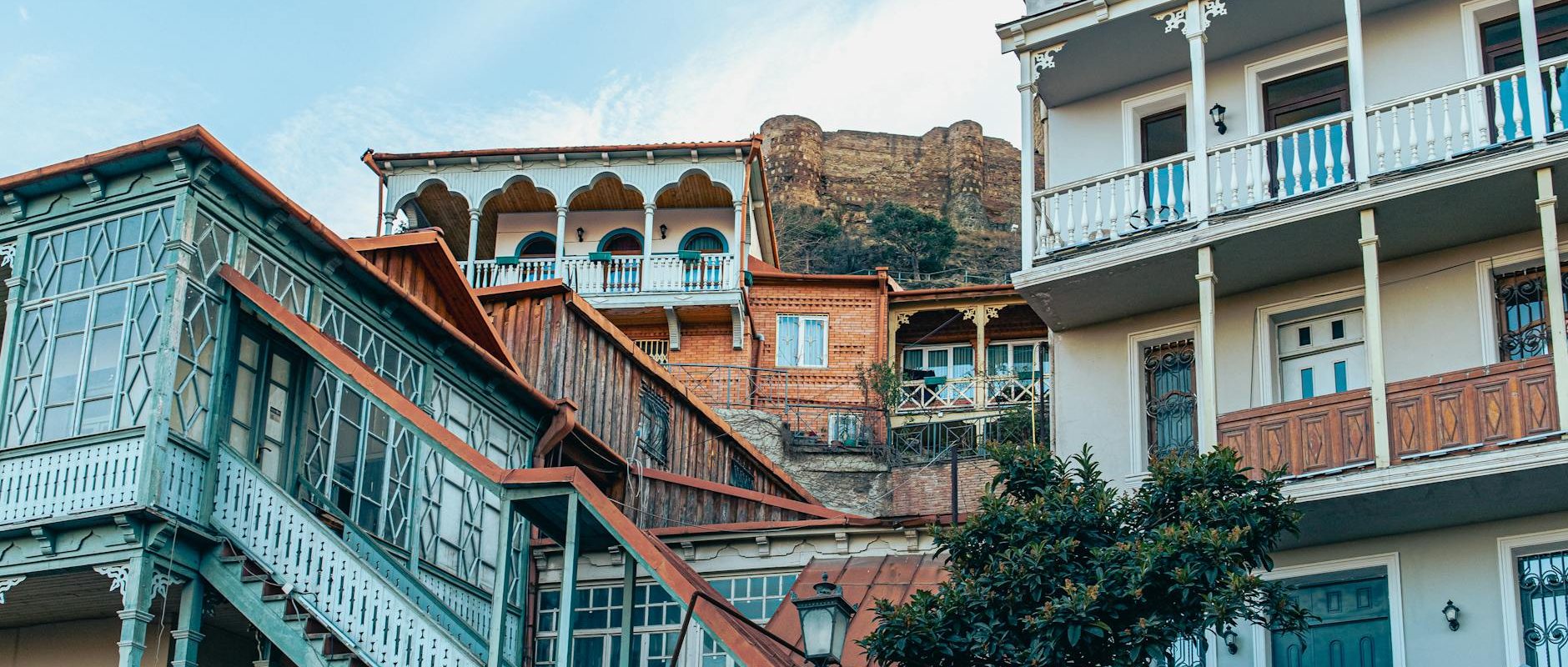
Tbilisi opens like a jewellery box. Lift the lid and the postcard pieces are all in place: Narikala Fortress, the sulphur baths of Abanotubani, the glass Bridge of Peace. Most visitors photograph the set in a day and move on to Kakheti or Kazbegi. The city itself keeps going for several more days. Its other districts sit ten minutes from the Old Town and get a fraction of its foot traffic. What they share is a habit of hiding their finest rooms indoors, behind a street door that looks like nothing.
Below are four of those districts, from the Art Nouveau stairwells of Sololaki to the Stalin-era avenues of Vake. For each there are the streets worth walking and the courtyards that tend to be open. The practical bits come at the end: how to get between them, when to go and where to sleep.
Wandering Through Sololaki, the “Caucasian Paris”
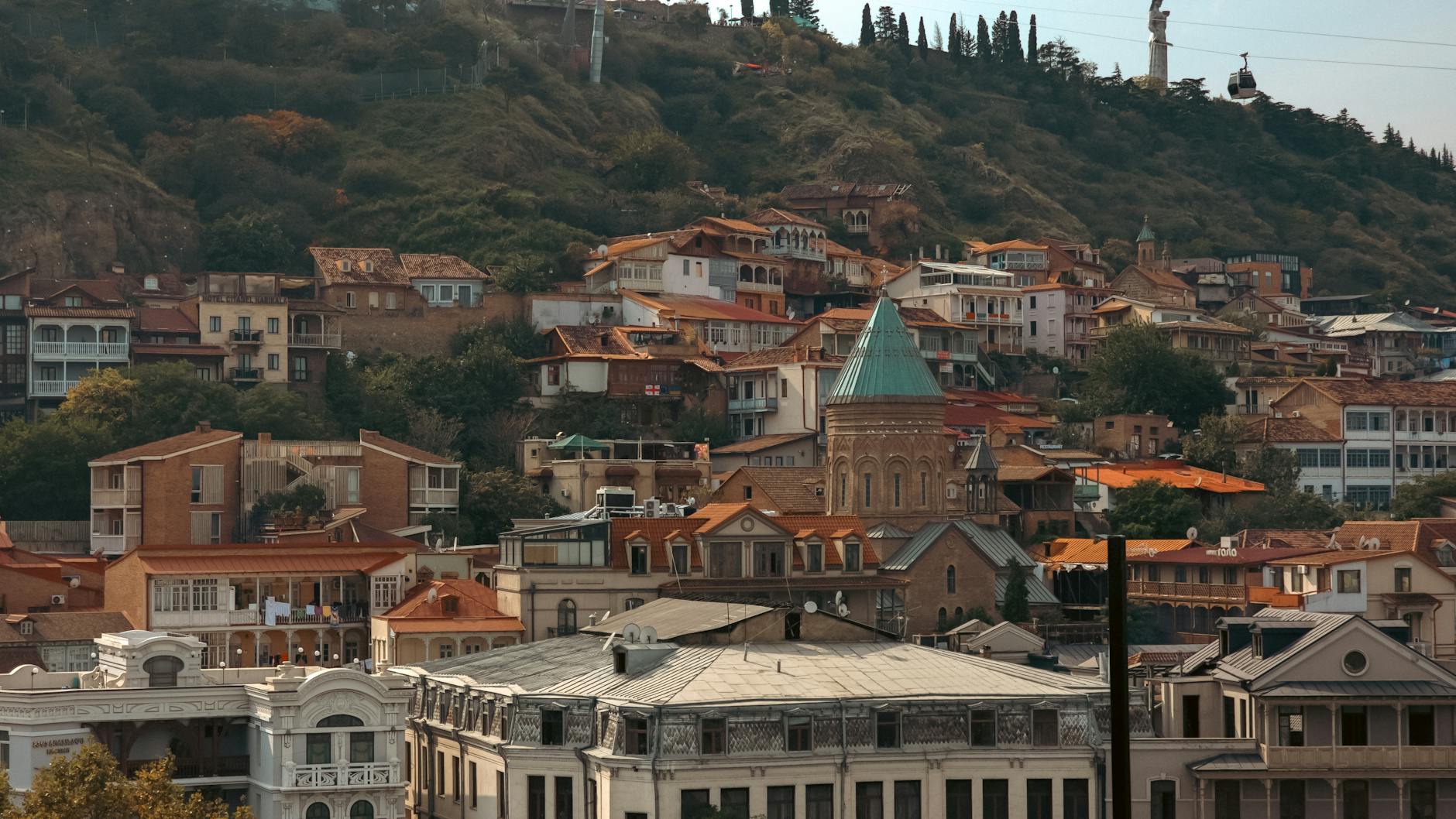
Sololaki is the district people mean when they talk about the painted courtyards of Old Tbilisi. It climbs the lower slopes of Mtatsminda directly west of Freedom Square. Between the 1880s and 1910s it was the address for Armenian merchants, Georgian nobility and the city’s doctors and lawyers. Their money went into the buildings. Art Nouveau mansions carry stucco garlands and oriel windows, and their entrance halls were finished like drawing rooms, with frescoed ceilings and tiled floors imported from Europe.
Maps are of limited use here. Machabeli, Lermontov, Asatiani and Dadiani streets are the core. The method is to try any street door that stands ajar. A façade with peeling plaster and a sagging balcony often fronts a stairwell with original 1900s paintwork. The Soviet decades left the exteriors to rot while residents kept the interiors going. Nobody minds a quiet visitor in a shared entrance hall; residents are used to it.
Hunting for Spiral Staircases and Stained Glass
The prize for courtyard hunters is the stained-glass house at Betlemi Street 3, nicknamed the Kaleidoscope. Its entrance hall is lit through coloured panes that throw red, green and amber across the staircase on a sunny afternoon. The door is often locked. Residents have grown weary of the attention, so the polite approach is to wait for someone to come out rather than ring the bells. Late morning gives the best light.
Beyond that one address, almost every second building in Sololaki has something worth the detour:
- Carved wooden balconies. They wrap around the inner courtyards in tiers. Each yard becomes a small enclosed world, with laundry on the lines, neighbours talking across the galleries and children on the stairs.
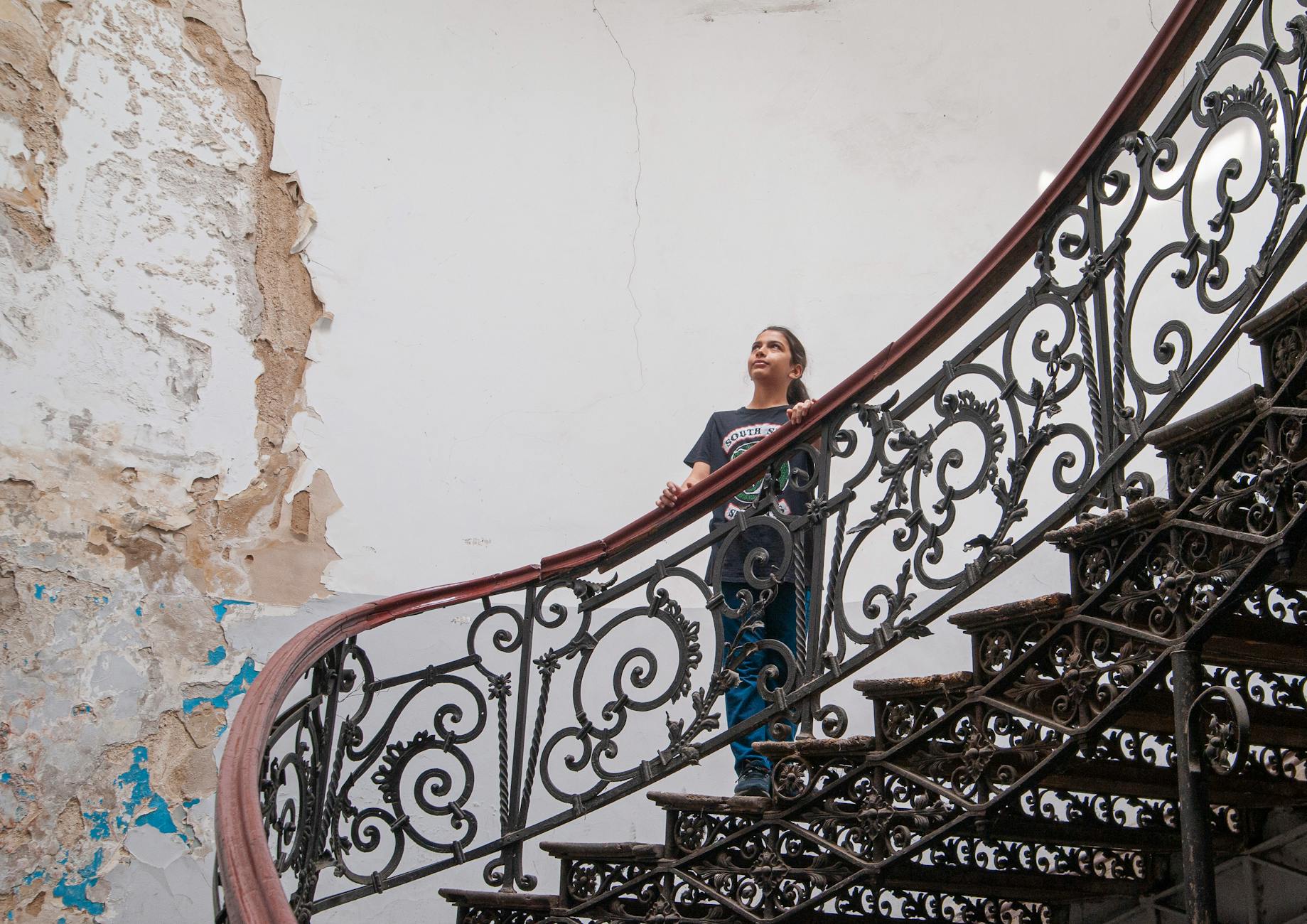
- Spiral staircases. Cast iron, wrought iron or wood, bolted to the outside of the galleries. Some serve apartments. Others climb to a roof and stop, their upper floors long since demolished.
- Painted entrance halls. Ceilings with cherubs and garlands, walls stencilled in faded blues and ochres, and sometimes the original mailboxes and gas lamps still in place.
Finding these alone is half the pleasure. The other half is the history: who built each house and why the city let them decay. That is easier with a guide. A guided walking tour of Old Tbilisi that concentrates on Sololaki’s entrance halls knows which doors open and which ceilings were restored by volunteers. Two hours covers a dozen buildings.
Where German Order Meets an Eastern Bazaar in Chughureti
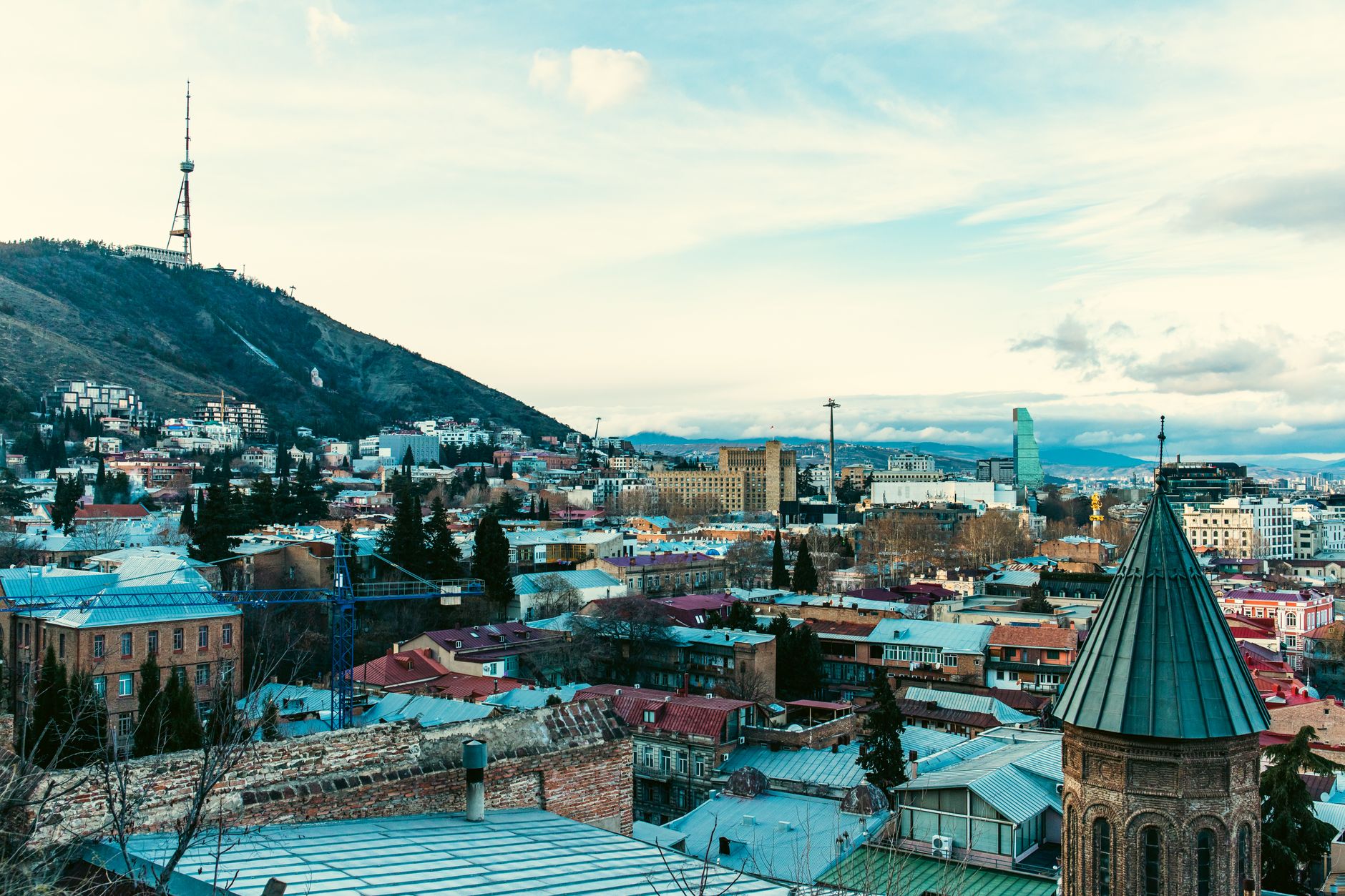
Across the Saarbrücken Bridge lies the left bank of the Mtkvari, the river Russians still call the Kura. Chughureti is a working district rather than a museum one. There are fewer churches than in the Old Town and almost no souvenir stalls. What it has instead is a mix nobody planned. A renovated boulevard, a 19th-century German colony, a converted factory full of hostels and bars, and the biggest market in the city all sit within fifteen minutes’ walk of each other.
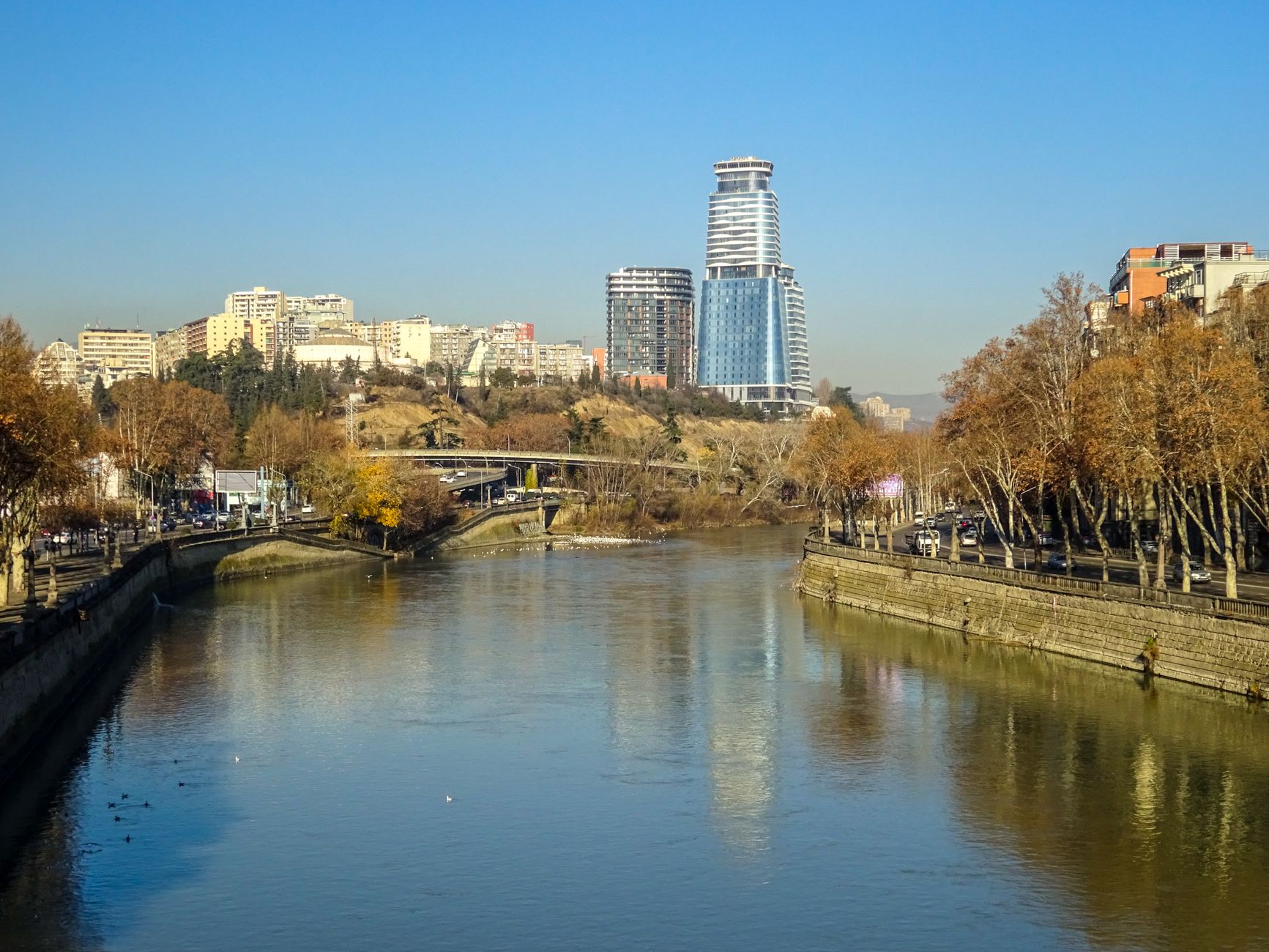
Agmashenebeli Avenue was rebuilt in 2016 under the name New Tiflis. Its pedestrian stretch now has repainted façades in pastel colours, string lights, cafés with English menus and shops selling Georgian wine by the bottle. It is pleasant for an evening. It is also slightly too tidy, in the way of any street renovated all at once.
Step through any archway off the avenue and the renovation stops. Behind it are the classic Tbilisi gallery courtyards, plainer than Sololaki’s but fully inhabited. Grapevines cover the yard, a tone (bread oven) stands in one corner, a mechanic works in another. Fabrika sits two blocks north. A Soviet sewing factory on Ninoshvili Street, it was converted in 2016 into a hostel, bars and studios around a courtyard that fills every night of the week. The old yards around it have not changed at all.
Chughureti is also a sensible place to stay. It is cheaper than the Old Town and two metro stops from Freedom Square via Marjanishvili station. Its guesthouses and small hotels occupy the same courtyard buildings described above. Comparing hotels in Tbilisi by district rather than price alone usually puts the better-value rooms on this side of the river.
Finding German Traces in New Tiflis
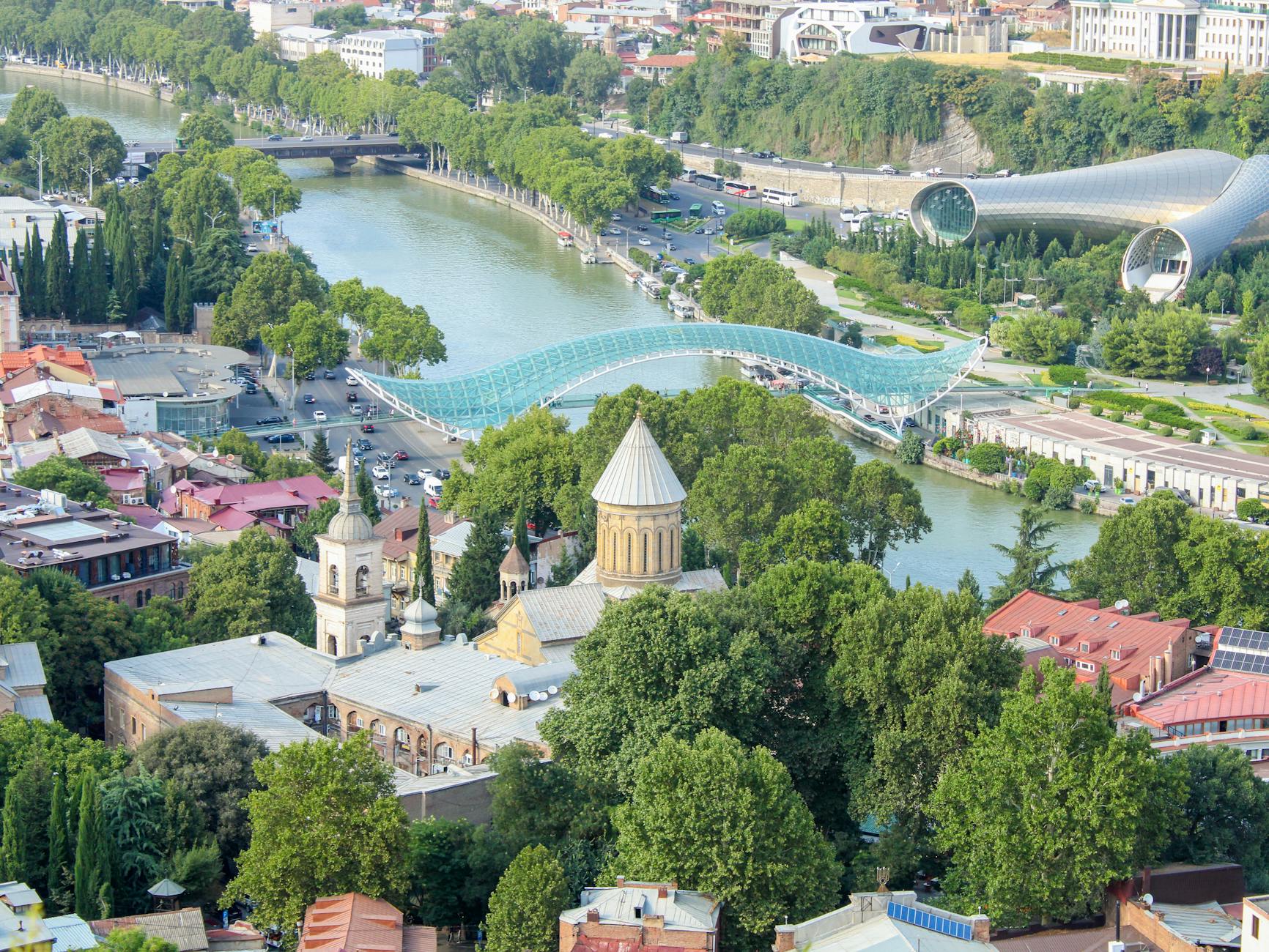
Swabian colonists arrived here in 1818 and built a settlement called Neu-Tiflis along what is now Agmashenebeli Avenue. They stayed until 1941, when the Soviet government deported the whole community to Kazakhstan. Their houses remain on Toidze, Chkheidze and Arnold Chikobava streets. Solid two-storey buildings with tall windows and gabled roofs stand around courtyards laid out in straight lines, nothing like the jumble of the Georgian quarters. The Lutheran church was demolished in 1946. A plaque on Marjanishvili Street marks the site, and the old German cemetery survives in the Vera district uphill.
Five minutes north, the order dissolves into the Dezerter Bazaar beside the railway station. It takes its name from the soldiers who sold their kit here after deserting in 1921. It is the largest and loudest market in Tbilisi. Halls of cheese and spices, stalls of churchkhela hanging like candles, pickles in buckets, and farmers from Kakheti selling wine from plastic jerrycans at 5 to 8 GEL a litre. The smell carries into the German streets. A rose garden in front of a Swabian house stands next to a cobbler’s shop with strings of churchkhela drying in the window. A food tour through the Dezerter Bazaar explains what the forty kinds of cheese are and which stalls to buy from. Mornings before 11:00 are the busiest and freshest.
Walking between the two, look for the details that give the German houses away. Wrought-iron window grilles with Gothic motifs. Heavy panelled doors. Ceilings unusually high for Tbilisi, visible through ground-floor windows. These were built for living in rather than for show, and most still are.
Avlabari’s Soul and Its Sweeping City Views
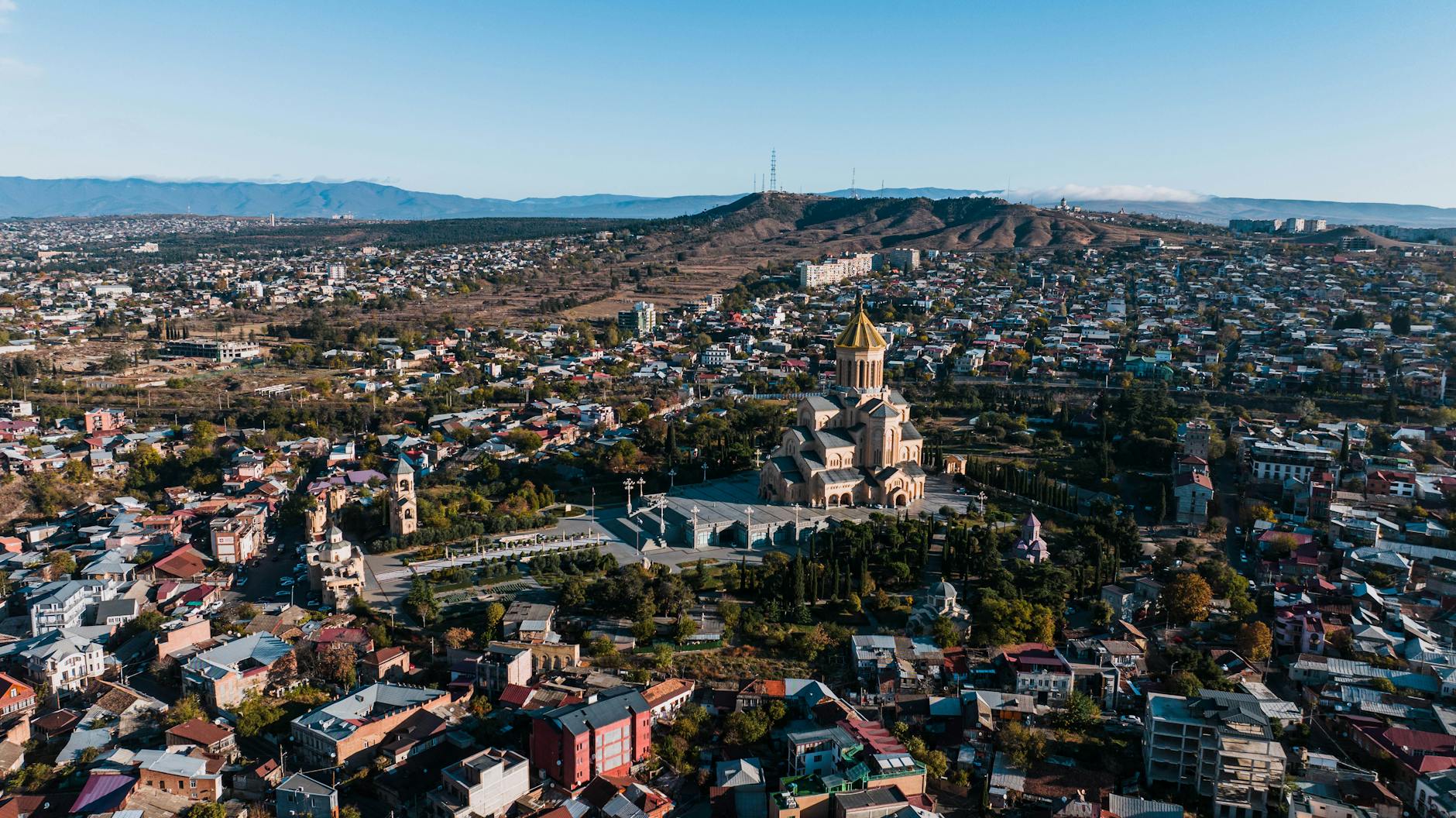
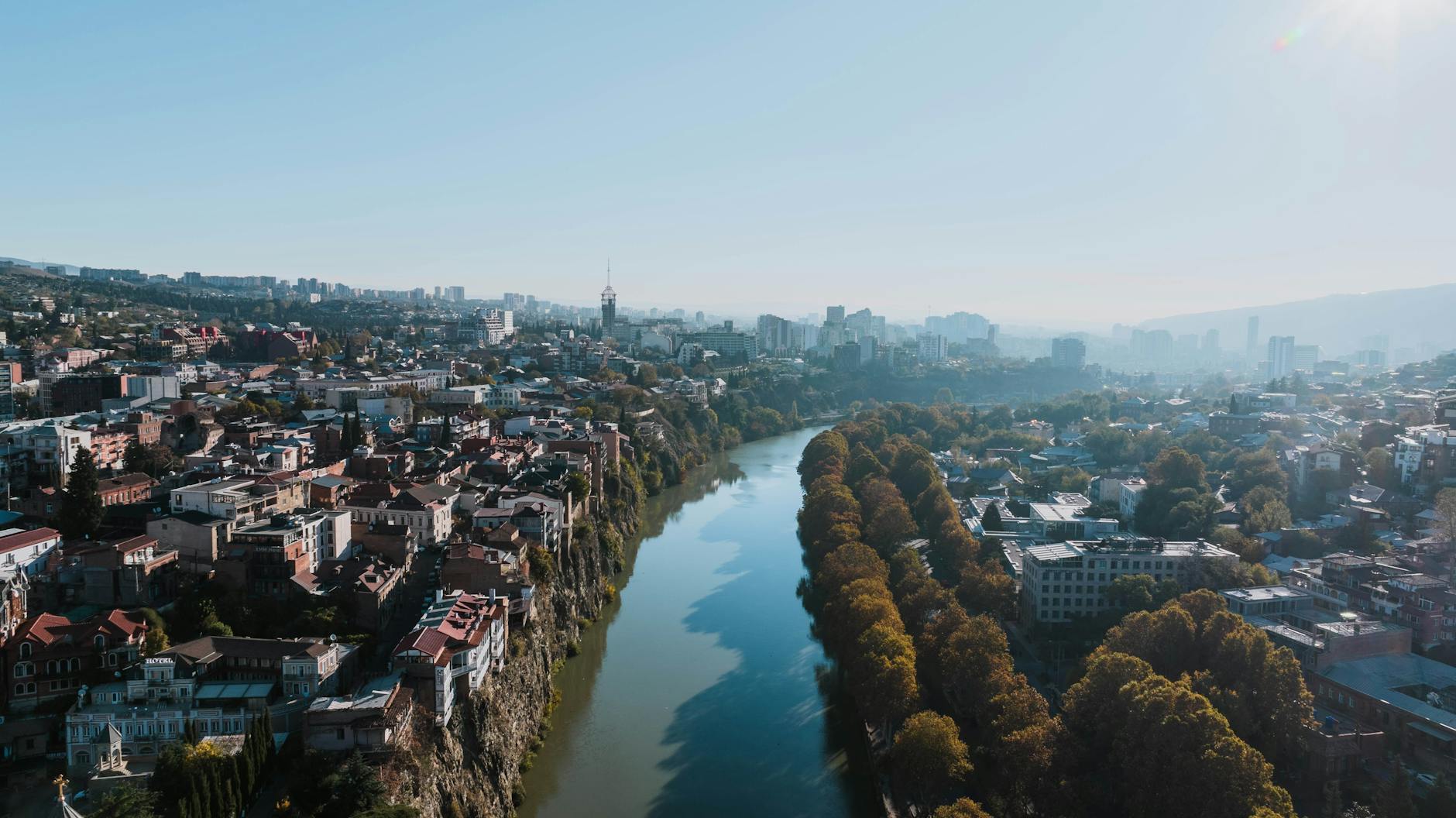
Avlabari occupies the cliff on the left bank opposite the Old Town. Two landmarks bring the crowds. Sameba, the Holy Trinity Cathedral, was finished in 2004 and is visible from almost everywhere in the city. The 13th-century Metekhi Church stands on its rock above the river, with the equestrian statue of King Vakhtang Gorgasali beside it. Most visitors photograph the view from Metekhi and go back across the bridge. The district begins where they turn around.
Avlabari was for centuries the quarter of Armenian craftsmen and traders. It still has Armenian churches, Armenian bakeries and an Armenian cadence to its street life. It is louder, poorer and more improvised than Sololaki. The way in is to climb from Metekhi up Isani Street, Virabi Lane and Bochorma Street and accept that the plan will fall apart. Lanes end in stairways. Stairways end in someone’s yard. The yard turns out to have a view across the river to Narikala that no official viewpoint offers. Visitors get looked at, asked where they are from, and often handed a coffee.
Things to look for on the way:
- Houses on the cliff edge. Along the descent from Metekhi Bridge to the riverbank, a row of old houses hangs its wooden balconies straight out over the Mtkvari. They look precarious and have looked that way for a century.
- Unmarked viewpoints. Several dead-end lanes above Metekhi finish at a low wall with the whole Old Town laid out below: the baths, the fortress, the Mother of Georgia statue. None of them appear on maps.
- Family wine cellars. Hand-painted “Wine” signs lead to marani in basements, where the owner pours from a qvevri buried under the floor. Prices start around 10 GEL a litre to take away. A proper wine tasting in Tbilisi is the organised alternative. It explains the qvevri method and the amber-wine grapes, and usually runs to five or six wines with cheese and bread for 60 to 100 GEL.
A Few Pointers for Exploring Avlabari
Four things make the difference between a good walk and a frustrating one here:
- Shoes with grip. Avlabari is cobblestones, broken steps and slopes of 15 percent or more. After rain, the old stone is slick.
- Expect conversation. Residents are at home, not at work in a tourist zone. Questions about where you come from and if you have eaten are normal. A few words of Georgian go a long way: “gamarjoba” for hello, “madloba” for thanks.
- Ask before photographing. The courtyards are private homes. A gesture with the camera and a raised eyebrow gets a nod almost every time. Skipping the question gets a closed door.
- Start at the top. Take the metro to Avlabari station and walk up to Sameba for the view across the whole valley. Then wander downhill through the lanes towards Metekhi. The route is almost entirely descent, and the city rearranges itself at every turn.
An unhurried loop from Sameba down to Metekhi Bridge takes two to three hours with stops. Dinner afterwards is easy. The streets around Avlabari metro have some of the cheapest khinkali in the central city, around 1 GEL per dumpling. The Armenian bakeries sell lavash straight from the oven until late.
Getting Out of the Center to Vera and Vake
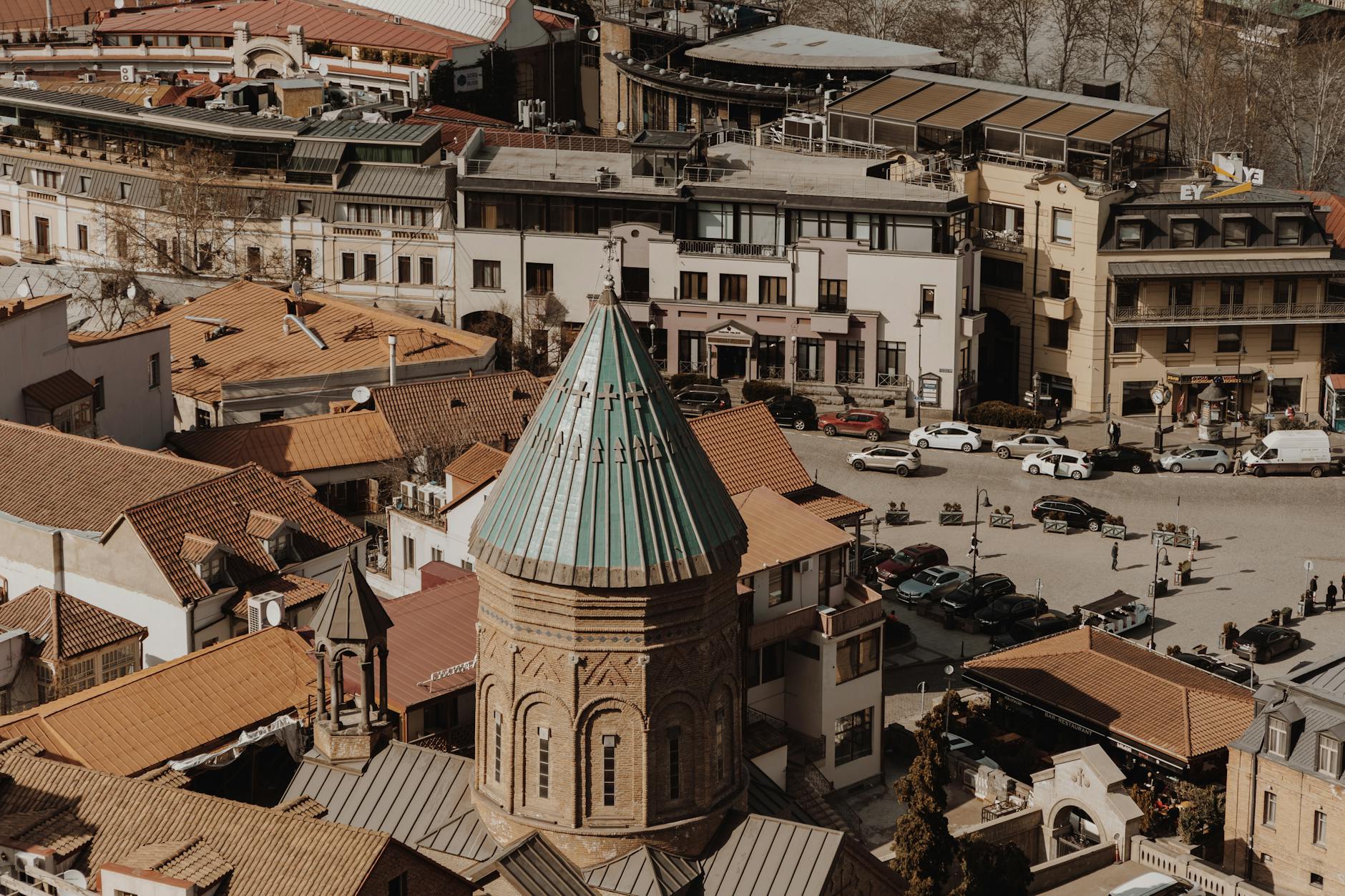
West of Rustaveli Avenue the city changes century. Vera and Vake are where Tbilisi’s professional classes have lived since the late 1800s. The Soviet planners built their showpiece avenues here in the 1930s and 1950s. Neither district is secret. Tourists simply rarely get there, since nothing in them appears on a top-ten list. Both repay an afternoon.
Vera for Bohemian Cafés, Vintage Finds and Quiet Parks
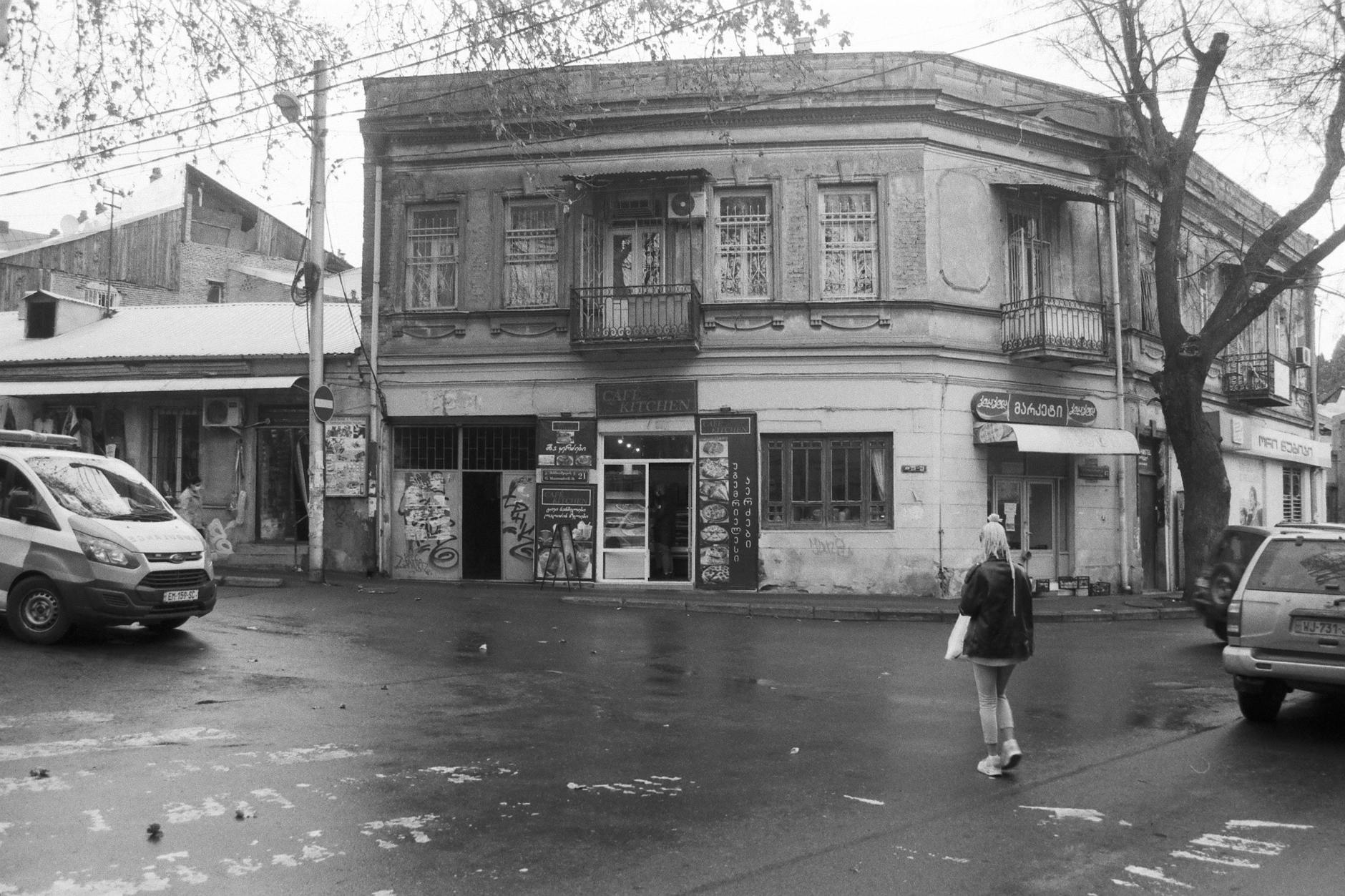
Vera begins a block behind Rustaveli Avenue. It has been the home of writers, actors and academics for a century; the Writers’ House and the Conservatoire are both here. Life runs slower than downhill. Vera Park is the centre, with men at backgammon and chess tables from mid-morning. Around it are specialty coffee bars, natural-wine bars, Georgian designers’ concept stores and basement vintage shops. Prospero’s Books and Caliban’s Coffeehouse on Rustaveli 34, with its courtyard garden, has been the city’s English-language bookshop since the 1990s.
Architecturally Vera is the sober sibling of Sololaki. Its buildings date from the 1890s to the 1920s, in a stricter Art Nouveau with less oriental ornament. Barnovi, Kiacheli and Zandukeli streets have the best entrance halls. Painted ceilings give way to marble staircases, wrought-iron banisters and a few pre-revolutionary lifts still in service. Wine Factory N1 on Petriashvili Street was a wine plant built in 1896 and reopened in 2017. Under its brick vaults are wine bars, restaurants, a Saturday farmers’ market and galleries, and it is the easiest place in Vera to taste a dozen Georgian wines by the glass.
Four ways to spend an afternoon in Vera
- Drink coffee seriously. Several of the city’s best roasters are within three blocks of the park. Most double as quiet places to work for an hour with a laptop.
- Dig for vintage. The basement shops sell Soviet badges and enamel signs, pre-war porcelain, film cameras and designer clothes from the 1960s to the 1990s. Prices have not yet caught up with Berlin’s.
- See a contemporary gallery. Vera is the centre of Tbilisi’s small but busy art scene, with half a dozen galleries showing young Georgian painters and photographers. Openings are usually on Thursday or Friday evenings and anyone can walk in.
- Sit in the park. A warm shoti bread from a nearby bakery costs about 1.5 GEL, a bottle of Natakhtari lemonade 2 GEL. An hour on a bench in Vera Park shows the district better than any walk.
Vake, a Greener Area with Soviet-Era Style
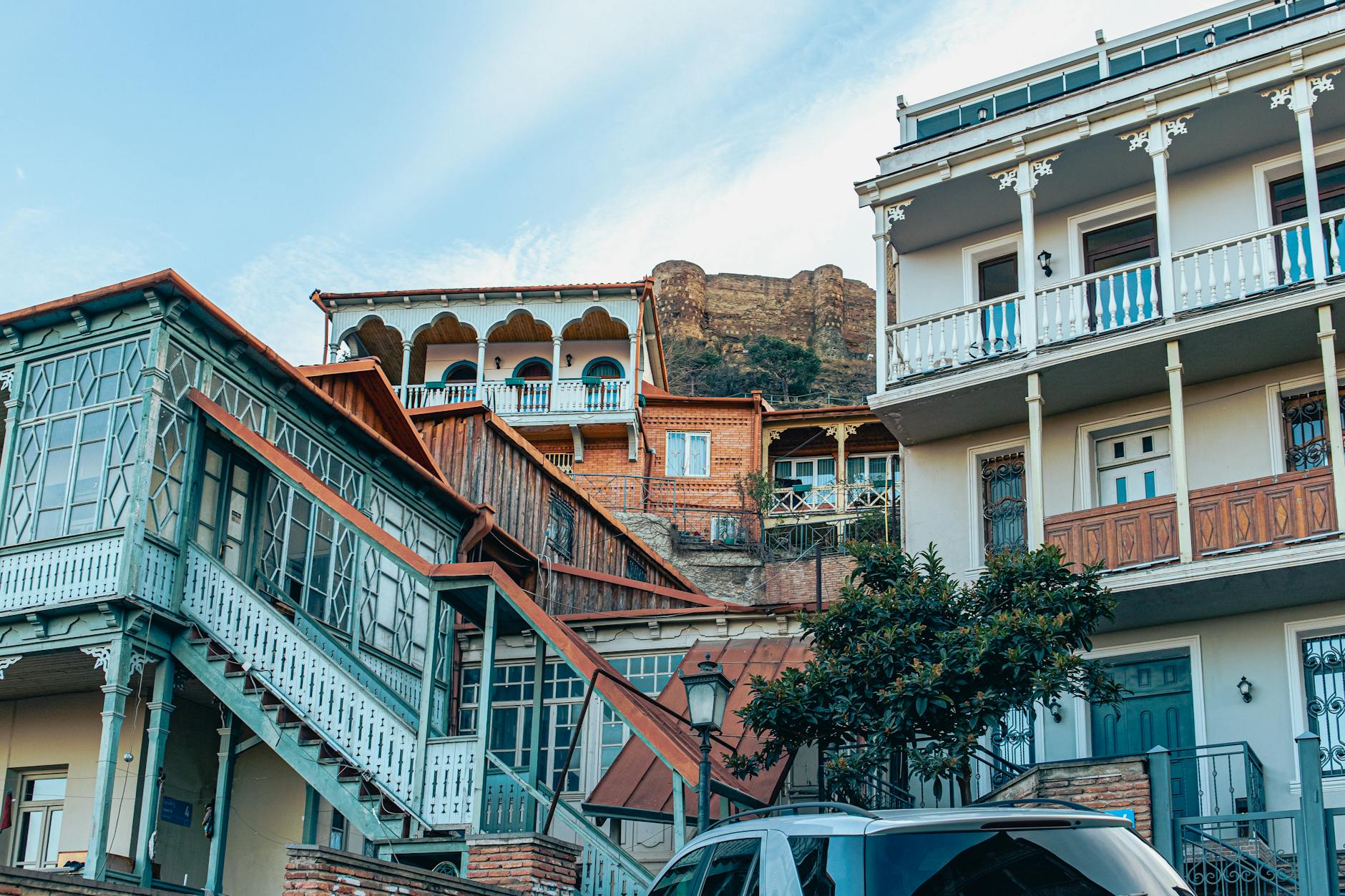
Vake, further west, is the greenest and wealthiest district in the city. Vake Park was laid out in 1946 as a war memorial. It runs up the hillside to a cable car that climbs to Turtle Lake (Kus Tba), where the city swims and paddle-boats in summer. The cable car costs a few lari each way. The walk up through the forest takes about 40 minutes for anyone who prefers it. The architecture here is the other reason to come. Stalinist Empire blocks with columns and balustrades line the main avenue, and 1960s and 1970s Soviet modernism fills the side streets, a world away from the wooden galleries of Sololaki.
Chavchavadze Avenue is the spine. It is lined with the monumental facades of the 1930s to 1950s, wide pavements, boutiques and the restaurants where Tbilisi’s business class eats. A Soviet architecture tour of Tbilisi normally covers this avenue together with the brutalist Ministry of Highways building and the mosaic bus stops on the way out of town. Vake’s own secret lies above the park. The Open-Air Museum of Ethnography was founded in 1966 on the slope below Turtle Lake. About seventy traditional houses were moved here from every region of Georgia, from Svan towers to Kakhetian wine houses with their qvevri still in the ground. Entry costs about 15 GEL and the grounds take two hours. Most visitors to the city never hear of it.
Moving between these districts is simple. The metro has two lines, and a ride costs 1 GEL with a reloadable MetroMoney card. Freedom Square, Rustaveli, Marjanishvili and Avlabari stations sit at the edges of Sololaki, Vera, Chughureti and Avlabari respectively. Vake has no metro. Bolt taxis from the centre cost 5 to 10 GEL and arrive in minutes. For a first orientation to how the districts fit together, the hop-on hop-off bus tour of Tbilisi loops through the Old Town, Rustaveli, Vera and across to Avlabari in about 90 minutes. After that the walking can begin in earnest.
Spring and autumn are the seasons for this kind of walking. April to June and September to October bring 18 to 25°C and clear light on the stairwells. July and August push past 35°C in the afternoons, when the courtyards empty until evening. A hotel anywhere along Rustaveli Avenue or in upper Sololaki puts all four districts within a 1 GEL metro ride or a 30-minute walk. For a city of hidden entrances, that is the right place to start.


