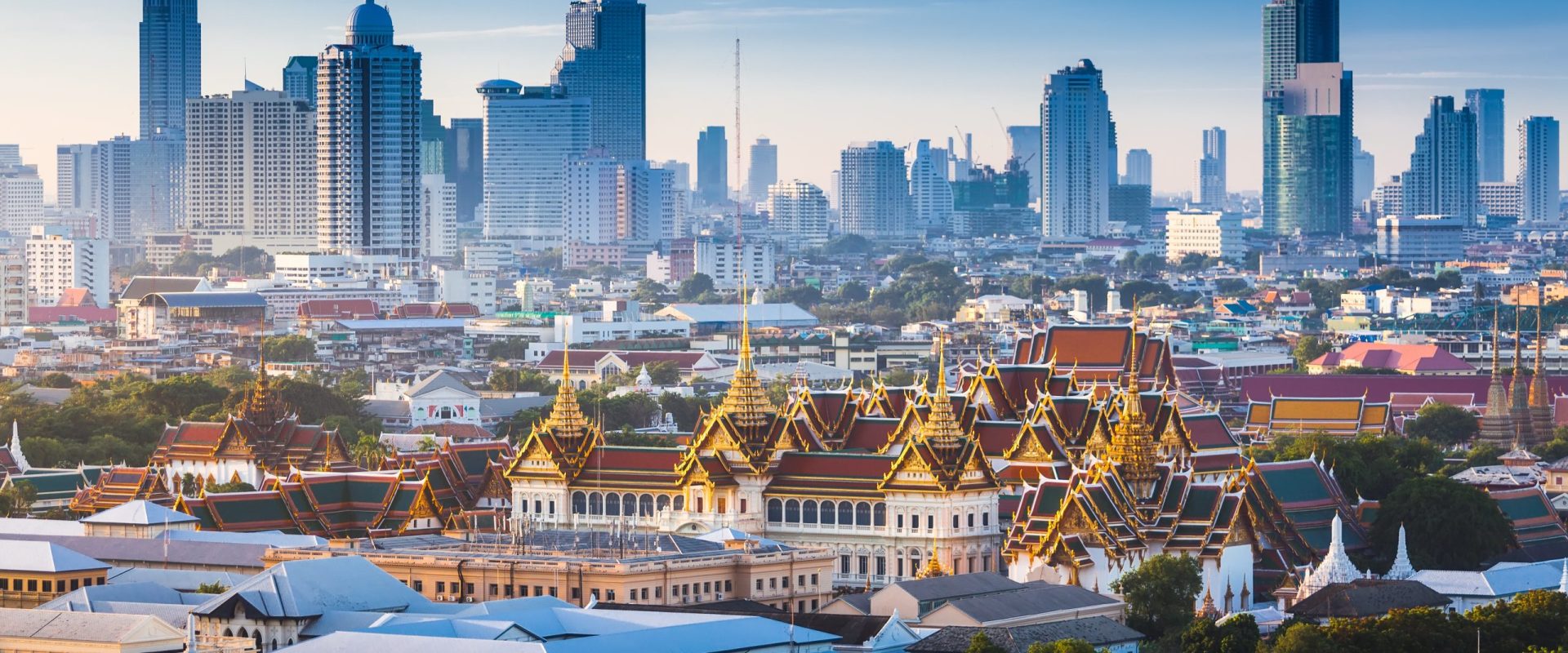
Bangkok rewards a plan. Its main sights are spread between the old royal island of Rattanakosin, the river, and the modern grid of Sukhumvit and Silom, and the traffic between them can eat half a day if you let it. This guide covers the places worth the effort, with entry prices, opening hours and the boat or train that gets you there, plus a short section on neighborhoods, food and transport at the top for people who land tomorrow.
Quick guide
Where to Stay
- Sukhumvit is the modern part of town along the BTS line, with the densest choice of restaurants, malls and bars. Pick it if you want everything within a ten-minute walk and do not mind the noise. The Landmark Bangkok stands right at Nana BTS station and is a reliable mid-range base.
- Silom is the business district: banks and office towers by day, Patpong night market and the Silom Soi 4 bars after dark. It works for business trips and for anyone who wants Lumpini Park within walking distance. COMO Metropolitan Bangkok on Sathorn Road is the quiet, design-led option here.
- Khao San Road is the backpacker street near the old town, with hostels from a few hundred baht, cheap bars and the Grand Palace a twenty-minute walk away. Our guide to traveling Bangkok on a budget covers the area in detail. Thai Cozy House is a clean guesthouse one street back from the noise.
- Riverside along the Chao Phraya has the large luxury hotels, river views and hotel shuttle boats to Saphan Taksin BTS. It is the calmest option and the most expensive. lebua at State Tower is the one with the rooftop bar from the Hangover film, and its rooms are large by Bangkok standards.
Where to Eat
- Street food is the main event. Yaowarat Road in Chinatown fills with stalls from about six in the evening, and a full meal of noodles, grilled seafood and mango sticky rice comes to 200-300 baht. Chatuchak Weekend Market on Saturday and Sunday has a food section near the clock tower.
- Restaurants cluster in Sukhumvit, where the sois off the main road specialize: Japanese around Soi 33, Middle Eastern near Nana, Korean on Sukhumvit Plaza. A sit-down Thai dinner costs 150-400 baht per person outside the malls.
- Cafes are everywhere and air-conditioned, which matters at two in the afternoon. Iced coffee runs 60-120 baht, and most cafes in Ari and Thonglor are fine with laptops for an hour or two.
How to Get Around
- BTS Skytrain and MRT beat any car between eight and ten in the morning and four and eight in the evening. Fares run 17-62 baht per ride, both systems take contactless bank cards at the gates, and the two networks meet at Asok/Sukhumvit, Sala Daeng/Silom and Mo Chit/Chatuchak Park.
- Taxis and tuk-tuks are cheap when the meter is on: flag fall is 35 baht, and a cross-town ride rarely tops 200 baht. Drivers who refuse the meter near tourist spots are asking for double. Tuk-tuks have no meter, so agree the price first, and expect to pay more than a taxi for the same distance.
- River boats are the best way to reach the temples. The Chao Phraya Express orange-flag boat charges a flat 16 baht and stops at Tha Tien for Wat Pho, Tha Chang for the Grand Palace, and Saphan Taksin for the BTS. Cross-river ferries to Wat Arun cost 5 baht.
- Motorcycle taxis wait at the mouth of every soi in orange vests. For a ride of one or two kilometers they cost 20-40 baht and are the only thing that moves in a jam. Helmets are supposed to be provided, and often are not.
Temple of the Emerald Buddha (Wat Phra Kaew)
Wat Phra Kaew stands inside the walls of the Grand Palace and is the most sacred temple in Thailand. It was built in 1782 when King Rama I moved the capital to Bangkok, and it holds the Emerald Buddha, a jade figure only 66 centimeters tall that sits high on a golden altar. Three times a year the king changes the statue’s robes for the hot, rainy and cool seasons, and the ceremony is a national event.
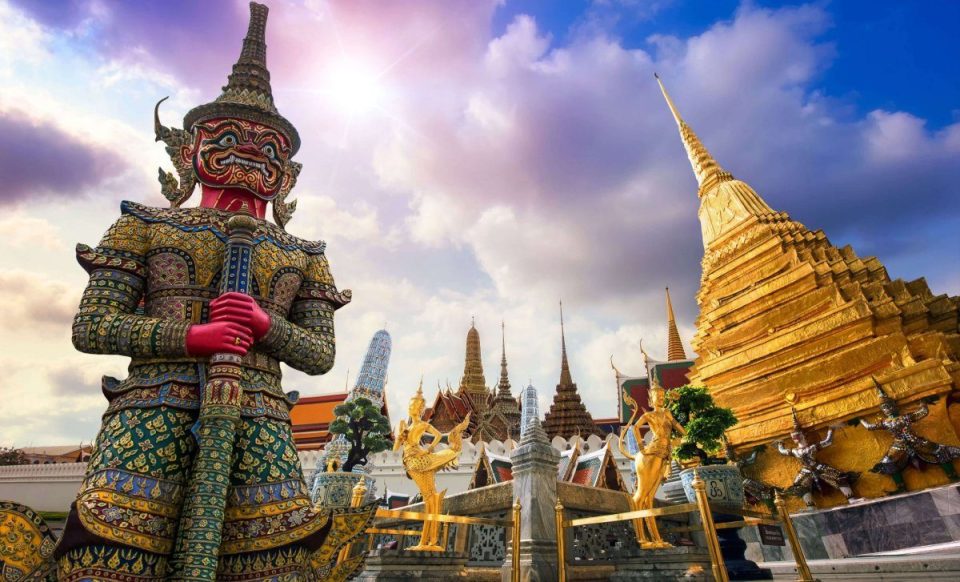
Every surface here is decorated: gilded chedis, walls of mirror mosaic, demon guardians taller than a house, and a gallery of murals telling the Ramakien, the Thai version of the Ramayana, in 178 panels. Photography inside the main chapel is banned, and you sit on the floor with your feet pointing away from the Buddha. A separate article covers temple etiquette and meditation in Chiang Mai, and the same rules apply here.
The Grand Palace
Built in 1782, the Grand Palace was the home of Thai kings for more than 150 years, until the royal family moved out in the 1920s. Its buildings mix Thai roofs with European facades, most visibly at the Chakri Maha Prasat Hall, which has an Italian Renaissance body under a Thai spired roof. Entry costs 500 baht for foreigners and includes Wat Phra Kaew and the Queen Sirikit Museum of Textiles. Gates open at 8:30 and close at 15:30, and the earlier you come, the fewer tour groups you share it with.
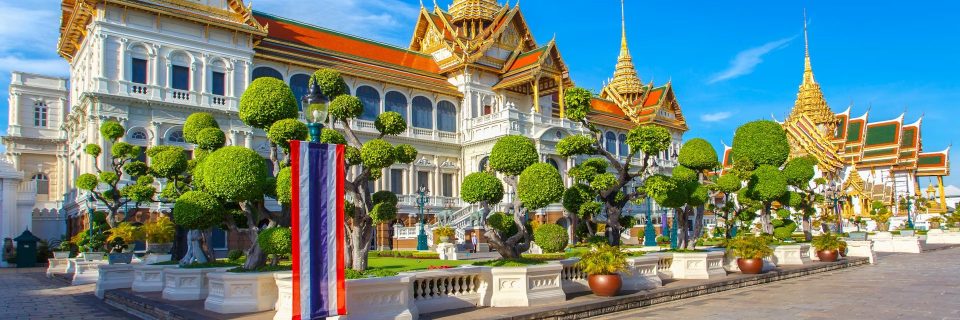
Dress code is enforced at the gate: shoulders and knees covered, no ripped jeans, no leggings. Sarongs can be borrowed against a deposit, but the queue for them is long. Ignore anyone outside who says the palace is closed for a ceremony and offers a tuk-tuk to another temple instead. That scam has run for decades. If you want the history explained rather than just seen, a guided tour of the Grand Palace is the one place in Bangkok where I think a guide earns the fee, because the signage inside is thin.
Temple of Dawn (Wat Arun)
Wat Arun stands on the west bank of the Chao Phraya, directly across from Wat Pho, and its silhouette is the one on every Bangkok postcard. Its central prang, a Khmer-style tower about 70 meters high, was finished in the early 1800s under Rama III. Get there by the 5-baht cross-river ferry from Tha Tien pier, which runs every few minutes until about 8 in the evening.
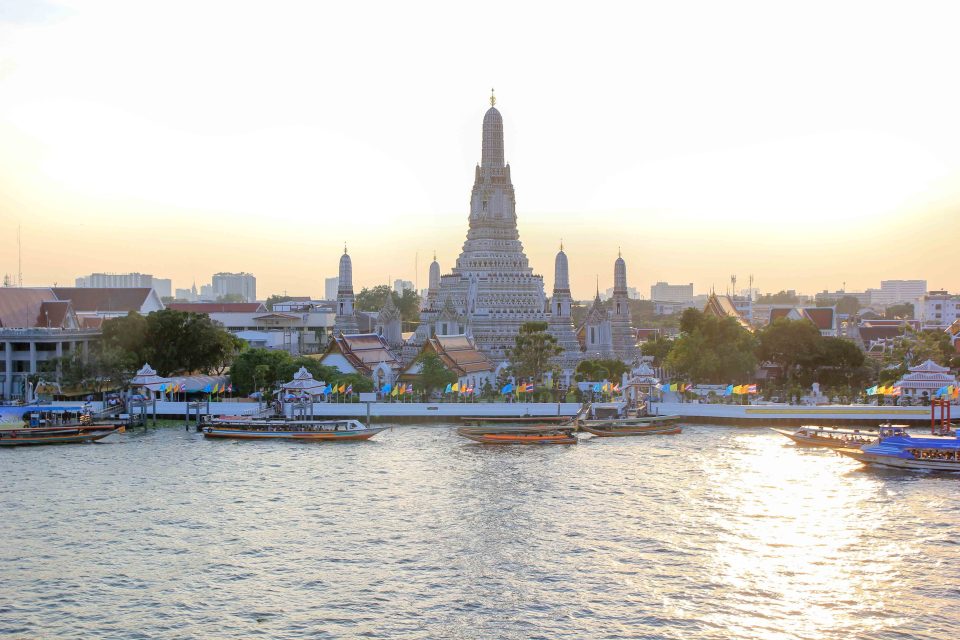
Up close the tower turns out to be covered in broken Chinese porcelain and seashells, arranged into flowers, which is why it glitters at midday. You can climb the lower terraces by steep stairs, but the upper tiers have been closed to visitors since the restoration. Come at sunset and then watch it lit up from a bar on the opposite bank, or come at 8 in the morning when the light is on the river side and the tour buses have not arrived.
Temple of the Reclining Buddha (Wat Pho)
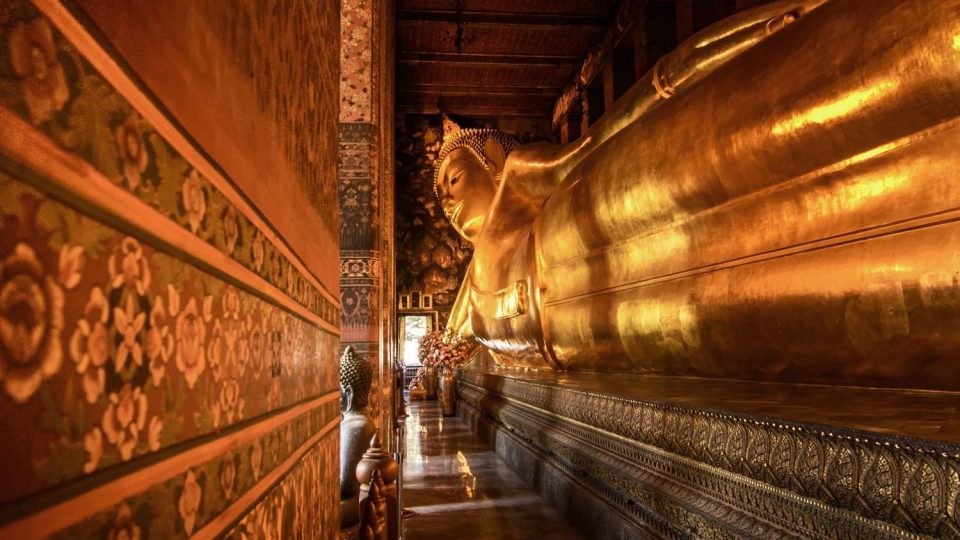
Wat Pho is older than the city itself and sits just south of the Grand Palace, so the two are done in one morning. Its Reclining Buddha is 46 meters long and 15 meters high, gilded from head to toe, with the soles of the feet inlaid in mother-of-pearl showing 108 auspicious symbols. Along the wall are 108 bronze bowls. Dropping a coin in each is said to bring luck, and the change is sold at the entrance. Entry is 300 baht and includes a bottle of water.
Wat Pho is also the birthplace of Thai massage, and the school on the grounds still teaches it. You can book a session in the pavilion at the back: a half-hour foot or body massage costs a few hundred baht, and the wait can be an hour in the afternoon, so put your name down before you look at the temple. Compared with the street parlors it is firmer and more medical, closer to physiotherapy than to relaxation.
Siam Paragon Shopping Mall
Siam Paragon opens straight off Siam BTS station, the busiest interchange in the city, and it is the mall Thais take visiting relatives to. Inside are the luxury brands, a multiplex, a car showroom on an upper floor, and a food hall in the basement where a good lunch costs under 200 baht. Next door are Siam Center, with Thai designers, and MBK across the road for phone cases and cheap electronics. The air conditioning alone justifies an hour here in April.
Sea Life Bangkok Ocean World Aquarium
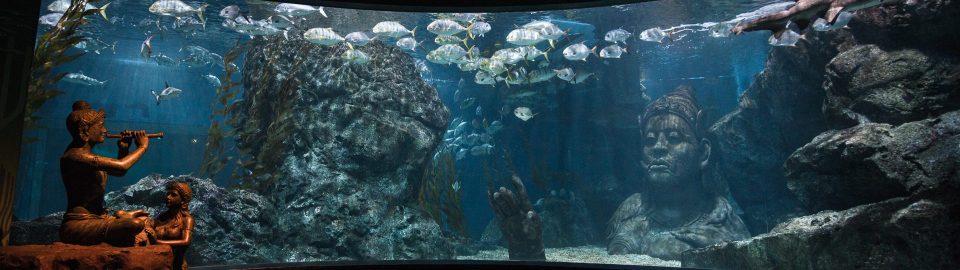
Two floors below the mall is Sea Life Bangkok, one of the largest aquariums in Southeast Asia, with more than 30,000 animals and a glass tunnel under the shark tank. It is the standard wet-season fallback for families, and tickets are cheaper online than at the door. Allow about two hours. Weekday mornings are calm, weekend afternoons are a crush of school groups.
MahaNakhon Skyscraper
King Power MahaNakhon rises 314 meters over Chong Nonsi BTS station and was briefly the tallest building in Thailand. Its pixelated cut, a spiral of missing blocks that winds around the tower, makes it recognizable from anywhere in Silom. Around the base is a small plaza with cafes, and the building holds a hotel and apartments.
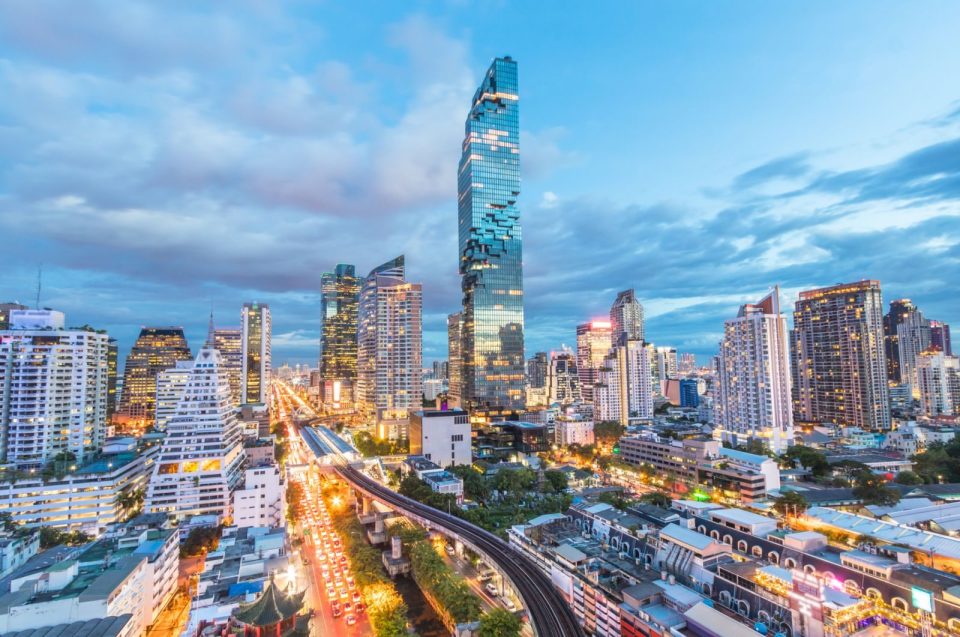
The SkyWalk on the 74th to 78th floors has an indoor deck and an open rooftop with a glass floor at the edge. Tickets cost about 1,000 baht, more at sunset, and the rooftop closes in thunderstorms with no refund, so check the sky before you buy. There is a bar on top where a drink costs as much as a meal downstairs. For a cheaper view, the rooftop bars on Silom hotels charge nothing to enter and only for the drink.
Lumpini Park
Lumpini Park is 57 hectares of lawns and lakes between Silom and Sukhumvit, named after the Buddha’s birthplace in Nepal and opened in 1925. Gates open at 4:30 in the morning and close at 9 in the evening. It is free, and it is the only place in central Bangkok where you can run a loop of 2.5 kilometers without crossing a road.
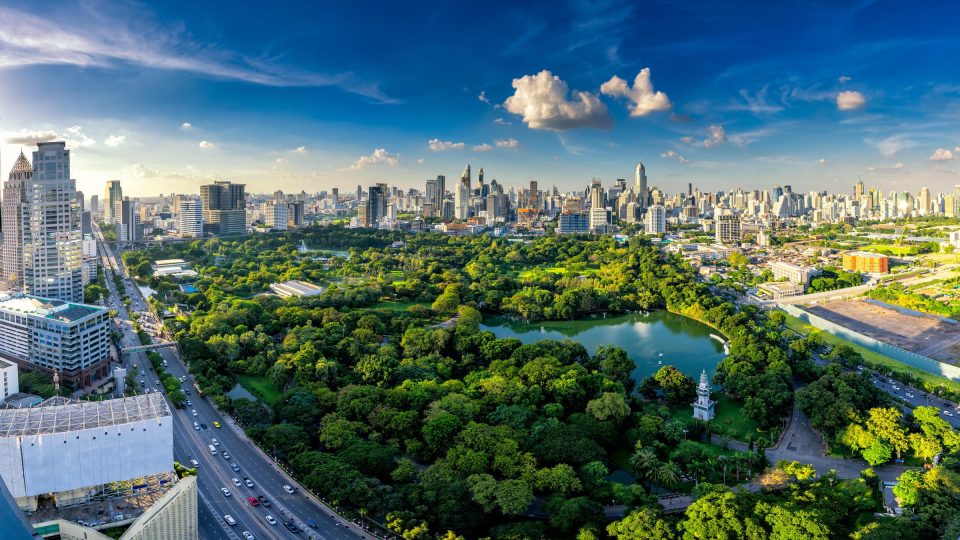
Mornings belong to the locals: tai chi groups near the Rama VI statue at the main gate, aerobics on the plaza at 6, and pedal boats on the lake for 40 baht per half hour once the kiosk opens. Watch the water’s edge for monitor lizards. They grow to two meters, they are harmless, and they are the reason first-time visitors stop dead on the path. Nearest stations are Silom MRT and Sala Daeng BTS at the southwest corner.
Suan Luang Rama IX Park
For plants rather than joggers, go to Suan Luang Rama IX in the eastern suburbs, the largest park in Bangkok and the city’s real botanical garden. It has themed gardens by continent, a lotus pond, a dome of desert plants, and an orchid collection. Entry is 10 baht. It is far from the center, about 40 minutes by taxi from Sukhumvit, so pair it with the flower market at Pak Khlong Talat only if you have a full free day.
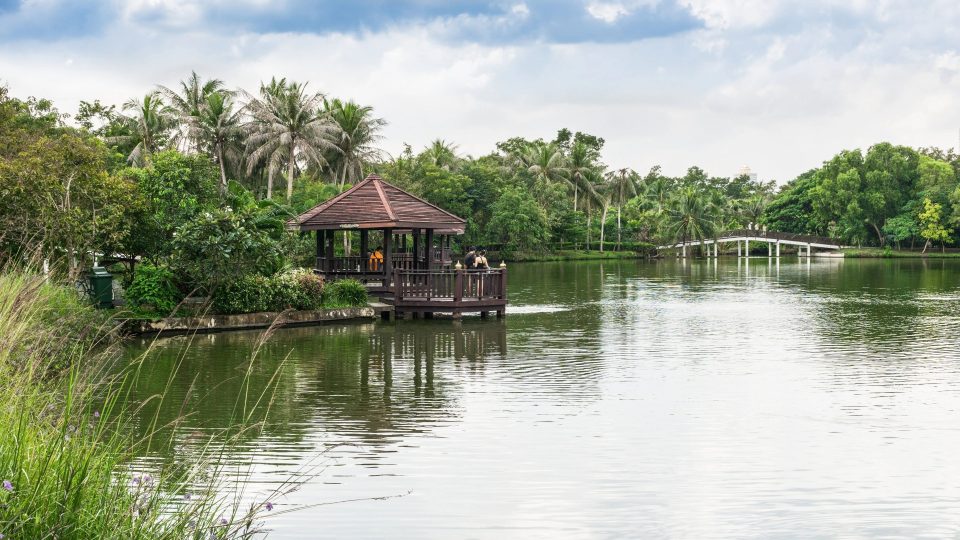
The park hosts a flower festival in early December each year, when the beds are replanted and the crowds arrive. Outside that week it is nearly empty on weekdays, and the Thai-language signs are the only downside for a visitor, so bring a plant identification app if the names matter to you.
Bangkok Excursions
Most organized trips out of Bangkok fall into four groups: boats on the river, markets outside the city, museums, and cooking classes. Prices below are what tour desks and booking sites charged at the time of writing, and all of them can be done independently for less if you have the time to work out the transport.
River Cruises
Seen from the water, Bangkok arranges itself: the temples on the west bank, the hotel towers on the east, wooden houses on stilts between them, and long-tail boats cutting across the wake. For the daytime version, the 16-baht express boat from Saphan Taksin to Phra Arthit is the same route the tour boats take, minus the commentary.
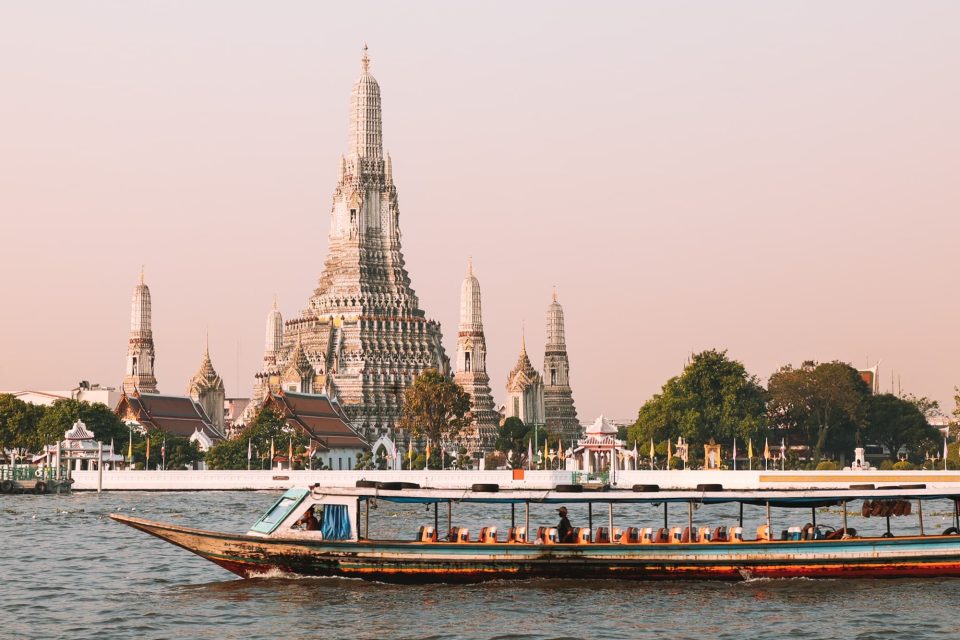
After dark it is a different trip. Evening dinner cruises leave from the ICONSIAM and River City piers around 7:30, run about two hours, and pass Wat Arun and the Grand Palace lit up. Expect 1,200-2,000 baht per person with a buffet and live music. Food is average, the view is not, so pick the boat by its deck rather than its menu.
Market Tours
Damnoen Saduak floating market is 100 kilometers southwest of the city, so a visit means a 7 a.m. start. Vendors sell fruit, noodles and souvenirs from boats in the canal, and by 10 the canal is jammed with tourist boats too. A half-day tour to Damnoen Saduak with transport costs roughly 1,000-1,500 baht and often bundles the Maeklong railway market, where stalls fold back to let the train through. On a weekend, Amphawa floating market nearby is smaller, later in the day, and less staged.
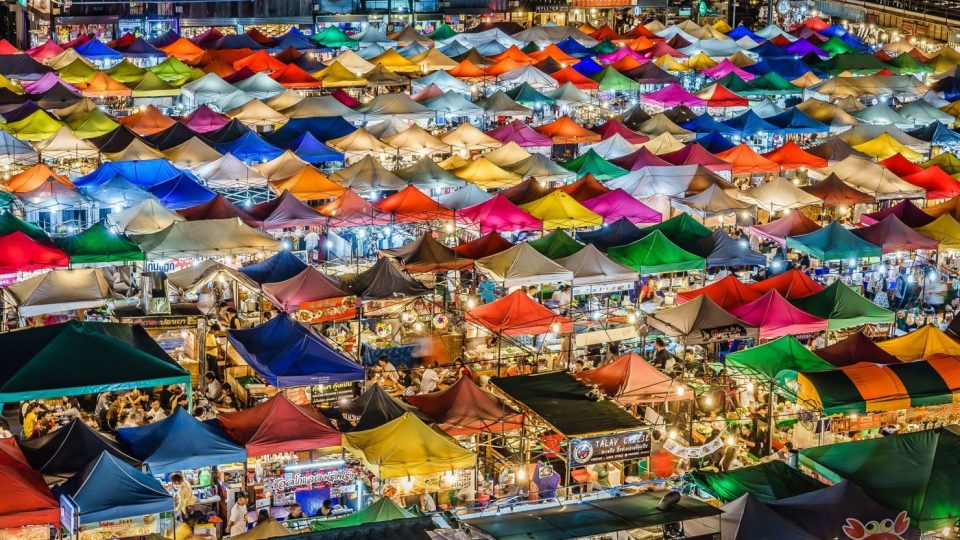
Inside the city, Patpong night market on Silom sets up around 6 in the evening between the go-go bars and sells copies of everything: watches, football shirts, bags. Start bargaining at a third of the first price. Chatuchak on the weekend is the better market by a distance, with 15,000 stalls, and it is on the BTS at Mo Chit.
If you have two or three spare days, Pattaya is about two hours from Bangkok by bus from Ekkamai station and makes an easy beach break after the city. Read our Pattaya tips before you go.
Museums
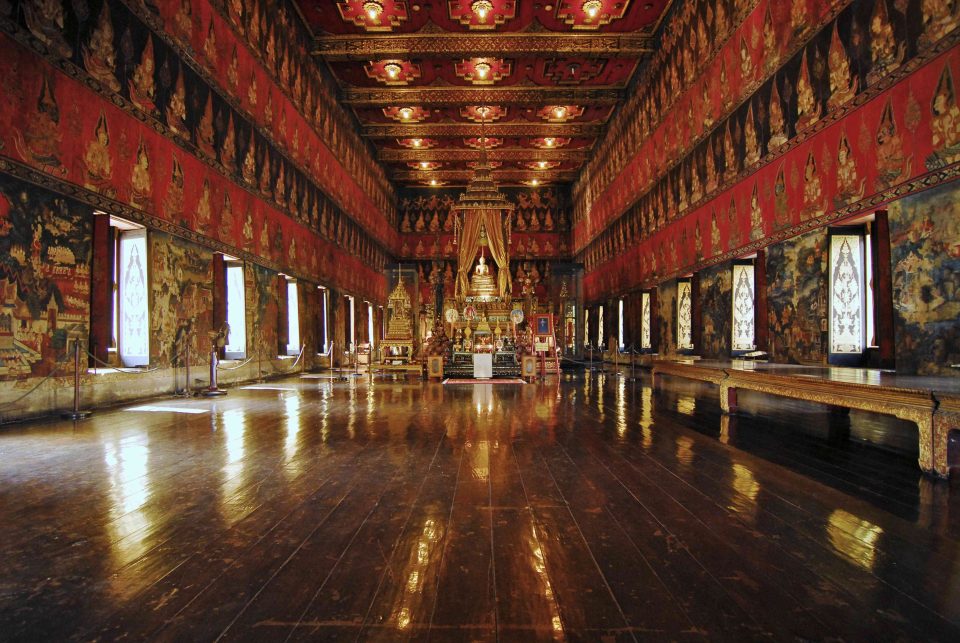
Three museums are worth the detour. The National Museum, next to Sanam Luang near the Grand Palace, has the best collection of Thai sculpture in the country and free English tours on Wednesday and Thursday mornings led by volunteers. Museum Siam, a short walk south of Wat Pho, is a small interactive museum about what it means to be Thai, good with children. The Museum of Contemporary Art, MOCA, is out near Chatuchak and shows five floors of modern Thai painting in a white building that is itself the best exhibit.
Cooking Classes
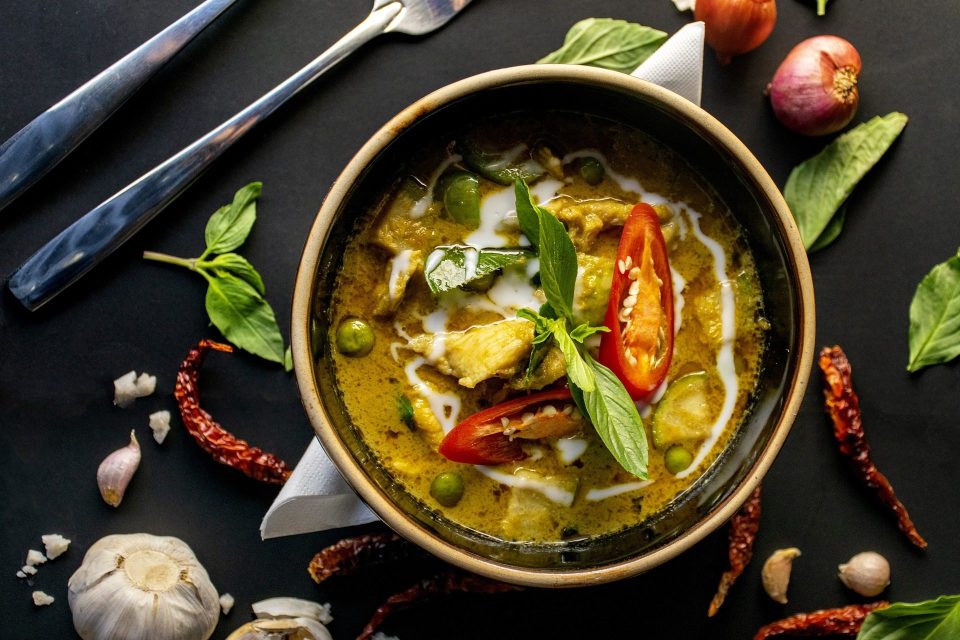
Thai cooking is easier to learn than it looks, because most dishes come down to a paste, a wok and four minutes. A half-day cooking class in Bangkok usually starts with a market visit, then four or five dishes such as tom yum, pad thai and green curry, and costs 1,000-1,500 baht including the meal you cook. Morning classes are cooler, and evening classes end with dinner. I have done these in several Thai cities, and the ones that hand you a printed recipe book at the end are the ones whose dishes you will make again at home.
A sensible first day: express boat to Tha Chang by 8:30, the Grand Palace and Wat Phra Kaew until 11, Wat Pho and a massage, the ferry to Wat Arun, then the boat back to Saphan Taksin and the BTS to Siam for air conditioning and dinner. That covers the four biggest sights for under 1,000 baht in tickets and transport, and leaves the rest of the week for the markets and the parks.


