Samarkand can be done in a day if all you want is the Registan, Gur-e-Amir and Shah-i-Zinda. Most people who stay three days wish they had booked four. Beyond the monuments there is a bazaar that has fed the city since Timur’s time, a wine factory founded in 1868, a Sunday market in the mountains 40 km away, and a cooking tradition built around one dish. What follows is a list of things to fill those extra days, with prices in som and dollars where they matter.
Two notes on money first. Entry to the major monuments is charged separately, typically 40,000-60,000 som (3-5 dollars) each for foreigners, and cash is still king at ticket windows. And a taxi across the center costs 15,000-25,000 som, so there is no reason to walk in the July heat unless you want to.
Guided Walks Around the Monuments
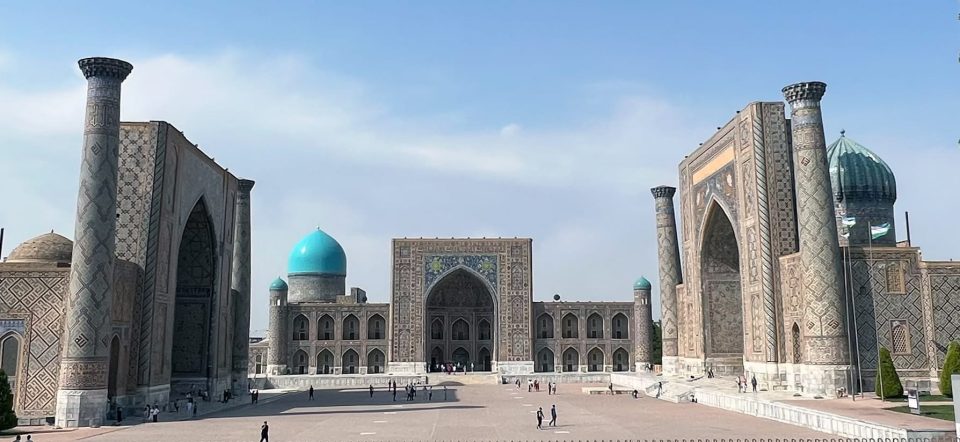
- The Registan with a guide: Three madrasahs, built between 1417 and 1660, around one square. Without a guide you see tilework; with one you learn why Ulugbek put astronomy on the facade of a religious school and which of the tiger mosaics broke Islamic convention. A guided tour of the Registan takes about two hours. Go at 8 am when it opens, or after 6 pm when the light turns the tiles gold and the tour buses have left.
- Gur-e-Amir and Shah-i-Zinda: Timur’s mausoleum with its jade tombstone, and the avenue of 20-odd mausoleums climbing the hill at Shah-i-Zinda, where the tilework is the finest in Central Asia. A combined tour of Gur-e-Amir and Shah-i-Zinda covers both in half a day. Shah-i-Zinda is still a working pilgrimage site; cover shoulders and knees, and expect Friday crowds.
Plov, Bread and the Siyob Bazaar
- Siyob Bazaar: The main market sits next to the Bibi-Khanym Mosque, a 10-minute walk from the Registan. Mornings are for the bread rows, where Samarkand non is stamped and baked in tandoors on site and sold for 5,000-8,000 som a loaf; it keeps for a week, which is why travellers carry stacks of it home. Dried apricots, walnuts, halva and spices are sold by weight, and tasting before buying is expected. Closed on Mondays in the meat and dairy halls, open every day for produce.
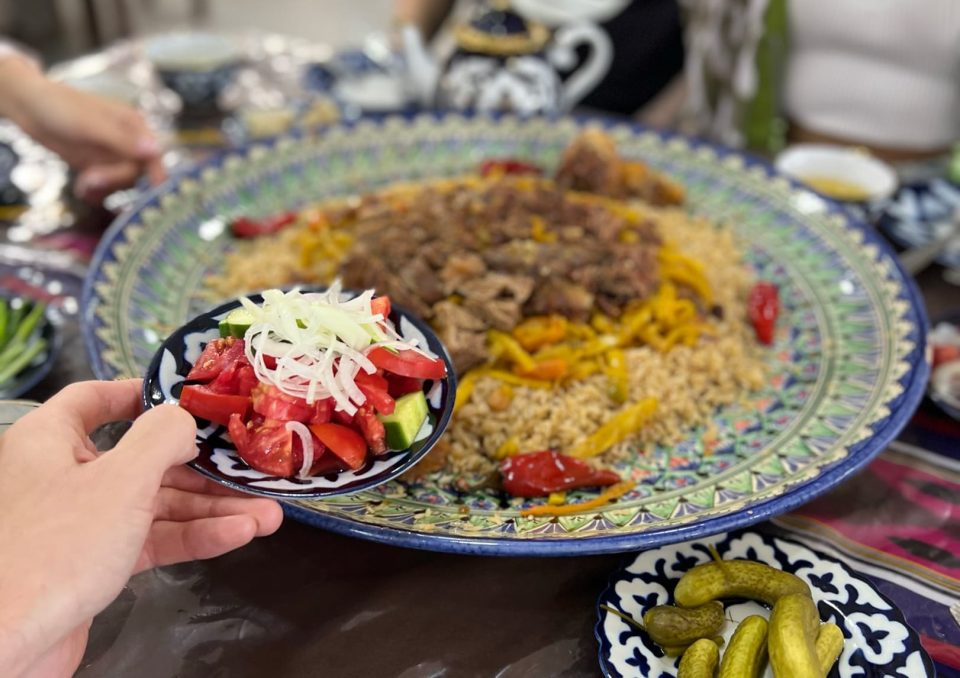
- Cooking plov: Samarkand plov is layered rather than stirred, with yellow carrots, chickpeas and raisins, cooked in a kazan over wood. A pilaf cooking class in a family house runs three to four hours including the meal, usually 25-40 dollars a person. In the city, plov is a lunch dish: the big oshkhonas serve it from about 11 am and run out by 2 pm.
What to Buy and Where
- Silk carpets: The Samarkand-Bukhara Silk Carpet workshop near the Registan weaves by hand with natural dyes and lets visitors watch. Prices start around 300-400 dollars for a small piece and climb fast. Bazaar carpets are cheaper and mostly machine-made; check the back, where hand knots are visible and uneven.
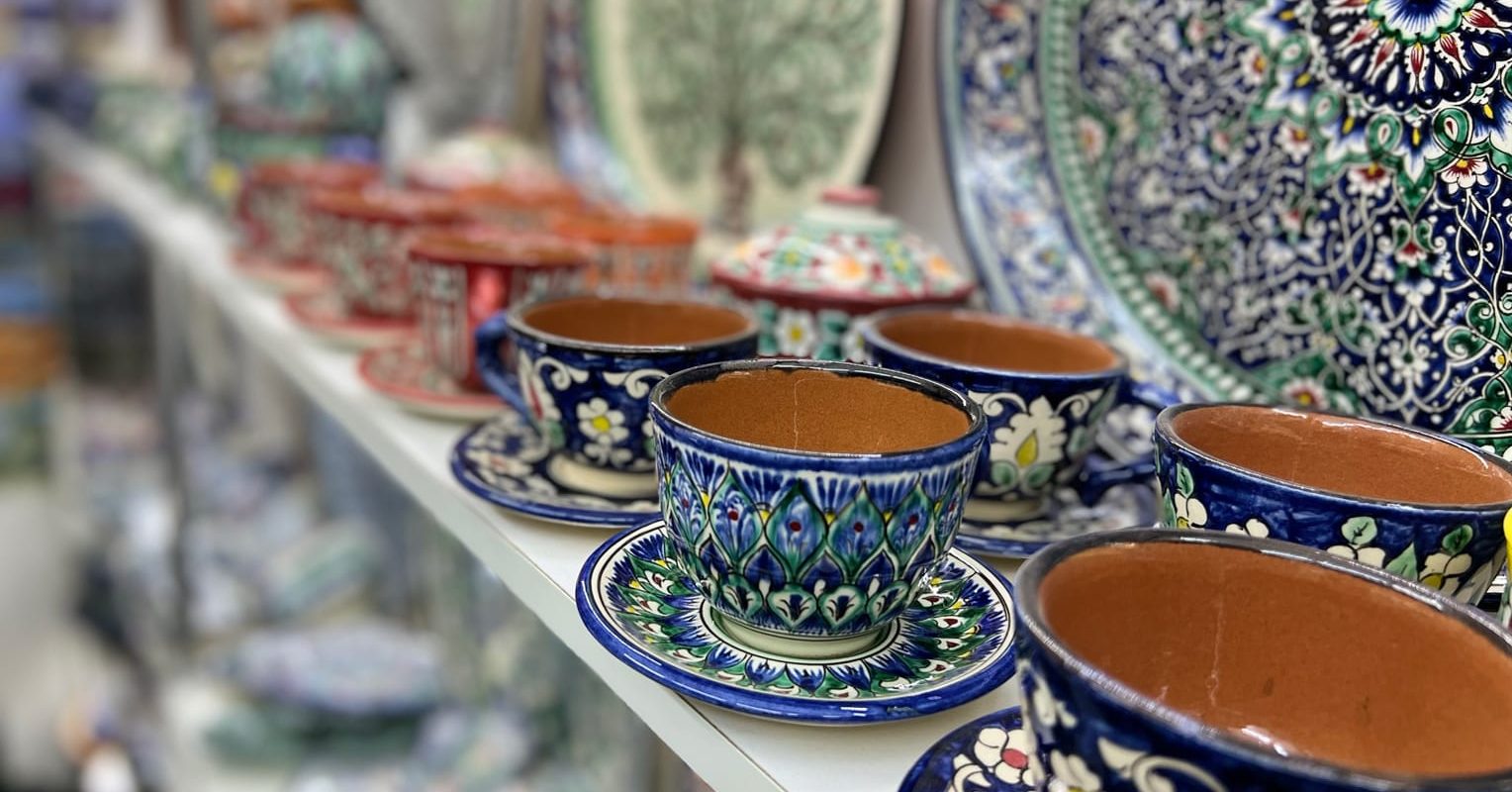
- Ceramics and suzani: Blue-and-white Rishtan ceramics, embroidered suzani panels and ikat fabric fill the shops inside the Registan madrasahs. Bargaining is normal there; in the shops on Tashkent Street prices are fixed and a little lower. Paper from the Meros mill in Konigil, made from mulberry bark the way it was in the 8th century, is the lightest souvenir and costs a few dollars a sheet.
- Urgut Sunday market: Forty kilometres south-east of the city, a wholesale market for the whole region with an antiques section of old suzani, samovars and Soviet enamel. Taxis from Samarkand charge 150,000-200,000 som for the round trip with waiting time. Go before 9 am; by noon the best pieces are gone.
Evenings
- The Registan light show: On most evenings in season a sound-and-light show projects onto the madrasahs after dark. Times shift with sunset; ask at the ticket office in the afternoon. It is free to watch from the viewing platform on the street side.
- El Merosi theatre: A costume show in a small theatre off University Boulevard that walks through Central Asian dress from Sogdian times to the emirs, with live music. It sounds like a tourist trap and is better than it sounds. Around 20 dollars, most evenings at 6 pm, an hour long.
- Wine at Hovrenko: The wine factory founded by Dmitry Filatov in 1868 runs tastings of ten local wines and brandies in a cellar museum on Makhmud Kashgari Street. Uzbek wine is sweet by default; ask for the dry ones. About 10 dollars a person, booking a day ahead is wise.
On Foot Through the Old City
- The mahallas: Behind the Registan the old neighbourhoods survive in a grid of mud-brick lanes, courtyard houses and small mosques. A walking tour of Samarkand’s old town strings them together with the Jewish quarter and the Rukhabad mausoleum. Alone, aim for the streets between the Registan and Gur-e-Amir, and for the Bibi-Khanym side of the bazaar.
- Afrosiyob: The hill north of the bazaar is the site of pre-Mongol Samarkand, abandoned after 1220. Today it is bare mounds with a museum at the foot that holds the 7th-century Sogdian ambassadors’ fresco, the single best object in the city. Museum entry about 40,000 som. The walk from the bazaar up through the ruins to the Ulugbek observatory takes an hour and explains why the city traveled back in time and moved downhill after the Mongols.
Hammam
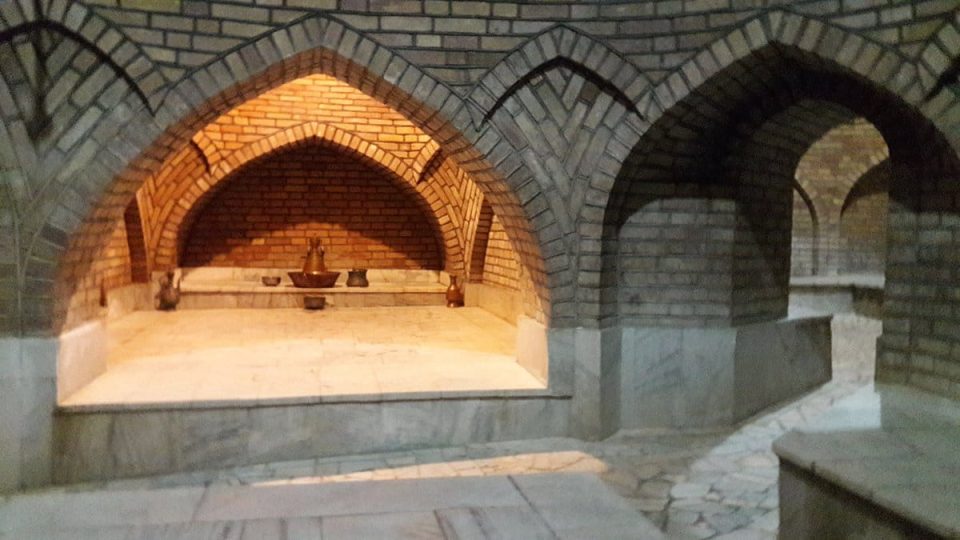
- Traditional baths: Samarkand has a couple of old hammams still in use and several hotel spas that imitate them. The old ones are men-only on most days with a women’s day or women’s hours, so ask before turning up. A scrub and massage in a traditional hammam costs 100,000-150,000 som and takes about an hour. After a day of climbing Shah-i-Zinda in 35°C it is money well spent.
Photography
- Light and timing: The Registan faces north, so its main facades are lit in early morning and late afternoon; at midday they are flat. Shah-i-Zinda’s tiles glow in the last hour before sunset. Bibi-Khanym is best from the bazaar side in the morning. The historical monuments all charge a small camera fee at the gate, a few thousand som, and drones are banned without a permit.
Out of the City
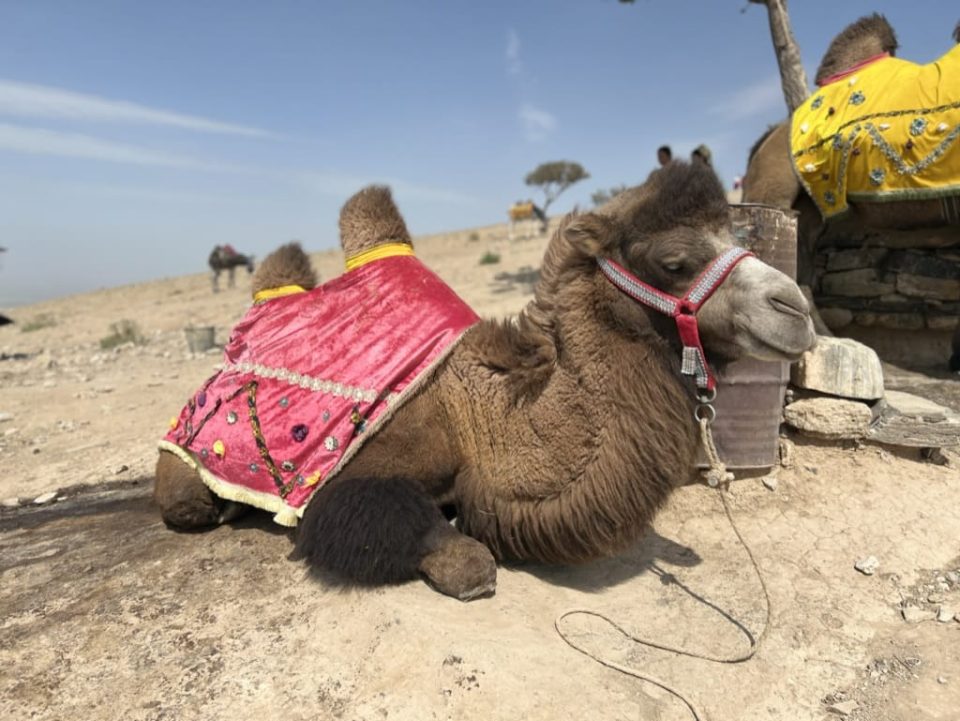
- Mountains and villages: The Zarafshan range starts 30 km south. Hazrat Daud, a cave shrine reached by a 1,300-step stairway, is the classic half-day outing, with the Amankutan gorge and its walnut forests beyond it. Shakhrisabz, Timur’s birthplace with the ruined Ak-Saray palace, is 90 km over the Takhtakaracha pass and takes a full day. A day trip from Samarkand with a driver and guide costs 60-100 dollars for the car, and shared taxis from the Registan bus stand do Shakhrisabz for a few dollars a seat.
- Vineyards: The valley between Samarkand and the mountains has grown grapes since Alexander’s time, and a couple of estates now take visitors for tastings and lunch under the vines. A vineyard tour outside Samarkand makes a quiet afternoon in September and October, when the harvest is on and the raisins are drying on the roofs.
A workable four-day plan: Registan, Gur-e-Amir and the light show on day one; Shah-i-Zinda, Bibi-Khanym, the bazaar and a plov class on day two; Afrosiyob, the observatory, the paper mill and a hammam on day three; Shakhrisabz or the mountains on day four. Sunday visitors should swap Urgut into the morning of whichever day is closest.


