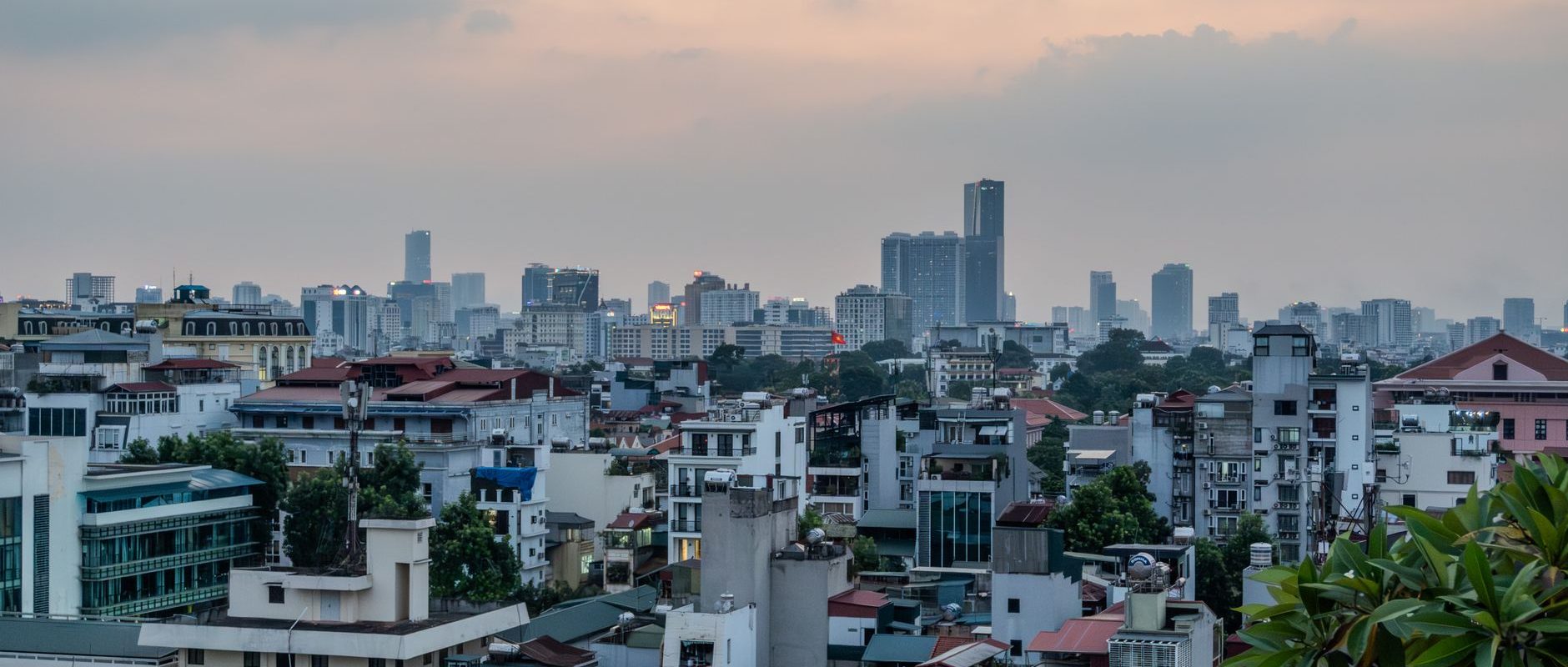
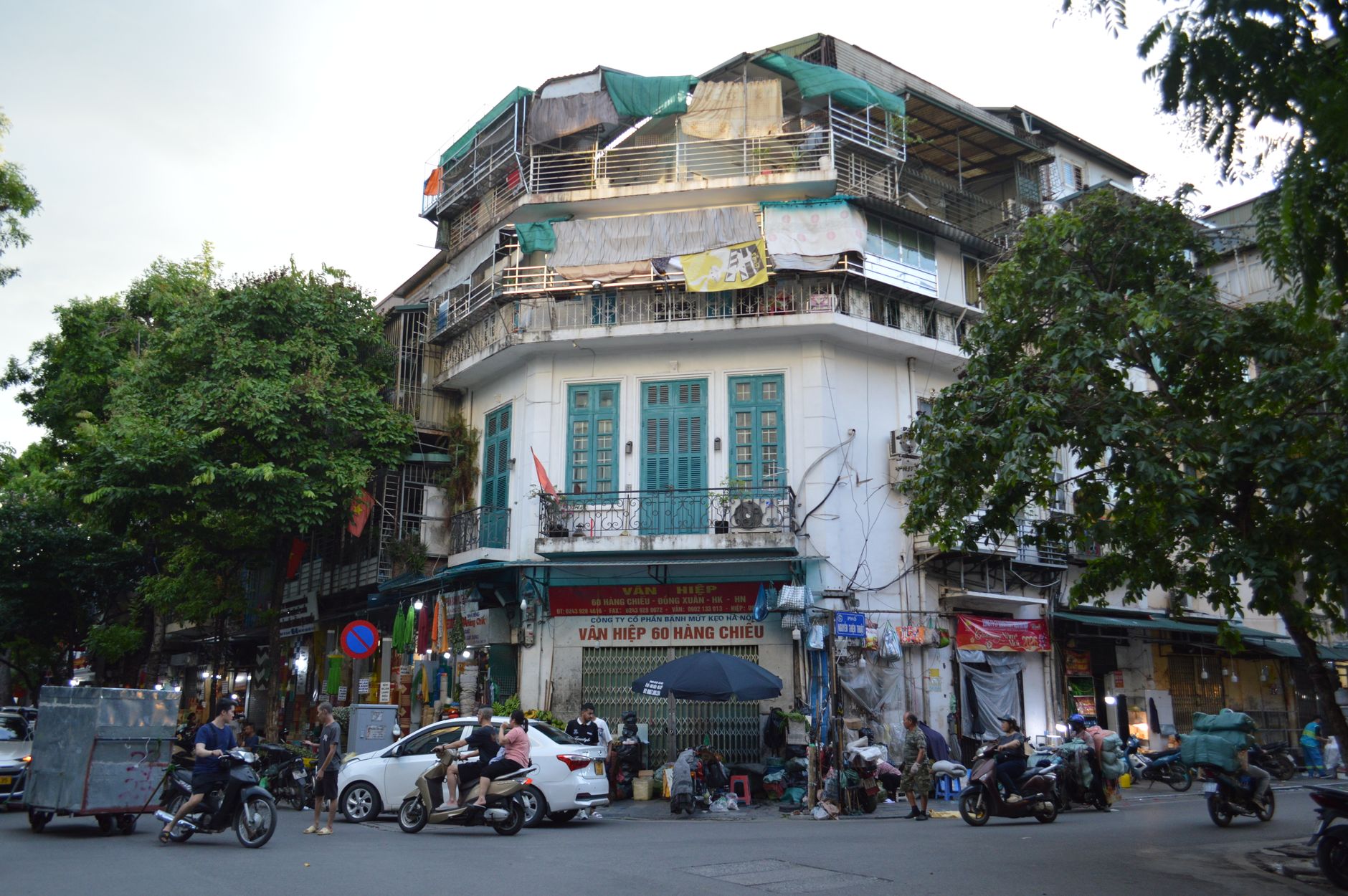
Hanoi is a city you want to leave in the first half hour and stay in after three days. Motorbike noise, sidewalks taken over by plastic stools, five-storey houses one window wide: this is the Old Quarter, and it takes getting used to. I lived in Vietnam for several months and came to Hanoi in different seasons. Three days is exactly enough to see what matters, eat what people come here for, and decide if you need a fourth night. Below is the plan by day, with 2026 prices in dong; count roughly 26,000 to the dollar.
Getting There and When to Go
Noi Bai airport sits 27 km north of the center. There are no nonstop flights from North America and only a few from Europe, mostly via Istanbul, Doha, Dubai or Bangkok; Vietnam Airlines flies nonstop from Paris, Frankfurt and London several times a week. Citizens of the UK, Germany, France, Italy, Spain, the Nordic countries, Japan and South Korea get 45 days visa-free. Americans, Canadians and Australians apply online for a 90-day e-visa for 25 dollars, three to five working days.
From the airport to the Old Quarter there are three ways. Express bus 86 runs to Hoan Kiem lake and the railway station for 45,000 dong, every 25 to 30 minutes from 6 am to 11 pm, 45 to 60 minutes with luggage on board. City buses 7 and 17 cost 9,000 but take an hour and a half with stops. A metered taxi costs 350,000 to 450,000, Grab 250,000 to 350,000. If you land at night, a private airport transfer with a name sign is simpler; bus 86 stops running after 11 pm.
Hanoi’s weather is nothing like southern Vietnam’s. October and November are the best months: dry, 22 to 28°C, clear skies. December to February is cool, 12 to 18°C by day, and in February and March a fine drizzle sets in that can last for weeks. May to August is hot and humid, up to 35°C with afternoon storms. If you have a choice, take autumn; if not, any month but July.
Day One, the Old Quarter and Hoan Kiem Lake
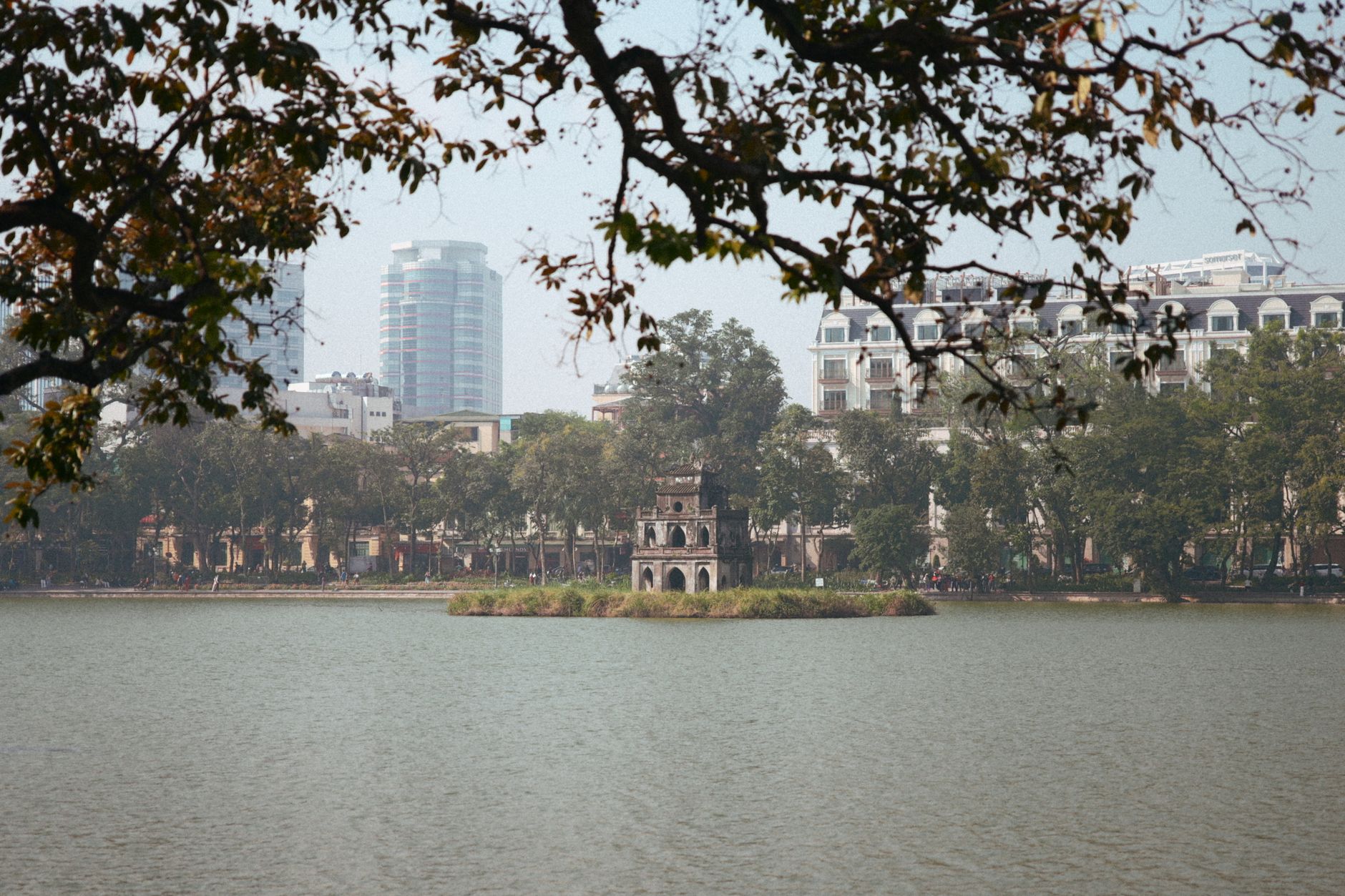
Start at the lake before the heat. At six in the morning the Hoan Kiem shore fills with Hanoians doing exercises, dancing and playing badminton, and by eight it is over. Ngoc Son temple on its islet costs 50,000 dong, and the red bridge leading to it is the city’s main postcard. Turtle Tower on the other islet is closed; you only look at it.
Then the Old Quarter. It is 36 streets, each of which once sold one product, and the names remember: Hang Bac for silver, Hang Ma for paper offerings, Hang Gai for silk. Hang Ma is still hung with paper lanterns, Hang Gai tailors still sew a dress in a day, and Hang Bac still has its jewelers. A street-by-street walk through all of them is in our guide to the 36 streets of the Old Quarter. The heritage house at 87 Ma May, 10,000 dong, shows how a merchant family lived in a house three meters wide and forty deep. Dong Xuan market at the north end of the quarter opens at 6 am, food and fabric downstairs, wholesale clothes upstairs.
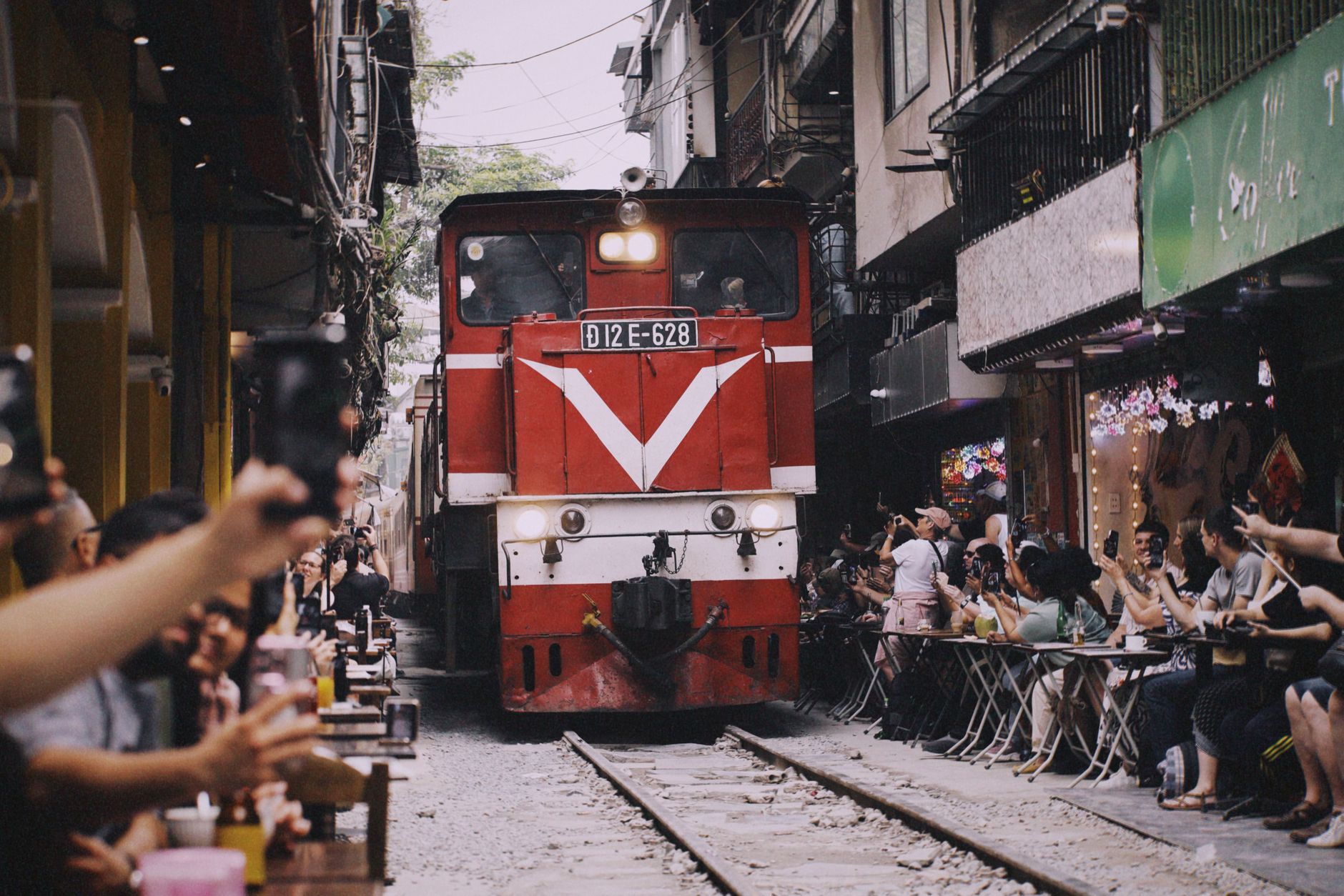
After lunch walk to Long Bien bridge. French engineers built it in 1902, it survived the bombing, and it still carries trains, motorbikes and pedestrians. From the bridge you see the Red River and the banana plantations on the island in the middle. Nearby is Train Street on Phung Hung, where the train passes half a meter from the cafe tables. Entry is free, but cafes ask you to buy a drink for 40,000 to 60,000, and trains run to a schedule shown at the entrance, usually between 6 and 7:30 pm.
In the evening, the Thang Long water puppet theatre on the north shore of the lake. A show lasts an hour, tickets cost 100,000 to 200,000 depending on the row, and performances start at 4:10, 5:20, 6:30 and 8 pm. Buy evening tickets in the morning. If you prefer a guide, a half-day city tour in a small group covers the quarter, the temples and the lake in one go.
Day Two, Ho Chi Minh, the Temple of Literature and West Lake
The complex on Ba Dinh square is open from 7:30 to 10:30 and you should arrive at opening. Ho Chi Minh’s mausoleum is free, the line moves fast, inside it is quiet and cold, no photos and no talking, and shorts and tank tops are turned away. It closes on Mondays and Fridays and for two or three months every autumn for maintenance, usually September to November, so check before you go. Next door are Ho Chi Minh’s stilt house and the One Pillar Pagoda, 40,000 dong for both.
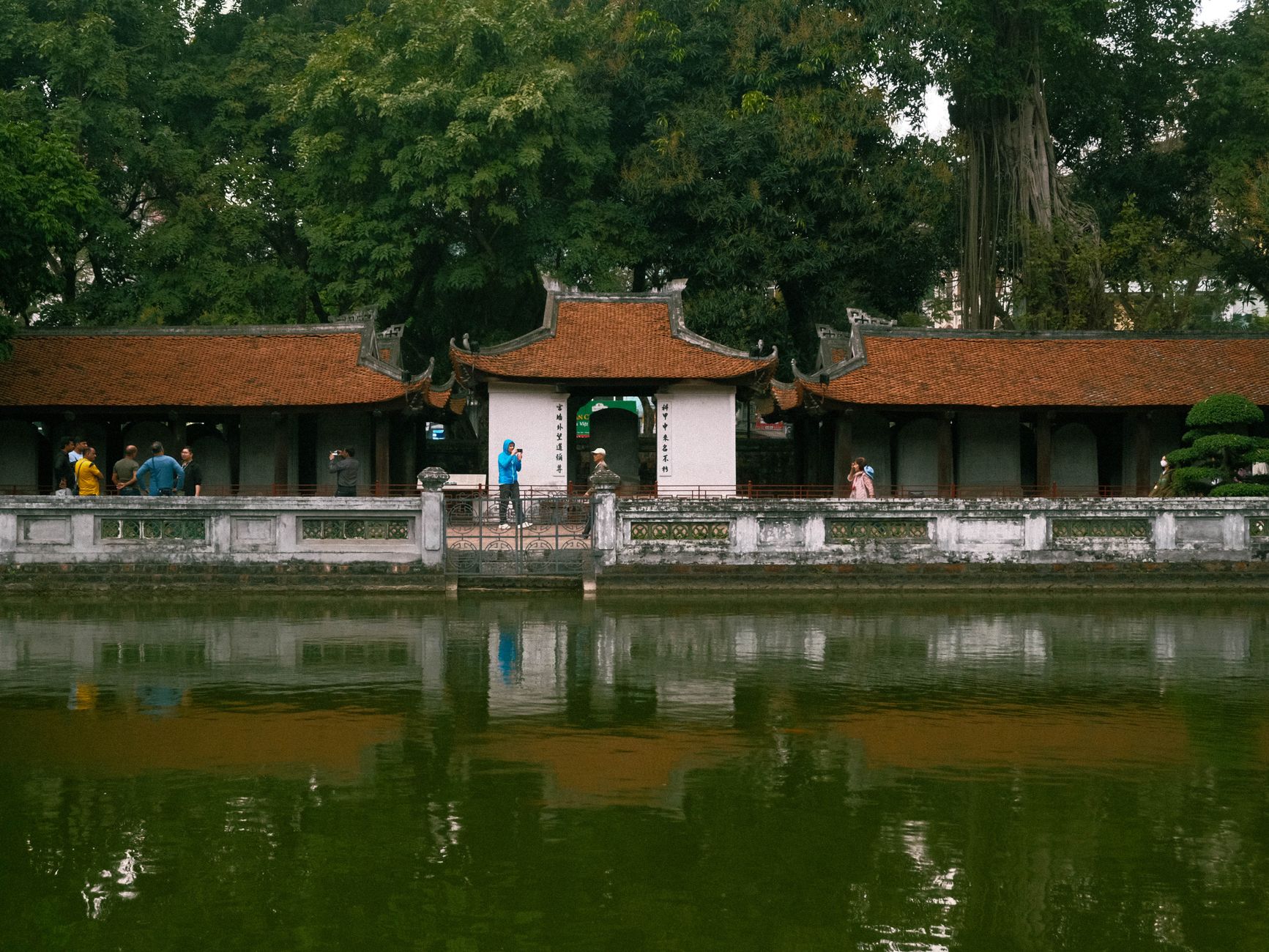
From there it is a 15-minute walk to the Temple of Literature, Vietnam’s first university, founded in 1070. Five courtyards, stone stelae on turtles carved with graduates’ names, and students in gowns who come here for graduation photos. Entry is 70,000 dong, open 8 to 5. Across the road is Hoa Lo prison, which American pilots called the Hanoi Hilton. It is a hard, honest museum, 50,000 dong, one hour.
Give the second half of the day to West Lake in the northwest. It is the city’s largest lake, 17 km around, and foreigners and wealthy Hanoians live along it. Tran Quoc pagoda on the causeway between West Lake and Truc Bach is the oldest in the city, sixth century, free, and at sunset the best photo spot in town. On the east shore cafes have terraces over the water, coffee at 50,000 to 70,000, and this is one of the few parts of Hanoi where you can sit in silence. A taxi from the center is 80,000 to 120,000.
Day Three, Out of Town or Deeper Into the Quarter
Day three is a fork. First option: Ninh Binh, which people call Ha Long on land, limestone karsts over rice fields, rowing boats through river caves, 500 steps up Mua mountain for the view. It is two hours each way, and a day tour with the boat, Hoa Lu and Mua Cave costs 900,000 to 1.3 million dong, such as the Ninh Binh full-day tour. If Ha Long is already planned as a separate cruise, Ninh Binh on day three is the right pick.
Second option: stay and dig deeper. The Museum of Ethnology in the west of the city, 40,000 dong, shows Vietnam’s 54 peoples with real houses in the garden; it is the best museum in the country. St. Joseph’s cathedral of 1886, grey and unexpectedly gothic, with coffee shops on the square in front. Hang Da street for fabrics and Hang Chieu for mats, where tourists do not reach. A motorbike tour with a local rider covers all of it in half a day; the Hanoi city insight motorbike tour led by women takes alleys a car cannot enter.
In the evening, either way, Ta Hien, the beer corner of the Old Quarter. Bia hoi, the draft beer of the day, costs 10,000 to 15,000 a glass, stools stand on the roadway itself, and by nine the street becomes one shared table. Snacks are fried spring rolls, peanuts and dried squid at 30,000 to 60,000. It is not a restaurant; it is how Hanoi ends a day.
Where to Stay and What Three Days Cost
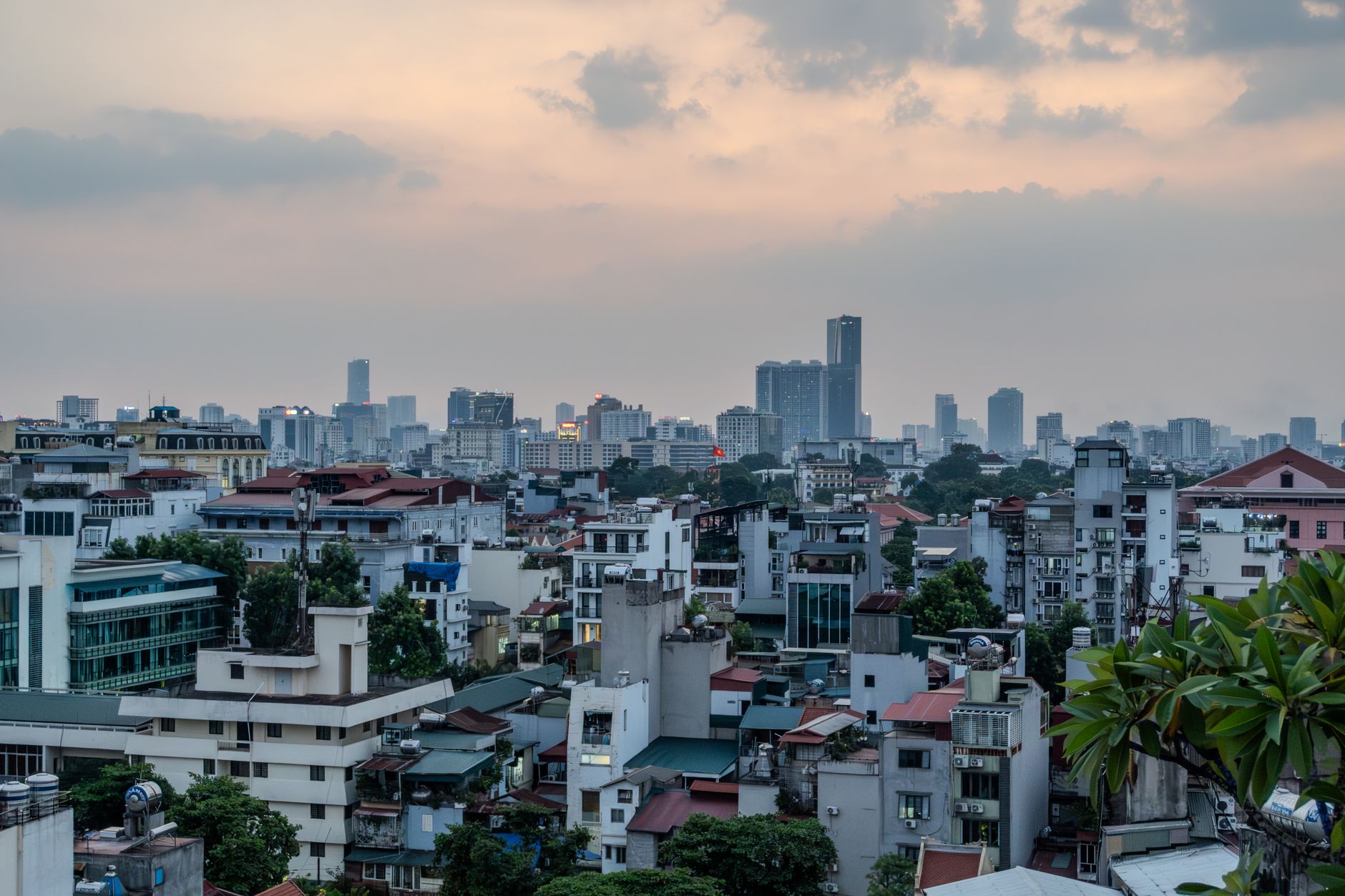
For three days you should stay in the Old Quarter or on the streets around Hoan Kiem, so that all of day one is on foot. Three-star hotels in the quarter cost 35 to 55 dollars a night; Eliana Ruby Hotel holds a 9 out of 10 from 2,500 reviews, with soundproofing and breakfast. A four-star boutique such as La Nueva Boutique Hotel runs 60 to 90 dollars with a rooftop pool. One thing to remember: the quarter is loud until midnight and wakes at five, so ask for a courtyard room.
A three-day budget for one person:
- Hotel, three nights in a three-star in the quarter: 110 to 160 dollars.
- Food: 12 to 18 dollars a day. Pho 40,000 to 60,000 dong, bun cha 50,000 to 70,000, dinner with beer on Ta Hien 150,000 to 250,000.
- Entry tickets: Ngoc Son temple, Temple of Literature, Hoa Lo, water puppets, Museum of Ethnology, about 350,000 dong.
- Transport: bus 86 both ways 90,000, Grab around town 30,000 to 80,000 a ride.
- A tour to Ninh Binh or by motorbike: 35 to 50 dollars.
That is 200 to 250 dollars without flights. Cash is needed almost everywhere outside hotels and larger cafes; Vietcombank and TPBank ATMs dispense up to 5 million dong per withdrawal and take foreign Visa and Mastercard. Gold shops on Ha Trung street change dollars at a better rate than banks or the airport.


