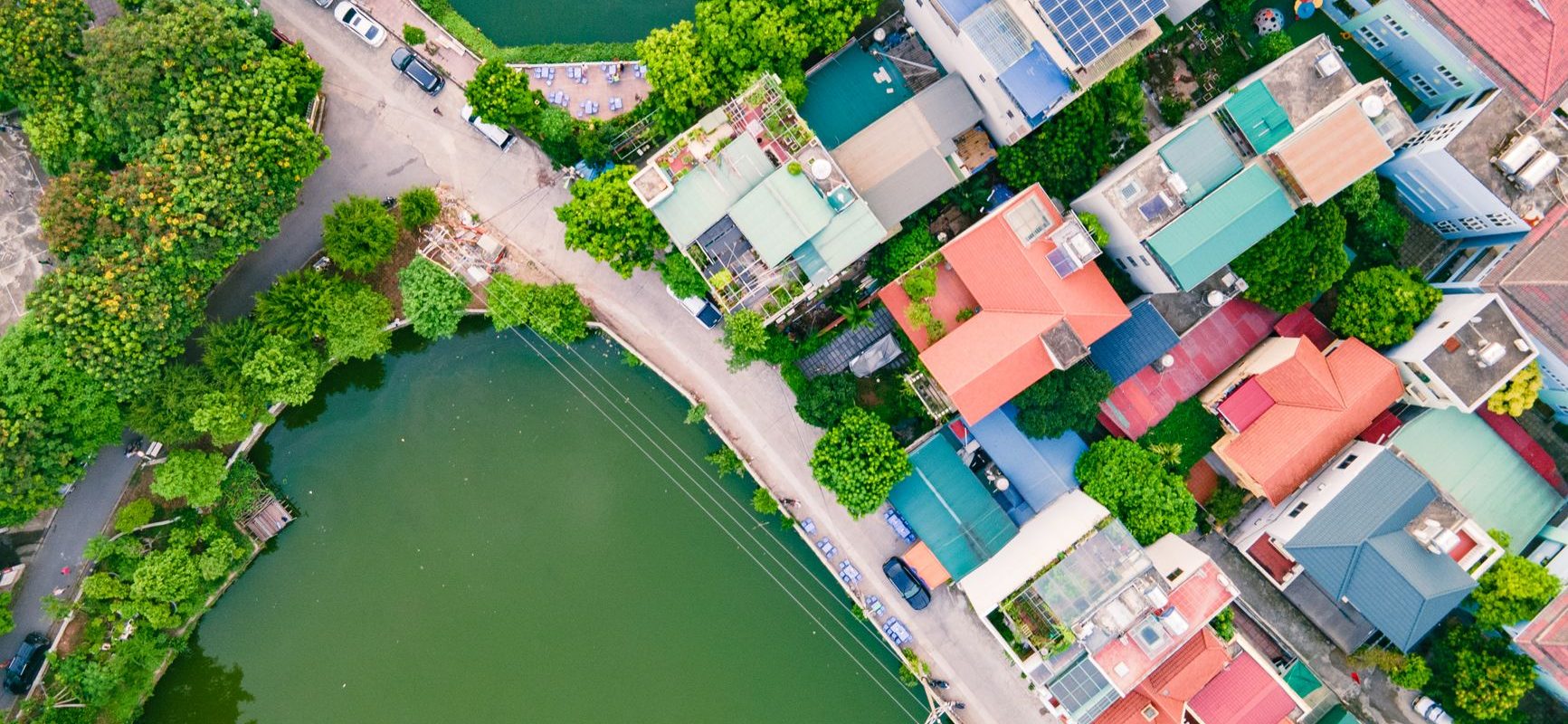
Hanoi’s Old Quarter is a square kilometer north of Hoan Kiem lake where, since the fifteenth century, each street sold one product and took its name from it. There are more than thirty-six streets today, but the name stuck. Half of them still hold on to their trade. Hang Ma sells paper lanterns, Hang Bac has its jewelers, Hang Thiec bends tin. I lived in Vietnam for several months and walked the quarter dozens of times before I stopped getting lost. Below it is taken apart piece by piece: what is on each street, where the old houses and temples are, how to walk it and where to stay.
How the Quarter Works
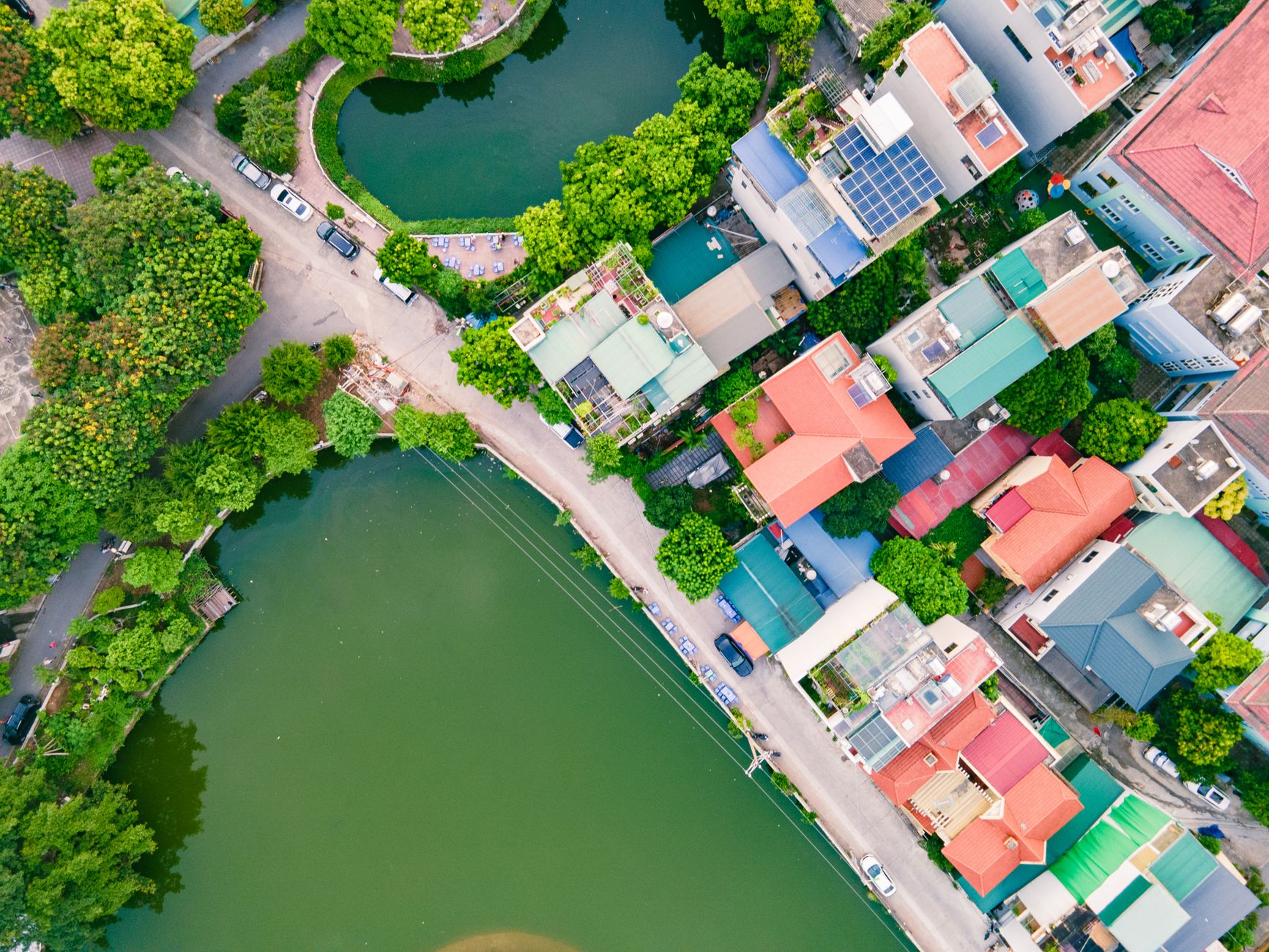
The quarter is bounded by the lake to the south, the citadel to the west, the Red River dyke to the east and Hang Dau street to the north. Inside is a grid of lanes with no right angles. Houses stand on plots three or four meters wide and up to sixty deep. Tax was levied on frontage, so merchants built backward. These are called tube houses, with the shop on the street, a courtyard behind it, living rooms, another courtyard and the kitchen.
Street names begin with Hang, meaning “merchandise,” followed by the goods: Hang Bac for silver, Hang Gai for hemp and later silk, Hang Dao for dyed cloth, Hang Muoi for salt, Hang Than for charcoal. Some streets have changed trades, some have not, and half the pleasure is finding where the craft is still alive. On foot the whole quarter takes an hour without stopping, but you will stop every thirty meters.
Orientation works along three axes. Hang Dao and its continuations Hang Ngang and Hang Duong run south to north from the lake to Dong Xuan market. Hang Buom and Ma May cross the quarter west to east. Hang Gai and Hang Bong lead from the lake west toward the cathedral and the citadel. Everything else lies between them.
The North, Hang Ma, Hang Buom and Dong Xuan Market
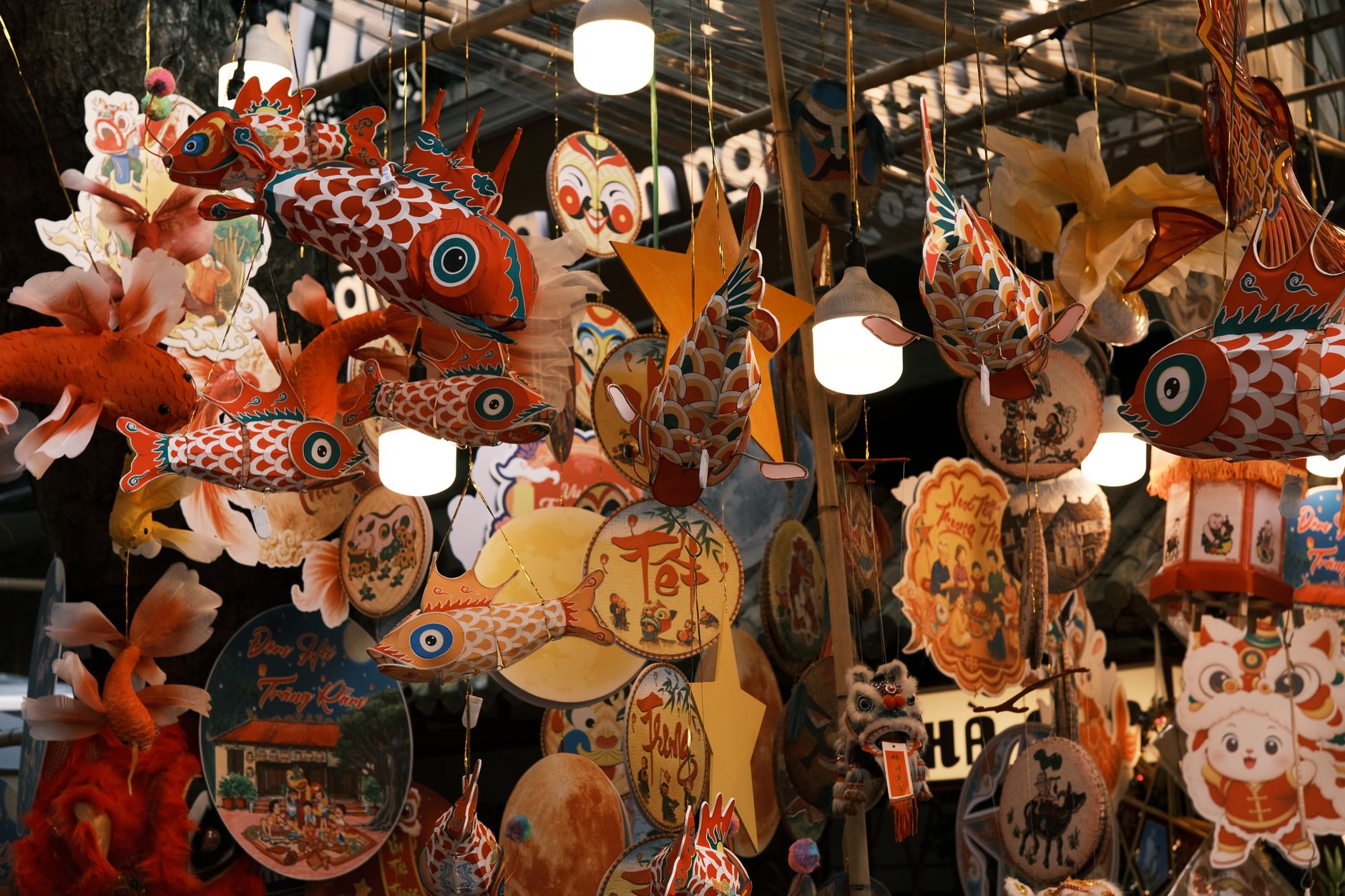
Hang Ma is the street of paper offerings, the most photographed in the quarter. It sells paper houses, money and iPhones that are burned for ancestors. Before festivals the whole street hangs with lanterns: red for Tet in January or February, stars and masks for the Mid-Autumn Festival in September or October. A lantern costs 30,000 to 100,000 dong, and it is the best souvenir Hanoi offers for the money.
Hang Buom, the street of sails, sells sails no longer. It holds Bach Ma temple, the White Horse, from the eleventh century. This is the oldest temple in the city and one of the four guardians of Thang Long. Entry is free; inside are red lacquered columns and an altar with a white horse that, by legend, showed the emperor where to build the walls. In the evening Hang Buom becomes a street of food and, at weekends, free street concerts.
Dong Xuan market on the quarter’s northern edge has stood since 1889; the present building went up after the fire of 1994. Three floors: food, fabric and household goods below, wholesale clothes and shoes above. For a visitor the lane behind it, Ngo Dong Xuan, is more interesting, lined from morning to night with stalls serving bun rieu and battered shrimp. On Friday, Saturday and Sunday from 6 pm, a night market runs from the market down to the lake along Hang Dao, closed to motorbikes.
Next door are Hang Chieu with mats and rope, Thuoc Bac with locks and tools, and Lan Ong, the medicine street, where open doors smell of cinnamon and dried mushrooms and herbs are weighed out to recipes several centuries old.
The Center, Hang Bac, Ma May and Ta Hien
Hang Bac, silver street, has worked its trade since the sixteenth century. There are dozens of workshops. Silver jewelry is made while you wait, and the price goes by weight plus labor. A ring comes to 300,000 to 800,000. Here too are houses with early twentieth-century balconies and the Chuong Vang theatre, which stages folk opera.
Ma May, rattan street, is now a street of hotels and travel agencies, but it keeps house number 87, a late nineteenth-century merchant house restored as a museum. Entry is about 10,000 dong, open 8:30 to 17:00. It is the one place where you can walk a tube house from front to back: shop, courtyard with a tree, room with the ancestral altar, bedroom, kitchen. Twenty minutes that explain the whole quarter.
Ta Hien is a short street of a hundred meters that becomes Hanoi’s beer corner in the evening. Stools on the roadway, bia hoi at 10,000 to 15,000 a glass, fried spring rolls and peanuts. By day it is quiet, and you can see that the houses on Ta Hien are French, with balconies and shutters. Hang Quat next door sells red lacquered altars and Buddhist ritual goods. It is one of the most beautiful streets in the quarter. Tourists rarely turn into it. A private city tour with Train Street walks exactly these lanes with the stories that are not on the plaques.
The South and West, Hang Gai, Hang Bong and the Cathedral
Hang Gai, silk street, is the most expensive and best-kept street in the quarter. It has the best silk and embroidery shops, where a dress is tailored in a day for 60 to 120 dollars and a scarf costs 300,000 to 600,000. Bargaining on Hang Gai is milder than at the market, but 10 to 15 percent comes off. On Hang Gai and neighboring Hang Trong are cafes on the upper floors of old houses. You reach them through a narrow door and three flights of stairs. Coffee is 40,000 to 60,000, the view is wires and tiled roofs.
Hang Bong continues Hang Gai west toward the citadel. It once sold cotton. Now it sells clothes and bags. One of the city’s best banh mi stands on a corner along the way. Beyond Hang Bong the quarter ends and the area around the Thang Long citadel begins, where 100,000 dong buys the excavations of the imperial palace and the wartime command bunker.
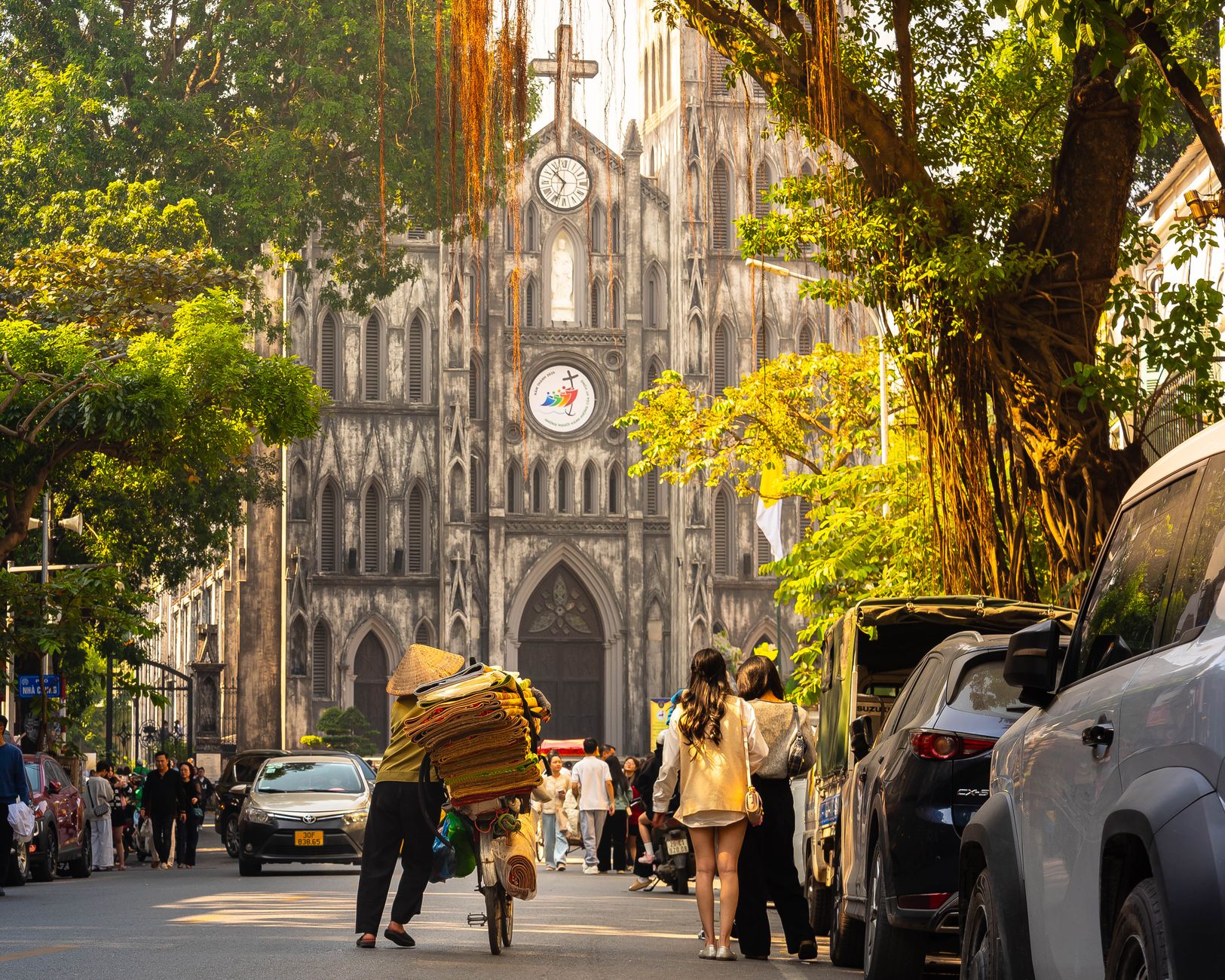
South of Hang Gai, just past the quarter’s formal boundary, stands St. Joseph’s cathedral of 1886, grey, gothic, twin-towered. In front is a square with cafes where Hanoi’s young drink iced lemon tea for 15,000 in the evening and crack sunflower seeds. Nha Tho and Ly Quoc Su streets around the cathedral are the calmest in the center, with boutique hotels and pricier restaurants. If the quarter’s noise wears you down, this is where to stay.
Train Street and Long Bien Bridge
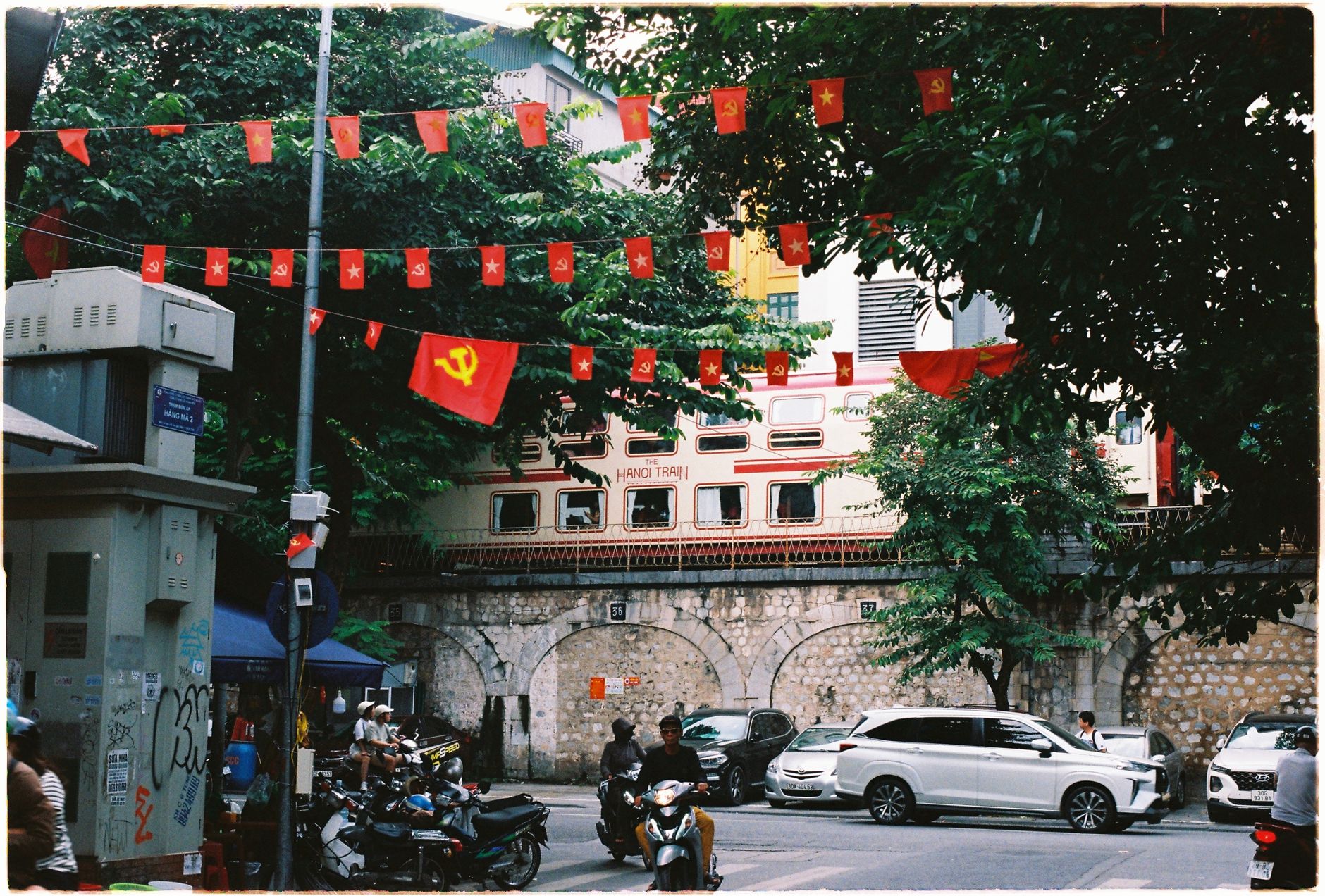
Train Street is a stretch of track where trains pass half a meter from the houses, and cafes sit between the rails and the walls. The best-known section is on Phung Hung at the quarter’s northern edge, the second on Tran Phu. Authorities closed the cafes in 2019 and 2022, then let them reopen on condition that customers sit inside while a train passes. Entry is free, but cafes ask you to buy a drink for 40,000 to 60,000. Someone at the entrance holds the timetable. Trains usually pass in the morning around 6 and 7 and in the evening between 6 and 7:30, more often at weekends.
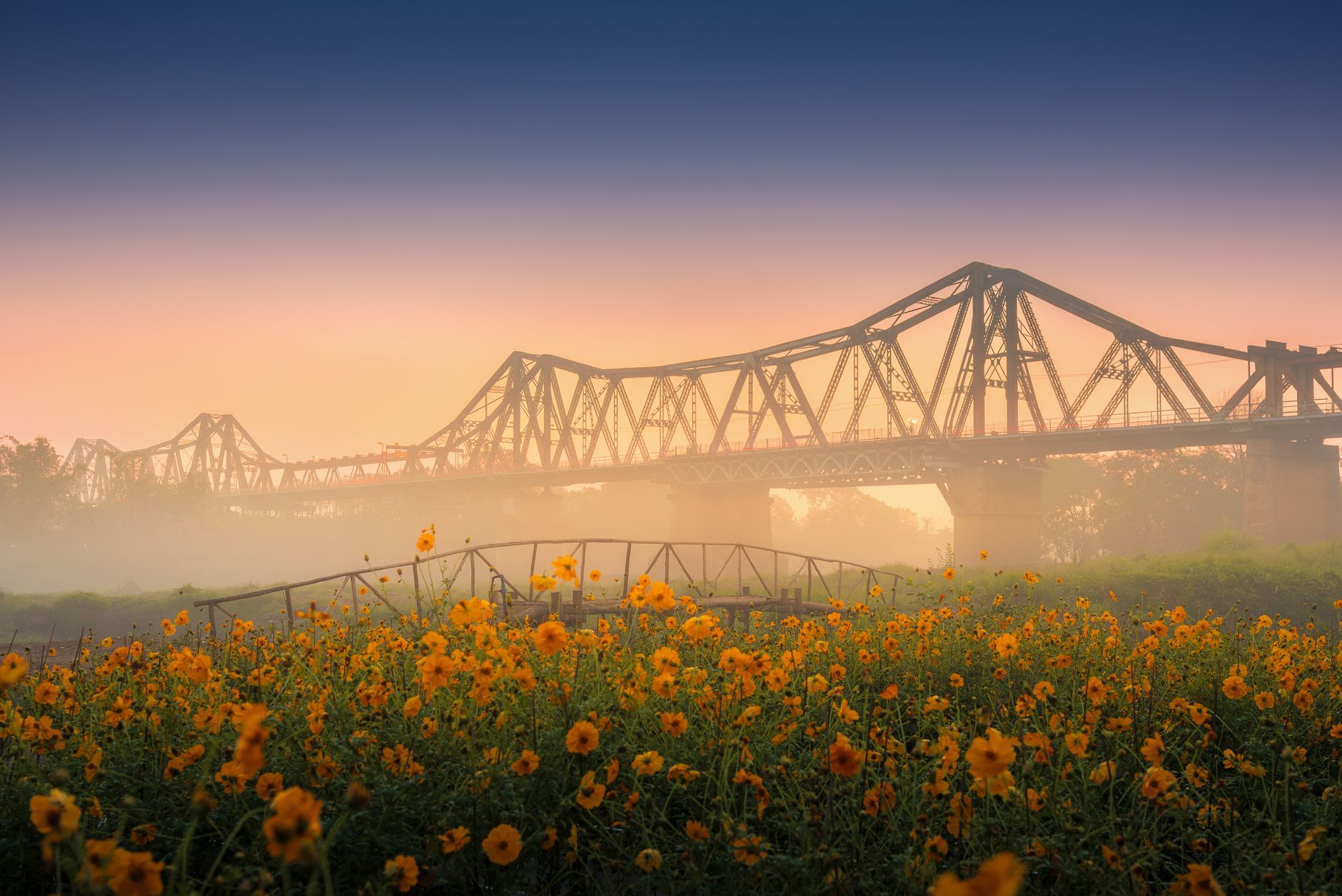
From Train Street it is ten minutes to Long Bien bridge. The French firm Daydé et Pillé built it in 1902, two and a half kilometers of steel trusses across the Red River. American planes bombed it ten times. The Vietnamese repaired it. It still stands, carrying trains down the middle and motorbikes and pedestrians along the edges. Walk it. The view takes in the river, the banana plantations on the island in the middle and the city. In the morning there is a market on the bridge; in the evening, the sunset.
Under the bridge on Hang Dau stands the old water tower of 1894, and nearby on Phung Hung the arches of the railway embankment are painted with murals of old Hanoi. The small-group guided street food tour with tastings ends on Train Street, which is sensible: you come here in the evening anyway.
How to Walk It and Where to Stay
Rules of movement in the quarter are simple. Sidewalks are taken by motorbikes and stools, so you walk along the edge of the road. Cross at a steady pace, neither stopping nor speeding up; the bikes steer around you. You need a map on your phone. Street names change every hundred meters and even locals get confused. Best times are early morning, seven to nine, when shops open and tourists sleep, and the evening after six.
Motorbike taxis and cars inside the quarter are pointless; everything is within fifteen minutes on foot. If you want to see it from a saddle, the bicycle tour of Hanoi’s backstreets covers more lanes in a morning than feet do. The Hanoi city insight motorbike tour, with a local rider, suits anyone who finds walking in the heat hard.
Staying in the quarter is worth it, but choose the street with care. Ta Hien, Hang Buom, Hang Dao and Ma May stay loud until midnight. Quiet ones are Hang Quat, Lo Su, Hang Be and the lanes west of Hang Bac. Good options: Golden Legend Boutique Hotel on a quiet street with a 9 out of 10 at 60 to 90 dollars, and Hanoi Lotus Boutique Hotel five minutes from the lake at 55 to 80. In any house in the quarter ask for a courtyard or upper-floor room. A tube house forty meters deep is quiet at the back.
With one day, the route is this: Hang Ma in the morning, Bach Ma temple, Dong Xuan market and lunch in the lane behind it, Hang Bac and the house on Ma May after lunch, rooftop coffee on Hang Gai, the cathedral at sunset, Long Bien bridge or Train Street for the 6:30 train, and Ta Hien for the night. That is ten kilometers on foot. It is the best day in Hanoi, and how it fits with Ba Dinh, West Lake and a trip to Ninh Binh is laid out in three days in Hanoi without a tour agency.


