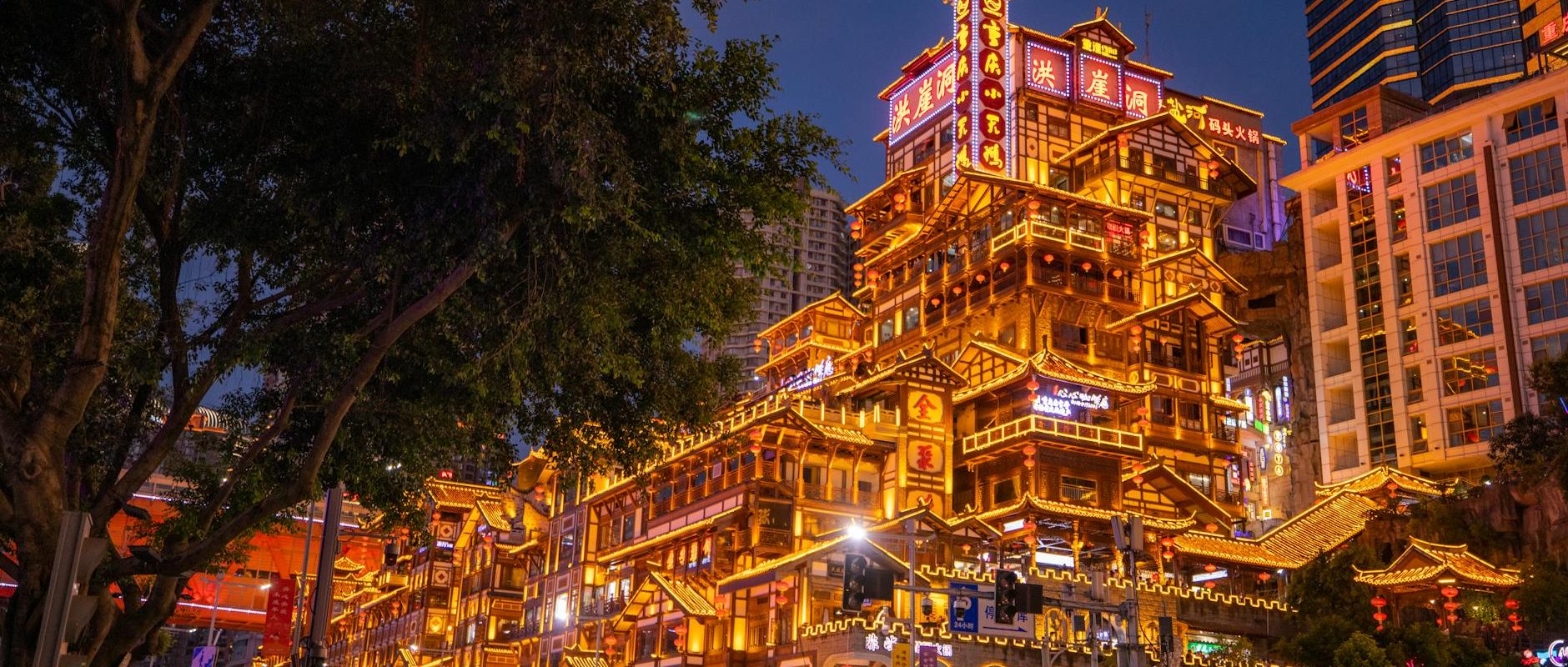
Chongqing breaks the usual rules of a city. Streets stack on top of each other, a monorail runs through the middle of an apartment block, and a door at pavement level can open onto the 20th floor of the building behind it. GPS gets confused here, its blue dot drifting between two roads that sit directly one above the other. An honest answer to “how do you explore this place” is to put the phone away, pick a staircase and follow it. Most of the places worth seeing are not marked by signs. They sit behind a plain door, on a rooftop, or three flights of steps below the road.
Flat ground is rare. Normal crossroads are rarer. Instead there are endless stairways, flyovers at tower-block height and skyscrapers that look drawn for a science-fiction film. Anyone who thinks they have seen every kind of Chinese city will have to recalibrate. Chongqing messes with the sense of space, and that is its main attraction.
Hongyadong Is Only the Starting Point
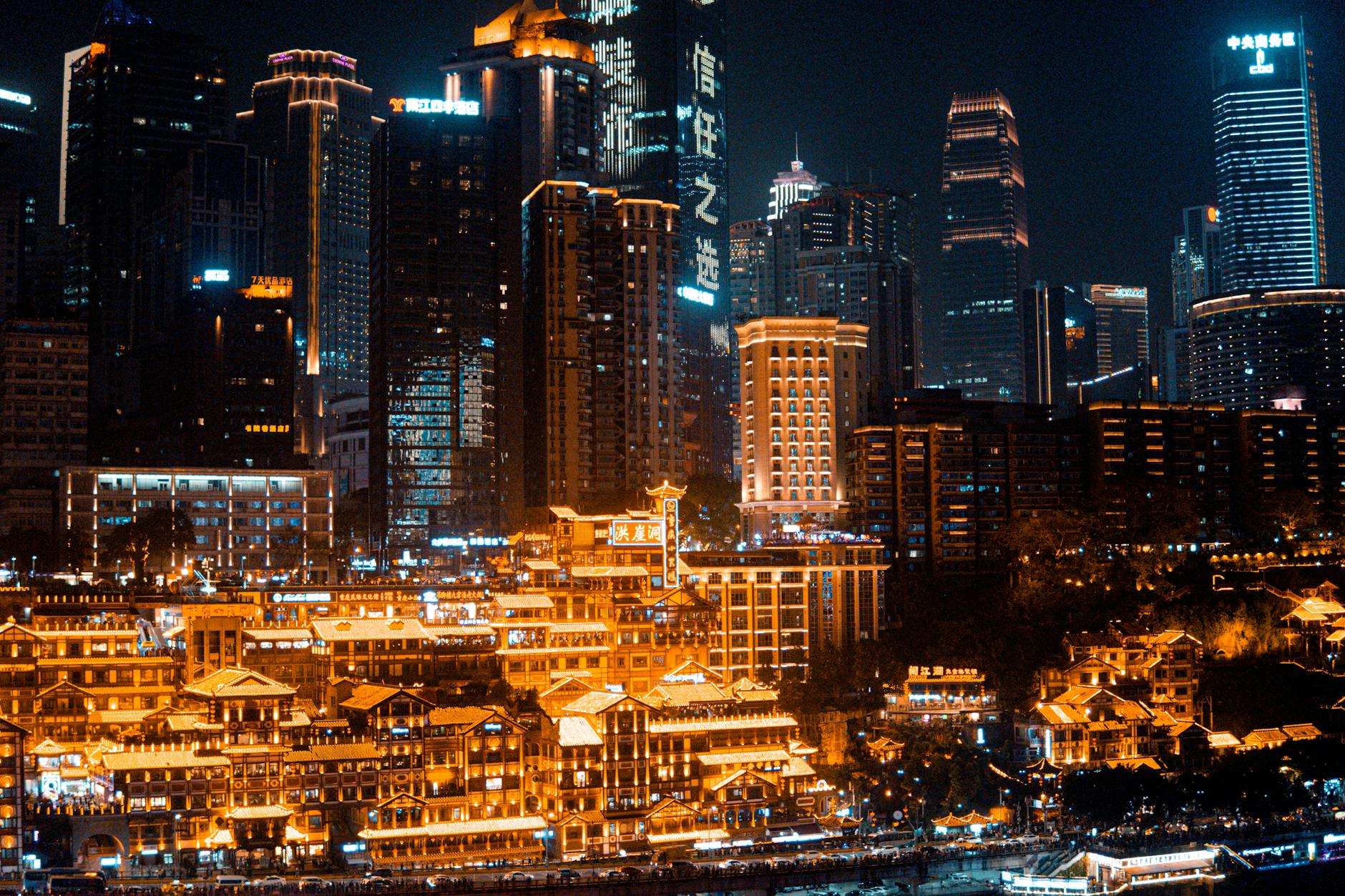
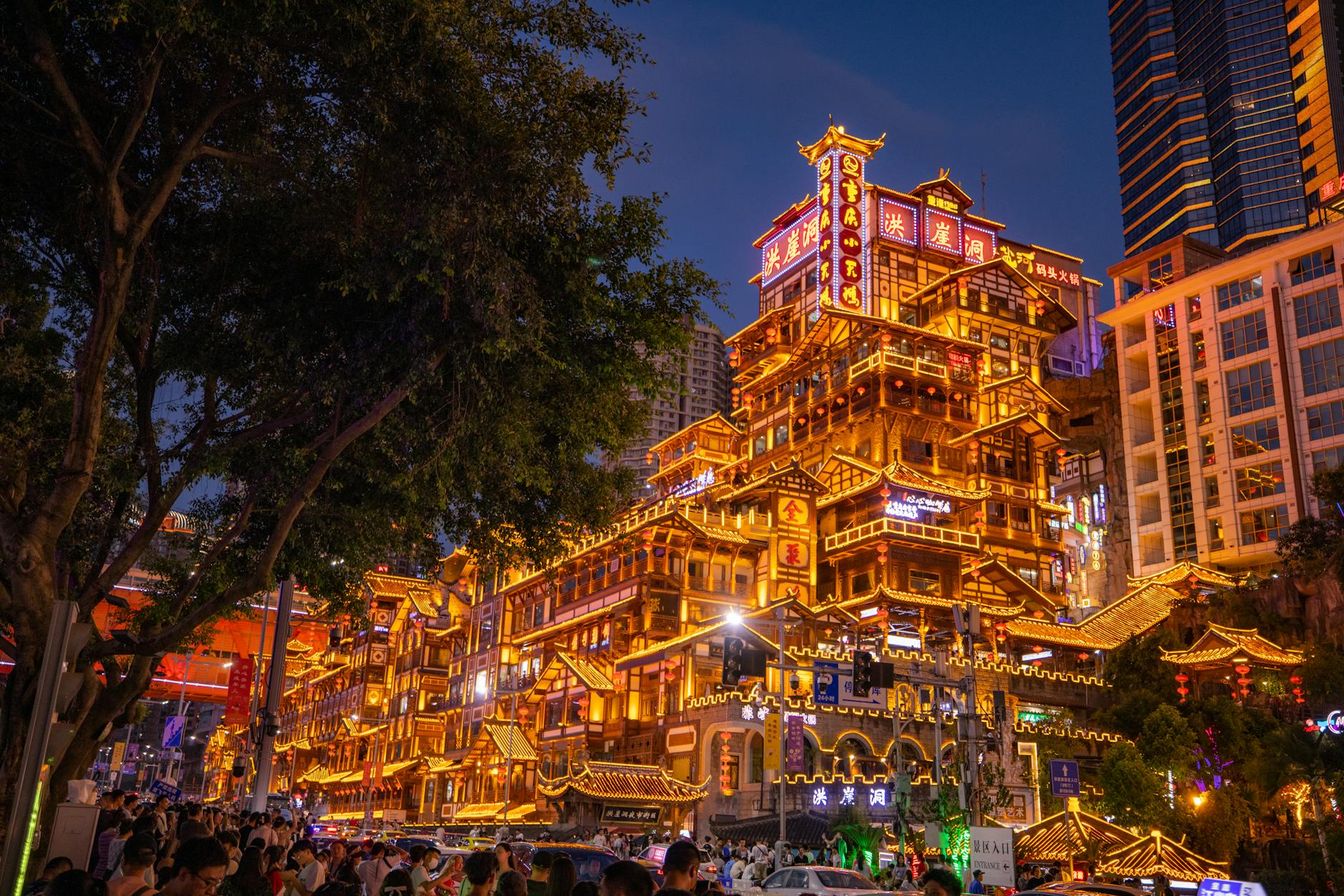
Every guidebook opens with Hongyadong, the glowing stilt-house complex on the Jialing River that looks lifted from an animated film. It is beautiful, and the evening crowds are enormous. But it is a shopping complex from 2006 built in old style, not the old city. To find what Chongqing is made of, you have to leave the riverfront, pick a side street and climb. Behind it lies a maze of stairs, and the maze is the point.
How Buildings and Mountains Become One
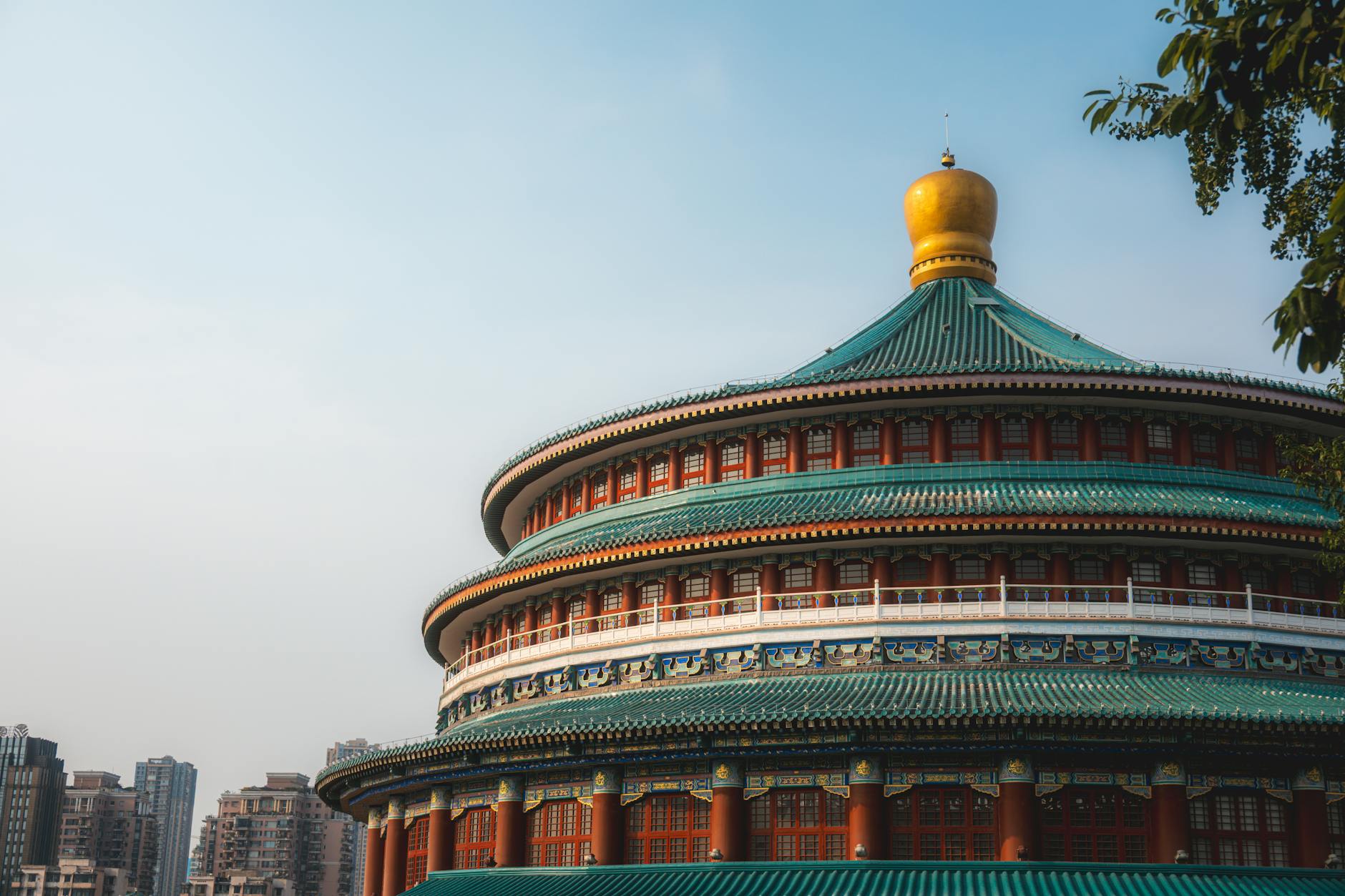
Liziba station on metro Line 2 is the single most surreal piece of infrastructure in the city. Its monorail passes straight through the sixth to eighth floors of a 19-storey residential block. People live above and below the track. Trains slow down, slide into the building and come out the other side. A viewing platform below the station lets you watch without a ticket, and trains arrive every few minutes. It looks like a joke and is simply the local solution to a slope too steep for anything else. Chongqing adapts its planning to a landscape that would defeat most cities. That is why its skyline is a jumble of old and new, traditional and futuristic, all crammed together.
Liziba is only the first example. Raffles City Chongqing stands on Chaotianmen, exactly where the Yangtze and the Jialing meet. Eight towers rise from one podium, and four of them carry a horizontal glass “Crystal” about 250 metres up and 300 metres long. There is a mall and a hotel inside, but the thing to see is the structure itself. Up on the skybridge, the Exploration Deck sells tickets for the Raffles City skybridge with afternoon tea included, which is a reasonable way to spend an hour up there. From the deck, the brown Yangtze and the greener Jialing meet in a visible line in the water below.
Side Alleys and Old Staircases
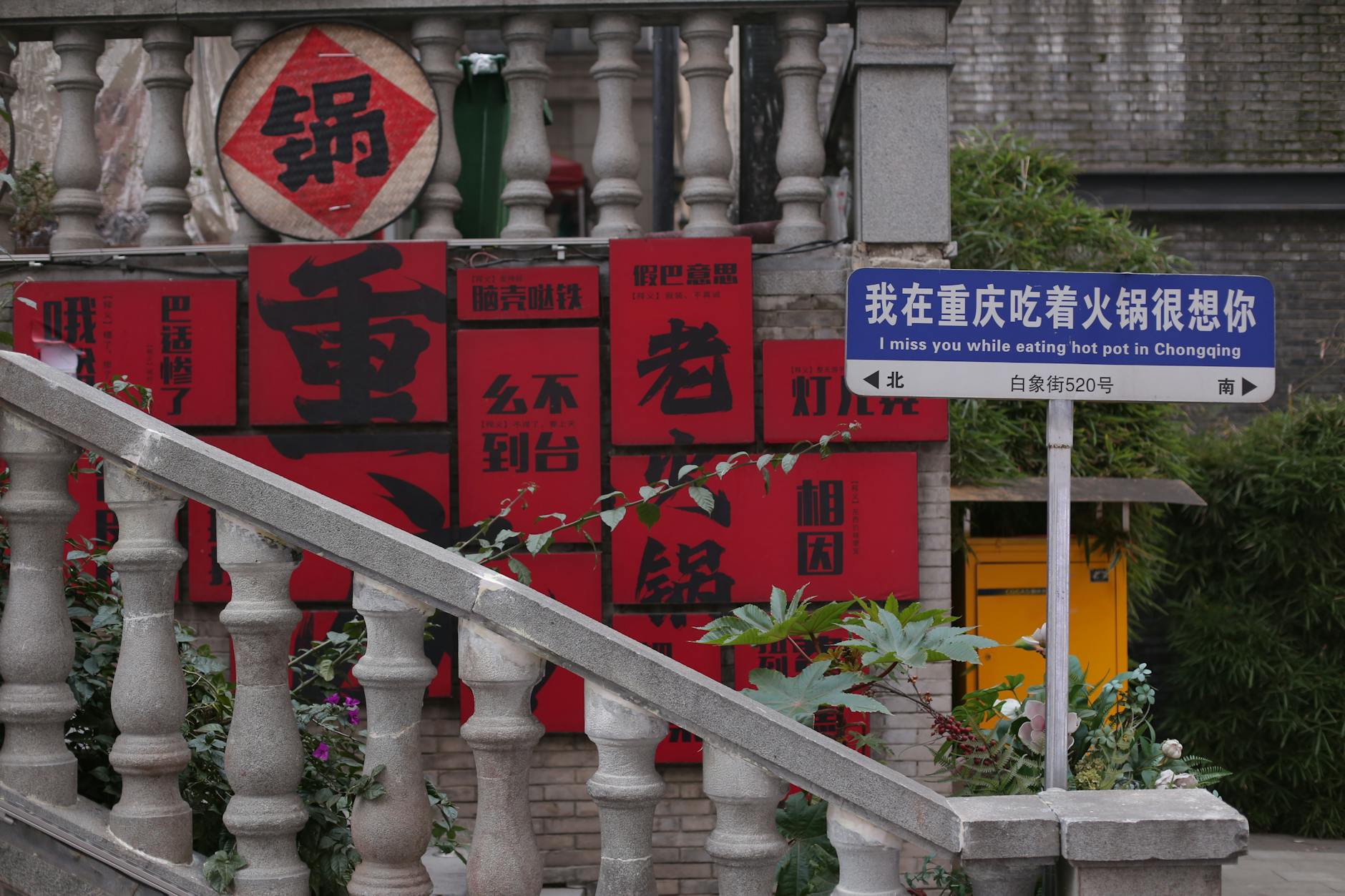
Chongqing is built on stairs. Thousands of them run up, down, sideways, through buildings and under bridges. They are not a shortcut, they are how the city is wired. Walk them and you find the places most visitors miss. Shibati, “eighteen steps”, is the classic example. Its old slum quarter was demolished around 2015 and rebuilt as a heritage district that reopened in 2021. What came back is tidier than the original, but the stair system linking the upper town to the river is still there, along with teahouses, noodle stalls and old men playing mahjong at folding tables. Go on a weekday morning, before the tour groups arrive.
Walks like this are how you find small temples squeezed between apartment blocks, and courtyards where nothing has changed in decades. This is the layered Chongqing. History and daily life sit just under the glossy surface, and it is in these spots that the city’s contrasts start to make sense. Wear proper shoes. A day here is a workout, and the stairs add up to a serious climb.
Seeing Chongqing From High Above
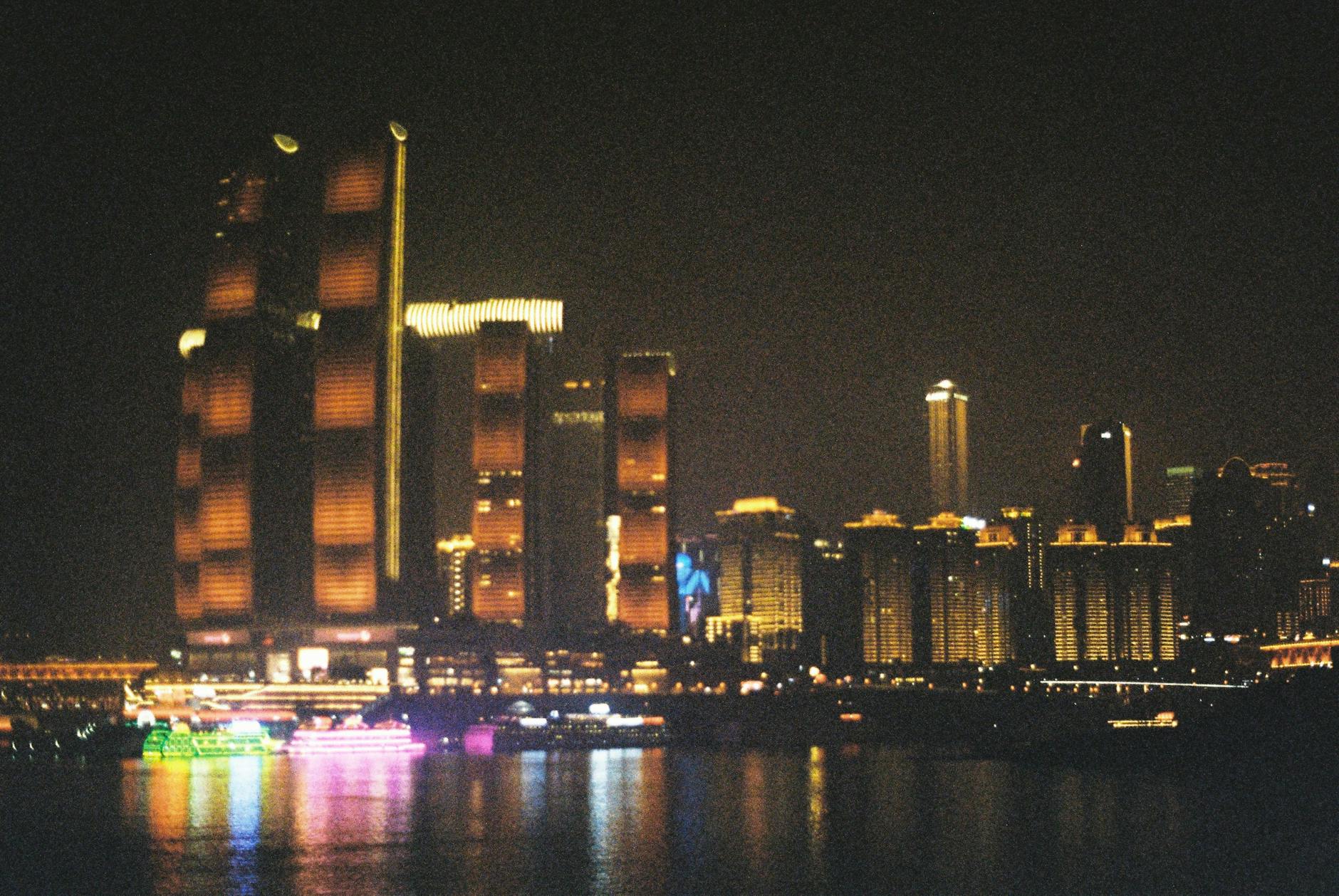
Hills make Chongqing a natural city of viewpoints. City lights reflected in the rivers, bridges fading into mist, towers rising into cloud. Raffles City’s deck and Hongyadong at night are the famous spots. Quieter options exist, and several of them cost nothing.
Alternative Viewpoints
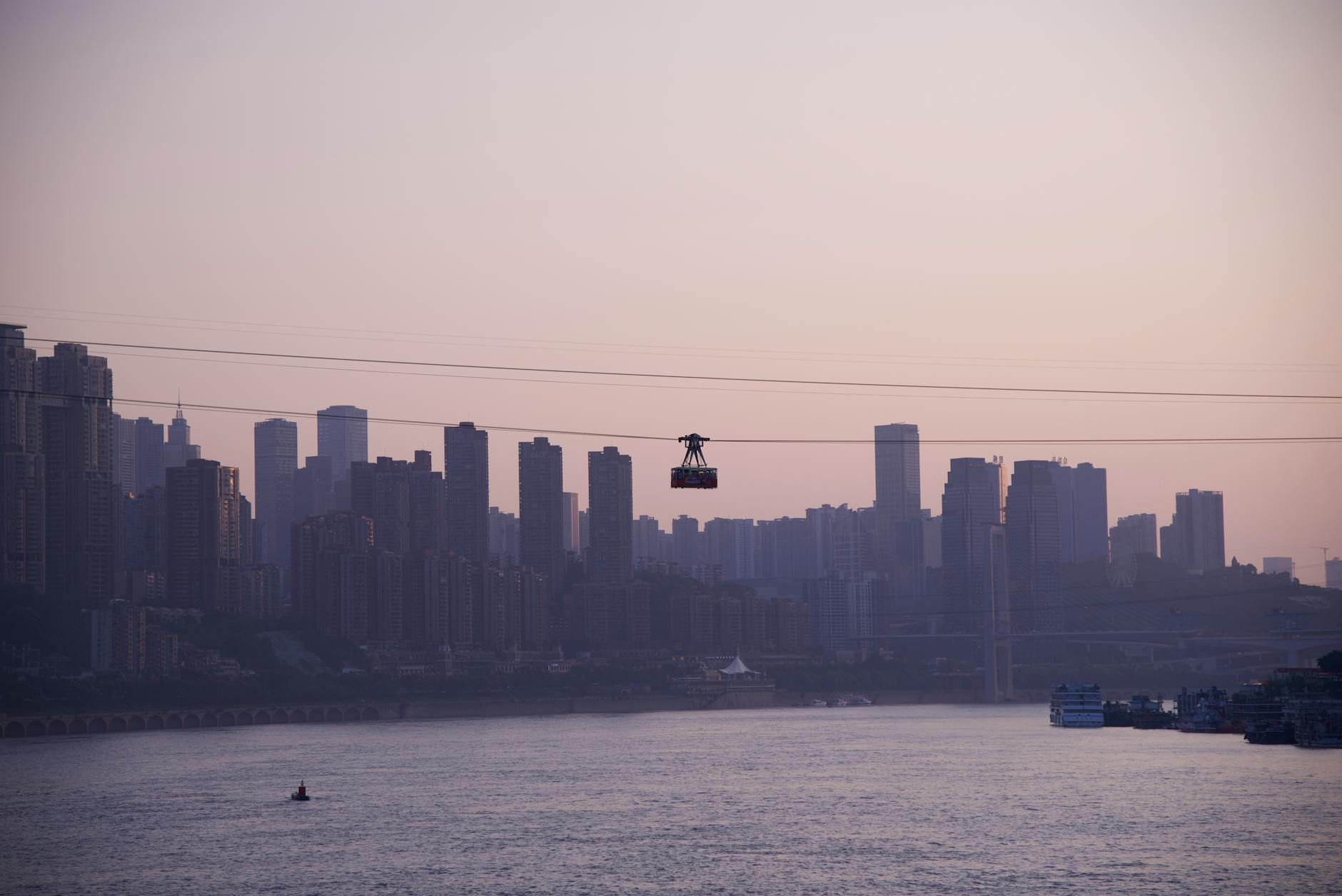
Eling Park is the one to start with. It began as a merchant’s private garden in 1909 and is now the oldest park in the city, on a hilltop between the two rivers. Entry costs nothing. A pagoda at the top gives a view of both rivers and the towers on the peninsula. During the day it is quiet enough for a slow walk. In the evening people arrive for the sunset and the moment the city lights come on, and nobody pushes for a place at the railing.
Kuixing Lou is a different kind of viewpoint. A plaza beside the building looks like an ordinary square with shops and restaurants. It is in fact the roof of a 22-storey tower, and the “street” at its far edge connects to the hillside behind. Walk to the railing and the drop to the lower road is dizzying. Upper floors look out over the Jialing and the districts on the north bank. No other spot illustrates the city’s layered character as clearly. You move around at different heights, and every level feels like a new town. For a paid alternative there is the Cloud Eye deck on the 73rd floor of the WFC tower at Jiefangbei, worth it on a clear day, but Kuixing Lou is free.
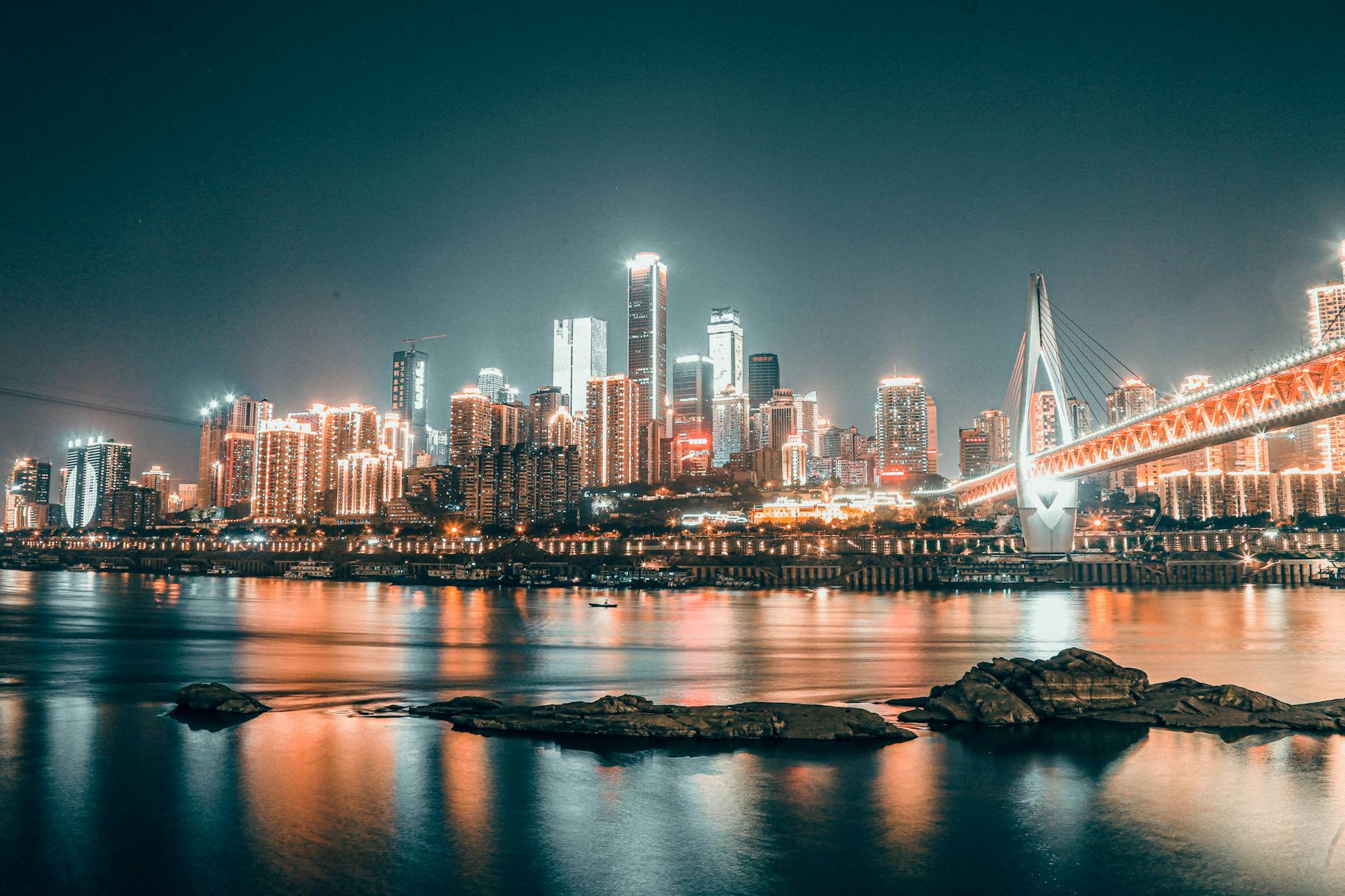
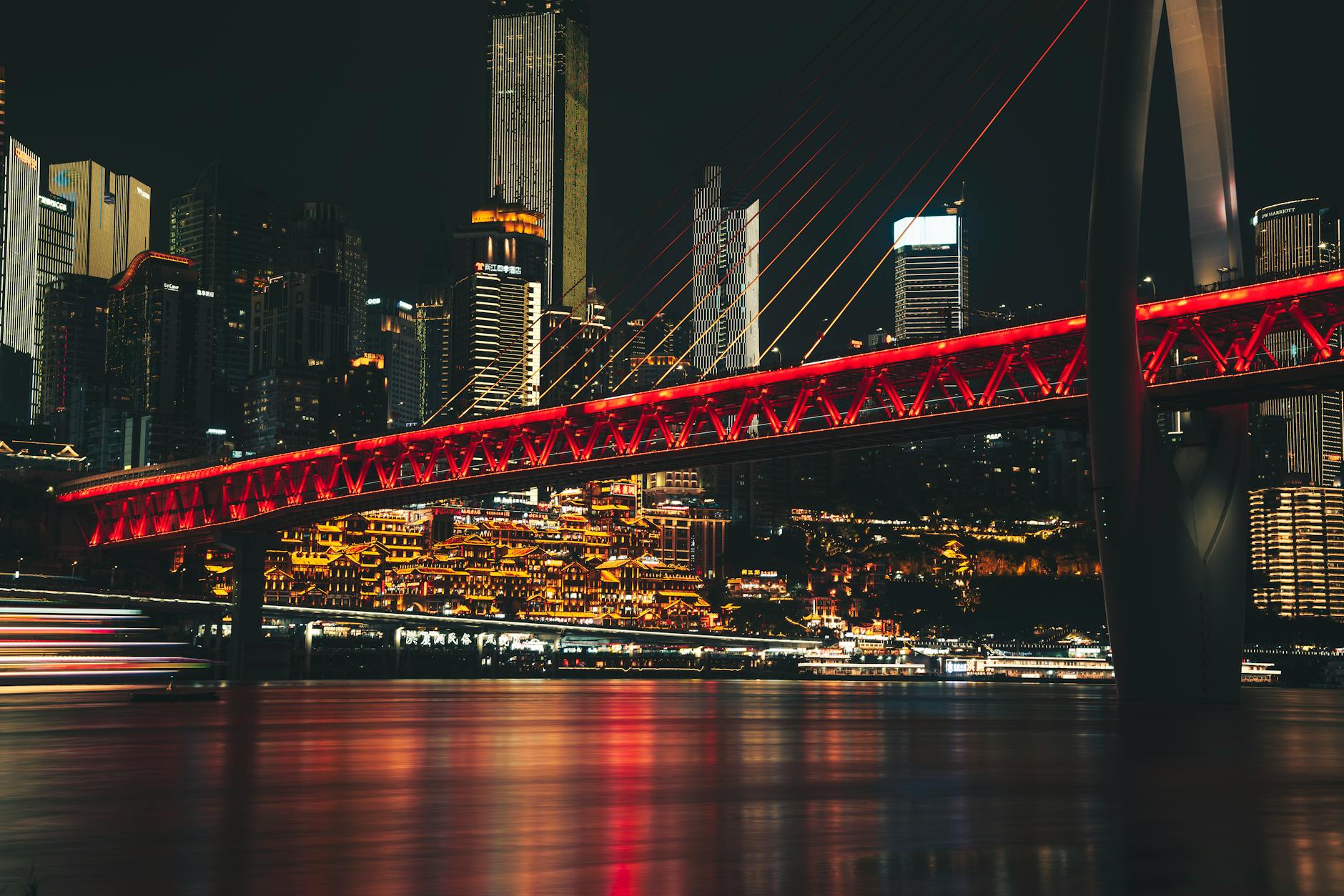
Then the bridges. Chongqing has dozens, and several have pedestrian walkways. Dongshuimen Bridge is the easiest: from its deck you watch the rivers meet with the skyline behind. For the postcard view of the peninsula, cross to Nanbin Road on the south bank in Nan’an district. All of the Jiefangbei skyline faces you across the water, and after dark the light show runs along the towers. Boats leave Chaotianmen for a night cruise on the Yangtze that circles the peninsula and shows the same view from the water.
Views from the Yangtze River Cable Car
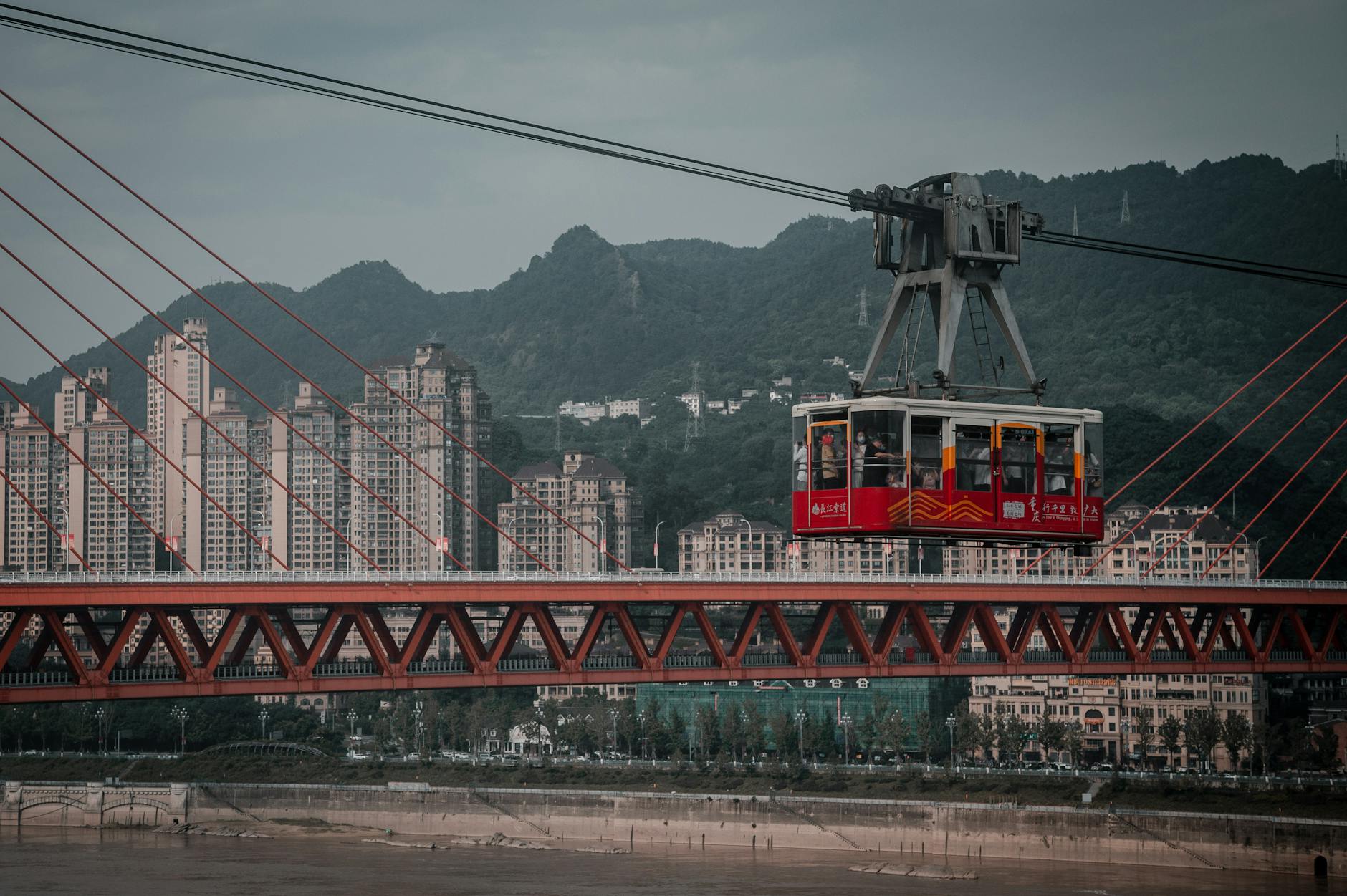
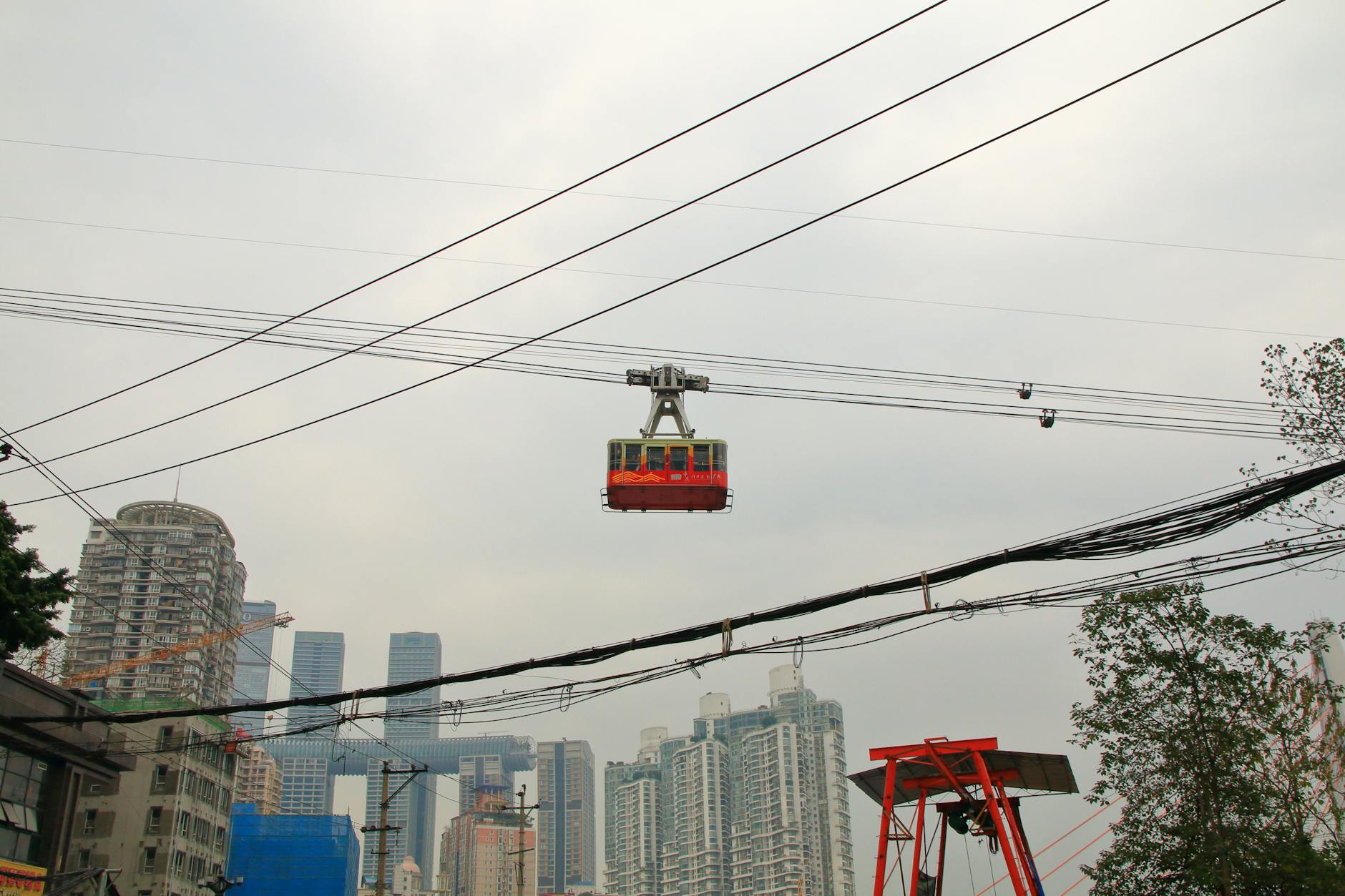
The Yangtze River Cableway is sold as an attraction but still counts as public transport. It runs from Xinhua Road on the peninsula to Shangxin Street on the south bank, 1,166 metres across the river, in about five minutes. A one-way ticket costs 20 yuan, a return 30. Cabins glide over the water with barges below and towers scrolling past the windows. Ride it once in daylight to see the detail and once after dark for the lights. From up there the name “Mountain City” needs no explanation.
There used to be two cableways. One of them, the Jialing River line, closed in 2011, and only the Yangtze crossing still runs. It is popular, so expect a queue at weekends and after dark. Xinhua Road is the busier platform. Across the river, the south-bank station is often quicker to board, and you can simply ride back the other way.
What to See Beyond the Guidebooks
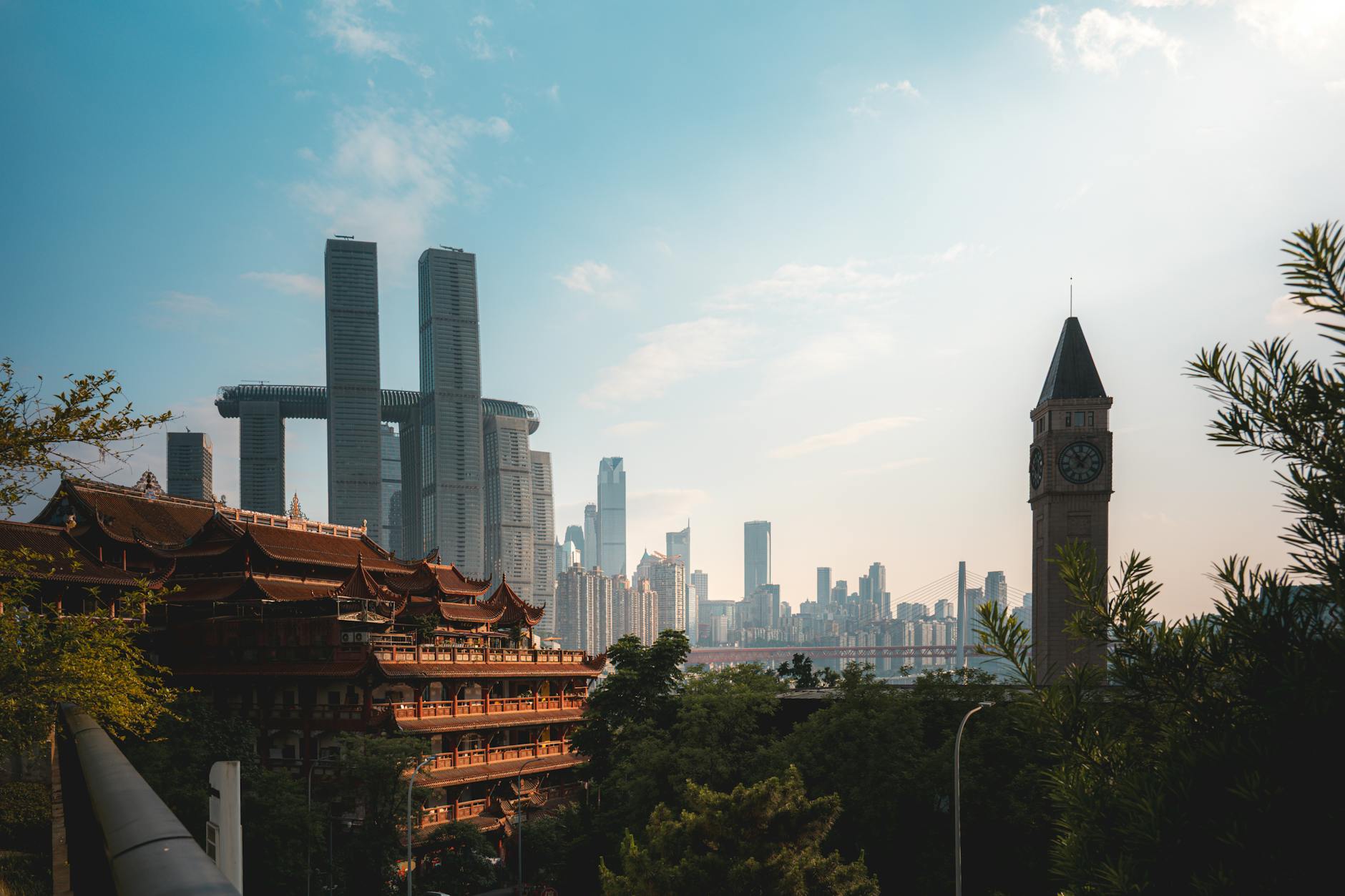
Views and architecture are the first layer. Underneath is a working municipality of over 30 million people, and daily life here tells you more than any viewpoint. Markets, teahouses and the smell of chilli oil at seven in the morning are the real orientation.
Hotpot, Noodles and Teahouses
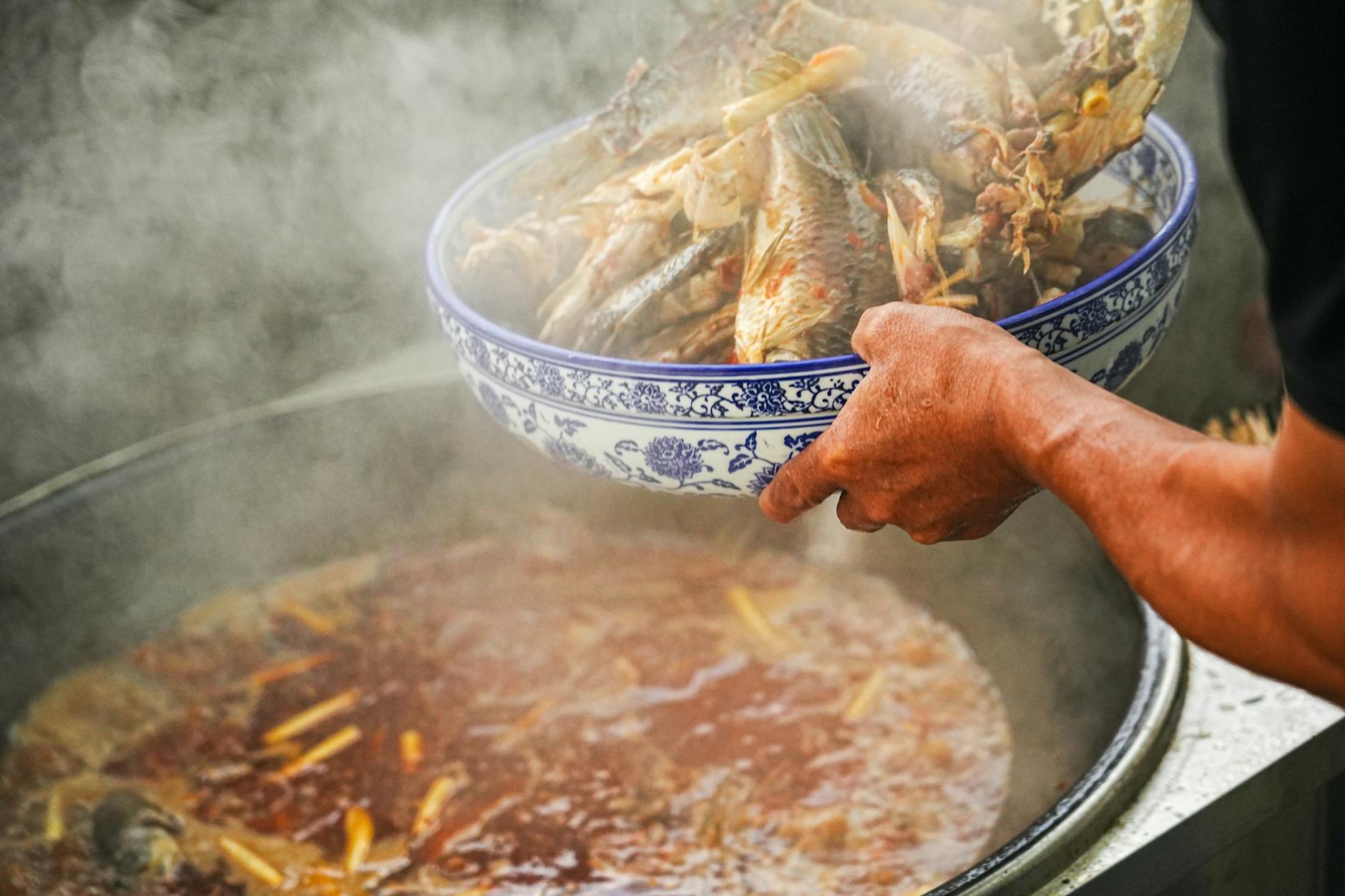
Food comes first. Chongqing hotpot is the city’s defining dish: a pot of beef-tallow broth loaded with dried chilli and numbing Sichuan pepper, into which you dip tripe, duck intestine, lotus root and whatever else is ticked on the order sheet. If you cannot take the heat, ask for “wei la” (微辣), mild spice, or a split pot with plain broth on one side. Most places will do it without comment. An evening food tour through the old blocks is the simplest way to eat your way through the city if ordering from a Chinese-only menu feels like too much, and it ends at a viewpoint for the night lights.
Hotpot is not the whole story. Street snacks matter as much: xiaomian, the breakfast noodle in chilli oil for around 10 yuan a bowl, spicy wontons, cold tofu pudding with pickles. Baixiang Street, the old commercial heart of the lower town, is a good place to graze. After all that, a traditional teahouse is the right antidote. Tea here is a ritual rather than a drink. You sit, the pot gets refilled, and you watch the street for an hour for the price of one cup.
Finding Art on the City Streets
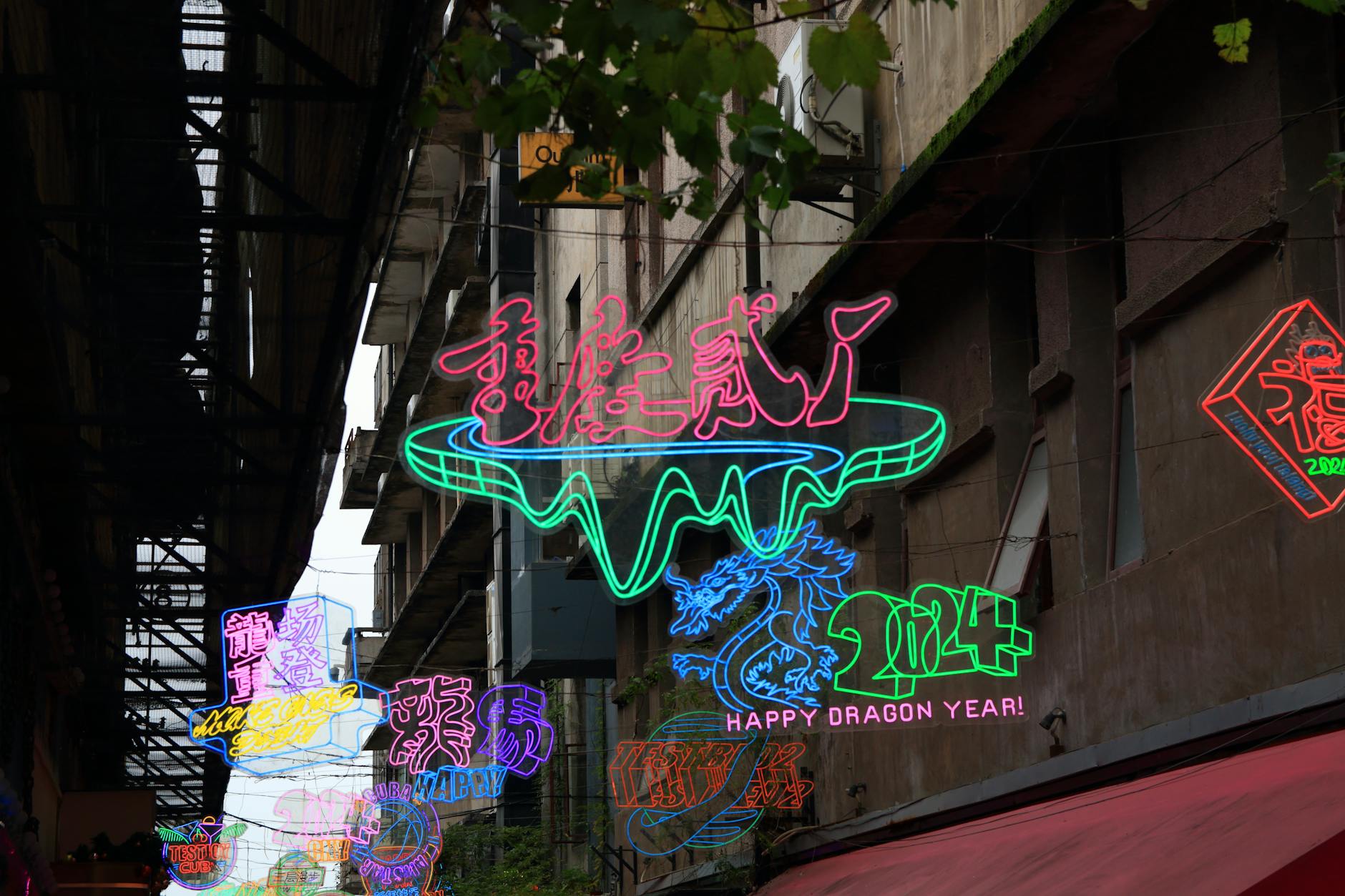
Chongqing is not only old history and new towers. Its art scene is small but growing. In older districts still waiting for redevelopment, murals cover whole walls and tell the city’s stories in paint. Huangjueping, next to the Sichuan Fine Arts Institute, is the best-known example: a street where almost every building is painted, with galleries beside the campus showing student work. None of it is in a museum. It is raw, spontaneous and makes the neighbourhood feel alive.
Jiefangbei deserves a look for more than the shopping. Sculptures and installations stand on the squares between the malls, and small galleries open in old industrial buildings and historic houses around the peninsula. Testbed 2, a converted printing works in Eling, is the kind of place to look for. Meanwhile the “Chongqing 1949” immersive show, staged in its own purpose-built theatre, is the big-budget version of the same creative energy, and a good way to see how the city tells its own wartime story.
Getting Out of the City Center
Chongqing municipality covers roughly the area of Austria, and the natural and historical sites outside the centre justify a day or two on their own. Once the urban jungle has worn you out, head out of town.
Wulong Karst and the Dazu Carvings
Wulong Karst, a UNESCO World Heritage site about three hours by road to the south-east, is the big one. Giant natural stone bridges, sinkholes and caves. The Three Natural Bridges are the highlight: three arches over 200 metres high spanning a gorge, with a Tang-style inn at the bottom built as a set for “Curse of the Golden Flower”. Scenes from “Transformers: Age of Extinction” were shot here too. Entry tickets for the Wulong scenic area can be bought in advance, and the Fairy Mountain grassland next door is the usual second stop. Going with an organised tour saves working out the shuttle buses between the sites.
History fans should go west instead, to the Dazu Rock Carvings, another UNESCO site about two hours away. Thousands of Buddhist, Taoist and Confucian figures were cut into cliffs between the 9th and 13th centuries. Two main groups survive, at Baodingshan and Beishan. Baodingshan’s set is a continuous horseshoe of carving about 500 metres long, with a 31-metre reclining Buddha at its centre, and it rewards a slow walk. A guide helps, because the carvings tell stories that are hard to read without context.
Ciqikou and the 816 Nuclear Plant
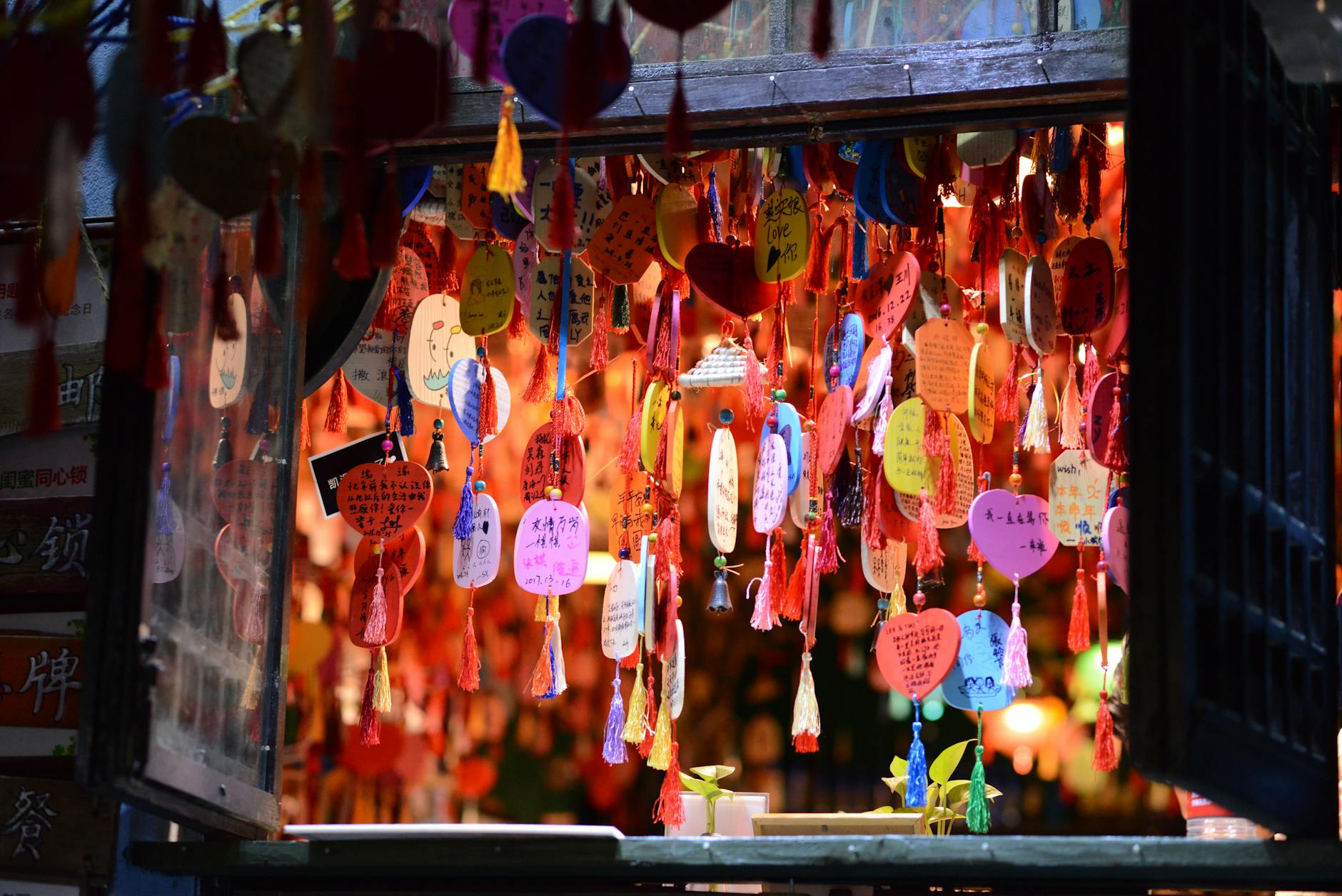
Ciqikou, the old porcelain port on the Jialing, is in every guidebook and sits at its own stop on metro Line 1. Entry is free. Its main street is a tourist bazaar. Leave it. Two alleys back you find teahouses, small workshops making brushes and sweets, and a slower pace. Several teahouses stage Sichuan opera with the face-changing act, and the Ciqikou shows are a cheap way to see it without booking a theatre downtown.
The 816 Nuclear Military Plant in Fuling, about two hours from the centre, is the opposite of quaint. It is a secret cold-war plutonium plant dug into a mountain over 17 years, never finished, and now open as a museum. Its main reactor hall is nine storeys high and its tunnels run for about 20 kilometres. A private tour of the 816 plant and the Wulingshan Grand Canyon combines it with a day in the mountains, which is the sensible way to see both without a car. Places like this explain where the modern city came from.
Practical Tips and Where to Stay in Chongqing
Some preparation helps. English is less common than in Shanghai or Beijing, so install a translation app and offline maps before landing. Alipay and WeChat Pay have accepted foreign Visa and Mastercard since 2023, and almost nobody uses cash. Metro is the easiest way around: Line 3 and Line 10 run from Jiangbei airport to the centre in about an hour, and a ride costs 2 to 10 yuan. One catch: the exit you want may be six floors above or below the street you need. Allow extra time, and take a taxi for the last stretch when the map shows a wall between you and the destination.
Chongqing has hotels for every budget. For luxury with a river view, Niccolo Chongqing sits inside the Raffles City complex at Chaotianmen, and Regent Chongqing is in a similar bracket across the water in Jiangbeizui. Both have panoramic windows over the rivers. Mid-range choices are plentiful around Jiefangbei, and Bloom Boutique Hotel is one of the regulars on comparison sites at the four-star level. Pick the neighbourhood first. The peninsula (Jiefangbei, Hongyadong) is the most central, while Jiangbeizui has the newer towers and the best view back at the skyline.
Why the Confusion Is Worth It
Chongqing is less a city than a way of thinking about one. It forces you to look up, down and sideways, to treat a staircase as a street and a rooftop as a square. Day one is disorienting. By the third it starts to make sense, and the disorientation turns out to be the fun part.
A sensible first day runs like this. Liziba in the morning to watch the train go through the building. Shibati and a bowl of xiaomian at lunch. Eling Park for the sunset, then the cableway after dark for 20 yuan one way. Finish with hotpot, mild if you ask for it.


