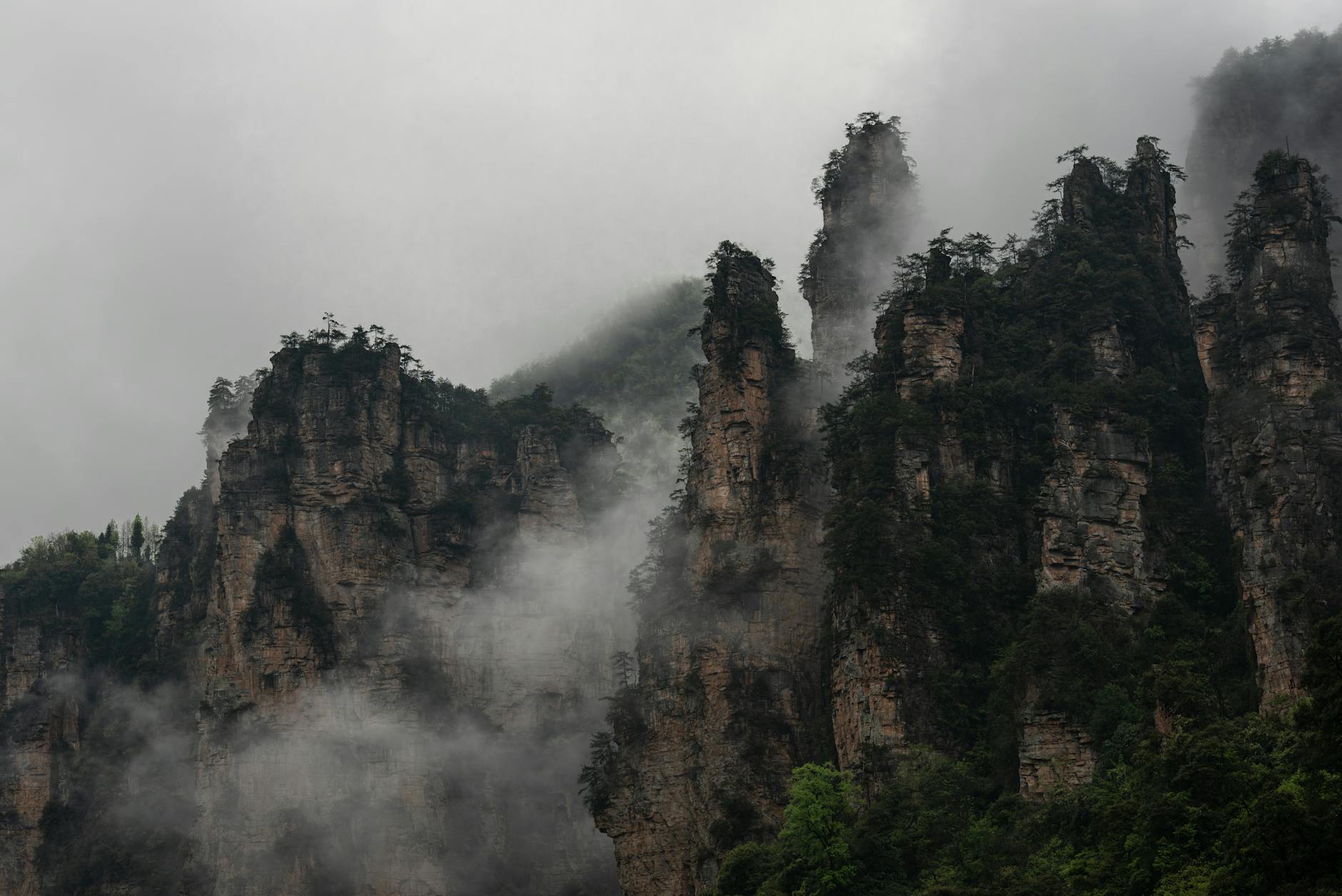
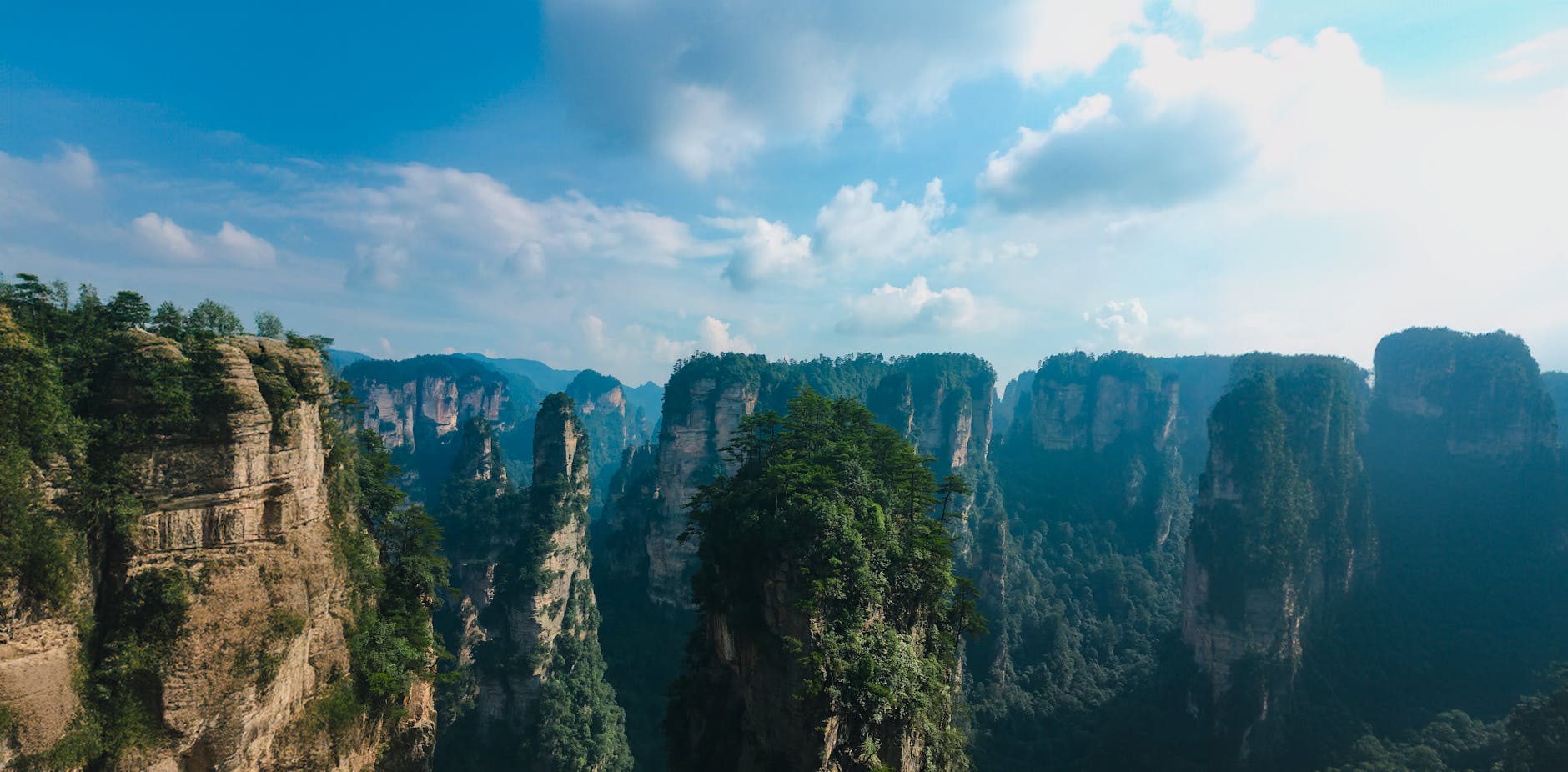
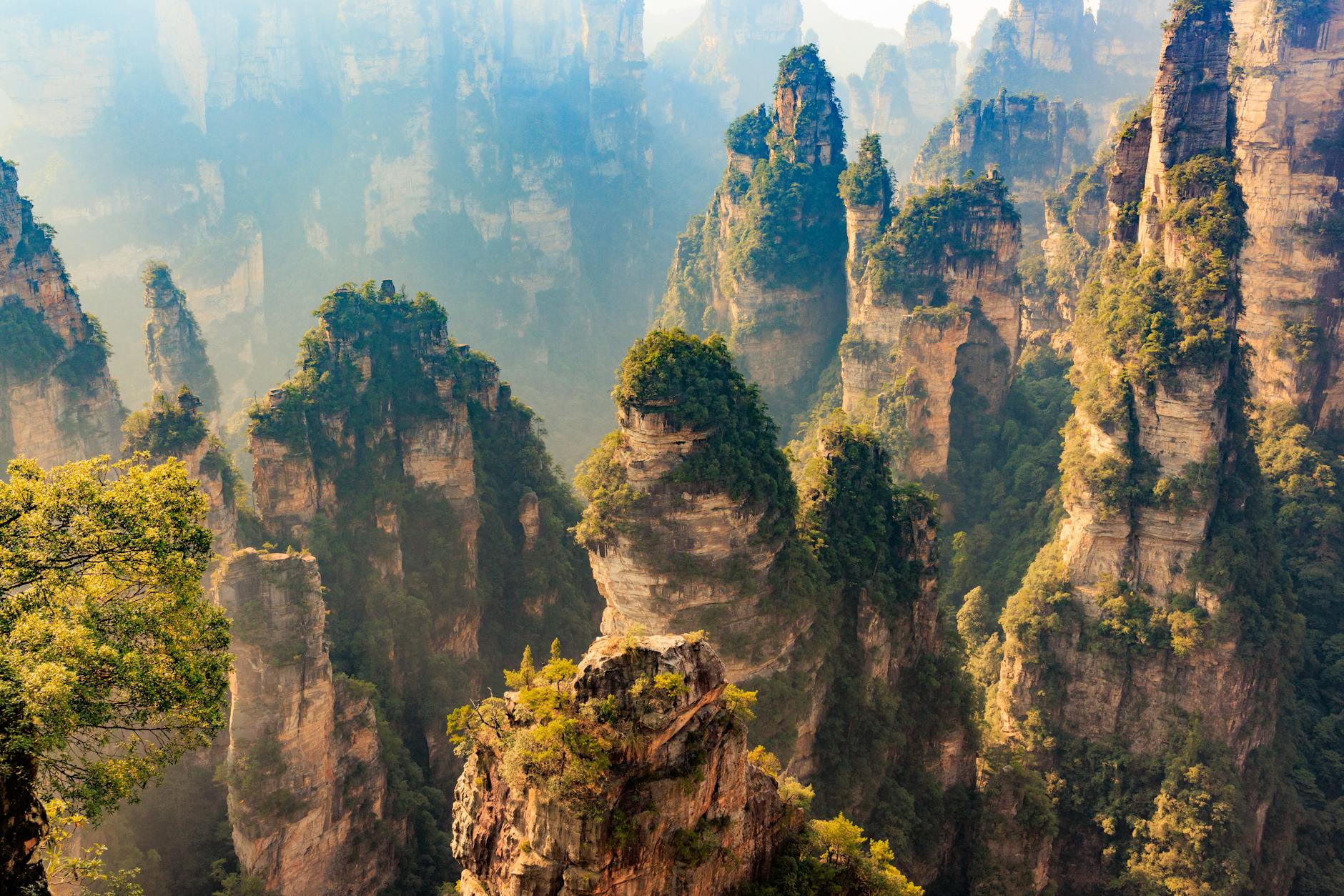
Zhangjiajie sits in the northwest of Hunan province. Its landscape inspired the floating mountains in “Avatar”: some three thousand sandstone pillars rising out of mist, many over 200 m tall. Most visitors come for a handful of photo spots and spend the day in a queue. Yet the park is big enough to hide from the crowds if the day starts early and the route avoids the two or three famous viewpoints at peak hours. Our separate guide lays out the quieter routes day by day. Below is the practical side for active travellers. How to get in and where to sleep. Which trails stay empty. What the Glass Bridge and Tianmen Mountain cost, and how to fit it all into four to six days without rushing.
How to Get There and Where to Stay
Zhangjiajie has no international flights, so the trip starts with a domestic hop. Zhangjiajie Hehua Airport (airport code DYG) takes flights from Beijing, Shanghai, Guangzhou, Chengdu and a dozen other Chinese cities. Flights to Zhangjiajie get expensive close to the date. Book a month or more ahead. Since 2019 there is also a high-speed rail option: Zhangjiajie West station is about three hours from Changsha, which itself has direct trains from Shanghai, Guangzhou and Beijing. From the airport or the station a taxi reaches Wulingyuan, the town at the park gate, in about an hour. Public buses from the central bus station do the same run for around 12 RMB and leave every 20-30 minutes through the day.
Where to sleep depends on the plan. Anyone coming for the park should stay in Wulingyuan, a ten-minute walk from the eastern park entrance, with supermarkets, noodle shops and dozens of guesthouses in every price range. Zhangjiajie city, 35 km to the south, makes sense for a late arrival or for a first day on Tianmen Mountain, whose cable car station sits right in town. Both areas show up when you browse hotels in Zhangjiajie, so filter by district before booking. Expect 150-300 RMB a night for a clean guesthouse room in Wulingyuan and roughly double for a resort-style hotel.
Where to Stay if You’re Here to Trek
For a hiking-first trip, lodging near a park entrance saves an hour each day, and that hour is the difference between an empty trail and a full one. Wulingyuan has the widest choice, from basic family inns to boutique hotels with mountain views. A few guesthouses and small hotels also operate inside the park, around the Yuanjiajie and Tianzi Mountain villages. They cost more and the rooms are simpler, but guests walk onto the trails before the first shuttle bus arrives and have the viewpoints to themselves in the evening.
- Wulingyuan: the best base for park days, with food, shops and hotels within a few streets of the gate.
- Inside the park: a handful of guesthouses near Yuanjiajie and Tianzi Mountain. Higher prices, quieter mornings, and no daily bus ride.
- Zhangjiajie city: for Tianmen Mountain, the train station and the airport. Allow 40-60 minutes to reach the park each morning.
The Best Zhangjiajie Trails for Active Travelers
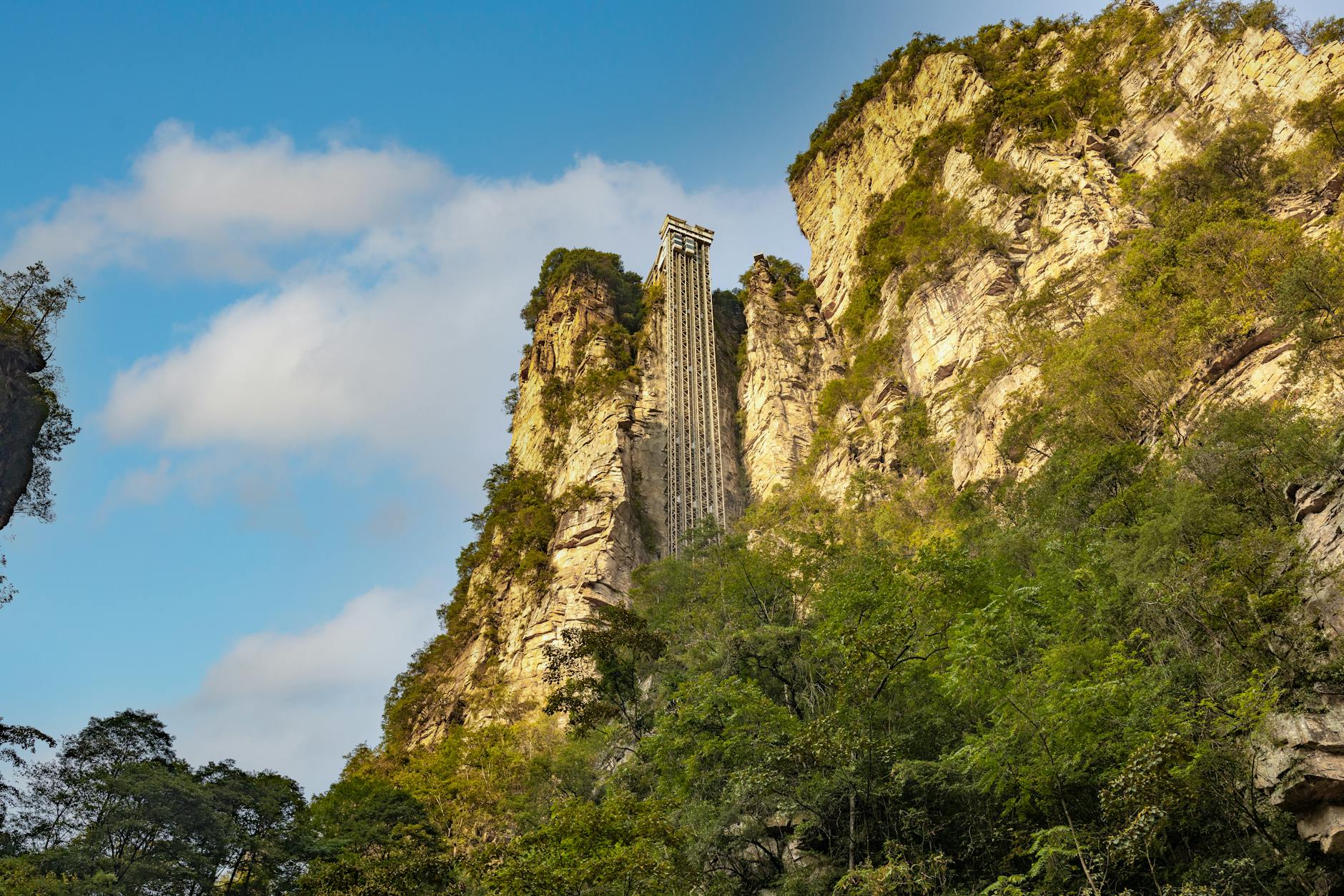
Zhangjiajie National Forest Park is the main event. A National Forest Park entry ticket costs around 228 RMB, is valid for four consecutive days and includes the shuttle buses inside the park. Cable cars and the Bailong Elevator are paid separately, roughly 65-80 RMB per ride. The famous main viewpoints on Yuanjiajie and Tianzi Mountain deserve their reputation, but they also collect every tour group in the park between 10 and 3. Quieter and often more interesting ground lies a short walk away from them.
Finding Quiet Trails for Peaceful Hiking
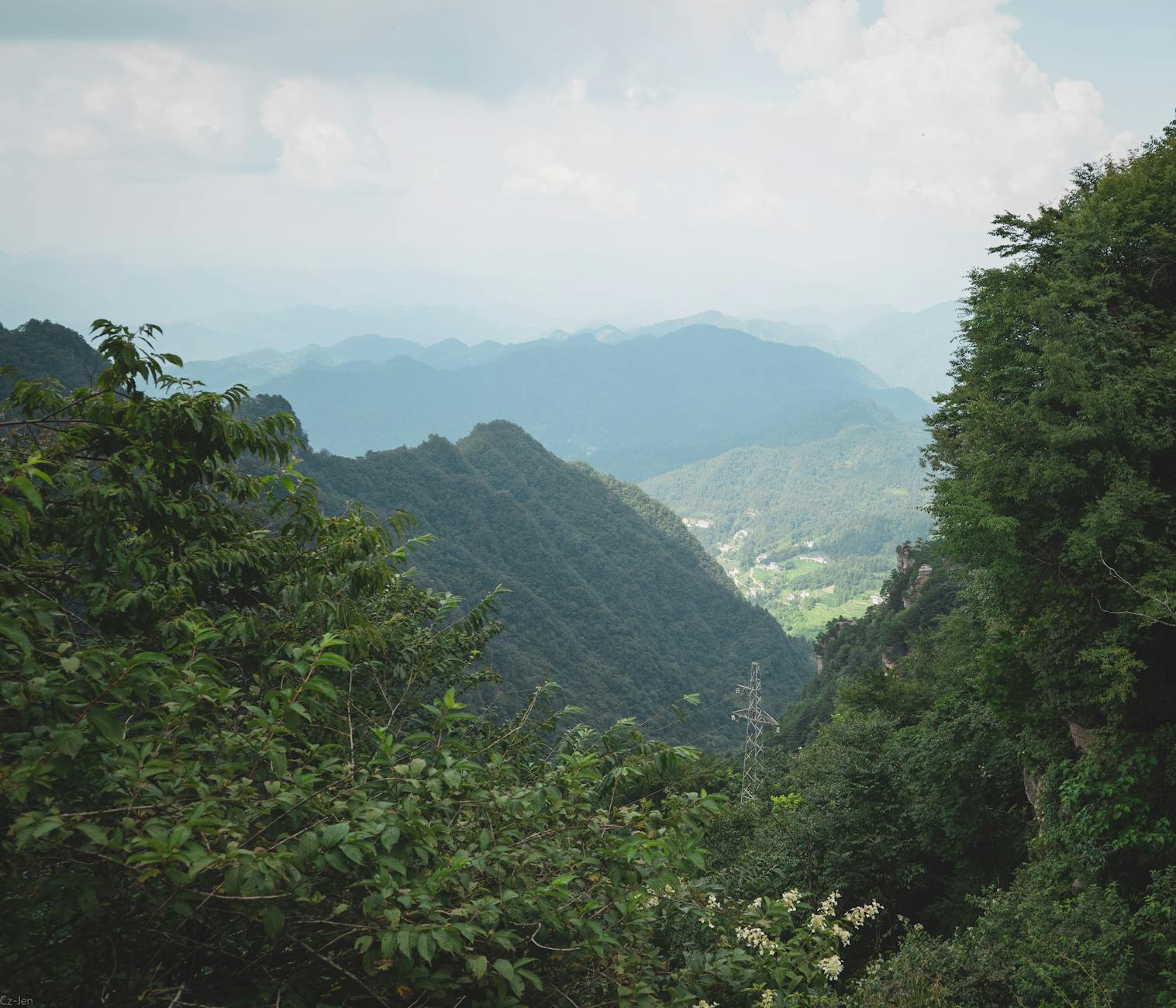
One rule matters more than any other: be at the gate when it opens, usually 7 am in summer and 7:30 in winter. Take the first shuttle, the first cable car. That is the only way to walk Golden Whip Stream in near silence or to see Tianzi Mountain without a selfie stick in the frame. Beyond timing, a few parts of the park stay quiet all day.
These four areas reward the extra effort:
- Yangjiajie: the most overlooked section of the park. Tour groups go straight to Yuanjiajie (the “Hallelujah Mountain” of the film) and Tianzi Mountain. The stone stairways of Yangjiajie, up to Wulong Village (Wulongzhai) and Tianbo Mansion (Tianbofu), carry a fraction of the traffic. Parts are steep and narrow, with ladders bolted to the rock, and the views over the pillar forest match anything on the famous platforms.
- Ten-Mile Gallery on foot: a small tourist train runs the length of this valley, and nearly everyone rides it. Walking the same 5 km path takes about an hour and a half and gives time to look at the rock spires instead of glimpsing them through a window.
- Golden Whip Stream in the morning: by 7 or 8 am the 7.5 km streamside trail is almost empty. Macaques come down to the water, and the only sound is the river. From late morning it fills up, so this is a first-thing-in-the-day walk.
- Trails around Huangshizhai: most visitors take the cable car up to the plateau and stay on it. The stair trail from the base, about 3,800 steps, climbs through the same scenery with almost nobody on it. Going down on foot and up by cable car is the kinder order for the knees.
A note on stamina: the park is built from stairs, and a long day here can mean 20,000 steps and several hundred metres of climbing. The payoff is seeing the pillars from angles that never appear on postcards. For anyone short on time or unsure about navigation, a guided day tour of Yuanjiajie and Tianzi Mountain covers the headline sights in one go. That frees the remaining days for the quiet trails above.
Facing the Zhangjiajie Glass Bridge
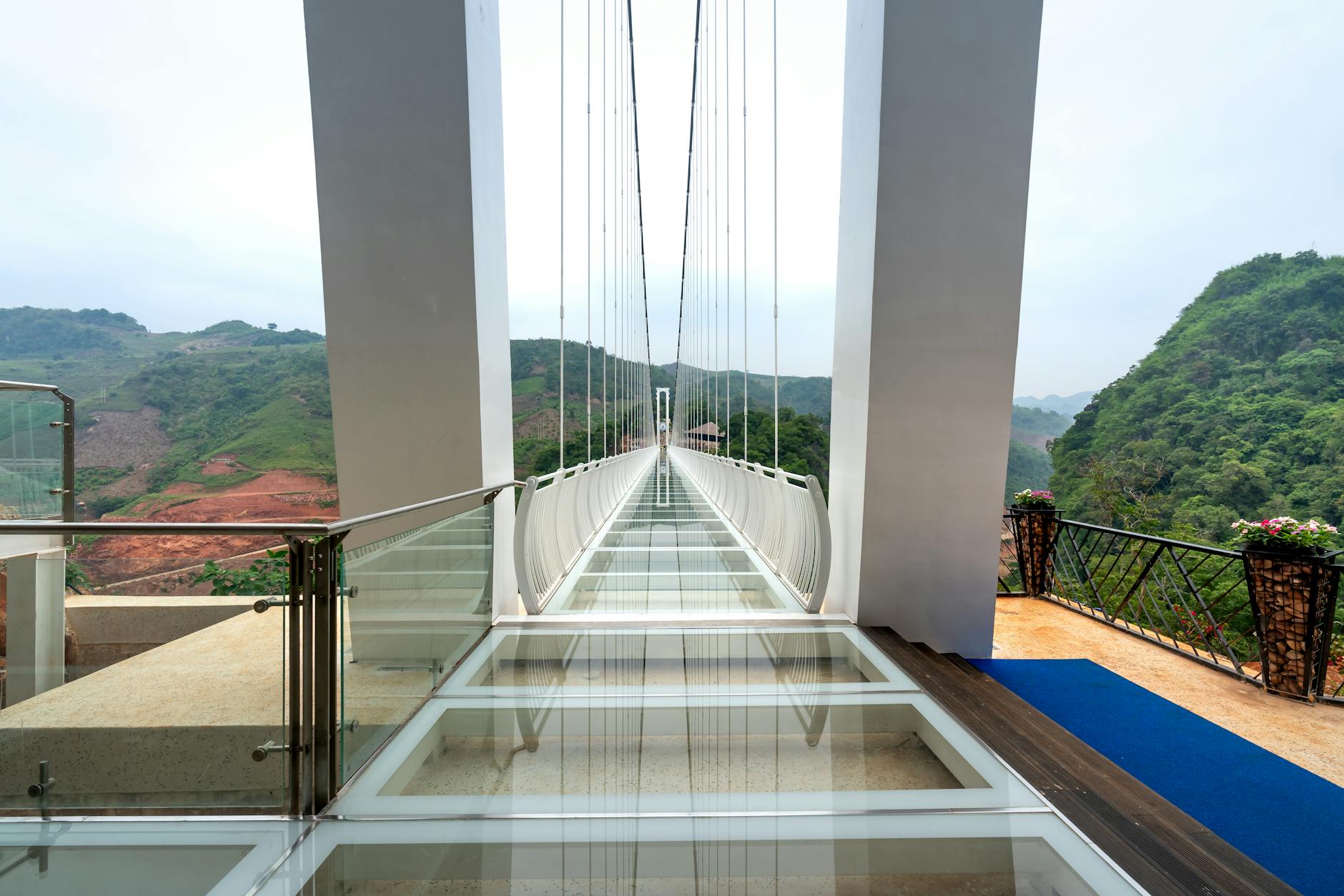
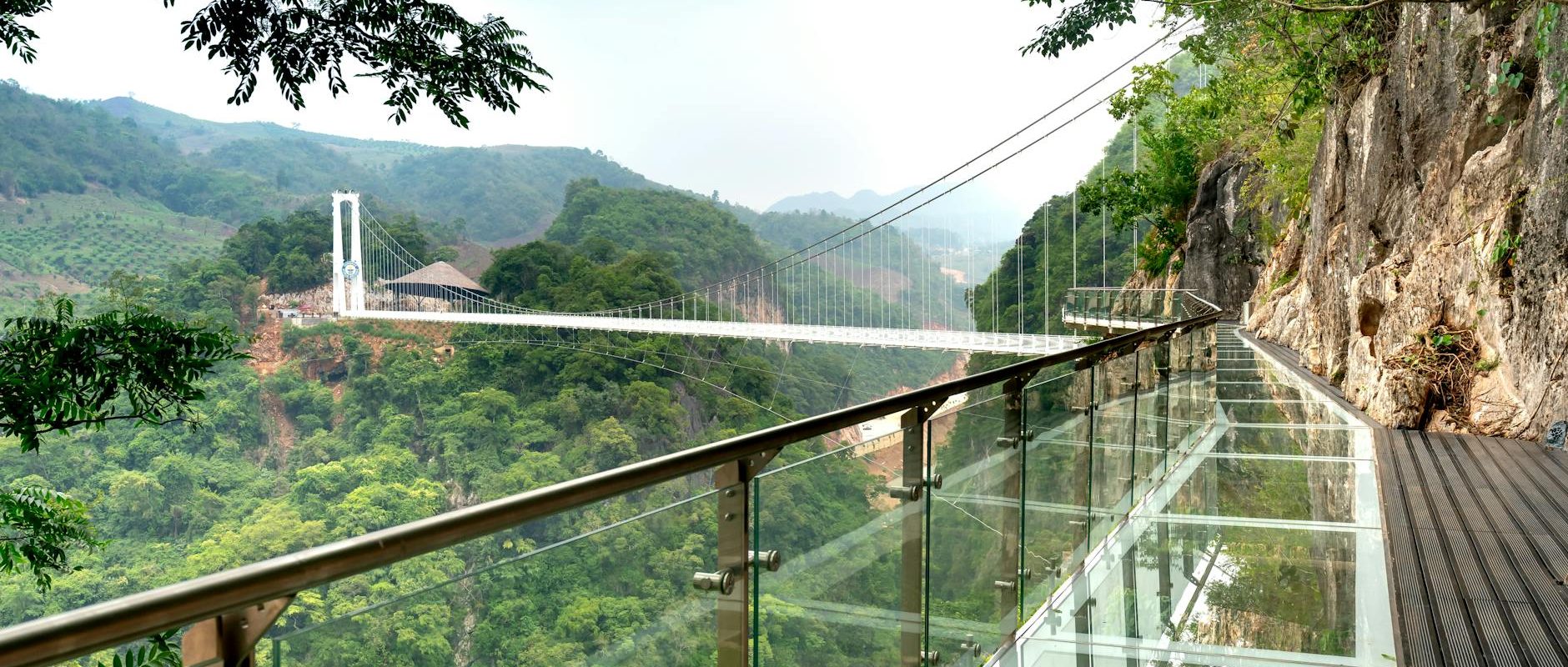
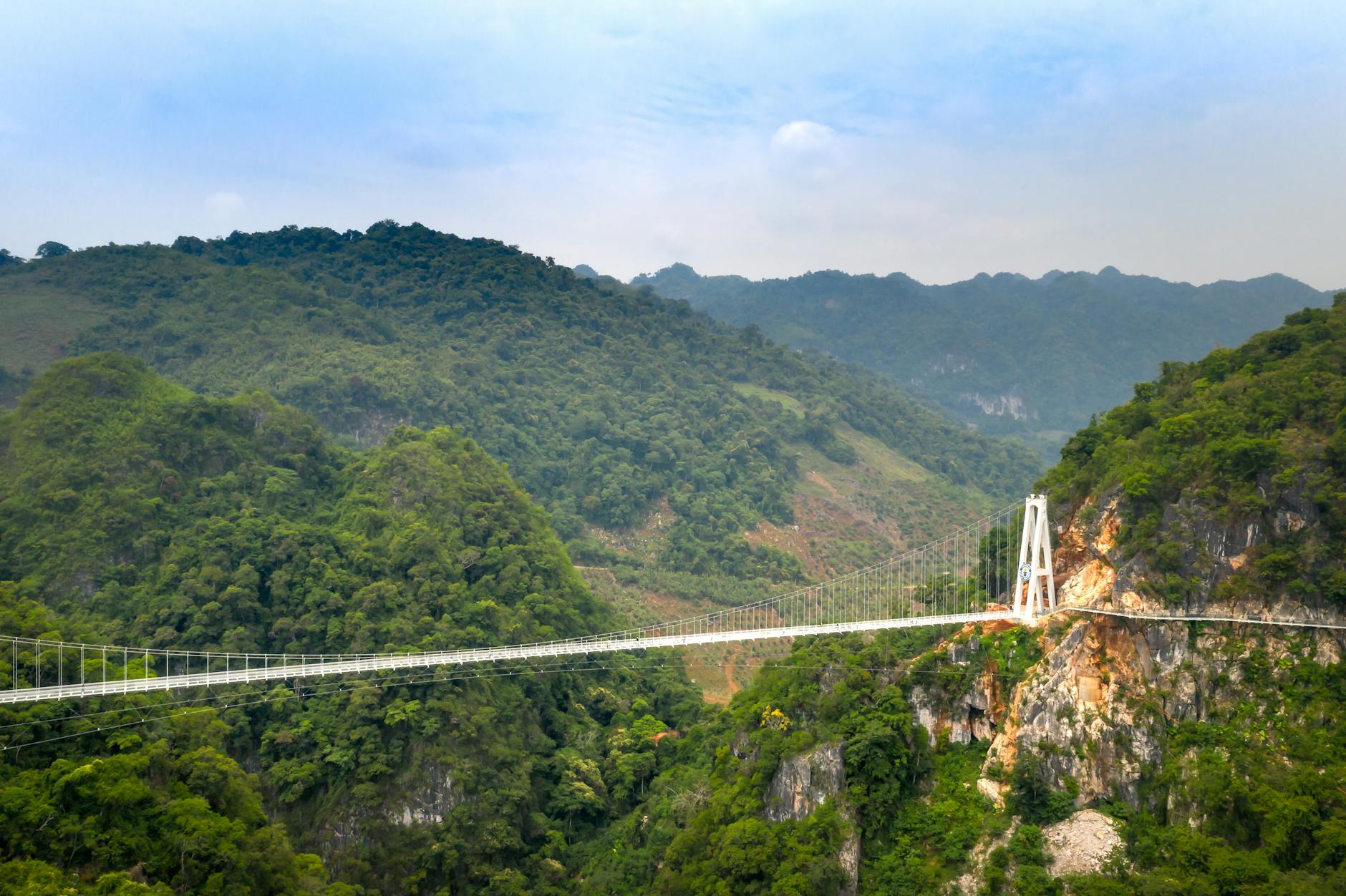
Zhangjiajie Grand Glass Bridge is the best-known single attraction in the region, and the usual question is how to get there and if it justifies a whole day. It does, for anyone with a head for heights. The bridge is only the start. Below it lies the Grand Canyon walk, and the two together fill a full day.
The Cost and Practical Details for the Glass Bridge
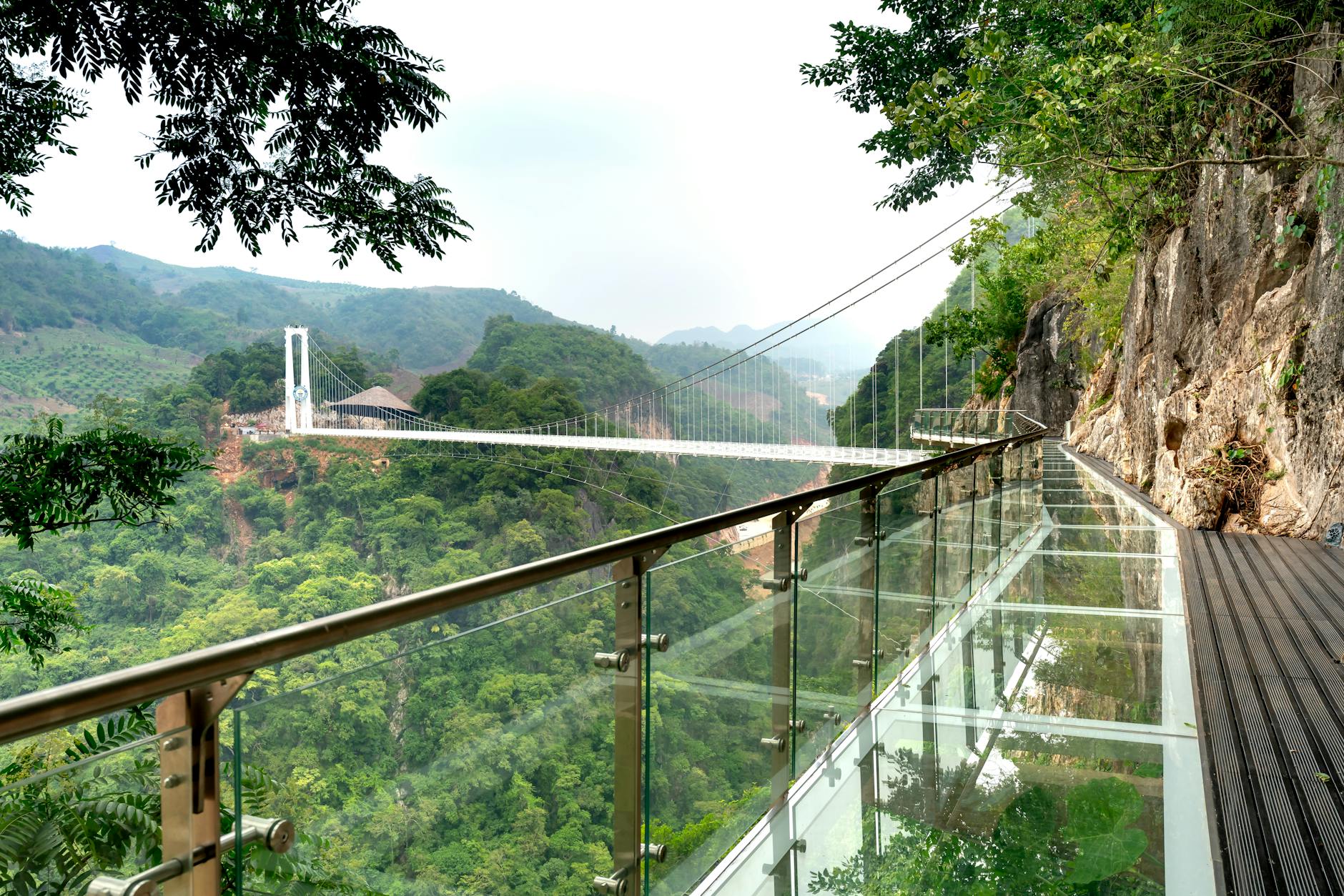
The bridge spans the Zhangjiajie Grand Canyon, a separate scenic area about 35 km east of Wulingyuan, so the National Forest Park ticket does not cover it. Visitors choose between a bridge-only ticket, around 140 RMB, and Grand Canyon tickets with the Glass Bridge option, which add the canyon descent for a higher price. Prices shift by season, so check the current figure when booking. Online booking matters here more than anywhere else in Zhangjiajie: entry is timed, the slot is printed on the ticket, and on weekends and holidays the afternoon slots sell out by mid-morning.
Getting there is simple. Buses from the Wulingyuan bus station run straight to the Grand Canyon entrance in 40-60 minutes. From Zhangjiajie city, go to Wulingyuan first and change there. Several operators also sell a one-day tour combining the Avatar mountains and the Glass Bridge, with transport and timed tickets handled. For anyone with a single spare day, that is the easiest route.
Crossing the Glass Bridge
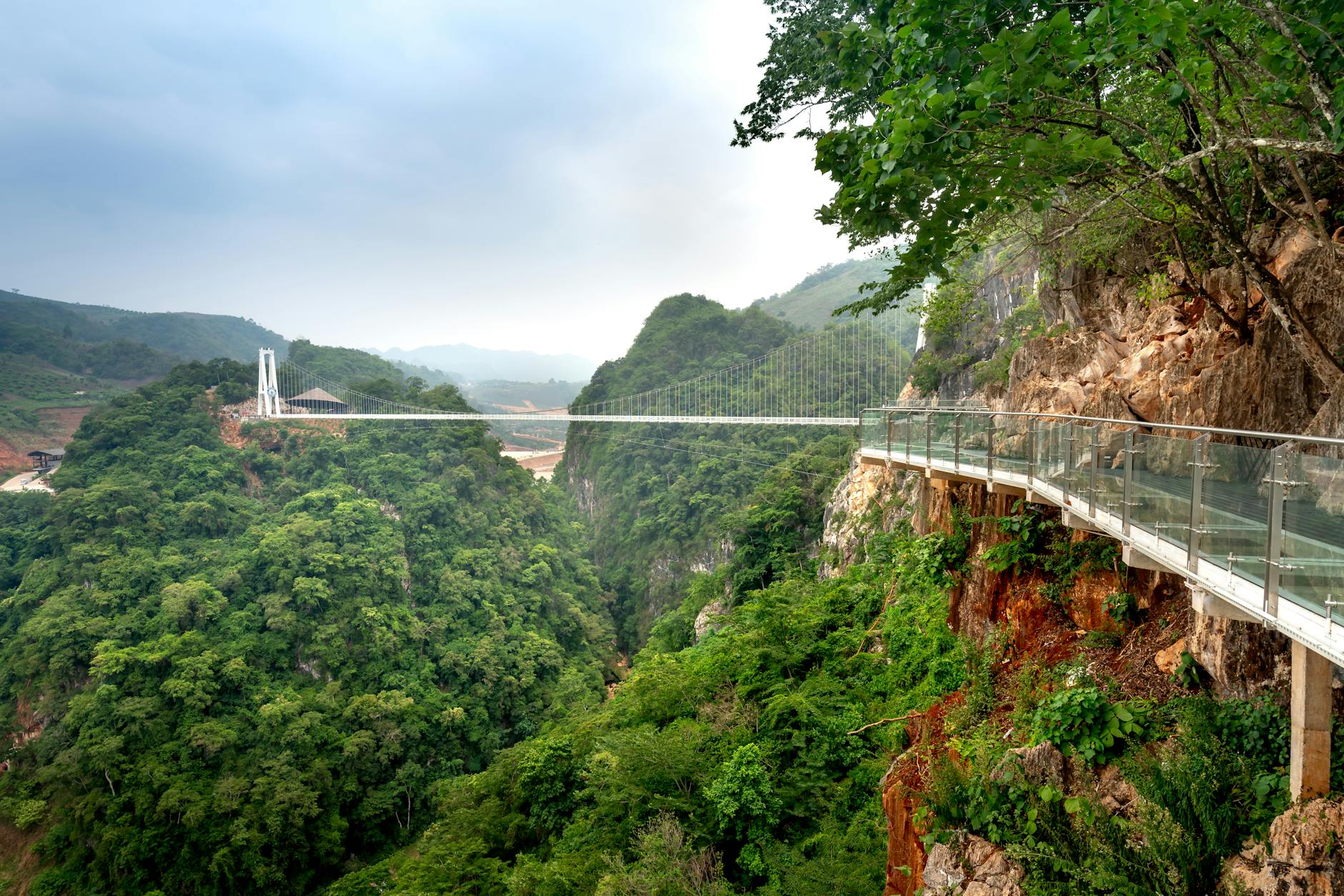
Opened in 2016, the bridge is 430 m long, 6 m wide and hangs about 300 m above the canyon floor. Walking across it means looking straight down through glass panels at the river below. Most people freeze on the first few panels. By the middle they relax. The views along the gorge take over. This is not a place to escape crowds, but the operators limit how many people are on the deck at once, so the walk never turns into a shuffle.
After the crossing, the canyon trail descends past waterfalls and along a stream to the exit, with a short zipline and a boat ride near the bottom. Budget two to three hours for the walk down, and expect a lot of stairs. Active travellers usually rate the canyon as highly as the bridge itself.
- Footwear: fabric covers go over your shoes to protect the glass. Staff hand them out at the entrance.
- Belongings: large bags and backpacks stay in the lockers before the bridge. Phones and small cameras are fine.
- Weather: fog or rain hides the canyon floor, which defeats the purpose of a glass floor. Pick a clear day if the schedule allows.
- Booking: buy the timed ticket online in advance, especially from April to October.
Up Tianmen Mountain to the Heavenly Gate
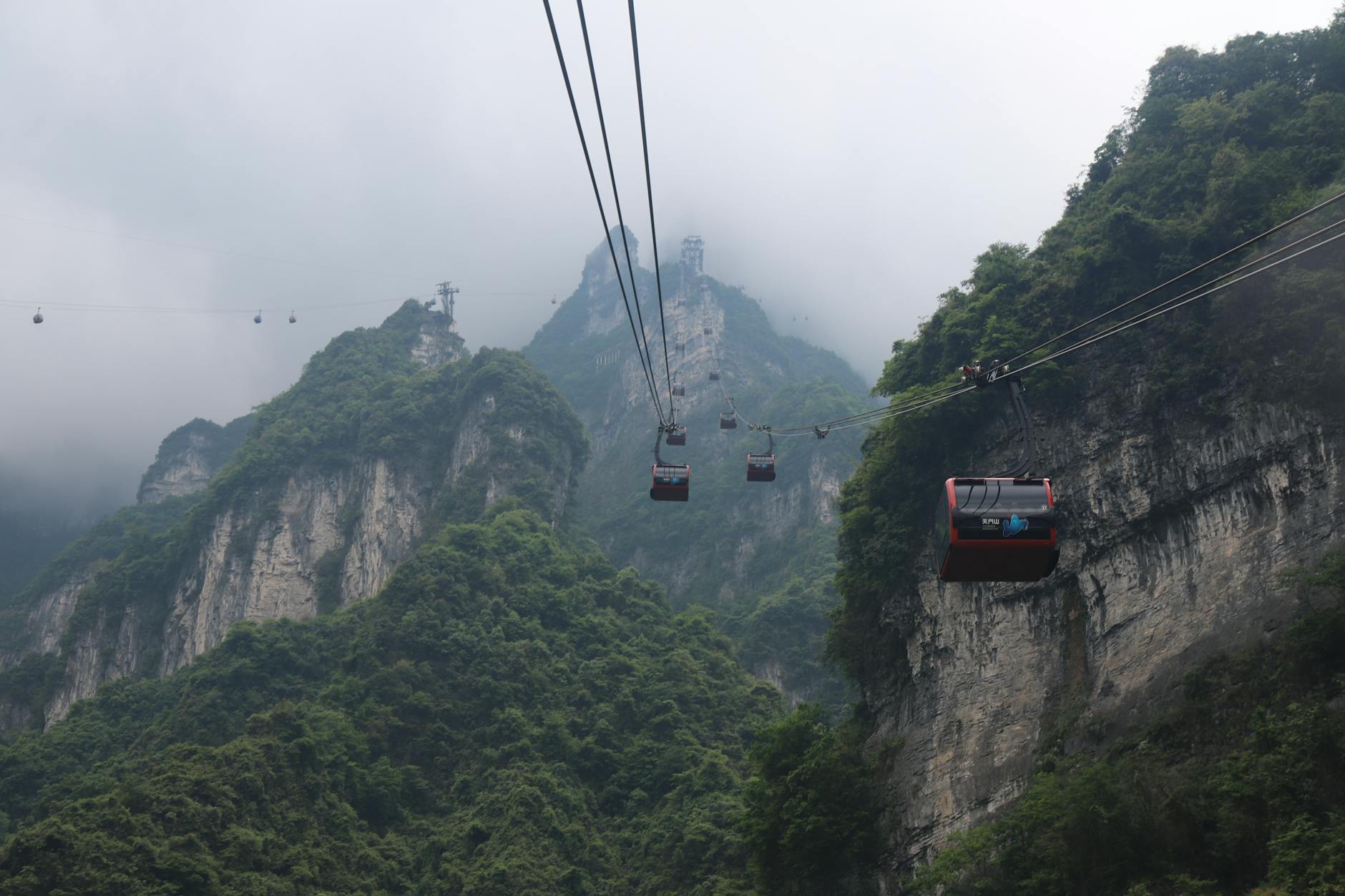
Tianmen Mountain is the second high-altitude thrill of the area and a separate attraction next to Zhangjiajie city, not part of the Wulingyuan park. It needs its own ticket and its own day.
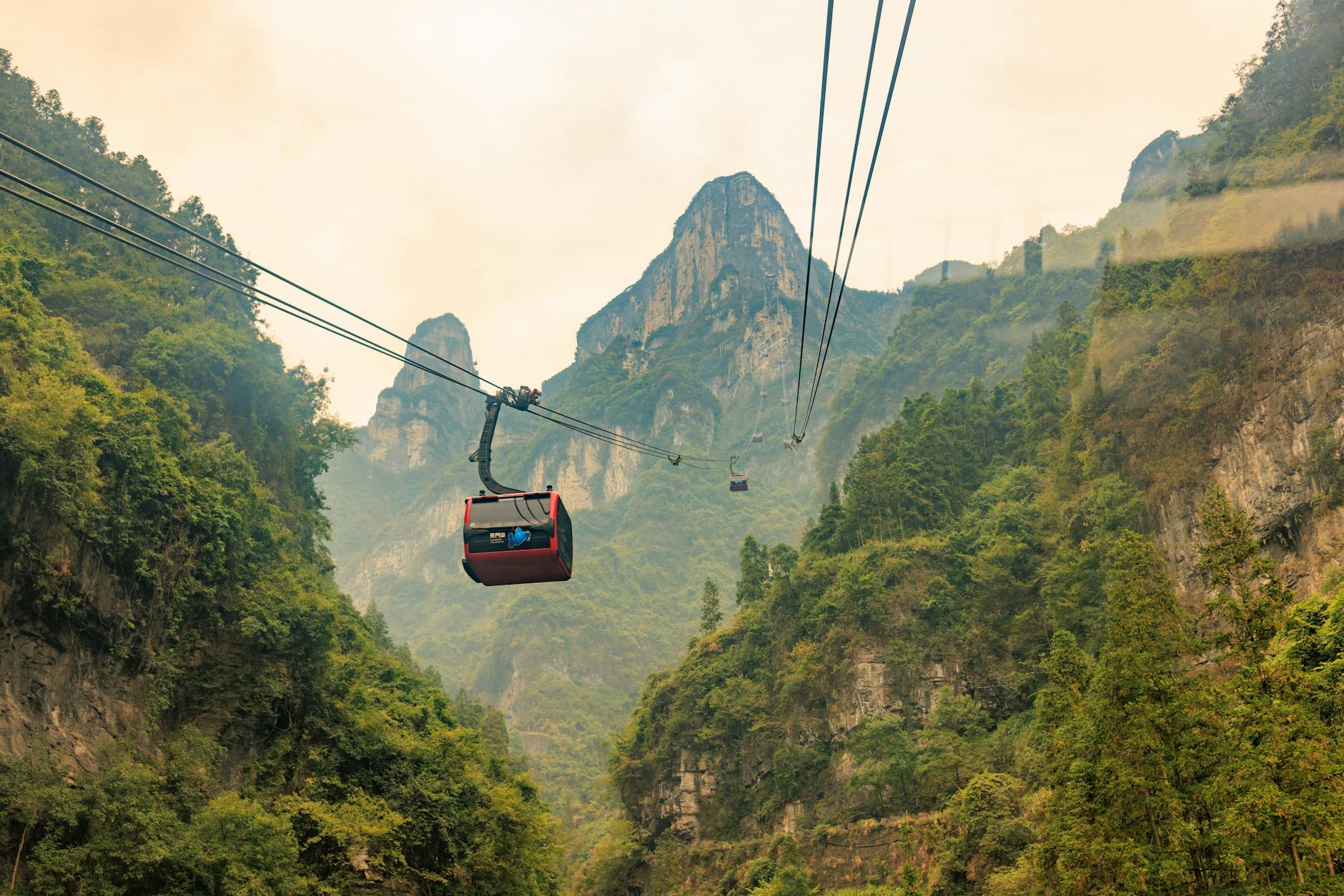
The ascent begins at a cable car station in the city centre. The line is 7,455 m long, one of the longest passenger cableways in the world. The ride takes close to half an hour as the city drops away and the 99 hairpins of Tongtian Avenue appear below. A Tianmen Mountain ticket with the cable car costs around 280 RMB in high season and less in winter, and it is sold with a fixed entry time, so book ahead for the early slots.
Walking on Air and Climbing to the Gate
At the top, several loops run along the cliff edge. Three glass skywalks are bolted to the rock face, each about 60 m long. They deliver as much of a jolt as the Grand Glass Bridge, because the drop beside you is vertical rather than a wide canyon. Shoe covers are again required. The skywalks connect to the western and eastern cliff paths, which take two to three hours to walk in full.
The main sight is Tianmen Cave, the “Heavenly Gate”, a natural arch 131 m high cut straight through the ridge. From the plateau, escalators built inside the mountain lead down to the top of the arch. From there, 999 stone steps descend to the base, where the view back up through the opening is the photo everyone comes for. A sensible order: cliff loops first, then the escalators to the gate, then the stairs down. Finish with the shuttle bus along the hairpin road back to town.
Crowds follow the same pattern as the national park. The first cable car of the day, around 8 am, puts you on the skywalks before the tour buses arrive. By early afternoon the queue for the ride down can reach an hour. Start with either the east or west loop, do the glass sections, then head to the Heavenly Gate.
What to See in Zhangjiajie Beyond the Main Sights
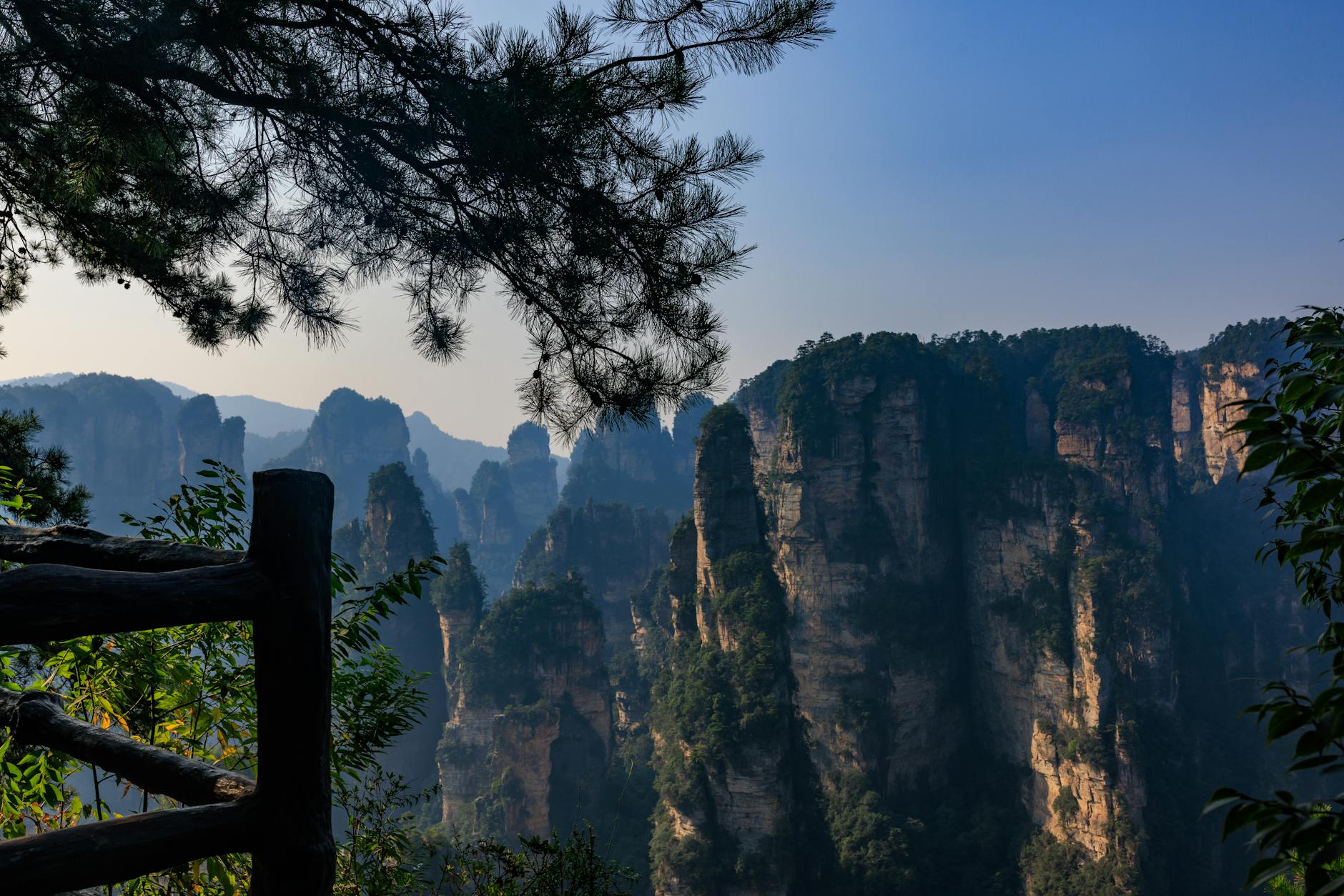
Zhangjiajie is not only pillars and glass. With a spare day, two places in the surrounding Xiangxi region add engineering and village life to the mountain scenery, and neither appears on the standard three-day package.
A Cultural Detour to Aizhai Bridge and Furong Town
Aizhai Bridge, near Jishou about 2.5-3 hours by road from Zhangjiajie, carries an expressway across a gorge on a main span of 1,176 m, more than 300 m above the valley floor. It opened in 2012 and ranks among the highest suspension bridges anywhere. A viewing platform and a walkway under the deck let visitors see the structure up close. The road into the gorge below, with its own tight switchbacks, is part of the appeal.
Furong Town, about 1.5-2 hours from Zhangjiajie on the way to Aizhai, is a Tujia village built on a cliff above the You River. Houses stack over a waterfall that drops some 60 m straight into the river. The place became known across China after the 1986 film “Hibiscus Town” was shot here. Stone lanes, rice tofu stalls and the view of the falls from a boat on the river fill a half day. A combined trip to Furong and Aizhai makes a long but worthwhile day out of Zhangjiajie, and it is one of the few routes here with no queues at all.
Zhangjiajie city itself has a couple of temples and riverside parks for a free evening, but the region’s real draw is its landscape. Everything else is a pleasant extra.
A Few Practical Tips for Your Adventure
A handful of details decide how smoothly a Zhangjiajie trip runs:
- Best time to visit: April-May and September-October bring mild weather and the clearest air. Summer is hot, humid and the peak season. Winter brings occasional ice on the stairs and closed trails, though the pillars in snow are a rare sight. Avoid the national holidays of 1-7 October and 1-5 May, when the park reaches its daily visitor caps.
- Clothing and footwear: sturdy shoes with grip are non-negotiable on wet stone stairs. Mornings at altitude run 10 degrees cooler than the valley, so layers and a light rain jacket belong in the daypack.
- Food and water: shops inside the park charge two to three times town prices. Stock up at the supermarkets in Wulingyuan the night before.
- Maps and navigation: download offline maps, since mobile signal fades in the valleys. The paper park map handed out at the gate shows the shuttle bus lines, which is what matters most.
- Tickets and payment: book the National Forest Park, the Grand Canyon and Tianmen Mountain online before arrival in busy months. Inside the park almost everything is paid by Alipay or WeChat Pay, both of which now accept foreign bank cards, so set one up before the trip.
- Language: outside the main hotels, English is rare. A translation app with offline Chinese handles most situations.
- Number of days: three to four full days cover the National Forest Park and Tianmen Mountain without rushing. Add the Grand Canyon and Furong for a five- or six-day trip. For anyone who would rather not plan logistics, a 3-day group tour of Zhangjiajie bundles the park, the bridge and Tianmen with transport and hotels.
A Sample Order for the Days
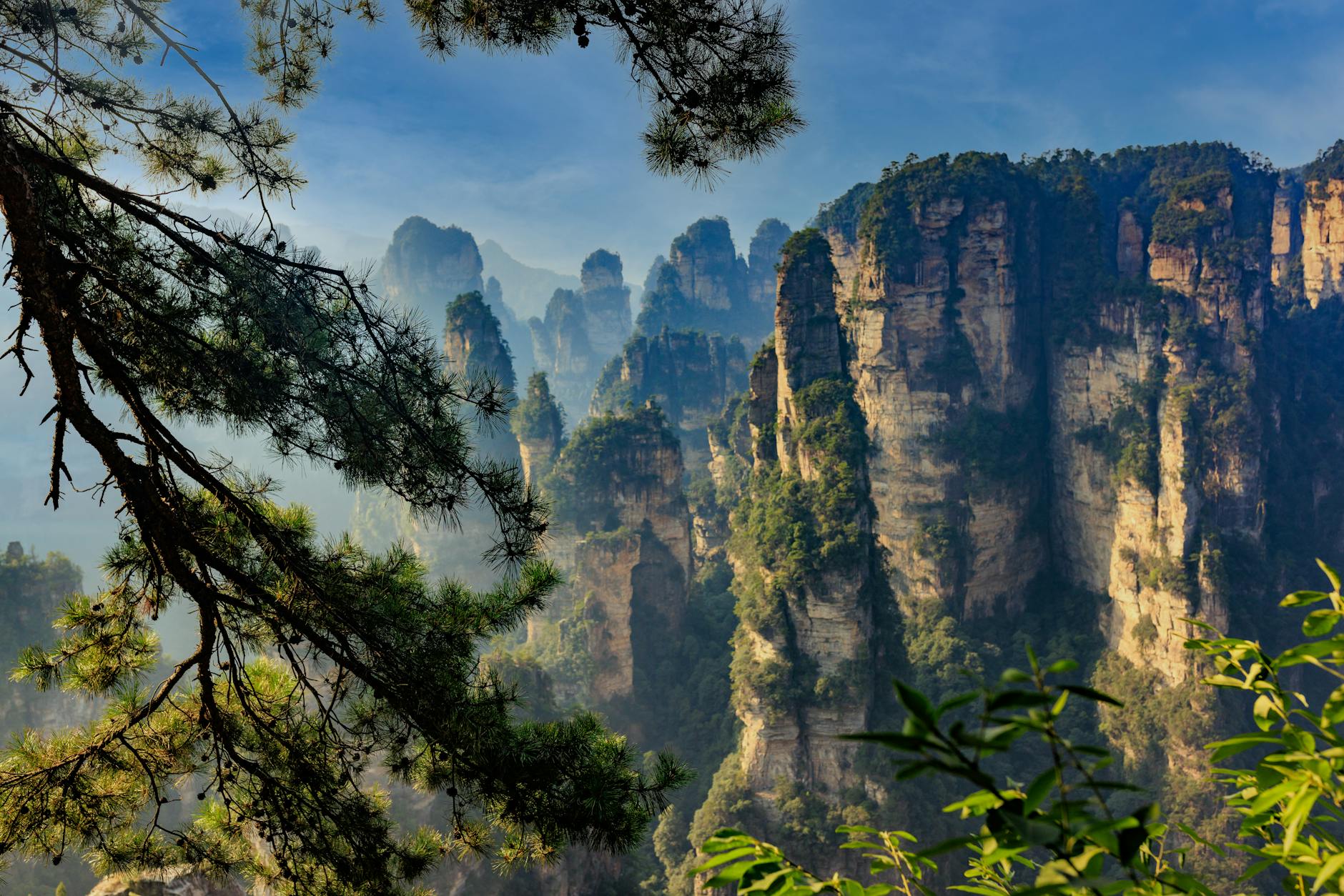
Zhangjiajie is crowded, and no amount of planning changes that at the famous platforms at noon. What planning does change is how much of the day is spent in a queue. Start before the gates open, give the four-day park ticket its full four days, and put the busy sights in the early hours.
A workable order for five days. Day one: Yuanjiajie and the Bailong Elevator from the first shuttle, then Yangjiajie in the afternoon. Day two: Golden Whip Stream at 7 am, Ten-Mile Gallery on foot, the Huangshizhai stairs. Day three: Tianmen Mountain on the first cable car. Day four: the Grand Canyon and the Glass Bridge with a morning time slot. Day five: Furong Town and Aizhai Bridge. By the last evening the step counter will read well past 80,000, and the pillars will have been seen from every angle the postcards miss.


