Most first-time visitors do the same loop: Burj Khalifa, Dubai Mall, a desert safari, the Marina. Dubai has a quieter layer underneath that, and much of it costs nothing. If you have already worked out how to save on transport, the eight places below fit into two or three spare afternoons without a car.
Each stop comes with a note on how to get there and what it costs. Where I mention a tour, it is because the place is awkward to reach on your own, not because walking is impossible.
1. Al Seef on the Creek
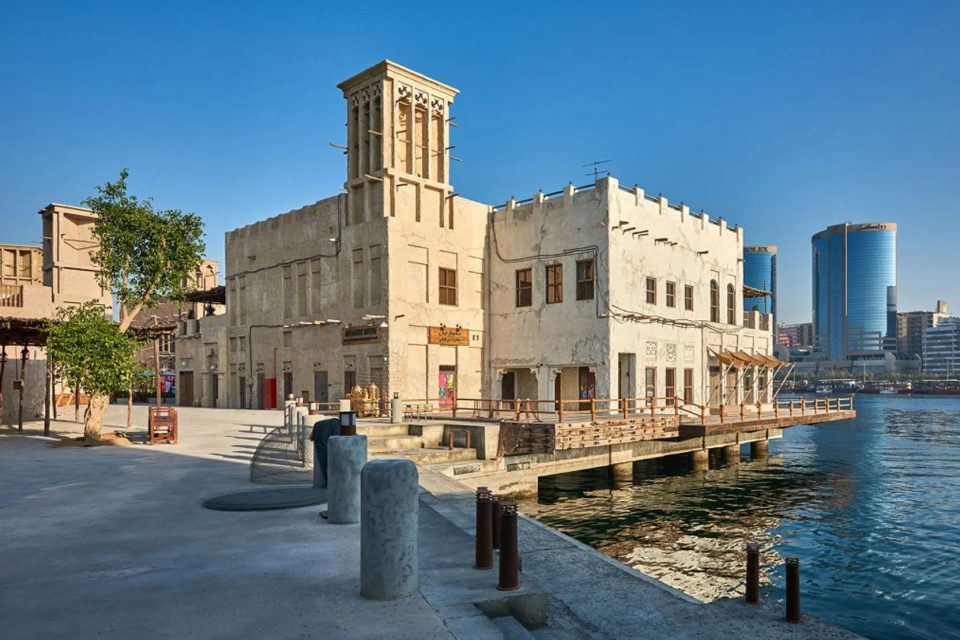
Al Seef is a waterfront strip along Dubai Creek, next to the Al Fahidi quarter. It opened in 2017, so the “old” houses are reconstructions, but the proportions, the coral-colored plaster and the wind towers are done carefully. Behind the facades you get cafes, small galleries and a dozen souvenir shops. Walking the promenade is free. If you want context for what you are looking at, a guided walk through old Dubai usually starts here or in Al Fahidi and crosses the Creek on an abra for 1 AED.
- Why go: old-style wind towers on one side, modern yachts moored on the other. The contrast photographs well, and the promenade is one of the few places in Dubai built for walking rather than driving.
- Timing: come after dark. The lights of Bur Dubai across the water are the main attraction, and the daytime heat is gone.
2. Arabian Coffee Museum
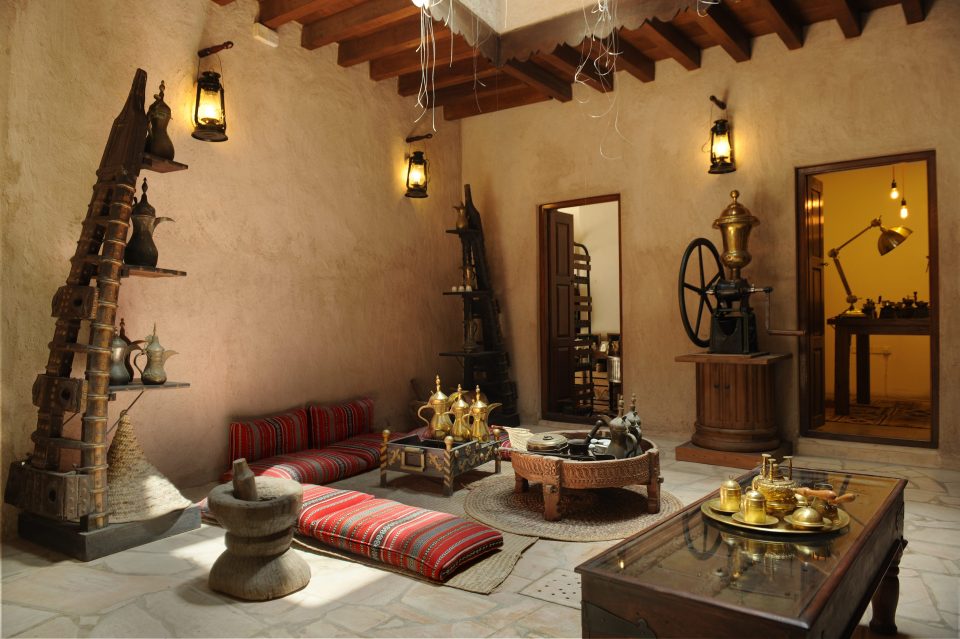
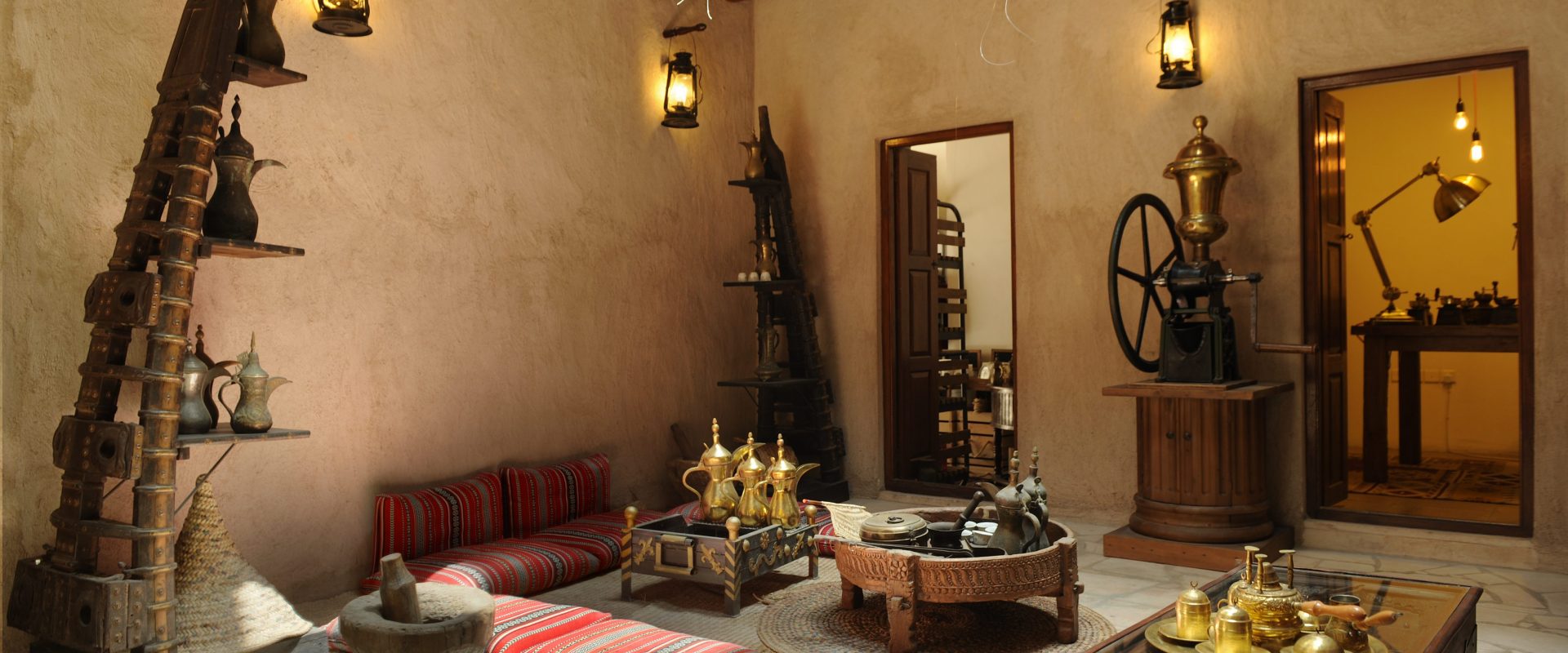
Inside the Al Fahidi district, in one of the restored houses, a two-floor museum covers the history of coffee in the Arab world. Old roasting pans, Ethiopian clay pots, Turkish grinders and a room explaining how a cup is served to a guest in a Bedouin tent. It is small. Half an hour is enough.
- What you get: a tasting of coffee brewed by several traditional methods, plus the story of how the drink spread from Yemen through the Arabian Peninsula.
- Practical note: entry is free. The museum sits in the middle of the Al Fahidi lanes, so it works as a shaded break between the alleys and the Creek.
3. Al Sufouh Beach, the “Secret Beach”
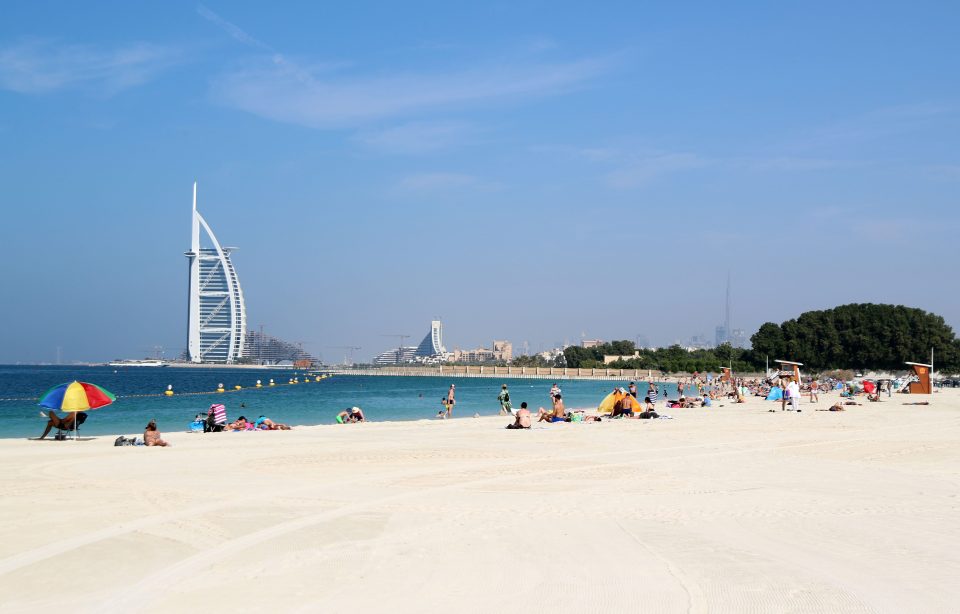
Locals call it Secret Beach or Black Palace Beach. There are no cafes, no sunbeds and no showers, which is exactly why it stays empty on weekdays. Bring water and a towel, and leave before the midday sun.
- The view: an unobstructed line of sight to Palm Jumeirah on one side and the sail of the Burj Al Arab on the other. Most photos of the Burj Al Arab taken “from the beach” come from here or from Kite Beach. If you want to see the hotel from inside, Burj Al Arab tours are the only way in without a room or restaurant booking.
- How to find it: the beach sits between Dubai Media City and the royal palace grounds. Get off the tram at Al Sufouh station and walk 10 minutes toward the sea, or take a taxi to the Media City side.
4. Dubai Water Canal
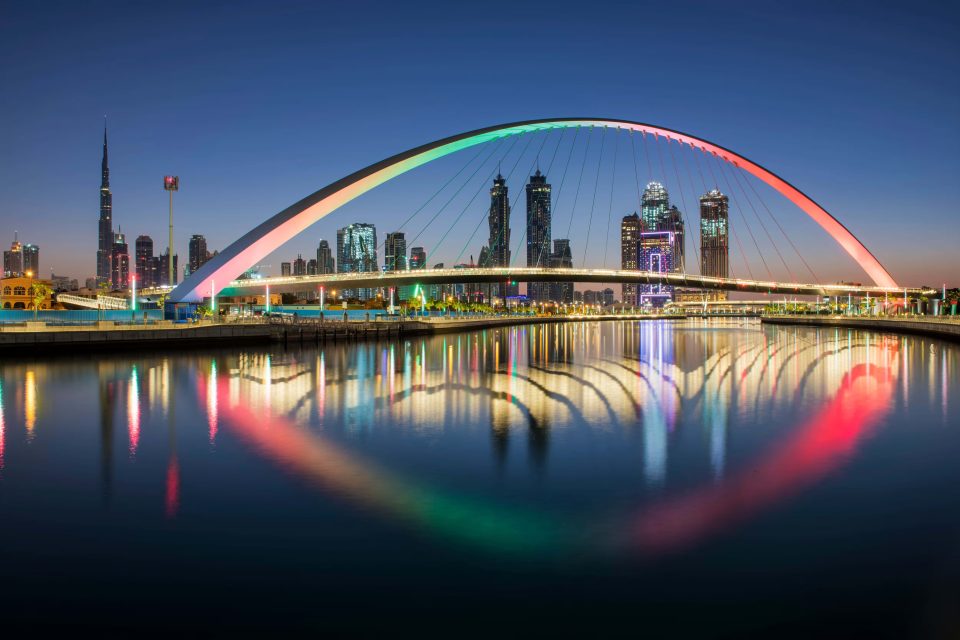
The canal is 3.2 km long and connects Dubai Creek with the Gulf, cutting through Business Bay and Jumeirah. Most people only see it from a car on Sheikh Zayed Road. On foot it is a different place. Both banks have a paved path, three pedestrian bridges cross the water, and the walk from Business Bay to the sea takes about 45 minutes.
- Best section: the bridges. From the twisted pedestrian bridge near Business Bay you look back at the Burj Khalifa cluster with water in the foreground. After dark the bridges and the banks are lit.
- Don’t miss: the waterfall under the Sheikh Zayed Road bridge. Water pours from the edge of the bridge into the canal, and sensors cut the flow whenever a boat passes underneath. It runs in the evening, so plan the walk for after sunset.
5. La Mer Beach District
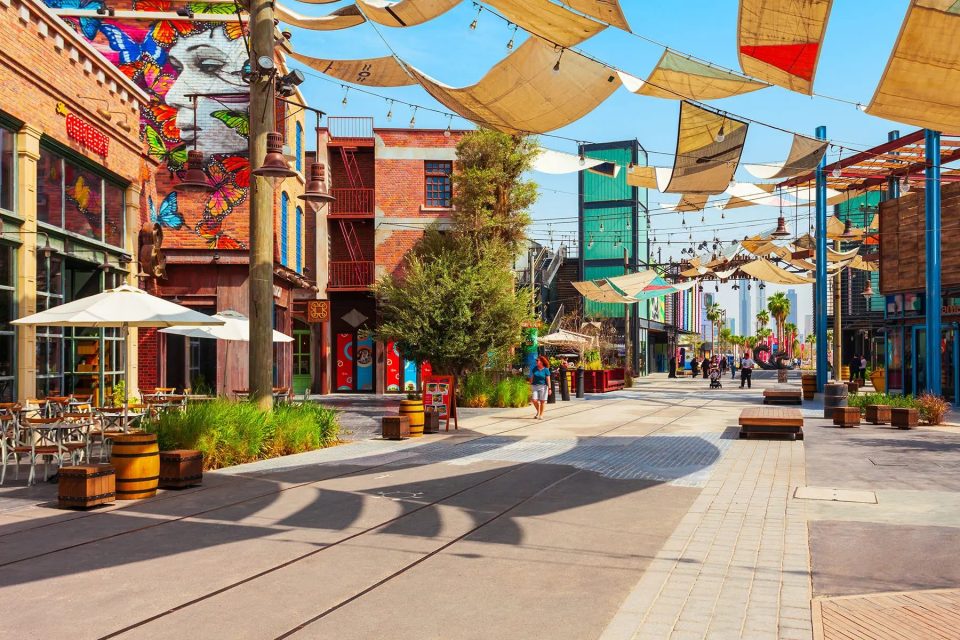
La Mer in Jumeirah 1 is not a secret, but it is far calmer than the JBR strip. Low wooden buildings, murals, street art on the containers, a wide public beach with showers and changing rooms. Prices in the cafes are closer to a Dubai mall food court than to a hotel beach club. Several mid-range hotels around La Mer sit within a 10-minute walk, which makes this a sensible base if you want the sea without paying Marina rates.
- Who it suits: anyone who wants a swim and a coffee without crowds, loud music or a day-pass fee. The beach itself is free.
- Getting there: no metro nearby. Take a taxi from Burj Khalifa/Dubai Mall station, about 15 minutes outside rush hour, or bus 8 along Jumeirah Beach Road.
6. Bastakiya Lanes in Al Fahidi
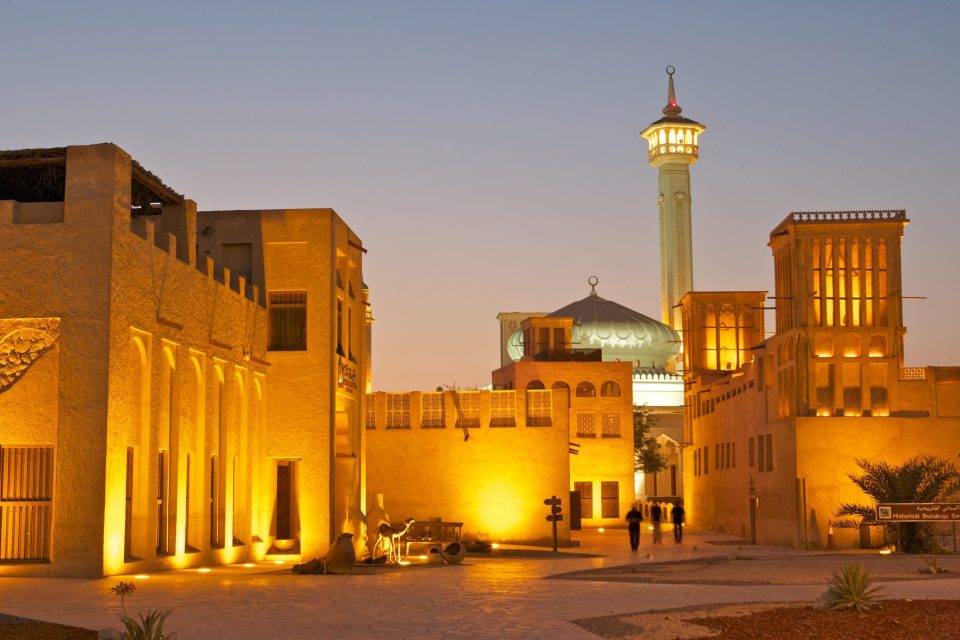
Bastakiya is the older name for the Al Fahidi Historical Neighbourhood, and the part worth your time is the inner maze rather than the main street. About fifty houses from the late 19th and early 20th century survive, built by Persian merchants from Bastak. The lanes are a metre or two wide and shaded most of the day, so this is the one outdoor walk in Dubai you can do at noon.
- What to look for: the wind towers, called barjeel. They catch wind from any direction and push it down into the rooms. Several houses are open and you can stand under one to feel the draft.
- Inside the houses: small galleries, a calligraphy centre, two or three courtyard cafes and the Sheikh Mohammed Centre for Cultural Understanding, which runs lunches with a Q&A on local customs.
7. Marina Skyline from Emirates Golf Club
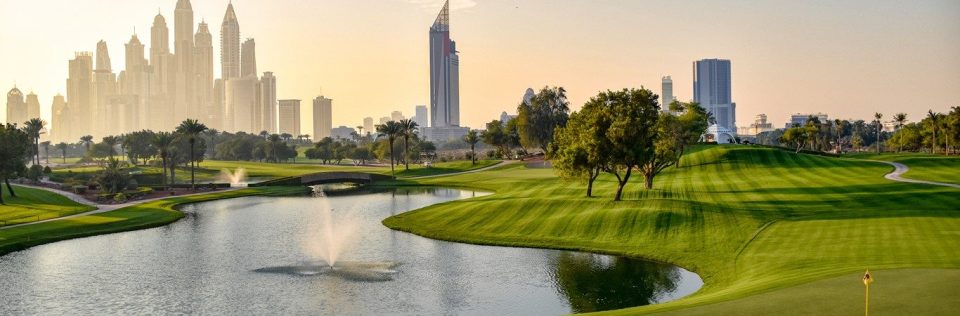
You do not need to play golf. The clubhouse restaurants and terraces are open to non-members, and they face the Marina towers across the fairways. Green grass in the foreground, water, then a wall of skyscrapers. No rooftop bar in the Marina itself gives you that angle, because from inside the district you are looking up, not across.
- When: arrive an hour before sunset. The towers light up one by one while there is still color in the sky.
- Cost: there is no entry fee, but you are expected to order something. A drink on the terrace costs more than in a mall cafe, roughly what you would pay at a hotel bar. The club is next to Nakheel metro station, 10 minutes on foot.
8. Al Minhad Camel Market
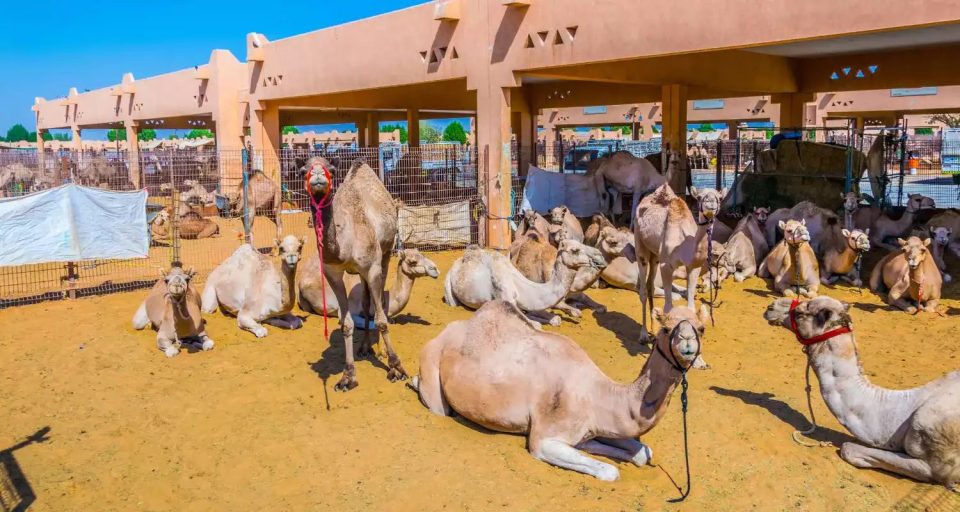
A working livestock market on the desert edge of the city, where camels are bought and sold for racing, breeding and meat. Traders come from across the Emirates and Oman. Nothing here is staged for visitors, and that is the point. Early morning is when the trading happens; by late morning the pens are quiet and the heat is up.
- Etiquette: ask before photographing people. Camels are fine. Keep out of the way of trucks and loading ramps.
- Getting there: no public transport reaches the market. A taxi from Downtown takes 30 to 40 minutes each way, and you will need to arrange the return in advance because there is no rank. Some guided trips to the camel market combine it with the nearby racetrack, which solves the transport problem.
If you have only one free afternoon, pair Al Fahidi, the Coffee Museum and Al Seef: they are within a 15-minute walk of each other and the abra across the Creek costs 1 AED.


