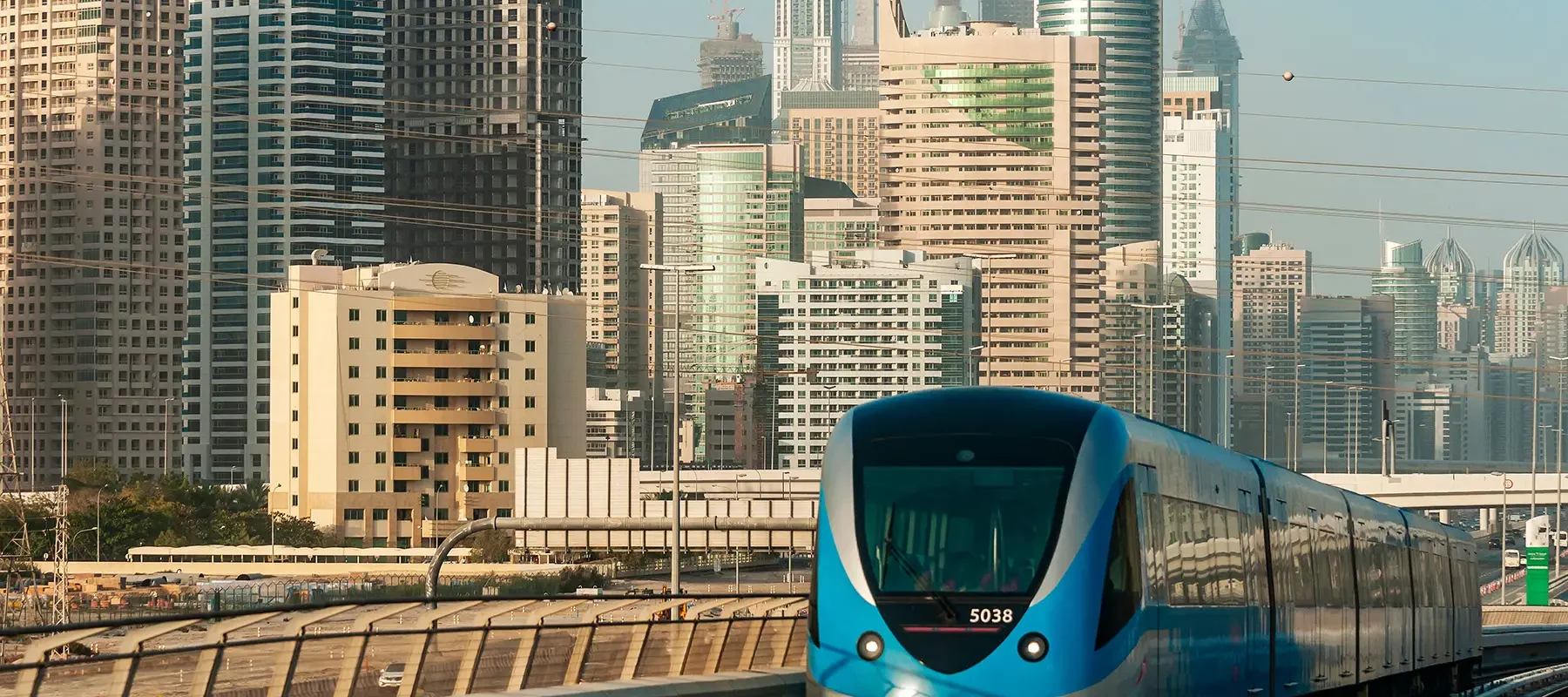
Dubai has a reputation as a taxi city, and taxis are everywhere. But the metro is faster along the coast, costs a fraction of the fare, and reaches most of what a first-time visitor wants to see: the airport, Dubai Mall and Burj Khalifa, Mall of the Emirates, the Marina and JBR, the old souks of Deira and Bur Dubai, and Expo City. Below are the two lines, the Nol card, exact fares as of 2026, the rules that carry fines, and how to combine the metro with the tram, buses and boats.
The Metro in Numbers
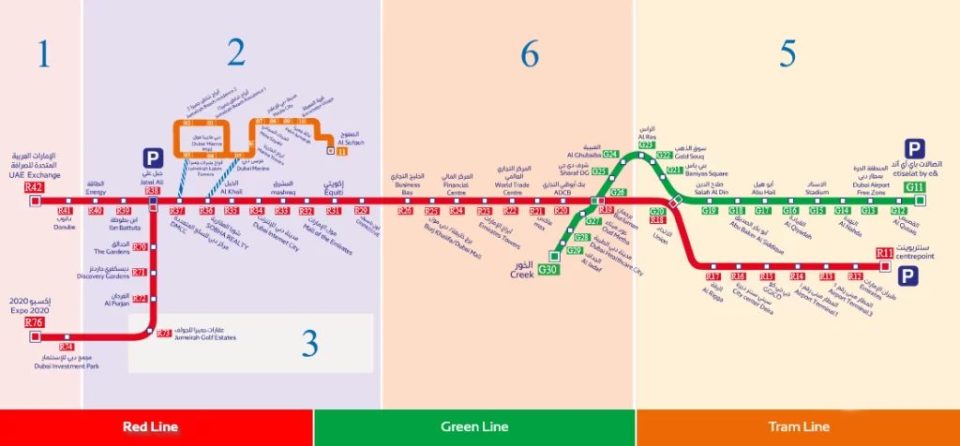
- Two lines. The Red Line runs about 52 kilometers from Centrepoint in the northeast, past the airport, along Sheikh Zayed Road to Jebel Ali, with a branch (Route 2020) to Expo City. A second line, the Green Line, loops through the historic districts of Deira and Bur Dubai for about 23 kilometers.
- Driverless and fully air-conditioned, stations included. Most of the Red Line runs on a viaduct above Sheikh Zayed Road, so a window seat gives some of the best free views of the skyline you will get in the city.
- Hours. Monday to Thursday and Saturday 5:00 to midnight, Friday 5:00 to 1:00, Sunday 8:00 to midnight. Trains run every 3 to 4 minutes at rush hour and every 7 to 8 minutes late in the evening.
- Interchanges. Both lines cross at Union and BurJuman. Changing lines takes five minutes and costs nothing extra.
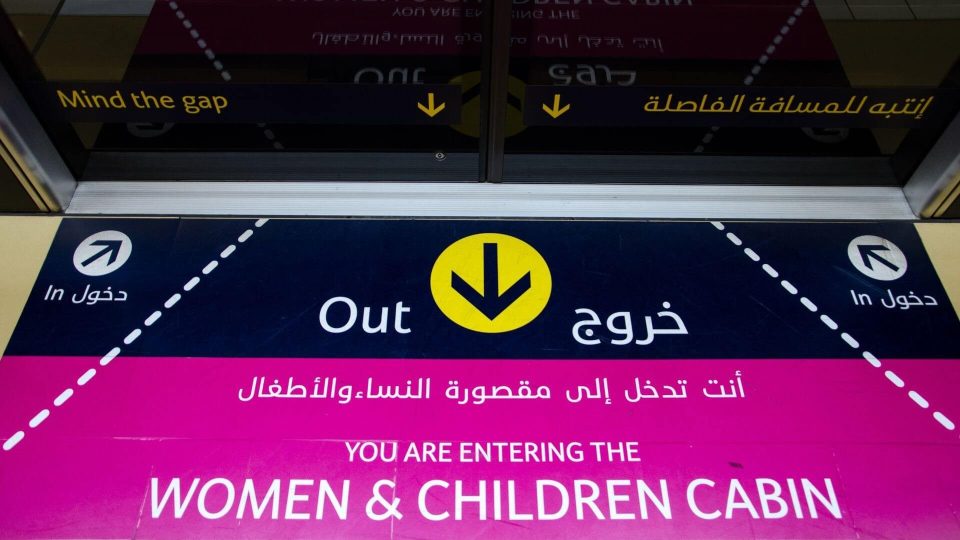
- Three cabin types. Silver (standard), Gold (first class, wider seats at the front of the train) and a Women and Children section next to Gold. Signs on the platform floor show where each cabin stops.
Choosing a Nol Card
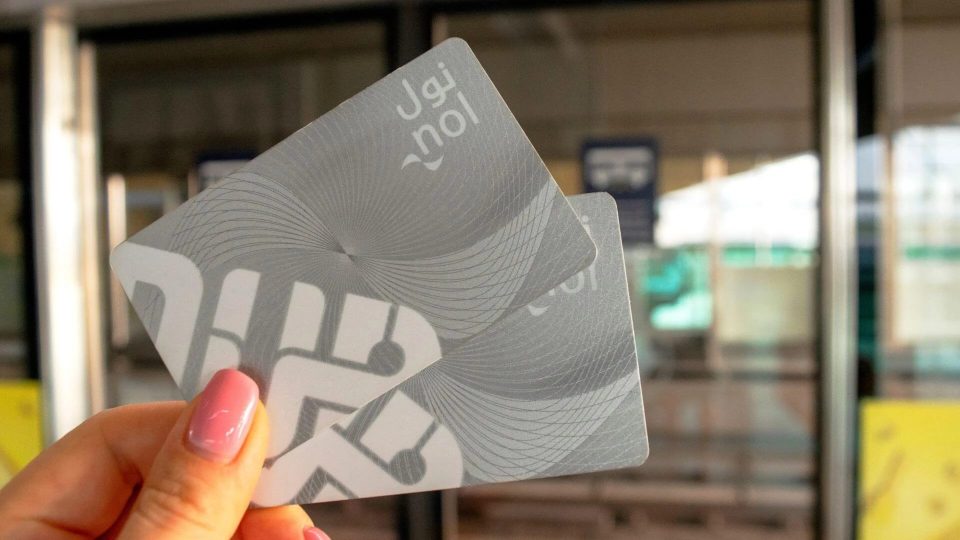
Every trip on the metro, tram, RTA bus and RTA water transport is paid with a Nol card. You tap in at the gate, tap out at your destination, and the fare is calculated from the number of zones you crossed. Cards and top-ups are sold at ticket offices and machines in every station, and machines take cash and cards.
| Card | Price | Good for |
|---|---|---|
| Red ticket | AED 2 for the paper card, fares loaded on top | One to ten trips, or a day pass. Works on one mode of transport at a time, so a metro ticket does not cover the bus. |
| Silver card | AED 25, including AED 19 of credit | Most visitors. Cheapest fares, all modes of transport, valid for five years. Top up as you go. |
| Gold card | AED 25, including AED 19 of credit | Access to the Gold cabin at double the Silver fare. Worth it only if you want a guaranteed seat in rush hour. |
| Day pass | AED 20 Silver, AED 40 Gold | Unlimited rides for one calendar day on a Red ticket. Pays off after three metro trips. |
Buy a Silver card at the airport station on arrival and you are set for the trip. Its AED 19 of credit covers roughly four rides, and a top-up of AED 50 is enough for a week of moderate use. Unused credit stays on the card, and the card can be refunded at a ticket office if the balance is over AED 5 and you have the receipt. I keep mine between visits: the card is valid for five years, and whatever balance was left still works on the next trip.
Zones and Fares
Dubai is divided into seven fare zones. What you pay depends on how many zones your trip touches, not on distance in kilometers, which is why a 15-kilometer ride can cost the same as a 3-kilometer one.
| Trip | Silver card | Red ticket | Gold class |
|---|---|---|---|
| Within one zone | AED 3 | AED 4 | AED 6 |
| Two adjacent zones | AED 5 | AED 6 | AED 10 |
| Three or more zones | AED 7.50 | AED 8.50 | AED 15 |
Some worked examples for the routes most visitors take:
- Airport Terminal 3 to Burj Khalifa/Dubai Mall: Red Line, about 25 minutes, AED 5 on Silver. A taxi on the same route costs AED 60 to 80.
- Burj Khalifa/Dubai Mall to Dubai Marina (Sobha Realty or DMCC): Red Line, about 30 minutes, AED 5.
- Gold Souk (Al Ras) to Dubai Mall: Green Line to BurJuman, change to Red, about 35 minutes, AED 5.
- Airport to the Marina: about 55 minutes, AED 7.50. Compare that with AED 100 or more in a taxi.
- Anywhere to Expo City: Red Line to Jabal Ali, then the Route 2020 branch. Count it as a three-zone trip, AED 7.50, and allow an hour from Downtown.
Always tap out. If you leave a station without tapping, the system charges the maximum fare of AED 7.50 and flags the card, and a second offence can bring a fine. Children under five ride free, and so does anyone under 90 centimeters tall. There are no tourist discounts beyond the day pass.
Stations Worth Knowing
- Airport Terminal 1 and Terminal 3 (Red). Both terminals have their own station inside the building. Terminal 2, used by flydubai and some low-cost airlines, has no metro; take bus F55 or a taxi to Terminal 1.
- Burj Khalifa/Dubai Mall (Red). This station is not inside the mall. An 820-meter air-conditioned walkway with travelators takes 10 to 12 minutes. Both the fountain show and the entrance to At the Top, levels 124 and 125 are on the far side of the mall.
- Mall of the Emirates (Red). Direct bridge into the mall and Ski Dubai.
- DMCC and Sobha Realty (Red). These are the two stations for Dubai Marina and JBR. Both connect to the tram, which gets you to the beach.
- Al Fahidi and Al Ras (Green). The old city: Al Fahidi historical district, the textile souk, the creek, and across the water the spice and gold souks.
- Expo City (Route 2020). Formerly the Expo 2020 site, now a district with museums, gardens and events.
If you plan to rely on the metro, choose accommodation within a ten-minute walk of a Red Line station. Downtown, Business Bay, Barsha Heights and the Marina all qualify, and prices between stations vary a lot. One budget example that sits right at a station is the ibis World Trade Centre, a three-star next to the World Trade Centre stop on the Red Line, two stops from Burj Khalifa/Dubai Mall. A location like that saves both taxi money and time in traffic on Sheikh Zayed Road.
Rules That Carry Fines
Dubai enforces its transport rules, and inspectors ride the trains in plain clothes. Fines below are set by the Roads and Transport Authority and are collected on the spot or added to your Nol card.
- Eating, drinking or chewing gum in a station or train: AED 100.
- Riding in the Gold cabin without a Gold card or Gold ticket: AED 100.
- A man in the Women and Children section: AED 100.
- Traveling without a valid ticket or without tapping in: AED 200.
- Sitting in a seat reserved for disabled passengers or the elderly: AED 100.
- Sleeping in a station or train, or putting feet on seats: AED 100.
Photography is allowed for personal use, and bags of normal size are fine. Folding bikes are allowed at any time, full-size bikes only outside peak hours. Alcohol is not allowed on any RTA transport, sealed or not.
Tram, Bus and Water Transport
Dubai Tram. Eleven stations along the Marina, JBR and Al Sufouh. It links to the metro at DMCC and Sobha Realty and stops within a few minutes’ walk of JBR beach and The Walk. A ride costs AED 3 on Silver regardless of distance, and the same Nol card works. It also connects to the Palm Monorail at the Palm Jumeirah stop, though the monorail has its own ticket.
RTA buses. Buses use the same zones and fares as the metro and fill the gaps the rail does not reach: Jumeirah beach, Kite Beach, Al Quoz, Global Village in season, and the airport at night. Stops along the main roads have air-conditioned shelters. Route maps are in the RTA app and Google Maps handles connections well.
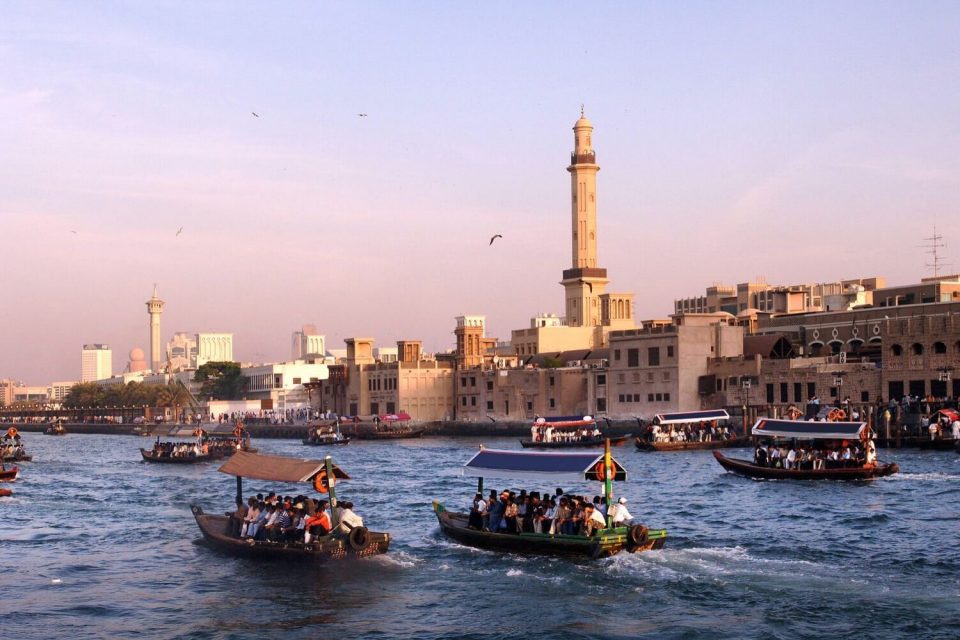
Abra. Wooden boats crossing Dubai Creek between Deira and Bur Dubai cost AED 1 per person, paid in cash to the boatman, and the crossing takes five minutes. It is the cheapest sightseeing in the city and the best way to move between the two souk districts. RTA also runs air-conditioned electric abras for AED 2 and water buses along the creek and around the Marina for AED 3 to 5, all payable with Nol.
Ferry. Dubai Ferry links Al Ghubaiba near the creek with the Marina for AED 50 in Silver class, about 90 minutes along the coast past Burj Al Arab and the Palm. It is a commute and a cruise in one, and far cheaper than a tourist boat. If you want the evening version with dinner, a dhow dinner cruise around Dubai Marina starts around AED 150 per person.
Taxis, for comparison. Flag fall is AED 5 by day and AED 5.50 at night, plus about AED 2 per kilometer, with a minimum fare of AED 12. Taxis from the airport start at AED 25. Careem and Uber run 10 to 20 percent above street taxi prices. A taxi makes sense for short hops at night, for groups of three or four, and for places the rail does not reach, such as the pickup points for an evening desert safari.
What a Week on Public Transport Costs
A typical sightseeing week with two or three metro rides a day, a couple of tram trips, an abra crossing and one ferry comes to about AED 90 to 120 per person on a Silver card, including the card itself. The same week in taxis runs AED 600 to 900. That difference pays for a Burj Khalifa ticket and a good dinner, which is the whole point of riding the train.
For the rest of the budget picture, our guide on how to explore Dubai on a budget covers food, attractions and where to stay, and the 2026 visa and entry guide answers the questions that come before the metro does.


