Samarkand sits 300 kilometres southwest of Tashkent, and for most visitors the question of getting there comes down to one train. Afrosiyob, the high-speed service, covers the distance in just over two hours, costs less than a taxi across London, and runs several times a day. There are also direct international flights into Samarkand’s own airport, a slower and cheaper train, shared taxis, and the road itself. I lived in Uzbekistan for several months and made this trip in most of those ways; here is how they compare.
By Plane
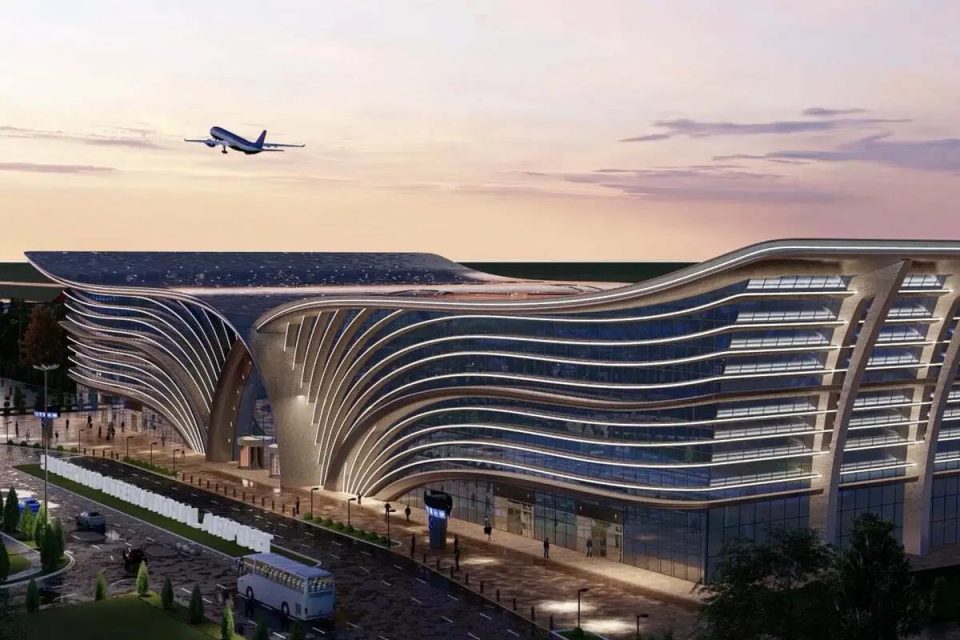
Samarkand has its own international airport (SKD) with a new terminal opened in 2022, and you no longer have to route through the capital. Uzbekistan Airways, Turkish Airlines, flydubai, Air Astana and several Russian carriers fly in directly from Istanbul, Dubai, Almaty, Moscow and a handful of other cities. From Western Europe or North America there is no non-stop service, so the practical options are a connection in Istanbul straight to Samarkand, or a flight to Tashkent and the train from there. Comparing flights to Tashkent against flights to Samarkand for the same dates is worth five minutes, because the Tashkent fare is often lower by more than the train costs.
Domestic flights between Tashkent and Samarkand exist. They take an hour in the air. They rarely make sense. Once you add the drive to Tashkent airport, check-in and the taxi at the other end, the train is faster door to door and a fraction of the price. Fly domestically only if you are coming from Nukus or Urgench in the far west and the alternative is a night train.
Samarkand airport is 6 kilometres north of the centre. A Yandex Go taxi to the Registan costs 20,000 to 30,000 sum, about two dollars, and the ride takes 15 minutes.
By Train
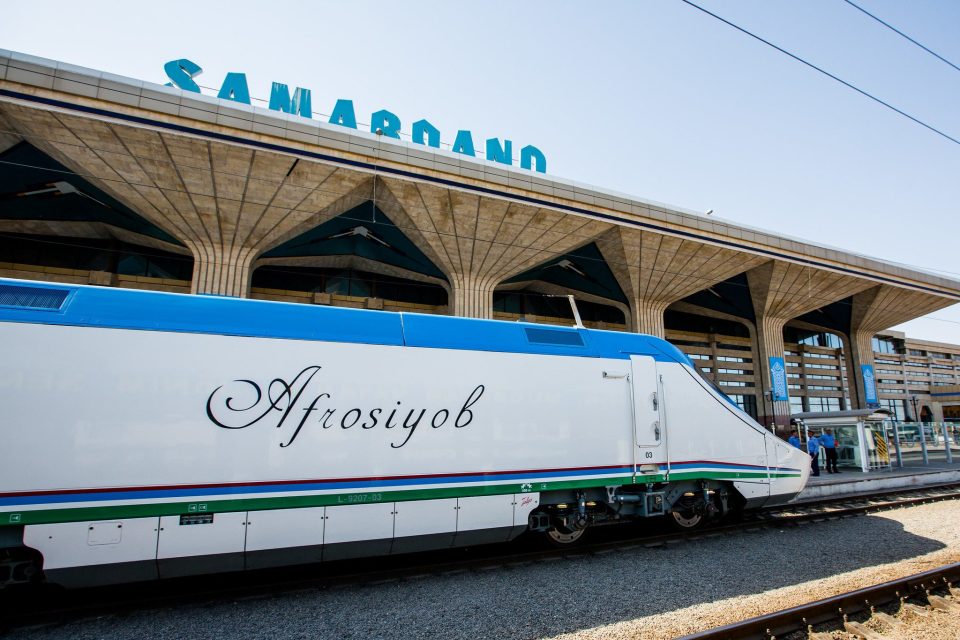
Uzbeks themselves travel between the two cities by train, and it is the answer for almost everyone reading this. Samarkand is on the main line from Tashkent to Bukhara and Khiva, so it also connects onward to the rest of the Silk Road route without going back to the capital.
Afrosiyob is a Spanish-built Talgo that runs at up to 250 km/h. Tashkent to Samarkand takes 2 hours 10 minutes, with four to six departures a day in each direction, the first around 7 am. Economy seats cost roughly 100,000 to 130,000 sum (8 to 10 dollars), business about double, and the VIP car with a meal service around 250,000. Seats are assigned, there is a snack trolley, and the carriages are air-conditioned to the point where a jumper is useful in July.
Sharq is the older express on the same line. Three to 3.5 hours, a third cheaper. Reclining seats, no reservation problem. Slow trains and overnight services take 4 to 6 hours and mostly matter if you are arriving from Bukhara or beyond and want to sleep on the way. Tickets for all of them are sold on the Uzbekistan Railways site (railway.uz) and app, which accept foreign cards, and at station counters against a passport. Afrosiyob sells out days ahead in April, May, September and October. Book as soon as your dates are fixed. Samarkand station is 3 kilometres north of the old town, a 15,000-sum taxi from the Registan.
Long-distance buses and minibuses leave from Tashkent’s Olmazor bus station in the northwest of the city when they fill up, which in daytime means every half hour or so. Count on 4 to 5 hours. A seat costs 60,000 to 100,000 sum. Shared taxis leave from the same yard: Chevrolet sedans that wait for four passengers and then drive non-stop. A seat is 100,000 to 150,000 sum and the ride is under four hours. Pay the whole car if you want to leave now. Both options drop you at Samarkand’s Ulugbek bus station on the edge of town, from where a city taxi to the centre is another 15,000 to 20,000 sum. This is the way to go if the Afrosiyob is sold out or you are travelling on a Sunday evening when the trains are full.
By Taxi or Car
Highway M39 runs the whole way, dual carriageway for most of it, and the drive takes about four hours with a stop. A private taxi for the car costs 500,000 to 700,000 sum, roughly 40 to 55 dollars, arranged through your hotel or by booking an intercity ride in Yandex Go. Self-drive rental exists in Tashkent but is not cheap and the police checkpoints outside every town ask for documents, so most people hire a car with a driver instead. A day trip to Samarkand with a driver from Tashkent is also sold as a tour, leaving early and returning late, though a day is too short for the city and an overnight stay is better.
Driving is about the stops. Half an hour after leaving Tashkent the road passes Chinaz on the Syr Darya, and beyond Gulistan it climbs through the Jizzakh pass, the “Gates of Tamerlane,” a gorge with inscriptions from the 15th and 16th centuries carved into the rock. Roadside chaikhanas along the way serve shashlik and green tea for a couple of dollars, and in summer the melon stalls outside Jizzakh are the best in the country.
Visas and Registration
Uzbekistan dropped visas for most visitors in 2018 and 2019. Citizens of the EU, the UK, Switzerland, Canada, Australia, New Zealand, Japan, South Korea, Israel, Turkey and about 80 other countries enter visa-free for 30 days. US citizens need an e-visa, applied for online in a few minutes for about 20 dollars and valid for 30 days; the same e-visa system covers India, China and most of the countries not on the visa-free list. Check the current rules on the e-visa portal before booking, because the list changes.
Every foreigner must be registered for each night in the country. Hotels and guesthouses do this automatically and give you a paper or electronic slip. Keep the slips until you leave. Border officers rarely ask any more. If you stay in a private apartment, the host has to register you through the Emehmon system, and it is worth confirming they will before you book.
Once you are there, the old town is walkable: Registan, Bibi-Khanym and the Siab bazaar are within 20 minutes of each other on foot, Gur-e-Amir a little further south. Our guides to the main sights of Samarkand and the city’s history cover what to do once you have arrived. Two nights is the minimum. Three if you want a day trip to Shakhrisabz.


