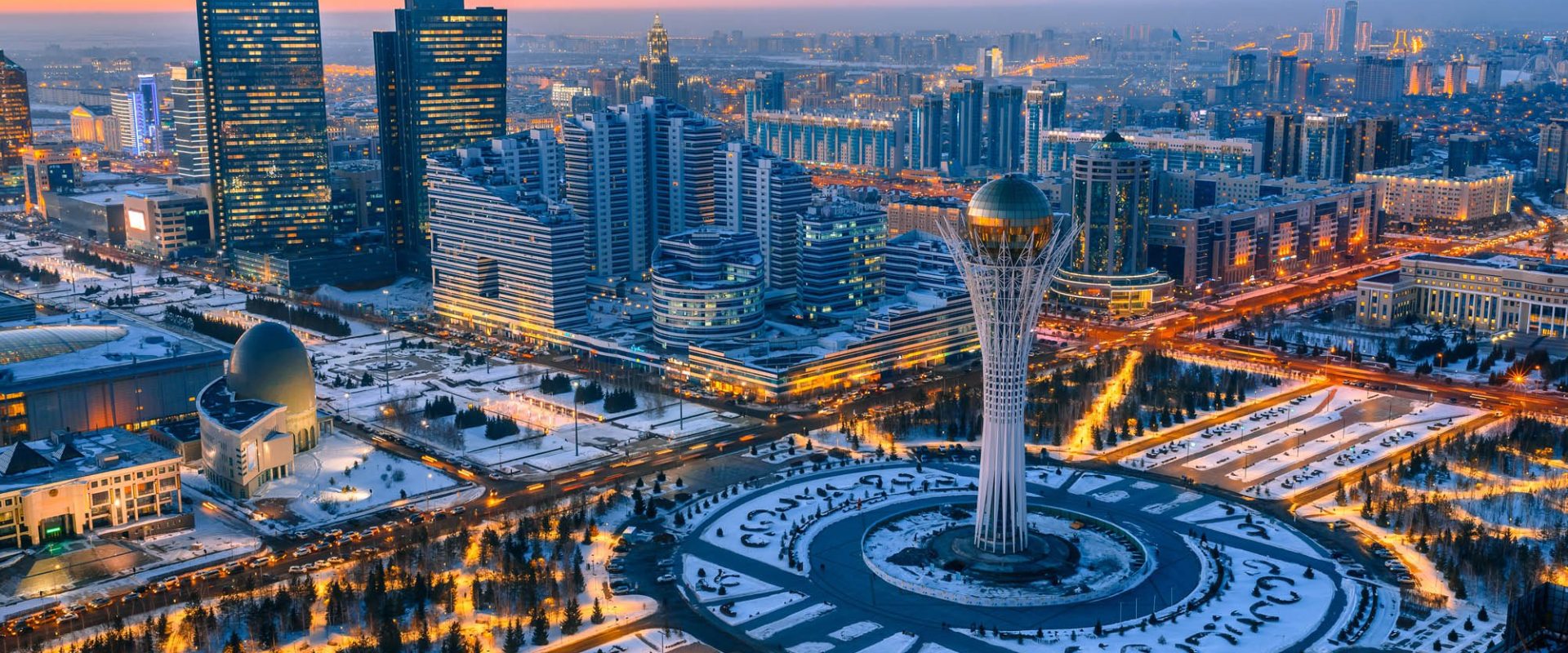
Astana is a capital that was mostly built in the last 25 years, on a flat steppe where winter lasts five months. Glass towers and a giant tent stand next to Soviet five-storey blocks, and a ten-minute walk takes you from one era to the other. This guide covers the things that matter before a first visit: how the city got its name, what to see on the left bank, how cold it gets, how to reach the center from the airport, and what is worth carrying home.
Five Names in One Century
Locals of a certain age still say Tselinograd. Founded in 1830 as a Cossack fort called Akmolinsk, the town became Tselinograd in 1961, when Khrushchev’s Virgin Lands campaign turned it into the hub of a wheat-growing region. Akmola followed in 1992, and in December 1997 the government moved the capital here from Almaty, a city 1,200 km to the south. Six months later came the name Astana, which simply means “capital” in Kazakh. In March 2019 it was renamed Nur-Sultan after the first president, Nursultan Nazarbayev, and in September 2022 parliament changed it back. Street signs, airport codes and metro maps still show traces of all of this, so do not be confused if a taxi driver uses a different name than your map.
Left Bank Architecture
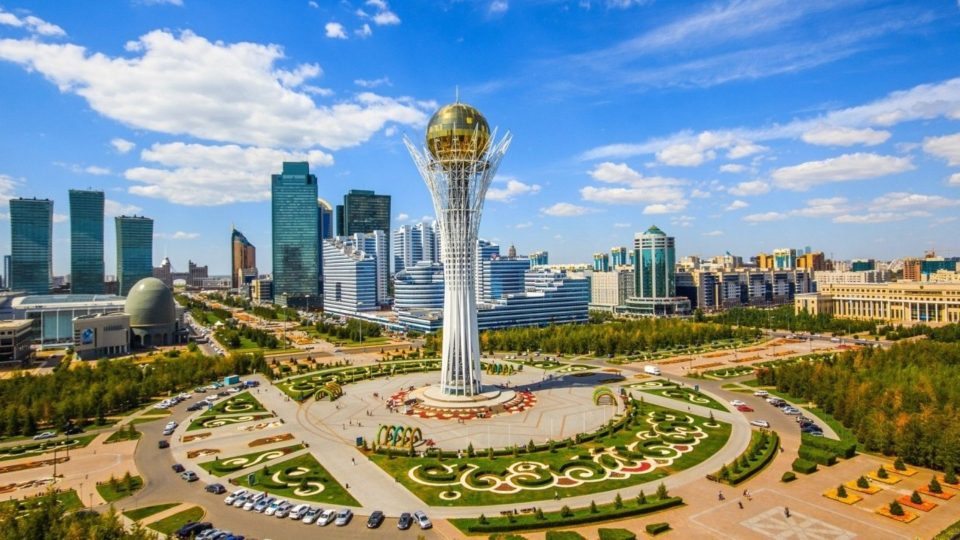
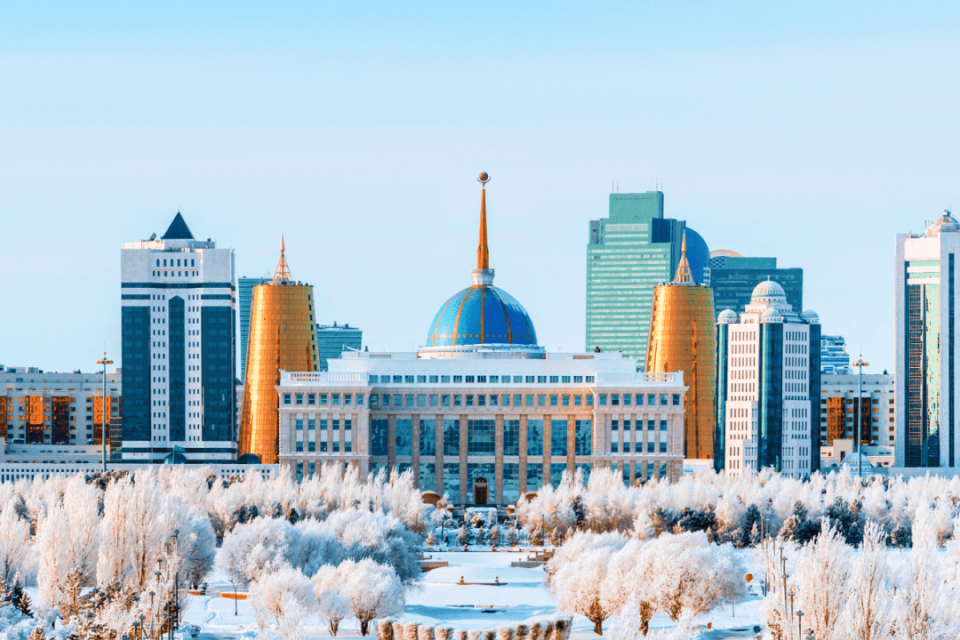
Almost everything built after 1997 sits on the left bank of the Ishim river, along a two-kilometer axis called Nurzhol Boulevard. Walk it from east to west and you pass the presidential palace, the twin golden towers of the ministries, and in the middle, Baiterek. Its shape comes from a Kazakh legend about the bird Samruk laying a golden egg in a poplar tree. Its observation deck is at exactly 97 meters, a reference to 1997. A ticket costs roughly $4, and from the top you can see the whole boulevard laid out like a model. If you prefer the history explained as you go, a guided architecture tour covers the boulevard plus the Expo site in about three hours.
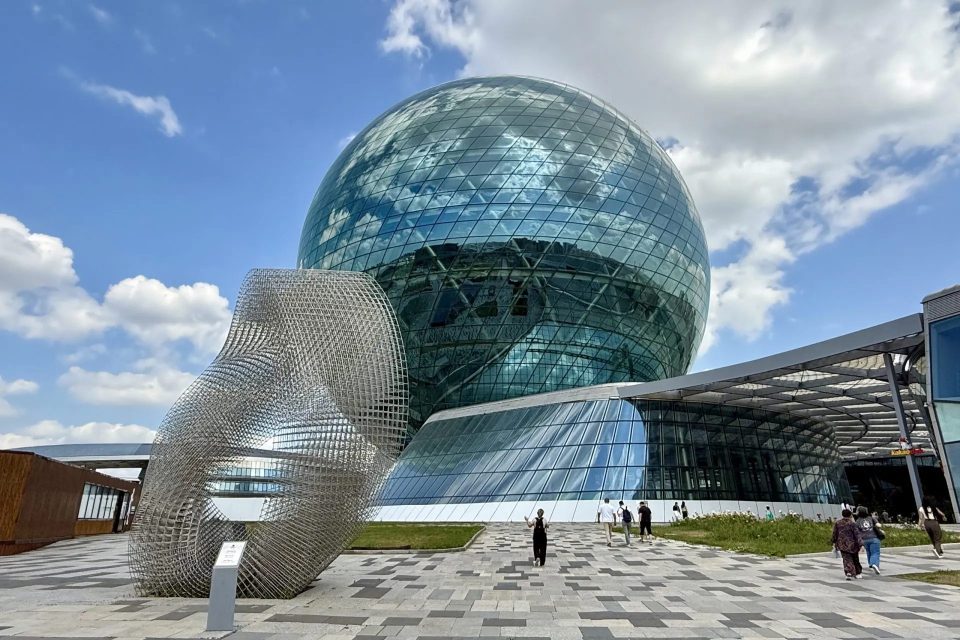
At the western end of the axis stands Khan Shatyr, a 150-meter tent of translucent plastic designed by Norman Foster and opened in 2010. Entry to the mall itself is free. On the top floor there is a paid beach club with a wave pool and sand shipped in from the Maldives, which feels absurd in January at minus 25 outside and is exactly why people go. Foster also designed the glass pyramid on the right bank, the Palace of Peace and Reconciliation, where guided visits run every hour. Add the Nur Alem sphere at the Expo 2017 grounds, now a museum of future energy, and you have a full day without repeating a building style twice.
How Cold It Gets
Astana is the second coldest capital on the planet after Ulaanbaatar. From December to February the daytime temperature sits around minus 15 to minus 20, and minus 30 with wind happens several times each winter. Wind is the real problem: the city has no hills or forests around it, so the steppe gusts go straight down the boulevards. In January I keep walks between buildings under fifteen minutes and plan the day around the underground passages and malls. Summer flips completely. July afternoons reach plus 30 and sometimes plus 35, with dry air and long evenings.
For a first trip, May to early June or September are the easiest months. Daytime temperatures stay between plus 15 and plus 25, the fountains along Nurzhol are running, and hotel prices are lower than during the July event season. Early October still works, but pack a hat and gloves: the first snow can land before the leaves finish falling.
Flights and the Airport Run
Direct flights arrive from Istanbul, Frankfurt, Dubai, Abu Dhabi, Seoul, Beijing and a dozen cities in the region. Air Astana and Turkish Airlines fly the most routes; Lufthansa, flydubai, Etihad and Asiana cover the rest. From Western Europe a return ticket usually falls between $400 and $700 depending on season, and the Istanbul connection is often the cheapest way in. Compare dates and carriers for flights to Astana a month or two ahead, because prices jump sharply around the July national holidays.
Nursultan Nazarbayev International Airport (code NQZ) is 16 km south-east of the center, about 25 minutes by car. Three ways in:
- Taxi via the Yandex Go app, which works with a foreign card. Expect $6 to $9 to the left bank. Drivers waiting at the exit ask two or three times that in cash.
- City buses 10 and 12 stop outside the terminal and run into the center every 15 to 20 minutes. The fare is under a dollar, paid by bank card on the validator, and the trip takes 40 to 50 minutes.
- A pre-booked airport transfer makes sense for a night arrival in winter, when standing outside with luggage for ten minutes is not something you want to test.
What to Bring Back
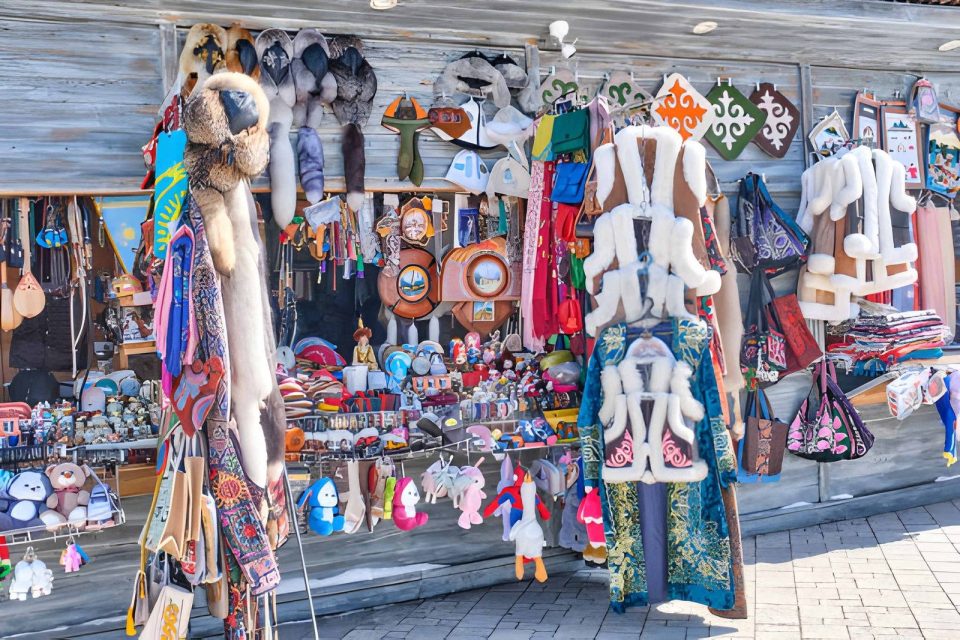
Souvenir shops inside Khan Shatyr and Mega Silk Way are convenient but charge mall prices. For the same items at half the cost, go to the Artyom market on the right bank, where traders sell felt, textiles and food from the regions. Things worth the suitcase space:
- Felt and embroidery. Slippers, small rugs, a kalpak hat or a chapan robe with traditional ornament. A pair of felt slippers runs about $10 to $15 at the market.
- Silver jewelry. Kazakh silversmiths work in large, flat shapes with carnelian and turquoise inserts. Bracelets and earrings start around $20 for simple pieces and climb fast for antique-style work.
- Textiles and rugs. Woven tekemet and syrmak rugs are heavy but fold flat. Smaller wall pieces fit in hand luggage and cost $30 to $80 depending on size and whether they are machine or hand made.
- Food. Honey from East Kazakhstan, kurt (dried salted cheese balls), dried apricots, and chocolate from the Rakhat factory. Kurt travels well and costs almost nothing; honey is sold in sealed jars that pass airport checks in checked luggage.
- A dombra. The two-stringed national instrument is sold in music shops and at the market from roughly $40 for a basic student model. Ask for a soft case, as the neck is thin and snaps easily in a suitcase.
Opera, Museums and Evenings Out
Astana Opera opened in 2013 and is the easiest high-culture bargain in Central Asia. Cheap seats in the upper tiers start at a few dollars, and even the best stalls rarely pass $30. Repertoire is classical: Verdi, Tchaikovsky, Kazakh operas such as Abai, and a strong ballet company. Buy tickets at the box office or on the theater’s own site a few days ahead; weekend premieres sell out. After dark the whole left bank is lit up, and a night tour of the illuminated center is a comfortable way to see it in winter without walking the full two kilometers.
Two museums are worth your time. The National Museum of Kazakhstan on Independence Square is the larger one, with a hall of gold Saka artefacts and a good section on the steppe nomads. The Museum of the First President, in the former presidential residence on the right bank, is smaller and focuses on the 1990s and the building of the new capital. Its photographs of the empty steppe where Nurzhol Boulevard now stands are the best way to grasp how fast the city grew. Both are closed on Mondays. Most half-day city tours include one of them.
Two or three days cover the main sights. If you have a fourth, take the hourly bus to Borovoye (Burabay), a lake and pine-forest resort 250 km north that locals use as their summer escape. Buses leave from the Saparzhai bus station near the railway terminal, take about four hours, and cost roughly $8 each way.


