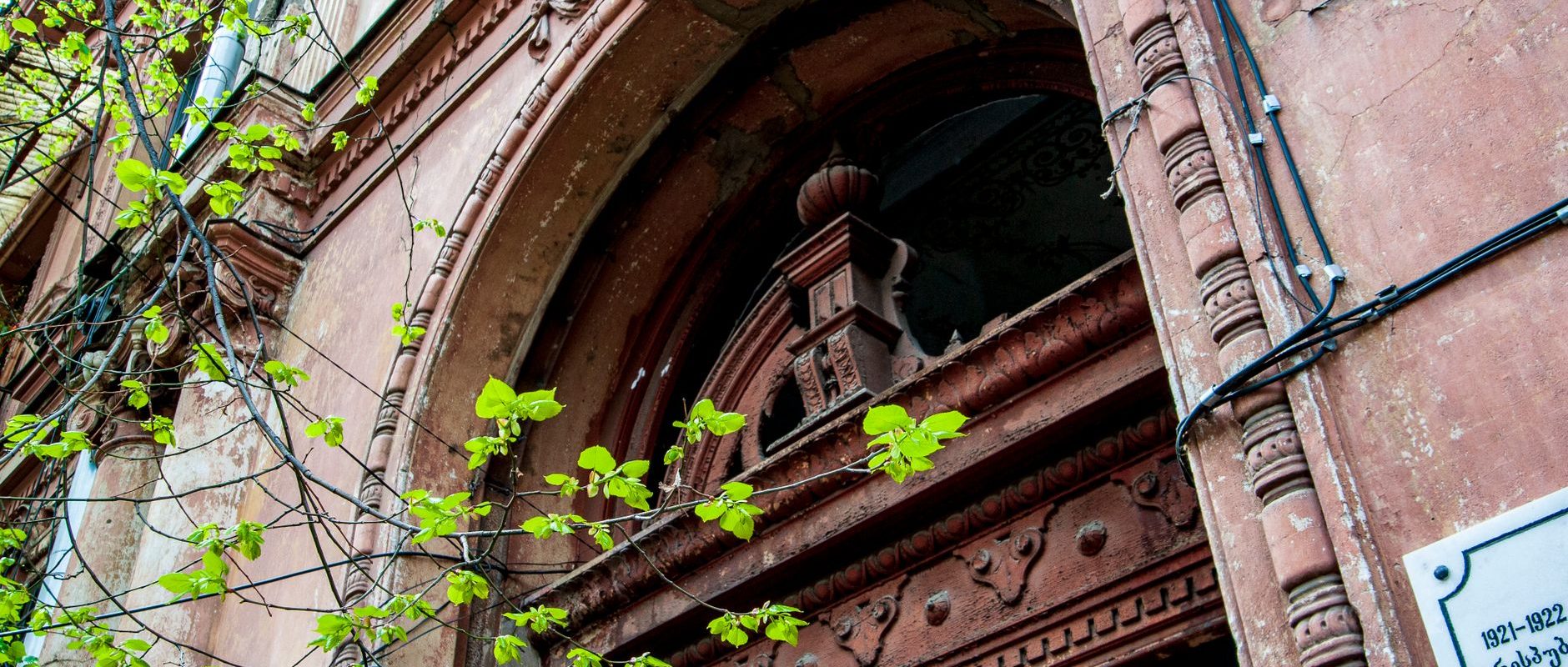
Tbilisi is easy to read at first glance. A fortress on the hill, balconies in every color, sulfur baths by the river. All of it shows up from any viewpoint in five minutes. But more hides behind those facades than a standard tour ever shows. Every bathhouse, staircase and archway here carries its own story, and the city gives some of them up reluctantly. Below are the details of old Tbilisi that most visitors walk straight past: legends, architectural oddities and corners worth a special detour.
Abanotubani and the legend that started the city
Legend says Tbilisi exists because of a single falcon. King Vakhtang Gorgasali was hunting here in the fifth century and lost track of a wounded bird in the brush. When his servants found the falcon, it was lying cooked in a hot spring. Vakhtang liked what he saw and moved his capital to the warm waters. Its name comes from “tbili”, meaning warm.
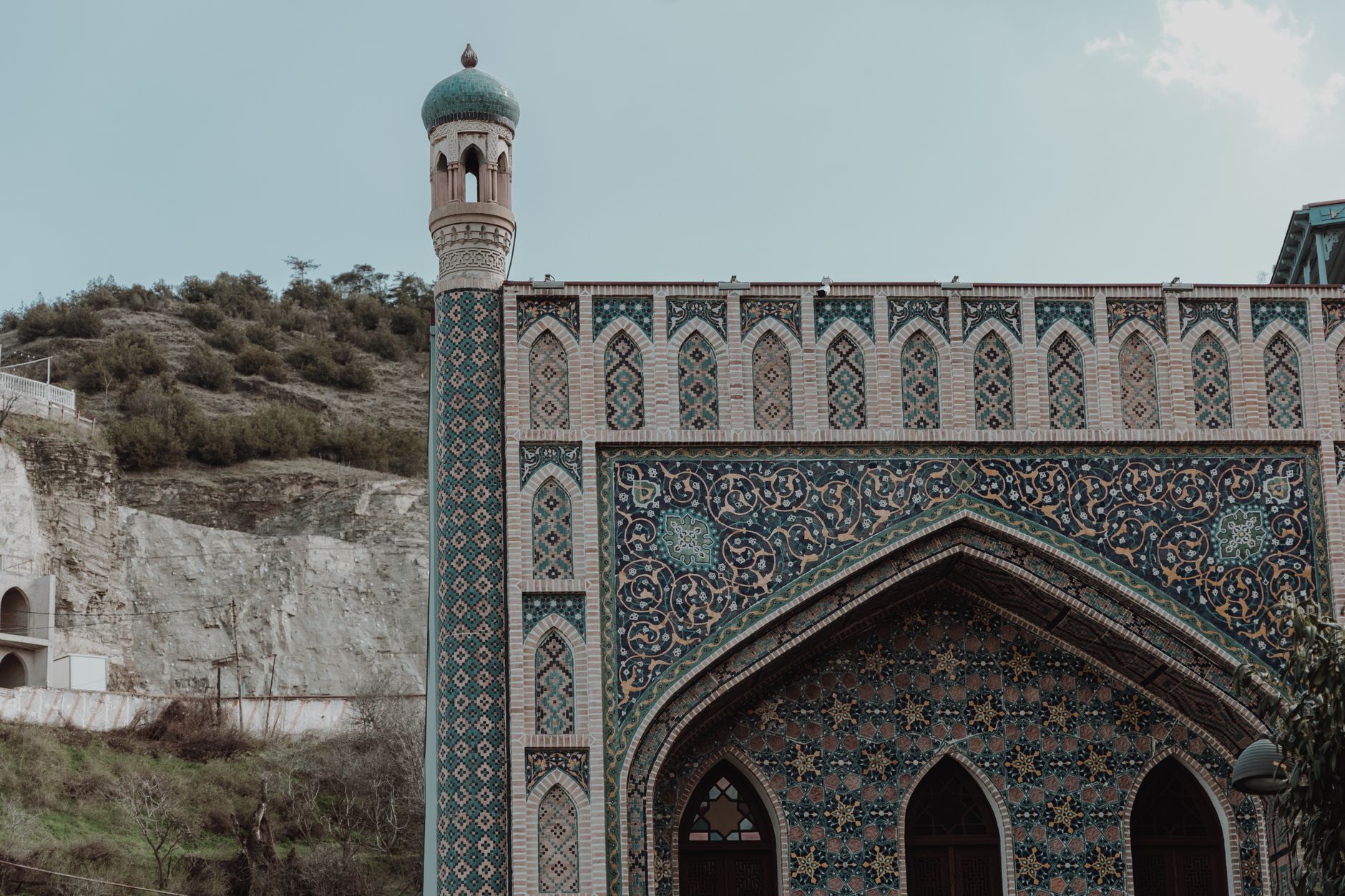
Geologists agree with part of it. Sulfur springs under the Abanotubani district are real, and the water surfaces at 37 to 47 degrees Celsius. Bathhouses were built directly over these springs, and their brick domes still poke out of the ground like upturned bowls. Orbeliani Baths, also known as Chreli Abano, the “motley bath”, is the best known, with a blue-tiled facade and two minaret-like towers in a Persian style. Pushkin bathed in the Tiflis baths in 1829 and wrote in “A Journey to Arzrum” that he had never seen anything more luxurious.
Walking in without a booking works for the shared halls. Those cost a few lari per person and function much like any city bathhouse, except that the water smells of sulfur and leaves a faint yellow tint on the skin. Private rooms with a pool and a steam room run from about 50 to 200 lari an hour depending on size, and groups of friends usually split one. Add a kisa scrub, a brisk rubdown with a coarse mitt, for another 10 to 20 lari. For a version with the booking already handled, there is a private sulfur bath session with wine sold as a package.
Each bathhouse in Abanotubani has its own facade and its own reputation. Orbeliani is the most photographed and the most expensive. Royal Baths, down the lane, keeps a quieter courtyard and more private rooms. Bathhouse No. 5 is the plainest from outside, but its shared halls are roomier and the line moves faster. Locals suggest not picking a bathhouse from a photo online. Walk the block instead and see which doors are open and where the crowd is thinner.
What the domes are hiding
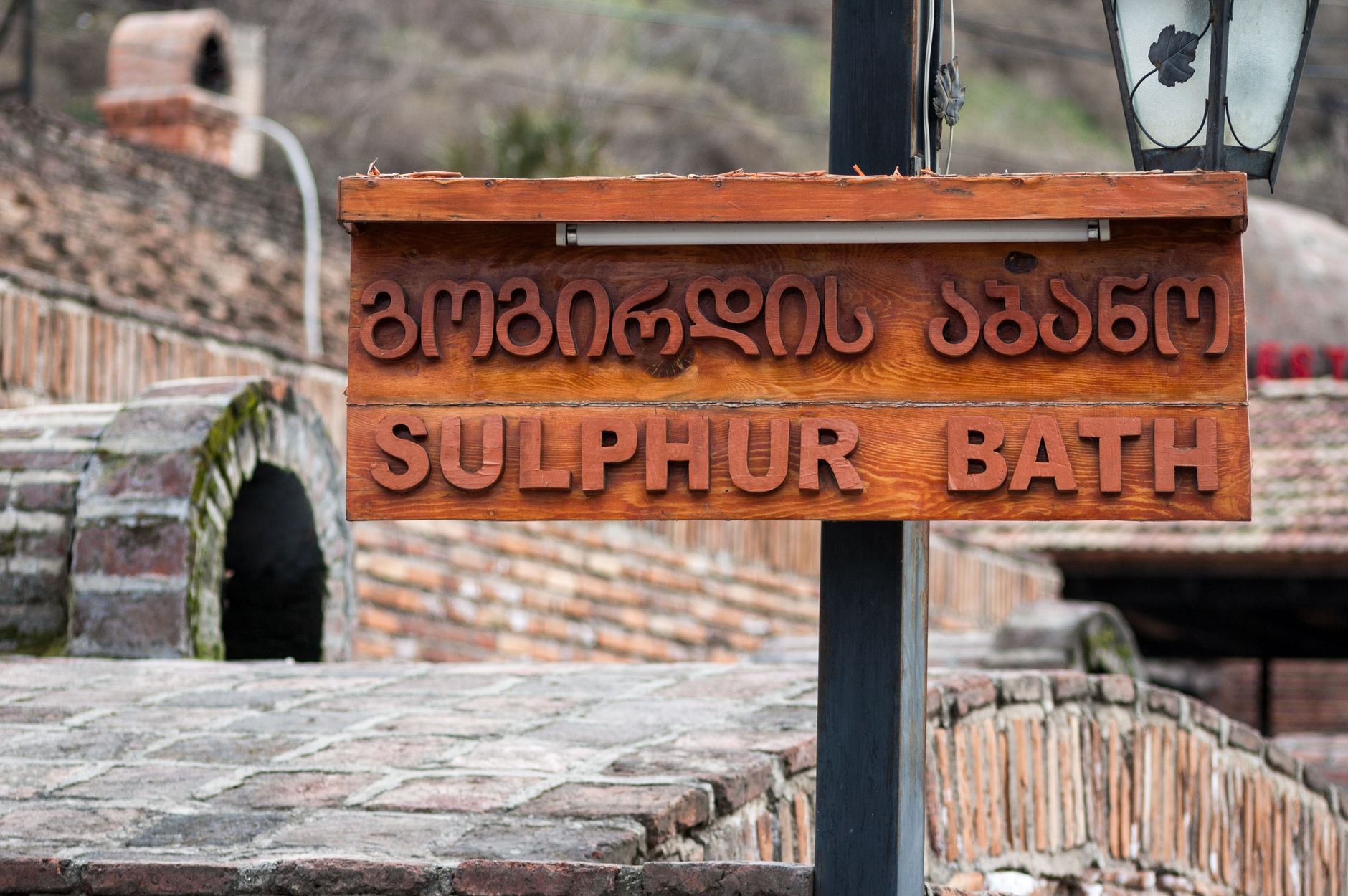
From outside, the bathhouses look like low mounds with round windows in the roof. That is not decoration. Each dome lets daylight into the steam room while trapping the heat inside, a ventilation system that has worked for nearly two hundred years. Underground, the halls sit below street level so the spring water reaches them by gravity. Behind the baths, the lane continues into Leghvtakhevi, the Fig Gorge, where a 22-metre waterfall drops between the cliffs a hundred metres from the bathhouse doors. Most visitors never walk that far. Group city walks usually pass the domes in their first hour; the common format is a highlights tour of the old town with a wine tasting at the end.
Narikala, the fortress that survived everything
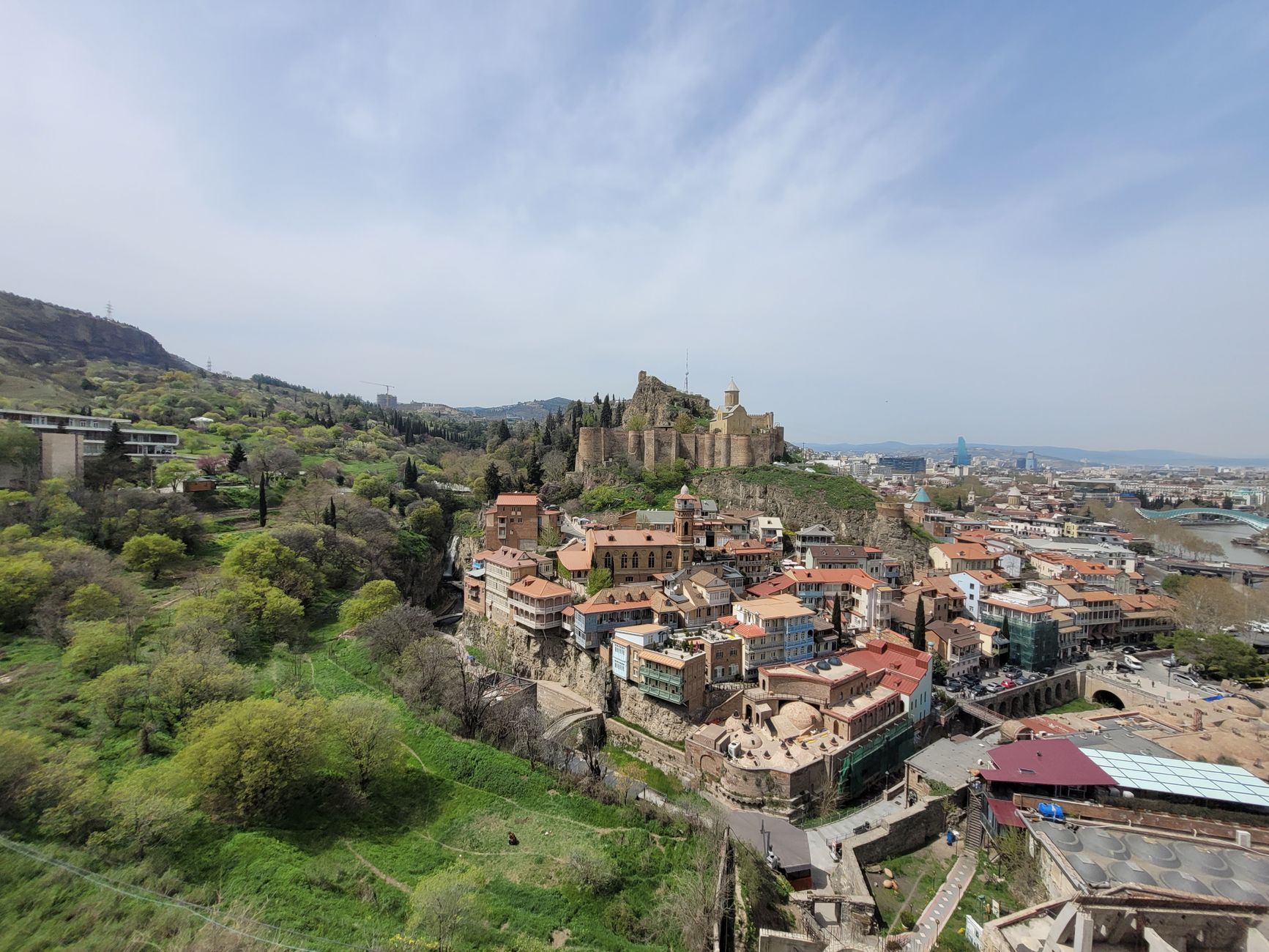
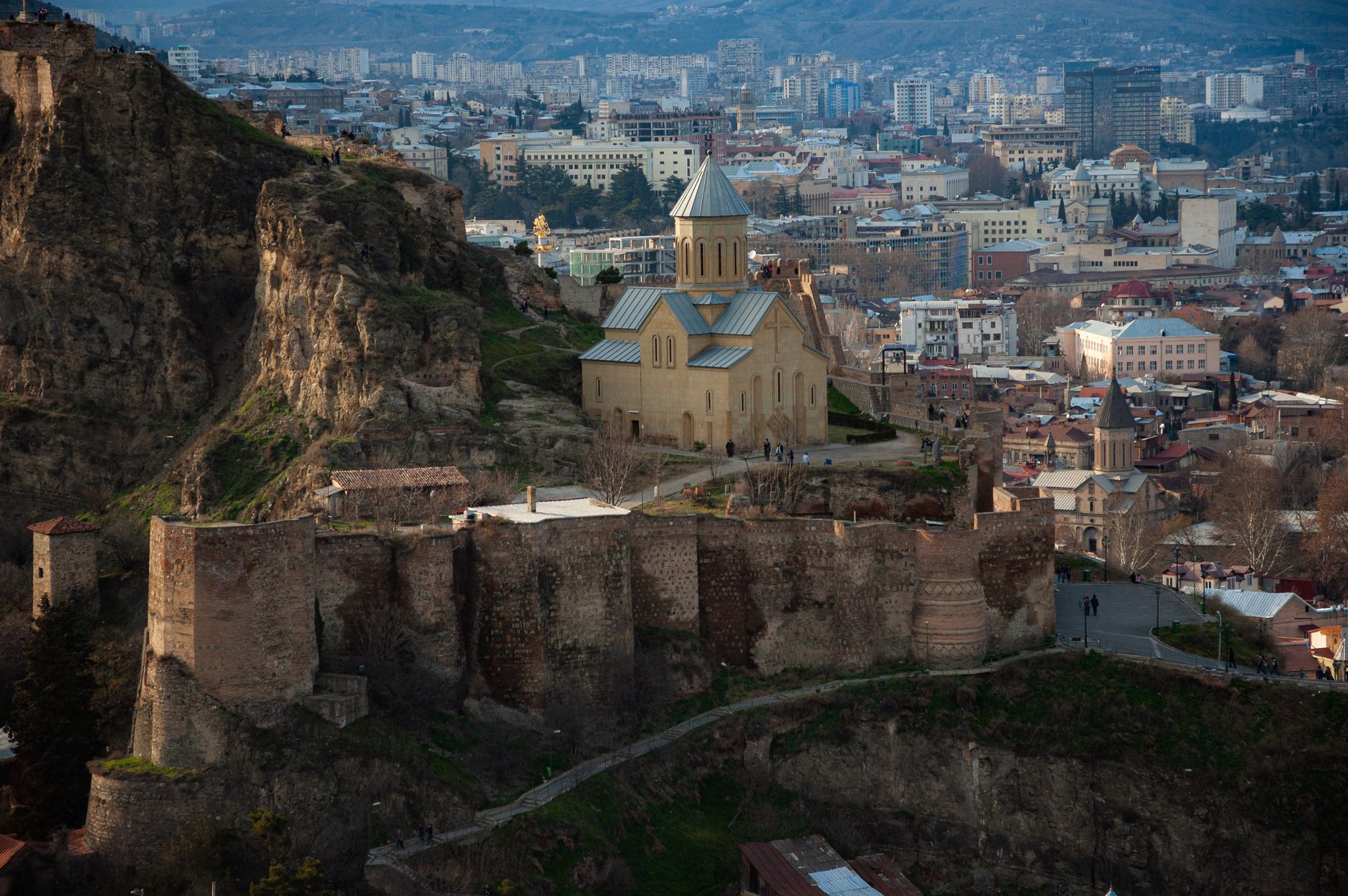
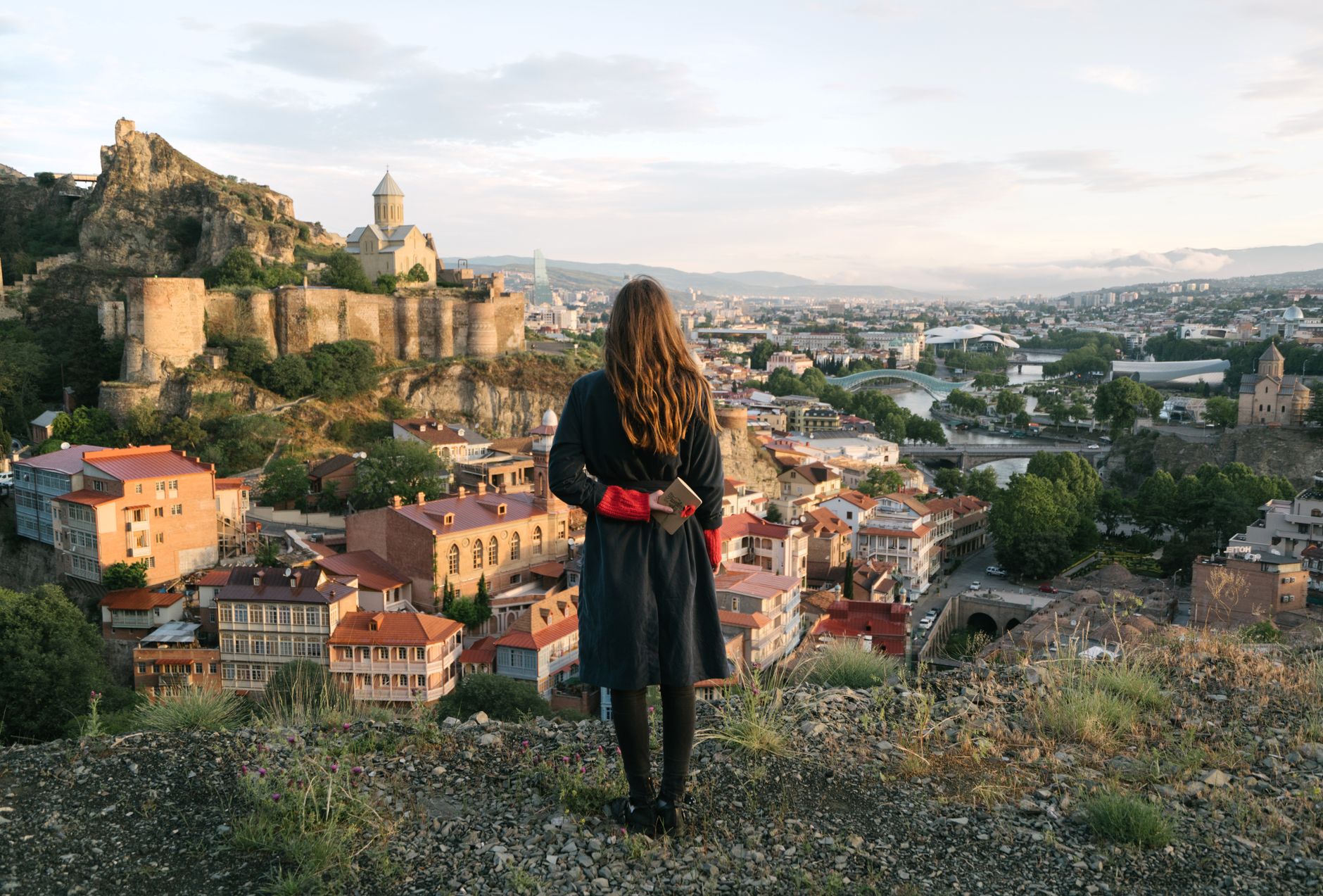
Narikala’s fortress looms over Abanotubani. Its first fortifications date to the fourth century, long before Vakhtang Gorgasali. Over fifteen hundred years Persians, Arabs, Mongols and Georgians themselves rebuilt the walls, each adding something new and tearing down what came before.
It ended in 1827. One of the towers held the Russian garrison’s gunpowder store, and the usual account blames an earthquake for setting it off. Most of the fortress has stood in ruins ever since, and that unfinished quality makes it more interesting than any restored castle. Walk between the broken walls and several centuries show at once. Entry is free, and the walls are unfenced, so watch children near the drops.
A cable car runs up from Rike Park. Two minutes over the rooftops of the old town, 2.5 lari each way, paid with the same Metromoney card as the metro. Climbing on foot is possible, but the path is steep and exhausting in the heat. Next to the fortress stands Kartlis Deda, the Mother of Georgia, a 20-metre aluminium figure from 1958 holding a sword for enemies and a cup of wine for guests. Its viewpoint is one of the best spots in the city for panoramic shots. A guided walk that includes both the cable car and the Mtatsminda funicular links the two hills in one afternoon.
A small St. Nicholas church stands inside the fortress walls. Its original was destroyed along with the gunpowder store in 1827. Nobody rebuilt it until the nineties, when restorers worked from old drawings and plans. Inside, the walls were painted from scratch, and the colors are noticeably brighter than in other Tbilisi churches. Restorers made no attempt to age the frescoes.
For a base inside this neighborhood, the Citadel Narikala Hotel is a five-minute walk from both the fortress and the sulfur baths.
The botanical garden below the walls
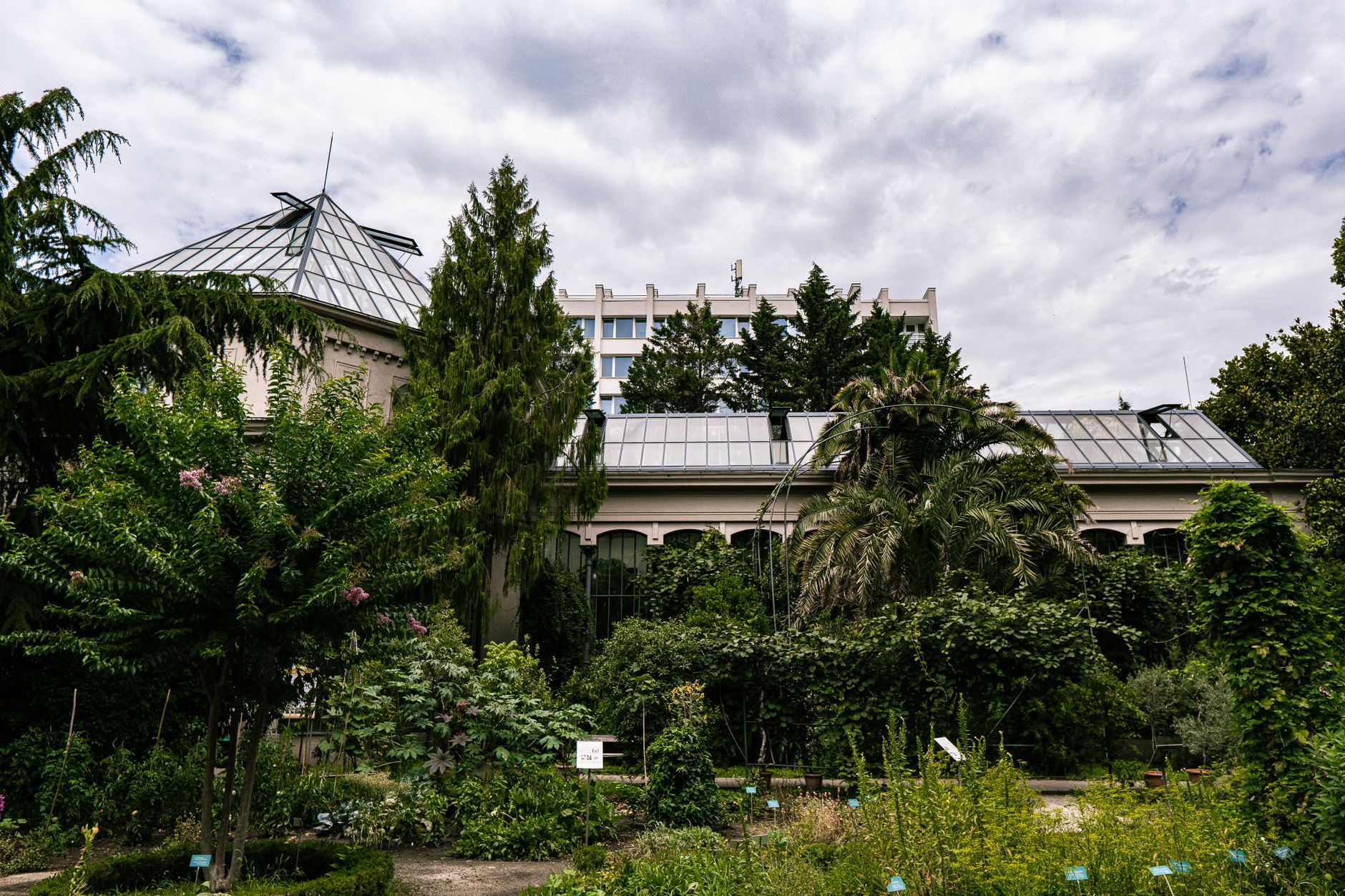
On the other side of the fortress, tucked into the Tsavkisistskali ravine, sits the Tbilisi Botanical Garden. Founded in 1845, it covers 128 hectares, and almost no tourists go there even though admission costs a few lari. Views of the fortress walls from below look nothing like the postcard shots. Down here the walls are simply massive. Paths follow the stream past old trees and a waterfall, and after about twenty minutes the noise of the city disappears. Enter from Botanikuri Street behind the baths, or walk down from Narikala through the upper gate.
The lanes hiding behind the avenue
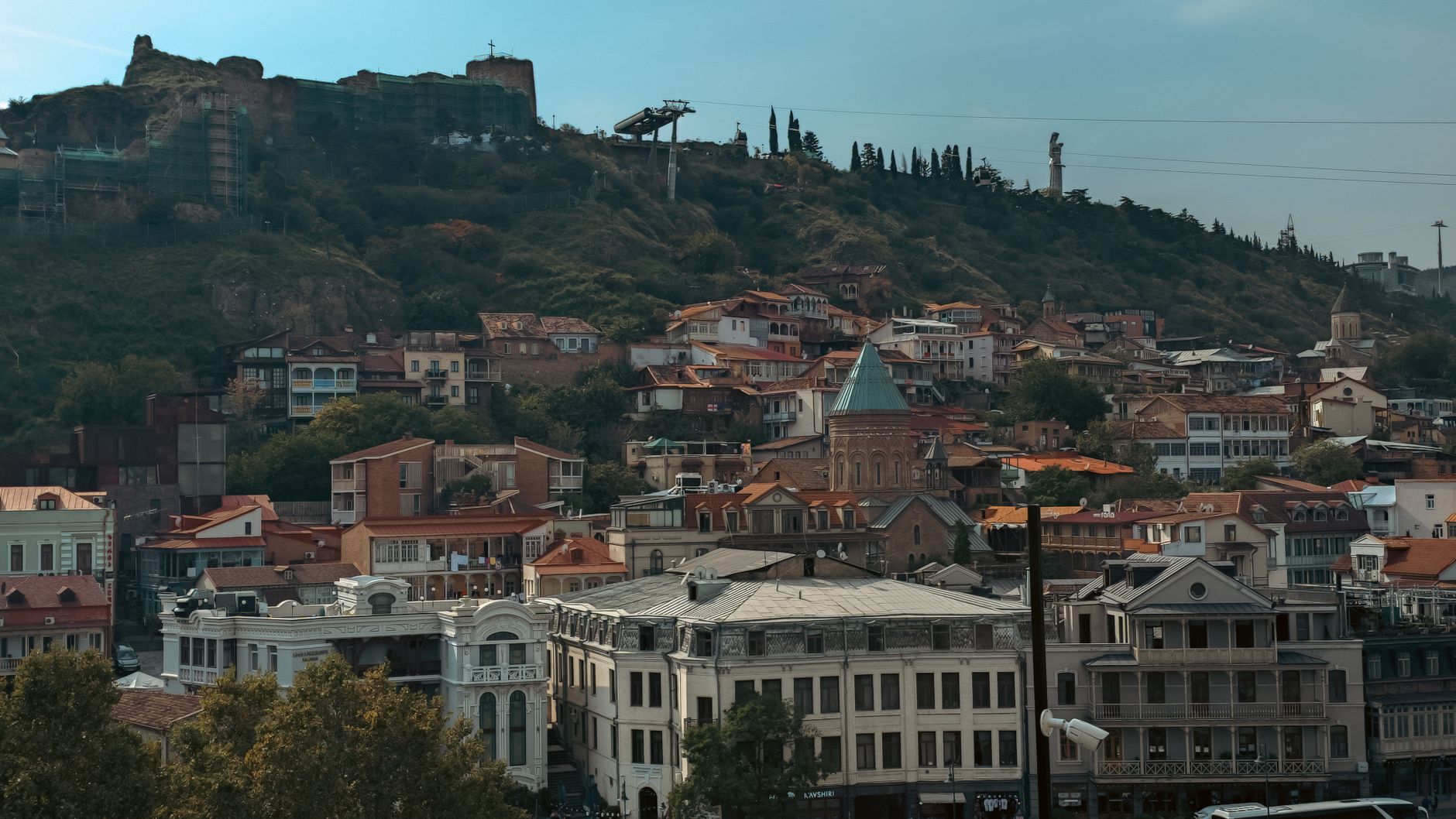
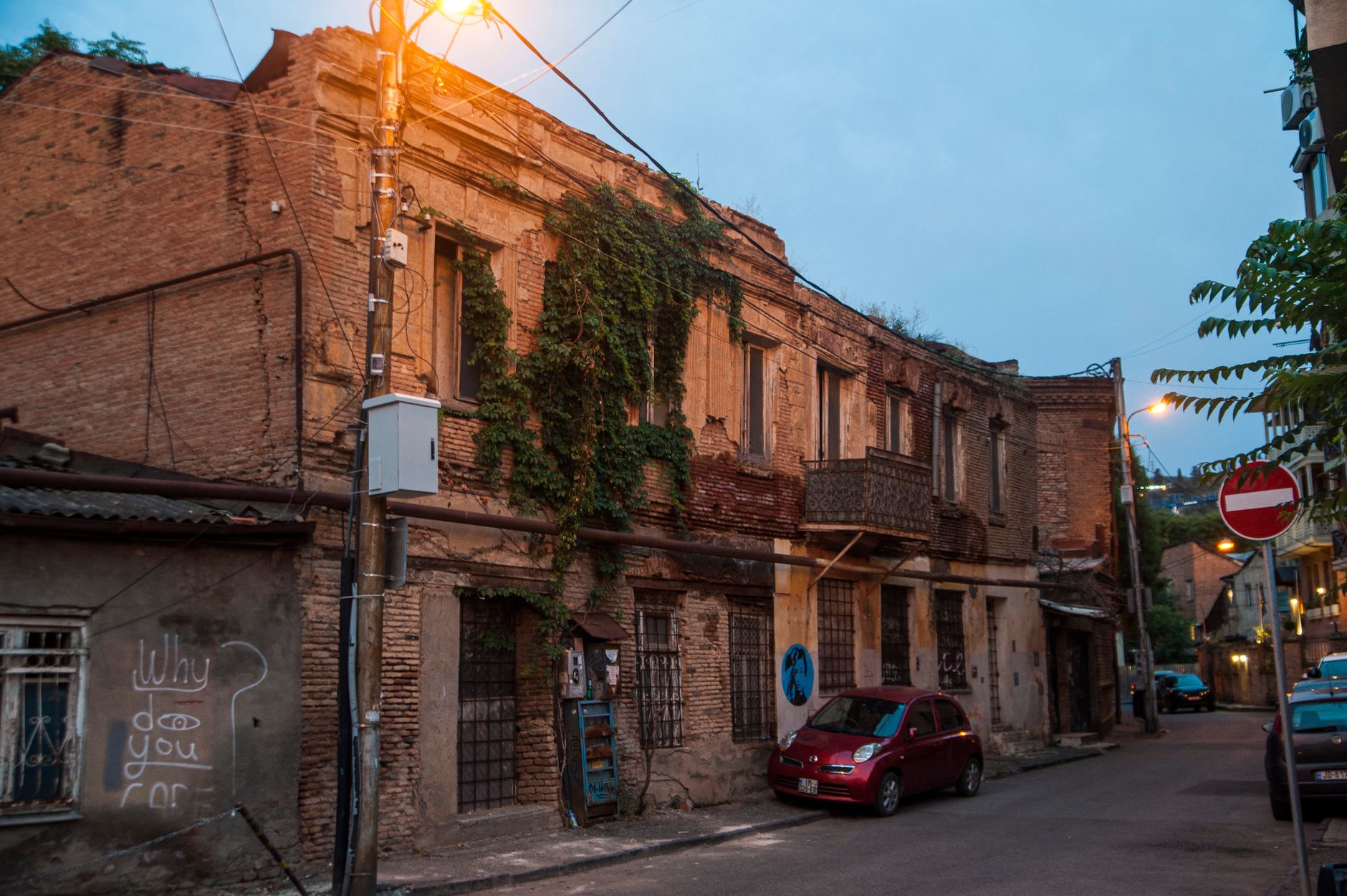
Tbilisi’s main tourist routes run along smooth, restored streets. Turn into any archway and the picture changes. Kldisubani, the district at the foot of Narikala, is still full of nineteenth-century houses with wooden balconies that look as if they are barely holding on.
Every one of these houses has its own carved railing, its own curved staircase, its own small courtyard with laundry lines and a grapevine. Neighbors still drink tea out in the yard and pay little attention to tourists with cameras. Courtyards like these are the Tbilisi that exists outside the museum version. Ask before photographing people on their own balconies; a nod is usually enough.
One of the most atmospheric streets is Betlemi, leading up to the Church of the Bethlehem Mother of God. Armenians named the district Betlemi after the biblical Bethlehem. Its street climbs in stairs and small bridges. From a few of its landings both Mtatsminda and Avlabari across the river come into view at once.
Anchiskhati, the oldest church in the city
Tbilisi’s oldest surviving building is the sixth-century Anchiskhati basilica, tucked into Shavteli Street near Meidan. It survived Persian raids and decades of Soviet use as a workshop and storage space, and now functions again as a working church. Inside there are almost no tourists. There are plenty of candles, and exactly the quiet the noisy streets make you want. Next door stands the leaning clock tower of the Gabriadze puppet theatre, built in 2010 from salvaged bricks and tiles; an angel strikes the bell on the hour, and a short puppet show plays in the window at noon and 7 pm.
Meidan, the square that has traded everything for centuries
Meidan, the old town’s main trading square, has been lined with caravanserais and shops since Persian times. Merchants converged here from across the Caucasus with silk, spices, wine and weapons. Today the same buildings house metalworkers and souvenir sellers, but the layout has barely changed over the centuries.
On the square, watch where you step. Part of the pavement is nineteenth-century cobblestone and part is modern restoration, and the difference is obvious. Nearby stands the Juma Mosque, the only one in Tbilisi where Sunnis and Shiites pray under the same roof; they have shared it since 1951, when the city’s Shia mosque was demolished for the dam. A rare thing, even in a country as religiously mixed as Georgia.
From the rooftop terraces on the slope above the square, the bathhouse domes, the minaret of the Juma Mosque and the spire of the Armenian church of St. George show at once, a combination guidebooks usually squeeze into a single line. Sayat-Nova, the eighteenth-century poet and bard, is buried at that church’s door. Grab a terrace table before noon, ahead of the tour-bus groups.
The caravanserai that became a museum
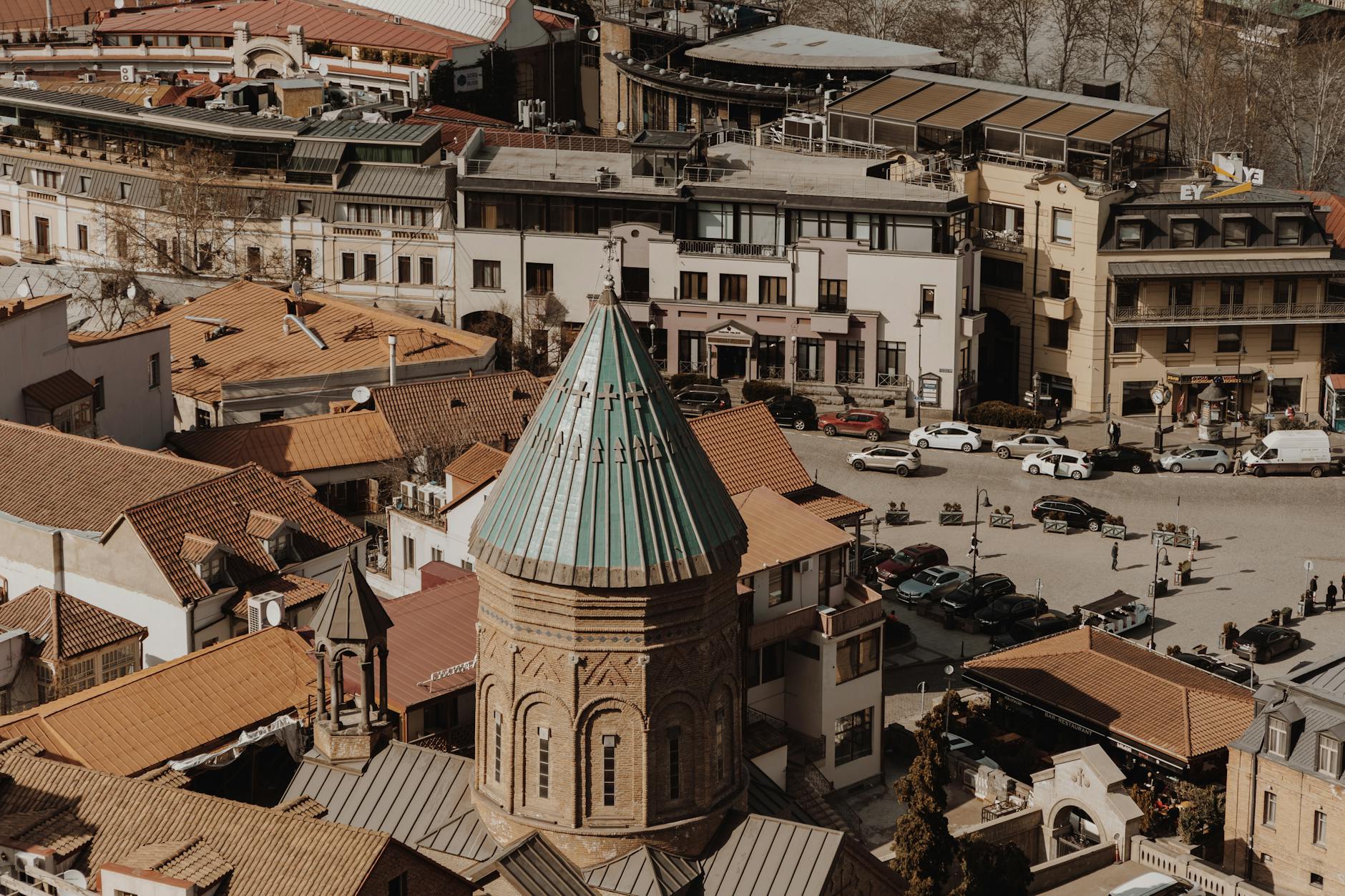
One of the old caravanserais beside Sioni Cathedral was turned into the Tbilisi History Museum, known to locals as Karvasla. Exhibition space is small, but the halls kept their vaults and niches, where merchants once slept alongside their goods. Tickets cost a few lari. Thick walls keep the heat out, so the stone vaults stay cool even at midday in July. Closed on Mondays.
Details that usually get lost in guidebooks
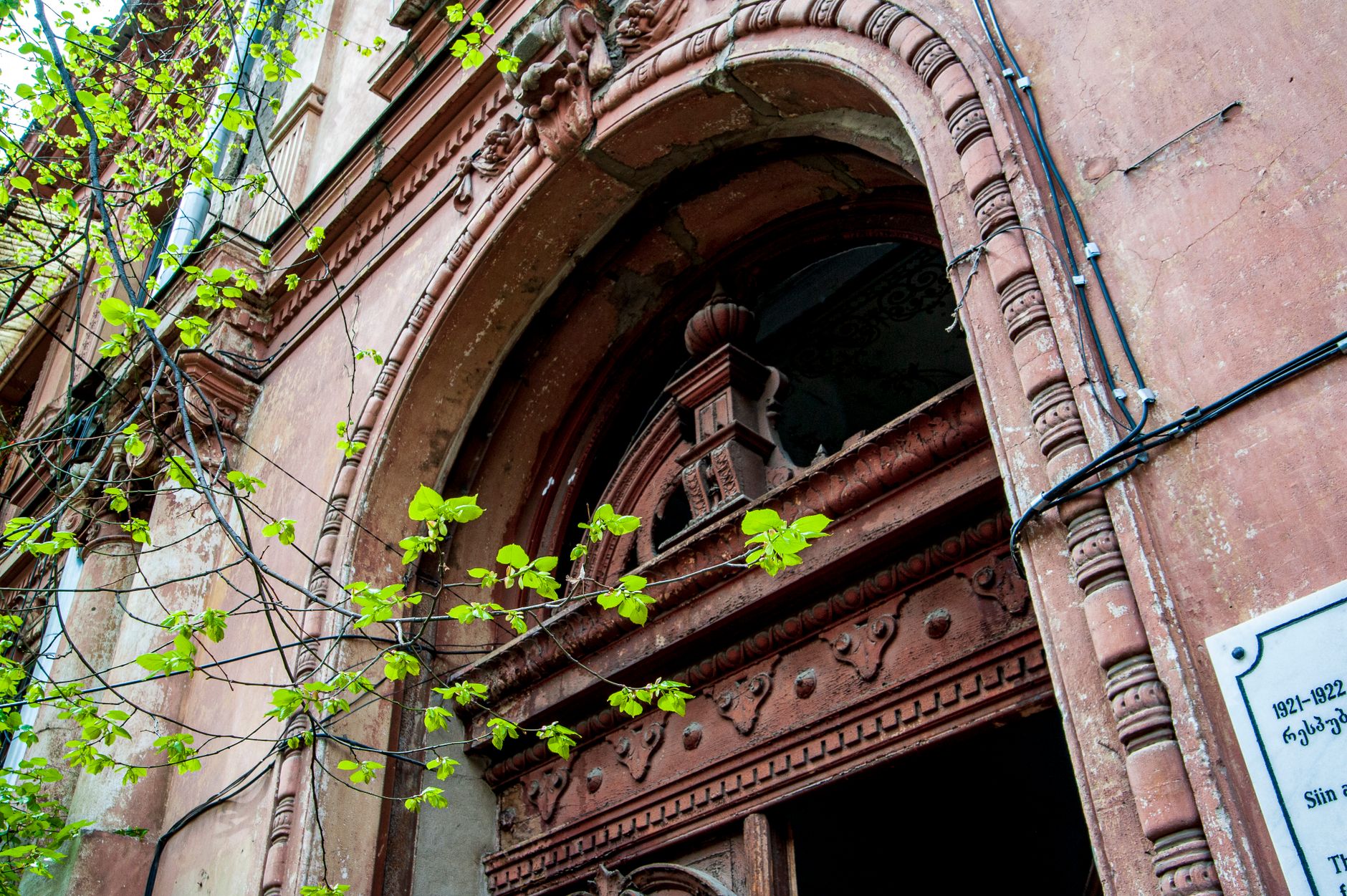
A few places in the old town rarely make it into the detailed guidebooks. On Kote Abkhazi Street, the Great Synagogue, finished in 1911, still gathers the Georgian Jewish community, one of the oldest in the world. Visitors may look inside on weekdays after asking the caretaker. Its story, along with the smaller synagogue nearby and the old Jewish quarter around Leselidze, is the subject of a Jewish heritage walking tour that most general city tours skip.
Two streets over, Sioni Cathedral keeps the cross of St. Nino, the woman credited with bringing Christianity to Georgia in the fourth century. It is made of two vine branches bound with her own hair, and it sits in a case to the left of the altar, easy to miss behind the crowd at the icons. Women are handed a headscarf at the door.
The wishing tree near Narikala
On the slopes between the fortress and the botanical garden, a few old trees carry ribbons tied by locals making a wish. The custom is Caucasian rather than specifically Georgian, and the trees stand off the main paths, so they rarely get photographed. Tie a ribbon if you like. Do not take one.
One more detail that is easy to miss: the balconies. Most of the carved wooden galleries in Kldisubani and Abanotubani date from the second half of the nineteenth century, when the Persian habit of open-air living rooms met Russian imperial building rules. Look for the ones painted sky blue. Once you know what to look for, the old town reads completely differently.
How to see these secrets for yourself
Most of this can be found alone with a map. Legends and small details surface faster with a guide, and a private walking tour built around your own interests is the format that actually goes into the courtyards instead of past them. Three hours is enough for the baths, the fortress and Kldisubani.
Early morning or sunset is the best time to walk. Then the sun turns the walls a warm color and there are fewer tour groups. Wear comfortable shoes. Old-town pavements are uneven, and some of the staircases are steep. Bring water too, since there is shade in the lanes but summer heat sets in fast; July and August regularly pass 35 degrees. For a first visit, check flights to Tbilisi early, since prices on direct routes swing a lot over the season.
For the whole route, baths, fortress, the lanes of Kldisubani and Meidan, set aside a full day, or two if you want to linger in every courtyard. In the synagogue, the mosque and the Orthodox churches, cover shoulders and knees. Nobody enforces it strictly, but locals notice. Otherwise the dress code in the old town is relaxed, and shoes for the stairs matter more than any outfit.
A practical order for one day: baths at 9 am before the halls fill, the gorge waterfall, the cable car up to Narikala, down through the botanical garden, lunch near Meidan, then Anchiskhati and the puppet-theatre clock at the 7 pm show. By then the bathhouse domes are lit from below, and the falcon story stops being a line in a guidebook.


