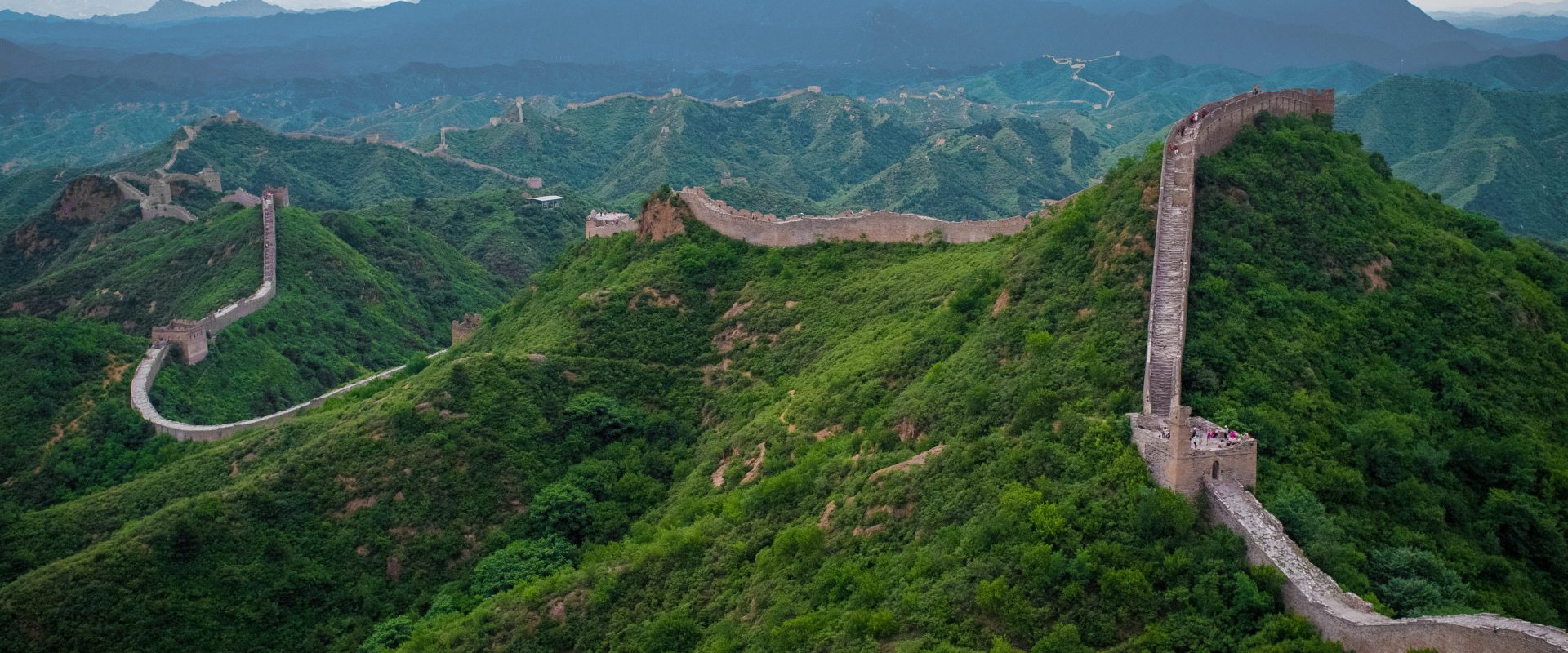
Beijing rewards a slow start. At seven in the morning the parks fill with people doing tai chi, and by midnight the same visitor can be on a hotel terrace watching the CCTV tower blink. Three days is enough for the three things most people come for: the Forbidden City, one stretch of the Great Wall, and an evening in the hutongs.
Many first-time visitors worry that China’s capital is hard to handle without a guide or the language. In practice the subway has English signs and announcements, QR payments work with foreign cards, and translation apps cover restaurant menus. What does need planning is tickets: the main sights now require passport-linked reservations days ahead, and the rules differ from one site to the next.
This itinerary groups the sights by district so there is no backtracking across a city of 20 million. Day one stays inside the old imperial axis, day two leaves for the Wall, day three covers the temples and the alleys. Prices below are in Chinese yuan (CNY); at the current rate 100 CNY is roughly $14.
Day 1 on the Imperial Axis
Everything on the first day lies on one north-south line: Tiananmen Square, the Forbidden City behind it, and Jingshan hill behind that. Walking distance from the square to the top of the hill is about 2.5 km, but inside the palace the detours add up to eight or ten. Comfortable shoes matter more than anything else today. Independent entry works fine, and a guided Forbidden City tour solves the ticket problem for those who missed the online release.
Morning on Tiananmen Square
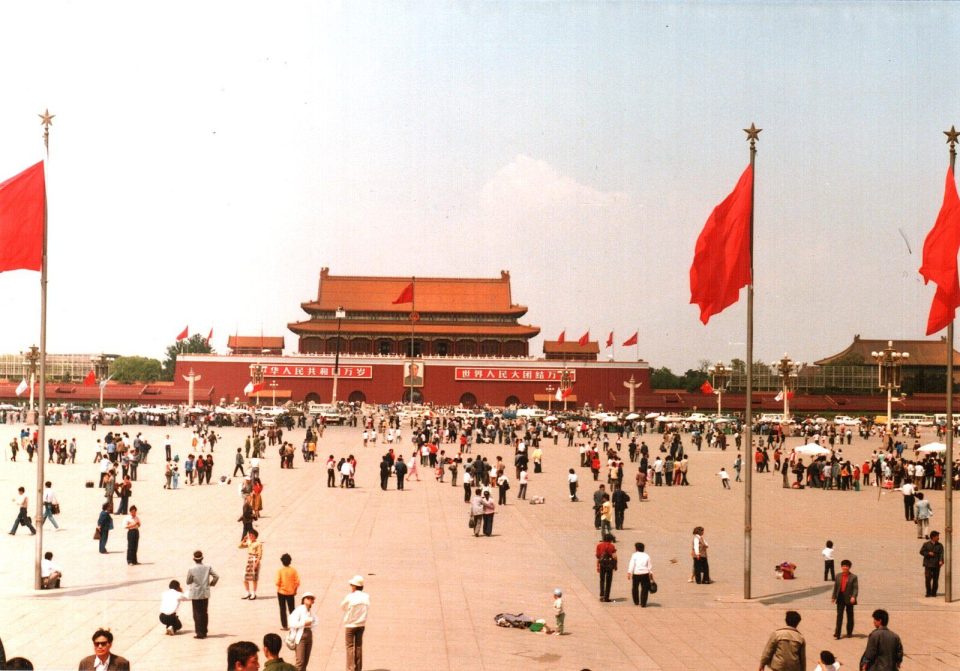
At 44 hectares this is one of the largest public squares in the world; estimates of its capacity run to a million people. Mao Zedong’s Mausoleum stands in the middle, the National Museum along the east side, and the Great Hall of the People on the west. Nothing here is free to wander into any more. Since 2021 the square itself requires a reservation.
- Flag ceremony. Soldiers raise the flag at sunrise every day, which in summer means around 5 am. Several thousand people come to watch, so arrive 40 minutes early and expect airport-style bag checks at every entrance.
- Reservation. Entry is free but must be booked at least one day ahead through the official WeChat mini-program, with a passport number for each visitor. Bring the physical passport; a photo on the phone is not accepted. Visitors without WeChat usually solve this by taking a guided Tiananmen and Forbidden City tour, where the operator handles both bookings.
Inside the Forbidden City (Gugong)
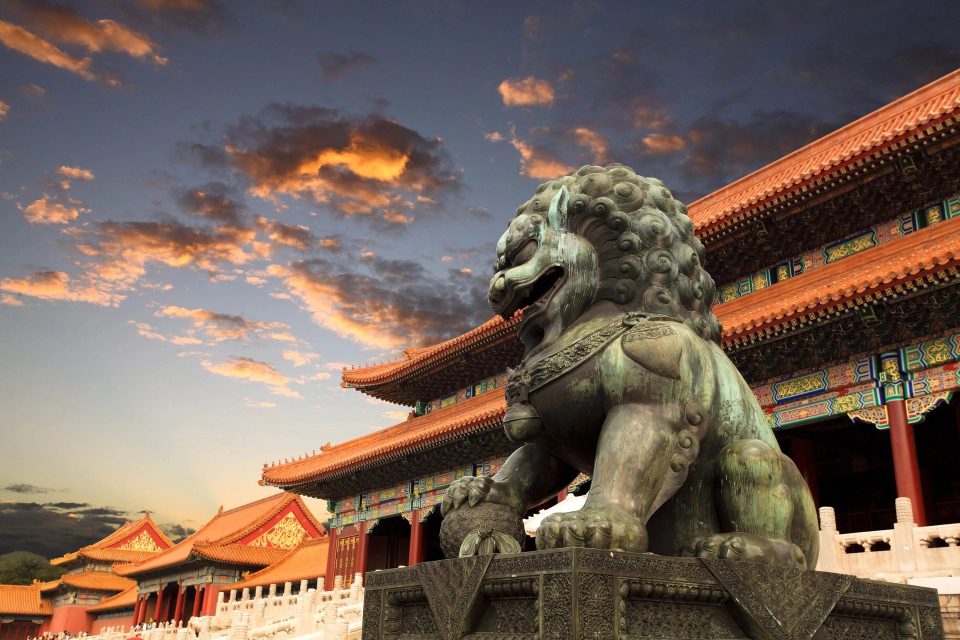
Entry is through the Meridian Gate, the one behind Mao’s portrait, and exit is only through the north gate. Between them lies the largest palace complex on earth, 72 hectares and roughly 8,700 rooms, though the legend of 9,999 is repeated on every sign. Twenty-four emperors of the Ming and Qing dynasties ruled from here between 1420 and 1912. Opening hours are 8:30 to 17:00 from April to October, closing half an hour earlier in winter, and the whole site is shut on Mondays.
Ticket timing. Tickets cost 60 CNY in high season and 40 CNY from November to March. They go on sale on the official Palace Museum site and WeChat exactly seven days ahead at 20:00 Beijing time, and for weekends and holidays they are gone within minutes. There is no ticket office at the gate. If the official release is missed, the remaining options are reseller platforms such as Trip.com at a markup, or a tour that includes admission.
Most visitors march straight up the central axis through the three great halls and leave exhausted. A better plan: spend an hour on the axis, then turn east into the Treasure Gallery (extra 10 CNY) and the Nine Dragon Screen, and finish in the Imperial Garden at the north end. Its twisted cypresses and piled rockery are 500 years old and the only shade in the complex. Four hours is a realistic minimum.
Sunset from Jingshan Park
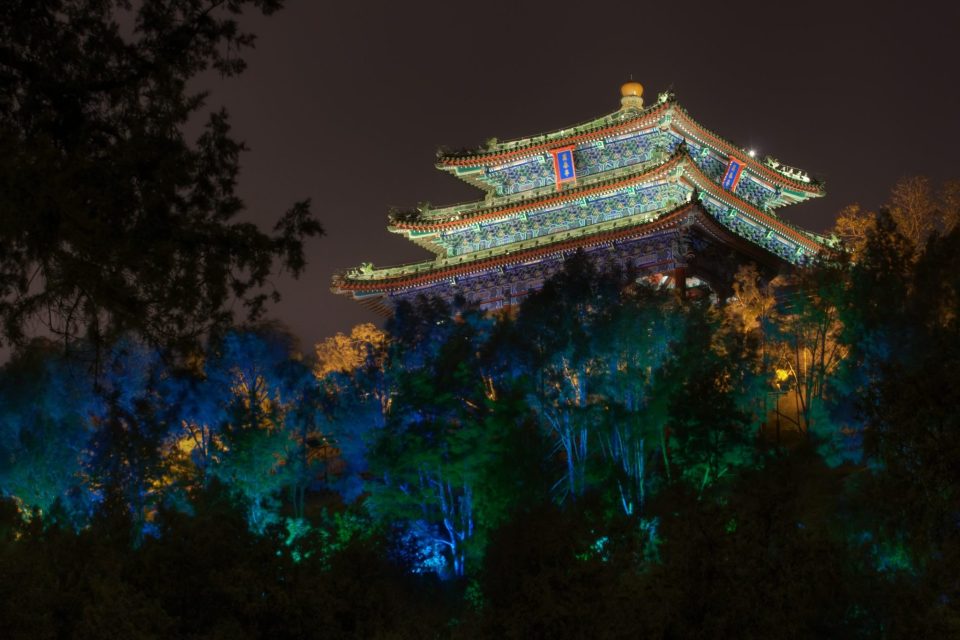
Across the road from the north gate is Jingshan, the artificial hill built from the earth dug out for the palace moat. Entry costs 2 CNY. Ten minutes of steps lead to Wanchun Pavilion on the summit, and from there the entire Forbidden City lies below in a single frame, golden roofs running south to the square. On a clear evening the view is the best in the city, and it is the photo that ends up on every postcard. Gates close at 21:00 in summer, so there is no need to rush.
Day 2 at the Great Wall and the Olympic Park
Day two leaves the city. Mutianyu is 70 km north-east of the center, which means a 90-minute drive each way, so the Wall takes the whole daylight part of the day. Evening goes to the Olympic Park, which is on the way back and looks best after dark. Pack water and a hat; there is little shade on the Wall and prices at the top are double those at the base.
Mutianyu Section
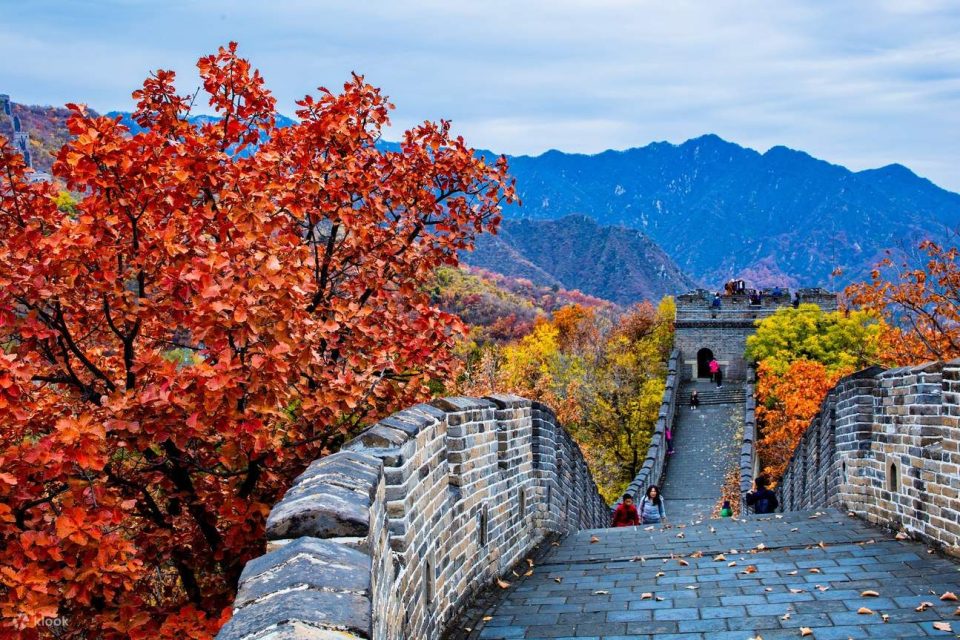
Badaling is closer and more famous, which is exactly the problem: it is the section tour buses use, and on weekends the walkway is shoulder to shoulder. Mutianyu has 22 restored watchtowers over 2.5 km, forest on both sides, and a fraction of the crowd. For a comparison of all the open sections, see which part of the Wall to visit.
- Tickets. Entry is 40 CNY. A shuttle from the car park to the foot of the Wall costs 15 CNY and is hard to avoid. Cable car up and down is 140 CNY; the chairlift up with the toboggan down is the same price and the better choice.
- Getting there. A taxi or ride-hailing car from the center costs 350 to 450 CNY each way. The Mubus tourist shuttle leaves from Dongzhimen in the morning and returns mid-afternoon, which is cheaper and avoids haggling. Public bus 916 to Huairou plus a local taxi works too but adds an hour.
- Route on the Wall. Take the chairlift to tower 6, walk east to tower 14 with the steep climb to tower 20 as an option, then come back and ride the toboggan down from tower 6. It is a 1.5 km metal luge with a hand brake, takes about five minutes, and closes in rain.
Olympic Park After Dark
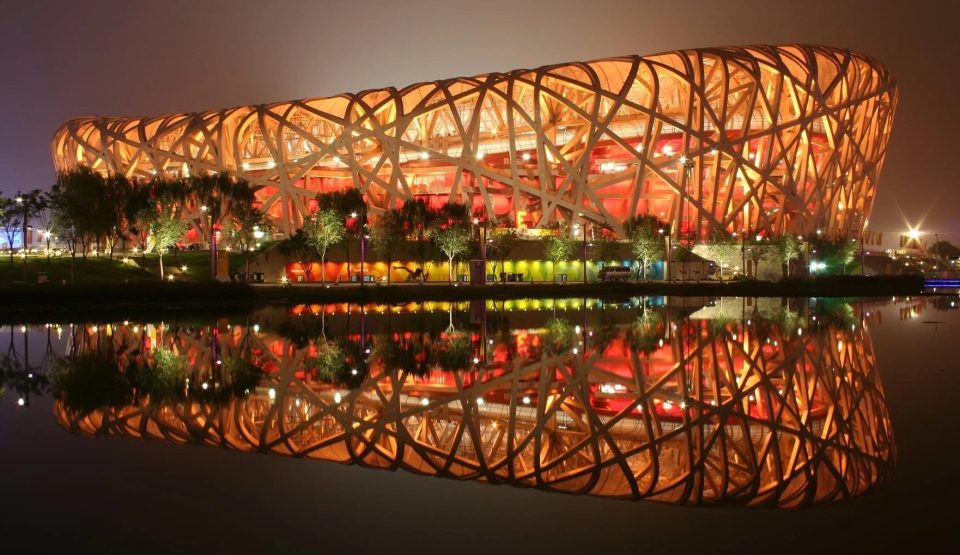
Back in the city, take subway Line 8 to Olympic Green. Two buildings from the 2008 Games, reused for the 2022 Winter Olympics, sit a few hundred meters apart:
- Bird’s Nest. The National Stadium, 42,000 tonnes of steel woven into a lattice. Going inside costs around 50 CNY and is not necessary; the structure is the point.
- Water Cube. The aquatics venue, wrapped in blue plastic bubbles that glow after sunset. Since 2022 it doubles as a curling arena in winter.
Lights switch on at dusk and stay on until around 22:00. Walking the length of the park takes 40 minutes, and the crowd is mostly local families, with none of the ticket queues of the daytime sights.
Day 3 Among Temples and Hutongs
After two days of palaces and fortifications the third day is smaller in scale. Both temples are on subway Line 5, twenty minutes apart, and the hutong district begins a short walk from the second one. Start early: the Temple of Heaven is at its best before 9 am, and the Lama Temple before the tour groups arrive at 11.
Morning at the Temple of Heaven
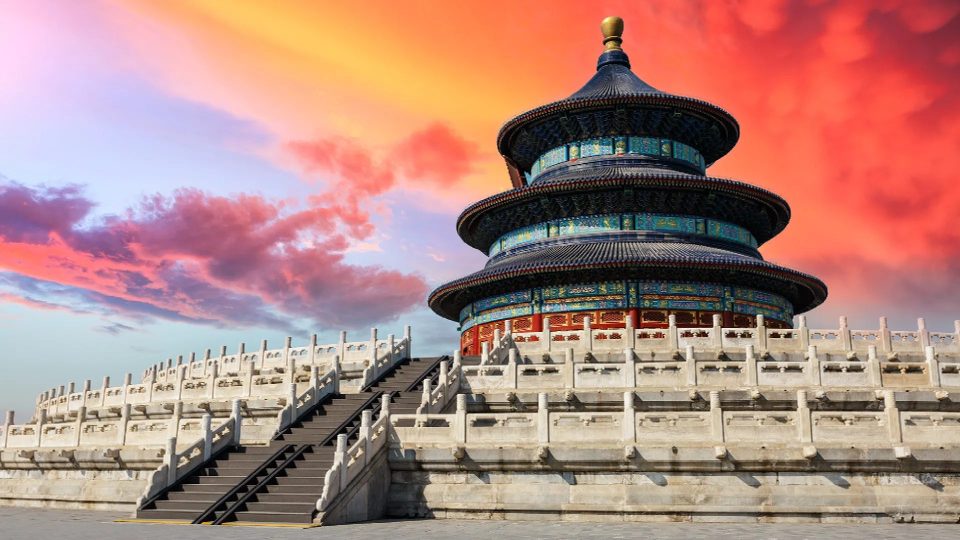
Ming and Qing emperors came here twice a year to pray for the harvest. The park ticket is 15 CNY, the through ticket covering the buildings 34 CNY in high season. Its centerpiece, the round Hall of Prayer for Good Harvests, is 38 meters tall with a triple roof of deep blue tiles, and the wooden frame holds together without a single nail. Twenty-eight pillars support it; the four central ones represent the seasons. Visitors who want the symbolism explained can join a Temple of Heaven guided visit, usually combined with a tai chi lesson.
- Why early. Park gates open at 6 am, two hours before the halls. In those two hours the long corridor fills with retirees playing cards, dancing with fans, writing calligraphy on the paving with water brushes, and practicing tai chi. That scene is as much the reason to come as the architecture.
Afternoon at the Yonghegong Lama Temple
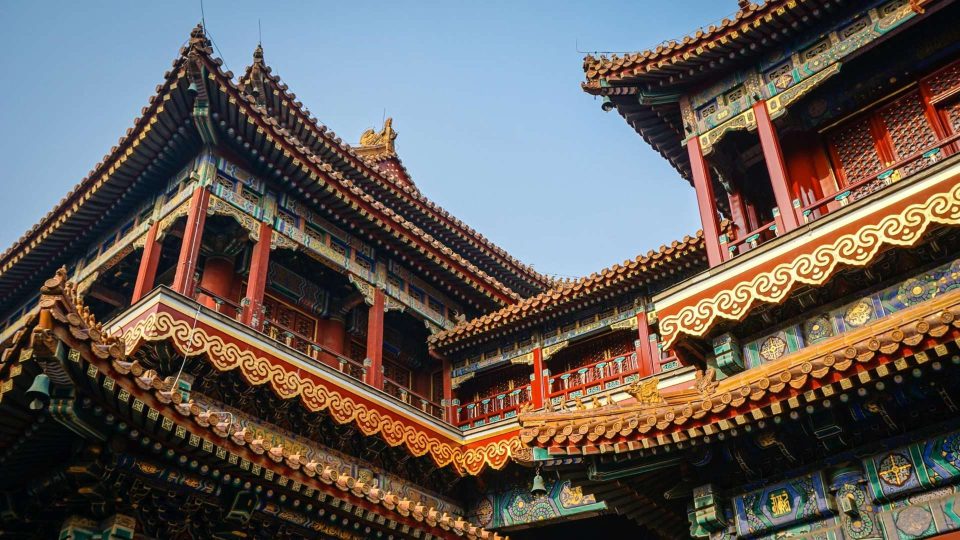
Yonghegong is the largest Tibetan Buddhist temple outside Tibet and still an active monastery. Entry is 25 CNY, hours 9:00 to 16:30, and the subway station of the same name on Lines 2 and 5 exits right at the gate. Incense is handed out free with the ticket, and the courtyards smell of it all day. In the last hall stands a Maitreya Buddha 26 meters tall, carved from a single sandalwood trunk, 8 meters of it below floor level to keep it upright. Photography inside the halls is not allowed.
Evening in the Hutongs
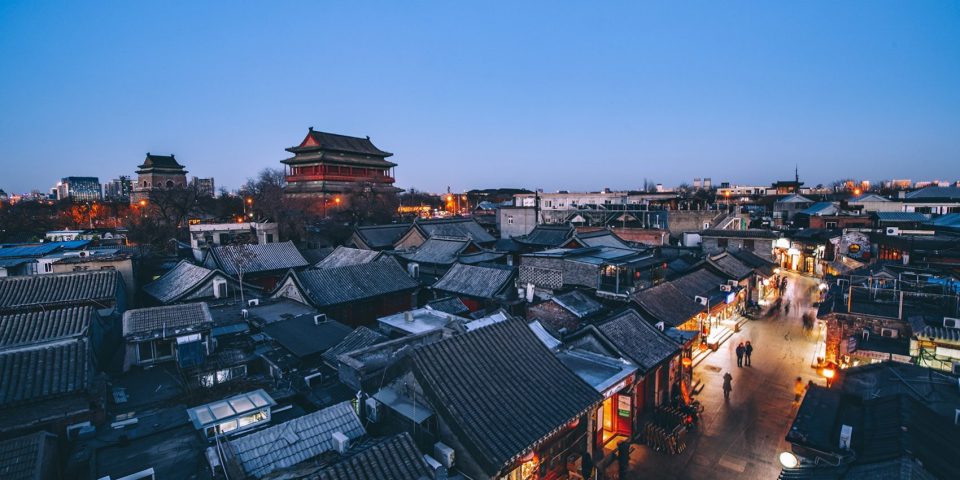
Hutongs are the old alleys of gray courtyard houses that once covered the whole city inside the second ring road. A few thousand survive, most of them within a 15-minute walk of the Lama Temple and the Shichahai lakes.
- Nanluoguxiang. An 800-meter pedestrian lane and the most commercial of the hutongs: cafes, souvenir stalls, lamb skewers and sugared hawthorn on sticks. Walkable in half an hour. A hutong food tour that starts here is a practical way to try eight or ten dishes without ordering blind.
- Yandai Xiejie. A 230-meter lane of old shopfronts leading to the Shichahai lakes, with the Drum and Bell towers at the far end. Trade here goes back to the Qing dynasty, when it sold tobacco pipes.
- Side lanes. One turn off the main streets and the shops stop: laundry on lines, bicycles stacked against walls, men playing mahjong on folding tables. Rickshaw drivers around Shichahai offer 30-minute loops for 100 to 150 CNY per cart; agree the price and the route before getting in.
Where to Stay for This Route
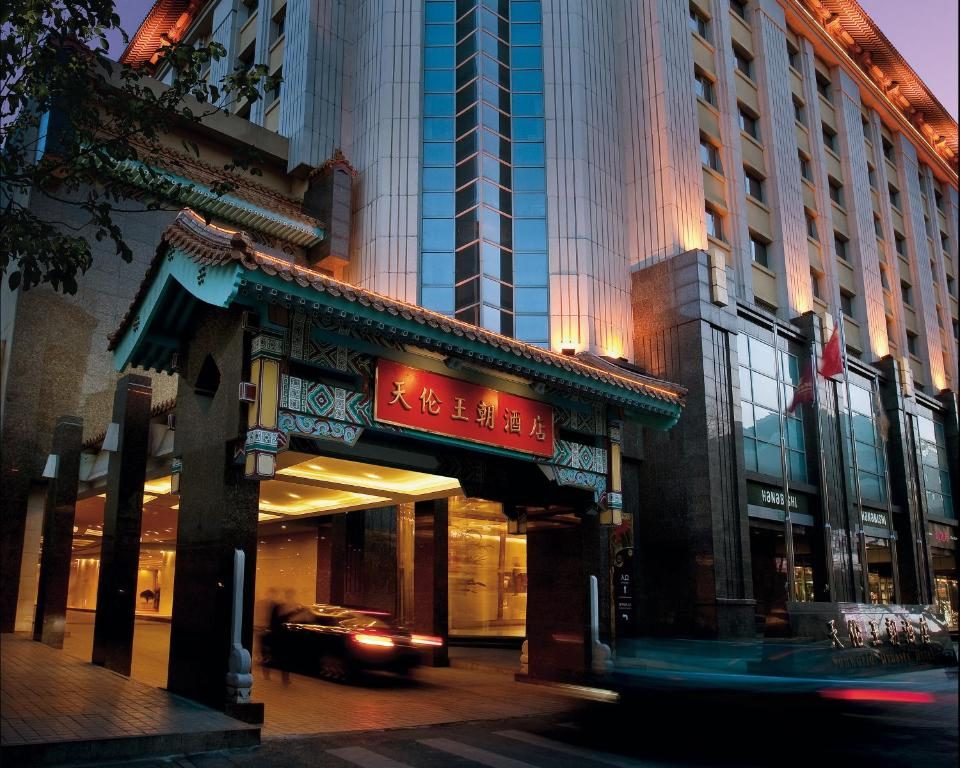
Beijing is 16,000 square kilometers, and a hotel in the wrong district adds an hour of subway each day. Three areas suit this itinerary: Wangfujing, within walking distance of the Forbidden City; the hutongs around the Lama Temple and Shichahai, for courtyard houses; and Sanlitun or the CBD for nightlife and the newer high-rise hotels. Filtering hotels in Beijing by Dongcheng district catches the first two areas at once.
A few places that come up consistently in traveler reports and fit each district:
Wangfujing for Walking Everywhere
From here the east gate of the Forbidden City is 15 minutes on foot, and the pedestrian shopping street with its night food stalls is at the door.
- Sunworld Dynasty Hotel Beijing Wangfujing, five stars. A large older hotel with a central atrium, right on the main street. Rooms are dated in places, but the location is hard to beat for day one.
- Novotel Peace Beijing, four stars. Reliable chain standard, big breakfast, rooms larger than usual for the price. Two subway stations within five minutes.
Hutongs for a Courtyard House
Courtyard hotels are converted siheyuan homes: rooms around an open yard, a tree in the middle, quiet at night. Most have fewer than 20 rooms, so they fill early in spring and autumn.
- Beijing 161 Lama Temple Courtyard Hotel. Small, well kept, with a rooftop terrace and a quiet lane a few minutes from the Lama Temple station. Good base for day three.
- Shichahai Shadow Art Performance Hotel. A boutique courtyard near the lakes that stages shadow-puppet shows for guests in the evening, a tradition that is otherwise hard to find in the city.
CBD and Sanlitun for the Skyline
East of the second ring road the city turns into glass. Subway Lines 1 and 10 connect this area to the sights in 20 to 30 minutes, and the bars and restaurants of Sanlitun are open late.
- Jen Beijing by Shangri-La. Mid-range by Shangri-La standards, with upper-floor rooms facing the CCTV headquarters, the building locals call the trousers. Large gym, lively bar.
- Rosewood Beijing. Top of the market, across the road from the CCTV tower. Rooms start around $400. Service and design justify it for those who can.
Where to Eat Peking Duck
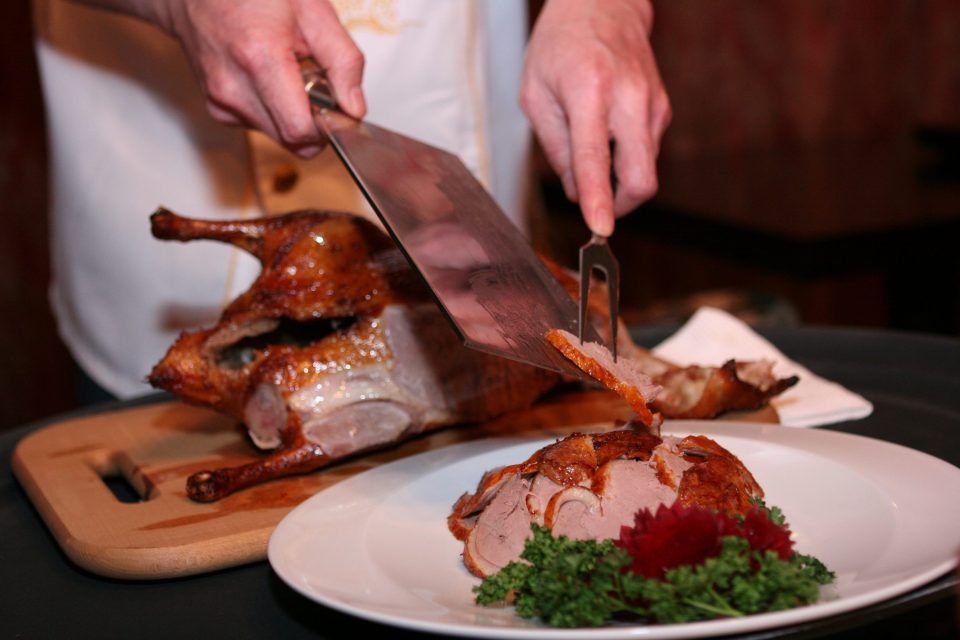
Peking duck is roasted over fruitwood until the skin turns to glass, then sliced at the table and eaten in thin pancakes with scallion, cucumber and sweet bean sauce. A whole duck feeds two or three and costs 200 to 350 CNY depending on the restaurant. Three places cover the range:
- Siji Minfu (四季民福). Currently the most popular duck house in the city, with several branches; the one on Nanchizi Street faces the Forbidden City moat. A duck costs around 300 CNY. Queues at dinner reach two hours, so either arrive before 11 am or take a number and walk along the moat while waiting.
- Quanjude (全聚德). Serving since 1864, with the original branch at Qianmen. More expensive and more touristy than the competition, but the duck is still cut the classic way into 100-plus slices, and the dining rooms have the feel of a state banquet.
- Jing Yaa Tang. Michelin-starred duck in a hotel basement in Sanlitun, with a cocktail bar attached. The quietest and most polished of the three, and the one to pick for a last-night dinner. Reservations are essential.
Practical Notes Before Departure
- Internet. Google services, Instagram, WhatsApp and YouTube are blocked. Install a VPN before leaving home, because the VPN sites themselves are blocked once inside. International roaming on a home SIM bypasses the filter, as does an eSIM bought abroad, at a higher price per gigabyte.
- Money. Cash still works but almost nobody uses it, and foreign cards are accepted only in hotels and big malls. Download Alipay or WeChat Pay before the trip and link a Visa or Mastercard; both accept foreign cards since 2023. After that every taxi, noodle shop and subway gate is a QR scan. Keep 200 to 300 CNY in cash for the rare stall that only takes it.
- Language. An offline translator such as DeepL or Baidu Translate handles menus and signs. For taxis, keep the hotel name and address in Chinese characters on the phone; drivers rarely read English. Didi, the local ride-hailing app, has an English interface and removes the conversation entirely.
- Getting around. Subway fares run from 3 to 9 CNY by distance, paid by QR code in Alipay. The Airport Express from Capital Airport costs 25 CNY and takes 20 minutes to Dongzhimen. Taxis start at 13 CNY, and a trip across the center rarely passes 50.
Budget for the three days, excluding the hotel: about 500 CNY for admissions and the Wall transport, 300 CNY for subway and taxis, and whatever a duck dinner adds. Everything else, the parks at dawn, the alleys at dusk and the view from Jingshan, costs 2 CNY or nothing.


