
On paper Singapore looks like a city for business travelers: glass towers, strict rules, expensive hotels. In practice it is one of the easiest places in Asia to bring children. Distances are short, the metro is air-conditioned, tap water is drinkable, and nobody stares at a stroller in a restaurant. The catch is choice. A six-year-old and a fifteen-year-old want different things, and Singapore has enough for both to fill two weeks. Four days covers the essentials. A week lets you slow down.
Sentosa Island for Every Age
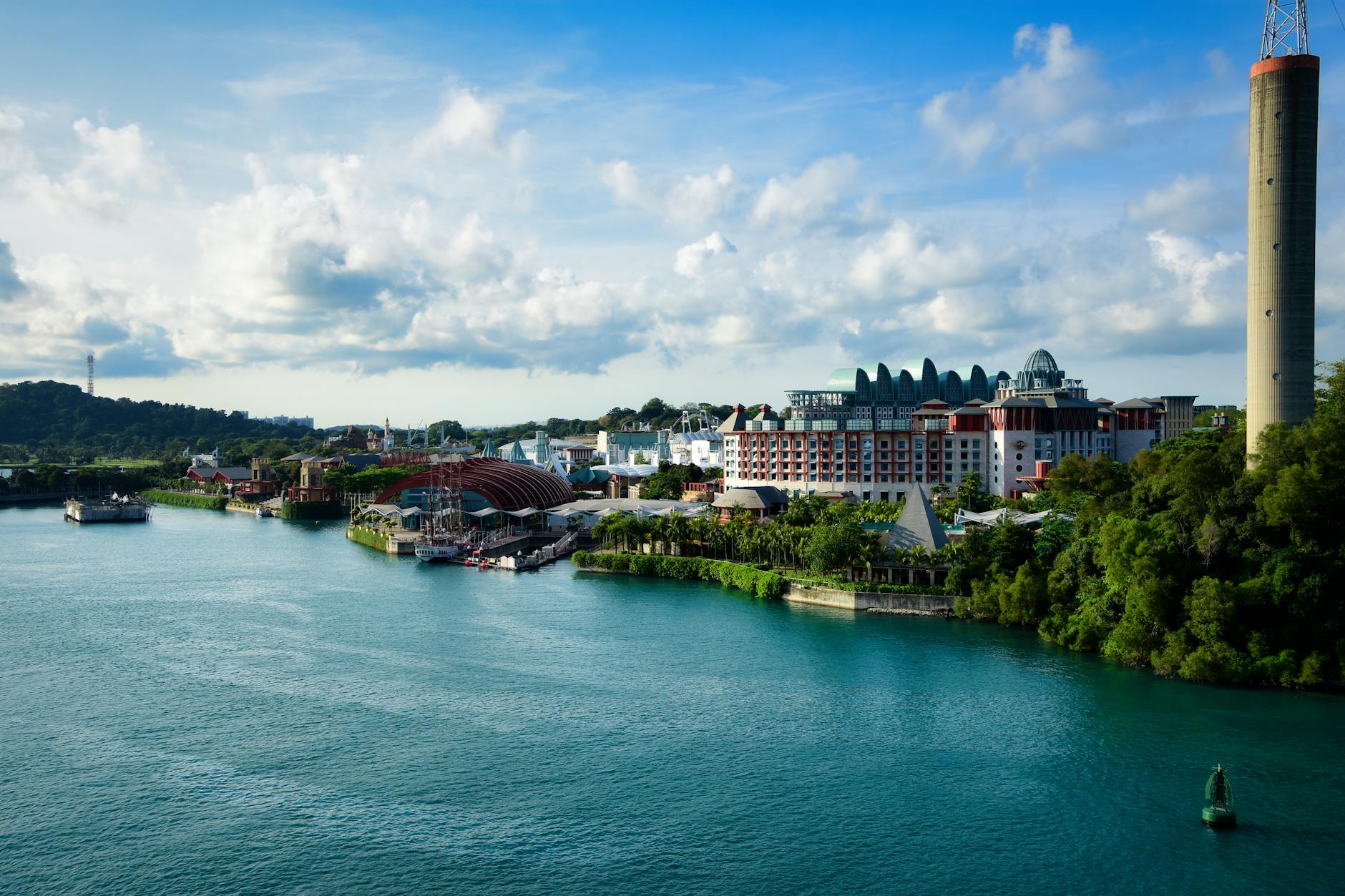
Sentosa is a five-square-kilometre island off the south coast, joined to the mainland by a bridge, a monorail and a cable car. Almost everything on it was built for visitors: a theme park, an oceanarium, a waterpark, three beaches, a luge track, a zipline and a dozen hotels. Families with young children can spend two full days here without repeating anything. Teenagers usually ask for a third. Walking in costs nothing via the Sentosa Boardwalk from VivoCity mall, a covered ten-minute stroll. The Sentosa Express monorail from VivoCity level 3 costs S$4 for the day and includes island admission.
A Day at Universal Studios Singapore

Singapore has no Disneyland. Universal Studios Singapore fills the gap, and for a family with a wide age range it works better than most big parks because it is compact: seven zones around a lagoon, walkable end to end in ten minutes.
Those zones are Hollywood, New York, Sci-Fi City, Ancient Egypt, The Lost World, Far Far Away and Minion Land, which opened in February 2025 where the old Madagascar area used to be. Revenge of the Mummy, an indoor coaster in the dark, and Transformers, a 3D motion ride, are the two queues teenagers head for. Younger children get the Enchanted Airways junior coaster in Far Far Away, the Sesame Street Spaghetti Space Chase in New York and the whole of Minion Land, built for smaller riders.
Now the practical side. Gates open at 10 am; standing there 15 minutes early gets you onto the Mummy before the queue hits 45 minutes. Adult one-day tickets start at about S$83, children aged 4 to 12 pay around S$62, and peak dates cost more. Live wait times sit in the official app. On school holidays a Universal Express pass, from about S$50 on top of the ticket, earns its price. On a weekday in March it does not. WaterWorld, the stunt show with explosions and jet skis, runs two or three times a day; the first rows get soaked, which is the point.
Singapore Oceanarium and Adventure Cove Waterpark

Both sit beside Universal Studios in the Resorts World complex. The old S.E.A. Aquarium reopened in July 2025 as the Singapore Oceanarium after an expansion that roughly tripled its floor space. Its main tank has a 36-metre viewing panel, with sharks, rays and groupers crossing overhead while you sit on the carpet. Sit there a while. Children lose interest in signage fast, but not in a ray the size of a dining table. Jellyfish rooms and the coral galleries hold the under-tens; the shark tunnel holds everyone.
Adventure Cove Waterpark is the better choice on a hot afternoon. Rainbow Reef lets children who can swim snorkel over a living reef inside the park, with masks included. Adventure River is a 620-metre lazy river that drifts through a grotto with fish behind glass. Riptide Rocket, a water coaster, keeps teenagers busy; Big Bucket Treehouse is the toddler zone with a tipping bucket. Lockers and towels cost extra, so bring your own towels. Tickets run around S$40 for adults and S$32 for children.
Beaches, the Luge and the Wings of Time Show
Palawan Beach has the calmest water of Sentosa’s three beaches and a suspension bridge to a small islet signposted as the southernmost point of continental Asia. That is a marketing claim more than a geographical one, but children enjoy the swaying bridge and the container ships queuing for the port. Siloso Beach, one stop west on the free beach tram, has the bars and the volleyball nets. Tanjong Beach, to the east, is the quiet one.
Skyline Luge is a gravity cart on a downhill track from Imbiah Lookout to Siloso Beach, with a chairlift back up. Children must be 110 cm tall and six years old to steer alone; smaller ones ride in front of an adult. Mega Adventure Park next door runs the MegaZip, a 450-metre zipline strung 75 metres above the jungle that lands on a small island off Siloso. After dark, Wings of Time plays at 7:40 and 8:40 pm on Siloso Beach: water screens, lasers, fire and a loose plot about a time-travelling bird. Standard seats cost S$19. The second show is less crowded.
Zoos and Gardens Inside the City

Singapore keeps more green space than almost any city its size, and much of it was designed with children in mind. Two clusters matter for families. Mandai, the wildlife reserve in the north, takes a full day plus an evening. Gardens by the Bay, downtown, fills a late afternoon and runs into the night shows.
Singapore Zoo, River Wonders and the Night Safari

Mandai sits about 25 km north of Marina Bay. Bus 138 from Ang Mo Kio MRT takes half an hour, a shuttle from Khatib MRT is quicker, and a taxi from downtown costs around S$30. Five parks share the site: Singapore Zoo, River Wonders, Night Safari, Bird Paradise and Rainforest Wild Asia, which opened in March 2025. Each sells its own ticket at roughly S$43 to S$56 per adult, with children aged 3 to 12 paying less; bundles of two or more parks come out cheaper than separate tickets.
Moats and glass replace bars at the zoo, so orangutans move through the trees above the main path and visitors stand a metre from the elephants’ pool. Feeding sessions are timed and listed at the gate. Rainforest Kidzworld has a wet play area, so pack swimwear for small children. Allow four hours.
River Wonders, next door, is built around the world’s great rivers and is home to the giant pandas Kai Kai and Jia Jia. Their cub Le Le moved to China in early 2024, and the parents’ loan has a fixed term, so check the park website before promising pandas to the kids. Night Safari opens at 7:15 pm. A 40-minute tram loops past tapirs, hyenas, deer and Asian elephants under faint lighting; the walking trails between tram stops are where the fishing cats and flying squirrels appear. Wear long sleeves and bring insect repellent. Children under six tend to fall asleep on the tram, and the wide bench seats make that easy.
Gardens by the Bay After Dark
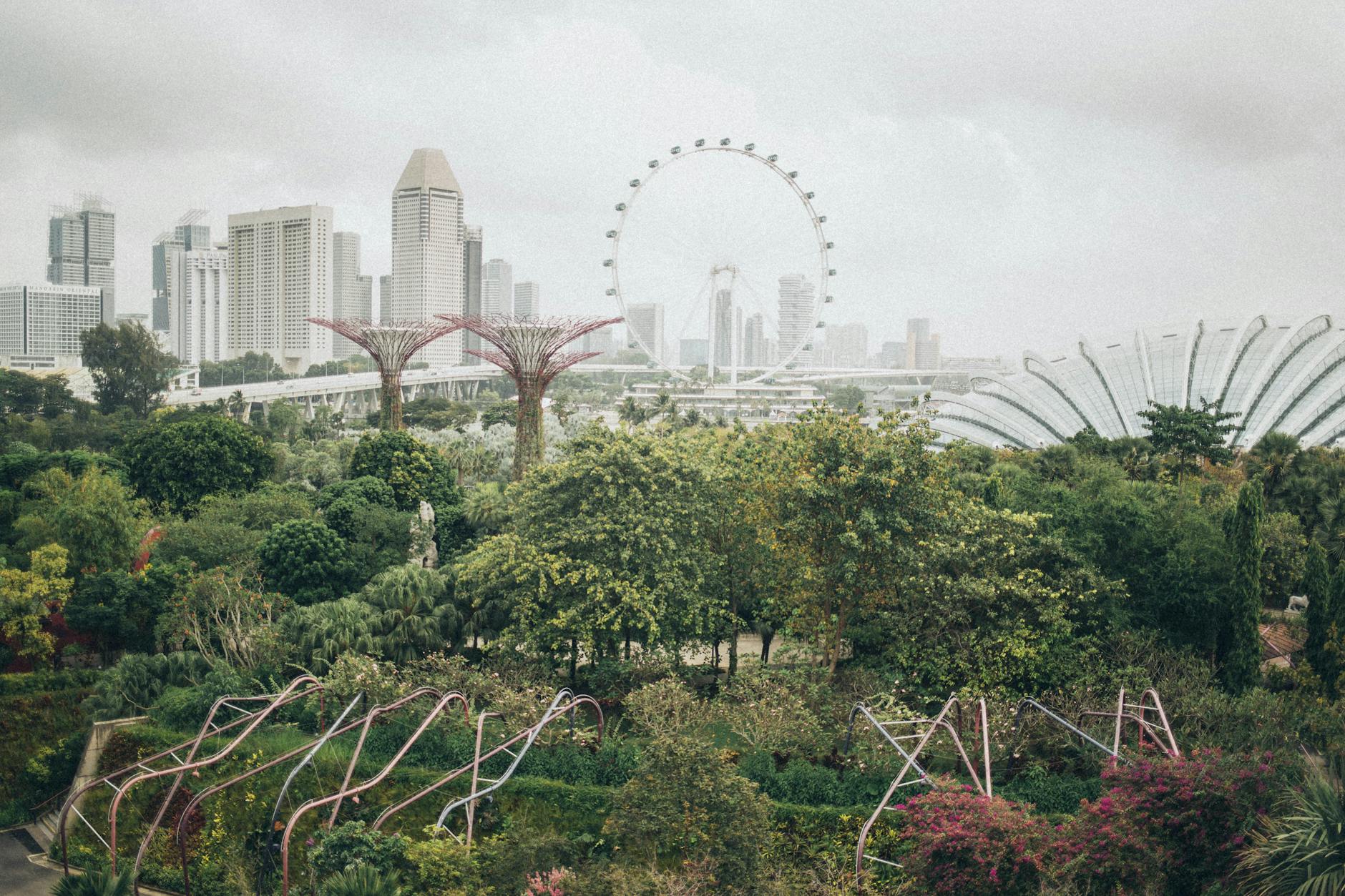
Gardens by the Bay is the 100-hectare park behind Marina Bay Sands, ten minutes on foot from Bayfront MRT. Its Supertrees, steel towers 25 to 50 metres high wrapped in climbing plants, are free to walk under at any hour. Twice a night, at 7:45 and 8:45 pm, they light up for Garden Rhapsody, a 15-minute music-and-light show best watched lying on the lawn. Most families pair it with Spectra, the free water-and-laser show on the Marina Bay Sands promenade at 8 and 9 pm. A river cruise timed to catch both Spectra and Garden Rhapsody from the water avoids pushing a stroller through the crowds between the two.
Up in the canopy, the OCBC Skyway is a 128-metre walkway strung 22 metres above the ground between the Supertrees. It costs S$14 for adults and S$10 for children and gives the only close view of the planted trunks. Timed-entry tickets avoid the queue after sunset. Then there are the two glass domes, ticketed and cooled to around 24 °C, which matters by 2 pm. Cloud Forest has a 35-metre indoor waterfall and a spiral walkway down through the mist. Flower Dome rotates seasonal displays and is the quieter of the two.
For children under 12 the real draw is the Far East Organization Children’s Garden: free entry, water jets, slides and a treehouse trail, open 10 am to 7 pm and closed on Mondays. Bring a change of clothes. Half a day covers the lot.
Museums and Neighborhoods That Kids Put Up With

Museums in Singapore lean interactive, which helps with the under-tens. Two earn their ticket price. Three historic districts cost nothing and give the city its texture, and all of them have a hawker centre for lunch within a five-minute walk.
ArtScience Museum and Science Centre Singapore

ArtScience Museum, the lotus-shaped building beside Marina Bay Sands, hosts Future World, a permanent teamLab exhibition. Children draw sea creatures that then swim across the walls, roll light balls that change colour on contact, and slide down a projected waterfall. Entry is by timed slot, and the 10 am slot is the emptiest. Allow 90 minutes. Teenagers stay longer than they expect to, mostly working out how the projections track them.
Science Centre Singapore is in Jurong East, ten minutes on foot from Jurong East MRT and about 35 minutes from downtown. Several hundred hands-on exhibits cover physics, biology and space, and the Omni-Theatre next door shows films on a dome screen. KidsSTOP, in a separate building, is for children aged 8 and under and needs its own ticket. On a rainy afternoon this is the safest plan in the city.
Little India, Chinatown and Kampong Glam

Three districts, three metro stops, no entry fees. Little India (Little India MRT) is the loudest and most colourful: spice shops along Serangoon Road, flower garlands outside the Sri Veeramakaliamman Temple and the Tekka Centre hawker court for dosa and biryani at lunchtime. Mustafa Centre, the 24-hour department store, is where to buy a forgotten charger or a two-kilo bag of cashews.
Chinatown (Chinatown MRT) centres on the Buddha Tooth Relic Temple, a four-storey temple finished in 2007 with a roof garden and free entry, and Maxwell Food Centre across the road for chicken rice. Kampong Glam (Bugis MRT) is the old Malay and Arab quarter around the gold-domed Sultan Mosque; Haji Lane beside it has the street art and the narrowest shophouses. Doing all three in one day is possible on the metro but hard on small legs, so pair each district with something nearby instead. A guided food tour with 12 tastings across the districts is an easy way to feed a family that cannot agree on a restaurant.
Where to Stay and How to Get Around
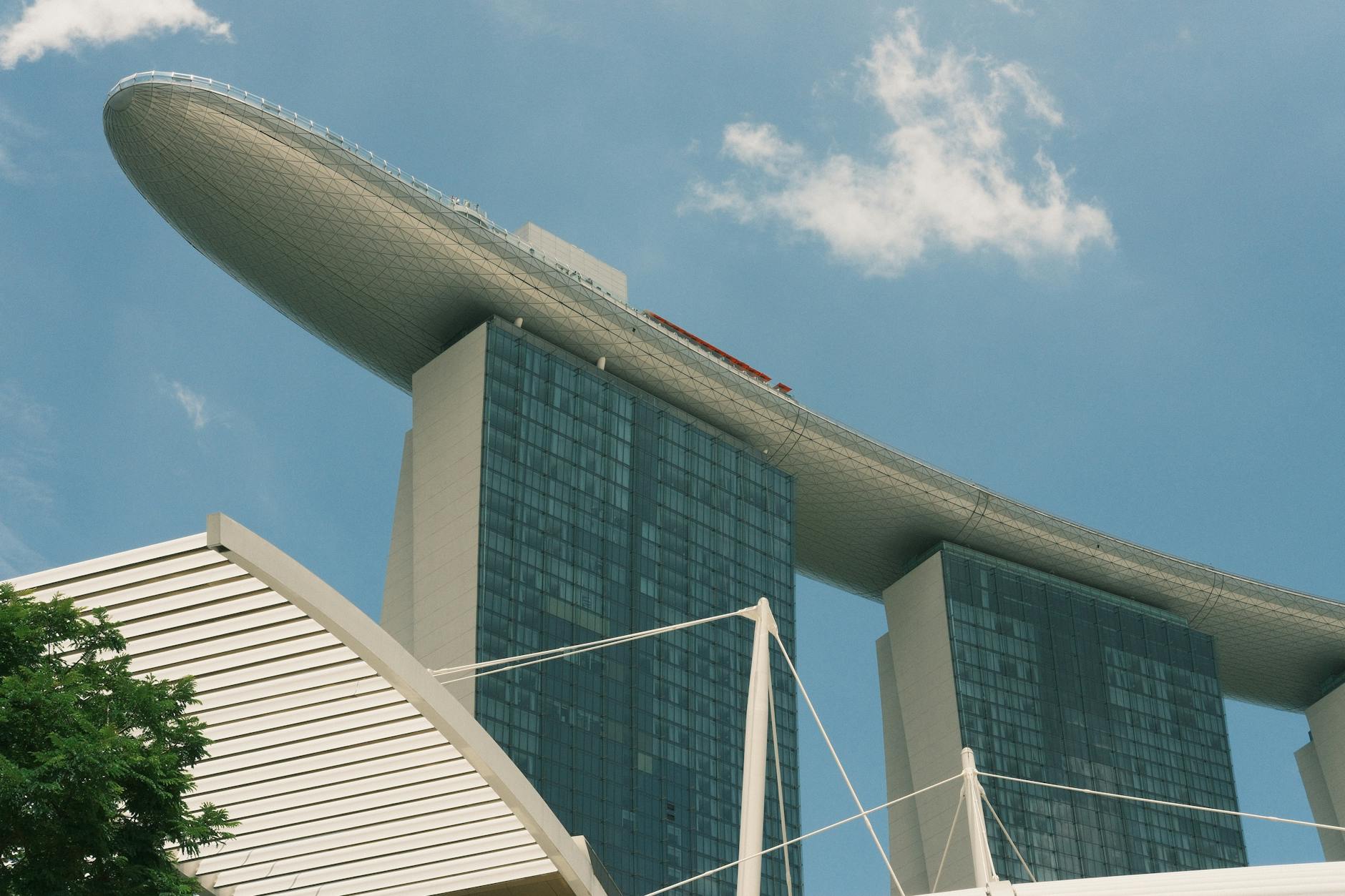
Singapore has the priciest hotels in Southeast Asia, and family rooms are scarce in the older four-stars. Settling the base and the transport before booking flights saves money and arguments. There is a separate guide to keeping Singapore affordable; the short version is that food and transport are cheap, while hotels and attractions are not.
Choosing a Family Hotel in Singapore

A pool matters more than a view. By 3 pm the heat sits above 32 °C with 80 percent humidity most days, and an hour in the water resets small children for the evening. Location comes second: Marina Bay for the gardens and museums, Orchard Road for the metro hub and shopping, Sentosa if two or more days go to the island. A breakdown of Singapore’s neighbourhoods covers the trade-offs in detail.
Among hotels that suit families, PARKROYAL COLLECTION Marina Bay and Pan Pacific Singapore both have large pools and family rooms within walking distance of Gardens by the Bay. On Sentosa, Amara Sanctuary sits in a quiet corner near Palawan Beach. For a lower rate with the same logic, Rendezvous Hotel on Bras Basah Road and Holiday Inn Singapore Orchard City Centre are the usual four-star picks. Expect S$250 to S$400 a night for a four-star family room in the city and more on Sentosa. Compare dates for hotels in Singapore on Booking.com and book two months ahead for the June and December school holidays.
Getting Around With Kids
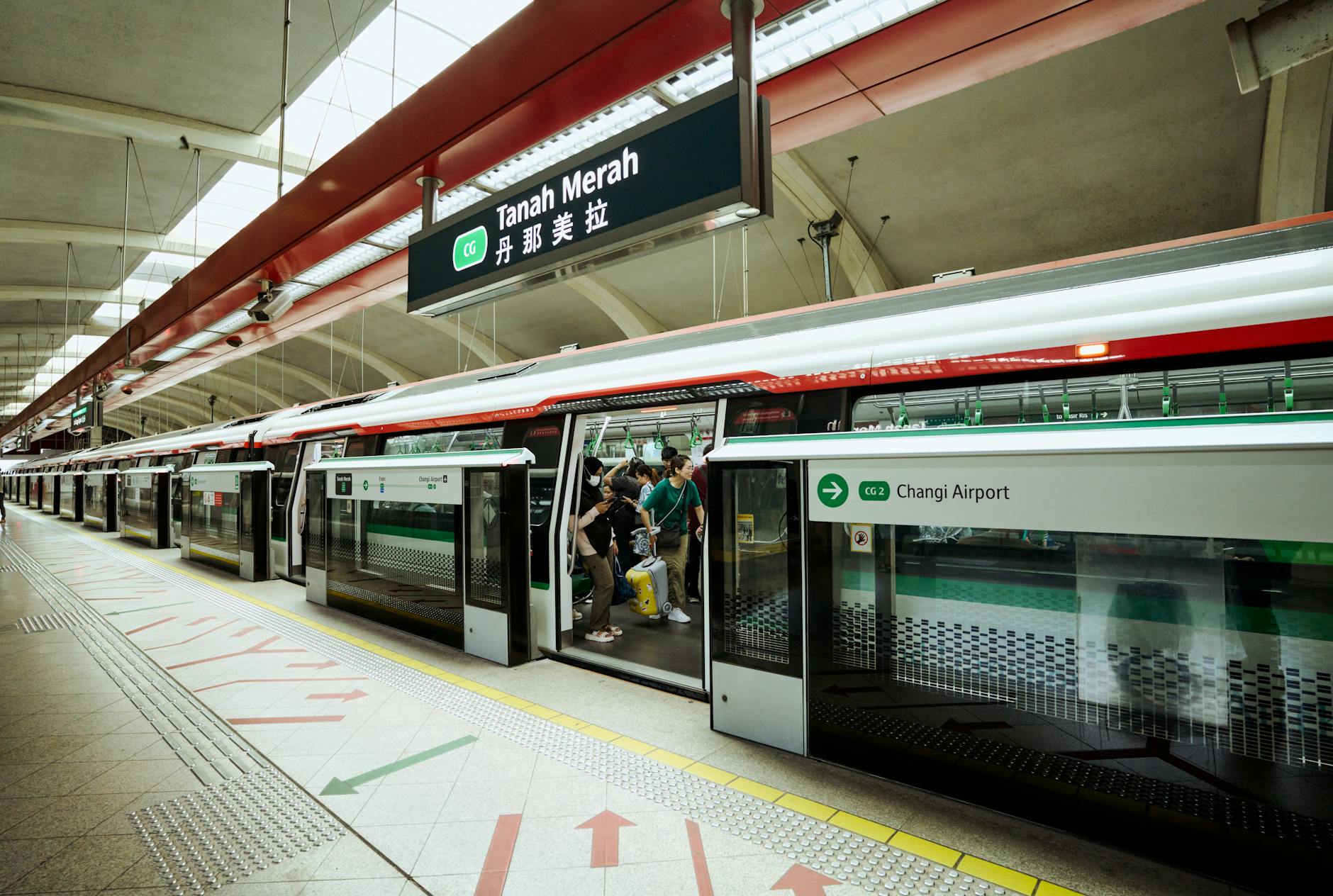
MRT does most of the work. Trains are air-conditioned, every station has lifts, and fares run from S$1 to about S$2.50 per ride. Tapping a contactless Visa or Mastercard at the gate works for adults and avoids buying any card at all; I have never bothered with a tourist pass here. Children under seven travel free, but those taller than 90 cm need a free child concession card from a TransitLink office in the bigger stations. A Singapore Tourist Pass (S$17 for one day up to S$30 for three, plus a refundable S$10 deposit) only pays off with eight or more rides a day.
Taxis and Grab, the local Uber, cost S$10 to S$20 for most trips across the centre. One rule matters for families: taxis are exempt from child-seat laws, but private-hire cars booked through Grab are not, so children under 1.35 m need the GrabFamily option with a booster seat. From Changi Airport the MRT takes 45 minutes to City Hall for about S$2, with a change at Tanah Merah; a metered taxi takes 25 minutes and costs S$25 to S$40 with surcharges. With a stroller, two suitcases and a jet-lagged child, a pre-booked private transfer from Changi Airport at a fixed price is the calmer option. For Sentosa, take the monorail, the cable car from HarbourFront (about S$35 return per adult, and the view is the point) or the free boardwalk. For a first-morning overview, a half-day guided city tour that includes the National Orchid Garden covers the colonial district and Marina Bay before the heat peaks.
How Many Days You Need
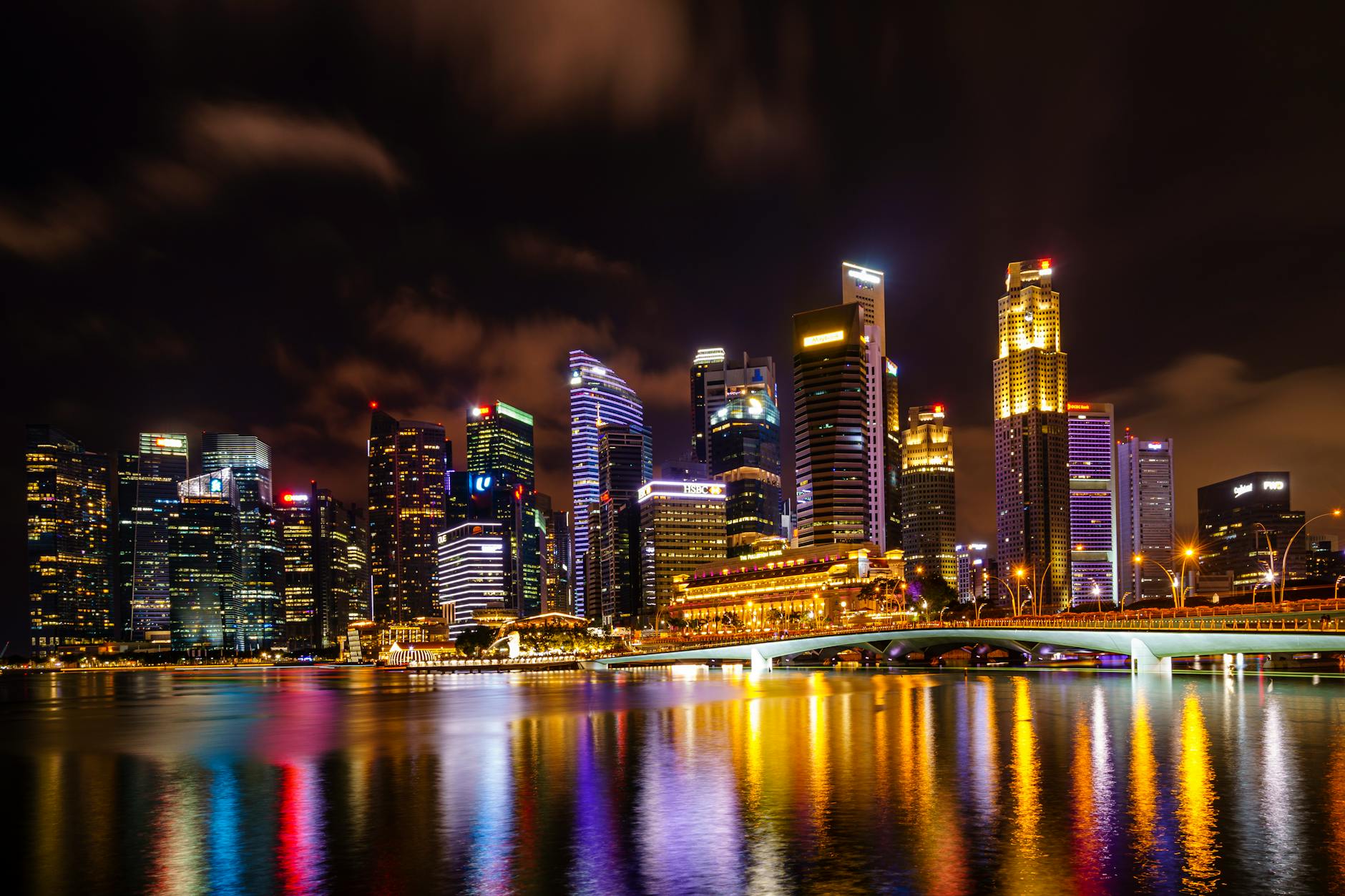
Four full days covers Sentosa (two days), Mandai with the Night Safari (one) and Gardens by the Bay plus one museum (one). A fifth day goes to the districts and a hawker-centre lunch. Mornings start early here. Most attractions open at 9 or 10 am and the heat builds by noon, so the pattern that works is outdoors until 1 pm, pool or indoors until 4, then out again for the evening shows. Rain comes in short afternoon bursts all year, heaviest from November to January.
Budget S$60 to S$80 per person per day for tickets if you take in one major attraction daily, plus S$15 to S$25 a head for food at hawker centres and about S$5 for transport. Nothing in the city is more than 40 minutes away by MRT, and the mistake most families make is cramming two big parks into one day. One park, one show, one swim. That is a full day in Singapore with children.


