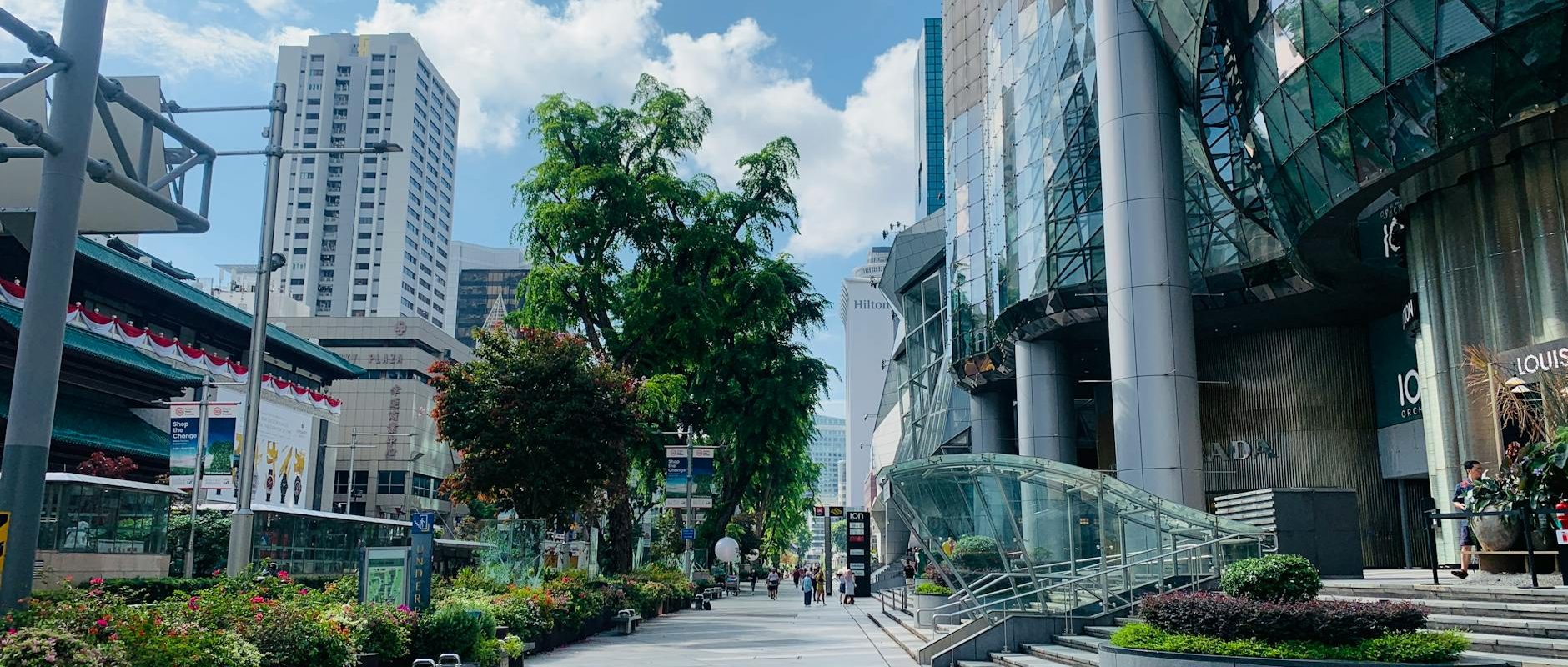
Plenty of cities call themselves modern. Singapore is the one where the label holds up on the ground. A rooftop pool sits 57 floors above the bay, driverless trains run every two minutes, tap water comes partly from recycled sewage, and 50-metre steel trees generate their own electricity. None of it is for show. Each piece solves a problem a small island with no land, no water and no raw materials had to solve to survive.
I have passed through Singapore many times on the way around Southeast Asia, and the city changes between visits in a way few places do. A new terminal, a new garden, a new line on the MRT map. What follows is a look at the buildings, the systems behind them and the practical side of seeing it all in two or three days.
Architectural Futurism and Green Oases
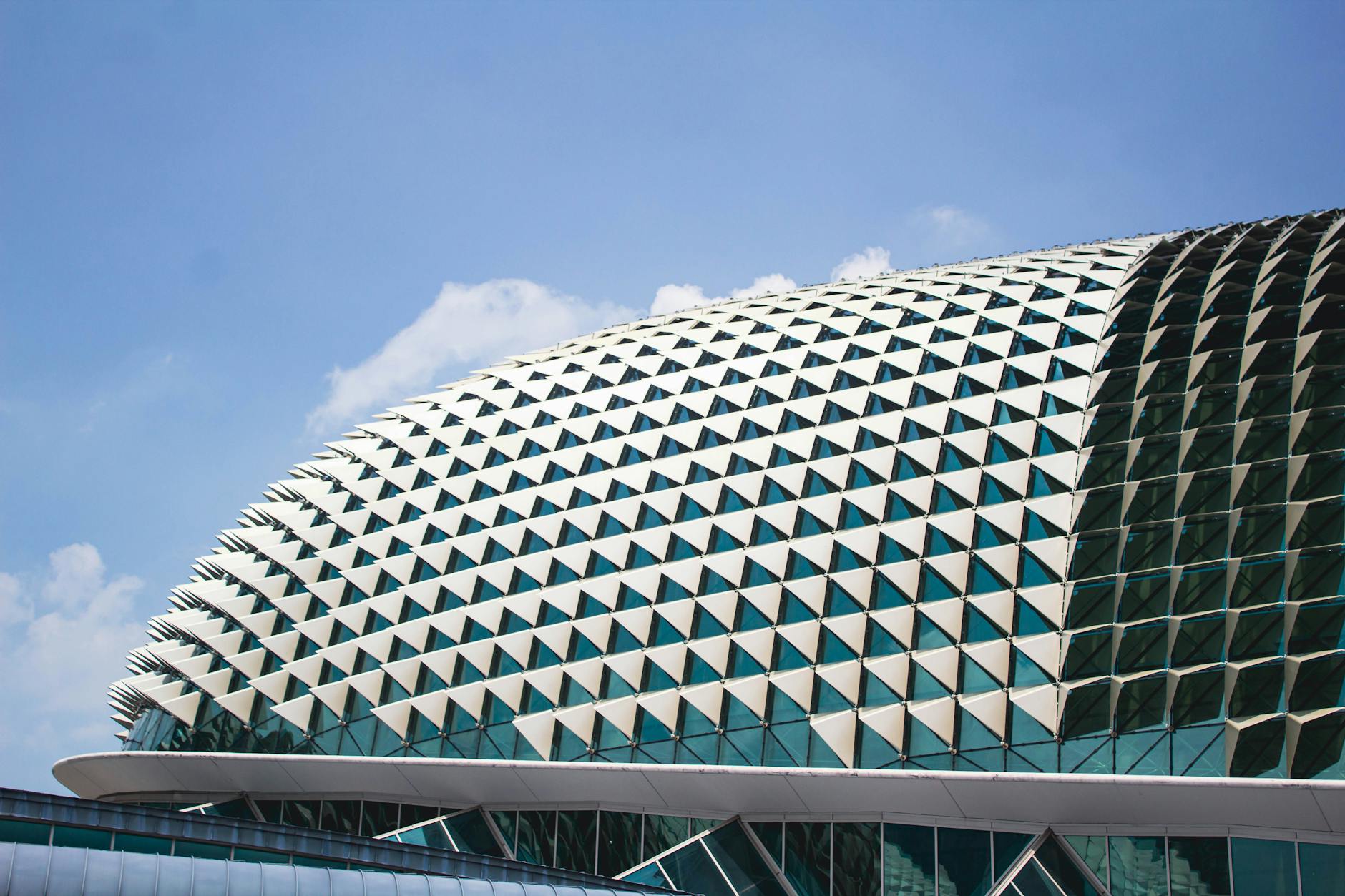
Architecture is the first thing anyone pictures when Singapore comes up, and for good reason. Since the 1990s the government has treated the skyline as a planning tool rather than a side effect, and every big project since has had to answer two questions: what does it do for the people inside, and what does it do for the greenery around it. The result is a downtown where glass towers, hanging gardens and public parks are one continuous surface.
Marina Bay Sands is the obvious starting point. Three 55-storey towers carry a 340-metre platform on top, shaped like a ship, with a 150-metre infinity pool for hotel guests and a public observation deck at one end. Sunset is the busiest and best hour: the Central Business District lights up on one side, Gardens by the Bay on the other. A ticket to the SkyPark observation deck costs about 30 SGD, roughly 22 USD, and pre-booking skips the ground-floor queue. Hotels nearby such as the Pan Pacific and Swissotel The Stamford face the same bay from the opposite bank, so their upper floors show the Sands itself in the frame.
How Gardens by the Bay Blends Nature and Technology
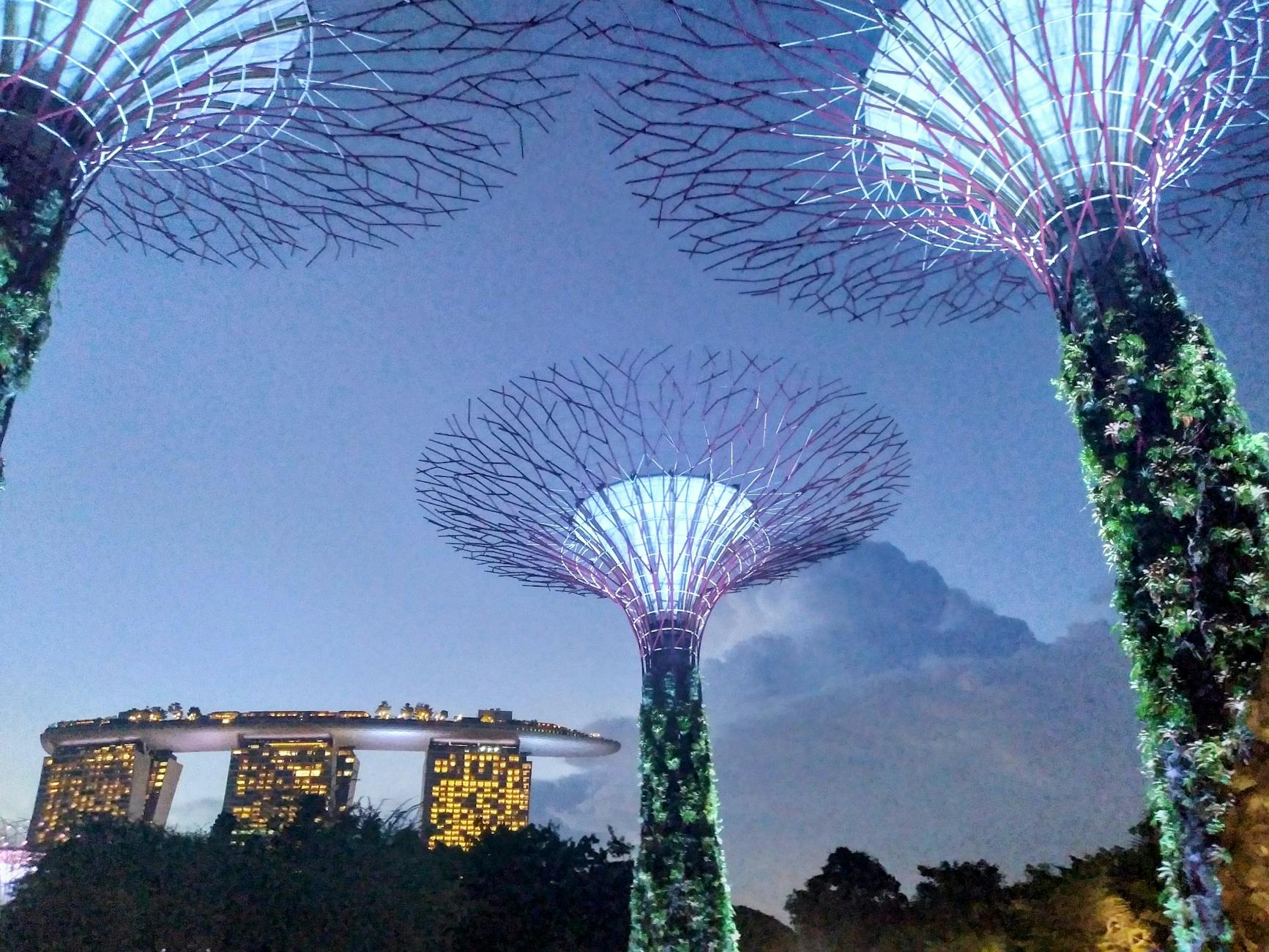
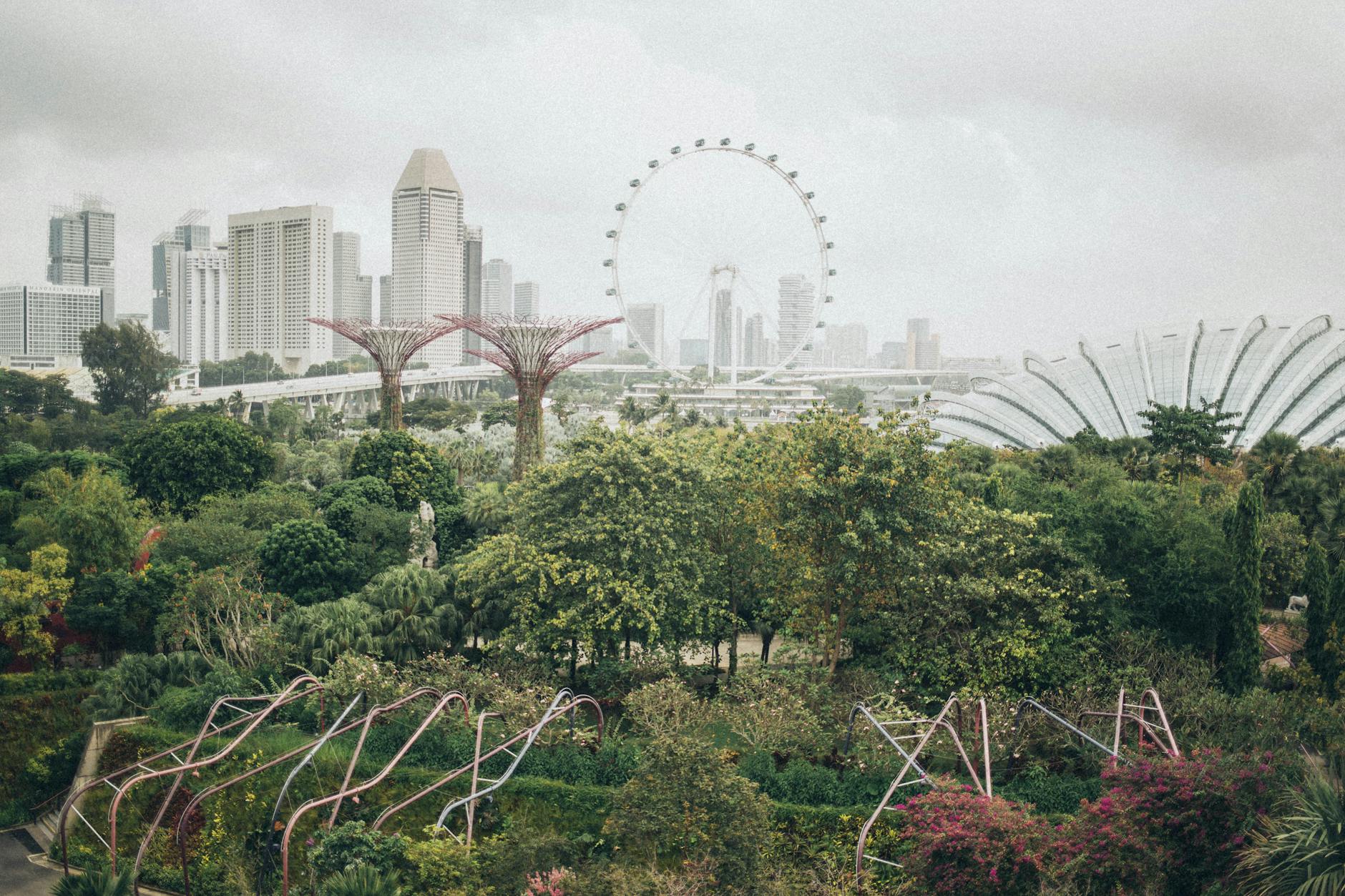
Gardens by the Bay occupies 100 hectares of reclaimed land directly behind the Sands, a ten-minute walk from PARKROYAL COLLECTION Marina Bay, itself a hotel with 2,400 plants growing inside its atrium. The Supertree Grove is the landmark: eighteen steel structures between 25 and 50 metres high, wrapped in ferns and orchids. Eleven of them carry solar panels, several collect rainwater for irrigation, and some act as exhaust vents for the conservatories next door. Entry to the grove is free. Twice every evening, at 19:45 and 20:45, the Garden Rhapsody light show runs for fifteen minutes with the trees pulsing to music, also free.
Two glass conservatories stand beside the grove. The Flower Dome keeps a dry Mediterranean climate and rotates its displays by season; the Cloud Forest holds a 35-metre artificial mountain with a waterfall pouring off the top and a walkway spiralling down through orchids and pitcher plants. A cool mist fills the hall every few minutes. Together they are the largest climate-controlled greenhouses in the world, and the cooling system runs partly on the biomass of garden waste collected across the city.
A combined ticket for both domes costs around 50 SGD for visitors, and the Cloud Forest alone is the one to pick if time allows only one. Mornings right after the 9:00 opening are the quietest.
What makes the gardens work is that nothing in them is purely decorative. Every pond is part of the drainage system, every tree does a job for the buildings around it. The same logic runs through the rest of the city, which is why the gardens are the right place to understand Singapore before looking at its technology.
Smart Solutions and Future Technologies
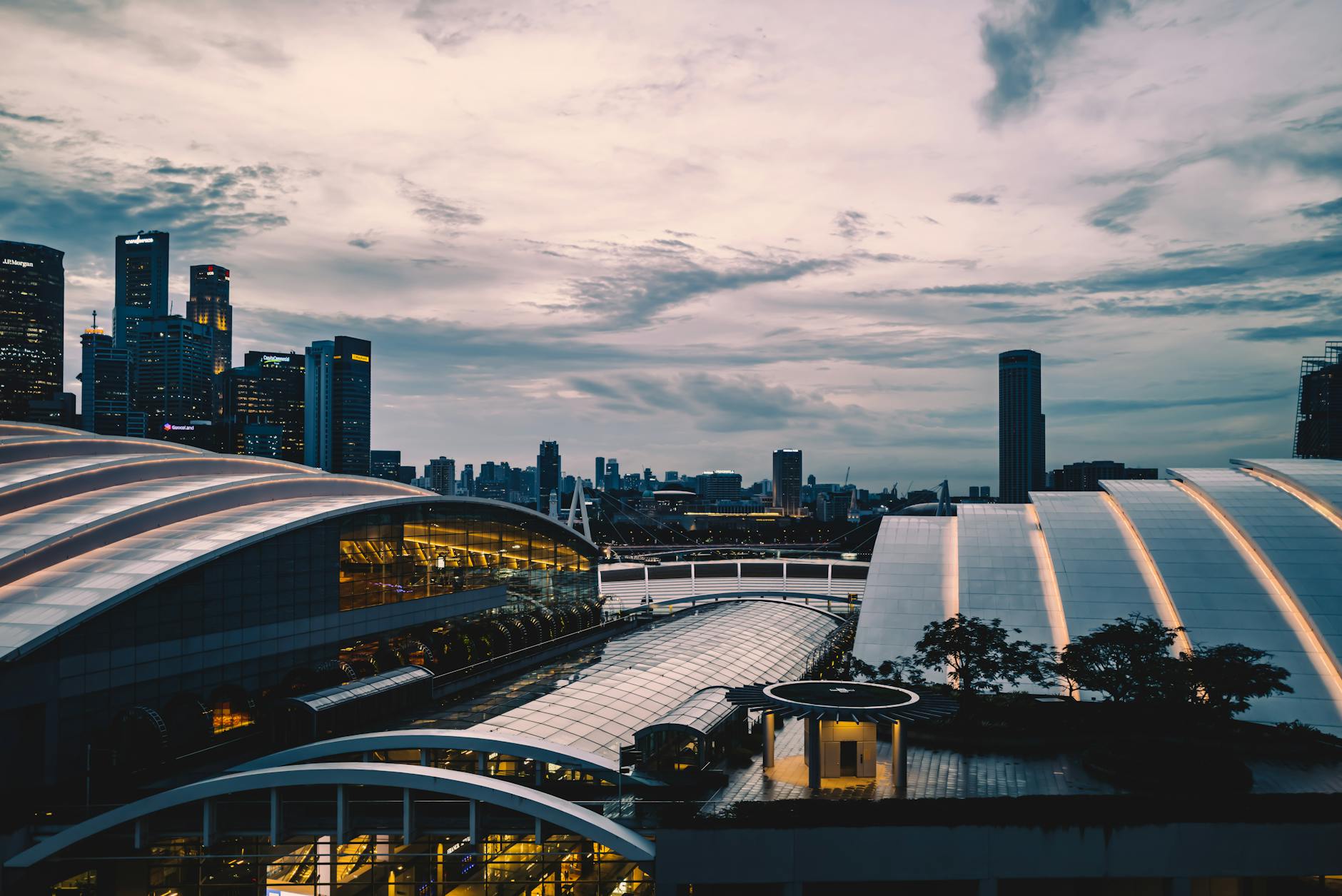
Beyond the buildings sits a system. Transport, rubbish collection, policing, healthcare and water all run on shared data under a programme the government has called Smart Nation since 2014. Visitors notice it first as an absence of friction: no queue at immigration thanks to automated gates, no ticket machine needed on the metro, no cash needed anywhere.
Transport is the clearest example. The MRT has six lines and over 140 stations, trains on the newer lines run without drivers, and a ride across the whole island costs under 3 SGD. Owning a car is deliberately expensive: a permit alone, called a Certificate of Entitlement, costs around 100,000 SGD and lasts ten years, and gantries on main roads charge drivers automatically at peak hours. So public transport carries most of the city, and the trains stay clean and frequent because they have to.
From Changi Airport the MRT reaches the centre in about 40 minutes for 2 SGD, with one change at Tanah Merah. Taxis take 25 minutes and cost 25 to 40 SGD depending on the hour, and Grab, the local ride-hailing app, is usually a few dollars cheaper. Late arrivals after the last train around midnight are the only time a pre-booked transfer makes sense.
Innovations in Everyday Life
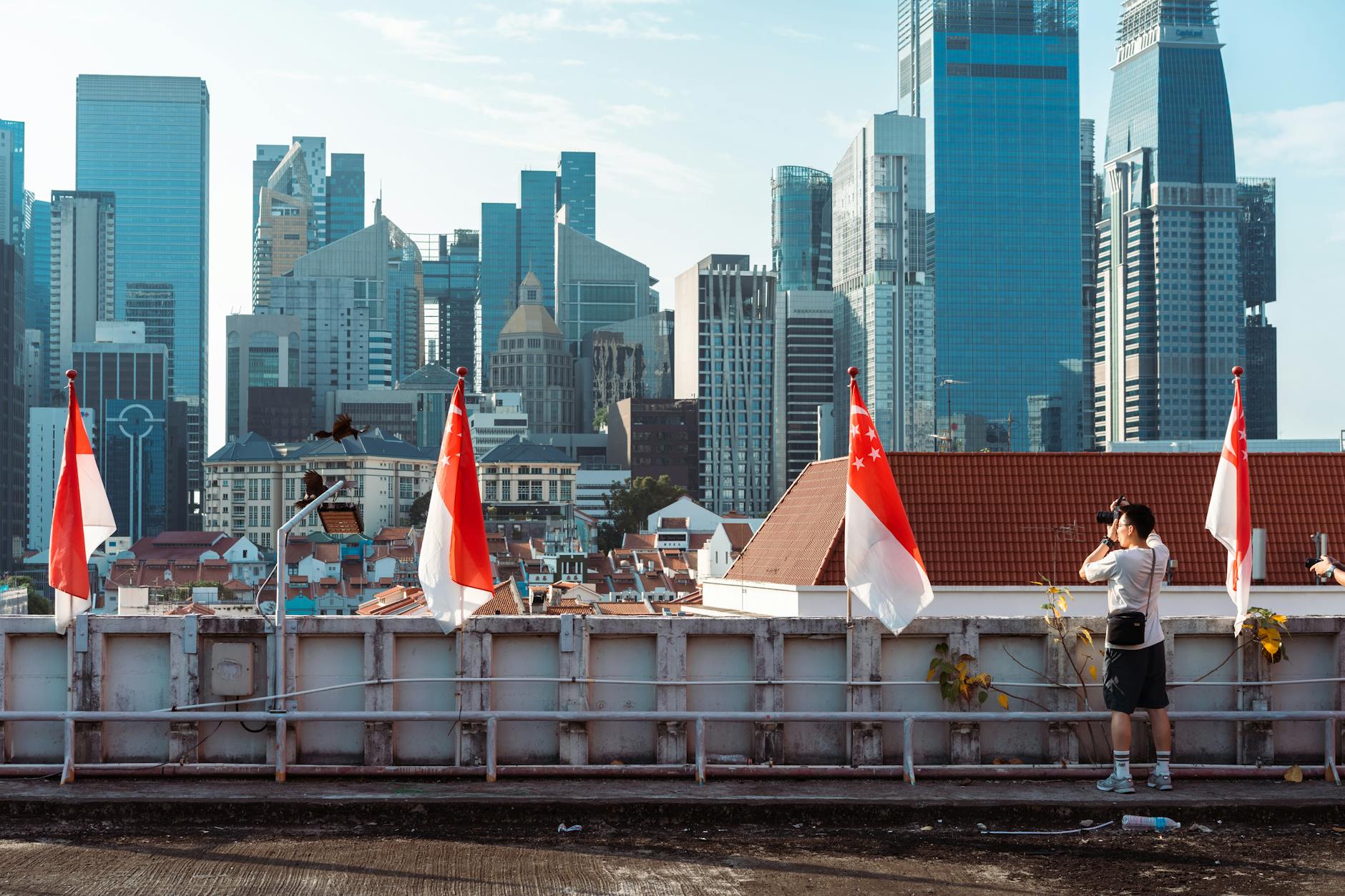
Water tells the story best. Singapore has no rivers worth the name and for decades imported most of its water from Malaysia under contracts that expire in 2061. Its answer has four parts, called the Four National Taps: rain collected from two-thirds of the island’s surface, imported water, desalinated seawater, and NEWater, which is treated wastewater filtered through membranes and ultraviolet light until it is cleaner than tap water. NEWater now covers about 40 percent of demand, mostly for industry. Bottles of it are handed out at national events, and visitors can tour the plant at Bedok for free.
Safety works the same way. Singapore ranks among the safest large cities in the world, and the reasons are a mix of strict laws, dense CCTV coverage and police who respond within minutes. Travellers who care about privacy may find the cameras uncomfortable. In practice it means walking back from a hawker centre at 1 a.m. through any neighbourhood without a second thought, which is rare in a city of six million.
Smaller systems fill in the gaps. Sensors across the island track air quality and publish the reading hourly. Street lights dim when nobody is around and brighten when a pedestrian approaches. Rubbish in new housing estates travels through pneumatic tubes to a central collection point instead of waiting in bins. Most of it is invisible to a visitor, and that is the point: the city is designed so that it simply works.
What to See in Futuristic Singapore
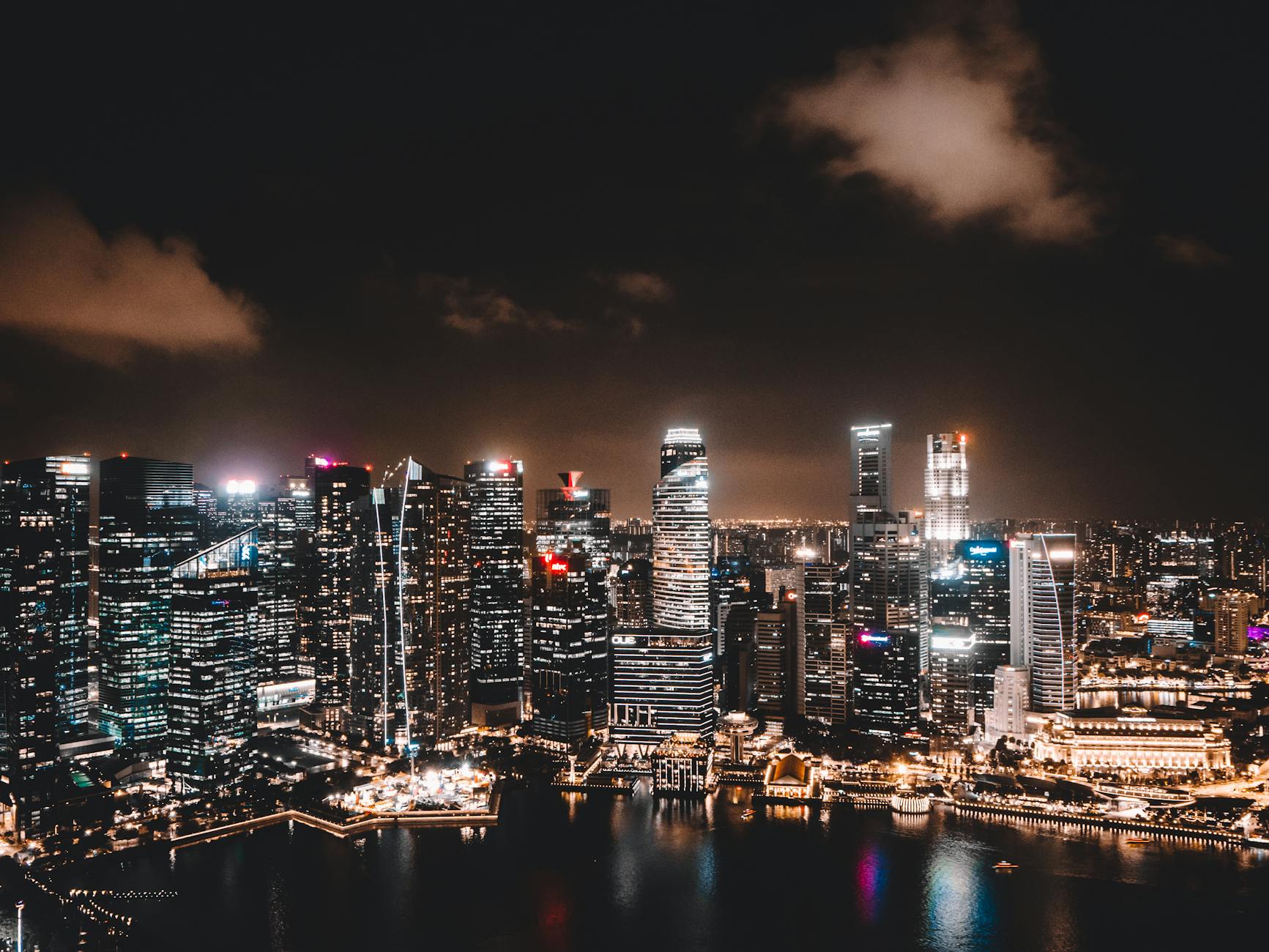
Marina Bay Sands and Gardens by the Bay take one full day. A second day covers the airport complex, the island of Sentosa and a walk along the bay, and a third can go to the research districts where the technology is made rather than displayed.
Changi Airport Is Its Own Little World
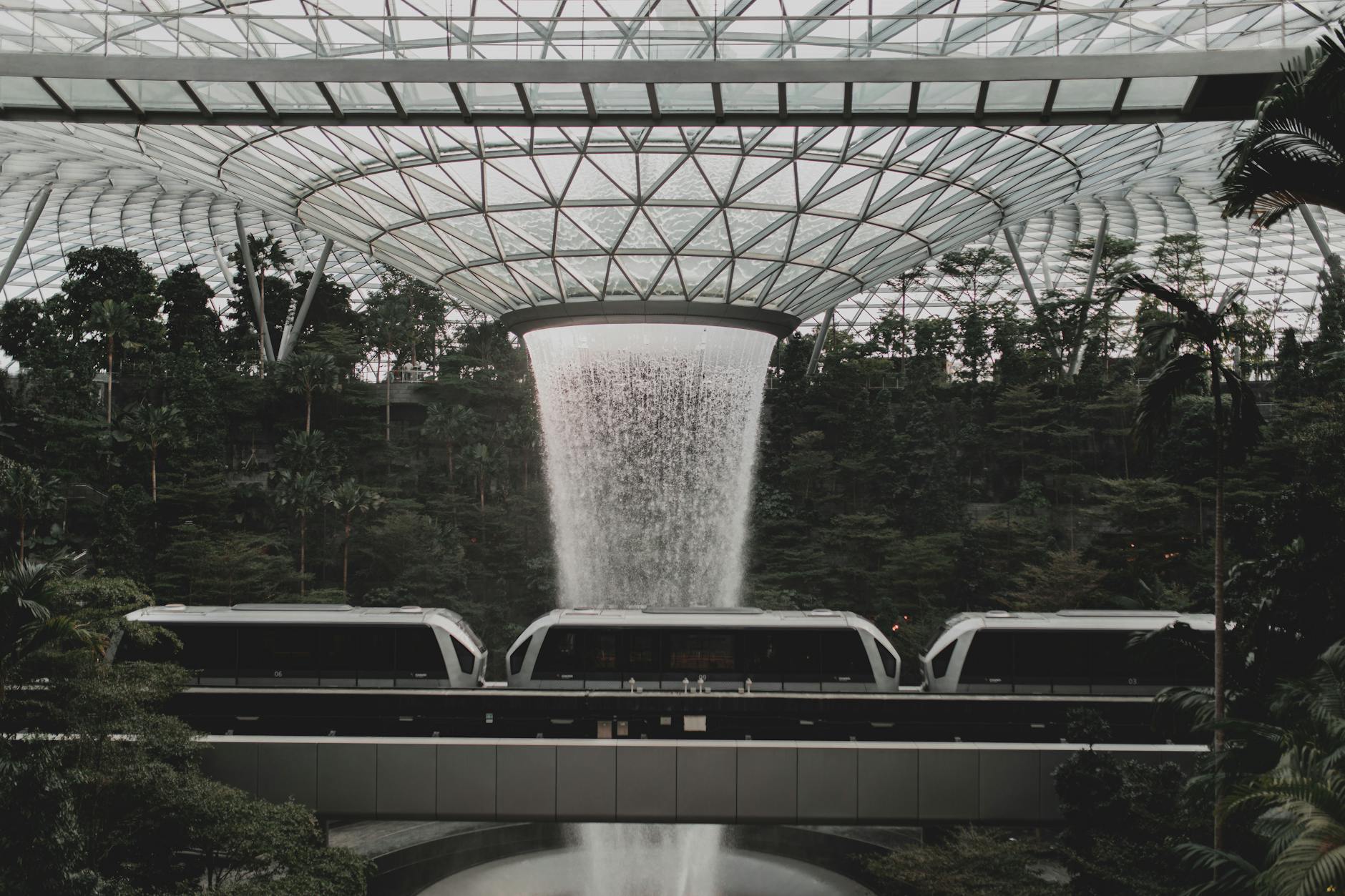
Changi has been voted the best airport in the world more times than any other, and it earns the title by behaving like a destination. Inside the terminals are a butterfly garden, a cinema that runs around the clock, a rooftop pool, a sunflower garden and a four-storey slide. The centrepiece is Jewel, a glass dome between Terminals 1, 2 and 3 with the Rain Vortex at its core: a 40-metre indoor waterfall falling through a ring of terraced forest. At night it becomes a projection screen for a light show on the hour. Jewel sits on the public side of security, so anyone can come by MRT to see it, and many locals do on weekends. Allow two hours; the top-floor Canopy Park with its mazes and nets costs extra.
For the working side of the “city of the future”, the one-north district near Buona Vista MRT is where biomedical labs, Grab’s headquarters and dozens of start-ups cluster around the Fusionopolis and Biopolis towers. There are no tourist crowds and nothing to buy a ticket for, but the campus-like streets and the lunchtime crowd of researchers show the part of Singapore that the postcards leave out. The nearby Science Centre in Jurong East is the family-friendly version, with an omnimax theatre and a working lab for kids.
Sentosa, Where Fun and Technology Collide
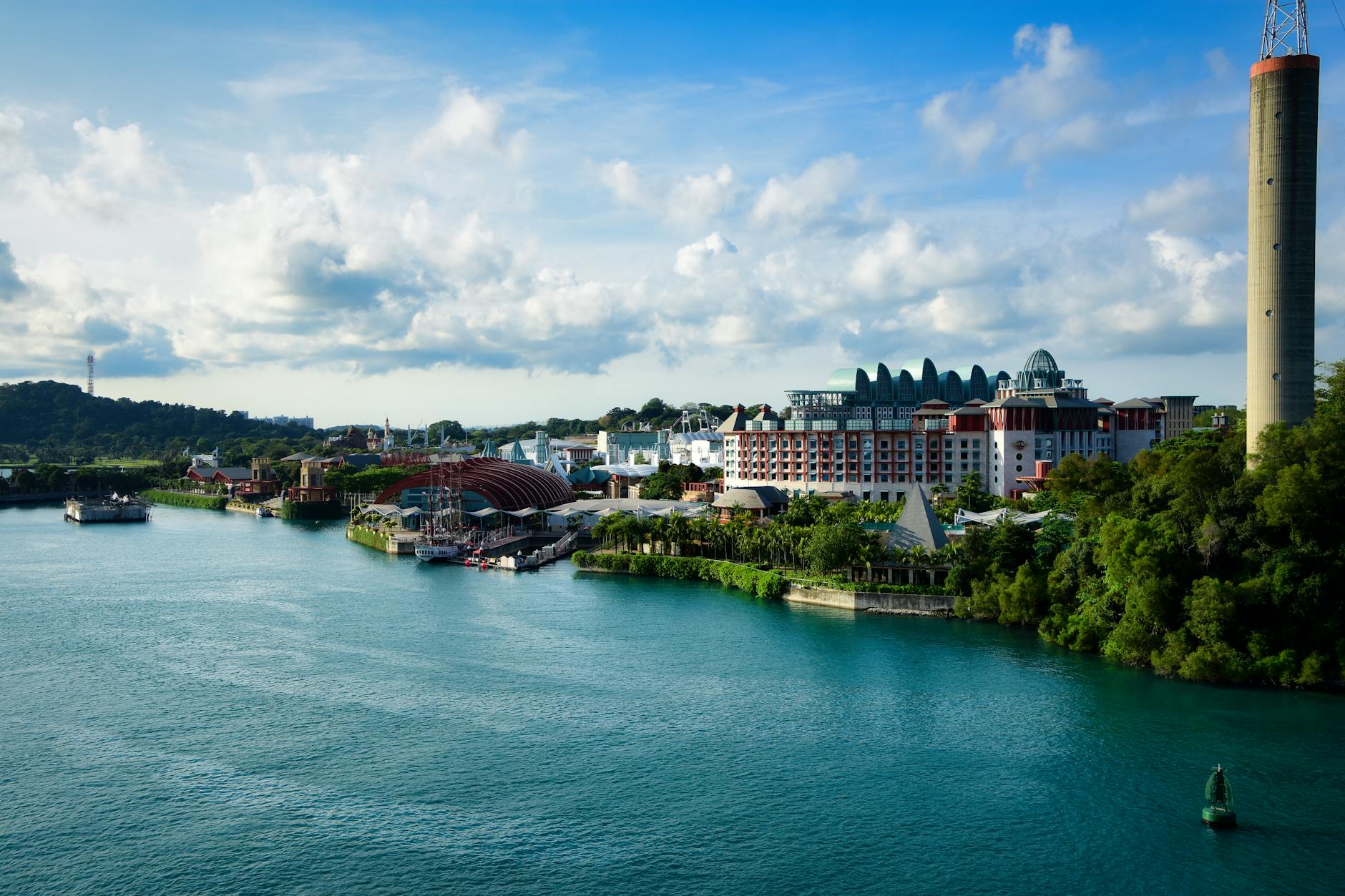
Sentosa is the resort island off the southern coast, linked to the mainland by a causeway, a monorail and a cable car. Most people come for the beaches and Universal Studios Singapore, where a one-day adult ticket runs about 80 SGD. Less visible is Sentosa’s role as a test bed: autonomous shuttle buses ran trial routes here before anywhere else in the country, crowd sensors steer visitors away from full beaches, and the Sentosa Express monorail has been driverless since it opened in 2007.
The S.E.A. Aquarium on the island holds over 100,000 animals behind one of the largest viewing panels in the world. The Singapore Cable Car connects Mount Faber on the mainland to Sentosa and then runs a second line across the island; a round trip on both lines costs around 35 SGD and gives the best aerial view of the container port, which handles more cargo than any port outside China. Late afternoon is the time to ride it, with the harbour lights coming on during the return leg.
Back on the mainland, a walk around Marina Bay at dusk is free and takes about an hour. The loop passes the lotus-shaped ArtScience Museum, the Helix Bridge modelled on a DNA strand, the durian-shaped roofs of the Esplanade theatres and the Merlion fountain. Every structure on the loop was designed for pedestrians first, with shade, benches and water fountains spaced along the route.
How Did Singapore Become the City of the Future?
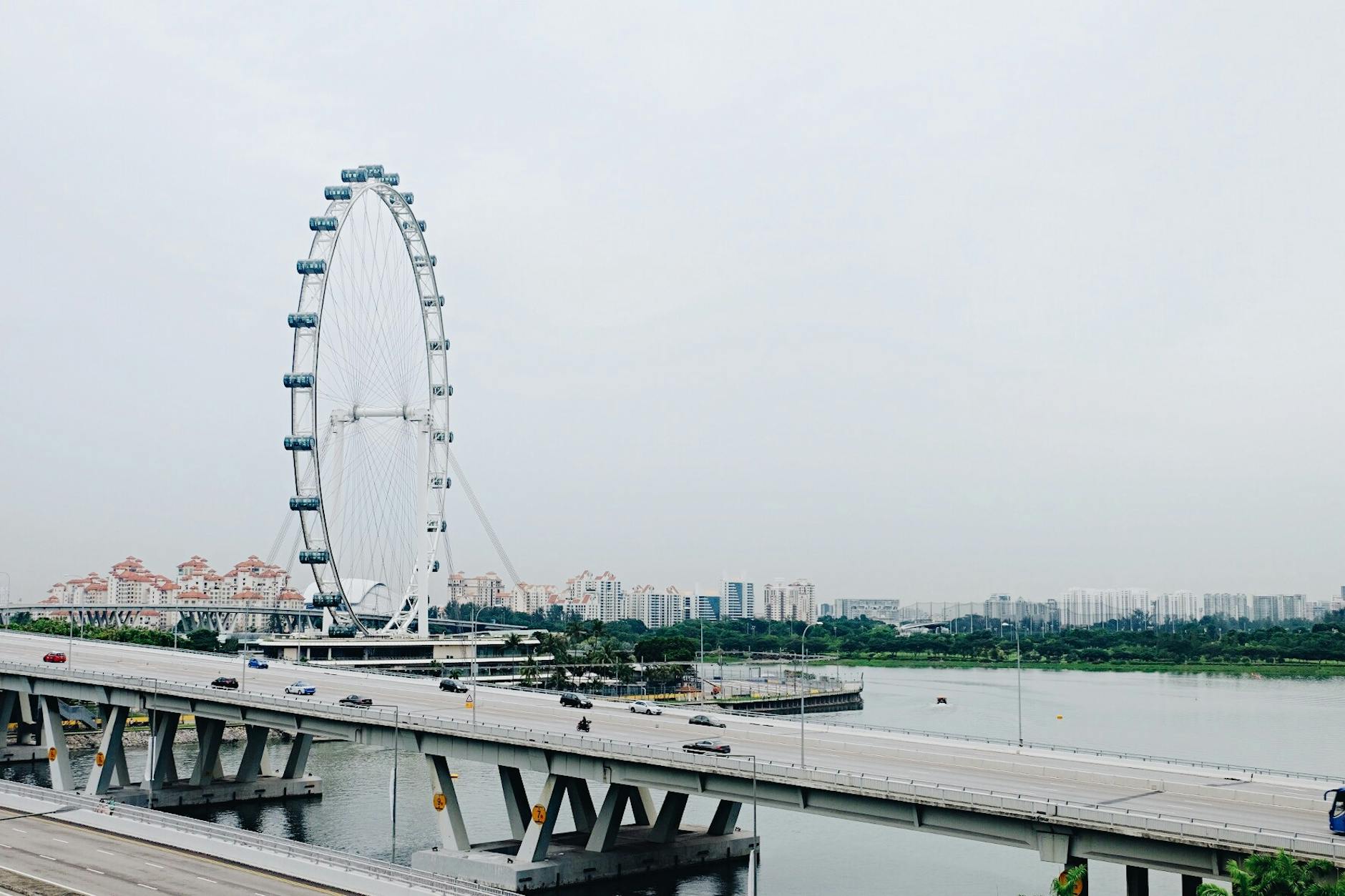
In 1965 Singapore was expelled from Malaysia and left with a port, a few swamps and no hinterland. Sixty years later it has one of the highest GDPs per person in the world. The short answer to how is planning that looked fifty years ahead, discipline in sticking to it, and heavy spending on education and research.
Lee Kuan Yew, prime minister from 1959 to 1990, set the pattern. His government decided early that a country with no resources had only its people to sell, so schools, English-language instruction and public housing came before almost anything else. Over 80 percent of residents still live in government-built flats, and the Housing Development Board’s new towns of the 1970s were the first large-scale experiments in the integrated planning that now defines the whole island.
The “Garden City” campaign began in 1967 with tree-planting along every new road and was upgraded in 2011 to “City in a Garden”, which requires new buildings to replace any greenery they remove, often on roofs and facades. That rule is why office towers downtown carry sky gardens and why hotels like PARKROYAL have trees growing from the twelfth floor. Beyond the looks, the greenery lowers street temperatures by two to four degrees and cuts air-conditioning bills across the city.
Economic Miracle and Openness to Innovation
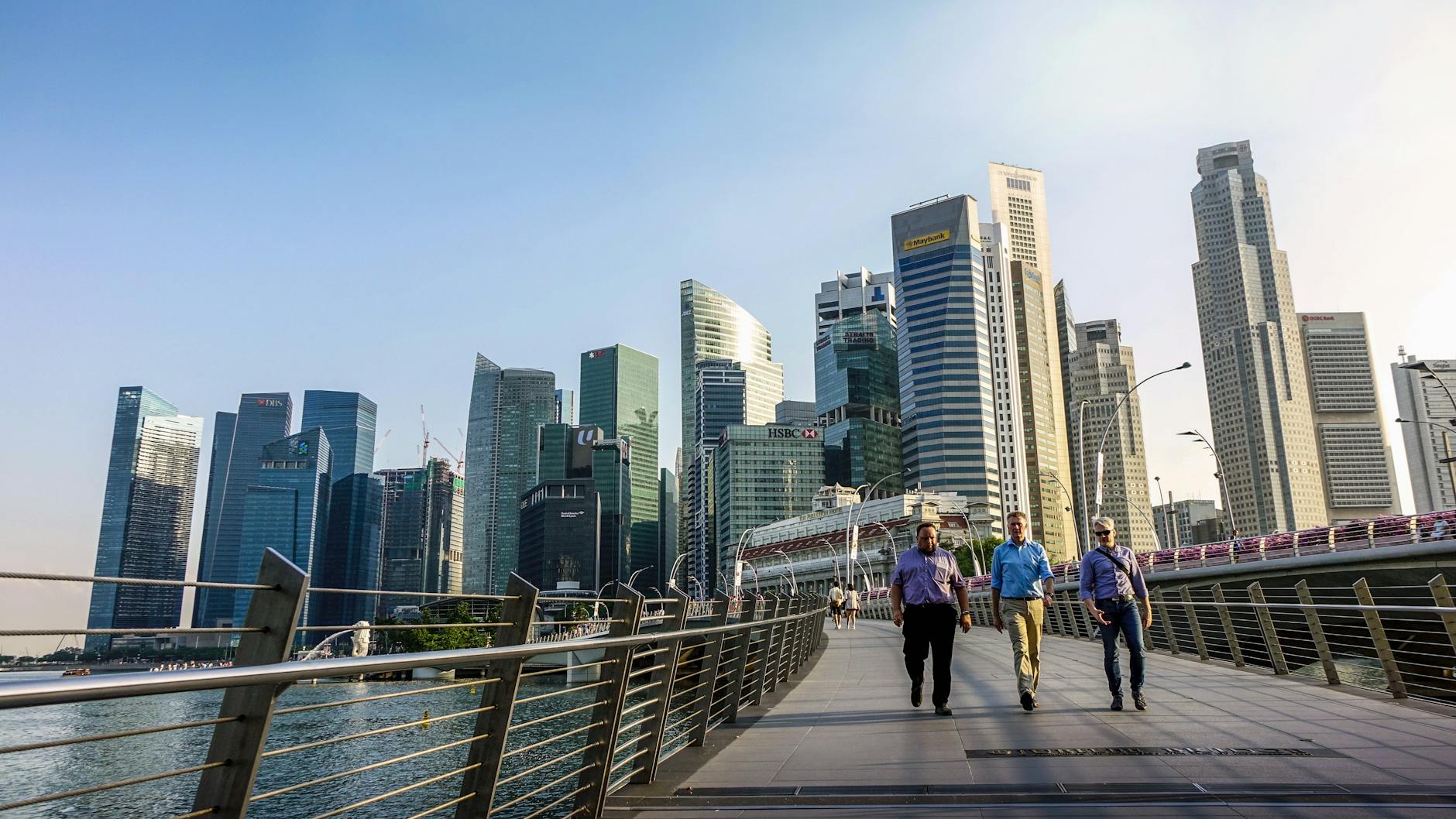
Singapore opened itself to foreign capital when most of its neighbours were nationalising industries. Low taxes, English law, a stable currency and a port on the busiest shipping lane in the world brought in banks, oil refiners and electronics makers, and later pharmaceutical and technology companies. Today the city is the third-largest financial centre on the planet, and the government still runs agencies whose only job is to find the next industry and bring it here before anyone else does.
Rules are the other half of the story. Fines for littering start at 300 SGD, chewing gum cannot be sold, eating on the MRT costs 500 SGD, and jaywalking is enforced. Visitors find the list amusing until they notice there is no litter anywhere, no graffiti, and that escalators are never broken. Every rule applies to tourists exactly as to residents, so it pays to read the signs. Carrying a packet of gum through customs is not a crime; selling it is.
What other cities take from Singapore is the method rather than any single building: decide what the city should look like in fifty years, write the rules that get it there, and keep them. Copenhagen and Dubai have both borrowed from the playbook, with mixed results, because the discipline is harder to export than the design.
Practical Tips for Your Trip to the Future
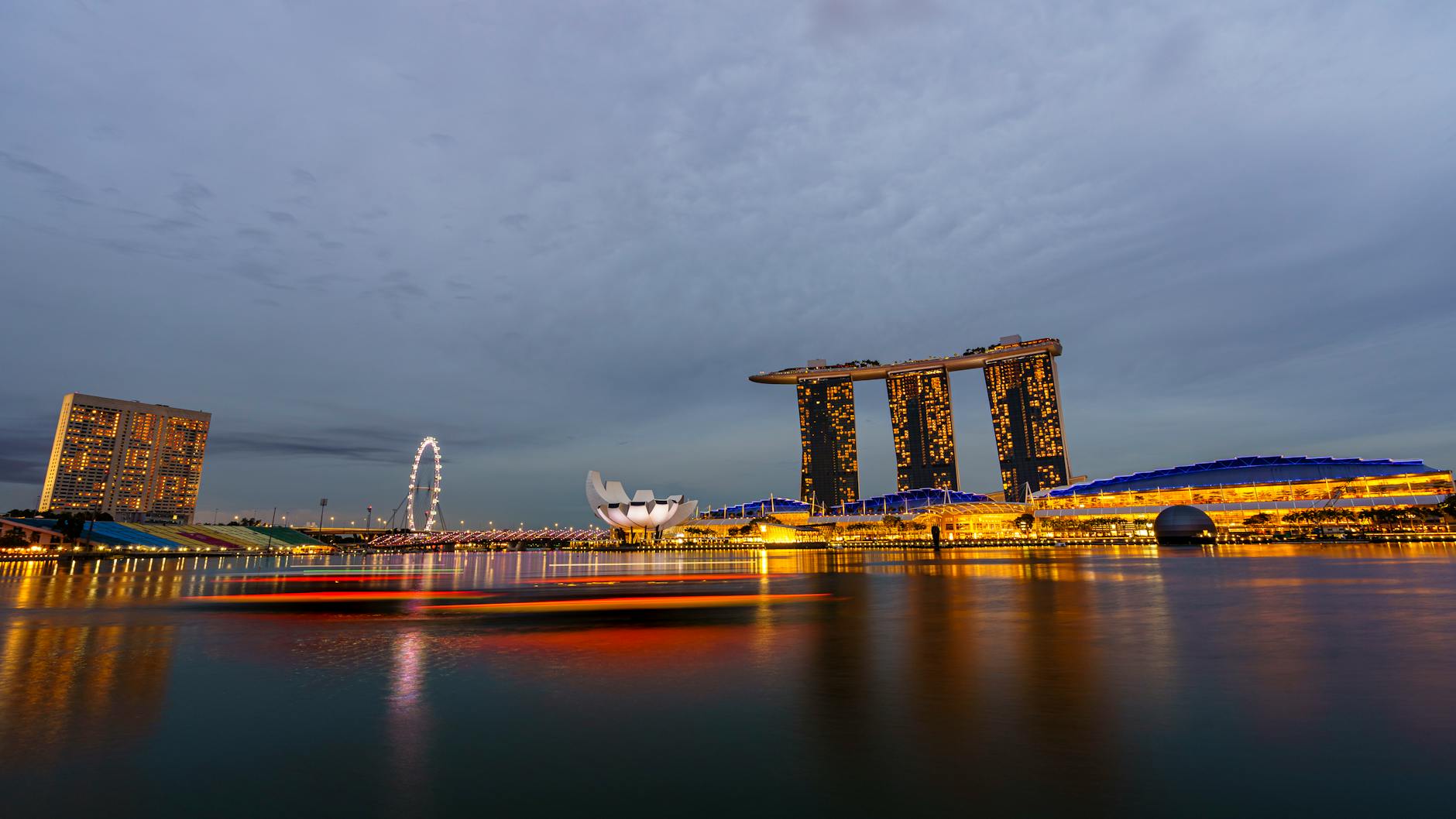
Singapore is one of the easiest cities in Asia to organise. English is an official language, cards work everywhere, and the whole island is smaller than New York City. The main variables are the price of the hotel and the heat.
How to Get There and Where to Stay
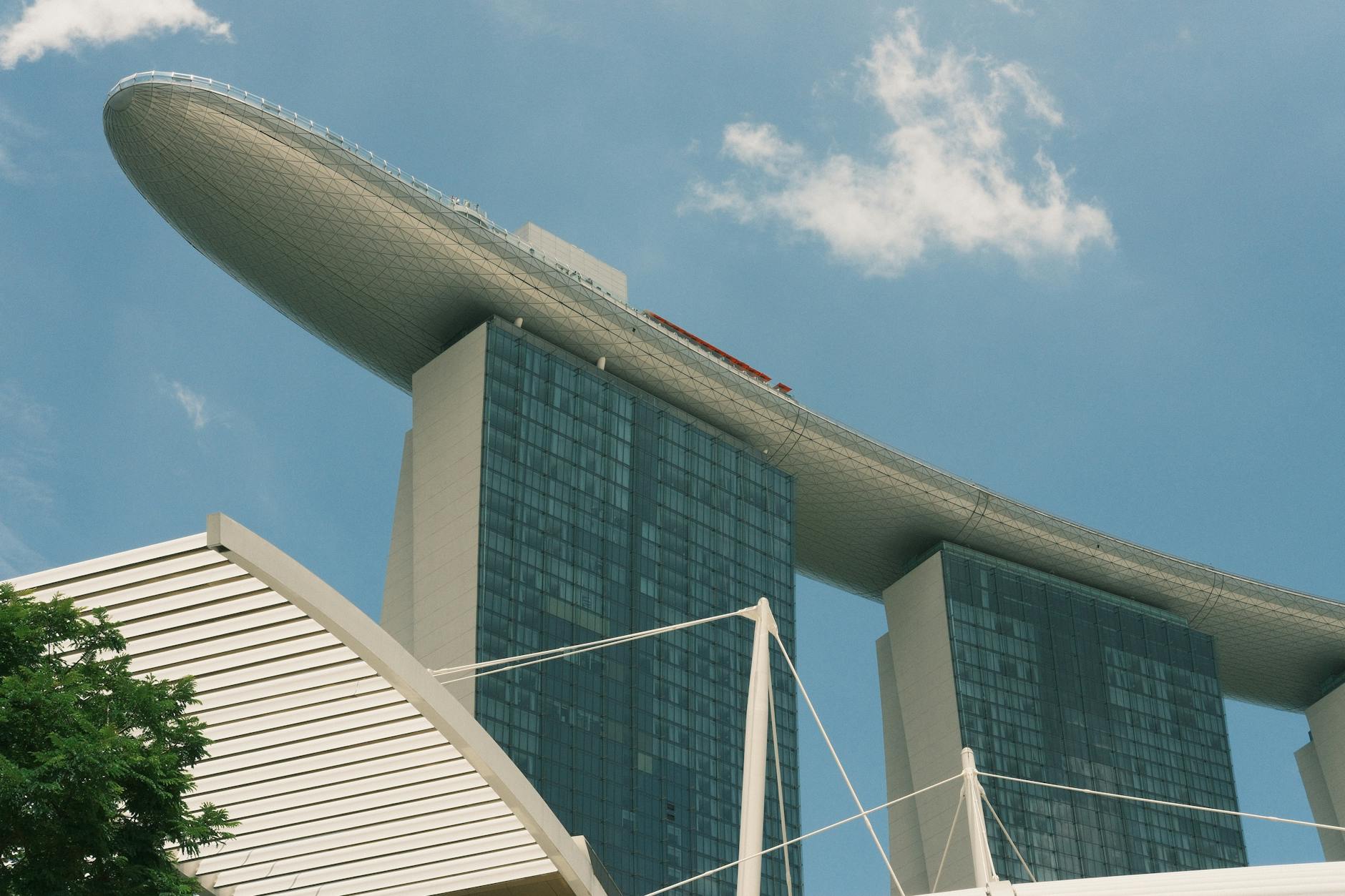
Changi has direct flights from London, Paris, Frankfurt, New York, Los Angeles, Sydney and almost every capital in Asia. Singapore Airlines is the home carrier and rarely the cheapest; comparing flights to Singapore across airlines usually turns up a Middle Eastern or Asian carrier for a third less. Peak fares fall in December, around Chinese New Year and during the Formula 1 night race in September.
Hotels are the expensive part. Even mid-range rooms downtown start around 200 SGD a night, and calling anything “budget-friendly” here is a stretch. At the top sits Raffles Singapore, the 1887 colonial hotel where the Singapore Sling was invented, from about 1,000 SGD a night; our separate list of Singapore’s ten best luxury hotels covers that end of the market. Hilton Singapore Orchard puts guests on the main shopping street with the MRT underneath. Four-star options such as Rendezvous Hotel and Village Hotel Bugis, both run by Far East Hospitality, come in around 200 to 250 SGD and sit within walking distance of the bay. Comparing hotels in Singapore by MRT station rather than by district is the quickest way to narrow the list, since any station within three stops of City Hall works for this itinerary.
Getting Around the City and Food
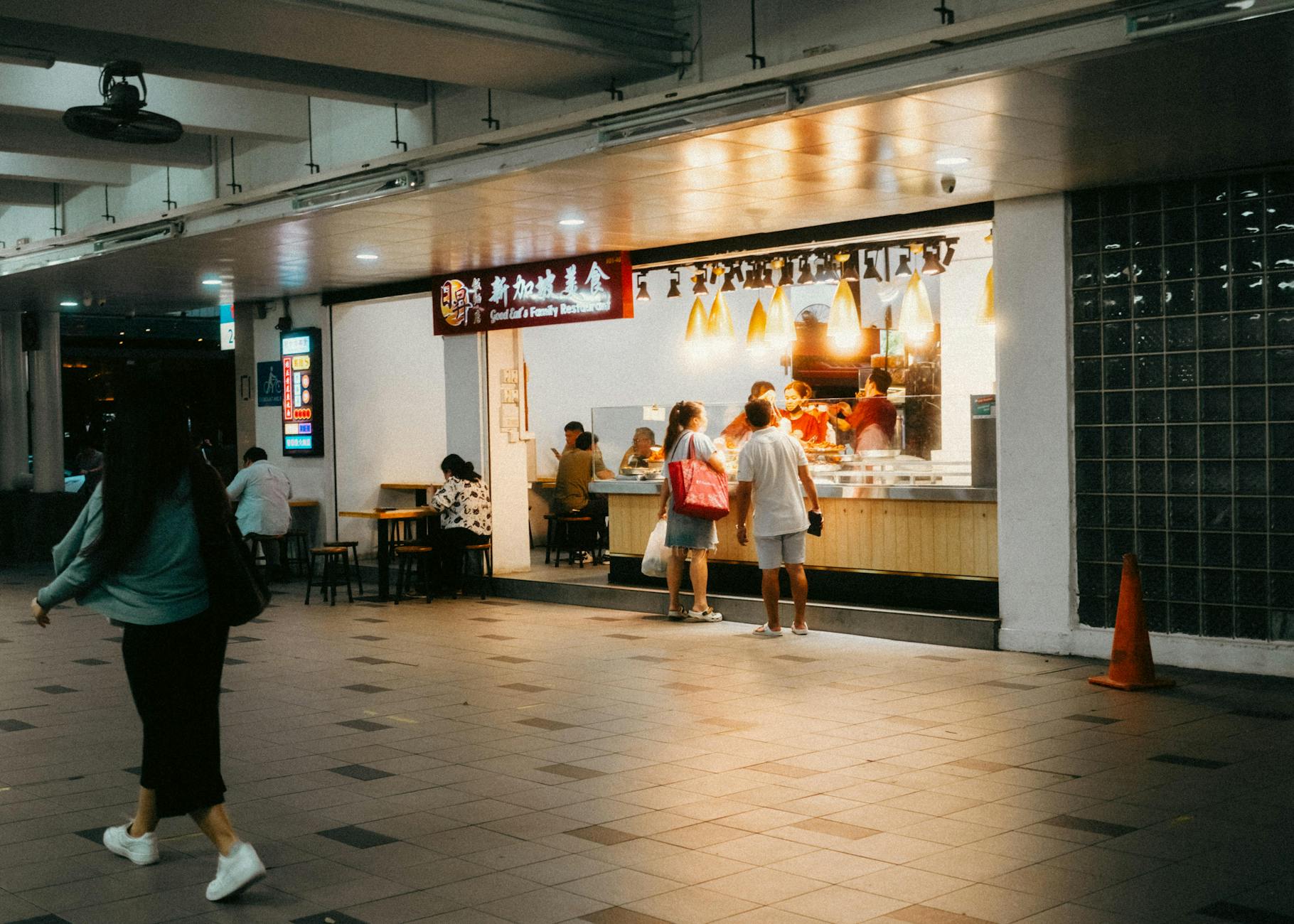
Public transport covers everything in this article. Any contactless Visa or Mastercard taps straight through the MRT gates, so an EZ-Link card is no longer necessary; the Singapore Tourist Pass at about 30 SGD for three days of unlimited rides only pays off with six or more trips a day. Grab is the local Uber and works with foreign cards. Walking is pleasant in the early morning and after sunset, and painful between noon and 16:00. For a first overview, the Hop-on Hop-off bus in Singapore loops past every sight in this article with an audio guide and air conditioning, which matters more here than in most cities.
Food is the great leveller. Hawker centres, the open-air food courts found in every neighbourhood, serve the same dishes that Michelin inspectors have starred for 4 to 8 SGD a plate. Lau Pa Sat near the financial district and Maxwell Food Centre in Chinatown are the two closest to the sights. Order chili crab (sold by weight, usually 70 to 90 SGD for a crab that feeds two), laksa, Hainanese chicken rice and char kway teow, and drink a kopi, local coffee with condensed milk, for under 2 SGD. On my own visits the first stop after the airport is usually a hawker stall, because the food is better and cheaper than anything in the hotel. A guided evening food tour helps first-timers decode the stalls and the ordering etiquette in a single night.
Climate and When to Go
Singapore sits one degree north of the equator. Temperatures hold at 28 to 32°C all year, humidity rarely drops below 80 percent, and rain falls on most days, usually as a hard shower in the afternoon that ends within an hour. The wettest stretch is the northeast monsoon from November to January. February to April and June to August are a little drier, but the difference is small enough that flight prices and events should decide the dates more than the weather.
Pack light cotton, a hat, sunscreen and a folding umbrella, and plan indoor sights for the middle of the day. Malls, museums and the MRT are air-conditioned to about 22°C, so a light layer is useful indoors. Tap water is safe to drink everywhere, which saves both money and plastic.
Three Days in Future Singapore at a Glance
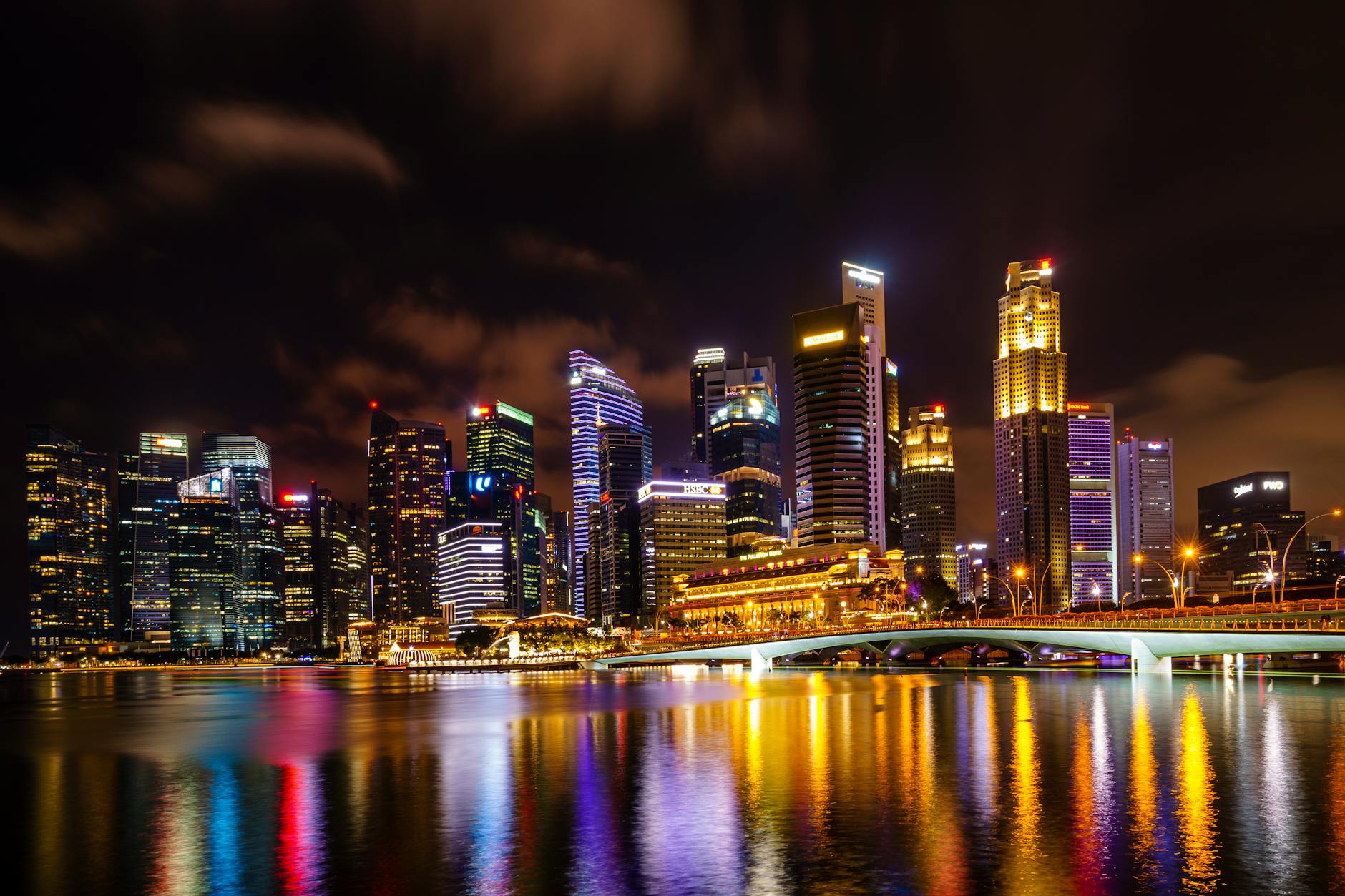
Day one: Gardens by the Bay conservatories at 9:00, lunch at Lau Pa Sat, the ArtScience Museum in the afternoon heat, the SkyPark at sunset and Garden Rhapsody at 19:45. Day two: the cable car to Sentosa in the morning, Universal Studios or the aquarium, the Marina Bay loop at dusk, and dinner at Maxwell Food Centre. Day three: one-north or the Science Centre in the morning, the NEWater plant or the National Museum after lunch, and Jewel at Changi in the evening whether or not there is a flight to catch.
Budget around 150 SGD a day per person without the hotel: 50 for the conservatories, 30 for the SkyPark, 35 for the cable car, under 10 for transport and 25 to 40 for three hawker meals. Everything in that list is reachable by MRT from any hotel within a few stops of City Hall, and the city keeps adding to it. The Thomson-East Coast MRT line, a new terminal at Changi and the next phase of Gardens by the Bay are all under construction, so the Singapore of a visit five years from now will be a different one again.


