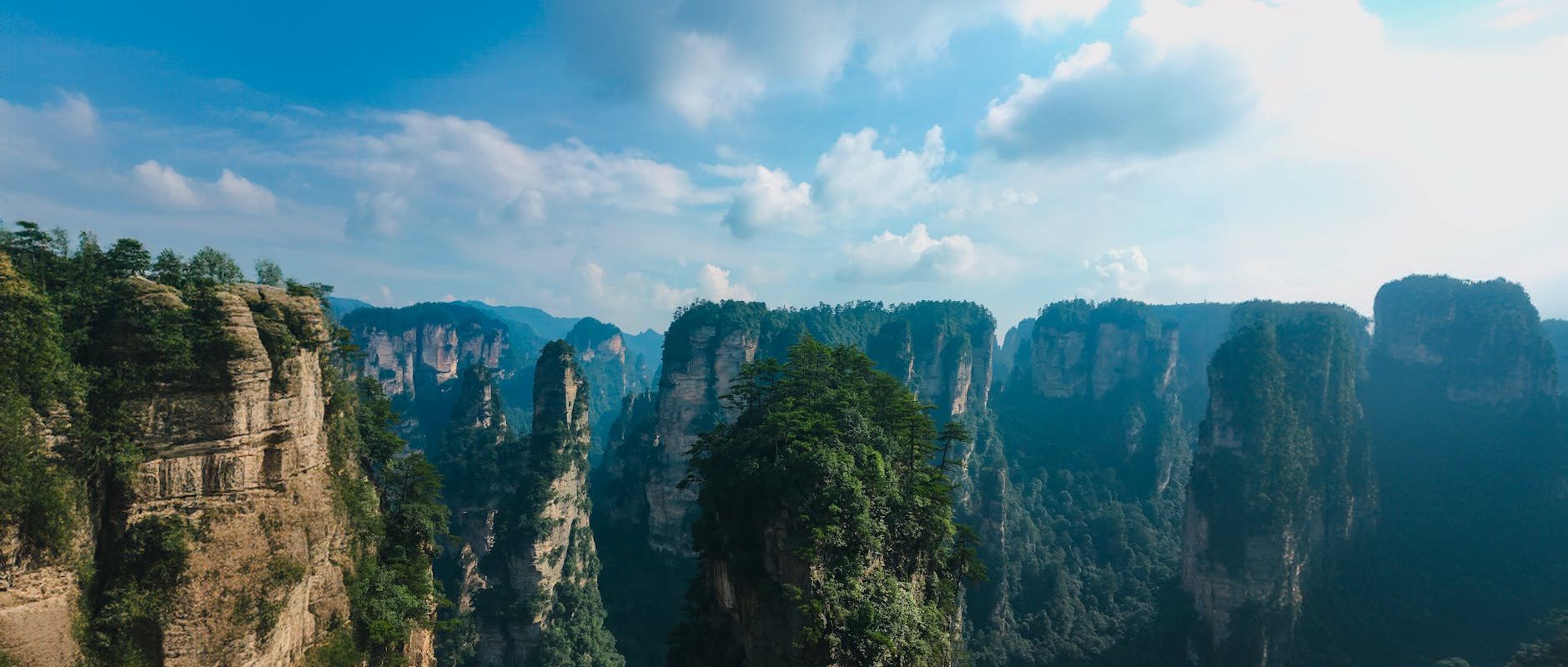
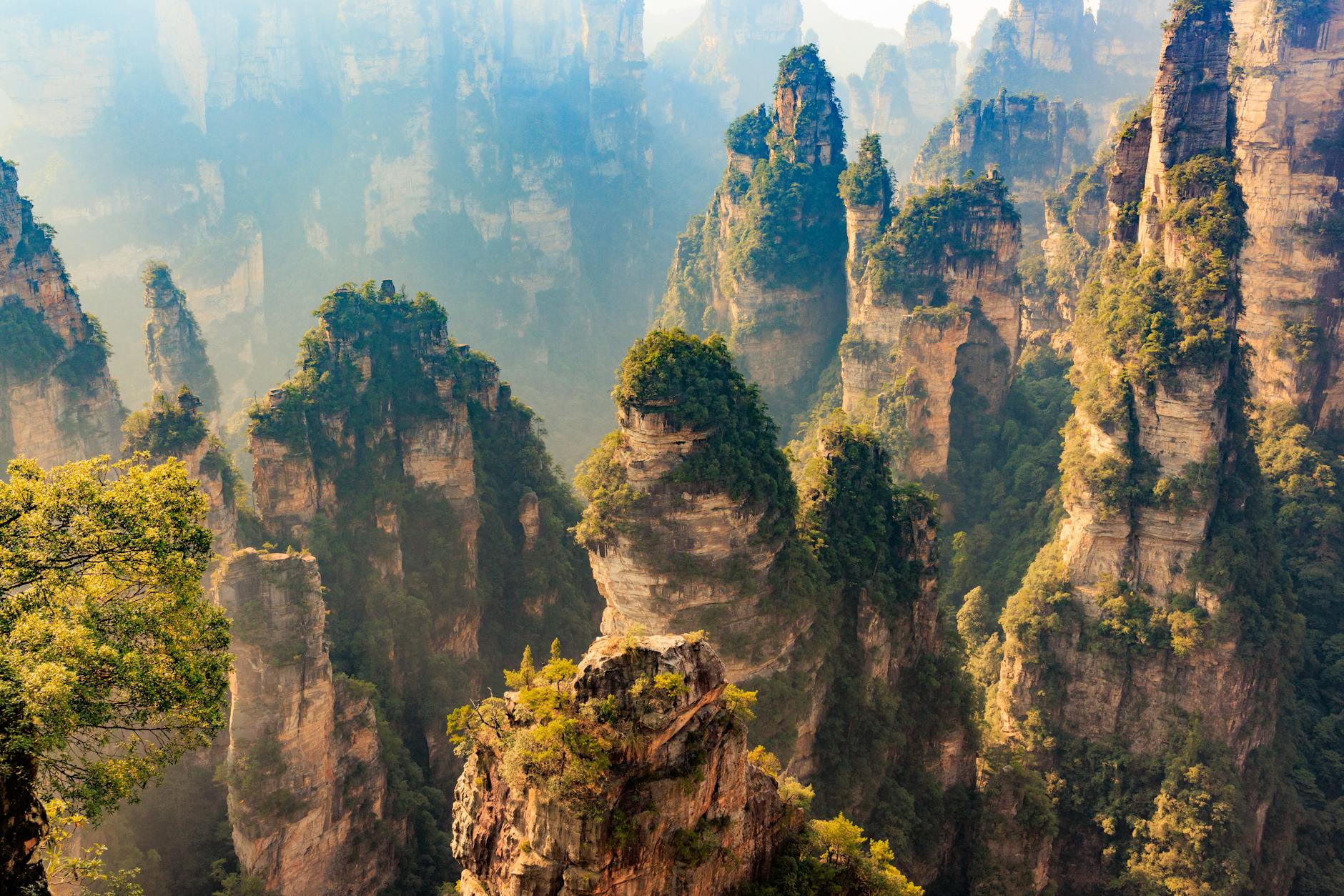
Zhangjiajie looks the way the photos promise, and that is rare. Over 3,000 sandstone pillars rise from the forest floor of Wulingyuan, some of them 200 metres tall, and on a spring morning the valleys between them fill with mist so that the peaks appear to float. Getting that picture, though, depends on being on the right platform at 6 am, in the right month, with the right lens. This guide covers where the classic viewpoints are, when the fog actually forms, and how to be standing there before the tour groups arrive.
Getting Ready for a Zhangjiajie Photo Trip
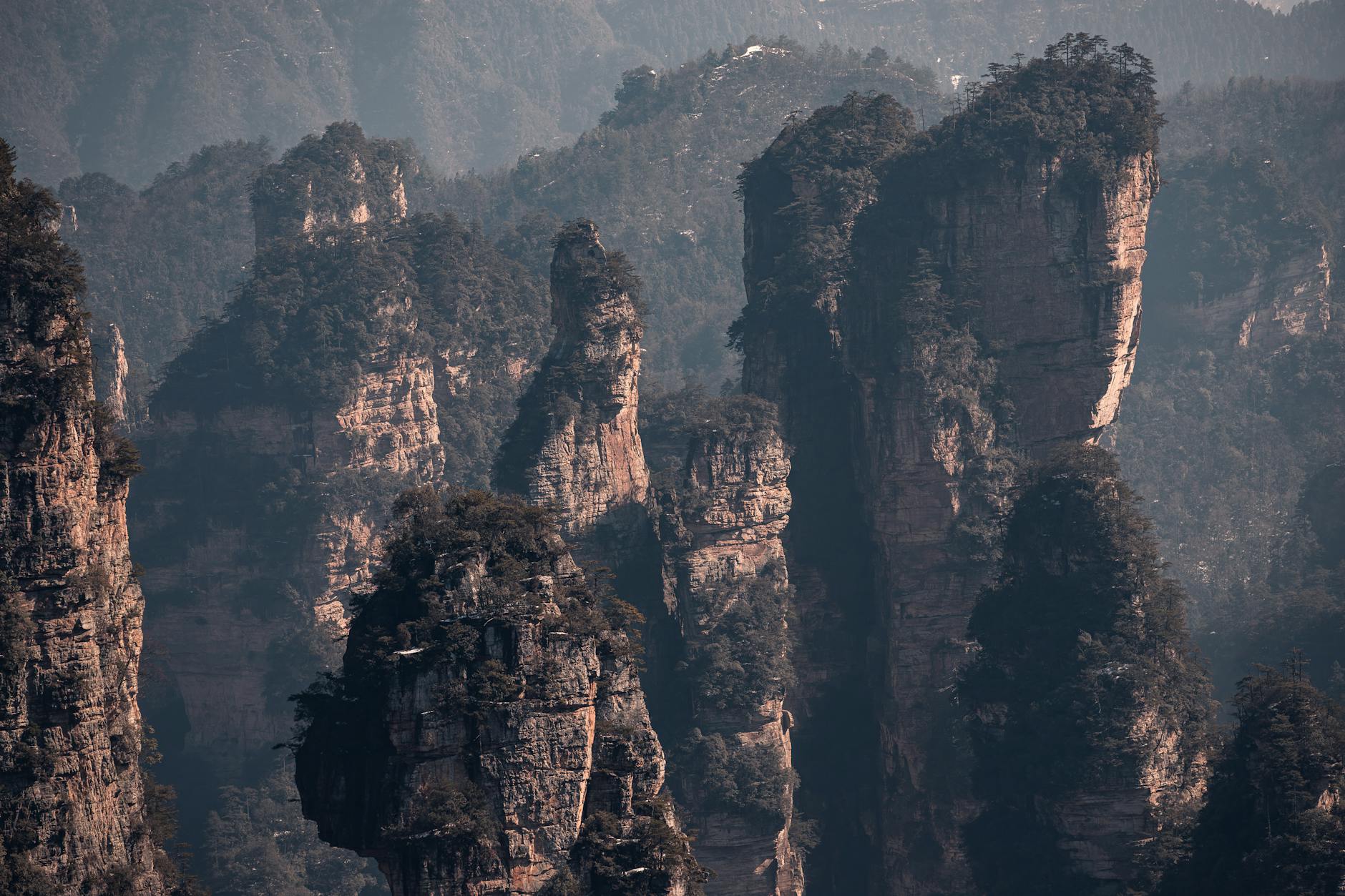
Zhangjiajie is a prefecture-level city, and the park everyone means when they say the name, Wulingyuan Scenic Area, lies 35 km to the north-east. It covers 390 square kilometres, has four main entrance gates and takes most people three days to see properly. A day-by-day itinerary helps, because the viewpoints are grouped on separate plateaus connected by shuttle buses, and a wrong turn in the morning costs you the light.
Picking the Right Season
Season decides most of the result. For fog and soft sunrises, April to May and September to October give the best odds. In spring the forest turns green, rain falls every second or third day, and the most dramatic mist usually forms the morning after a storm, when the valleys are saturated and the sky clears overnight. Daytime temperatures run 15 to 25 degrees, mornings on the plateaus closer to 10.
Autumn brings colour. From mid-October the maples and sumac on the slopes turn red and gold against the grey sandstone, the air is drier and visibility is longer, which suits telephoto work on distant peaks. Summer, June to August, is hot and humid at 30 degrees or more, with heavy downpours that do produce fog but also close trails and bring the biggest crowds of the year, especially in July and August school holidays.
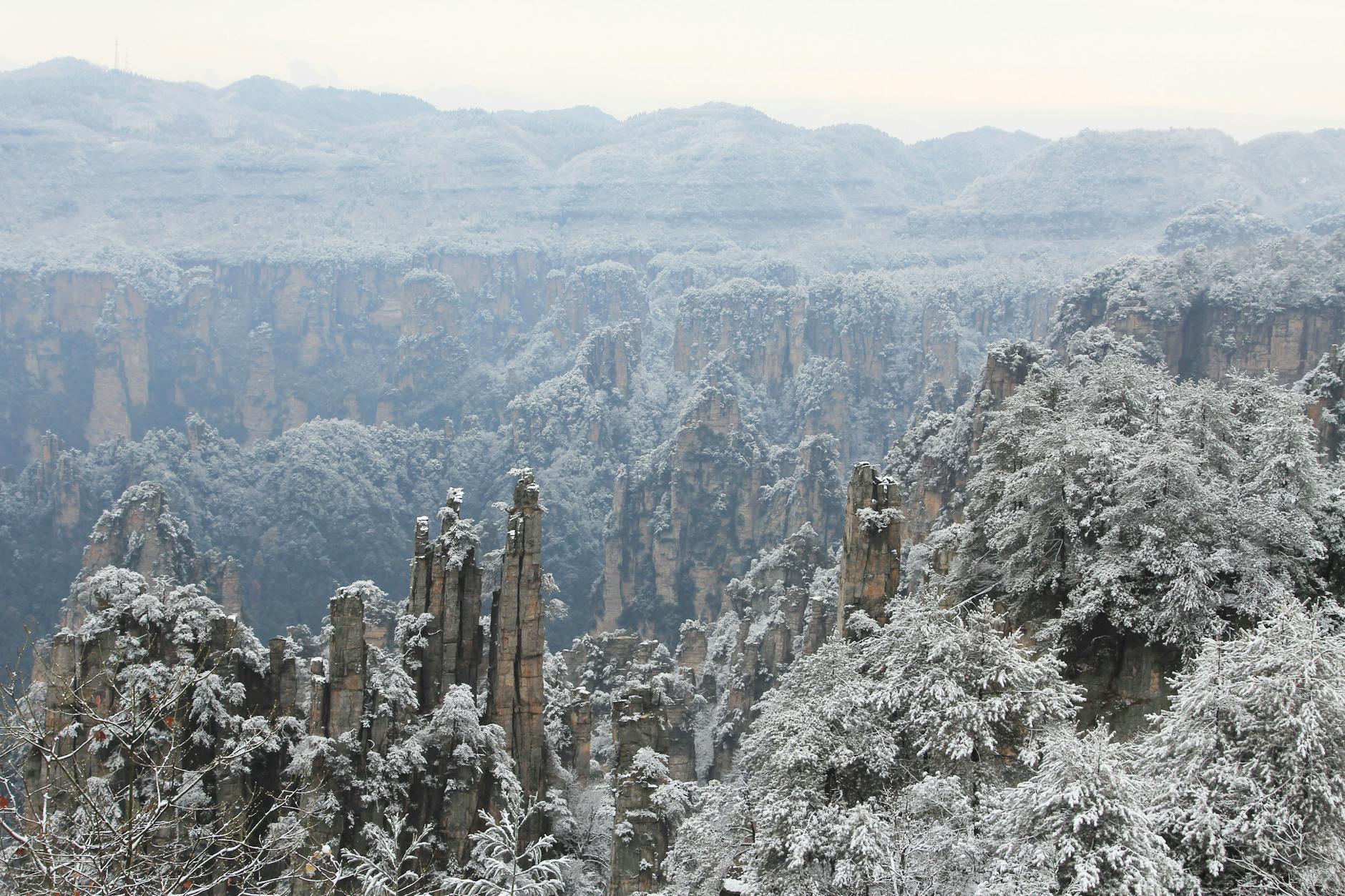
Winter is underrated. Snow on the pillars happens a few times a year, usually in January, and the park empties out. Some cable cars and the Bailong Elevator close for maintenance or ice in December and January, so check before you book, and expect far less fog than in spring.
Getting There and Where to Stay
Zhangjiajie Hehua airport (DYG) sits 5 km from the city centre and has direct flights from Beijing, Shanghai, Guangzhou, Chengdu and about twenty other Chinese cities, plus a few international routes to Korea and Southeast Asia. High-speed trains from Changsha take about 2.5 hours to Zhangjiajie West station. From either the airport or the station, a taxi to Wulingyuan town takes 50 to 60 minutes and costs 120 to 150 yuan; the public bus from the central bus station costs 12 yuan and takes a little over an hour.
For sleeping there are two sensible choices:
- Wulingyuan town, just outside the park. This is where most visitors stay: hundreds of hotels at every price, restaurants that serve until late, and a 10-minute walk or 5-minute shuttle to the Wujiayu entrance gate. Hotels in Wulingyuan start from about 150 yuan for a clean double in a guesthouse; the Pullman Zhangjiajie, the best-known international brand here, sits a few minutes from the gate with a pool and reliable English at the desk. Budget travellers rate the Destination Youth Hostel for its location on the road to the East Gate.
- Inside the park. A handful of guesthouses survive in the villages of Yuanjiajie and Tianzi Mountain, Tongfu Inn among them. Rooms are basic, hot water can be unreliable, and you carry your bag up from the bus stop, but you wake up 15 minutes from the viewpoints and see the sunrise before the first cable car of the day brings anyone else. For a dedicated photo trip this is the trade worth making for at least one night.
Park entry costs 228 yuan including insurance and is valid for four consecutive days, with fingerprint registration at the first gate. Shuttle buses inside the park are free and run from about 6:30 am to 7 pm, earlier in peak season. Cable cars and the elevator cost extra, 65 to 80 yuan per ride.
Yuanjiajie and Tianzi Mountain
These two plateaus hold most of the famous compositions, including the pillars that the Avatar production team photographed for Pandora. They sit at 1,000 to 1,200 metres on the northern side of the park and connect by shuttle bus in about 30 minutes, so a single long day covers both. A private Yuanjiajie and Tianzi Mountain tour makes sense if you want a driver waiting at the gate at dawn; otherwise the free shuttles do the job once the park opens.
Yuanjiajie and the Pandora Pillars
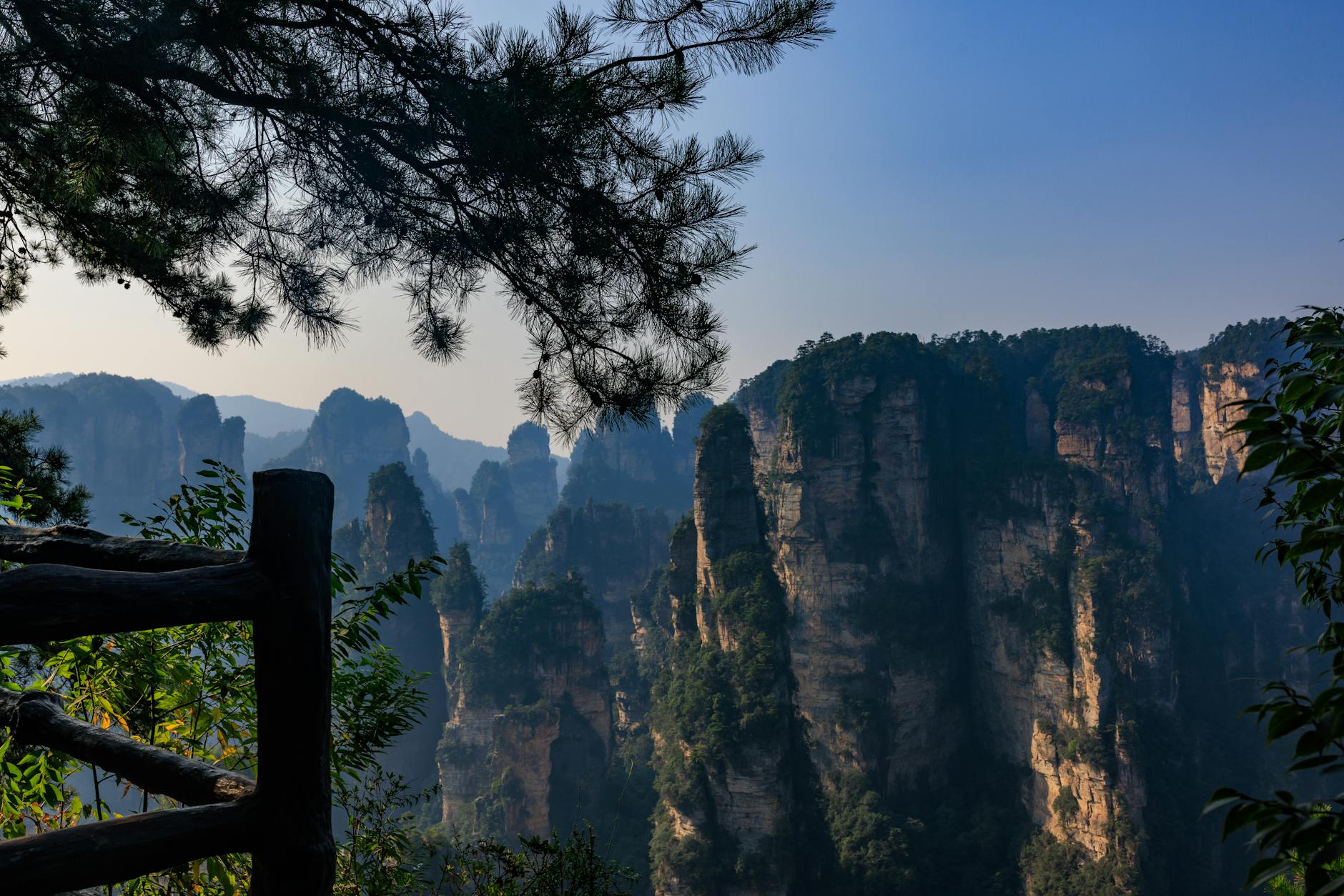
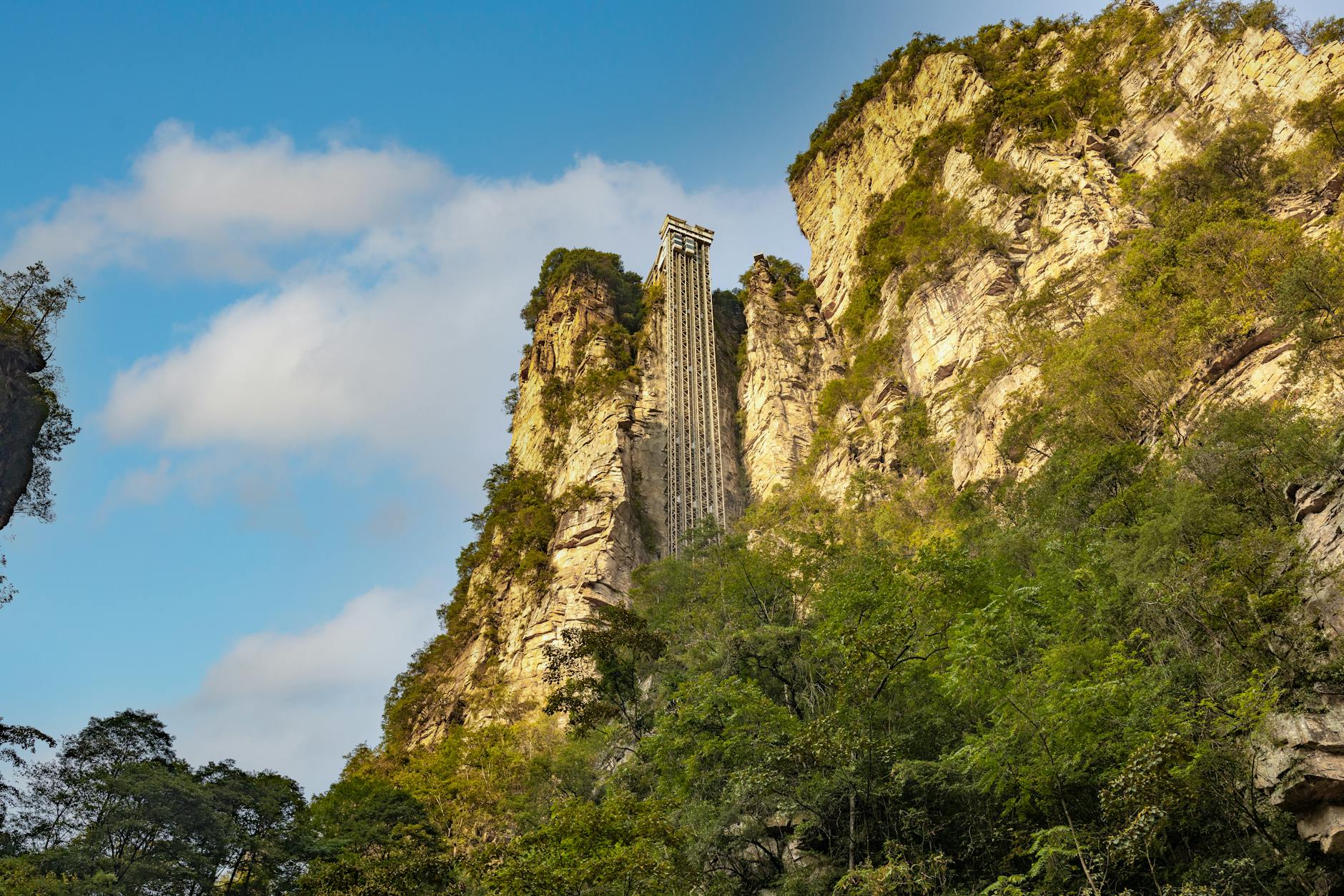
Yuanjiajie is the most photographed section of the park. Its quartz-sandstone columns stand close together, topped with pines, and from the rim trail they appear to hang in the air whenever cloud fills the valley floor. Access is by the Bailong Elevator, a glass lift bolted to a cliff face that climbs 326 metres in under two minutes and holds the record as the tallest outdoor elevator in the world. It costs 65 yuan one way, the queue at mid-morning in high season can pass an hour, and the first cars run from 7 am. People uneasy with heights can walk up instead: the trail from the Golden Whip Stream takes about two hours.
Three viewpoints along the rim deserve a tripod:
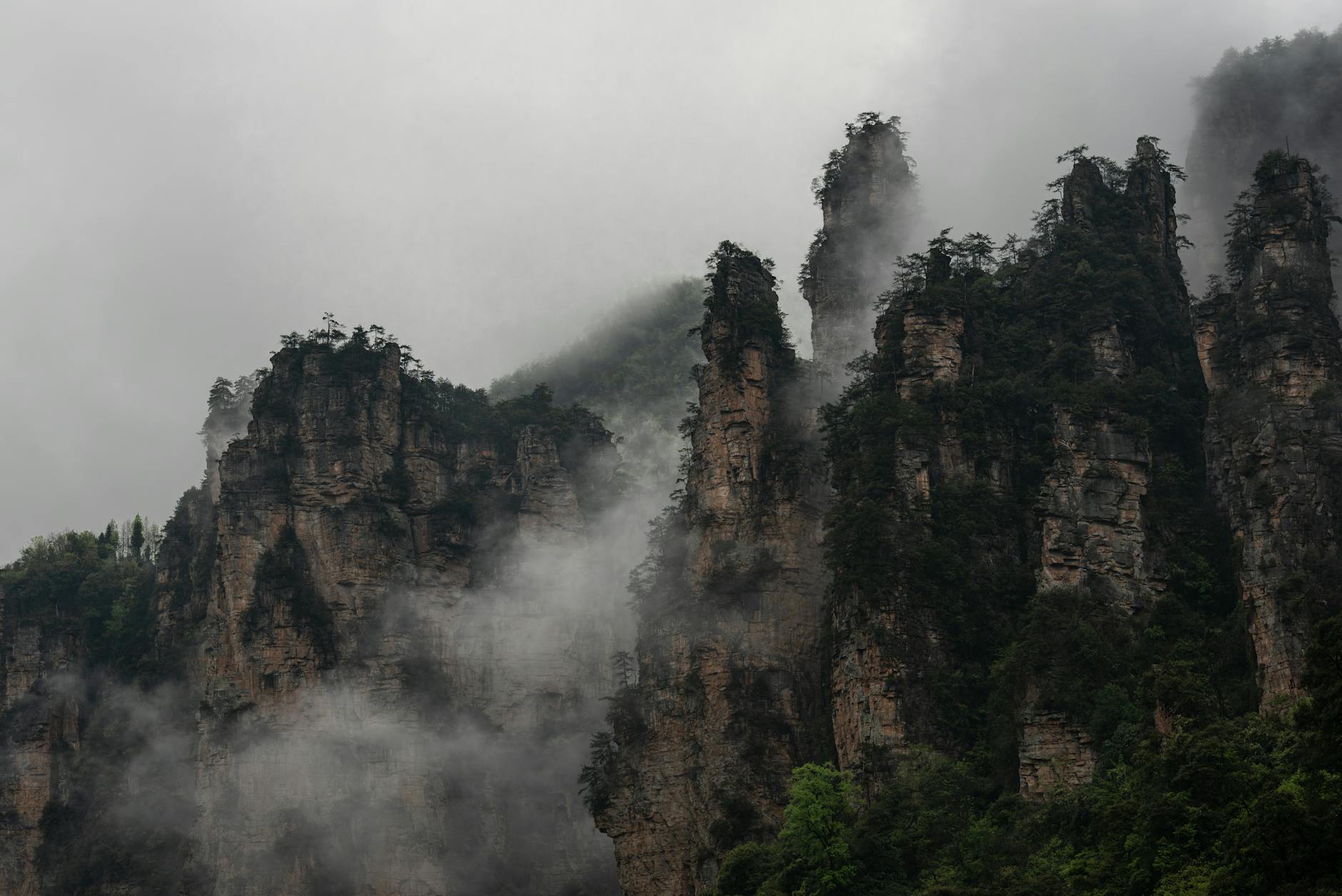
- Southern Sky Column, renamed Avatar Hallelujah Mountain in 2010. A single 1,080-metre pillar with a pine cluster on top, best shot from the marked platform in the first hour after sunrise, when side light separates it from the peaks behind and the fog is still draining out of the valley. By 9 am the platform is three deep with phones.
- Platform of Ecstasy (Mihuntai). A few minutes’ walk further on, with a wide view across dozens of peaks. In fog the far rows fade to grey silhouettes, which works for layered telephoto compositions at 100 to 200 mm.
- First Bridge Under Heaven. A natural sandstone arch 20 metres long spanning two peaks, 350 metres above the gorge. Arrive before 8 am for a clean frame without people on the bridge; the lock-covered railings make a useful foreground.
Mornings on the plateau are cold even in June, often below 10 degrees before the sun clears the ridge, so a warm layer belongs in the camera bag. Rhesus macaques patrol the rim trail and will open an unattended backpack, which is a hazard for lenses as much as for snacks.
Tianzi Mountain Viewpoints
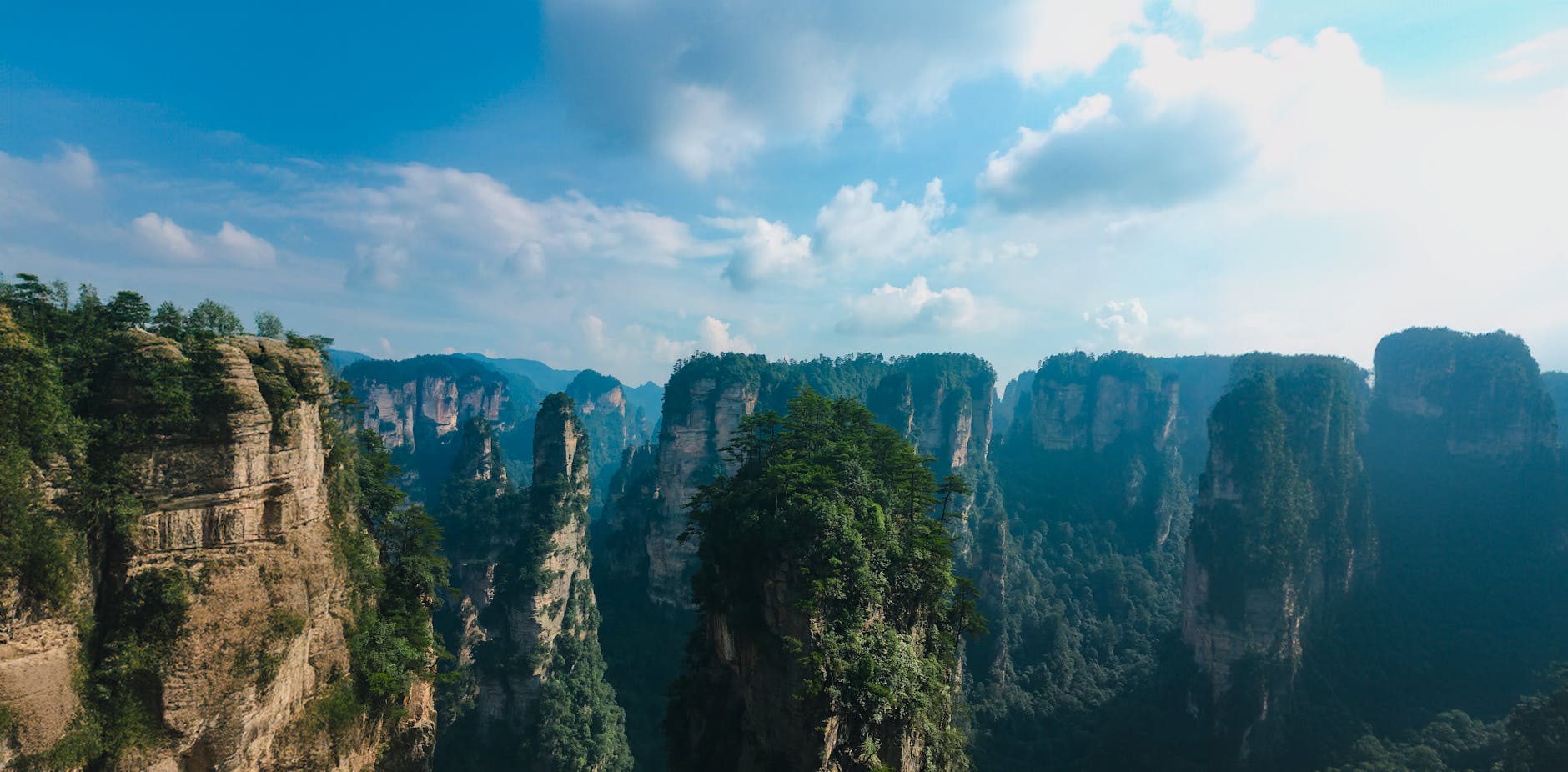
Tianzi Mountain is the higher plateau to the north, around 1,260 metres, and its views are wider and more open than Yuanjiajie’s. The cable car from the Tianzi Mountain gate on the park’s north side takes 7 minutes, costs 72 yuan one way, and passes over a forest of thin pillars with the floor several hundred metres below; a seat on the valley side gives a frame-filling view for the whole ride. A guided Tianzi Mountain visit is useful mostly for the transport between the scattered platforms, which the shuttle buses serve less often than on Yuanjiajie.
Three spots stand out:
- Imperial Writing Brush Peaks (Yubifeng). A cluster of narrow spires that Chinese painters compared to brushes standing in a pot. Dawn and fog suit them best, when the peaks separate from the background; the viewing platform faces roughly south-east, so the sun rises to the left of the frame in spring and autumn.
- West Sea Peak Forest Platform (Xihai). The widest panorama on the mountain, looking over hundreds of pillars in the valley below. When fog rolls in from the west, usually between 6 and 8 am, the peaks turn into islands in a white sea for 20 to 40 minutes before it burns off.
- Fairy Scattering Flowers Platform. A smaller lookout named for a pillar said to resemble a woman holding a basket. Less crowded than the other two, and good for close telephoto shots of individual rock shapes.
Going down, the cable car is the fast option. The alternative is the stone stairway to the Shilihualang valley, about 3,800 steps and two hours on foot, which passes a dozen quieter viewpoints and ends at the Ten-Mile Gallery mini-train, 38 yuan, with the pillars seen from below rather than above.
How to Catch the Fog and the Sunrise
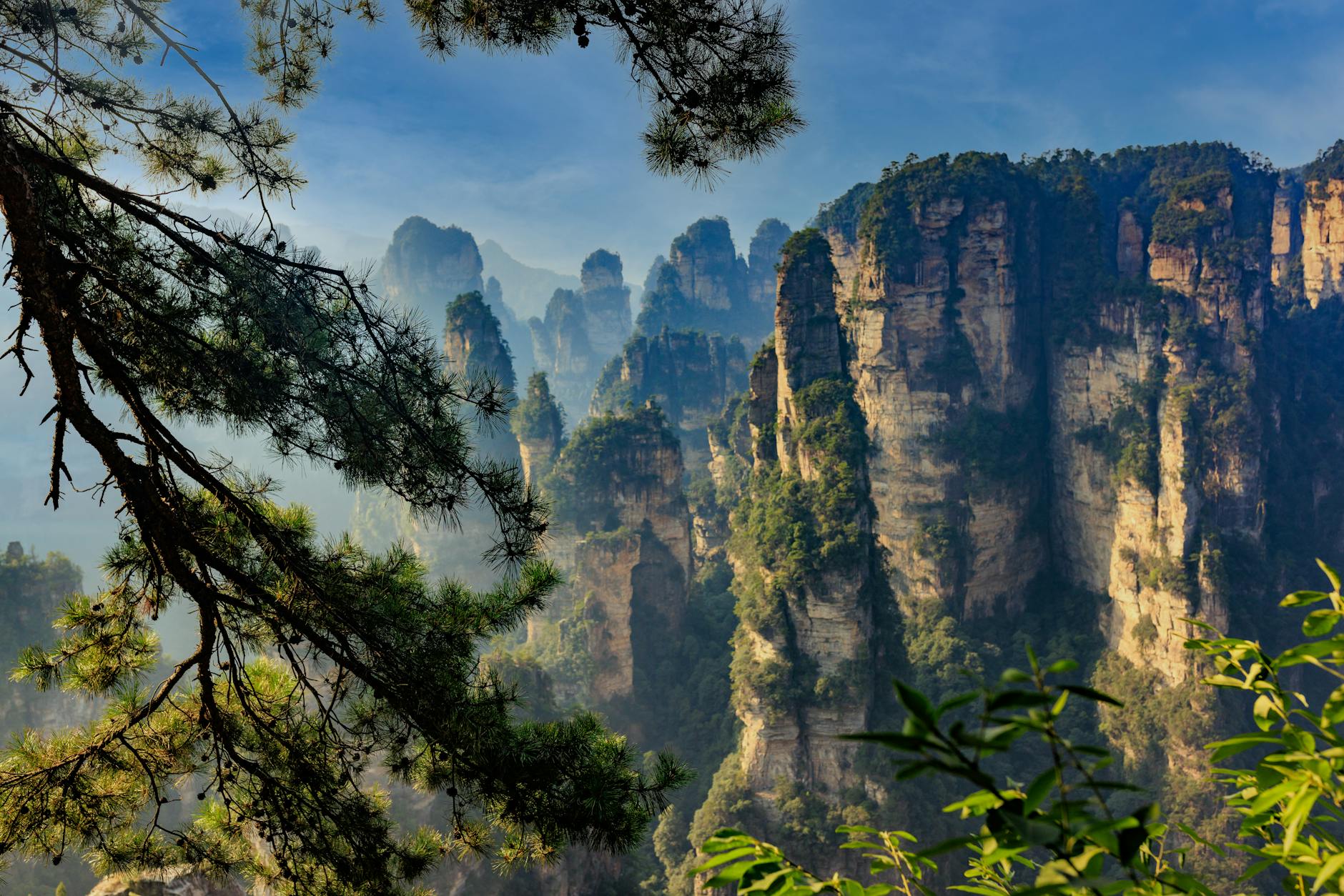
Fog is the reason photographers get up at 4:30 here. It is also the least predictable part of the trip, and a few rules of thumb raise the odds considerably.
Where and When the Fog Forms
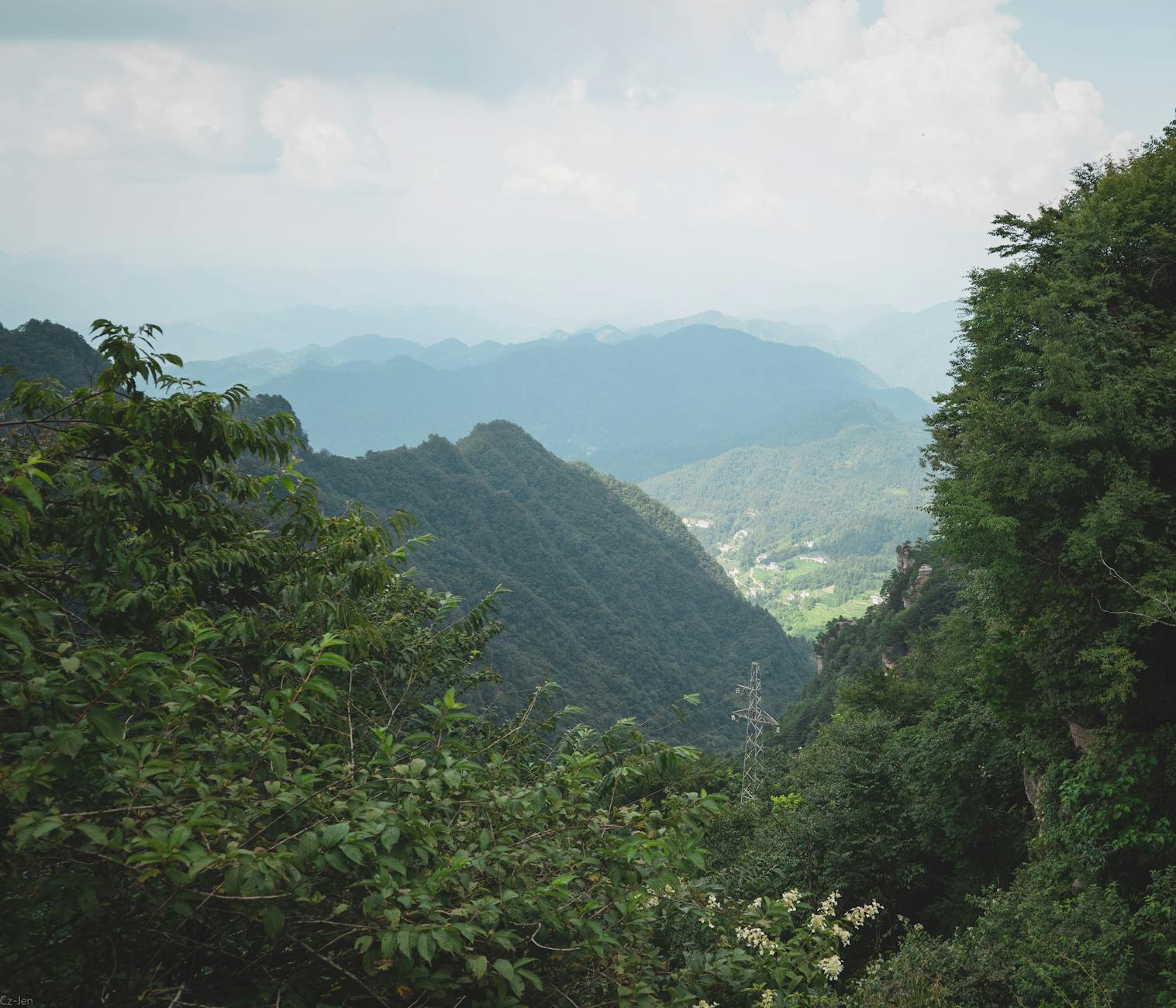
Valley fog in Wulingyuan is radiation fog: on clear, still nights after a wet day, the air in the gorges cools and condenses, and by dawn the cloud sits below the rim trails at about 800 to 1,000 metres. It forms most often in spring and after summer rain, builds in the two hours before sunrise, and dissolves within an hour or two of the sun reaching the valley floor. A rainy afternoon followed by a clear evening forecast is the signal to set the alarm.
- Yuanjiajie. Because the pillars stand close together, fog here looks densest and swirls visibly between them. Platform of Ecstasy and the Avatar Hallelujah Mountain platform are the standard positions.
- Tianzi Mountain. West Sea Valley and the Imperial Writing Brush Peaks. With a wider valley below, the fog behaves more like a sea with islands than like smoke between columns.
- Daguantai. A set of small lookouts on the eastern edge of Tianzi, reached by a side trail that few tour groups take. The views drop into mist-filled side canyons, and on a weekday morning you may share the platform with two or three people.
Being on a platform at first light means either sleeping inside the park or getting into position the evening before, since the first shuttles and cable cars start after sunrise for much of the year. Guesthouses in the Yuanjiajie and Tianzi villages take overnight bookings inside the park, and for fog photography that single night matters more than any lens choice.
Where to Watch the Sunrise
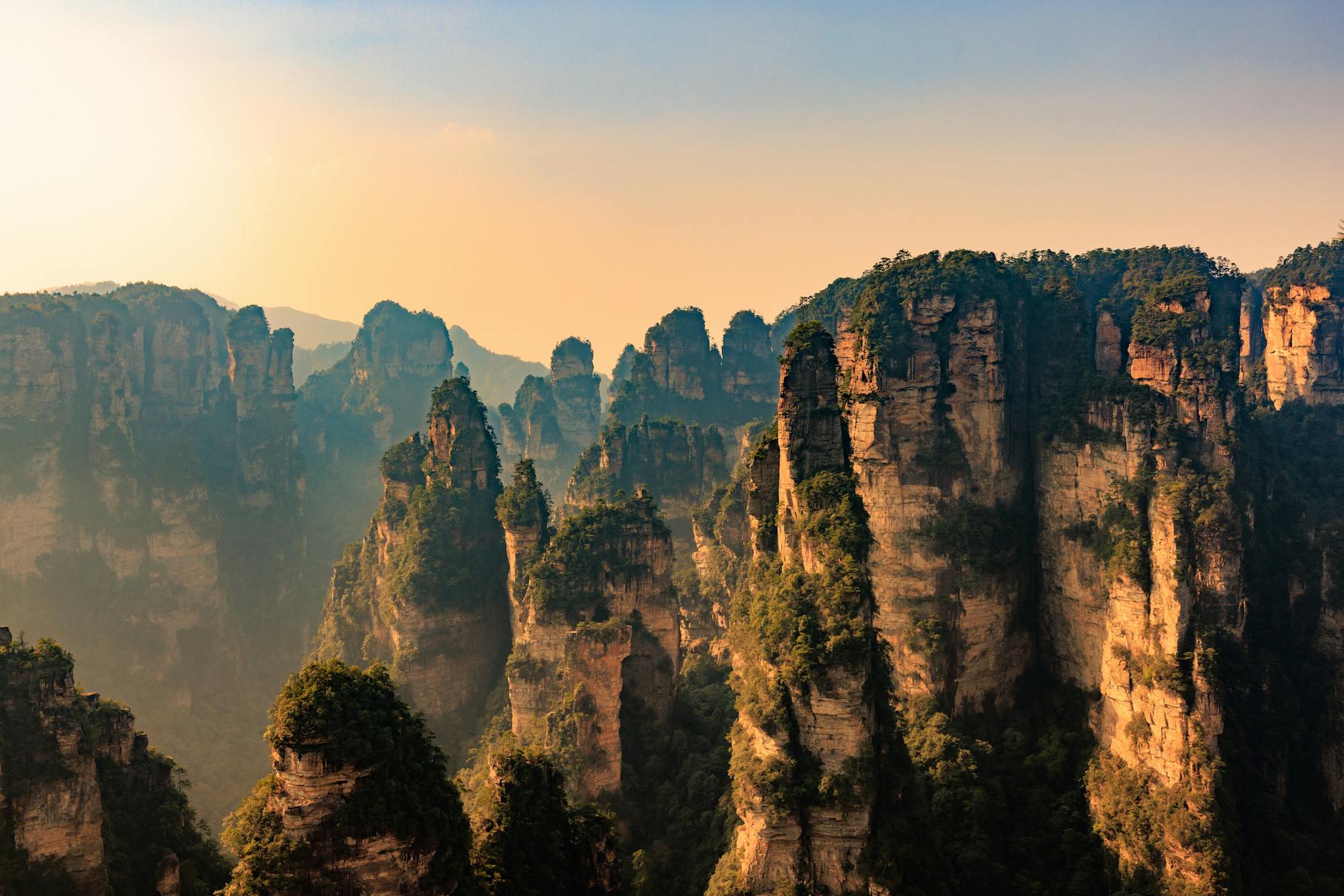
Sunrises in Zhangjiajie are rarely red. More often the sky goes pale pink and grey, and the picture comes from the light touching the tops of the pillars one by one while the gorges stay in shadow. Sunrise falls between 5:30 and 7:00 depending on season; being in position 40 minutes earlier catches the blue hour and the thickest fog.
- Tianbo Mansion (Tianbofu) viewpoint. On Tianzi Mountain, with a clear eastward horizon and a stack of peaks in the foreground. The classic sunrise position on the plateau.
- West Sea Valley platform. Despite the name, the view here opens to the east as well, and the sun rising through fog gives backlit, glowing edges on the pillars.
- Yangjiajie. The park’s western section, with viewpoints such as Wulongzhai and the Heavenly Ladder. Reaching them involves steep stairs and narrow ledges, which keeps the crowds away; the reward is a sunrise over the same stone forest with almost nobody else in frame.
Mountain weather turns in minutes. A platform socked in with cloud at 6:15 can clear at 6:40, so waiting half an hour longer than feels sensible often pays. On the other hand, if the cloud base sits above the rim, the fog is where you are, not below you, and the better move is to drop down to the Golden Whip Stream and shoot the pillars from the valley floor instead.
Beyond the Main Park
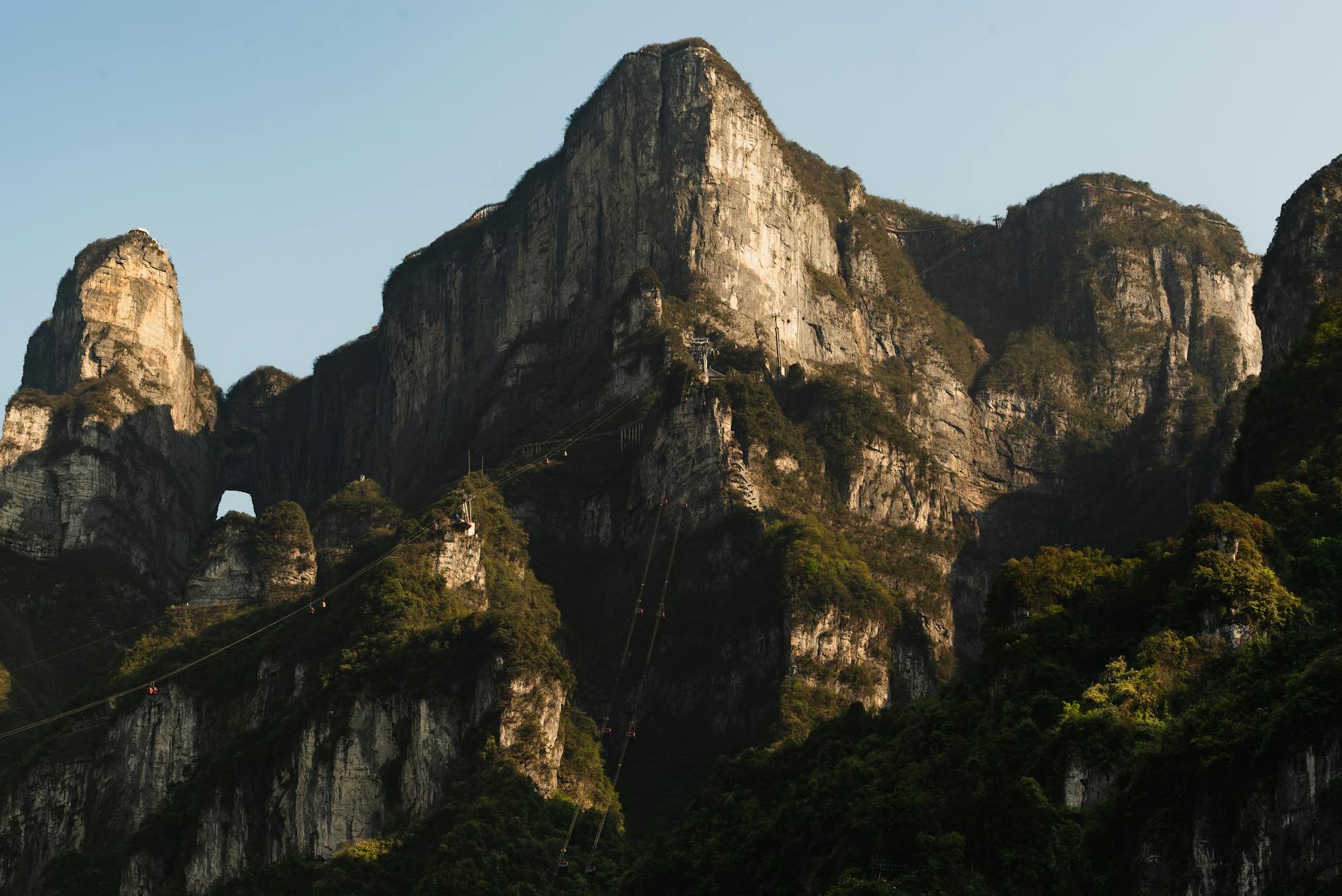
Two other sites in the area photograph completely differently from Wulingyuan, and both fit into a day each from Zhangjiajie city or Wulingyuan town.
Tianmen Mountain, Heaven’s Gate and the Glass Walks
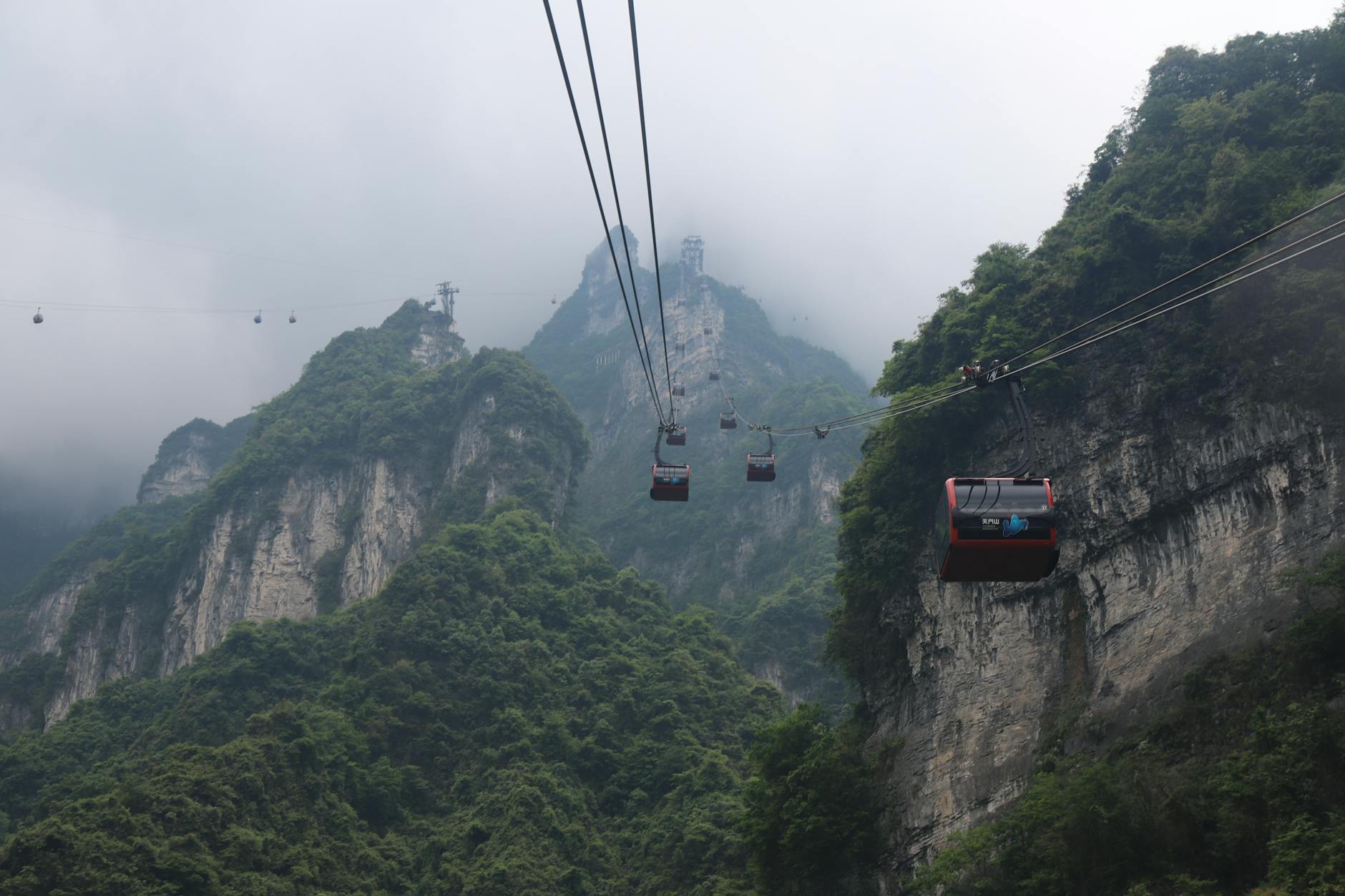
Tianmen Mountain rises directly above Zhangjiajie city, 8 km south of the centre, and the cable car to the summit leaves from a station next to the railway station in town. The ride covers 7,455 metres, among the longest in the world, takes about 28 minutes, and climbs from the city streets over farmland and then up near-vertical cliffs. Tickets run 278 yuan in high season for the combined cable car, bus and park entry, and time-slotted online booking is required; weekend slots sell out a day or two ahead. A Tianmen Mountain day tour with pre-booked tickets saves the booking hassle and the morning queue.
What to shoot on the mountain:
- The cable car itself. Looking down on the Tongtian Avenue, the 99-bend road that switchbacks up the mountainside, is the shot everyone takes; the car’s rear window gives the cleanest view with no cable in frame.
- Heaven’s Gate (Tianmen Cave). A natural arch 131 metres high through the mountain ridge, reached by the 999 steps of the Stairway to Heaven or by escalators carved inside the rock. From the bottom of the stairs a wide lens frames the whole arch with the sky behind it; from the platforms halfway up, a telephoto picks out people in the opening for scale.
- Glass skywalks. Three glass-floored walkways, each 60 to 100 metres long, hang off the cliff face at 1,400 metres. Shoe covers are mandatory and cost 5 yuan. Shots looking down through the glass at the valley, with feet in frame, are the standard; a polarising filter cuts the reflections on the glass.
Sunrise from Tianmen is hard to arrange because the cable car does not start until 7:30 in most seasons, after the sun is up. Early winter mornings, when sunrise comes at 7:20, are the exception, and the sea of cloud below the summit on a cold clear day is the one shot here that rivals the main park.
The Grand Canyon Glass Bridge
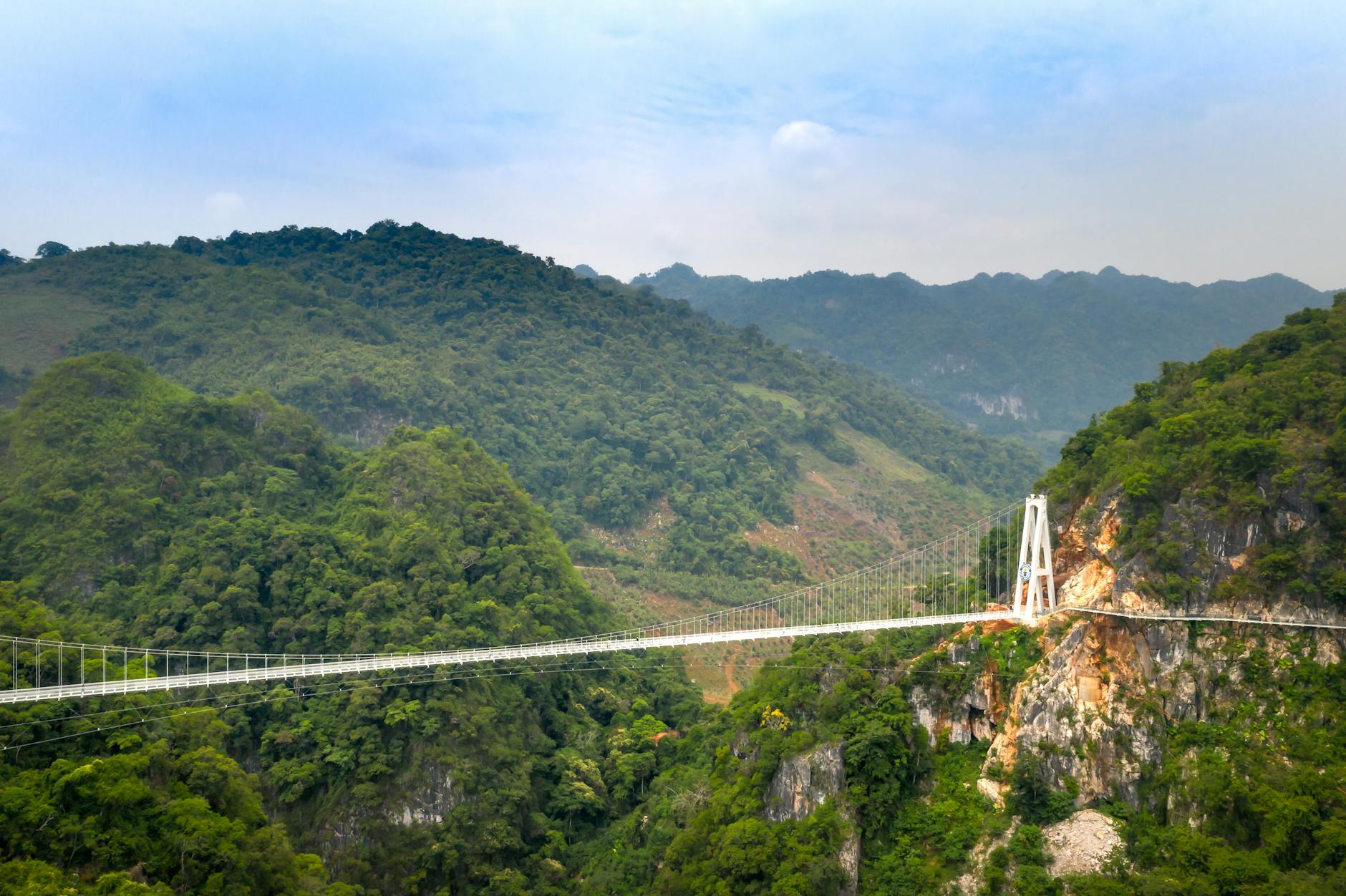
The Zhangjiajie Grand Canyon lies 30 km east of Wulingyuan town, about 45 minutes by taxi or shuttle. Its glass bridge, opened in 2016, spans 430 metres across the gorge at a height of 300 metres and was the longest glass-bottomed bridge in the world when it opened. Entry to the bridge alone costs about 140 yuan, the combined ticket with the canyon walk below about 220, and both require a booked time slot. Grand Canyon glass bridge tickets with transport from Wulingyuan are sold as a half-day package.
For photographers the site offers two subjects:
- The bridge. From the approach path on the west side, the whole span reads as a thin line against the far cliff. On the deck, looking straight down through the glass or catching the sky reflected in it works better than wide shots, because the deck carries up to 800 people at a time and is never empty. Patience helps; so does the first time slot of the day.
- The canyon. A trail descends 1,500 steps from the bridge to the canyon floor, past several waterfalls and a stretch of boardwalk along the stream, then returns by boat and lift. The light down here is even and green, suited to long exposures of the water rather than to the drama of the pillars.
Fog and sunrise play no role at the canyon. Midday, when the sun reaches the gorge floor and lights the bridge from above, is the better time, and it leaves the early hours free for the main park.
Photography Notes for Zhangjiajie
A short list of what makes a difference in this particular landscape:
- Start before dawn. Fog and first light are gone by 8 or 9 am, and so is the solitude. Sleep inside the park for at least one night, or book a guesthouse within walking distance of a gate and take the first shuttle.
- Prepare for rain. Wulingyuan gets about 1,400 mm of rain a year, most of it in spring and summer. A rain cover for the camera and a microfibre cloth for the front element get used every day; so does a light rain jacket, since the viewing platforms have no shelter.
- Lenses.
- Wide angle, 16 to 35 mm, for the platforms where the pillars fill the whole field of view and for the arch at Heaven’s Gate.
- Telephoto, 70 to 200 mm, for layered compositions of distant peaks in fog and for isolating single pillars like the Southern Sky Column. In this park the long lens does more work than the wide one.
- Tripod, for blue hour, for fog at low shutter speeds and for long exposures that smooth the cloud movement. Platforms are railed and crowded, so a compact travel tripod that fits between the uprights beats a heavy one.
- Filters. A graduated neutral density filter balances a bright sky against pillars still in shadow at sunrise. A polariser cuts haze on autumn afternoons and reflections on the glass walkways.
- Spare batteries. Cold mornings and long waits drain them, and there is nowhere to charge on the plateaus.
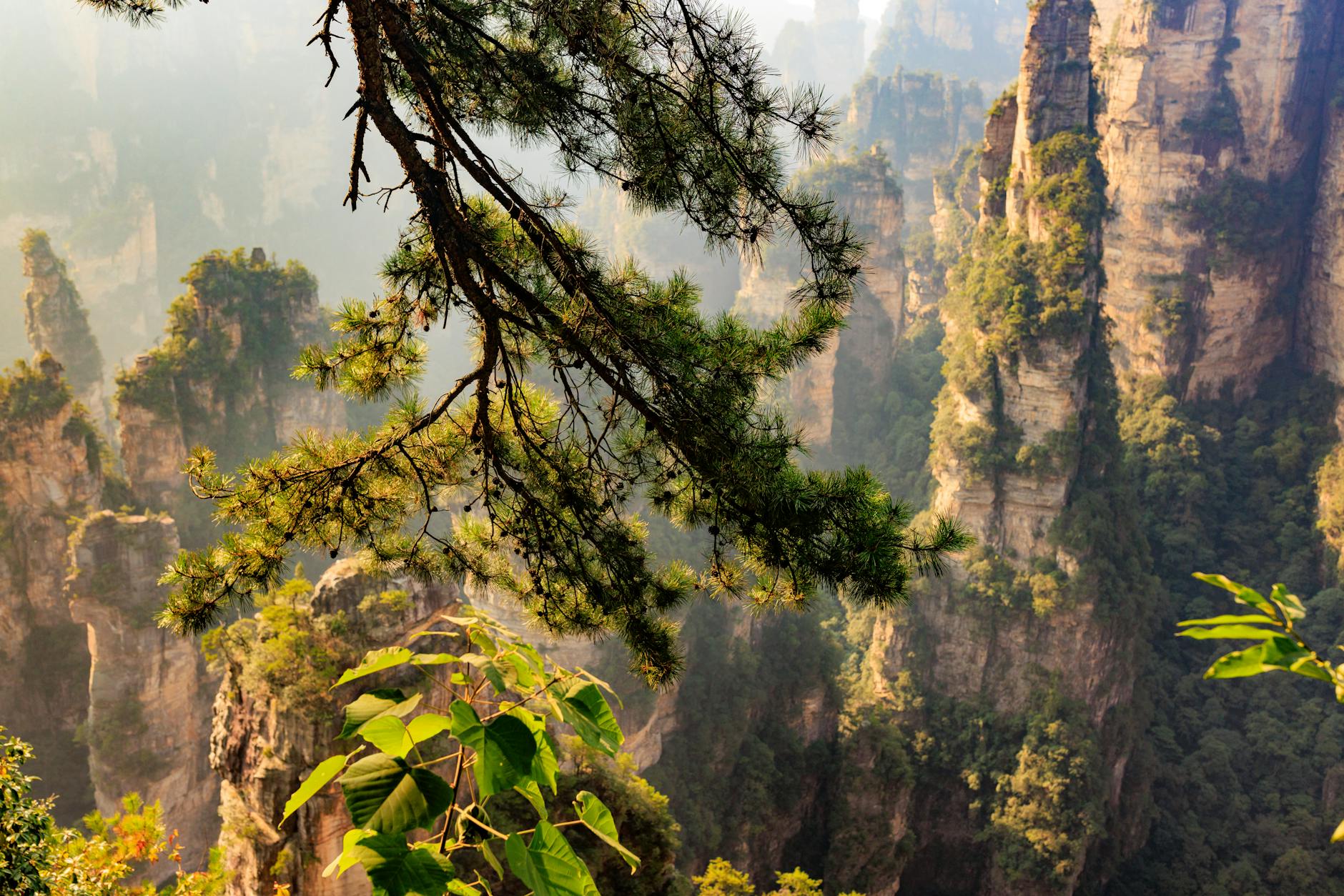
- Composition. Pine branches, railings and rock edges in the foreground give the floating peaks a sense of depth; without them the pillars flatten into a pattern. Fog can be the subject itself, with a single peak breaking through, or a backdrop that erases a cluttered background.
- Patience. Cloud, light and crowds all change on a ten-minute cycle. Many of the best frames come from staying on a platform half an hour after everyone else has moved on.
- Local guides. Park guides know which platform faces the sunrise in which month and which side trails avoid the tour groups. For a trip built around photography, a private multi-day Zhangjiajie tour with a guide who can be told “first light at Tianbofu” is worth the cost of the extra hotel night it saves.
A Three-Day Shooting Plan
Day one: enter at Wujiayu gate at opening, ride the Bailong Elevator before the queue builds, shoot Yuanjiajie through the morning, then take the shuttle to Tianzi Mountain and sleep in a guesthouse in the village there. Day two: Tianbofu or West Sea platform 40 minutes before sunrise, Imperial Brush Peaks as the fog lifts, walk down the stairs to Shilihualang by early afternoon, and ride the mini-train out. Day three: the Grand Canyon bridge at the first time slot, or Tianmen Mountain from the city if your flight leaves from Zhangjiajie that evening.
Whatever the plan, the fixed point is a platform on Tianzi Mountain before first light in April, May or October, with a 70-200 mm lens and a jacket. Everything else in Zhangjiajie is an adjustment to the weather of that particular morning.


