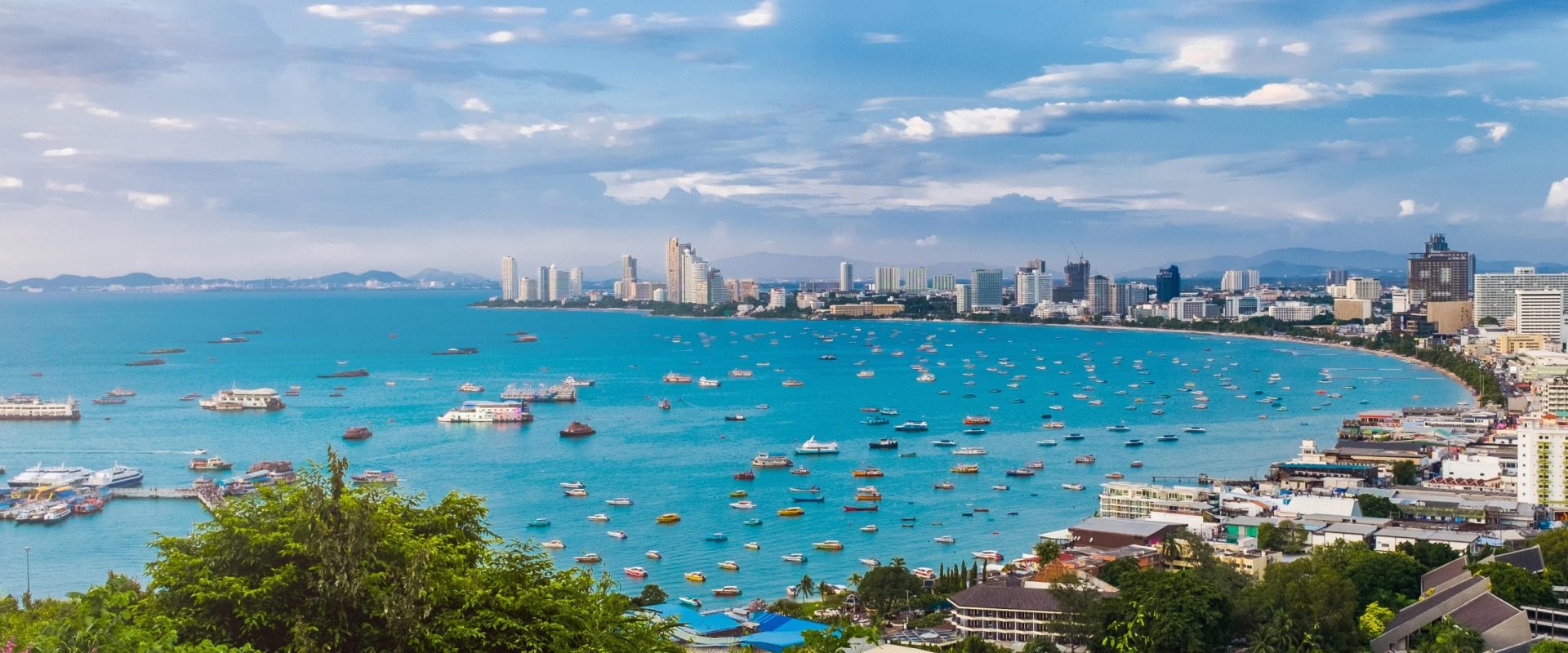
Pattaya sits on the eastern shore of the Gulf of Thailand, 147 kilometers southeast of Bangkok. It is the closest beach resort to the capital, which explains both its popularity and its reputation. The city has a loud side, centered on Walking Street, and a quiet side that most first-time visitors never find. This guide covers the seasons, the four beaches and the hotels on each, the sights that are worth the entry fee, and what it costs to get here and get around. Prices are in Thai baht as of 2026.
Getting to Pattaya From Bangkok
The drive takes about two hours on the motorway, longer on Friday evenings and Sunday afternoons when half of Bangkok has the same idea. You have four options.
- Bus from Ekkamai (Eastern Bus Terminal): about 130 THB, departures every 30 to 40 minutes from 5:00 to 23:00, two to two and a half hours. Buses arrive at the North Pattaya terminal, a 50 to 100 THB songthaew ride from the beach hotels. The same service runs from Mo Chit.
- Direct bus from Suvarnabhumi Airport: around 150 THB, roughly every hour or two from the ground floor of the terminal. The most useful option if you fly into Bangkok and want to skip the city.
- Minivan from Victory Monument or Ekkamai: 150 to 200 THB, faster but cramped, and drivers wait until the van is full.
- Taxi or Grab: 1,500 to 2,000 THB for the car, about two hours door to door. Worth it for a family of four with luggage.
Of the four, I take the Ekkamai bus whenever I am travelling light: fixed price, fixed timetable, a proper seat, and no waiting for a van to fill up. There is also a train from Bangkok on weekends. It costs 31 THB, takes almost four hours and stops at a station well outside the center, so it is a day out rather than a transfer. Pattaya’s own airport, U-Tapao, is 45 kilometers south and handles domestic flights to Chiang Mai, Phuket and Udon Thani plus a growing number of flights from Chinese cities and Kuala Lumpur. For most Europeans and Americans the route is still Bangkok first.
Best Time to Visit Pattaya
High season, November to February. Daytime temperatures of 25 to 31°C, low humidity and almost no rain. This is the window for beaches and boat trips. Hotels charge their top rates and the good ones on Wong Amat and Jomtien sell out around Christmas and Chinese New Year, so book six to eight weeks ahead.
Hot season, March to May. Temperatures climb to 35°C and the air gets heavy, especially in April. Beach mornings and air-conditioned afternoons work well. Hotel rates fall by 20 to 30 percent and tours are easier to book on the day.
Rainy season, June to October. Expect a heavy shower most afternoons and a few grey days, with September and October the wettest months. The sea is choppier and some Koh Larn boats are cancelled on rough days. In return, rooms cost 30 to 40 percent less than in January, the beaches are half empty, and saving money on the whole trip is easy. Rainy season in the Gulf is not what the name suggests: most days the shower lasts an hour and the morning is dry, so a beach holiday still works.
If you want the best balance of weather and price, aim for the first half of November or the second half of February. You get high-season sea conditions with shoulder-season rates.
The Four Beaches and Where to Stay
Pattaya is three beaches on the mainland plus an island, and the one you pick decides what kind of holiday you have. Rooms in a decent three-star hotel cost 1,000 to 1,800 THB a night in high season, four-star resorts 2,000 to 3,500, and the five-star beachfront places start around 4,500. Compare the options on Booking.com and check our study of Thai hotel guest scores to see how Pattaya’s neighbors compare.
Central Pattaya Beach
A four-kilometer curve of sand along Beach Road, with the shopping malls, bars and Walking Street right behind it. If you want to walk everywhere and have dinner options on every corner, this is the place. The trade-off is noise, crowds and water that is fine for a swim but not what you came to Thailand for.
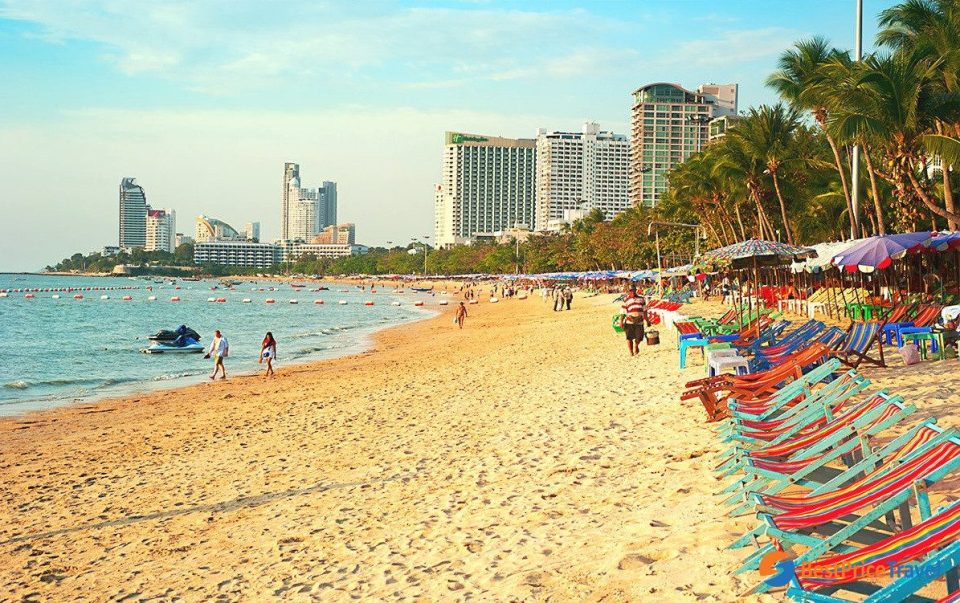
Where to stay: Hilton Pattaya sits above the Central Festival mall with a rooftop pool and the best sunset bar in the city. Holiday Inn Pattaya is the family standby on Beach Road, with two towers and a kids’ pool. Siam@Siam Design Hotel is a mid-range option near the Dolphin Roundabout with a rooftop infinity pool for about 2,000 THB.
Jomtien Beach
Six kilometers of sand starting just south of the headland, a ten-minute songthaew ride from the center. The water is cleaner, the crowd is families and long-stay visitors, and the seafront restaurants are cheaper than in town. Nightlife is limited to a few bars and the night market, which for many people is the point. When I spend more than a few days in Pattaya, this is where I base myself: a month in a Jomtien condo costs less than two weeks in a Beach Road hotel, and the 10 THB songthaew gets you to the center whenever you want the noise.
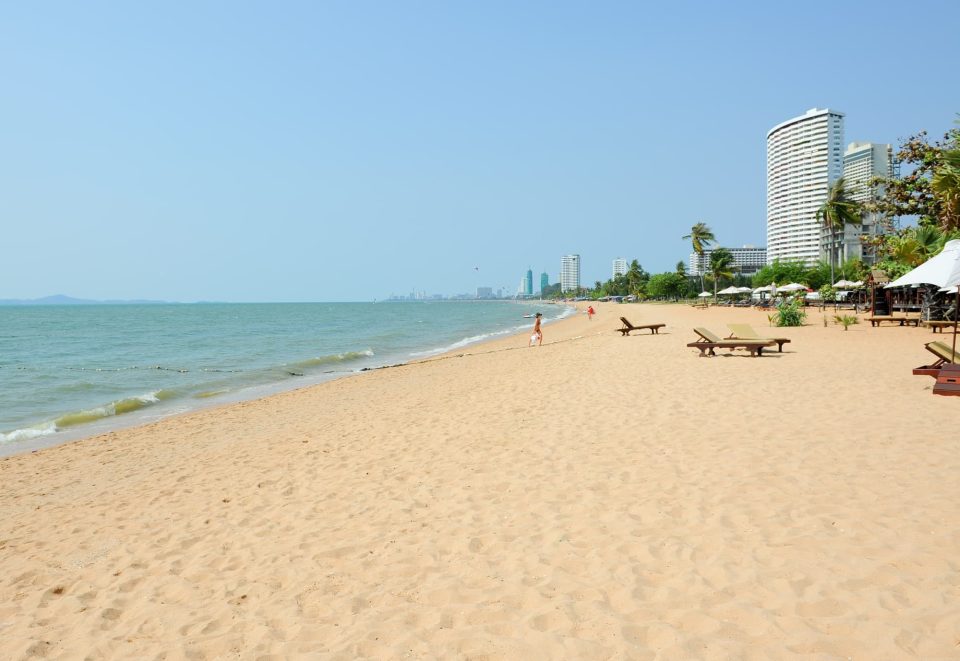
Where to stay: Rabbit Resort on Dongtan Beach is a low-rise Thai-style resort with two pools right on the sand. Ravindra Beach Resort at Na Jomtien is the big family option with a large pool complex. Movenpick Siam Hotel, also at Na Jomtien, is the quiet upscale choice with a water park for children.
Wong Amat Beach
North of the city in Naklua, Wong Amat is the upscale end of Pattaya. The beach is narrower but clean and calm, the hotels are the best in the area, and the Sanctuary of Truth is a short walk away. You will take a songthaew or Bolt into the center for evenings out, about 10 minutes and 100 to 150 THB.
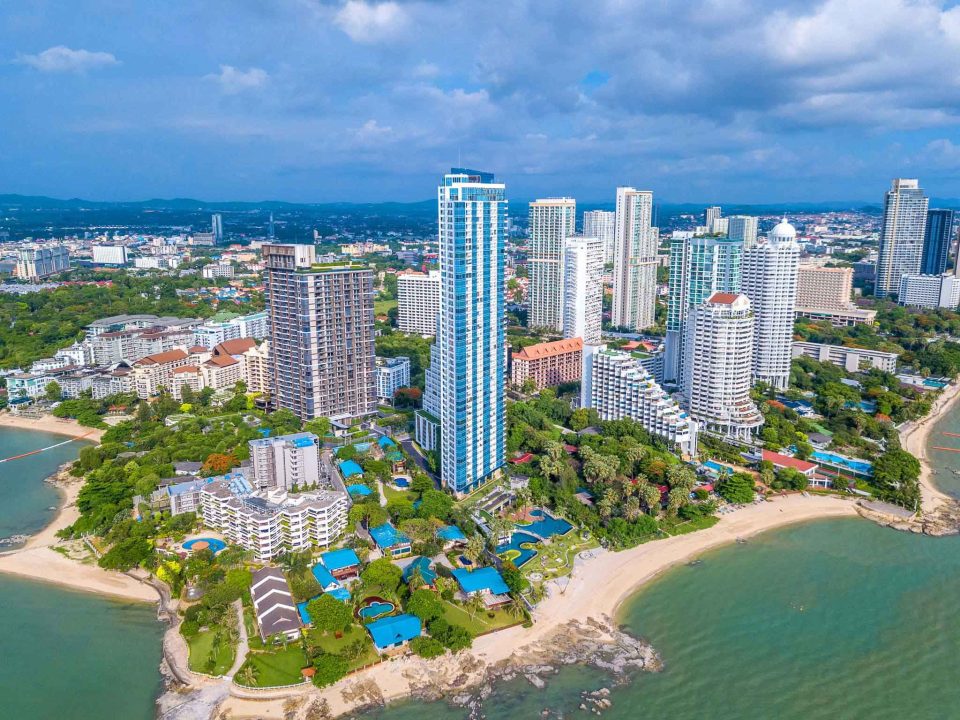
Where to stay: Centara Grand Mirage Beach Resort is the themed resort with a water park that families book months ahead. Cape Dara Resort has one of the best beachfront pools in Pattaya. Pullman Pattaya Hotel G has a private beach and a spa, and Dusit Thani Pattaya on the headland has been the grand old hotel of the city for decades.
Koh Larn
Koh Larn is the island seven kilometers offshore, and it has the beaches the mainland does not: white sand and clear water at Tawaen, Samae and Tien. The public ferry leaves Bali Hai pier at the end of Walking Street about every hour from 7:00 to 18:30, costs 30 THB and takes 40 minutes. A shared speedboat costs 300 to 400 THB per person and takes 15 minutes, and a private boat runs 2,500 to 3,000 THB. On the island, songthaews and rented scooters connect the beaches.
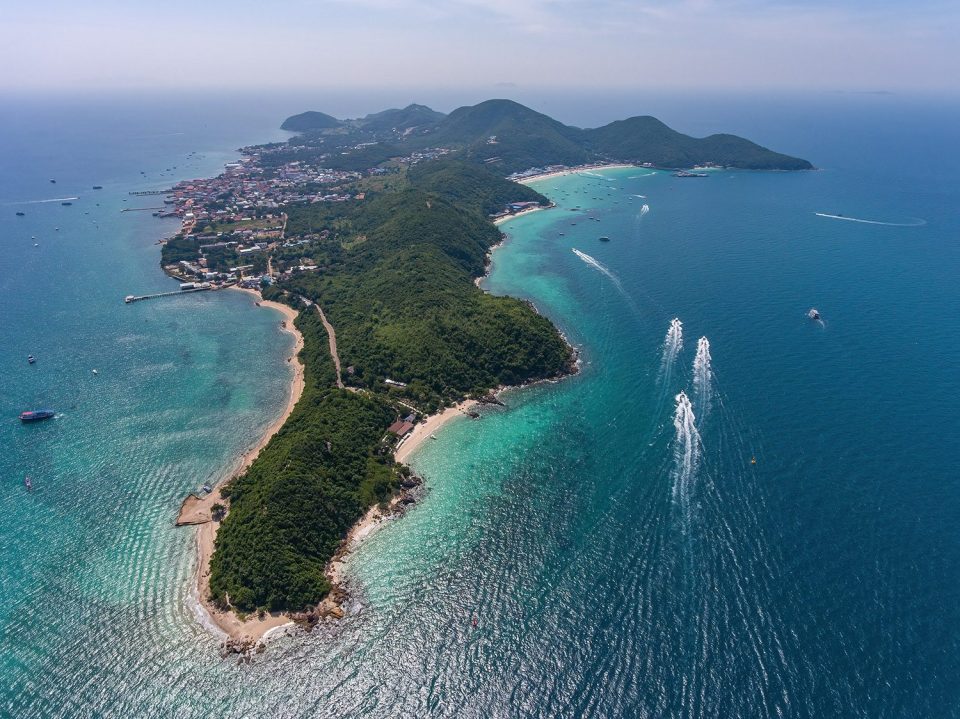
Where to stay: Most people come for the day, and Tawaen Beach is crowded by 11:00 in high season. If you stay overnight, Xanadu Beach Resort on Tien Beach is the comfortable option, and a handful of guesthouses near the pier cost 800 to 1,200 THB. The island empties after the last ferry, which is when it is at its best.
Things to Do in Pattaya
Pattaya has more paid attractions per square kilometer than anywhere else in Thailand, and not all of them deserve your money. These are the ones that do, with entry prices so you can plan a budget.
Nightlife
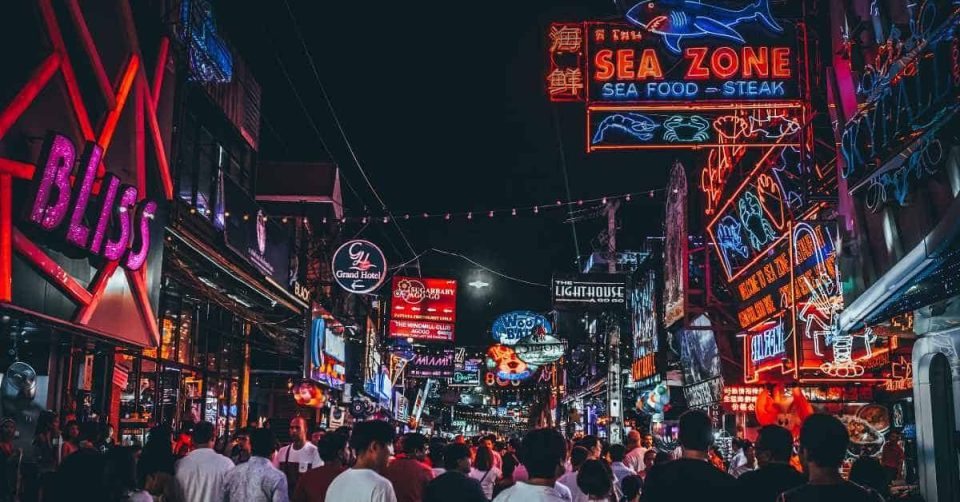
Walking Street closes to traffic at 18:00 and fills with bars, clubs, seafood restaurants and cabaret shows until the early hours. It is loud and unsubtle, and a walk down it is part of the Pattaya experience whether or not you stop. Beers cost 100 to 150 THB in the bars, more in the clubs. Beach Road and Soi Buakhao have the same bars at lower prices and with live music. For a show rather than a bar crawl, the Tiffany’s and Alcazar cabarets in North Pattaya run nightly performances from about 800 THB.
Daytime Sights
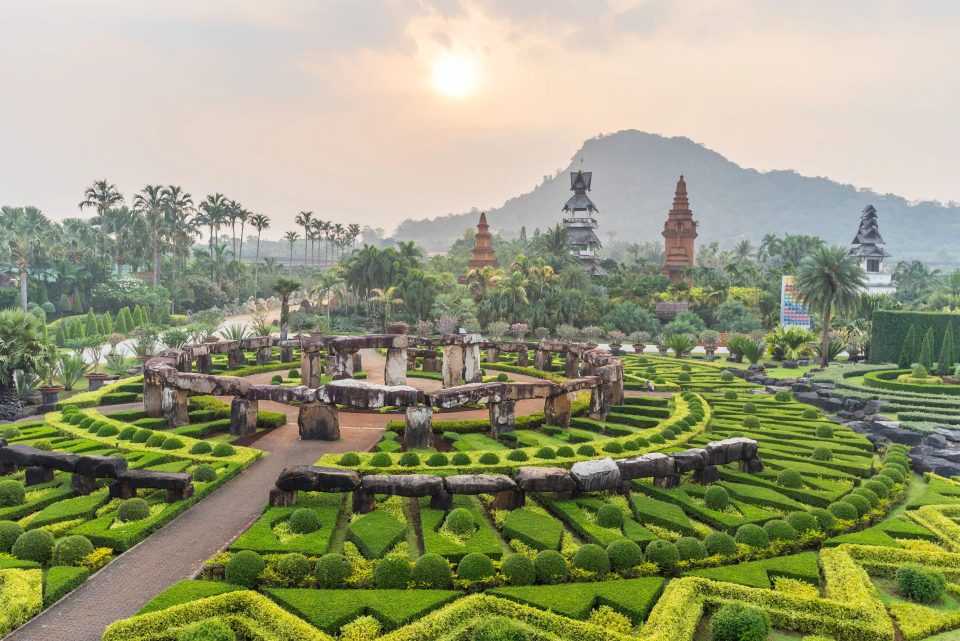
Nong Nooch Tropical Garden is 20 kilometers south of the city and covers 240 hectares of themed gardens, a dinosaur valley and a car museum. Garden entry is about 500 THB, or 800 THB with the Thai cultural show and elephant show included. A ticket with hotel transfer saves the 400 THB taxi each way. Allow at least four hours.
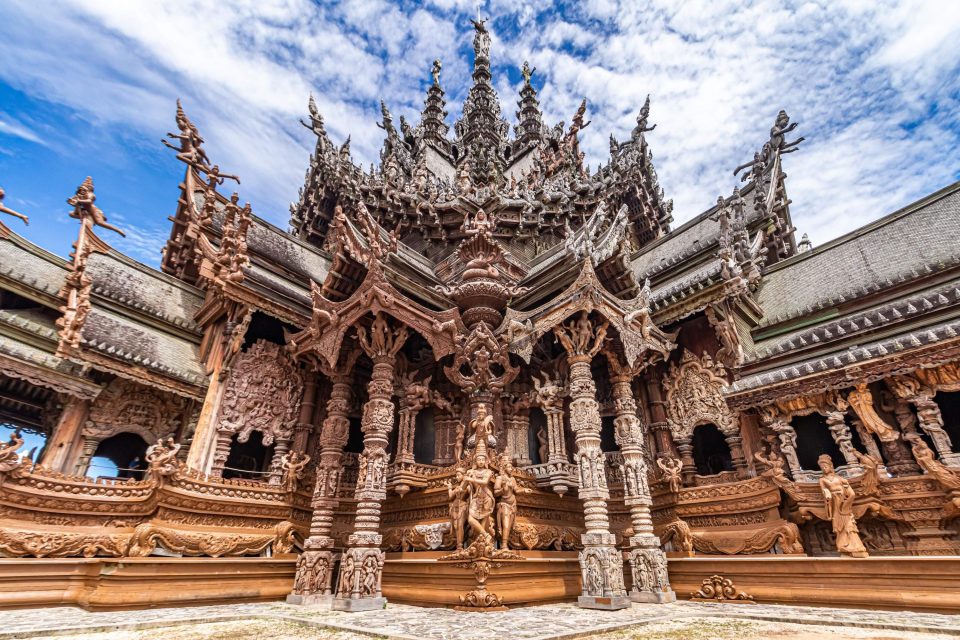
The Sanctuary of Truth in Naklua is a 105-meter wooden temple built entirely without nails, under construction since 1981 and still not finished. Entry is 500 THB and includes a guided walk. Go in the late afternoon for the light, and take the guided visit if you want the meaning of the carvings explained rather than just photographed.
Two free stops round out a day of sightseeing. The Big Buddha on Pratumnak Hill (Wat Phra Yai) has an 18-meter golden statue and a view over Jomtien, and the Pattaya Viewpoint a little further along the same hill gives the classic photo of the bay. Both are a 100 THB songthaew charter from the center.
Water Sports
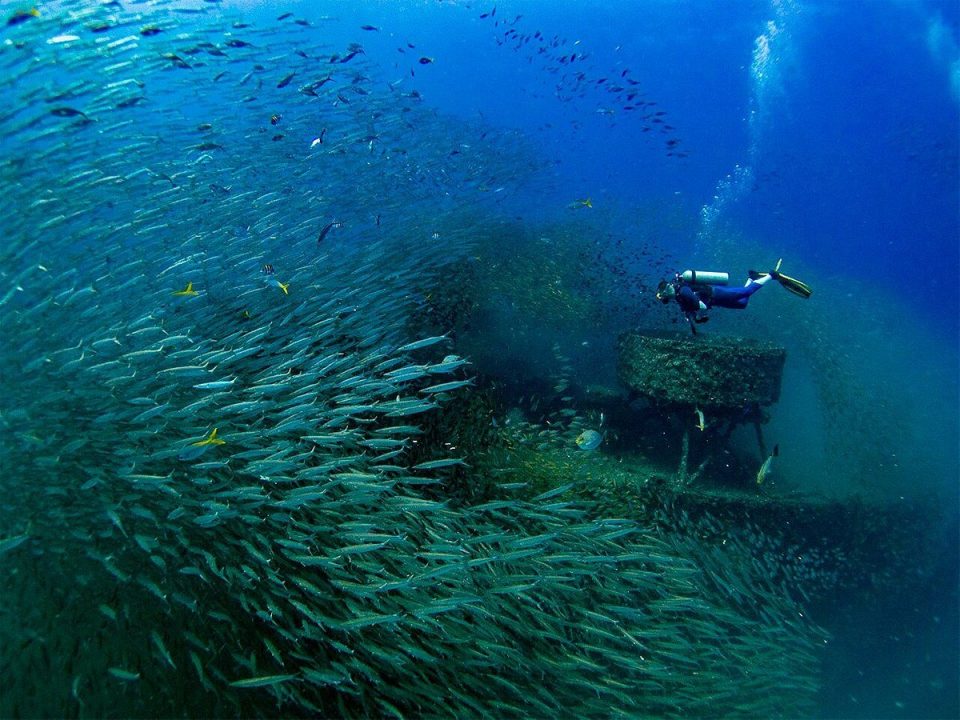
Diving and snorkeling. Pattaya is not Thailand’s best dive destination, but it is the closest to Bangkok and a good place to learn. Dive schools on Beach Road and Jomtien run PADI Open Water courses for 12,000 to 15,000 THB over three days, and two-tank fun dives to the wrecks and islands cost 3,000 to 3,500 THB. Visibility is best from November to April.
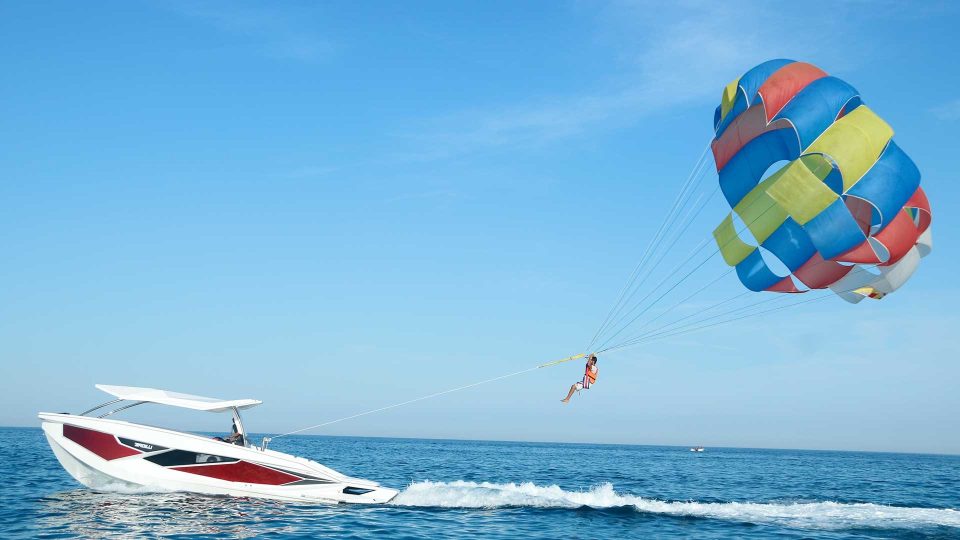
Parasailing and jet skis. Parasailing costs 500 to 800 THB for a short flight from a platform offshore. Jet skis rent for 1,000 to 1,500 THB per half hour. Photograph the jet ski from every angle before you set off, because damage claims on return are the oldest scam in town, and only rent from operators with a permit board on display.
Day Trips
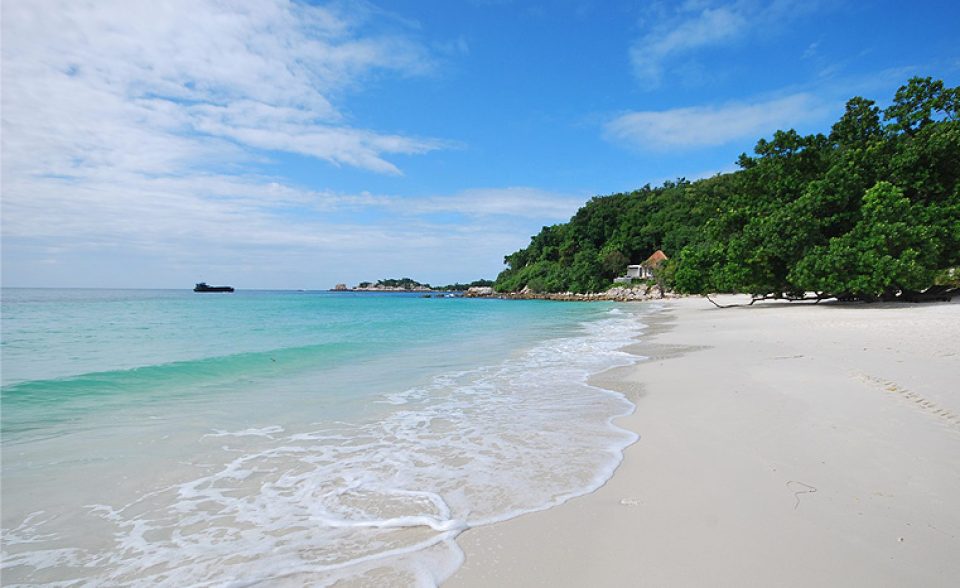
Koh Samet is the best beach within reach of Pattaya. Drive an hour south to Ban Phe pier in Rayong, then take the ferry (about 100 THB, 40 minutes) or a speedboat (300 to 400 THB, 15 minutes). Foreigners pay a 200 THB national park fee on arrival. Organized day tours from Pattaya bundle the transfer, the boat and lunch for around 1,500 to 2,000 THB, which is close to what you would pay doing it yourself.
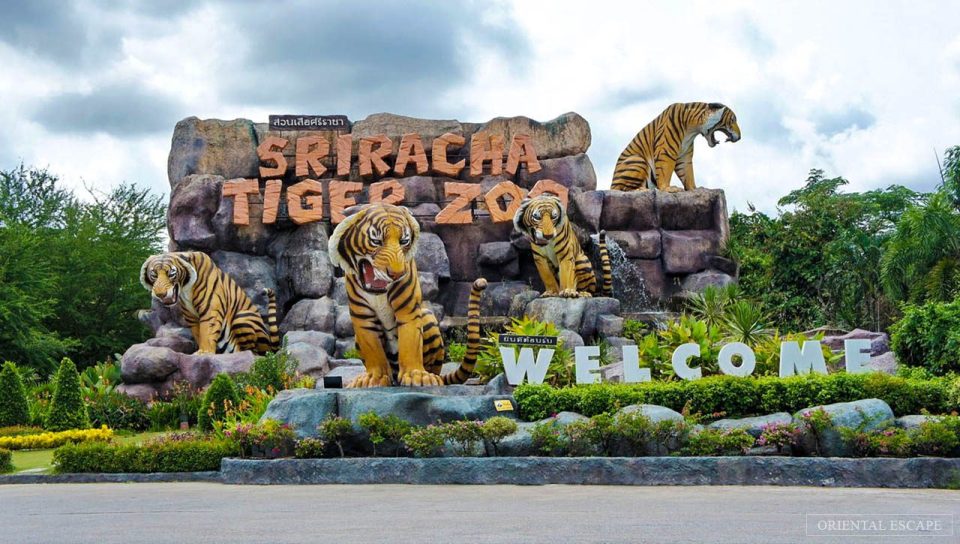
Sriracha Tiger Zoo, 30 minutes north, charges about 450 THB and offers photos with tiger cubs and crocodile shows. It is popular with tour groups, and it is also the kind of place animal welfare organizations ask visitors to avoid. If you want animals, the elephant sanctuaries near Pattaya that do not offer rides are the better use of a day and a similar price.
Getting Around Pattaya
Songthaews, the blue pickup trucks with two benches in the back, are the city’s bus system. They loop along Beach Road and Second Road all day and run to Jomtien and Naklua. A ride on the fixed route costs 10 THB, Jomtien is 10 to 20 THB, and you pay the driver when you hop off. If you ask the driver to go somewhere off the loop, it becomes a charter and the price jumps to 100 to 200 THB, so agree on it first. My rule: never say a destination when boarding, just climb in, ring the bell where you want out, and hand over a 10 THB coin.
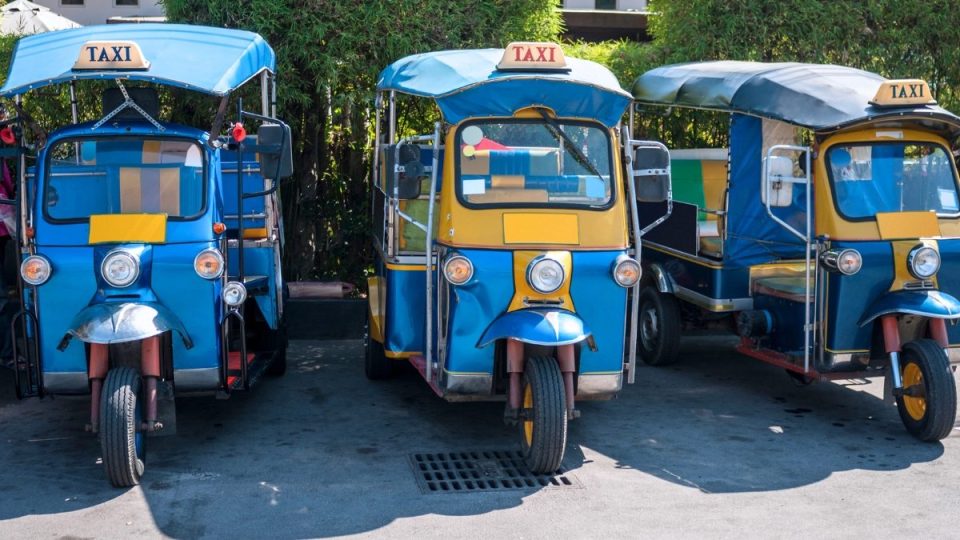
Motorbike taxis wait at most corners in numbered vests. Short hops cost 40 to 60 THB, the center to Jomtien about 80 to 100. Bolt and Grab both work in Pattaya and are cheaper and less argument-prone than the metered taxis, which rarely use the meter: expect 100 to 200 THB for rides within the city.
Renting a scooter costs 200 to 300 THB a day plus fuel and needs an international driving permit with a motorcycle category, which the police check at roadblocks on Sukhumvit Road. Helmets are mandatory and the fine for riding without one is 500 THB. A rental car from 900 THB a day makes sense only for day trips to Koh Samet or Bangkok.
What a Day in Pattaya Costs
A comfortable mid-range day for one person comes to roughly 2,500 to 3,500 THB: 1,500 for a three-star room near Jomtien, 400 to 600 for three meals if you mix street food at 60 to 100 THB with one restaurant dinner, 100 to 200 on songthaews, and 500 for one paid attraction. Add 1,500 THB for a Koh Larn day with a speedboat and a beach chair. Walking Street can double any of these numbers, which is the one budgeting rule everyone learns in Pattaya. If the city is a stop on a longer trip, our Bangkok guide covers the capital end of the journey.


