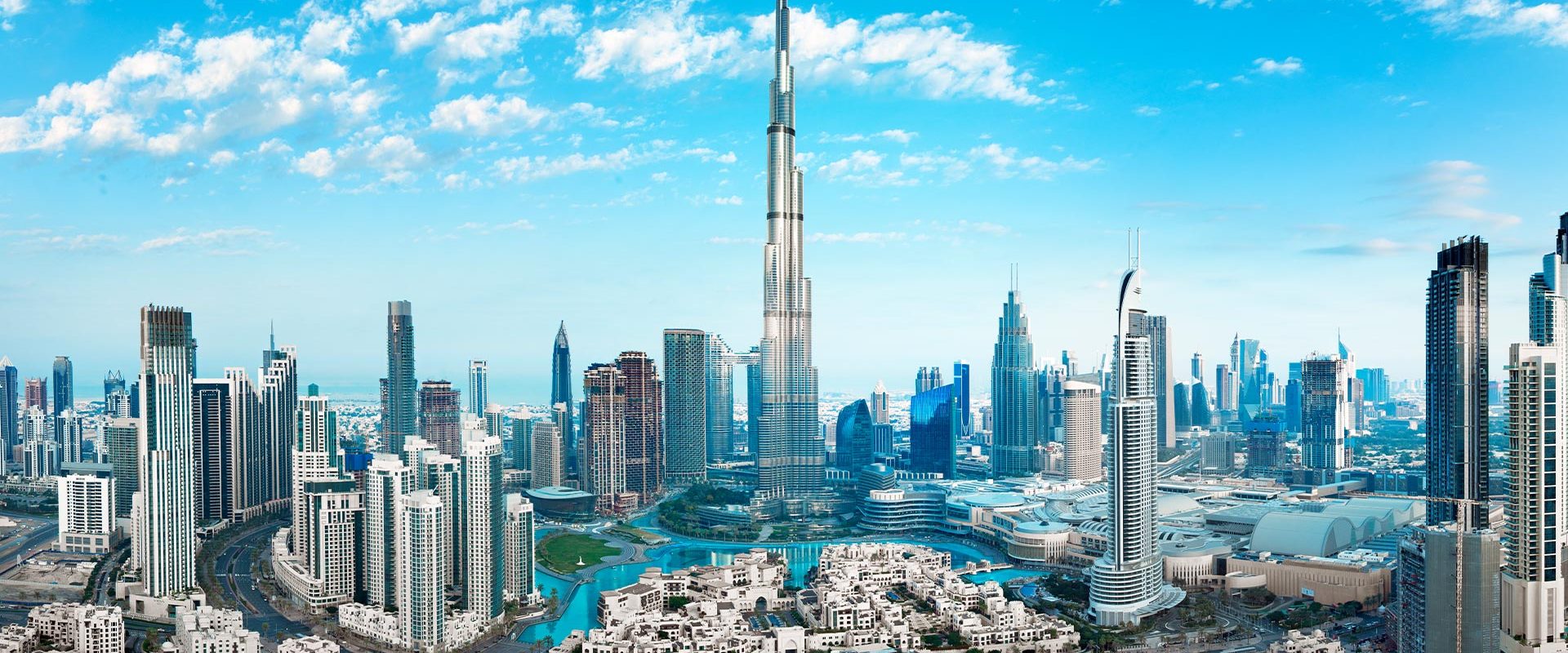
Dubai has a reputation as a city for people who don’t look at price tags, and the hotels on the Palm do their best to earn it. But most of the city works differently. A metro ride costs about a dollar, a shawarma two, the beach is free, and the fountain show that fills every Instagram feed costs nothing to watch. On my own visits I have spent less per day here than in Lisbon or Prague, and the difference came down to a few choices made before the flight.
This guide covers those choices for a solo trip in 2026: which neighborhood to sleep in, how to move around, where to eat for under ten dollars and which of the famous sights are free. Prices are given in UAE dirhams (AED) with dollar equivalents; the dirham is pegged at 3.67 to the US dollar, so the numbers don’t drift.
One warning before the tips. Budget hotels are where Dubai stumbles in guest reviews, and our hotel score comparison across the Emirates shows the scale of it: the cheaper the room, the wider the gap between the photos and the reality. Read the last ten reviews, not the average.
Finding Budget-Friendly Accommodation
Accommodation is the one line in a Dubai budget that can go wrong by a factor of ten. A room in a Marina tower and a room in Deira can be 20 minutes apart on the same metro line and differ by 400 dollars a night. When you compare Dubai hotels on Booking.com, filter by metro distance first and by stars second; a three-star next to a station beats a four-star that needs a taxi every day.
Picking Your Neighborhood
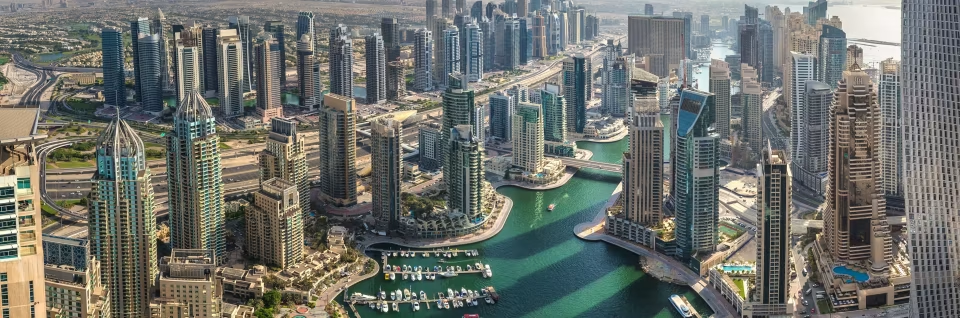
Forget Dubai Marina, Downtown and Palm Jumeirah for sleeping; visit them, then go home to the old city. Two areas carry almost all of Dubai’s cheap rooms:
- Deira and Bur Dubai. The historic core on both banks of Dubai Creek, with the souks, the abra boats and the Indian and Pakistani cafes. Nothing here is glamorous, and hotels in Deira and Bur Dubai are the cheapest in the city: clean two- and three-star rooms from AED 150 to 300 (40 to 80 USD) outside peak season. The Red and Green metro lines cross here, so Downtown is 15 minutes away and the airport about 10.
- Al Barsha. A middle ground between old and new Dubai, built around Mall of the Emirates and its metro station. Hotels in Al Barsha run AED 250 to 450 (70 to 120 USD), newer and quieter than Deira, with the Marina and JBR beach two or three stops down the Red Line. Good if you want modern comfort without Marina prices.
Types of Accommodation
- Hostels. Dubai has a few dozen, mostly in Deira, Bur Dubai and near Al Rigga and Burjuman stations, plus some in Marina towers aimed at backpackers. A dorm bed costs AED 60 to 120 (16 to 33 USD). Standards vary wildly; mixed dorms are rarer than in Europe, and many places are gender-separated.
- Apartments. For a stay of a week or more, or for two people, a studio with a kitchen often undercuts a hotel room, and cooking even breakfast saves AED 40 to 60 a day. Apartments in Dubai cluster in Bur Dubai, Al Barsha and the Sports City and JVC districts; the last two are cheap because they have no metro, so check the bus links before booking.
Getting Around Cheaply and Easily
Taxis in Dubai are honest, metered and air-conditioned, and they still eat a budget: AED 12 flag fall and about AED 2 per kilometer means Deira to the Marina costs AED 80 to 100 one way. Ride-hailing through Careem or Uber is the same price or slightly more. Unless you are late for a flight, the metro does the job for a tenth of that.
Choosing a Nol Card
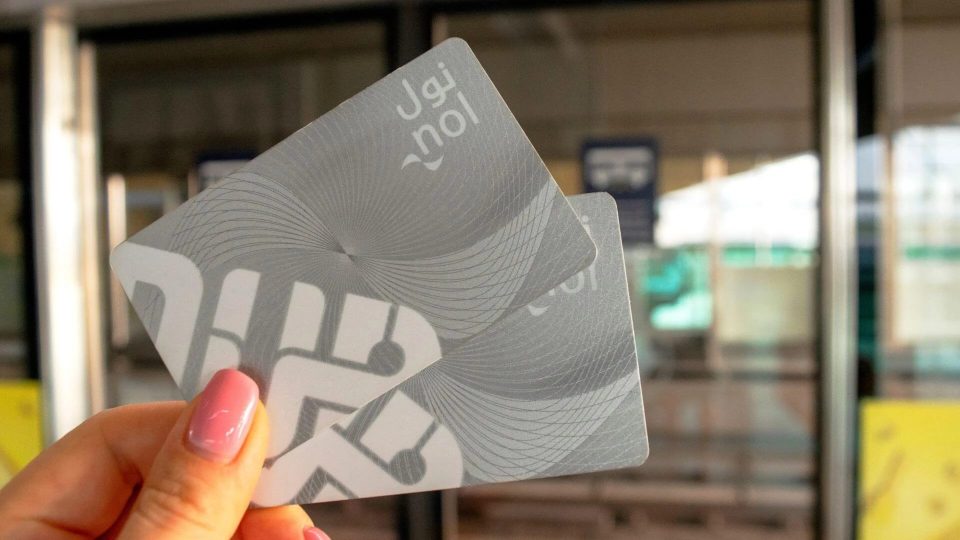
Every metro, tram, bus and water bus ride is paid with a Nol card. Buy the Silver card at any station machine: AED 25, of which AED 19 is credit to spend. Single-ride red tickets exist, but each ride on them costs more and you queue at the machine every time. Fares on Silver run from AED 4 for one zone to AED 8.5 for three or more, and the system caps a day of standard-class travel at AED 20, so after the third long ride everything else is free.
Money-saver. Load AED 50 to 100 at once, which covers a solo week, and tap out at every exit gate. A missed tap-out charges the maximum fare. Contactless bank cards also work at metro gates, but at red-ticket rates, so the Nol still wins.
Dubai Metro
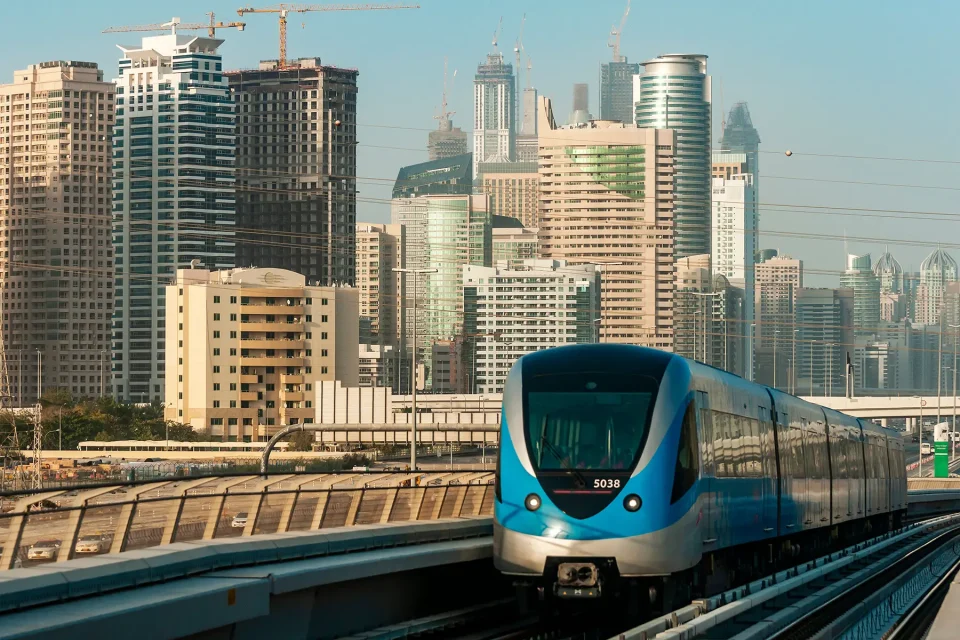
Two driverless lines, Red and Green, cover almost everything a visitor wants: the airport, the Creek, Downtown and the Burj Khalifa, Mall of the Emirates, the Marina and JBR. Trains run from about 5 AM to midnight, until 1 AM on Fridays and Saturdays, and the airport to Bur Dubai costs around AED 6. The metro is by far the fastest option at rush hour, when Sheikh Zayed Road turns into a parking lot. Two rules catch newcomers:
- Gold Class carriage. The front car of every train has leather seats and a double fare. A Silver card tapped in there earns an AED 200 fine from the inspector, not an upgrade.
- Women and children’s carriage. Marked in pink on the platform floor. Men standing in it, even by accident, pay AED 100. Women can ride in any carriage.
Water Transport
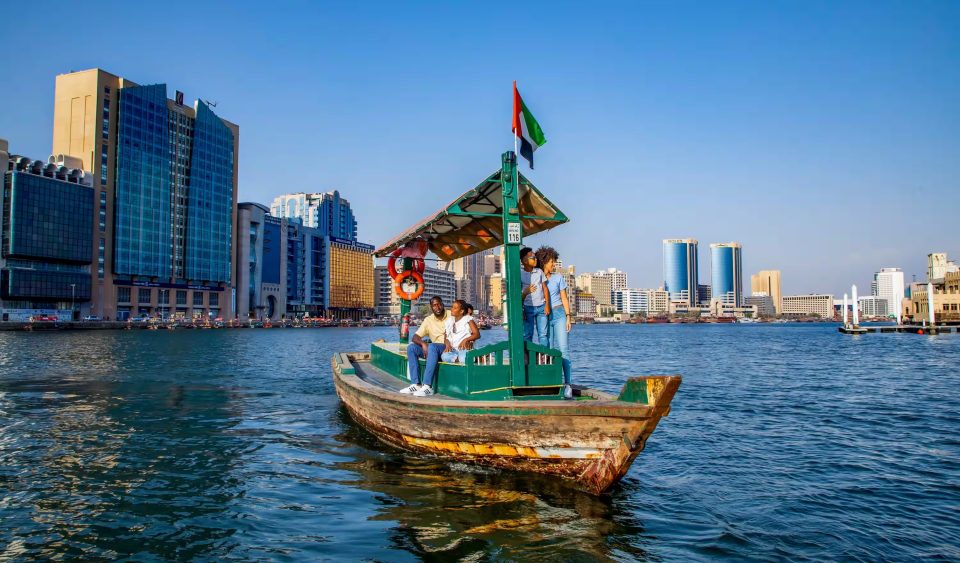
An abra is the wooden motorboat that has crossed Dubai Creek between Deira and Bur Dubai since before the city had roads. The crossing takes five minutes and costs AED 1, paid in cash to the boatman, and it links the Spice and Gold Souks on one bank with the Textile Souk and Al Fahidi on the other. For a longer version of the same route with the history explained, a Dubai Creek and souks walking tour covers both banks in about three hours, but the one-dirham ride on its own is the best value in the city.
Where to Eat Without Breaking the Bank
Restaurants with a view of the Burj charge AED 150 and up per person before drinks, and alcohol anywhere adds AED 40 to 60 per glass. Yet about 85 percent of Dubai’s residents are expatriate workers from South Asia, the Philippines and the Arab world, and they eat out every day at prices built for their salaries. Eat where they eat.
Historical Neighborhoods
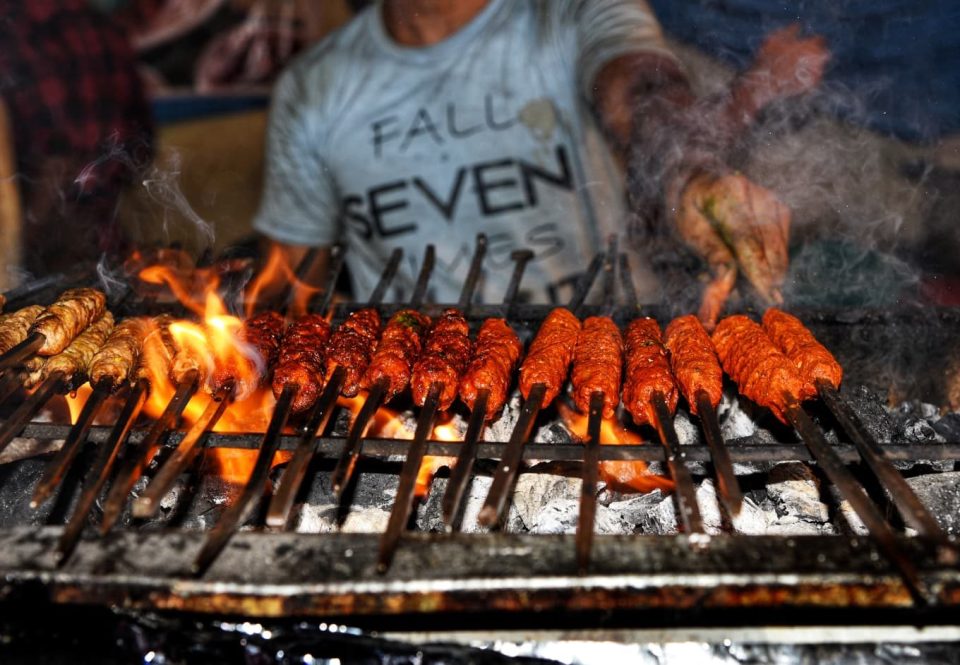
Deira, Bur Dubai and Karama hold hundreds of small cafeterias, most open until well past midnight. Look for:
- Indian and Pakistani cafeterias. A plate of biryani, a thali with three curries and bread, or a kerala-style fish meal costs AED 15 to 30 (4 to 8 USD). Meena Bazaar in Bur Dubai and the streets behind Al Rigga station are dense with them. Portions are built for laborers; one order feeds a solo traveler for the day.
- Shawarma and manakish. Lebanese and Syrian counters sell a chicken shawarma for AED 8 to 15 and a za’atar manakish flatbread for AED 5. The Al Mallah branches on 2nd of December Street have been the local benchmark for decades.
- Mall food courts. In Downtown or the Marina, skip the restaurants on the mall’s ground floor and go up to the food court, where Filipino, Thai and Indian counters serve set meals for AED 25 to 40. Supermarkets such as Carrefour and Lulu also sell hot meals and rotisserie chicken for about the same.
Water. A 500 ml bottle costs AED 1 in a Deira grocery and AED 10 to 15 in a Downtown cafe. Carry a bottle and refill it at the hotel; tap water in Dubai is desalinated and safe, though most residents filter it for taste. In summer, buy water in supermarkets rather than from kiosks in the sun, where it arrives warm.
Free and Cheap Attractions
Dubai sells experiences aggressively, from desert safaris to helicopter rides, and a solo traveler can walk past all of it. Most of what the city is known for is visible from the street.
Five Free Sights
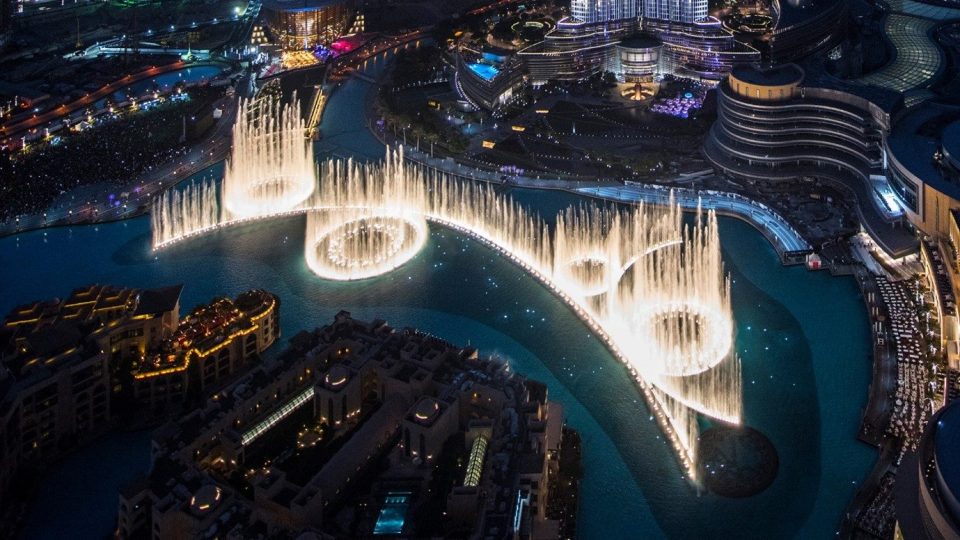
- Dubai Fountain. Water jets up to 150 meters high, set to music, on the lake at the foot of the Burj Khalifa. Shows run at 1 PM and 1:30 PM, then every 30 minutes from 6 PM to 11 PM. The free viewing spots are the Dubai Mall waterfront promenade and the bridge to Souk Al Bahar; arrive 15 minutes early for a railing spot.
- Dubai Creek and the souks. The Gold Souk, the Spice Souk and the Textile Souk sit within a one-dirham abra ride of each other. Nobody expects you to buy; the gold shop windows alone are worth the trip, and the saffron sellers hand out samples.
- Public beaches. Kite Beach in Umm Suqeim with the Burj Al Arab in the background, JBR Beach by the Marina and Jumeirah Open Beach are all free, with showers and lifeguards. Bring your own food and water; beachfront cafes charge Downtown prices.
- Dubai Marina walk. A seven-kilometer loop around the artificial canal between the towers, lit up after dark and busiest from 8 PM. Start at DMCC or Sobha Realty metro station and finish at JBR for the beach.
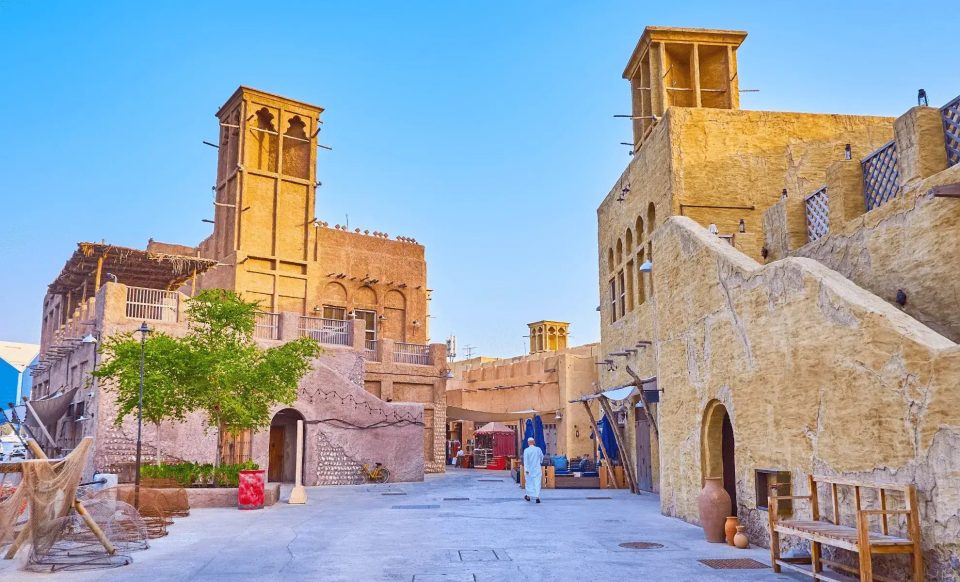
- Al Fahidi Historical Neighbourhood. Restored 1900s merchant houses with wind towers (barjeel) on the Bur Dubai bank, small free galleries and the Coffee Museum. Go before 10 AM or after 4 PM, when the lanes are cool and the tour groups are gone. More places like this are in our guide to Dubai beyond the Burj Khalifa.
Paid Activities That Are Worth It
- Burj Khalifa observation deck. Levels 124 and 125 cost from AED 169 (46 USD) for a morning or late-evening slot and over AED 250 for the sunset hour. Book Burj Khalifa tickets online a few days ahead; walk-up prices at the mall counter are higher and the prime slots sell out. A cheaper trick for the view alone is a drink at a Downtown rooftop bar, where AED 60 to 80 buys a cocktail and the skyline.
- Dubai Aquarium & Underwater Zoo. The 10-million-liter tank with its 33-meter acrylic panel is visible for free from the Dubai Mall’s ground floor, sharks and rays included. Paying, from about AED 199, gets you into the glass tunnel and the zoo upstairs; a Dubai Aquarium tunnel ticket is only worth it with children or a strong interest in fish.
Health, Safety, and Travel Insurance
Dubai is one of the safest big cities anywhere for a solo traveler, including for women travelling alone; petty theft is rare and the police respond fast. The risk is financial. Medicine here is private, and a walk-in visit to a clinic for sunstroke or a stomach bug starts at AED 300 to 500 before tests, while an emergency room visit runs into the thousands.
Two rules for independent travelers:
- Buy travel insurance before you fly. A basic policy with emergency medical cover for a week costs 15 to 30 USD, less than one night in a Deira hotel, and the UAE visa rules for some nationalities require it anyway.
- Respect the heat. From May to September daytime temperatures pass 40°C with high humidity, and heat exhaustion is the most common reason tourists end up in clinics. Plan outdoor sights for early morning and after sunset, and treat the hours between noon and 4 PM as mall or hotel time.
Hacks and Tips for 2026
- SIM card. Visitors arriving at Dubai airport get a free tourist SIM from du or Etisalat at passport control with a small data allowance, enough for maps for a day. Topping it up costs AED 50 to 100 for a week. An eSIM bought before the trip is cheaper still at 5 to 15 USD for 5 to 10 GB.
- Season. Hotel prices roughly double between November and March, when the weather is perfect, and fall by half from June to August, when it is not. May and October are the compromise: hot but survivable, with shoulder-season rates.
- Clothing. Shorts and T-shirts are fine on the beach and in the Marina. In Deira, Bur Dubai, mosques and government buildings, cover shoulders and knees; there is no fine for tourists, but you will be treated better. Swimwear stays on the beach.
- Ramadan. In 2026 it falls in late February and March. Many cafes in the old city close or do takeaway only during daylight, malls and hotel restaurants stay open, and the evening iftar buffets are some of the best food deals of the year, often AED 80 to 120 for an unlimited spread.
A realistic solo budget on this plan: AED 200 for a hotel room in Deira, AED 20 for transport, AED 60 to 80 for three meals, and whatever you choose to spend on one paid attraction. That is about 75 to 90 USD a day without the Burj, roughly what a hostel bed and street food cost in Western Europe, in a city where the free fountain show alone would be a paid ticket anywhere else.


